
Rhoda’s fete had passed off in the manner of fetes. Violent anxiety about the weather which in the early morning appeared capricious in the extreme. Considerable argument as to whether any stalls should be set up in the open, or whether everything should take place in the long barn and the marquee. Various passionate local disputes regarding tea arrangements, produce stalls, et cetera. Tactful settlement of same by Rhoda. Periodical escapes of Rhoda’s delightful but undisciplined dogs who were supposed to be incarcerated in the house, owing to doubts as to their behavior on this great occasion. Doubts fully justified! Arrival of pleasant but vague starlet in a profusion of pale fur, to open the fete, which she did very charmingly, adding a few moving words about the plight of refugees which puzzled everybody, since the object of the fete was the restoration of the church tower. Enormous success of the bottle stall. The usual difficulties about change. Pandemonium at teatime when every patron wanted to invade the marquee and partake of it simultaneously.
Agatha Christie, Pale Horse, pp. 56 – 57
Tag: Agatha Christie
A Wrong ‘Un
After a minute or two, while [the two men] stood watching Lombard’s progress [climbing down the cliff on a rope], Blore said:
“Climbs like a cat, doesn’t he?”
There was something odd in his voice.
Dr. Armstrong said:
“I should think he must have done some mountaineering in his time.”
“Maybe.”
There was a silence and then the ex-Inspector said:
“Funny sort of cove altogether. D’you know what I think?”
“What?”
“He’s a wrong ‘un!”
Armstrong said doubtfully:
“In what way?”
Blore grunted. Then he said:
“I don’t know — exactly. But I wouldn’t trust him a yard.”
And Then There Were None, by Agatha Christie, pp. 107 – 108
This is a very tense book. I was planning to dedicate an entire Friday post to it, but being short on time, I’m just using this quote from it on Quote Wednesday.
This bit of dialogue really shows the atmosphere of the book, and how the atmosphere is coming from the theme. In most Christie murder mysteries, there is one murderer among a group of people who are not murderers (even if they are not innocent in other ways). In this book, ten people are trapped together on a small island. None of them knows the others very well, and so they don’t trust each other either. As the book unfolds, it becomes clear that this lack of trust is well founded. Every single guest on the island has committed a murder in the past. They are all capable of killing. As Christie says in her other books, once a murderer has killed, they will do it again. So, any one of them could be “the murderer” who is picking off the guests one by one. In a sense, they are all “the murderer.” They are all a “wrong ‘un.”
I didn’t much enjoy this book the first time I read it, because it so disorienting (one point of the book was to create “an impossible puzzle”). The second time through, I was of course less confused, but I also didn’t enjoy it much because there is no character we can sympathize with. The one who comes closest, Vera, turns out to have been responsible for the death of a child. She, too, is a wrong ‘un.
The third time, this summer, I appreciate that this book is a sort of exaggerated picture of our predicament as human beings. We are trapped in this world (the island) surrounded by people, including ourselves, who are all totally depraved, who are all “wrong ‘uns.”
A Murder Is Announced: A Reread

A long review, but with no spoilers! That’s how much is going on in this book!
This is about my third time to read this book. The first instance was many, many years ago, when I knew very little about life or about postwar England. At that time, the characters, their life circumstances, their personalities didn’t give me clues about the mystery, but rather were just another part of the exotic setting through which I stumbled, gaping and blinking.
I remember that I reread the book at least once in the interim, but I can’t remember the occasion. Probably I was so busy immersing myself to escape the stresses of everyday life that I didn’t absorb much except “how fun to read an Agatha Christie book.”
And then there’s this trip round. Third time’s the charm?
Lock Up Your Daughters Christies!
I bought this book in response to the news that Christie’s books are now going to be edited before they are published. New editions will remove language that could be hurtful, such as references to class, race, nationality, or people’s personal appearance. In other words, all the distinctive parts of the British world-view in the 30s through 60s that make the books interesting period pieces, that Christie often conveys subtly and sympathetically, and that often figure as important factors in the psychology of the murder mysteries. When I heard this news, my immediate thought was that I’d better build up my own library of older editions of Christie. Her whole corpus has always been widely and cheaply available in libraries and bookstores, but precisely because of this availability, it never occurred to me to build up a collection. I purchased A Murder Is Announced and then at once had occasion to lend it to a young person who had never heard about Christie, so that was my good deed for the month I guess. She finished it in a night or two, and when I got it back I of course re-read it.
It’s not hard to see, in this book, what parts would go on the sensitivity editor’s chopping-block.
Through the door surged a tempestuous young woman with a well-developed bosom heaving under a tight jersey. She had on a dirdl skirt of a bright colour and had greasy dark plaits wound round and round her head. Her eyes were dark and flashing.
She said gustily:
“I can speak to you, yes, please, no?”
Miss Blacklock sighed.
“Of course, Mitzi, what is it?”
ibid, p. 21
Sometimes she thought it would be preferable to do the entire work of the house as well as the cooking rather than be bothered with the eternal nerve storms of her refugee “lady help.”
Wow! Just look at that English stereotype of a foreigner. Mitzi wears bright colors, her hair is “greasy,” she is too curvy (body shaming!), and she is subject to “nerve storms.” Later in the story, we learn that Mitzi is dramatic, boastful, and “a liar.” What could be worse? Surely the sensitivity editor should get rid of this entire character. Unfortunately, Mitzi is rather important to the plot. She also embodies one of the themes in this book: the new conditions of life in the British countryside immediately after WWII.
Post-War Britain
“Helps to find out if people are who they say they are,” said Miss Marple.
She went on:
“Because that’s what’s worrying you, isn’t it? And that’s really the particular way the world has changed since the war. Take this place, Chipping Cleghorn, for instance. It’s very much like St. Mary Mead where I live. Fifteen years ago one knew who everybody was. … They were people whose fathers and mothers and grandfathers and grandmothers, or whose aunts and uncles, had lived there before them. If somebody new came to live there, they brought letters of introduction, or they’d been in the same regiment or served in the same ship as someone there already. If anybody new–really new–really a stranger–came, well, they stuck out–everybody wondered about them and didn’t rest till they found out.”
She nodded her head gently.
“But it’s not like that anymore. Every village and small country place is full of people who’ve just come and settled there without any ties to bring them. The big houses have been sold, and the cottages have been converted and changed. And people just come–and all you know about them is what they say of themselves. They’ve come, you see, from all over the world. People from India and Hong Kong and China, and people who used to live in France and Italy in cheap little places and odd islands. And people who’ve made a little money and can afford to retire. But nobody knows any more who anyone is. People take you at your own valuation. They don’t wait to call until they’ve had a letter from a friend saying that So-and-So’s are delightful people and she’s known them all their lives.”
And that, thought Craddock, was exactly what was oppressing him. He didn’t know. They were just faces and personalities and they were backed up by ration books and identity cards–nice neat identity cards with numbers on them, without photographs or fingerprints. Anybody who took the trouble could have a suitable identity card–and partly because of that, the subtler links that had held together English social rural life had fallen apart. In a town nobody expected to know his neighbor. In the country now nobody knew his neighbor either, though possibly he still thought he did …
ibid, pp. 126 – 127
The postwar conditions that Miss Marple is describing are pretty much what it’s like everywhere in America … at least, everywhere that I have lived. The idea that you might not visit someone, or get to know them, until you’ve had a letter of introduction from someone you do know, strikes an American as stifling. (In Indonesia, by the way, when you come to visit a new place you need a letter of introduction not from a mutual friend but from some kind of bureaucrat.)
Many of these “people” from overseas that Miss Marple describes would have been Englishmen and Englishwomen who had been living abroad before the war. One such person is Miss Blacklock, a main character in this mystery, who came to Chipping Cleghorn only two years ago. Her friend, Dora, and her niece and nephew, Julia and Patrick, who live with her, also came recently. But many others would have been not English but foreigners. Apparently, England had to digest a large influx of postwar refugees and this fact forms the background to many of Christie’s stories, this one in particular. Besides Mitzi, another character is a young Swiss man who works at a nearby hotel and who might not be entirely honest with money.
Christie is not entirely unsympathetic to foreigners. One of her sleuths, Hercule Poirot, is Belgian. English people tend not to take him seriously because he is a “dapper little man with an egg-shaped head” and a French accent, and this tendency to underestimate him often works in Poirot’s favor, just as the fact of her being an unprepossessing old maid works in Miss Marple’s. For example, here is a passage from another of Christie’s books:
Fortunately this queer little foreigner did not seem to know much English. Quite often he did not understand what you said to him, and when everyone was speaking more or less at once he seemed completely at sea. He appeared interested only in refugees and post war conditions, and his vocabulary only included those subjects. Ordinary chitchat appeared to bewilder him. More or less forgotten by all, Hercule Poirot leant back in his chair, sipped his coffee and observed, as a cat may observe, the twitterings, and comings and goings of a flock of birds. The cat is not yet ready to make its spring.
Funerals Are Fatal, pp. 167 – 168
In A Murder Is Announced, English characters make frequent references to the possibility that they themselves, or others, might be unjustly prejudiced against foreigners. And we get passages like this one:
“Please don’t be too prejudiced against the poor thing because she’s a liar. I do really believe that, like so many liars, there is a real substratum of truth behind her lies. I think that though, to take an instance, her atrocity stories have grown and grown until every kind of unpleasant story that has ever appeared in print has happened to her or her relations personally, she did have a bad shock initially and did see one, at least, of her relations killed. I think a lot of these displaced persons feel, perhaps justly, that their claim to our notice and sympathy lies in their atrocity value and so they exaggerate and invent.”
She added, “Quite frankly, Mitzi a maddening person. She exasperates and infuriates us all, she is suspicious and sulky, is perpetually having ‘feelings’ and thinking herself insulted. But in spite of it all, I really am sorry for her.” She smiled. “And also, when she wants to, she can cook very nicely.”
ibid, pp. 59 – 60
This is a really interesting speech. One the hand, it represents Miss Blacklock (and, presumably, Agatha Christie) trying to be fair to Mitzi. On the other hand, from my perspective it still doesn’t give Mitzi enough credit. Any European refugee from WWII was quite likely to have actually lost their entire family, and to have seen and suffered many real atrocities which would sound unbelievable if they were not documented. It was one of the most harrowing periods in modern history. Such people were likely to have severe PTSD which would, in fact, make them “suspicious” and jumpy. For example, when Mitzi is being interviewed by the police in the wake of the murder, she predicts that they will torture her and take her away to a concentration camp. There is no reason to think this is melodrama.
Other parts of Mitzi’s character, such as her boastfulness, emotionalism and tendency to get insulted, may be cultural differences that have nothing to do with the war. Nearly every culture is boastful and demonstrative compared to the Brits, and people tend to get insulted and sulky in shame-based cultures such as we find in Asia (and perhaps some parts of Eastern Europe).
Another aspect of postwar Britain is the increase in bureaucracy. Identity cards have already been mentioned–a sort of top-down attempt to keep track of people bureaucratically now that the older system of everybody knowing everybody has disintegrated–but there is also bureaucratic control of all aspects of the economy, even down to whether people barter:
Craddock said, “He was quite straightforward about being there, though. Not like Miss Hinchcliffe.”
Miss Marple coughed gently. “You must make allowances for the times we live in, Inspector,” she said.
Craddock looked at her, uncomprehendingly.
“After all,” said Miss Marple, “you are the Police, aren’t you? People can’t say everything they’d like to say to the Police, can they?”
“I don’t see why not,” said Craddock. “Unless they’ve got some criminal matter to conceal.”
“She means butter,” said Bunch. “Thursday is the day one of the farms round here makes butter. They let anybody they like have a bit. It’s usually Miss Hinchcliffe who collects it. But it’s all a bit hush hush, you know, a kind of local scheme of barter. One person gets butter, and sends along cucumbers, or something like that–and a little something when a pig’s killed. And now and then an animal has an accident and has to be destroyed. Oh, you know the sort of thing. Only one can’t, very well, say it right out to the Police. Because I suppose quite a lot of this barter is illegal–only nobody really knows because it’s all so complicated.”
ibid, pp. 214 – 215
I didn’t even notice this aspect of the book during the previous times I read it. This time, it jumped out at me, because somewhere I had seen an essay about how in the postwar years, England continued rationing as a sort of experiment in socialism and this kept people poor for longer than they otherwise would have been. C.S. Lewis, for example, like many in England, relied on care packages from friends in America for such things as ham. Having been sensitized to this aspect of it, on this go-round I realized how much this Christie book really is a time capsule.
And … “nobody really knows because it’s all so complicated” is truly the essence of bureaucracy!
The Fun of Being a Woman
But the Christie goodness doesn’t stop there. (Really, there is so much going on in this book!) There is the delightful Mrs. Goedler. She is actually a very minor character … the widow of Miss Blacklock’s financier employer. Miss Blacklock stands to inherit if Mrs. Goedler predeceases her, which is very likely to happen because Mrs. Goedler has had poor health for years and is now likely to die within a few weeks. Inspector Craddock visits her, and Mrs. Goedler has this to say:
“Why, exactly, did your husband leave his money the way he did?”
“You mean, why did he leave it to Blackie? Not for the reason you’ve probably been thinking.” Her roguish twinkle was very apparent. “What minds you policemen have! Randall was never in the least in love with her and she wasn’t with him. Letitia, you know, has really got a man’s mind. She hasn’t any feminine feelings or weaknesses. I don’t believe she was ever in love with any man. She was never particularly pretty and she didn’t care for clothes. She used a little makeup in deference to prevailing custom, but not to make herself look prettier.” There was pity in the old voice as she went on: “She never knew any of the fun of being a woman.”
Craddock looked at the frail little figure in the big bed with interest. Belle Goedler, he realized, had enjoyed–still enjoyed–being a woman. She twinkled at him.
“I’ve always thought,” she said, “it must be terribly dull to be a man.”
ibid, p. 169
Now, that’s awfully inspiring to a gal like me. But Belle Goedler is not finished giving us advice on how to live:
She nodded her head at him.
“I know what you’re thinking. But I’ve had all the things that make life worth while–they may have been taken from me–but I have had them. I was pretty and gay as a girl, I married the man I loved, and he never stopped loving me … My child died, but I had him for two precious years … I’ve had a lot of physical pain–but if you have pain, you know how to enjoy the exquisite pleasure of the times when pain stops. And everyone’s been kind to me, always … I’m a lucky woman, really.”
ibid, p. 171
Go and do likewise.
Another Great Insight from Miss Marple
“What I mean by a shifty eye,” continued Miss Marple, “is the kind that looks very straight at you and never looks away or blinks.”
A Murder Is Announced, by Agatha Christie, p. 95
Agatha Christie knows how it go
“I do wish you wouldn’t read that horrid paper [The Daily Worker], Edmund. Mrs. Finch doesn’t like it at all.”
“I don’t see what my political views have to do with Mrs. Finch.”
“And it isn’t,” pursued Mrs. Swettenham, “as though you were a worker. You don’t do any work at all.”
“That’s not in the least true,” said Edmund indignantly. “I’m writing a book.”
“I meant real work,” said Mrs. Swettenham.
A Murder is Announced, by Agatha Christie, p. 4
What My Favorite Characters Would Be Doing in Quarantine
Up till now I’ve tried to make posts that don’t mention you know what, because I figure that readers come to Out of Babel for fun and weirdness, not for more mentions of you know what. But, I saw this super fun tag over in the book nook of The Orangutan Librarian. I hope by trying it I’m not letting you down. As you can see, I’ve spun it a little, imagining how the characters would handle coronavirus in their own worlds.
Rules
- Take 5 or more of your favorite book characters and imagine what they would be doing if they were quarantined with us in the real world.
- You can have them be in their own squad if you want, or working on their own.
- Tag 5 friends.
- Link back to this post and credit Reader Voracious.
Narnia Quarantine

The Pevensie kids, of course, would not even be here …
For some reason I imagine Edmund and Lucy quarantining with their cousin Eustace and his parents rather than being with their parents (who got stuck in Greece) or with Peter and Susan (who got stuck at their respective universities). Eustace, though less of a know-it-all since his first trip to Narnia, is still extremely well-informed about epidemiology, government policy, and all the latest economic and medical updates. His mother, Alberta, insists that everyone wear masks and gloves even inside the house.
Middle Earth Quarantine

Gandalf the Grey would have caught the coronavirus early (because he travels a lot), come down with complications (because it hits old people the hardest), died, and been resurrected.
Sam Gamgee, humble, hardworking, and patient, would be the perfect person to quarantine with. He’s also a very resourceful cook.
Faramir and Eowyn would be climbing the walls, holed up in the Houses of Healing in Minas Tirith.
Tom Bombadil and the River Daughter are immune to human ills and they also take a long view of the death of much of the rest of the world.
Gimli would rather risk death than give up smoking.
Tony Hillerman Quarantine

Sadly, in real life, the coronavirus has hit the Navajo nation really hard. Tony Hillerman’s Navajo cop characters, Jim Chee and Joe Leaphorn, would be reacting very differently. Leaphorn, who is older and more of a homebody, would be happily hanging out with his wife Emma at his home in Window Rock. Chee, who is young and restless, would be running around the reservation trying to help everyone he could. He would go to be with an older relative who is dying of the virus, making sure that the person is moved outside as per tradition and that they have someone with them. Though young and healthy, he would unexpectedly develop a bad case himself and would be found recovering in the hospital at the very end of the book, being visited by his girlfriend Janet or Bernie, depending upon where we are in the series.
Emberverse Quarantine

Junie and Mike of the Emberverse have already been through a society-destroying event that resulted in most people dying. Junie heads up a neo-pagan community near Corvallis, Oregon, and Mike runs a more specialized, military one just northwest of Salem. Since the Change destroyed all modern technology, the inhabitants of the Emberverse would probably barely notice the coronavirus. Fewer people develop the diseases of civilization (heart disease, diabetes) in their medieval-style world, living conditions are less crowded, and there are no nursing homes or hospitals. Probably all they would notice was a particularly bad seasonal flu endangering the few remaining old people. They’d be grateful that this sickness, unlike many, was not threatening little children. Junie would be using her herbology and caretaking skills to help as many of her subjects as possible. Because Junie and Mike both grew up in the modern world, before “the Change” happened, they are aware of germ theory and this would help them enforce hygiene on their people.
Agatha Christie Quarantine

Miss Marple has lived through two world wars. She would gamely go along with whatever deprivations and regulations the quarantine brought. She’s been through worse. If anyone complained, she would smile sweetly while silently judging you and simply say, “So many things are difficult.”
Hercule Poirot is already a bit of a germophobe. He would take enthusiastically to masks and hand sanitizer, but would become peevish when unable to procure the foods that he’s used to. Whenever Hastings began to panic about the many unknowns, Hercule Poirot would calm his fears through the use of the Little Grey Cells.
P.G. Wodehouse Quarantine

Airheaded bachelor Bertie could not stand not going to his club. He would beg Jeeves to come up with a way that Bertie could skirt the rules to get out and about. Jeeves would do so, knowing that within hours, Bertie would be back home with a horrible hangover that he would need to sleep off and then drink one of Jeeves’s miraculous restoratives. Jeeves knows that the coronavirus mostly endangers older people, so even if Bertie should become a carrier, there is little danger that he would infect anyone because even in normal circumstances he cannot be induced to visit his Aunt Agatha.
And … I can’t resist … Quarantine with my own characters!

Nirri is, essentially, already in quarantine all the time. He broke his spine in a fall from the Tower of Babel, becoming paraplegic, and is now being reluctantly cared for by people with whom he does not share a language. He is the nightmare person to be quarantined with: arrogant, demanding, unable to communicate or be reasoned with. Though 130 years old, he is healthy as a horse and there is no way he is dying from this. On the bright side, he is an accomplished musician. Give him a lute and he will entertain you all evening, even if you don’t understand the words to his songs.
Zillah is a born caretaker and the tribe’s resident medical expert. It was she who insisted they rescue Nirri. Though young and even middle-aged people don’t usually show symptoms of the virus, in a tribe their size there might be one or two who do. Zillah would spend herself caring for them, and then get sick herself (she is the tribe’s second oldest person, after Nirri). She would survive, cared for by her daughter Ninna, and the weeks when she was sick would be the loneliest of Nirri’s life.
You Sure You Wanna Do This?
If you do, I tag …
- Jyvurentropy, who has been posting so much that I can’t keep up with her
- Bookstooge, for his sarcasm
- Colin, because I want to hear his thoughts
- The hilarious Christopher Waldrop, even though I’m unable to comment on his posts
- … and the always insightful Eustacia, if she has time to do this tag
The Seven Heavenly Virtues Tag
The Orangutan Librarian tagged me for this post that applies the “Seven Heavenly Virtues” to the world of our reading.
By the way. The Seven Deadly Sins are easy to remember, in groups of two, three, and two. There’s The World (Envy, Greed); The Flesh (Lust, Gluttony, Sloth); and The Devil (Anger … and the granddaddy, Pride). The seven virtues are the flip side of these.
Once when I was at university, the theme of our homecoming week was the extremely creative “We’ve Got Pride.” I will always love my fellow English majors who named their contribution to the parade “Beyond pride: the seven deadly sins.” They wanted to show that “[our university] also gots Envy, Greed, Lust, Gluttony, Sloth, and Anger.” And of course it was true.
Onward.
CHASTITY: Which author/book/series you wish you had never read?
Hmm. It’s rare that I go on wishing I had never read a book. Usually if it stuns me with some horror, I hate it at the time, but as my mind assimilates the idea, I’m glad to have encountered it in a book so that I can grapple with that aspect of the world.
A good example is Ken Follett’s Pillars of the Earth. A major part of the plot is a sexual assault. It’s described graphically. The creepy lead-up and the lengthy aftermath include scenes from the point of view of both the victim and rapist. When I read this, it was the first time I’d read a rape described in detail (or, at least, the first time I understood what I was reading). It was very traumatic, and it led to lots of crying and praying for women who were real-life victims. So, as you can see, it bore some good fruit almost immediately.
Later I read another book by Ken Follett in a completely different genre, and it also featured a serial stalker and rapist, with many scenes written from his point of view. At that point I decided that I would not read any more books by Ken Follett, nor would I ever get on an elevator with the man.
TEMPERANCE: Which book/series did you find so good, that you didn’t want to read it all at once, and you read it in doses just to make the pleasure last longer?
I don’t usually show temperance when it comes to serious, emotional reads. … OK, I actually don’t have much temperance at all. I once stayed up all night finishing Mary Doria Russell’s The Sparrow.
However, with comic series, I find that if you binge on them they can become wearing, whereas if you read one every once in a while, they are refreshing. For example, P.G. Wodehouse’e Bertie Wooster books and Janet Evanovich’s Stephanie Plum series.
CHARITY: Which book/series/author do you tirelessly push to others, telling them about it or even giving away spare copies bought for that reason?
Well this question will contain no surprises to anyone who knows me or has followed my blog for any length of time.

The Emberverse series by S.M Stirling: I recommend this often because it encompasses a wide range of interests. The first few books are post-apocalyptic, and then it becomes more of a fantasy series. I’ve recommended it to people because it’s set in the Northwest (Idaho, eastern Washington and Oregon, northern California). Recently I recommended it to someone who is interested in retro martial arts such as sword fighting and archery, because there is a ton of that in these books, including descriptions of how the weapons are made and gripping battle scenes. The research on these books is both wide and deep, from ecology to botany to anthropology to martial arts to Celtic mythology.
‘Til We Have Faces: A searing, emotional novel about friendship, identity, divided loyalty, and religion. One of C.S. Lewis’s less famous works.
The Everlasting Man (non-fiction): G.K. Chesterton discusses paganism and why it expresses important things about being human … with the cheery paradoxes that only he can bring.
The Divine Conspiracy(non-fiction): With wit and wisdom, Dallas Willard applies the Gospels in a fresh way (which we all need frequently). This is so well-written that it’s a pleasure to read, and you just sail through it even though it’s quite thick.
Now, go forth and read these!
DILIGENCE: Which series/author you follow no matter what happens and how long you have to wait?
Agatha Christie. She has such a large corpus of work that even though I think I’ve read all her novels, I’m never sure.
Also, the Brother Cadfael series by Ellis Peters.
Also anything by Tony Hillerman or Dick Francis.
It looks like formula mysteries are my genre for this.
PATIENCE: Is there an author/book/series you’ve read that improved with time the most, starting out unpromising, but ultimately proving rewarding?
Watership Down. It is gripping from the first, don’t get me wrong, but it is so long. Then when you get to the end, you discover that the author is doing things with it that only a really long book can do.
KINDNESS: Which fictitious character would you consider your role-model in the hassle of everyday life?

Any strong, quiet, capable character who consistently takes care of others. Durnik in the Belgariad; Precious Ramotswe in The No. 1 Ladies series; Bardia in ‘Til We Have Faces; Sam Gamgee, Aragorn, Gandalf, Aslan. And, of course, Zillah from my own books.
Unfortunately my gifts and personality are almost opposite from all these characters. But I’ve always wanted to be strong, quiet, calm, and capable.
HUMILITY: Which book/series/author do you find most under-rated?
This is a hard one to answer because I don’t always have a real great idea of what other people are reading. How can I know that the gem I’ve “discovered” hasn’t also been discovered by a bunch of others?
Apparently Thomas Sowell has a bunch of great books about economics and society that have helped the people who’ve read them greatly … but I have not read them, only watched videos of him speaking. There are many such examples.
Now, Discuss
I hesitate to tag people because it seems to freak them out. But if you get inspired by any of the questions in this tag, please answer them either at your own blog or in the comments.
The Festive Christmas Book Tag
I got this tag from Em @ The Geeky Jock. It was created by Girl Reading .
1) A fictional family you would like to spend Christmas dinner with?
Whooo this is a tricky one!
I think the ideal place to spend Christmas would be in Germany, Austria or Switzerland, soo … Heidi? Problem is, I haven’t read it.
The Von Trapp family? Not fictional, and not sure I could live up to their standards.
How about Denmark? Hamlet’s family? Never mind, too much family tension.
Scotland? MacBeth? Nope … nope … nope.
How about a big English country house from an Agatha Christie novel? There is sure to be a murder, but on the other hand the food and the service would be terrific. But I would certainly make a fool of myself on account of not having sufficiently good table manners and not understanding the British class system. A fate worse than … death.
Bertie and Jeeves? Getting closer, but Bertie by himself is not really a family.
I’ve got it. Almost all the Grimms’ fairy tales take place in Germany. All I have to do is find a fairy tale family to spend Christmas with.
Cinderella? … Family tension again.
Little Red Riding Hood and her grandmother? That would be great, except I think in the original version they die.
Hansel and Gretel? Yet more family tension, and they are starving. Maybe I could spend Christmas with Hansel and Gretel and their father post-witch.
Actually, now that I think about it, I have a pretty good family to spend Christmas with already. There is plenty of food, no murder, and a minimal amount of family tension. In this case, truth is better than fiction.
2) A bookish item you would like to receive as a gift?
An agent! A publisher! A BOOK DEAL! (hysterical laughter)
3) A fictional character you think would make a perfect Christmas elf?
Puck from A Midsummer Night’s Dream. He’s already an elf, so it’s not a stretch.
4) Match a book to its perfect Christmas song.
Game of Thrones … We Three Kings.
(I haven’t read it, but it’s about kings, right?)
5) Bah Humbug. A book (or fictional character) you’ve been disappointed in and should be put on the naughty list?
Austin Lively of Andrew Klavan’s serialized novel, Another Kingdom.
Austin, Austin, Austin. You spent the first two seasons transforming from a Hollywood wannabe into a brave and honorable man.
Now, at the beginning of the third season, you’re a powerful Hollywood SOB who is taking women to the Casting Couch.
What happened? Have you forgotten who you are, Austin?
You’d better remember quick, because until you do, I am going to be cheering over every bad thing that happens to you.
6) A book or fictional character you think deserves more appreciation and deserves to be put on the nice list?
Anthony Trollope isn’t as well-known as Jane Austen but his books are just as funny.
7) Red, Gold, and Green. A book whose cover has a wonderfully Christmassy feel to it.

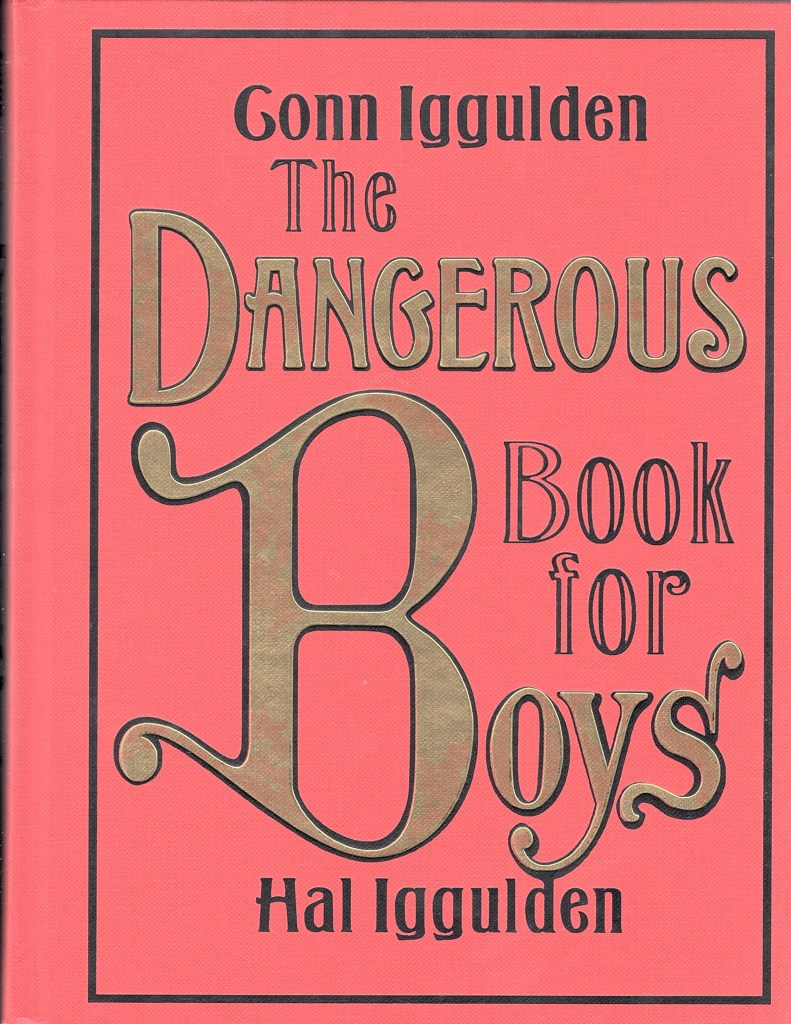

8) A book or series you love so much, you want everyone to find it under their Christmas tree this year so that they can read and love it too.
The No. 1 Ladies’ Detective Agency series, starring Precious Ramotswe and Grace Makutsi (both of the agency) … Mr. J.L.B. Matekoni of Tlokweng Road Speedy Motors … Mr. J.L.B. Matekoni’s hapless assistant, Charlie … the somewhat overbearing Mma Potokwane who runs the orphanage … and many, many others.
These books are just so heart-warming and they go down so easy. Although written in a certain order, it’s easy for the reader to jump right in even if you read them out of order. And they are addictive. I think a book or two – or a crateful – from this series would brighten any reader’s Christmas.
 Out of Babel Books