Behold, Creepy

“There is only one journey,” [the lady] said, “that all men make. They go forth from the Mother, and do what men are born to do, till she stretches forth her hand, and calls them home.”

Plainly this land was of the old religion. Touching my brow in respect, I said, “We are all her children.”

“But some,” she said, “are called to a higher destiny. As you are, stranger, who come here fulfilling the omens, on the day when the King must die.”

Now I understood. But I would not show it. My wits were stunned and I needed time.

“High Lady,” I said, “if your lord’s sign calls him, what has that to do with me? … if he needs me to serve his death, he will send for me himself.”

She drew herself up frowning. “What is a man to choose? Woman bears him; he grows up and seeds like grass, and falls into the furrow. Only the Mother, who brings forth men and gods and gathers them again, sits at the hearthstone of the universe and lives for ever.”

–The King Must Die, p. 66

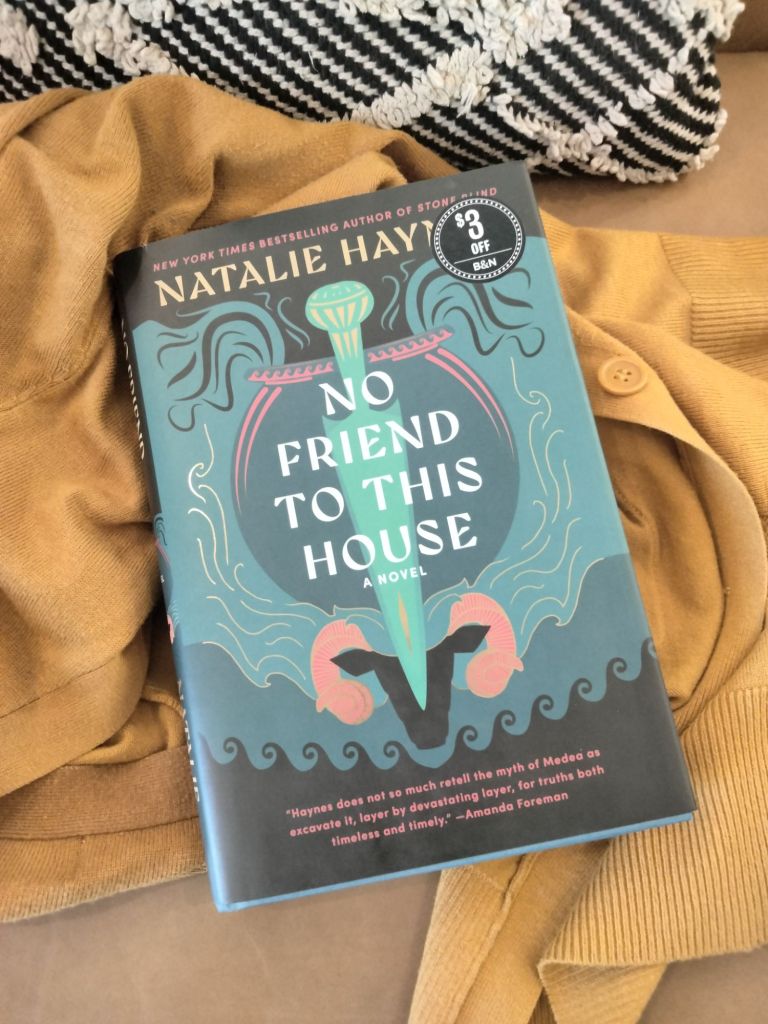
Book Review: Seeing Green by Tilly Dillehay

After the extremely long last Friday’s post, on which I labored for weeks, this will be just a short quick review.

I love the Archie-style eyes on the cover of this book. It’s addressing a very ugly sin, but the fact that the eyes on the cover are pretty makes it easier for the reader to accept the rebuke.

Tilly Dillehay is an awesome writer. Nevertheless, she spent much of her young adult years consumed with poisonous, immiserating envy for her younger sisters, who were thinner and had developed their musical talents more than she had. Dillehay writes with blistering honesty about this sin, the ins and out of it, the effect it had on her relationships, and above all, the cure.

When Dilley writes of the natural gifts that God gives unequally to people, and that we are tempted to envy, she calls them “glories.” There is the glory of being good-looking, of talent, of being a warm and charming person, and so on. She brings out how, when God gives someone a gift like this, it is there for the rest of us to enjoy. It makes the world a more beautiful place, and ultimately, shows forth His glory. It is wise of her not to denigrate the things that we envy (which is one thing envious people tend to do), but to fully admit that they are praiseworthy. She points out that, in the new heavens and the new earth, there will still be inequality among us when it comes to beauty, talent, and other such features. But though there will still be inequality, there will no longer be any envy.

Why Should Your Heart Not Dance?

In my Greco-Fiction project, I have briefly set aside The King Must Die in order to re-read Till We Have Faces. I have to read TWHF for a book club, but I can’t complain, really, because I was one who convinced the book club to read it for our February discussion.

If you have never heard of it, Till We Have Faces is one of C.S. Lewis’s lesser-known novels. The point of view character is a young woman, a princess in the ancient, fictional kingdom of Glome, who is cursed with an ugly face, an abusive father, and a horrible fertility goddess for a religion. Her name is Orual. The first bright spot in Orual’s life is a Greek slave her father captured in war, who becomes her tutor. The second, and much brighter, spot is her younger half-sister Psyche.

The back of the book describes it as a “timeless tale of two princesses–one beautiful and one unattractive.” Naturally, when I first picked it up, then in my late teens, I thought, “Well, I know which one of these I will identify with!” Like probably every young woman, I expected to have a grand time wallowing in self-pity on behalf of the ugly princess. However, this is not that kind of story. Orual is not envious of Psyche’s beauty. The jealousy she feels is of a very different kind.

I don’t want to give away the events of the story, because you should definitely read it. However, I do want to post a long passage from the book. This passage is very important thematically, and in terms of Orual’s character development, even though it is not an action scene.

When we topped [the ridge], and stood for a while to let the horse breathe, everything was changed. And my struggle began.

We had come into the sunlight now, too bright to look into, and warm (I threw back my cloak). Heavy dew made the grass jewel-bright. The Mountain, far greater yet also far further off than I expected, seen with the sun hanging a hand-breadth above its topmost crags, did not look like a solid thing. Between us and it was a vast tumble of valley and hill, woods and cliffs, and more little lakes than I could count. To the left and right, and behind us, the whole coloured world with all its hills was heaped up and up to the sky, with, far away, a gleam of what we call the sea. There was a lark singing; but for that, huge and ancient stillness.

And my struggle was this. You may well believe that I had set out sad enough; I came on a sad errand. Now, flung at me like frolic or insolence, there came as if it were a voice–no words–but if you made it into words it would be, “Why should your heart not dance?” It’s the measure of my folly that my heart almost answered, “Why not?” I had to tell myself over and over like a lesson the infinite reasons it had not to dance. My heart to dance? Mine whose love was taken from me, I, the ugly princess who must never look for other love, the drudge of the King, perhaps to be murdered or turned out as a beggar when my father died? And yet, it was a lesson I could hardly keep in my mind. The sight of the huge world put mad ideas into me, as if I could wander away, wander forever, see strange and beautiful things, one after the other to the world’s end. The freshness and wetness all about me made me feel that I had misjudged the world; it seemed kind, and laughing, as if its heart also danced. Even my ugliness I could not quite believe in. Who can feel ugly when the heart meets delight? It is as if, somewhere inside, within the hideous face and bony limbs, one is soft, fresh, lissom and desirable.

Was I not right to struggle against this fool-happy mood? What woman can have patience with the man who can be yet again deceived by his doxy’s fawning after he has thrice proved her false? I should be just like such a man if a mere burst of fair weather, and fresh grass after a long drought, and health after sickness, could make me friends again with this god-haunted, plague-breeding, decaying, tyrannous world.

pp. 95 – 97

Themes in The King Must Die: Hellenes vs. ‘Shore People’

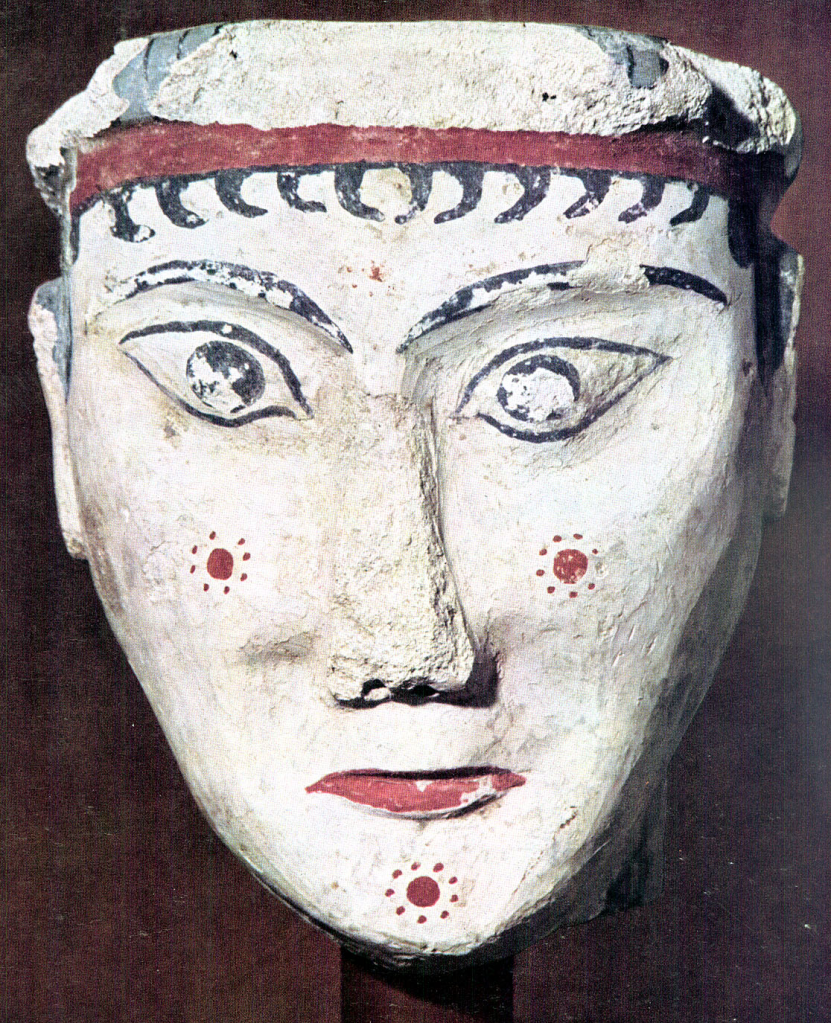
source: https://external-content.duckduckgo.com/iu/?u=http%3A%2F%2Farthistoryresources.net%2Fgreek-art-archaeology-2016%2Fgreek-art-archaeology-images%2Fmycenaefemalehead.jpg&f=1&nofb=1&ipt=7f3ec109d2b5fa5fc8a646dec84f0413e7fff54487f710be3ff027785a877590

As part of my ongoing, yearlong foray into fiction set in the ancient Mediterranean, I am now re-reading Mary Renault’s The King Must Die. There is so much history and speculation packed into this book, that I make free to do a series of posts on different topics from it, en route to the final book review. So, buckle up! I hope you like ancient historical fiction! (And, since you are visiting Out of Babel Books, I assume you at least don’t hate it!) Today’s topic is Renault’s theme of the two conflicting cultures of Hellenes vs. what they call the “Shore People.”

On the timing of the Theseus story

I have always had the impression that the story of Theseus was one of the older historical myths. It happens when Knossos, on Crete, is still a thriving city. So, in my mind, I put it a few generations before the Iliad. Madeline Miller, author of Circe, seems to agree. In her book, Circe hears of Theseus having killed the Minotaur well before Odysseus comes to land on her island.

If you do the math, Theseus living before the Odyssey would also put him living before Agamemnon returns from the war at Troy and is slaughtered in his bath by his wife, Clytemnestra. In the play Agamemnon (written, of course, much later), Clytemnestra kills her husband in revenge for his having sacrificed their thirteen-year-old daughter before he sailed for Troy, in addition to a couple of other grudges. Like most women, I find it hard not to think Clytemnestra has a case.

Renault, however, takes a different tack. She has a teenaged Theseus hear the following story from a bard:

The song he gave us was the Lay of Mycenae: how Agamemnon the first High King took the land from the Shore Folk, and married their Queen. But while he was at war she brought back the old religion, and chose another king; and when her lord came home she sacrificed him, though he had not consented. Their son, who had been hidden by the Hellenes, came back when he was a man, to restore the Sky Gods’ worship and avenge the dead. But in his blood was the old religion, to which nothing is holier than a mother. So, when he had done justice, horror sent him mad, and the Night’s Daughters chased him half over the world.

ibid, p. 40 in my copy

So here we have Agamemnon, Clytemnestra, their son Orestes, and the Furies. At the same time, this passage raises some questions.

The Shore People and Their Appearance

The Shore People make their appearance on the very first page of The King Must Die.

Our house is Hellene, sprung from the seed of Ever-Living Zeus. We worship the Sky Gods before Mother Dia and the gods of the earth. And we have never mixed our blood with the blood of the Shore People, who had the land before us.

-ibid, p. 1

As the story progresses, it rapidly becomes obvious that the Hellenes have, in fact, mixed their blood with the blood of the Shore People. There is the story of Agamemnon, above; Theseus is said to be “blonde and blue-eyed like the Hellenes, but small and wiry like the Shore People,” and Theseus, who is very promiscuous, even has a child who “came out small and dark, but so was [his mother’s] brother.”

So we have two populations, one that is native to the Greek coastlands (or at least has been there a long time), and one that came there from the steppes. Theseus’s grandfather explains to him their ethnic history, which he got from his own grandfather:

“Long ago, he said, our people lived in the northland, beyond Olympos. He said, and he was angry when I doubted it, that they never saw the sea. Instead of water they had a sea of grass, which stretched as far as the swallow flies, from the rising to the setting sun. They lived by the increase of their herds, and built no cities; when the grass was eaten, they moved where there was more. … When they journeyed, the barons in their chariots rode round about, guarding the flocks and the women … [Lord Poseidon] told the King Horse, and the King Horse led them. When they needed new pastures, they let him loose; and he, taking care of the people as the god advised him, would smell the air seeking food and water. The barons followed him, to give battle if his passage was disputed; but only the god told him where to go.”

ibid, pp. 16 – 17

This is a description of the Indo-European lifestyle and homeland. The Indo-Europeans took their reverence for the horse, and their wheeled carts and chariots, with them wherever they went, including to Scandinavia. So the Hellenes are Indo-European, and the Shore People, presumably, Hamitic or Semitic.

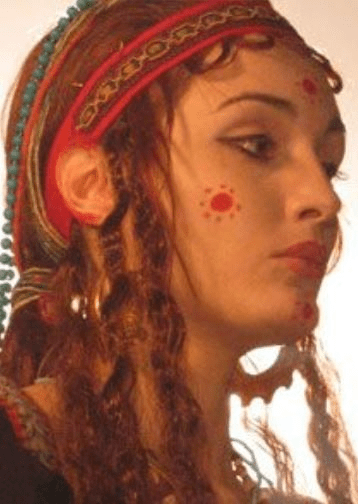
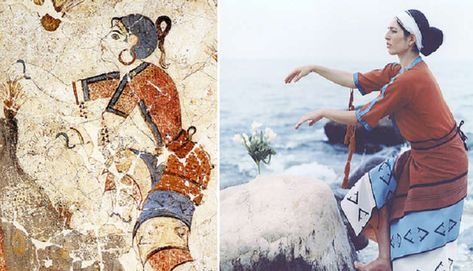
The mask at the top of this post is Mycenaean. Mycenae is located in the Peloponnesian Peninsula, which is also the location of Troizen, Theseus’s home. The ancient Mycenaean culture, older than classical Greece, took its cues from the Cretan urban culture of the time. In later Greece, you get men wearing himations and women wearing finely woven chitons. This is usually how Helen of Troy, for example, is illustrated. However, she probably looked more like the Mycenaean and Cretan women. Here is someone’s attempt to reconstruct the probable hairstyle and costume of the most beautiful woman in the world:

source: https://external-content.duckduckgo.com/iu/?u=https%3A%2F%2Fi.pinimg.com%2Foriginals%2F7d%2F29%2F38%2F7d293880174568ffd506b49b1f90aefd.jpg&f=1&nofb=1&ipt=500d8b11965e5cbdcd1de9286836a9a6b69ab9fcdb46f8991655a2c6648b4ab5

Notice the Egyptian-style, kohl-lined eyes, and the red suns for makeup. Helen might have been blonde, being a Hellene, but her clothing was perhaps more like this.

Here is someone else, reconstructing a traditional Mycenean costume and pose:

source: https://external-content.duckduckgo.com/iu/?u=https%3A%2F%2Fi.pinimg.com%2F474x%2Fcf%2F30%2Fde%2Fcf30de47e8298251f9d3ecc2976996ec.jpg&f=1&nofb=1&ipt=64a6c835ea102cac25d991e173ec53081fe8af0a6bd70db48b6d80c562988c33

I’m guessing these fashion choices came from the Shore People.

Theseus’s mother is described as wearing this ancient Mycenaean style. She wears a tiered, flounced skirt hung with charms, exposed breasts (what was going on, Crete and Mycenae?) and hair that is curled by the use of “crimping braids” (probably to attain a very curly look for those who do not, like the Shore People, have it naturally). Though a blonde Hellene, she is a priestess of the mother goddess, and so she takes some of her cues from the Shore People, and here is where we find the tension.

The Shore People and Their Religion

Both the Hellenes and the Shore People practice the sacrifice of their kings. However, there is a difference. For the Hellenes, it does not come on a regular schedule. Theseus’s grandfather explains:

“When the work of the King Horse was done, he was given to the god … And in those days, said my great-grandfather, as with the King Horse, so with the King. When the king was dedicated, he knew his moira [i.e. doom]. In three years, or seven, or nine, or whenever the custom was, his term would end and the god would call him. And he went consenting, or else he was no king, and no power would fall on him to lead the people. And the custom changes, Theseus, but the token never. … Later the custom altered. They ceased to offer the King at a set time. They kept him for the extreme sacrifice … And it was no one’s place to say to him, ‘It is time to make the offering.’ He was the nearest to the god, because he had consented to his moira; and he himself received the god’s commandment. And so it is still, Theseus. We know our time. … It is not the sacrifice … it is not the bloodletting that calls down power. It is the consenting, Theseus. The readiness is all.”

ibid. pp. 18 – 19

This might explain why so many kurgan burials are of high-born individuals who seem not to have died of old age.

It also, of course, explains the title of the book.

Meanwhile, it has been established that the Shore People do things a different way: “old laments have come down from the Shore People, of young heroes who love a goddess for a year, and foreknow their deaths” (p. 37). In other words, the Shore People treat their king primarily as the goddess or priestess’s consort, and kill him after just a year.

Marija Gimbutas has tried to make the case that the Shore People practiced a gentle, feminine, goddess-worshipping religion, and that they were cruelly exterminated by the warlike, sky-god worshipping evil Indo-Europeans. Renault is not going to paint with such a broad brush. Realistically, she shows both groups living next to one another and influencing each other. Also, throughout the course of the story, she is going to show by increasingly vivid illustrations that these two cultural systems are absolutely incompatible with each other. And that the mother-worship, in the end, is at least as bloody as the worship of Zeus.

Renault’s take on the story of Agamemnon is a great illustration of this. She interprets the story as a conflict between Clytemnestra’s mother-goddess culture and Agamemnon’s sky-father culture. When Clytemnestra brings back the “old religion,” it means that Agamemnon must die–not in battle, not some day, but now, and actually, yesterday. It means that Orestes is doubly cursed. He has loyalty to both religions, with their incompatible demands, and he is put at the mercy of the furies, the representatives of the goddess-religion. They chase him because he killed his mother, but if we string out the implications, even if he had not, they would probably be chasing him anyway. After all, he is a male heir to the throne, so his days are definitely numbered. Behold, the kindness of the religion of the goddess.

Obviously, there are some universal truths and some redemptive metaphors here, hidden under a thick layer of occultism, war between the sexes, and general pain and suffering for everyone. It is going to take a much greater King than Theseus to cut this difficult knot.

Seasonal Postscript

Oh, and Happy Valentine’s Day to everyone! Such a romantic post, I realize.

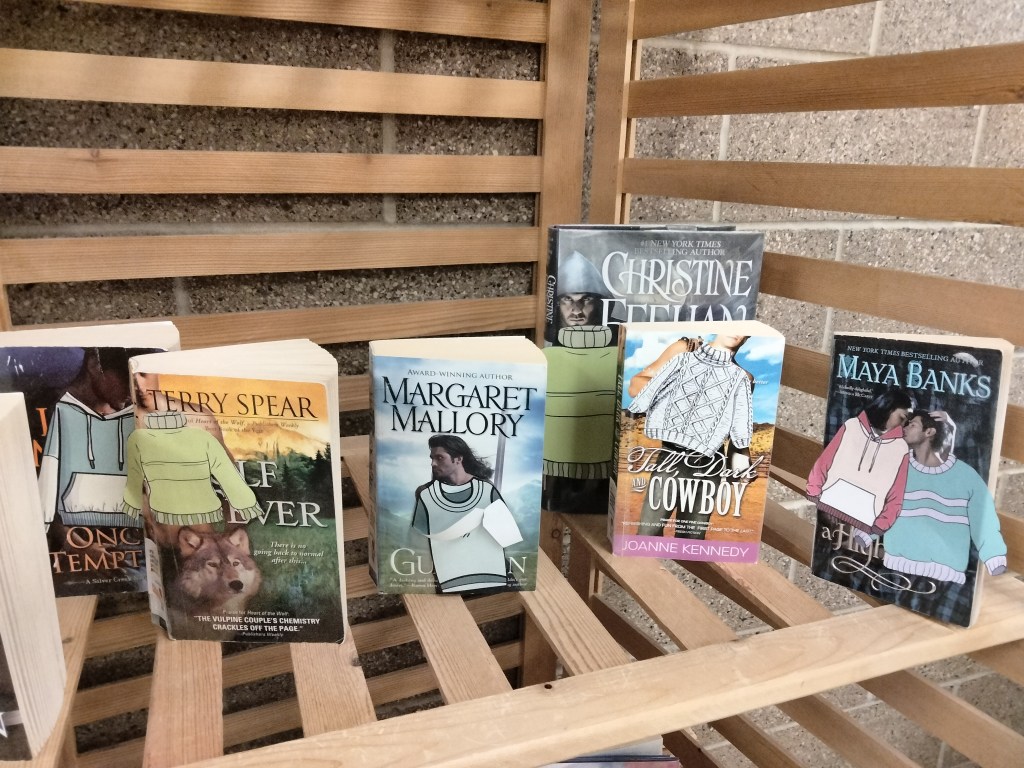
Behold, Three Books

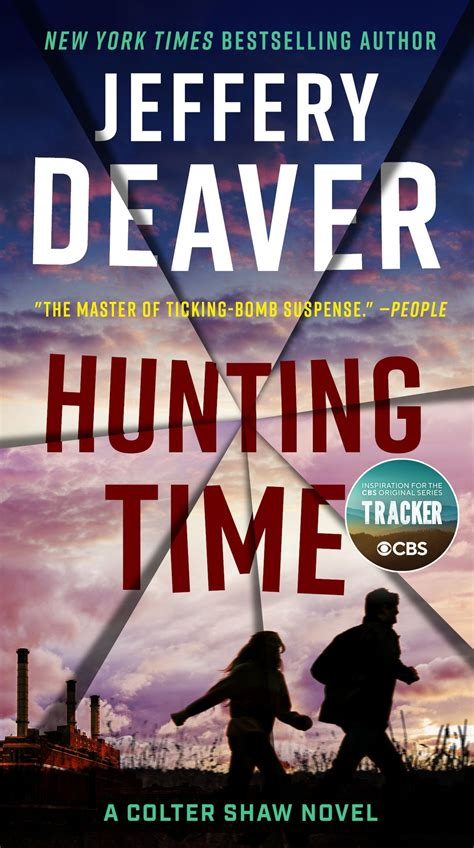
Hunting Time, a Colter Shaw Novel, by Jeffery Deaver.

By the way, it’s “hunting TIME,” not “HUNTing time.” The sense is not “time to hunt,” but “we don’t just save time, we hunt it down.”

This is a very professional modern thriller and the author has tons of blurbs on the back from other modern thriller writers. The plot was intricate, the pacing tense, and the characters were distinctive enough to keep them straight and give some emotional momentum to the story. There was also at least one major twist that I did not see coming, and that I really thought was clever.

Possibly the best-drawn “character” is the Midwestern city of Ferrington, the picture of urban blight but without the glamour of a big coastal city. Ferrington used to be an industrial capital, but then many industries left the city, leaving people out of work. Now the place seems to be nothing but drugs, crime, and despair. There are lot of chain-link-fence-surrounded empty lots filled with trash, long streets full of abandoned warehouses, and there is a badly polluted river. The ugliness of the scenes described rises to the level of beauty. The cops are corrupt in some cases and spread too thin in others. I think the name Ferrington is supposed to remind us of Ferguson, Missouri, and this is where we start to get into the book’s flaws.

Though Deaver mostly sticks to the story, when laying his scenes he makes sure to get in occasional digs at the reader. Bigots are everywhere. Trans is good, gay is good. We capitalize Black but not white. Stuff like that. Oh, and of course, capitalists are the one who ruined Ferrington in the first place.

My other issue with this book is the female characters. They’re not terrible, but … but … well. They are just missing a certain je-ne-sais-quois. For example, one of the point of view characters is a woman, Allison Parker. Deaver uses third person limited with her and with Colter Shaw, the sleuth. When we are inside Allison’s point of view, he frequently calls her Parker. That is just a bit confusing. It makes it sound like there is another person in the room. I am pretty sure that most women don’t think of themselves by their last name. Although maybe men do. Which is really the problem: All Deaver’s “female” characters (he has three main ones in this book) think more like men. Allison Parker is an engineering genius, very organized, very no-nonsense. Her daughter Hannah is a math genius, also no-nonsense. Sonja Nilsson is a former military operative (you guessed it, no-nonsense!) who is willing to sleep with Shaw after having known him for a day or two.

This is not a problem with Deaver alone. Many, many female authors write “male” characters who think and talk like women. It’s just awfully difficult to get into the head of the opposite sex.

Finally, there are occasional little things that made me scratch my head. “Seahorses can be sensuous.” (They can?) “Five-high.” (It’s high-five.) Nilsson lost forty pounds, and kept it off, in order to go into witness protection. (Oh, I didn’t realize it was that easy. Especially since she left the military at the same time! But, as we all know, the only thing keeping fat people from losing weight is the want-to. Eye roll)

Due to all these little flaws, and because the reveal of the villain was less satisfying than I had hoped, I give this book three out of five stars.

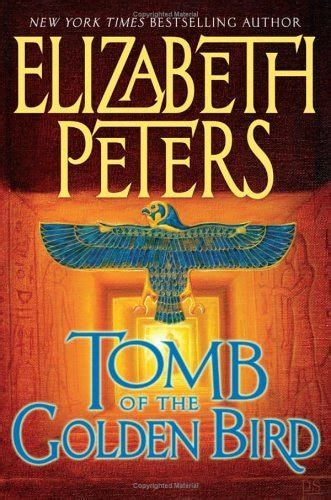
Tomb of the Golden Bird, by Elizabeth Peters

This was pure fun.

The Emersons are a family of British Egyptologists. Emerson, “Father of Curses,” the paterfamilias, is married to Amelia Peabody, whom he calls “Peabody.” This hot couple began their Egyptian adventures back in the Victorian era, but now it is 1922. Their grown son, nicknamed Ramses, is married and has children, and the Emersons have a large, motley household of employees, longtime family friends, relatives, and adoptees, both Egyptian and British. They have returned to Luxor, Egypt, for yet another season of digging. Of course, there are going to be capers, skullduggery, and so forth, and all the Emersons will be involved up to their elbows. Will they be deceived by Emerson’s half-brother Sethos? Will they foil an international plot? Most importantly, will they ever get a peek into the intact tomb that was discovered–technically, by Emerson–and is now being opened by the odious Carter?

This series is exquisitely researched. About 60% of the story is told in the first person by Amelia Peabody, in near-perfect late Victorian/Edwardian language. Scattered everywhere are gems like this one:

… I identified several other [party] guests as journalists. I can always spot them by the bulges in their coat pockets which indicate the presence of notebooks, and by their predatory looks. Messieurs Bradstreet of the New York Times and Bancroft of the Daily Mail were known to me personally (through no fault of mine).

p. 241

The other 40% of the story is told in third person from the point of view of Ramses, who is a quieter character than his colorful parents, but it also includes gems:

He had thought of several innocent explanations for David’s behavior, including the one he had given. It was understandable that [David] might feel the need to be alone; the family en masse or individually could be wearing.

p. 254

I originally came to this series hoping for ancient Egyptian mystical mysteries. It’s not that. It’s more of a romp. Much of this book felt like following the Keystone Cops, but eventually there did turn out to be some twists that gave the whole plot shape and direction. Four out of five stars.

Matchingmaking for Psychopaths, by Tasha Coryell

I picked this up off the New Books shelf at the library. Perhaps I should have left it there, based on the title, but I had read the first few pages and found them engaging. Alas, I returned the book without finishing it. I would have liked there to be at least one main character who I was sure wasn’t a psychopath. A little psychopathology goes a long way.

When I returned the book, the librarian giggled and said, “Oh, that one was silly.” It was indeed silly. But silly and serial murder don’t mix well. At least not for me.

And there was also a daughter

And there was also a daughter.

She drops out of the story very early, sacrificed

for good winds on the way to Troy.

But her mother’s revenge has made history.

And there was also a daughter

cursed to foresee the destruction of the city,

as daughters often do,

and no one believed her.

And there was also a daughter,

kidnapped (seduced?) by Shechem,

avenged (destroyed?) by her brothers,

a single chapter in Genesis.

And there was also a prophet,

a man too young to know what women suffer–

yet He did, somehow.

Daughter, your faith has healed you. Go in peace.

Quote: A Silver Lining

[My mother’s] first bout of Lyme disease was diagnosed at the Bethesda Naval Hospital when a physician discovered three large bull’s-eye rashes on her behind. The physician was so excited at this classic presentation of Lyme that he called in several other handsome young navy doctors for a viewing. (My mother, somewhat of a flirt, loved telling this story.)

Bitten, by Kris Newby, p. 242

Quote: Women in Pubs

“Women,” Mart says with deep disapproval, appearing at Cal’s shoulder. “The pub’s full of women tonight.”

“They get everywhere,” Cal agrees gravely. “You reckon they should stay home and take care of the kids?”

“Ah, Jaysus, no. We’ve the twenty-first century here now. They’ve as much right to a night out as anyone. But they change the atmosphere of a place. You can’t deny that. Look at that, now.” Mart nods at the girl in the pink dress, who has started dancing with one of her girlfriends in a few square inches of space between the tables and the bar. “That’s disco behavior, that is. That’s what you get when there’s women in. They oughta have pubs of their own, so they can have their pint in peace without some potato-faced f-er trying to get into their knickers, and I can have mine without your man’s hormones getting in the air and spoiling the taste.”

“If they weren’t here,” Cal points out, “you’d be stuck looking at nothing better’n my hairy face for the evening.”

“True enough,” Mart concedes. “Some of the women in here tonight are a lot more scenic than yourself, no harm to you. Not all of them, but some.”

Tana French, The Hunter, pp. 120 – 121