About nine months ago, I decided I was going to read all the fiction I could that was set in or based upon ancient Greece. This does not mean I would or could read everything that was out there. In fact, my local library had some new books in the genre that I picked up, glanced through, and decided weren’t worth my time. It’s a very popular genre, and it has given rise to some incredible classics and some incredible stinkers.
Here’s what I did read:
Date read
Title & author
My reaction
January 2026
Circe, Madeline Miller
heartbreaking in the best way
February 2026
Till We Have Faces, C.S. Lewis
(a re-read) in my opinion, far & away his best novel
Feb – March 2026
The King Must Die, Mary Renault
(a re-read) insanely good research, poetic literary writing
March – May 2026
Christianity and the Hellenistic World, Ronald H. Nash
nonfiction; explores whether Christian ideas were borrowed from Greek culture
May 2026
No Friend to This House, Natalie Haynes
perhaps the best you could do with a Jason and Medea re-telling, which isn’t saying much, as they are both royal stinkers who deserve each other
June 2026
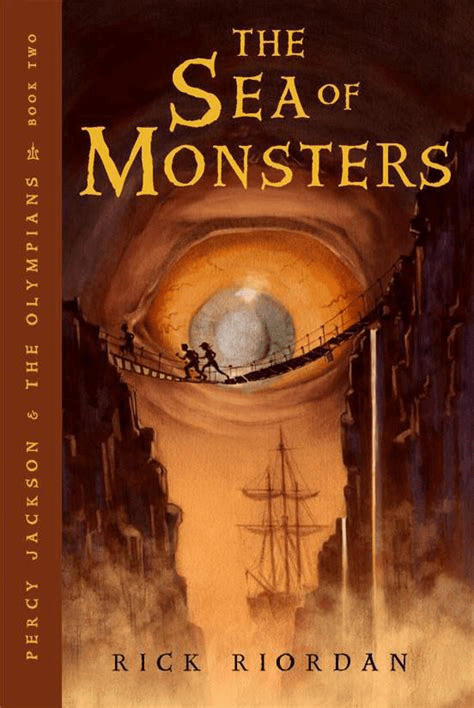
The Sea of Monsters, Rick Riordan
a Percy Jackson book: fun, woke-ish, O.K.
July 2026
The Siren Song, Anne Ursu
a better Rick Riordan
in process
The Letters to the Corinthians: Revised ed., William Barclay
What better time to read a commentary on Paul’s letters to the new church in Corinth?
yet to read
The Bull from the Sea, Mary Renault
sure to be demanding but good
yet to read
The Curse of King Midas, Colleen M. Story
I started this, but it just was not the time for it.
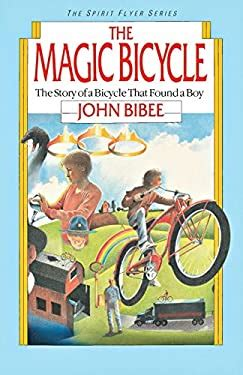
I remembered that, when I was a kid or a tween, my family got ahold of this series, the Spirit Flyer series. This is the first one. It was published by InterVarsity Press, in 1983. You can see that the cover art style is very 80s. It’s reminiscent of the Choose Your Own Adventure books, which I also loved. The kid’s hair is late 70s/early 80s American hair. The art style is realistic, not exaggerated to make the characters look like elves or superheroes or something. The elements in the scene sort of float randomly around in it, a barrage of impressions, like of the old school pictures they used to sell our parents where there was an in-focus view of the kid smiling at the camera, and in the background, a large, soft-focus view of the kid staring wistfully off into the middle distance.
This is not me, but it might as well be.
Anyway.
I remembered that this series was really good. It was written from a Christian perspective, but not nicey-nice Christian. There was a sense of menace that grew from book to book, as a town was taken over by some kind of evil organization. I remembered it being almost like That Hideous Strength for kids.
Recently, whilst at my parents’ house looking for a different book, I saw this and decided to give it a re-read. Long story short, it’s as good as I remembered. It is an earnest book. The action unfolds slowly at first. In the first few chapters, John (the main character’s name — this book doesn’t shy away from cliches) trash-picks an old bicycle at the dump and fixes it up. He’s an 80s kid, which means he seems very independent and capable to us today. The process of fixing up the old bike over a period of about two days is described methodically. Meanwhile, John is dealing with a best friend; neighborhood bullies; and a stepfamily with whom he lives after his parents died in a car wreck: a strict, no-nonsense uncle, a self-effacing aunt, and three girl cousins, the oldest of whom is very kind.
When bad things start happening, the symbolism is super obvious, but the narrative is unapologetic. There is a huge black snake apparition with red eyes. There is a human villain, seemingly nice but possessed of a creepy grin, who later shows up with “the face of someone dead–a pale shriveled mask of a face with its teeth bared, snarling like a rabid dog.” (131) A strong smell of something dead often accompanies them.
As you can see from the quote above, the writing is earnest too. The Magic Bicycle is written simply, as appropriate for middle grade, but not fatuously. Bibee isn’t afraid to use time-worn phrases (“like a rabid dog”), but they do not come off as lazy because he has something to say and his story is going somewhere. His book reminds me of C.S. Lewis pointing out to young writers that “if you just say what you want to say, without caring twopence about how often it has been said before, nine times of ten you will find yourself becoming original without really trying.”
Cyberpunkgirl recommended Anne Ursu’s Greek-mythology-inspired middle-grade books, after I gave a tepid review of a Percy Jackson book. Not too long afterwards, I found myself at the bookstore, remembered Ursu’s name, and looked her up. Sure enough, they had all the Cronus Chronicles except for the first one. (Why do bookstores do this?) So I got #2, The Siren Song.
I really enjoyed it. While clever and funny, it is somehow more sweet and sincere than the Percy Jackson books. Charlotte is very believable as a spunky, stubborn, impulsive 13-year-old girl. I also liked that it is written in the third person limited (usually from Charlotte’s perspective but occasionally from the perspective of one of the villains, or of her cousin Zee), and in the past tense. Books written in the first person, especially in the present tense, are the bane of my existence most of the time.
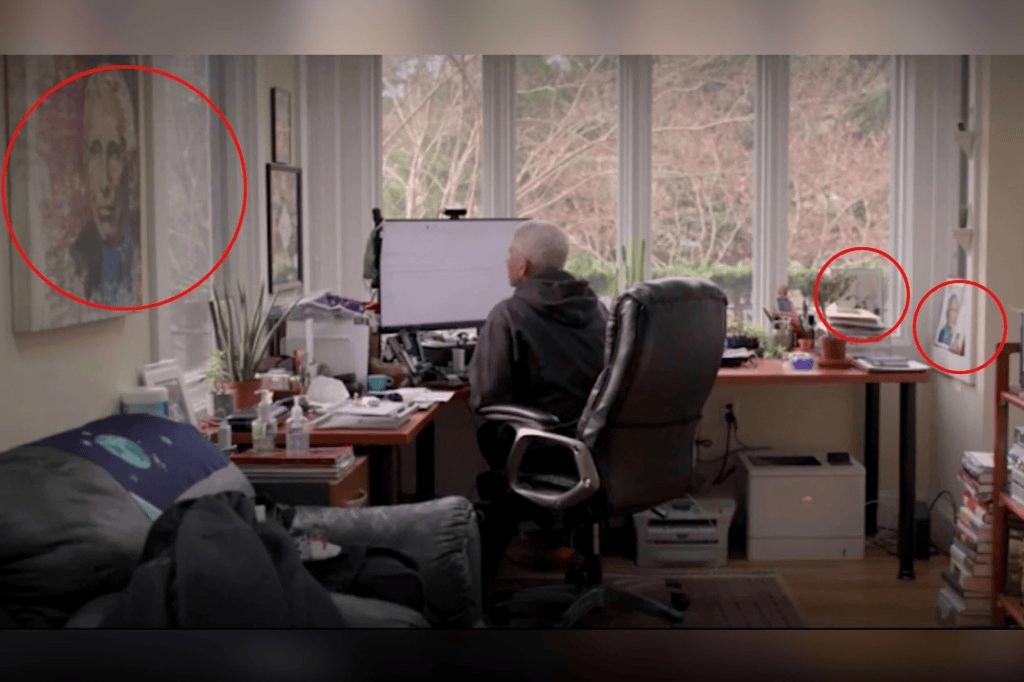
In this book, Charlotte tangles with Poseidon. He is extremely self-involved (as we would expect of a god), and has images of himself all over his magical yacht, from mosaics to murals to his face on furniture and light fixtures. Which reminded me of something …
Ahem. Anyway.
My favorite character had to be Sir Lawrence Gaumm, a true English gentleman, and no, I won’t tell you what species he was, but he was delightful.
The governor of California … was truly a strange mix–he was canny when it came to his personal options and the main chance, and he was a superb politician, and this was welded onto–in an uneasy seam–the fact that he was an economic nincompoop.
Not only was he personally shrewd with his own money, and clueless with regard to finances at whatever transition point it turns from “money” to “economics,” but he was also an ugly man. But this ugliness–of the plain kind, not the grotesque freak show kind–was combined with uncanny amounts of personal charisma. He could talk virtually anybody into virtually anything, and this was a function of that charisma sloshing out of him whenever he made any sudden moves whatever.
He knew how to add and subtract. But, to underline it again, when it came to money on the loose, money in the pockets of others, and particularly when it came to money that corporations had mysteriously obtained, or the smaller reserves of the upper-middle-class taxpayer, he hadn’t a clue. He thought of public money as coming from a limitless aquifer of funds deep beneath their feet. Those who opposed him were obstinate and stiff-necked people who inexplicably did not want to pay a modest amount to install a new well and pump.
The ventures that remained in California kept going bust for some reason, and this was invariably attributed to “bad luck.” His ignorance of how this kept happening to the same kind of people was sincere, although it was also culpable. He should have known better. He had gotten through college. He had also had a driver’s license for decades.
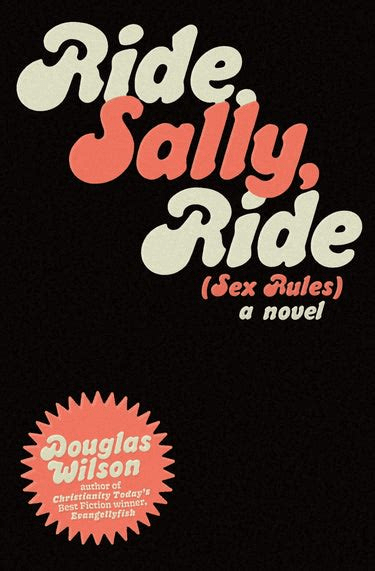
–from Ride, Sally, Ride by Douglas Wilson, taken from pp. 107 – 111
Here it is, advertising my book The Great Snake. Out of all my books, TGS is probably the best beach read, because it’s the shortest and takes place mostly in a subtropical setting. There might still be time for you to read it before the end of summer! Just saying!
Benson was not an unintelligent man, but he was a simple man. [His son] Ace was much quicker, and more widely read, and Benson had been aware of that gap for about five years now. Whenever he began his cautions against intellectualism, he knew how lame it sounded. He didn’t like it, but didn’t know what else to do, or say.
After their conversations, Ace would be unsettled too, but for different reasons. He would work through the arguments again in his mind, and could not see any alternatives to the way he had gone. And he was constantly mystified by the things his father would say and then go and do. The arguments were watertight, and his father’s thinking was not watertight.
And yet, now … an irrational desire to be irrational went over his head like a wave. He knew he had no moves. If he just surrendered, all would be well. If he continued to struggle, there would be nothing but … well, nothing but struggle. Struggle in every direction. A world of struggle.
–Ride, Sally, Ride, by Douglas Wilson, pp. 85 – 86
The gist of this book is that history moves in seasonal cycles. The authors spend a lot of time talking about how expecting seasonal cycles in history is the wisdom of the ancients, and that this has been lost to a linear conception of time that came from Christianity and got even more exaggerated during the Enlightenment. Linear time leads people to expect that things will just keep getting “more so;” that the future will look like an extrapolation of the recent past. As a result, people never expect a turn of history coming, and are always gobsmacked when it arrives.
As they urge readers to accept a cyclical view of history, the authors go slightly overboard and make it sound as if we should worship the circle. They point out circular symbolism in various myths. They say that a cycle is associated with the number four and feminine energy, whereas a line, or triangle, is associated with the number three and masculine energy. While this is not wrong, they then make it sound as if the idea of history as a line, moving in a particular direction, should be rejected and has nothing to offer us.
It’s not a big part of the book, but it is foundational and I found myself trying to integrate their view before I moved forward.
Should We Worship the Circle?
I believe that much of the symbolism they describe is correct. (Not all of it is, since the authors tend to cast a really wide net throughout history and literature, and then throw into the book anything they drag in that looks superficially similar to their thesis. But much of it is.) Seeing history as inescapably circular is an ancient, pagan way to view the world. And it does reflect something about the nature of humans and of creation. However, uncorrected, it tends to leave people fatalistic and trapped in the cycle. Exhibit A would be Hinduism. Christianity did indeed break people out of this endless treadmill by presenting a picture of history where the end is not like the beginning, where history moves in a definite arc or story from creation to fall to redemption to glorification. Of the many things that Christ did on the Cross, He broke us out of the endless cycle. That is why history fundamentally changed after His death and resurrection. You get different types of people, who think in different types of ways, and you get cultures that are Christianized developing in very different ways than any culture before them. Of course, one downstream effect of all this was that it made possible the Enlightenment, materialism, and what C.S. Lewis calls “the fatal serialism of the modern imagination.” These things aren’t good, but to put this in perspective, blaming them on Christianity is sort of like blaming your parents because you scraped your knee while you were on a trip that they took you on to Disneyworld.
Here’s how G.K. Chesterton put it:
As we have taken the circle as the symbol of reason and madness, we may very well take the cross as the symbol at once of mystery and of health. Buddhism is centripetal, but Christianity is centrifugal: it breaks out. For the circle is perfect and infinite in its nature; but is fixed forever in size; it can never be larger or smaller. But the cross, though it has at its heart a collision and a contradiction, can extend its four arms forever without altering its shape. Because it has a paradox at its centre it can grow without changing. The circle returns upon itself and is bound. The cross opens its arms to the four winds; it is a signpost for free travelers.
–Orthodoxy, p. 32
So, yeah. Although in the big picture, history is linear, cycles of development do still exist, both in human lives and in human societies, and we would do well to remember that and work within our nature.
The Seasons of a Saeculum
Briefly, they assert that history moves in cycles of just over or just under 100 years. These, they call a saeculum, following the Roman word for it. The seasons are:
Spring / A High: A time of building, strong families, and strong social cohesion
Summer / An Awakening: A time of spiritual revolution led by idealistic young people
Autumn / An Unraveling: A time when the values of the Awakening are applied to changing society, and things start to fragment
Winter / A Crisis: A time when the society is threatened by a series of shocks that often include war
(Fun fact, if you are into personality typologies, you can also make these seasons match the Four Humors: Sanguine, Choleric, Phlegmatic, Melancholic.)
Each season takes roughly 20 to 25 years. Each one causes the next.
The authors also identify four generational “personalities.” The personality of each generation is determined based upon their experiences in childhood and young adulthood. In what conditions did they grow up, and when did they come of age?
If you came of age during a Crisis, your generation is the Hero type: the can-do ones, prone to hubris.
If you came of age during a High, your generation is the Artist type: passive and conformist.
If you came of age during an Awakening, your generation is the Prophet type: fiery and moralistic.
If you came of age during an Unraveling, your generation is the Nomad type: neglected and cynical survivors.
Armed with these thought tools, you can now make applications.
The Applications
I appreciate the authors for not claiming too much for their rubric. First of all, they point out that these cycles are not precise in the time they arrive. This is an organic cycle, like the seasons. Some years, you might have a cool summer or a mild winter. Sometimes, seasons are delayed beyond what is usual. For example, the authors have a series of detailed charts in which they apply this rubric to American history. They say that during the Civil War, the Crisis came fast and didn’t last the usual 20 years. As a result, the cycle was shorter. That saeculum skipped the Hero generation. It went straight to the Artist generation of traumatized conformists.
Another helpful thing they say is that this year-like cycle in human history does not cause random events. There is still such a thing as chance, and as human will. However, a society’s reaction to events is heavily influenced by what season they are in. The United States did not immediately enter WWI after the sinking of the Lusitania, because we were in an Unraveling period. But we did immediately mobilize for war after the attack on Pearl Harbor, because we were now in a Crisis.
Finally, this cycle of history is not equally prominent in all societies. Because it has to do with changes in public attitudes, fashions, values, and child-rearing practices, in very traditional societies the cycle is muted. One generation is much like the last. When a society throws off tradition and allows its citizens a lot of social mobility and freedom to make their own choices, ironically that is when the cycle becomes a large factor in that nation’s history. It is for this reason, say the authors, that these seasons are particularly easy to spot in the United States.
It can be difficult to spot seasons of history in past societies (beyond speculation) when we know relatively little about them. Sometimes it’s pretty clear, as when we look at the cycle of idolatry-oppression by enemies-repentance-deliverance found in the book of Judges. We can also find many historic diatribes (probably written during an Unraveling) lamenting the loss of civic virtues.
O.K., so, with those caveats, if you are an American, you have probably been applying this rubric to the last hundred years in our country, which is super easy to do. Here we go:
Crisis: Wall Street Crash of Oct. 1929 through the end of WWII. Coming of age: the Great Generation, or what the authors call the G.I. Generation.
High: Late 1940s to early 1960s. Coming of age: the Silent generation. Beatniks.
Awakening: the “Consciousness Revolution,” late 1960s to early 1980s. Coming of age: the now-much-maligned Boomers. Hippies.
Unraveling: late 1980s to early 2000s. Coming of age: Generation X, or what the authors calls 13ers. Slackers.
The Great Generation are Heroes, the Silent are Artists, the Boomers are Prophets, and the Xers are Nomads. Tag yourself. I’m an Xer.
When It Doesn’t Fit Exactly
Now, how do we define a “generation”? It usually works out that once every 20 to 25 years, there is an identifiable new crop of young people. Hero and Prophet generations tend to be bigger, because of what’s going on around the time they are born. Hence, the Baby Boomers are Prophets. Artist and Nomad generations tend to be smaller, because they were born during a time when adults had other things on their minds (the Crisis or the Awakening).
Also, of course, the generations in a nation don’t necessarily fit with the generations in a given family. The authors point out that, often, it takes one big generation more than 20 to 25 years to reproduce, so that, for example, the children of Heroes are Prophets. The Prophets react against what their parents’ generation valued, but they get along better with their grandparents (also Prophets).
Here’s another example. My parents are Boomers. Now, the Boomer culture was rather anti-baby, anti-family, anti-settling down. However, my folks were not typical Boomers. They swam against the tide. They had six children, and my mom stayed home with us when we were small. They tried to raise us in a very pro-family way. So I was shielded from many of the things that my fellow Gen Xers had to deal with, growing up in an environment where kids were considered to “trap” their mothers, or with parents who divorced or went off to “find themselves.” However, I did pick up on the Gen Xer vibe of living in an unravelling society, being blamed for everything from racism to pollution to the hole in the ozone layer. When I read this line,
[O]ne student mockingly tells his friends in River’s Edge: “You young people are a disgrace to all living things, to plants even. You shouldn’t even be seen in the same room as a cactus.”
-p. 195
… I laughed. The fact that I found this funny, tells me that I am a true Gen Xer.
So anyway, I am a younger Xer. But because my parents had a large family, I have younger siblings who are Millennials (supposed to be the Hero generation; more on this later). Meanwhile, my husband’s parents are Silent generation (Artists). My husband has older siblings who are Boomers, and he is an older Xer. And because we waited a while to have children, our own children are … I guess … Zoomers? Who are supposed to be Artists? Or maybe Alphas? Who … I’m not sure what they should be, because this Crisis seems to be extending. Again, more on this later.
The Predictions, Accurate and Otherwise
The Fourth Turning, published in 1997, predicted that beginning around or shortly before 2005, America would enter a Crisis. There were a variety of things they thought could happen:
States secede or try to secede over federal taxes, causing a Constitutional crisis
“A global terrorist group blows up an aircraft and announces it possesses portable nuclear weapons.”
A government budget crisis leads to a government shutdown and a Wall Street crash.
A “new communicable virus” leads to quarantine, which local areas resist, leading to martial law.
War with Russia and Iran.
All these are taken from pages 272 – 273 of the book.
So where are we at now? Something that takes 25 years of your life might be too big to see, but I suggest the following. America’s Crisis era started on Sept. 11, 2001, with an unprecedented kind of terrorist attack, which led to big curtailments of freedom like the Patriot Act and the creation of the TSA, and to a number of wars. Then we had a housing market crash and financial crisis in 2008. Meanwhile, there were a series of incidents that, helped by agitators, caused riots in our cities. Police departments responded by being less active, and crime soared. People started to get freaked out, which led to the election of 2016 (nations tend to turn to a “strongman” in a crisis), which caused more people to freak out. The Crisis reached its climax in 2020 – 2022, with you-know-what.
So counting from Sept. 11, 2001, we are almost exactly 25 years into this Crisis era. According to the authors’ rubric of how these seasons usually go, we should be coming out of our Crisis soon, into either a new High with regenerated values, prosperity, and social order, or else into the total destruction of our society.
Which one do you think is happening? For me, I’m not sure. I see elements of people building new values and communities, but I don’t see any national consensus on these things. Nor do I particularly see signs of the Crisis ending.
To prepare for the Fourth Turning, the authors in 1997 recommended that individuals and families do the following:
“Return to the classic virtues.”
“Do not isolate yourself from community affairs.”
“Build personal relationships of all kinds. Face-to-face contacts … will become newly important.”
“Prepare yourself and your children for teamwork.”
“Maintain relationships of trust with your extended family … your household will function best if it is multigenerational.”
“Gird for the weakening collapse of public support mechanisms.”
“Generalists with survival know-how will have the edge over specialists who skills are useful only in an undamaged environment.”
These are all taken from pp. 318 – 321 of The Fourth Turning.
These are steps that are being, and have been, taken by many who think of themselves as preppers. and by people who are working and hoping for a cultural renaissance. I’m most familiar with those who are doing this within Christian circles.
The only blind spot that the authors seem to have is that they incurably think of the “teamwork” and “coming together” that must take place during a Crisis, as a national affair. They say “we” while thinking primarily of the national government. In the section on “preparing your children for teamwork,” they suggest not pulling your children out of government schools “if the schools are working.” While I have seen many people doing community building throughout this crisis, one thing I have not seen is a newfound trust in, or willingness to comply with, the federal or even in most cases the local governments. People have been coming together in “teams” to found and maintain private schools and other things like that, but not to join federal programs.
O.K., now for the predictions that didn’t prove to be so prescient.
Any book that makes this many predictions (even in general terms) is going to result in some howlers. For example, here’s the authors’ prediction about how the Silent generation would handle Social Security entitlements:
… America’s rising familiarity with the Silent elder persona will erode today’s support for across-the-board senior benefits. Unlike G.I.s, the Silent will not feel entitled. Their prior public deeds will not inspire them (or others) to lobby for a vast elder reward. … [The Silent’s] sense of guilt and instinct for compromise will compel them to give in some, relax their claims on young workers, and drain the electricity out of the third rail of Social Security politics.
— ibid, pp. 220 – 221
This — how to put it?– emphatically did not happen. I have heard with my own ears Silent generation members say, “We paid into the system for a lot of years. Now we need to get out of it.” When you set up a Ponzi scheme, no one wants to be left holding even a little bit of the bag.
They make a similar prediction about Boomers:
When the market hits bottom, millions of Boomers … will immediately have to make do with steeply diminished material consumption. Many will have no choice but to live communally or with their adult children… public spending on elder benefits will necessarily decline. … Congresses will debate massive cuts. To maintain G.I.-style elder dependence on the young, Boomers would have to wage political war on their coming-of-age Millennial children. It is a war they will not wage–and would not win if they did.
ibid, p. 284
Now, the retirement age has been raised, but other than that, I have not noticed any “massive cuts.” And from my observation, Boomers as a group have been perfectly happy to wage political war on Millennials. And they have won it, by convincing Millennials that the solution to their financial woes is more taxes and entitlements, not just for older people but for everyone.
I have not noticed a trend of Boomers moving in with their adult children, either. In the first place, they, not their children, are usually the ones who own homes, a situation brought about by entitlement policy applied to housing. In the second place, their children are often alienated Xers, and relationship isn’t the greatest (present company excepted). Finally, some Boomers I know are effectively the caregivers for their grandchildren.
In short, the collapse of the Social Security/Medicare system has come about more slowly than Strauss & Howe (or, frankly, I) expected. As an Xer, I did not expect to be able to retire, and maybe I still won’t, but my husband is approaching the age when he can start withdrawals to give us some breathing room, and there has not yet been a nationwide apocalypse. Color me surprised.
One more howler:
As they break into their twenties, Millennials will already be accustomed to meeting and beating adult expectations. Basking in praise… they will seek out [their elders’] advice … Every youth domain will become more mannerly, civic-spirited, and emotionally placid. In college, Millennials will lead a renaissance in student decorum and appearance, making profanity as out of date as the backward cap. … On the job, Millennials will be seekers of order and harmony. They will delight employers with their skills, work habits, and institutional loyalties. … Millennials will respond [to economic hard times] with a cheerful patience reminiscent of Depression-era G.I.s.
ibid, pp. 293 – 294
Look, I’m not here to slam on Millennials. I actually have a lot of sympathy for your generation. But there is no way this general picture describes the way things have gone with the Millennial generation.
Strauss & Howe are predicting that the Millennials will emerge as a Hero generation, because that’s what his historical scheme calls for. But this requires a lot more strength and resilience than Millennials, as a group, entered young adulthood possessing.
The authors did not foresee that Millennials would have been intentionally weakened by a number of cultural trends which were pushed on them by earlier generations. These include behavioral meds, and overpraising/participation trophy culture combined with identity politics culture, which gave complimentary messages that, on the one hand, you are so amazing and talented and don’t need to work to improve yourself, and on the other hand, you are a victim of history and society. Each of these messages is weakening; in combination, they are devastating. There is also the horrible sexual confusion that has been foisted upon the Millennial and Zoomer generations. This draws on the power of identity politics (being a sexual minority is an easy way to obtain an oppressed identity), and on the behavioral meds culture (giving powerful new medications in response to emotional distress).
What generation could emerge from such a gauntlet unscathed? It is no exaggeration to compare all these horrors to WWI, which wiped out a generation of young people and traumatized the survivors. These are not conditions that cause young people to “meet and beat adult expectations” in the positive sense, nor to “delight their employers.”
Perhaps Millennials are a Hero Generation in a new sense. If they are functional at all, it’s because they have won through an intense spiritual war. Perhaps we should think of them as veterans. Like veterans, they certainly bear mental and physical scars. But instead of coming back from a physical war and plugging into an existing social structure, they are having to re-invent the wheel in all the most basic domains of life: schedules, self-care, family.
And quite a few Millennials are a “Hero Generation,” itching for action, in the sense that they are committed Marxists who want to see the violent overthrow of society.
Others, like my younger siblings, are more like the G.I. generation after WWII, eager to get married, raise children, contribute to their communities, and build a wholesome cultural high.
The fact that we have Millennials going in these two very different directions makes me rather uncertain about how this Crisis is going to go.
I wonder whether what we have seen is what the author predicted on page 302:
If [the Crisis] ends badly, Millennials would bear the full burden of its consequence throughout their adult lives. If they come of age traumatized, like the Progressive youths of the Civil War, Millennials will thereafter attend to the details of suffering and healing as heirs to the Artist archetype.
It seems to me that our Millennials are behaving more like a “sensitive Artist” generation than like a “hubristic Hero” generation. This would mean that, as with the Civil War, America had once again skipped the Hero generation and gone straight to Artist.
The Prophet, born in the High, seeks vision; the Nomad, born in the Awakening, seeks realism; the Hero, born in the Unraveling, seeks power; and the Artist, born in the (prior or current) Crisis, seeks empathy.
p. 322
Reader, I Read-ed It
So, that’s the outlines of the book plus a few of my thoughts on it. Obviously, there is a lot more material in there. Some of it is really interesting (the parts that apply the seasonal rubric to the past). Other parts feel dated (ironically, the parts written in the future tense). Read it if you’re curious and want to know more. Meanwhile, what do you think? What generation are you? What do you want to do in the coming High?
O.K., I’ll just say it. Douglas Wilson is a great theologian/expositional preacher, he seems to be a highly competent counselor, and he is an excellent polemical writer. He is not an excellent novelist.
He is just an okay novelist. I will explain.
Ride, Sally, Ride was published in 2020, which means it was being written in the 20-teens, pre-Covid and pre-George Floyd riots (though not pre-Ferguson and a lot of other riots). It is set in the late 2030s, in a somewhat dystopian setting.
A Little Bit of Orwell
In this setting, the United States is not officially fragmented, but almost. On the Left Coast and the East Coast, you have blue states, which is what we Americans call politically leftist states, with increasingly draconian laws outlawing hate speech and enforcing the rainbow. In the middle of the country, you have red states, which is what we Americans call politically conservative states, also known as “free states.” The free states have been able to survive economically, despite not having access to the East and West Coasts, because they have really developed their natural gas, oil, and grain production, and they still have the Mississippi River. They are able to ship their products down this and out into the Gulf of Mexico (as I still call it). So, in Ride Sally, these United States are not quite separate “states” (read: countries) yet, but they are in the middle of a slo-mo breakup.
Wilson didn’t foresee the Covid debacle, but his characters make frequent references to “the Troubles of 2024,” which seem to have been widespread unrest leading to widespread legal changes.
Most of the action in Ride Sally takes place in Colorado. It (but not Wyoming) is part of the blue, Diversity Gestapo bloc that also includes Washington, Oregon, and California. Americans will recognize this as plausible. Not only have gay marriage, polyamory, and porn been legalized and widely promoted in these states, but so has the sale of “sex bots.” You can order them online for a few thousand dollars, and they can be programmed to say whatever you want.
A Little Bit of Old Testament
Our hero, Ace (short for Asahel) is a twentysomething living with his parents while he attends university. His parents are Christians, but they are sort of cowardly and compromised, as is their church, which is the only reason they have been able to go on living in Colorado. Ace, on the other hand, has been reading Puritan theology (outlawed as hate speech) on the dark web, and has grown into a fine young man. Their last name is Hartwick.
As our story opens, the Hartwicks have a new neighbor. Their new neighbor has a wife, “Sally.” Sally is a sex bot.
The new neighbor introduces Sally as if it were a real person. The Hartwicks are maneuvered into inviting the “couple” over for dinner, at which the neighbor speaks to the bot as if it were a person and eats off its plate to make it appear that Sally has finished her meal. It’s creepy, though it could have been creepier if this were a horror story, which it’s not.
The next day, neighbor asks Ace to go “look in on Sally” while neighbor goes to pick up a package (which turns out to be another bot). He tells Ace this would be “the right thing” to do. Ace, also determined to do the right thing, but in a different way, goes over to the neighbor’s house and sees Sally posed seductively, in an obvious setup. He helpfully puts a t-shirt on the doll, takes it over to the recycling center where he works, and crushes it in the trash compactor. All of this takes place in the first chapter. The rest of the book deals with Ace being put on trial for the “murder” of the neighbor’s “wife.”
And a Little Bit of Wodehouse
The trial unfolds through a series of zany, madcap events. There are slimy lawyers. There are conniving governors. There are riots, conversions, and assassination attempts. There is a refugee from an Amish community. There are crossed wires and mixed signals galore.
Many of the plot points turn on one of the Team Sanity characters causing mayhem at strategic moments. Example: a slimy lawyer is about to hold a press conference where he will trot out a false accusation of rape against Ace from a would-be influencer who knew him slightly in high school. The press conference is totally derailed when another woman, watching in the crowd, yells out, “Then why did you molest me, Dwight?” as soon he says “believe all women.”
In short, this book, besides being a dystopia, also sort of wants to be a P.G. Wodehouse comic adventure.
So, Douglas Wilson, you have tried to combine 1984 with P.G. Wodehouse, with a little bit of Stepping Heavenward. How did it go?
This reader’s verdict is that it was mixed. The absurdity of the Diversity Gestapo laws certainly do lend themselves to Wodehouse-like hijinks on the part of Team Sanity. When the establishment has no category for objective truth, this creates a quite a few loopholes. For example, at one point Ace’s defense attorney makes a motion that the jury have at least three sex bots on it. They cannot be programmed to vote guilty or innocent, of course, as that would constitute jury tampering. This is a stroke of brilliance worthy of Jeeves near the end of one of the Jeeves and Bertie books.
However, one of the things that makes the Jeeves and Bertie books so fun is that the stakes are always so low. Will Bertie’s uncle to get to purchase the coveted antique that he’s had his eye on? Will Anatole, Bertie’s aunt’s temperamental but genius cook, quit, leaving the family without good food to eat? Will Bertie be forced to marry the soppy and naive Madeline Bassett, or will she end up with the man who really loves her, i.e. Augustus Fink-Nottle? Whenever Bertie or one of his friends are in danger of being jailed, it’s not for murder, it’s for something like “stealing a policeman’s helmet.”
The stakes are a lot higher in Ride, Sally, Ride, which makes things a little less funny. Yes, it is possible to write about life-or-death situations in a comedy, but we must not be seriously concerned that disaster will befall the protagonists. Whereas in a dystopia, we should. Furthermore, the stakes in Ride, Sally don’t only involve whether Ace will be unjustly jailed by the state of Colorado. There are quite a number of potentially heartbreaking, messed-up family situations also on the line. These are resolved, in this book, in the same way that interpersonal misunderstandings are resolved in a Bertie and Jeeves novel, which is just frankly weird. It gives the reader the feeling, as Bertie would say, “that you get when you step on the top step and it isn’t there.” If we were reading 1984, we would not expect Wilson and Julia to hash out their mutual betrayal in one heart-to-heart talk.
Douglas Wilson Can’t Write Dialogue
I’m sorry, but he just can’t. His narrative is brilliant. It’s funny, satirical, and extremely quotable. He does sometimes get a little bit lost in the satire at the expense of moving the story, which is not something that usually happens with Wodehouse. He also sometimes neglects to inform the reader, at the beginning of a scene, where this scene is taking place, or what the protagonists look like. For example, we have to wait until the end of the book to find out that the defense lawyer’s wife is a ginger with hazel eyes, tall, and with a full figure. It would have been nice to know that the first time we met her. But this is a flaw for which I have criticized many other authors.
But anyway, back to the dialogue. It stinks. All of the characters talk, to greater or lesser extents, just like the narrative voice. The only exceptions are the woke characters, when they are spouting boilerplate woke stuff. They do that pretty well. And, I’m not saying the dialogue is consistently bad. There are certainly moments when a character says something, and it sounds like a real American person talking. The last line, for example, is great. But for the most part, the characters speak in sentences that are way too complete and way too complex. They sound like they were composed, not blurted. And this is true even in moments of great emotion. When they do get off a funny, half the time it’s British sounding, like the original P.G. Wodehouse.
Look, Bertie is a British character, so he can sound British, even when he is being a dip. But if you want to write an American dip, they should sound like one. Ace’s false accuser is portrayed as being not very bright … but you wouldn’t know it from her speech patterns. Another character, Sarah, left her Amish community just about a month ago, but she says to another woman, “You, my dear, are gorgeous.” Amish people don’t say stuff like that. This is not difficult. I mean, it would not have been difficult to research just a little bit. Go talk to an Amish person, or even just a Mennonite, or even just somebody with German heritage, and take a few notes on their speech patterns.
But that wasn’t Wilson’s priority. He has a lot of irons in the fire, and my impression is that he wasn’t trying to write a book with good dialogue. He wanted to write a rip-roaring satire with a quick-paced plot, and he did. He probably wasn’t going for Great Literature. (And to be fair, P.G. Wodehouse is Great Literature, in his own special way. So maybe it’s not fair to expect Wilson to write fiction as well as Wodehouse.)
Perhaps this inconsistent-dialogue thing would not bother some readers, but in addition to writing fiction, I read a lot of it, and as for this reader, it drove me crazy. I did finish the book, but that problem nearly ruined it for me.
Characters. Should. Talk. Like. Real. People! The end.
The Stepford Wives, and some Spoilers
Brian pointed out in the comments that creepy-sexbot-as-horror-story has been much better done by the original Stepford Wives. He is right. In fact, these two pieces of literature (?) are using the same trope to critique two different things. The Stepford Wives was asserting that having a middle-class, two-parent family living in suburbia is dehumanizing to women, and Ride Sally is asserting the same thing, but about the every-kind-of-sexual-desire-is-sacred value system.
Although Ride Sally is a worse-written book, I think it makes a better case. Here are some spoilers. Near the end of the book, it turns out that Neighbor is a serial sex-bot buyer. Every few months, he finds something that his “wife” has done wrong. He then destroys her and replaces her, because she was a “bad wife.” From this point of view, it becomes clear why Neighbor set up Ace to avail himself of Neighbor’s “wife.” He was also setting up Sally. He had already ordered another “wife,” and his plan was to come home, find Sally “committing adultery,” and get rid of her.
To be honest, I find this portrayal more realistic than in Stepford, where the “wives” live with their husbands for years, just like a regular wife. Men who do not have their impulses directed to something godly, the kind of men who would buy a sexbot, are unlikely to be content with the same Sally year after year. Because what they want is not really a wife.
At one point in Wilson’s novel, a researcher reveals that the sexbot companies keep data about all the units they sell. The average bot has been used a total of only three times. I know this is fiction, but that fictional stat rings depressingly true. Because whatever users are doing with a bot, it cannot be called having sex. That requires two actual people. So users are bound be disappointed.
The psychology is solid. But the development and execution of all these different plotlines is lacking. It’s a shame. It makes me wish that someone else had written this book.
Last year, I taught Ancient History to a group of third, fourth, and fifth graders.
One pair of brothers in my class were very knowledgeable, and very enthusiastic, about the Greek monsters, myths, and pantheon. This was great. Some of their “knowledge” was a little overly specific, however. They gave me to understand that they had learned all this from reading the Percy Jackson books, which were so good and I really ought to read them.
So, when I decided to spend a year reading Greek-mythology-inspired fiction, I added “at least one Percy Jackson book” to my reading list.
The library had a bunch of the Percy Jackson series, but curiously, not the first one. So I checked out books #2 and #3. Sea of Monsters is #2 in the series.
Having read it, I get the idea. It was enjoyable enough, but I don’t feel the need to read any more of them.
Riordan has done some nice, internally consistent worldbuilding where the ancient Greek gods, monsters, and even locations, move around the world depending upon where the center of Western Civilization is at the time. So, in the Bronze Age, they were based in the Mediterranean. Now, in modern times, they are based in and around New York City (with the ocean conveniently nearby). The titular Sea of Monsters, which used to be the entire Mediterranean, is now (spoilers) the Bermuda Triangle.
Percy (short for Perseus) Jackson is a son of Poseidon, who lives with his mother in New York City. During the summers, he attends Camp Half-Blood, a training camp for children of the gods. It is staffed by the centaur Chiron (who, in the original myths, trained Achilles — very appropriate). In this book, Chiron has been fired, and one of the camp directors is Tantalus. Tantalus spends the entire book chasing pieces of food (donuts, burgers, etc.), which flee from him so that he never gets to take a bite.
We also meet Hermes, a fit, middle-aged man in a jogging suit, whose caduceus has been transformed into a cell phone around whose antenna twine two small green snakes by the names of George and Martha.
You get the idea. The book is a lighthearted blend of ancient Greek characters with modern technology, slang, and what is supposed to be teen culture.
Like many books that are supposed to be relatable for tweens, it’s told in the first person. There is some generic slang (“Dude!” etc.), and many of the adult authority figures are clueless and/or careless about the teens’ well-being. These are the pitfalls of such books. The use of technology and slang runs the risk that the books will not age well. The portrayal of the adults, while it might facilitate the requisite adventure, does not encourage respect. Surely, there could be ways for the author to show teachers that actually care about their students, and still get Percy away from the camp and off on his own.
As a teacher, I’m also concerned about the portrayal of bullies in Percy’s private school in New York City. The idea that there is a vicious hierarchy in middle- and high- school is definitely a Hollywood trope. I’m sure this is true in some places, but in the schools I’ve been in (both as a student and teacher), the successful, “popular” kids were mostly very kind. Kids who are less socially adept (like I was) tend to be fearful and envious, and project their feelings of inferiority onto the “popular” kids. Stories like this are not helping them gain social confidence or believe the best about others’ intentions, as we are told to do in I Corinthians 13.
This book had some poignant moments, especially near the end, but the author kept it mostly lighthearted. The series is clearly building towards some big showdown, having to do with a plot by Kronos. If I didn’t have such a long reading list, I might finish it.