
The pursuit of truth and justice is not for the faint of heart. Whether it involves a personal conflict, an ecclesiastical conflict, or a civil conflict, there are many points where the temptation to cave in or retreat is significant. It takes real courage to fight for justice. No good deed goes unpunished. Parents, pastors, and judges can be, and often are, cowards in the face of conflict. The pursuit of justice can be costly.
-A Justice Primer, 3rd ed., by Wilson & Booth, p. 202
Tag: cognitive science
Ride, Sally, Ride: A Book Review

O.K., I’ll just say it. Douglas Wilson is a great theologian/expositional preacher, he seems to be a highly competent counselor, and he is an excellent polemical writer. He is not an excellent novelist.
He is just an okay novelist. I will explain.
Ride, Sally, Ride was published in 2020, which means it was being written in the 20-teens, pre-Covid and pre-George Floyd riots (though not pre-Ferguson and a lot of other riots). It is set in the late 2030s, in a somewhat dystopian setting.
A Little Bit of Orwell
In this setting, the United States is not officially fragmented, but almost. On the Left Coast and the East Coast, you have blue states, which is what we Americans call politically leftist states, with increasingly draconian laws outlawing hate speech and enforcing the rainbow. In the middle of the country, you have red states, which is what we Americans call politically conservative states, also known as “free states.” The free states have been able to survive economically, despite not having access to the East and West Coasts, because they have really developed their natural gas, oil, and grain production, and they still have the Mississippi River. They are able to ship their products down this and out into the Gulf of Mexico (as I still call it). So, in Ride Sally, these United States are not quite separate “states” (read: countries) yet, but they are in the middle of a slo-mo breakup.
Wilson didn’t foresee the Covid debacle, but his characters make frequent references to “the Troubles of 2024,” which seem to have been widespread unrest leading to widespread legal changes.
Most of the action in Ride Sally takes place in Colorado. It (but not Wyoming) is part of the blue, Diversity Gestapo bloc that also includes Washington, Oregon, and California. Americans will recognize this as plausible. Not only have gay marriage, polyamory, and porn been legalized and widely promoted in these states, but so has the sale of “sex bots.” You can order them online for a few thousand dollars, and they can be programmed to say whatever you want.
A Little Bit of Old Testament
Our hero, Ace (short for Asahel) is a twentysomething living with his parents while he attends university. His parents are Christians, but they are sort of cowardly and compromised, as is their church, which is the only reason they have been able to go on living in Colorado. Ace, on the other hand, has been reading Puritan theology (outlawed as hate speech) on the dark web, and has grown into a fine young man. Their last name is Hartwick.
As our story opens, the Hartwicks have a new neighbor. Their new neighbor has a wife, “Sally.” Sally is a sex bot.
The new neighbor introduces Sally as if it were a real person. The Hartwicks are maneuvered into inviting the “couple” over for dinner, at which the neighbor speaks to the bot as if it were a person and eats off its plate to make it appear that Sally has finished her meal. It’s creepy, though it could have been creepier if this were a horror story, which it’s not.
The next day, neighbor asks Ace to go “look in on Sally” while neighbor goes to pick up a package (which turns out to be another bot). He tells Ace this would be “the right thing” to do. Ace, also determined to do the right thing, but in a different way, goes over to the neighbor’s house and sees Sally posed seductively, in an obvious setup. He helpfully puts a t-shirt on the doll, takes it over to the recycling center where he works, and crushes it in the trash compactor. All of this takes place in the first chapter. The rest of the book deals with Ace being put on trial for the “murder” of the neighbor’s “wife.”
And a Little Bit of Wodehouse
The trial unfolds through a series of zany, madcap events. There are slimy lawyers. There are conniving governors. There are riots, conversions, and assassination attempts. There is a refugee from an Amish community. There are crossed wires and mixed signals galore.
Many of the plot points turn on one of the Team Sanity characters causing mayhem at strategic moments. Example: a slimy lawyer is about to hold a press conference where he will trot out a false accusation of rape against Ace from a would-be influencer who knew him slightly in high school. The press conference is totally derailed when another woman, watching in the crowd, yells out, “Then why did you molest me, Dwight?” as soon he says “believe all women.”
In short, this book, besides being a dystopia, also sort of wants to be a P.G. Wodehouse comic adventure.
So, Douglas Wilson, you have tried to combine 1984 with P.G. Wodehouse, with a little bit of Stepping Heavenward. How did it go?
This reader’s verdict is that it was mixed. The absurdity of the Diversity Gestapo laws certainly do lend themselves to Wodehouse-like hijinks on the part of Team Sanity. When the establishment has no category for objective truth, this creates a quite a few loopholes. For example, at one point Ace’s defense attorney makes a motion that the jury have at least three sex bots on it. They cannot be programmed to vote guilty or innocent, of course, as that would constitute jury tampering. This is a stroke of brilliance worthy of Jeeves near the end of one of the Jeeves and Bertie books.
However, one of the things that makes the Jeeves and Bertie books so fun is that the stakes are always so low. Will Bertie’s uncle to get to purchase the coveted antique that he’s had his eye on? Will Anatole, Bertie’s aunt’s temperamental but genius cook, quit, leaving the family without good food to eat? Will Bertie be forced to marry the soppy and naive Madeline Bassett, or will she end up with the man who really loves her, i.e. Augustus Fink-Nottle? Whenever Bertie or one of his friends are in danger of being jailed, it’s not for murder, it’s for something like “stealing a policeman’s helmet.”
The stakes are a lot higher in Ride, Sally, Ride, which makes things a little less funny. Yes, it is possible to write about life-or-death situations in a comedy, but we must not be seriously concerned that disaster will befall the protagonists. Whereas in a dystopia, we should. Furthermore, the stakes in Ride, Sally don’t only involve whether Ace will be unjustly jailed by the state of Colorado. There are quite a number of potentially heartbreaking, messed-up family situations also on the line. These are resolved, in this book, in the same way that interpersonal misunderstandings are resolved in a Bertie and Jeeves novel, which is just frankly weird. It gives the reader the feeling, as Bertie would say, “that you get when you step on the top step and it isn’t there.” If we were reading 1984, we would not expect Wilson and Julia to hash out their mutual betrayal in one heart-to-heart talk.
Douglas Wilson Can’t Write Dialogue
I’m sorry, but he just can’t. His narrative is brilliant. It’s funny, satirical, and extremely quotable. He does sometimes get a little bit lost in the satire at the expense of moving the story, which is not something that usually happens with Wodehouse. He also sometimes neglects to inform the reader, at the beginning of a scene, where this scene is taking place, or what the protagonists look like. For example, we have to wait until the end of the book to find out that the defense lawyer’s wife is a ginger with hazel eyes, tall, and with a full figure. It would have been nice to know that the first time we met her. But this is a flaw for which I have criticized many other authors.
But anyway, back to the dialogue. It stinks. All of the characters talk, to greater or lesser extents, just like the narrative voice. The only exceptions are the woke characters, when they are spouting boilerplate woke stuff. They do that pretty well. And, I’m not saying the dialogue is consistently bad. There are certainly moments when a character says something, and it sounds like a real American person talking. The last line, for example, is great. But for the most part, the characters speak in sentences that are way too complete and way too complex. They sound like they were composed, not blurted. And this is true even in moments of great emotion. When they do get off a funny, half the time it’s British sounding, like the original P.G. Wodehouse.
Look, Bertie is a British character, so he can sound British, even when he is being a dip. But if you want to write an American dip, they should sound like one. Ace’s false accuser is portrayed as being not very bright … but you wouldn’t know it from her speech patterns. Another character, Sarah, left her Amish community just about a month ago, but she says to another woman, “You, my dear, are gorgeous.” Amish people don’t say stuff like that. This is not difficult. I mean, it would not have been difficult to research just a little bit. Go talk to an Amish person, or even just a Mennonite, or even just somebody with German heritage, and take a few notes on their speech patterns.
But that wasn’t Wilson’s priority. He has a lot of irons in the fire, and my impression is that he wasn’t trying to write a book with good dialogue. He wanted to write a rip-roaring satire with a quick-paced plot, and he did. He probably wasn’t going for Great Literature. (And to be fair, P.G. Wodehouse is Great Literature, in his own special way. So maybe it’s not fair to expect Wilson to write fiction as well as Wodehouse.)
Perhaps this inconsistent-dialogue thing would not bother some readers, but in addition to writing fiction, I read a lot of it, and as for this reader, it drove me crazy. I did finish the book, but that problem nearly ruined it for me.
Characters. Should. Talk. Like. Real. People! The end.
The Stepford Wives, and some Spoilers
Brian pointed out in the comments that creepy-sexbot-as-horror-story has been much better done by the original Stepford Wives. He is right. In fact, these two pieces of literature (?) are using the same trope to critique two different things. The Stepford Wives was asserting that having a middle-class, two-parent family living in suburbia is dehumanizing to women, and Ride Sally is asserting the same thing, but about the every-kind-of-sexual-desire-is-sacred value system.
Although Ride Sally is a worse-written book, I think it makes a better case. Here are some spoilers. Near the end of the book, it turns out that Neighbor is a serial sex-bot buyer. Every few months, he finds something that his “wife” has done wrong. He then destroys her and replaces her, because she was a “bad wife.” From this point of view, it becomes clear why Neighbor set up Ace to avail himself of Neighbor’s “wife.” He was also setting up Sally. He had already ordered another “wife,” and his plan was to come home, find Sally “committing adultery,” and get rid of her.
To be honest, I find this portrayal more realistic than in Stepford, where the “wives” live with their husbands for years, just like a regular wife. Men who do not have their impulses directed to something godly, the kind of men who would buy a sexbot, are unlikely to be content with the same Sally year after year. Because what they want is not really a wife.
At one point in Wilson’s novel, a researcher reveals that the sexbot companies keep data about all the units they sell. The average bot has been used a total of only three times. I know this is fiction, but that fictional stat rings depressingly true. Because whatever users are doing with a bot, it cannot be called having sex. That requires two actual people. So users are bound be disappointed.
The psychology is solid. But the development and execution of all these different plotlines is lacking. It’s a shame. It makes me wish that someone else had written this book.
Talk Out Loud
Yes, I talk to myself.
I say, “O.K., we’re going to put in a load of laundry, then we’re going to water the garden, write blog post, start supper.” The purpose of this should be obvious. It helps me organize the twenty things I want to do, triage them, and make the winners my official Next Activity. This is hard to do without saying stuff out loud (at least, for me). My thoughts don’t do well when they are left inside my head unsupervised.
Notice that I call myself “we” for purposes of decision making. This may be a side effect of having raised three children.
But I also talk to other entities that are not visible to the naked eye. I talk to God, of course. “I’m sorry, Lord, I was trying to promote myself just now instead of Your glory.” “I’m scared, God.” “Help!” I talk to people I haven’t seen in years, apologizing out loud for that one thing I did back in university. I tell my potted plants, “You guys sit tight there. I’ll be right back.” I’ll never forget the first time I accidentally said “I love you” to the chickens.
I won’t put down what I say to web sites that make it difficult to do things.
I know it’s not just me. You are busted, Reader! I’ll bet you, too, talk to … I don’t know, spoons. Trees. Whatever. It turns out, people need something to talk to. Evidence:
“Elves always wanted to talk to things,” says Treebeard, when speaking of the Elves first “waking up the trees.”
The Tom Hanks character, in Castaway, famously saves his sanity by talking constantly to a volleyball named “Wilson.” When Wilson is washed away, near the end of the movie, he really grieves him. And it turns out that, by getting into daily “conflicts” with the volleyball, he has become better at relating to actual people when he is near them again. This points up how humans are able to anthropomorphize anything. Robots, for example, or rocks.
I have not done this myself, but I’ve heard that many people talk to their dead loved ones… either at their grave, or just throughout the day.
In C.S. Lewis’s novel Perelandra, philologist Ransom finds himself alone on Mars after he had been kidnapped by fellow academics. (In the story, Mars has air and water that are consumable by humans.) Ransom is very alone, very scared, in a very strange situation. As he wanders through the Martian forests, he begins to talk to himself. Not just in the sense of speaking out loud. He actually feels as though “Ransom” is a second person beside him, whom he must comfort, reassure, and consult with. “Don’t worry, Ransom,” he says. “We’ll make it.” It’s actually a creepy scene as we realize how on the edge he is, and even feel our stability slipping with his.
This might be Lewis’s interpretation of the intriguing and spooky Third Man Phenomenon. This is an experience that some people have in survival situations, such as mountain climbing, where they sense another person with them in the situation. It can happen to people who are alone in the wilderness, or in a group. This sense of another person with them is persistent, and so vivid that they may hear a voice. Psychologists, of course, tend to explain this as a hallucination brought on by things like sleep and oxygen deprivation, and/or a coping mechanism comparable to Stockholm Syndrome. (The sleep deprivation theory does raise the question, Why doesn’t this happen to new mothers? At least, not that I know of.) I don’t know what to make of the Third Man, but I will say that he does make me think of the fourth man in the furnace with Shadrach, Meshach, and Abednego.
Lewis has another instance of the Third Man phenomenon in his book Pilgrim’s Regress. The narrator, who has been traveling all over the world to find the place he considers paradise, ends up on a perilous cliff, at night, and debates going back to the last house he stopped at, which is definitely not the place he has spent his whole life looking for, but at least it’s safe. At this point a mysterious man appears, prevents him from going back the way he came, and forces him to go on until he is “cliffed out,” at which point the stranger leads him over the perilous part.
“Men go crazy in congregations, but they only come back one by one,” sings Sting. While I like Sting, and while I recognize that cults do exist, as a generalization this line from his song is the inverse of the truth. People really, really need something or someone to talk to. We always want to talk to things.
So, if you’re comfortable sharing, what do you talk to?
And that’s Catharsis
… in all those parts there is no rite in the year that moves and holds the people like the death of the King. So solemn is the day, he said, that if anyone who watches has grief or fear or trouble of his own, it is all purged out of him by pity and terror; he comes away calmed, and falls into a sleep.
-The King Must Die, p. 67
This is Taking a Toll.
Hello, fellow readers. I just don’t know.
This is an unplanned post. But, after all, a blog is a “web-log,” no? As in, a record of how we are doing day to day. And book blogs are records of how our reading affects us.
And whoof. Reading Greco-fiction is proving costlier than I anticipated.
First, there was Circe, with its depressing picture of Odysseus slipping into OCD paranoia after his return to Ithaca.
Then, I read Till We Have Faces, which is sort of like having the Holy Spirit do open heart surgery on you, if you really pore over it.
Now, I’m sitting here trying to work, but I’m having to take a break because reading The King Must Die has made my stomach hurt. That is not an exaggeration; I am experiencing psychologically caused stomach pain from reading this book.
I had some time to myself this morning, before leaving for the office. I thought I’d just get caught up on my reading of The King Must Die. Plus, it is hard to put down. I enjoyed reading about the earthquake that brought down the palace of Knossos. I relished when the Greek ship passed the island of Kalliste, the source of the earthquake, and the watery crater where the island used to lie. (This is the eruption of Thera, a well-documented event that took place about 1500 B.C.) Theseus is bringing with him Princess Ariadne of Crete. He is in love with her, and he has promised her father Minos that he will marry her and protect her.
The party lands on the Isle of Dia. I knew what was coming, but I kept reading. I remember this from university.
The people on the Isle of Dia are about to have a festival to Dionysius. Terrible things happen at such times, but everyone is in an altered state. A sacrificial man is torn apart by the wild women, the Maenads. I mean with their bare hands, teeth, etc.
Ariadne participates in this ceremony. When Theseus finds her, sleeping the wine off peacefully, all covered in someone else’s blood and still holding a body part, he vomits. He knew the king must die, but he didn’t anticipate exactly how it would happen. And he’s only eighteen years old.
I knew what would happen, but for some reason, it affected me worse this time. Perhaps because this time, I have children the ages of Theseus, Ariadne (16), and the “King” (also 16) whom she murdered.
At the same time, I can’t just dismiss it as follows: “Well, of course. It’s paganism. It’s all horrible and worthless, not worth caring about these people, not worth my time.” The reason these stories still intrigue us is because there is some very deep stuff going on there. And The King Must Die is filled, almost on every page, with Biblical easter eggs, both as direct quotes and as symbolic allusions. Even the Dionysian ceremony has them. Though I don’t doubt those wild women would indeed have to be possessed, and not in a good way, to do what they did.
Anyway, I’ll get to how I found Christ in The King Must Die in a later post, when I have gathered myself. I just wanted to report that it sort of ruined my day.
Have you ever had a physical reaction to a book? And did you still like the book after?
Behold, Three Books
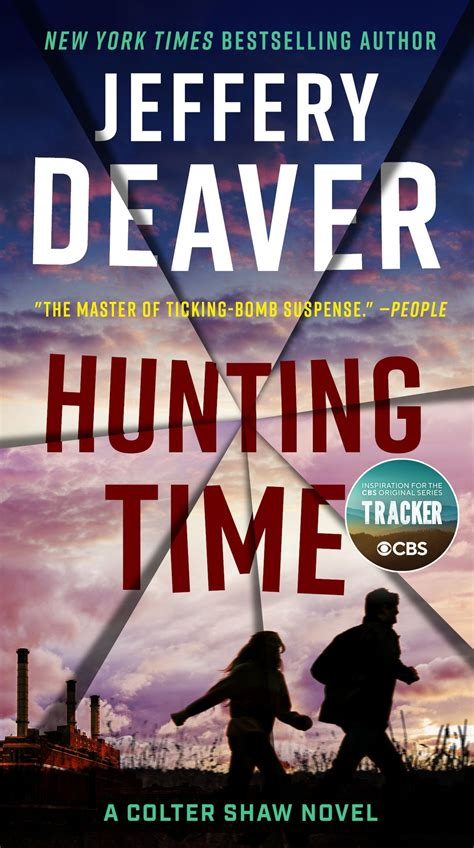
Hunting Time, a Colter Shaw Novel, by Jeffery Deaver.
By the way, it’s “hunting TIME,” not “HUNTing time.” The sense is not “time to hunt,” but “we don’t just save time, we hunt it down.”
This is a very professional modern thriller and the author has tons of blurbs on the back from other modern thriller writers. The plot was intricate, the pacing tense, and the characters were distinctive enough to keep them straight and give some emotional momentum to the story. There was also at least one major twist that I did not see coming, and that I really thought was clever.
Possibly the best-drawn “character” is the Midwestern city of Ferrington, the picture of urban blight but without the glamour of a big coastal city. Ferrington used to be an industrial capital, but then many industries left the city, leaving people out of work. Now the place seems to be nothing but drugs, crime, and despair. There are lot of chain-link-fence-surrounded empty lots filled with trash, long streets full of abandoned warehouses, and there is a badly polluted river. The ugliness of the scenes described rises to the level of beauty. The cops are corrupt in some cases and spread too thin in others. I think the name Ferrington is supposed to remind us of Ferguson, Missouri, and this is where we start to get into the book’s flaws.
Though Deaver mostly sticks to the story, when laying his scenes he makes sure to get in occasional digs at the reader. Bigots are everywhere. Trans is good, gay is good. We capitalize Black but not white. Stuff like that. Oh, and of course, capitalists are the one who ruined Ferrington in the first place.
My other issue with this book is the female characters. They’re not terrible, but … but … well. They are just missing a certain je-ne-sais-quois. For example, one of the point of view characters is a woman, Allison Parker. Deaver uses third person limited with her and with Colter Shaw, the sleuth. When we are inside Allison’s point of view, he frequently calls her Parker. That is just a bit confusing. It makes it sound like there is another person in the room. I am pretty sure that most women don’t think of themselves by their last name. Although maybe men do. Which is really the problem: All Deaver’s “female” characters (he has three main ones in this book) think more like men. Allison Parker is an engineering genius, very organized, very no-nonsense. Her daughter Hannah is a math genius, also no-nonsense. Sonja Nilsson is a former military operative (you guessed it, no-nonsense!) who is willing to sleep with Shaw after having known him for a day or two.
This is not a problem with Deaver alone. Many, many female authors write “male” characters who think and talk like women. It’s just awfully difficult to get into the head of the opposite sex.
Finally, there are occasional little things that made me scratch my head. “Seahorses can be sensuous.” (They can?) “Five-high.” (It’s high-five.) Nilsson lost forty pounds, and kept it off, in order to go into witness protection. (Oh, I didn’t realize it was that easy. Especially since she left the military at the same time! But, as we all know, the only thing keeping fat people from losing weight is the want-to. Eye roll)
Due to all these little flaws, and because the reveal of the villain was less satisfying than I had hoped, I give this book three out of five stars.
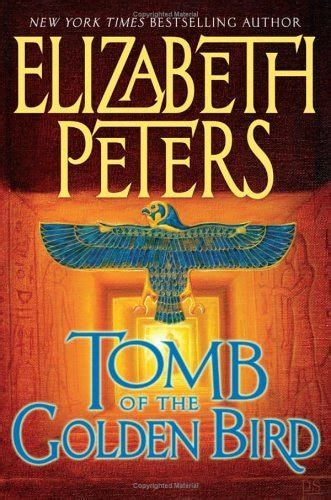
Tomb of the Golden Bird, by Elizabeth Peters
This was pure fun.
The Emersons are a family of British Egyptologists. Emerson, “Father of Curses,” the paterfamilias, is married to Amelia Peabody, whom he calls “Peabody.” This hot couple began their Egyptian adventures back in the Victorian era, but now it is 1922. Their grown son, nicknamed Ramses, is married and has children, and the Emersons have a large, motley household of employees, longtime family friends, relatives, and adoptees, both Egyptian and British. They have returned to Luxor, Egypt, for yet another season of digging. Of course, there are going to be capers, skullduggery, and so forth, and all the Emersons will be involved up to their elbows. Will they be deceived by Emerson’s half-brother Sethos? Will they foil an international plot? Most importantly, will they ever get a peek into the intact tomb that was discovered–technically, by Emerson–and is now being opened by the odious Carter?
This series is exquisitely researched. About 60% of the story is told in the first person by Amelia Peabody, in near-perfect late Victorian/Edwardian language. Scattered everywhere are gems like this one:
… I identified several other [party] guests as journalists. I can always spot them by the bulges in their coat pockets which indicate the presence of notebooks, and by their predatory looks. Messieurs Bradstreet of the New York Times and Bancroft of the Daily Mail were known to me personally (through no fault of mine).
p. 241
The other 40% of the story is told in third person from the point of view of Ramses, who is a quieter character than his colorful parents, but it also includes gems:
He had thought of several innocent explanations for David’s behavior, including the one he had given. It was understandable that [David] might feel the need to be alone; the family en masse or individually could be wearing.
p. 254
I originally came to this series hoping for ancient Egyptian mystical mysteries. It’s not that. It’s more of a romp. Much of this book felt like following the Keystone Cops, but eventually there did turn out to be some twists that gave the whole plot shape and direction. Four out of five stars.
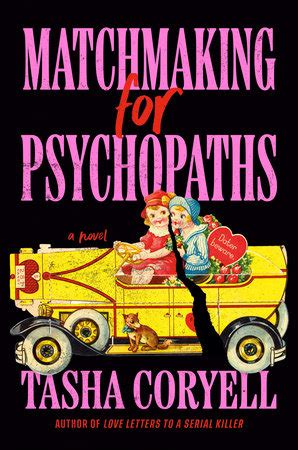
Matchingmaking for Psychopaths, by Tasha Coryell
I picked this up off the New Books shelf at the library. Perhaps I should have left it there, based on the title, but I had read the first few pages and found them engaging. Alas, I returned the book without finishing it. I would have liked there to be at least one main character who I was sure wasn’t a psychopath. A little psychopathology goes a long way.
When I returned the book, the librarian giggled and said, “Oh, that one was silly.” It was indeed silly. But silly and serial murder don’t mix well. At least not for me.
Quote: Indirect Communication III
Everyone here [in the pub] has stuff to tell him and ask him, and stuff they want to tell each other about him. Not a one of these things will be said in so many words; lack of clarity is this place’s go-to, a kind of all-purpose multi-tool comprising both offensive and defensive weapons as well as broad-spectrum precautionary measures.
Tana French, The Hunter, p. 350
Quote: Indirect Communication
“What did the sheriff want with you?”
“He wanted to stir shit,” Cal says. He’s had it with dancing around things. The level of subtlety around here is pretty near bringing him out in hives.
Tana French, The Hunter, p. 387
Unintentionally Serendipitous Book Haul

Thriving with Adult ADHD was suggested to me by Amazon when I was buying How to Keep House While Drowning. The price was under $10, so I added it to my cart. I thought it could help … myself and … others.
Something They Will Not Forget was given to me as assigned reading. I brought it home from work, intending to binge on it at home, and misplaced it. Today I found it again. I won’t draw the obvious connection here…
These books are also serendipitous in the way they match the newly purchased orange tablecloth. We are having Fall* here in America. Fall* is a retail season in which stores like Hobby Lobby try to convince us to buy all-new Fall-themed decorations. In the case of this tablecloth, I fell for it, and I have no regrets. It makes the room look so cozy.
A Great Book You Cannot Read
The book is called Everything Has a Shape. This particular book is book-shaped. It is a proof copy of a draft written by my brother-in-law, Andrew McKeeth. It’s nicely formatted and readable, but still needs an editor. The main remaining issue is malapropisms and homophones.
Everything Has a Shape is similar to Alice in Wonderland, except that it makes a lot more sense. Alice falls into a world of nonsense, whereas the protagonist of this book, Prism, the daughter of a geometer, is invited into a world where everything makes its own kind of sense.
Everything Has a Shape also reminded me of The Phantom Tollbooth. If you were a kid who loved to read, you probably stumbled across The Phantom Tollbooth and loved it. In that book, Milo travels through a world where everything is a physical manifestation of language. For example, you can see a huge crowd of adjectives thundering over a hill.

Everything Has a Shape is sort of the mirror image of The Phantom Tollbooth, because in the world Prism must navigate, the primary mental unit is not words, but shapes. In fact, the denizens of this new place tell Prism that they did not have language at all until humans started coming into their world.
And what is it called, this strange place that Prism visits? It’s called Place.
“We come from Place. Oh, sorry. Of course this probably doesn’t make any sense either. The place where I live is called Place. It really is a terrible name, I know, but it fit so well that nobody had the heart to change it. It used to be all Space before we called it Place. Anyway, we want to ask you about Nothing. You see in Place, where I come from, there is always something. You humans, however, do believe in Nothing. You think that there is such a thing as void and vacuum. In Place everything has a shape. Even Space, which might seem empty, is really just an undefined shape.”
“If there isn’t Nothing in Place,” [asked Prism], “why are you coming to ask about it?”
“Well, as far as we know there has never been Nothing in Place, but we are beginning to think that there might be a little bit of Nothing now. What is Nothing? Can you measure Nothing? I mean, if there is Nothing, how could you know it?”
Everything Has a Shape, p. 15
The book is full of conversations like this, and they only get worse, which is to say, more confusing but ultimately more insightful as well. I will post quotes from this book in a few weeks, because they are so thought-provoking.
Place, once Prism gets there, is understandably hard to describe, but the author does a fair job of it. It is a world folded over on itself, with a parallel ground above it, called Oversky. Think of it as looking like the center of the earth. Place is populated with strange creatures and paradoxical landscapes that look like an M.C. Escher drawing. There is also a population of humans whose ancestors got into Place years ago and have been living there ever since. Prism’s journey will, of course, take her all throughout this world. She often has to use mental tricks in order to be able to navigate Place’s physical reality. These are similar to the mental tricks we might have to use here on earth, such as occupying ourselves to make time go faster, or closing our eyes to navigate an illusion room, but Prism’s experience in Place is more intense.
Prism ultimately has to face The Twister, an entity that is introducing chaos into Place by convincing the creatures to deform their own shapes. The Twister makes a strong argument that nobody has an inherent shape of their own, that having an unchangeable shape is a kind of prison, and that by helping creatures to destroy their shapes, he is setting them free. Creatures who have encountered the Twister leave broken.
Prism’s time in the Twister’s tower is confusing and poignant, especially when she encounters the Likeness, a girl who looks exactly like Prism but claims to be a better version.
“Did you used to have a shape of your own?” Prism asked.
“You mean before I became a Likeness? Yes, I used to believe that lie, but then I realized the truth that there is no shape. It is better this way. I can be whatever I like. You can only be you.”
“As I said before,” Prism said, “if I could be everything, I would stop being anything. It’s true that I am stuck with my shape, but I’m the only one who can be me.”
“You’re wrong. I am you right now.”
“You’re a copy. You are ‘like’ me, true. You can be like anything you want but you can never be yourself.”
“You don’t know what you’re passing up.”
“I would rather be me than be nobody.”
The Likeness grew angry and the real Prism wondered if she really looked that way when she got mad.
ibid, p. 166
As you can see, Everything Has a Shape is an insightful and compelling read. I hope it can be published someday so it can be enjoyed by more people. Furthermore, I would love to see an illustrated version. The scenes in this book would lend themselves to some amazing surrealist art. At the very least, it needs a beautifully done cover.
What do you think? Would you read Everything Has a Shape if it were available?

