
If there is an element of Gnosis (not Gnosticism) present in John’s Gospel, it may well reflect the writer’s purpose to counteract Gnostic tendencies (not yet Gnosticism) in his day. In other words, when Paul and John appear to approach the subject of Gnosis, they are clearly anti-Gnosis.
–Ronald H. Nash, Christianity & the Hellenistic World, p. 268
Tag: Hermeticism
I Think It’s Time Again to Post my Review of This Book About Aliens
Alien Intrusion: UFOs and the Evolution Connection by Gary Bates, A Book Review
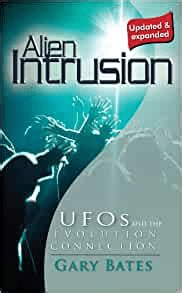
I’ve found myself recommending this book to multiple people in multiple comments sections in recent days, so perhaps it’s time to re-post a shortened version of my review of it from 2024. This is a great resource if you’re wondering about UFOs and the beings that are presumably inside them.
Alien Intrusion is 400+ pages, with endnotes to each chapter, appendices, and an index, yet it is accessibly written. It is a capable survey of the whole phenomenon, starting with the social history of UFO sightings and how aliens are portrayed in fiction; moving on to the science of whether light-speed travel is really possible (it’s not); whether indications of physical life beyond Earth look promising (they don’t); the theory of Directed Panspermia and how it was supposed to save evolution; sightings of lights in the sky and cover-ups associated with them; conspiracy theorists, true believers, and hucksters who have capitalized on the UFO craze; and finally, testimonies of people who have had abduction experiences.
“Abducted — Close Encounters of the Fourth Kind” is a really interesting chapter. Bates has just spent more than half the book showing that the extraterrestrial hypothesis, at least as it is usually understood, cannot be true for multiple reasons. But now, he turns his attention to the many people who have had alien abduction experiences. And instead of dismissing them as hoaxers (dealt with in the last chapter) or gaslighting them, he believes them. And he has a great deal of compassion for them. This is why I think so highly of Bates.
A “Typical” Alien Abduction Story
According to Bates, drawing on the work of other researchers, here are the elements of “Classic Abduction Syndrome [CAS]”: the abductee is captured, often at night, and often while being seemingly paralyzed. Once on the ship, they are typically undressed and subjected to some kind of invasive and humiliating “medical” examination. Often, this escalates to sexual abuse of various kinds. Then, the aliens “teach” the abductee. This involves being told that they have been chosen for a special mission. Predictions are made about the future of earth or of humanity. The aliens are trying, and they want the abductee’s help, to raise humanity’s consciousness or to save humanity. Often, they say they are engaged in a breeding program, creating human/alien hybrids. Sometimes this is explained as a way for humanity to survive when the earth is destroyed. Abductees may be given a tour of the ship or of other locations, and they may meet a divine being or an entity claiming to be Jesus, the pope (!), or a dead relative. After the abductee is returned to his or her surroundings, they often don’t immediately remember their abduction experience. They may experience “lost time,” and recall the experience only later (sometimes under hypnosis, which raises other issues).
Abductees experience lasting physical and mental aftereffects of their experience, whatever its nature may have been. They have PTSD-like symptoms. They have may bruises, scars, or puncture marks on their body, though these are never of an obvious enough nature to prove their story. They may experience new chronic health problems, commonly with their reproductive system, even including uterine or breast cancer.
On the spiritual side, many abductees come out of the experience with a new openness to the occult and to New Age beliefs. Others, though they initially feel understandable anger and fear towards the aliens, after multiple abductions come to a passive state of appearing to love and be fascinated with their tormentors, almost like Stokholm Syndrome.
Assuming that all these people are not just making up these bizarre and traumatic experiences, it is clear that they have come into contact with entities that do not wish them well.
On their own testimony, the “aliens” can be shown to be unreliable. For example, they tell abductee they are torturing them “for your own good.” They say they are wise and want to help human beings evolve to the next level, yet they subject their human subjects to frightening and degrading sexual practices. Either these beings don’t understand humans very well, or they are traumatizing them on purpose to “break” them.
The aliens also seem eager to explain exactly where they are from. In past decades, they would claim to be from Mars or Venus. Now that we know more about those planets, they tend to name a star or star system that is outside of our galaxy. Aliens tend to appear to humans in whatever form is culturally expected at the time.
Over the decades, we have allegedly been visited by long-haired Space Brothers, stacked Space-Babes, black-eyed and large-headed dwarfs, bipedal reptiles, praying mantis-type creatures, and … well … the list goes on and on. But, they all seem perfectly comfortable with Earth’s gravity, temperature, oxygen levels, etc. Doesn’t that strike you as a bit odd?
Nick Redfern, UFO researcher, quoted in ibid, p. 321
So, we have powerful, apparently deceptive entities, which kidnap and traumatize people, and then unfailingly give them a New Age message to take back to earth, often going out of their way to say that the Bible has “gotten it wrong.”
Furthermore, apart from claiming to be from space, these “alien” abduction experiences have a lot in common with abduction stories from past ages where the perpetrators were fairies, demons, or other paranormal entities. It is starting to look as if we are hearing the same song, but a different verse. And in fact, Bates suggests that these “aliens” are probably demonic, or fallen angelic, entities. They are, in short, the “elohim” described by Heiser and identified as “the gods” by Cahn.
Jesus Really Is the Answer
Two UFO researchers, Joe Jordan and Wes Clark, noticed that out of all the abduction cases they had heard of, very few were Christians. They put out a call for anyone who was a Christian and had an abduction experience to contact them. Confusingly, they were contacted by people who said things like “I’m a Christian and I was abducted and saw Jesus on the spaceship.” With further research, they found that people who identified as Christian but did not “walk the walk,” as the researchers put it, were just as likely to experience abduction and subsequent New Age brainwashing by the “aliens.” However, “walk the walk” Christians had a different experience:
Clark said that many of the respondents claimed to be Christians who told of their own abduction experiences. He felt that they were happy to have someone to talk to; they usually felt uncomfortable talking about their experiences because most UFO investigators had New Age inclinations and ideas that opposed their own beliefs. In addition, the Christian church is not equipped to deal with such reports because the UFO phenomenon has been largely misunderstood and dismissed by organized religions. Clark comments:
“As the number of cases mounted, the data showed that in every instance where the victim knew to invoke the name of Jesus Christ, the event stopped. Period. The evidence was becoming increasingly difficult to ignore.”
ibid, p. 267
So, My Prediction
Therefore, here’s what I expect from the government files about UFOs which are being released a chunk at a time.
These files cover years of reports, so they will comprise a bunch of different types of experiences. “Aliens” seem to adjust their approach based not only on the cultural expectations of the time, but regionally as well, and perhaps tailored to the individual. So this will be a very heterogenous mass of stuff.
Most of it will not be conclusive. There will be grainy videos and plenty of eyewitness testimonies. Some of the testimony is going to come from people considered sane and reliable (like Air Force pilots), but most people simply can’t bring themselves to accept testimony of something they believe is impossible, no matter how upstanding the witness. As we have seen with abduction experiences, “aliens” might leave some kind of physical evidence (small puzzling scars), but they tend not to leave anything conclusive. Observe that they have been dropping strange hints, and lots of them, for more than a century, but they have never made an open appearance that would settle all questions.
If there really are, say, powerful and ethically challenged interdimensional beings who wish to sell humankind a narrative by appearing as aliens, why have they not settled on a unified approach and made a big, dramatic appearance with an internally consistent story to back it up? I can think of three reasons.
The first reason is that they want control of the narrative, which means they only want to present themselves openly to people they can successfully brainwash. Presumably, they can’t give Stockholm Syndrome to 300 million people at the same time, so they save the extreme treatment for individuals. For people they can’t directly access for whatever reason, they give ambiguous physical phenomena, such as lights that move as nothing should be able to.
Second reason: They aren’t unified, and/or they don’t have really great self-control. There is no reason to think that fallen angelic beings would all work together. Perhaps they are all going rogue. Clearly, they can’t resist torturing their victims, even when that would seem to work against their goal of presenting as wise and gaining humankind’s trust.
Third reason: They are limited by a greater power. You cannot come into a strong man’s house and take his possessions unless you can first tie up the strong man. Say you want to manifest yourself as a god or with a big obvious spaceship in a randomly chosen country. If that country was, at one time, loyal to the Creator of the Universe, and large sections of it still are, He quite likely will not put up with this.
So, from these government files I expect a bunch of different stuff, maybe even an alien “corpse,” which will be weird and ambiguous and perhaps look like it was made for a movie (because, in a sense, it was) … but nothing that would be seen as conclusive by a skeptic.
I’m not focusing energy. I’m talking to a person.

So it’s not me you have to worry about, it’s Him.
Theology November: A Review of a Book about New Thought
Happy Lies by Melissa Dougherty, Zondervan, 2025
This review was originally posted, in a slightly different form, on Goodreads in June 2025.


This book is a capable history of New Thought in the Christian church, particularly in America. The author first sketches how she grew up around a lot of New Thought and mistook it for Christianity. Then, she sketches how after she realized many of these beliefs were wrong, for some years she was calling them New Age because that’s what everyone else called them. She discusses how she learned of the term New Thought and how it differs from the New Age.
Both belief systems partake of Gnostic/Hermetic cosmology and theory of human nature. However, New Age embraces neopaganism and the occult, whereas New Thought instead tries to cast these Hermetic ideas in “Christianese” and read them back into the New Testament. This is made easier because many New Testament writers were talking directly back to Gnostics, and even re-purposing their terms.
Melissa unpacks the Gnostic/Hermetic assumptions behind such common “Christian” practices as the Prosperity Gospel, visualization, affirmations, “I am” statements, and the like. But instead of just dismissing these practices as “ppf, that’s pagan,” she actually shows where they originated and how they differ from orthodox Christianity.
This book does not dive deeply into the pagan side of Gnosticism and Hermeticism. It doesn’t discuss these philosophies’ relationship to Western mysticism, Eastern mysticism, Kabbalism, or German philosophers like Hegel. It doesn’t discuss the attempts in the early centuries after Christianity to integrate Gnosticism with Christianity. The history of these philosophies is a huge topic that could take up a lifetime of study.
Melissa’s book is not meant to be an intimidating doorstop of a book that covers all of this. She’s zooming in on one little twig on this big, ugly tree: New Thought and its influence on American Christianity. Her book gives well-meaning Christians the tools and vocabulary to recognize this kind of thought and to talk about it. I have bought copies to give to all the women in my family. New Thought can be difficult to talk about because it portrays itself as “what Jesus actually taught.” If you know someone who is into New Thought, you cannot just dismiss it as “No, that’s Gnostic.” Even though you are right, to them it will sound like you’re just brushing them off. This book might be useful in such a situation.
If you want to find out how Hermeticism gave birth to Marxism through Hegel and Marx, there is a fantastic series of lectures about it on YouTube by James Lindsay. I also recommend Melissa’s YouTube channel and the YouTube channel Cultish.
Word that Mean Things, Part III
Capitalism, n.
- A term invented by Karl Marx to encapsulate his view that money, and owning private property, is spiritually degrading for people, in his book Das Kapital.
- A general term for modern post-industrial society, with special emphasis upon corrupt corporate bureaucracy, commercialism, and the “rat race” as distinctive features of “capitalism” and not just its byproducts.
- An all-purpose explanation for anything that goes wrong in the world, such as diseases, poverty, imposter syndrome, environmental degradation, stress, and death.
- Private property; the idea that people should be able to own their own houses, land, clothing, vehicles, etc., and keep the fruits of their labor.
You might notice some tension between definitions 3 and 4.
Long story short, Marx coined the term capitalism so he could make private property the world’s whipping boy, and boy howdy, did it work out for him!
A Great Book You Cannot Read
The book is called Everything Has a Shape. This particular book is book-shaped. It is a proof copy of a draft written by my brother-in-law, Andrew McKeeth. It’s nicely formatted and readable, but still needs an editor. The main remaining issue is malapropisms and homophones.
Everything Has a Shape is similar to Alice in Wonderland, except that it makes a lot more sense. Alice falls into a world of nonsense, whereas the protagonist of this book, Prism, the daughter of a geometer, is invited into a world where everything makes its own kind of sense.
Everything Has a Shape also reminded me of The Phantom Tollbooth. If you were a kid who loved to read, you probably stumbled across The Phantom Tollbooth and loved it. In that book, Milo travels through a world where everything is a physical manifestation of language. For example, you can see a huge crowd of adjectives thundering over a hill.

Everything Has a Shape is sort of the mirror image of The Phantom Tollbooth, because in the world Prism must navigate, the primary mental unit is not words, but shapes. In fact, the denizens of this new place tell Prism that they did not have language at all until humans started coming into their world.
And what is it called, this strange place that Prism visits? It’s called Place.
“We come from Place. Oh, sorry. Of course this probably doesn’t make any sense either. The place where I live is called Place. It really is a terrible name, I know, but it fit so well that nobody had the heart to change it. It used to be all Space before we called it Place. Anyway, we want to ask you about Nothing. You see in Place, where I come from, there is always something. You humans, however, do believe in Nothing. You think that there is such a thing as void and vacuum. In Place everything has a shape. Even Space, which might seem empty, is really just an undefined shape.”
“If there isn’t Nothing in Place,” [asked Prism], “why are you coming to ask about it?”
“Well, as far as we know there has never been Nothing in Place, but we are beginning to think that there might be a little bit of Nothing now. What is Nothing? Can you measure Nothing? I mean, if there is Nothing, how could you know it?”
Everything Has a Shape, p. 15
The book is full of conversations like this, and they only get worse, which is to say, more confusing but ultimately more insightful as well. I will post quotes from this book in a few weeks, because they are so thought-provoking.
Place, once Prism gets there, is understandably hard to describe, but the author does a fair job of it. It is a world folded over on itself, with a parallel ground above it, called Oversky. Think of it as looking like the center of the earth. Place is populated with strange creatures and paradoxical landscapes that look like an M.C. Escher drawing. There is also a population of humans whose ancestors got into Place years ago and have been living there ever since. Prism’s journey will, of course, take her all throughout this world. She often has to use mental tricks in order to be able to navigate Place’s physical reality. These are similar to the mental tricks we might have to use here on earth, such as occupying ourselves to make time go faster, or closing our eyes to navigate an illusion room, but Prism’s experience in Place is more intense.
Prism ultimately has to face The Twister, an entity that is introducing chaos into Place by convincing the creatures to deform their own shapes. The Twister makes a strong argument that nobody has an inherent shape of their own, that having an unchangeable shape is a kind of prison, and that by helping creatures to destroy their shapes, he is setting them free. Creatures who have encountered the Twister leave broken.
Prism’s time in the Twister’s tower is confusing and poignant, especially when she encounters the Likeness, a girl who looks exactly like Prism but claims to be a better version.
“Did you used to have a shape of your own?” Prism asked.
“You mean before I became a Likeness? Yes, I used to believe that lie, but then I realized the truth that there is no shape. It is better this way. I can be whatever I like. You can only be you.”
“As I said before,” Prism said, “if I could be everything, I would stop being anything. It’s true that I am stuck with my shape, but I’m the only one who can be me.”
“You’re wrong. I am you right now.”
“You’re a copy. You are ‘like’ me, true. You can be like anything you want but you can never be yourself.”
“You don’t know what you’re passing up.”
“I would rather be me than be nobody.”
The Likeness grew angry and the real Prism wondered if she really looked that way when she got mad.
ibid, p. 166
As you can see, Everything Has a Shape is an insightful and compelling read. I hope it can be published someday so it can be enjoyed by more people. Furthermore, I would love to see an illustrated version. The scenes in this book would lend themselves to some amazing surrealist art. At the very least, it needs a beautifully done cover.
What do you think? Would you read Everything Has a Shape if it were available?
Misanthropic Quote of the Week: Man-Centered
Classical theology has erred in its insistence that theology be ‘God-centered,’ not ‘man-centered.’
Robert Schuller, quoted in Happy Lies, p. 198
This is what the LORD says:
‘Cursed is the one who trusts in man,
who depends on flesh for his strength
and whose heart turns away from the LORD.
He will be like a bush in the wastelands;
he will not see prosperity when it comes.
He will dwell in the parched places of the desert,
in a salt land where no one lives.
But blessed is the man who trusts in the LORD,
whose confidence is in Him.
He will be like a tree planted by the water
that sends out its roots by the stream.
It does not fear when heat comes;
its leaves are always green.
It has no worries in a year of drought
and never fails to bear fruit.’
The heart is deceitful above all things
and beyond cure.
Who can understand it?
Jeremiah 17:5 – 9, NIV
Mic Drop of the Week
The Law of Attraction isn’t biblical. It’s anti-biblical. It’s occultic, not Christian. It makes Jesus your life coach and God your loyal servant. But “believing in Jesus” is not a magic formula. And God isn’t your golden retriever.
Happy Lies, by Melissa Dougherty, p. 141
For Your Viewing Pleasure
Welcome to February! This February, instead of doing a bunch of posts about the gooey stuff (after all, we already read a Barbara Cartland), I’ll be doing posts about stuff I love. I hope you will love it too, and that these posts and the resources they direct you to, will bring joy to your bleak February.
If you have not seen the debate below, you are missing a treat. It may be the most entertaining debate in history, at least for those who have any interest in the Bible, ancient history, or textual criticism.
It’s two hours long, but you could just watch the first hour and be entertained. Or, you could watch it in half-hour snippets for your nightly giggle. Then it would be sort of like watching a reality show, if one of the participants on the reality show was an adult who knew what they were talking about.
Billy Carson, a prominent YouTuber who pushes a Gnostic/neopagan version of the Bible, monologues until fact-checked by an extremely patient Wes Huff, an actual New Testament textual scholar. The moderator interrupts periodically to ramble about how much he loves Jesus because Jesus got rid of all the old sexism.
No matter who has just spoken or how long a turn they have taken, Huff manages to give them a response that is calm, respectful, and adds actual biblical knowledge to what they have just said.
You’re welcome.
Race Marxism by James Lindsay: a book review

Well, it’s that time of year again: the long, long weeks of post-Christmas winter, when we grit our teeth and read the books that are not fun but are good for us. I think it was this time of year, a few years ago, that I read The Gulag Archipelago by Aleksandr Solzehenitsyn. This is similar.
The poison of class war
First, some background. I don’t like Marxism. I don’t like anything that has even the faintest hint of class war in it, in fact.
I was a sensitive, easily guilt-tripped child, and I grew up in a “Christian” denomination that had an intermediate-to-advanced case of marxist infection in its Sunday School materials. They would take verses like “blessed are the poor” and “how hard it is for the rich to enter the kingdom of God!” and use them to make it clear to me that being an American, with a high standard of living relative to the rest of the world, was not only a sin, but a very special sin, in a category all its own, because this was one sin which you could not repent of and to which the blood of Jesus did not apply. I was the “evil rich,” and there was nothing I could do about it. Also, because of this, I was morally guilty for any suffering that happened anywhere in the world, provided that the United States was somehow involved or the people suffering were “poorer” than I was. And I swallowed all this. I felt guilty, not grateful, for every little purchase or luxury. And eventually, I felt defensive about them.
I now know, based upon what I have learned since, that marxian systems by their nature do not include repentance or grace. These are Christian concepts. We cannot expect them from a system that works by designating a villain class, then constantly expanding that class. I had already figured out, simply from applying common sense, that the “logic” of class-war thinking is illogical, years before Lindsay came on the scene, but once I started reading him, it became even clearer.
As a simple piece of first advice for pushing back against Critical Race Theory, stop assuming it has good intentions. Individual people pushing Critical Race Theory might have good intentions, but the Theory they are applying does not. For liberals, this is a tough pill to swallow. Critical Race Theory ideas are not liberal ideas, and they cannot be considered on liberal terms. They are viruses meant to infect the liberal order. Assuming the ideas must mean something more reasonable than it seems or that activists won’t equivocate between meanings in a strategic way to seize power will cause you to lose every single time.
ibid, pp. 254 – 255, emphasis in original
There is no redemption in a marxian system. The only way you, as a dirty resource hog, could possibly redeem yourself would be to fix all the problems and all the suffering in the world. Since you can’t do that, you will probably die in the Revolution. Sorry not sorry. And you’ll deserve it.
It still baffles me when well-meaning people (usually women, TBH) try to “comfort” me by telling me something along the lines of “It’s not your fault. It’s the fault of Capitalism. You are the oppressed. The System needs to change.” (“It” could be anything from the difficulty of navigating the health insurance system, to eating healthy.) I just want to shake their shoulders and say, “Are you kidding? We are the ‘capitalists.’ We are the ones they hate and blame. If you blame ‘capitalism,’ you are blaming me and saying I should not have any private property.”
This sounds kind of self-pitying, so let me hasten to add that I fully realize that being guilt-tripped, blamed, and messed up in the head over your class status is by far the least harmful outcome for anyone exposed to Marxist ideas. For millions of people who were more directly affected, it cost them their very lives. However, my little story does illustrate how the only fruit of class-war rhetoric is to divide people from one another and give them hang-ups. It never makes relationships better.
O.K., so that’s bit of background #1. Me and Marx – not good buddies. No, indeed.
A challenging book to read
Second bit of background: over the past several years, I have listened to many, many hours of lectures by James Lindsay. It was a fellow Daily Wire reader who first pointed me to Lindsay’s website, New Discourses. (Fun fact: one of my kids for several years thought the site was called Nudist Courses.) Anyway, Lindsay’s podcasts quickly became a regular feature of my listening-during-chores lineup. I would do dishes, pick berries, paint, or fold laundry while listening to his dry, mathematician’s voice punctuated by occasional naughty words when the stupidity of the ideas he was describing provoked him really, really bad.
I listened to Lindsay talk about the Grievance Studies Project that he carried off with Peter Boghossian and Helen Pluckrose. I listened to him read and analyze essays by Herbert Marcuse, Kimberle Crenshaw, Derrick Bell, bell hooks, Robin DiAngelo, Jacques Derrida, and Paolo Freire. As I was listening, Lindsay was also learning. He traced modern identity politics back through the postmodernists, back to Marx. Marx’s ideas he traced back to Hegel, as he did long episodes about Hegel’s extremely convoluted philosophy and how Marx tried to remove Hegel’s mysticism. Eventually, he uncovered the occult roots of Hegel and other German philosophers. It was from Lindsay that I first heard the term Hermeticism (although I was listening to a lecture on Gnosticism by Michael Heiser around the same time).
Lindsay started out in the New Atheist movement, with a special interest in the psychology of cults. He then disassociated himself from the New Atheists when he noticed they were behaving, as a group, rather like fundamentalists. His views on religion have matured over the years. He now realizes that not all religions are equally cultlike or equally bad for society. And, after much research, he has correctly identified modern identity politics as a reboot of the ancient Gnostic/Hermetic mystery religions, complete with secret knowledge, sexual initiation rituals, and the promise to transform human nature itself into something greater. “Ye shall be as gods.”
If all of this sounds hard to believe, you can find all these lectures on the New Discourses website and most of them on YouTube as well.
I go on at such length about this in order to convey to you just how well oriented I was when I picked up Race Marxism. I had already heard Lindsay lecture on the thinkers he mentions in the book, many of them multiple times. (And for many of them, it takes multiple times to actually retain their concepts, because they are intentionally complex. Not to speak of the way they love to invent words, flex on their readers, equivocate, and even undermine language itself.)
I was really well oriented, baby.
And even so — even so — I found Race Marxism to be a slog.
I honestly don’t think this is Lindsay’s fault. He’s trying to give us the history of a concept (“Critical Race Theory”) that is intentionally obscure. Many different streams of thought have gone into it, and the Theory’s proponents take advantage of this to toggle back and forth between the different meanings of the concepts in their theory. In fact, they use the Theory’s slipperiness as a sort of shibboleth. That way, if someone says something negative about the Theory, disagrees, or even simply states the theory in terms they don’t like at the moment, they can claim that this person has not really understood it.
Critical Theories exploit this confusion by focusing virtually entirely on “systems,” which are almost impossible to pin down or describe accurately, not least since these “systems” really are stand-in descriptions for “everything that happens in any domain human beings are involved in, and how.” That is, when a Critical Theory calls something “systemic,” what it really means is that it has an all-encompassing Marxian conspiracy theory about that thing. When people don’t think that way, Theorists then accuse them of not understanding systemic thought, or, more simply, of being stupid and intellectually unsophisticated. This little trick is very useful to activists because it allows them to call everyone who disagrees with them too stupid to disagree with them and generally tricks “educated” onlookers into thinking the plain-sense folks must be missing something important, nuanced, and complex.
ibid, p. 233
Any book that tries to engage with, pin down, and define a thought system that uses these tactics is going to be a slog. Lindsay has to trace several different lines of thought, so he’s coming at the same concept from a different angle in chapter after chapter. It’s all one big tapestry, so there’s not a clear, natural place to start. The first few chapters feel as if we are going in circles a bit. Lindsay has to quote CRT authors at some length, and they are not good writers. Additionally, because their entire philosophy is based upon envy and hate, even when they are somewhat clear they are unpleasant to read. But he is not going to make a claim about CRT and then not back it up. So, we get things like, “No, CRT is not simply anti-white-people; instead…” [twenty pages later] “… and that’s how CRT manages to be anti-most -white-people while denying the reality of race.”
The book picks up towards the end, when with much blood, sweat, and tears, the basic claims of CRT have been established beyond a doubt and Lindsay can move on to how it affects organizations and what can be done about it.
What will your experience be like reading this book?
I’m not sure.
It depends upon how familiar you are with these concepts already, and how quick of a study you are. It might also help if you do your reading from this book at a time of day when you are fresh. I think part of my problem is that I was slogging through it, often when tired or otherwise unwell. It’s not really the sort of book that you can take to an event, or dip into in a waiting room.
If these concepts are totally new to you, and you are a very quick study, you might come out of this book with the experience of “mind blown!” However, it’s more likely that you will grasp some things on the first go-round, but will understand more each time you re-read a given chapter. (That’s actually my experience with most non-fiction books.)
It is the nature of Critical Race Theory to have a whole bunch of academic, intimidating-sounding terms to describe just a couple of ideas that, when you get down to it, are fairly simple and also stupid. So the learning curve is steep at first, but quickly flattens out if you know what I mean.
I bought this book primarily to have on hand as a resource. I had to read it cover to cover at least once, so that I know where to find things in it. I probably won’t do that again. But I will certainly dip into it, because it documents painstakingly all the ridiculous, counterintuitive, antihuman, incredibly damaging claims that have been made in this theory, and who made them, when and where in what publication. That is an invaluable resource to have on hand, because there will be new terms and new claims soon, and the Theorists will deny that anyone ever made the old ones.
So, I bought this book more as a reference book than anything. I hope that you will, too. Lindsay has done a fantastic job compiling all this stuff and sorting it all out in some kind of order. Perhaps, if he had spent more years on it, he could have polished the prose and made it more pleasant to read, but that wasn’t the priority. The priority was to get this book out there in time to undeceive as many people as possible about this insidious theory. It doesn’t have to be pretty. It just has to exist.

