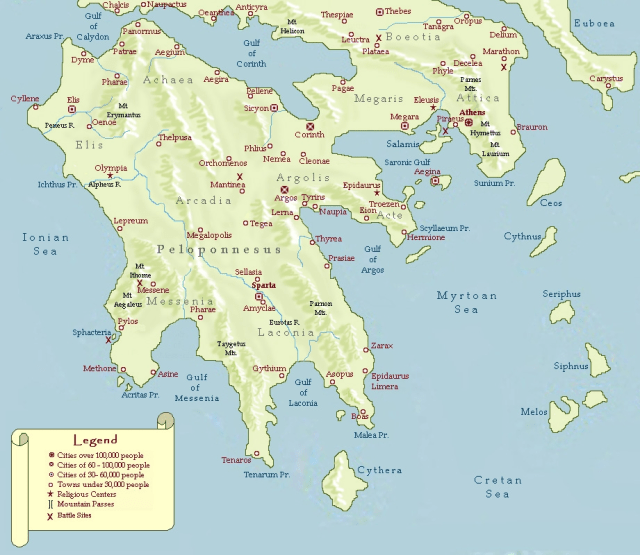
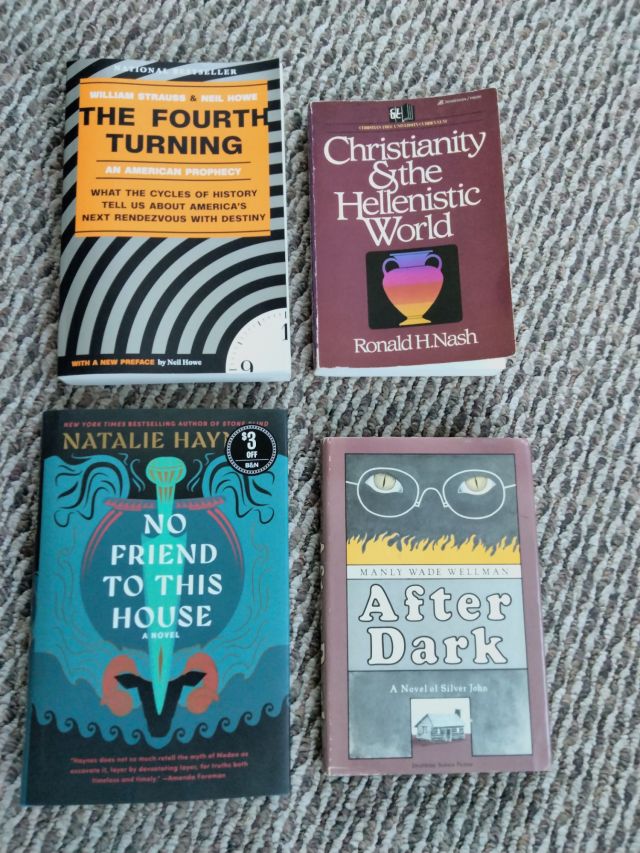
About nine months ago, I decided I was going to read all the fiction I could that was set in or based upon ancient Greece. This does not mean I would or could read everything that was out there. In fact, my local library had some new books in the genre that I picked up, glanced through, and decided weren’t worth my time. It’s a very popular genre, and it has given rise to some incredible classics and some incredible stinkers.
Here’s what I did read:
Date read
Title & author
My reaction
January 2026
Circe, Madeline Miller
heartbreaking in the best way
February 2026
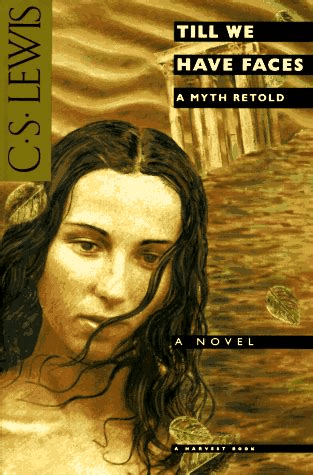
Till We Have Faces, C.S. Lewis
(a re-read) in my opinion, far & away his best novel
Feb – March 2026
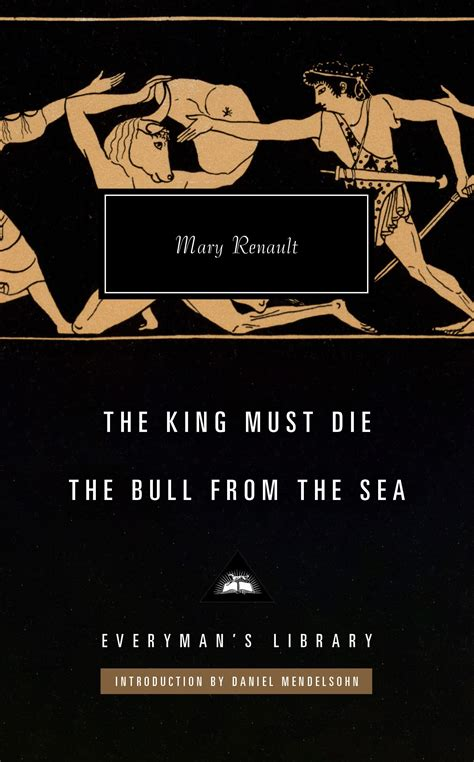
The King Must Die, Mary Renault
(a re-read) insanely good research, poetic literary writing
March – May 2026
Christianity and the Hellenistic World, Ronald H. Nash
nonfiction; explores whether Christian ideas were borrowed from Greek culture
May 2026
No Friend to This House, Natalie Haynes
perhaps the best you could do with a Jason and Medea re-telling, which isn’t saying much, as they are both royal stinkers who deserve each other
June 2026
The Sea of Monsters, Rick Riordan
a Percy Jackson book: fun, woke-ish, O.K.
July 2026
The Siren Song, Anne Ursu
a better Rick Riordan
in process
The Letters to the Corinthians: Revised ed., William Barclay
What better time to read a commentary on Paul’s letters to the new church in Corinth?
yet to read
The Bull from the Sea, Mary Renault
sure to be demanding but good
yet to read
The Curse of King Midas, Colleen M. Story
I started this, but it just was not the time for it.
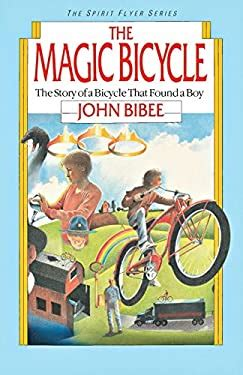
I remembered that, when I was a kid or a tween, my family got ahold of this series, the Spirit Flyer series. This is the first one. It was published by InterVarsity Press, in 1983. You can see that the cover art style is very 80s. It’s reminiscent of the Choose Your Own Adventure books, which I also loved. The kid’s hair is late 70s/early 80s American hair. The art style is realistic, not exaggerated to make the characters look like elves or superheroes or something. The elements in the scene sort of float randomly around in it, a barrage of impressions, like of the old school pictures they used to sell our parents where there was an in-focus view of the kid smiling at the camera, and in the background, a large, soft-focus view of the kid staring wistfully off into the middle distance.
This is not me, but it might as well be.
Anyway.
I remembered that this series was really good. It was written from a Christian perspective, but not nicey-nice Christian. There was a sense of menace that grew from book to book, as a town was taken over by some kind of evil organization. I remembered it being almost like That Hideous Strength for kids.
Recently, whilst at my parents’ house looking for a different book, I saw this and decided to give it a re-read. Long story short, it’s as good as I remembered. It is an earnest book. The action unfolds slowly at first. In the first few chapters, John (the main character’s name — this book doesn’t shy away from cliches) trash-picks an old bicycle at the dump and fixes it up. He’s an 80s kid, which means he seems very independent and capable to us today. The process of fixing up the old bike over a period of about two days is described methodically. Meanwhile, John is dealing with a best friend; neighborhood bullies; and a stepfamily with whom he lives after his parents died in a car wreck: a strict, no-nonsense uncle, a self-effacing aunt, and three girl cousins, the oldest of whom is very kind.
When bad things start happening, the symbolism is super obvious, but the narrative is unapologetic. There is a huge black snake apparition with red eyes. There is a human villain, seemingly nice but possessed of a creepy grin, who later shows up with “the face of someone dead–a pale shriveled mask of a face with its teeth bared, snarling like a rabid dog.” (131) A strong smell of something dead often accompanies them.
As you can see from the quote above, the writing is earnest too. The Magic Bicycle is written simply, as appropriate for middle grade, but not fatuously. Bibee isn’t afraid to use time-worn phrases (“like a rabid dog”), but they do not come off as lazy because he has something to say and his story is going somewhere. His book reminds me of C.S. Lewis pointing out to young writers that “if you just say what you want to say, without caring twopence about how often it has been said before, nine times of ten you will find yourself becoming original without really trying.”
I say, “O.K., we’re going to put in a load of laundry, then we’re going to water the garden, write blog post, start supper.” The purpose of this should be obvious. It helps me organize the twenty things I want to do, triage them, and make the winners my official Next Activity. This is hard to do without saying stuff out loud (at least, for me). My thoughts don’t do well when they are left inside my head unsupervised.
Notice that I call myself “we” for purposes of decision making. This may be a side effect of having raised three children.
But I also talk to other entities that are not visible to the naked eye. I talk to God, of course. “I’m sorry, Lord, I was trying to promote myself just now instead of Your glory.” “I’m scared, God.” “Help!” I talk to people I haven’t seen in years, apologizing out loud for that one thing I did back in university. I tell my potted plants, “You guys sit tight there. I’ll be right back.” I’ll never forget the first time I accidentally said “I love you” to the chickens.
I won’t put down what I say to web sites that make it difficult to do things.
I know it’s not just me. You are busted, Reader! I’ll bet you, too, talk to … I don’t know, spoons. Trees. Whatever. It turns out, people need something to talk to. Evidence:
“Elves always wanted to talk to things,” says Treebeard, when speaking of the Elves first “waking up the trees.”
The Tom Hanks character, in Castaway, famously saves his sanity by talking constantly to a volleyball named “Wilson.” When Wilson is washed away, near the end of the movie, he really grieves him. And it turns out that, by getting into daily “conflicts” with the volleyball, he has become better at relating to actual people when he is near them again. This points up how humans are able to anthropomorphize anything. Robots, for example, or rocks.
I have not done this myself, but I’ve heard that many people talk to their dead loved ones… either at their grave, or just throughout the day.
In C.S. Lewis’s novel Perelandra, philologist Ransom finds himself alone on Mars after he had been kidnapped by fellow academics. (In the story, Mars has air and water that are consumable by humans.) Ransom is very alone, very scared, in a very strange situation. As he wanders through the Martian forests, he begins to talk to himself. Not just in the sense of speaking out loud. He actually feels as though “Ransom” is a second person beside him, whom he must comfort, reassure, and consult with. “Don’t worry, Ransom,” he says. “We’ll make it.” It’s actually a creepy scene as we realize how on the edge he is, and even feel our stability slipping with his.
This might be Lewis’s interpretation of the intriguing and spooky Third Man Phenomenon. This is an experience that some people have in survival situations, such as mountain climbing, where they sense another person with them in the situation. It can happen to people who are alone in the wilderness, or in a group. This sense of another person with them is persistent, and so vivid that they may hear a voice. Psychologists, of course, tend to explain this as a hallucination brought on by things like sleep and oxygen deprivation, and/or a coping mechanism comparable to Stockholm Syndrome. (The sleep deprivation theory does raise the question, Why doesn’t this happen to new mothers? At least, not that I know of.) I don’t know what to make of the Third Man, but I will say that he does make me think of the fourth man in the furnace with Shadrach, Meshach, and Abednego.
Lewis has another instance of the Third Man phenomenon in his book Pilgrim’s Regress. The narrator, who has been traveling all over the world to find the place he considers paradise, ends up on a perilous cliff, at night, and debates going back to the last house he stopped at, which is definitely not the place he has spent his whole life looking for, but at least it’s safe. At this point a mysterious man appears, prevents him from going back the way he came, and forces him to go on until he is “cliffed out,” at which point the stranger leads him over the perilous part.
“Men go crazy in congregations, but they only come back one by one,” sings Sting. While I like Sting, and while I recognize that cults do exist, as a generalization this line from his song is the inverse of the truth. People really, really need something or someone to talk to. We always want to talk to things.
So, if you’re comfortable sharing, what do you talk to?
In my recent big post about sacrifice (willing and otherwise), I pointed out some similarities between the different sacrificial deaths in Mary Renault’s The King Must Die, and the death of Christ.
Some of these similarities are deep. Theseus, as future king of Athens, has an honorary title the Shepherd of the People. He is the king’s son, and he feels “the god” (Poseidon) calling him “to the bulls,” that is, to go and be a human sacrifice in Crete. Before he departs, he reassures the parents of the other future bull-dancers, “I will go with your children, and take them into my hand. They shall be my people.”
Two thousand years after Christ, we are so saturated in the power of His story and of the things He said that it is hard to read these ancient customs as anything but Christological types. And, since The King Must Die was published in 1958, it’s pretty clear the author also was aware of Christ and was intentionally pulling phrases from Him. More about that in a moment.
Other similarities are superficial, but nonetheless striking. Near the end of TKMD, a sixteen-year-old “king” who is about to be torn to pieces by wild women in a Dionysian rite, goes to his death riding in a cart, crowned with ivy, brandishing a wine cup and scattering wheat seed on his people. Now, this rite is almost nothing like the death of Christ. It’s pagan. It does not happen on Passover, the date of the annual sacrifice of a lamb, but rather it is part of an annual ritual of human sacrifice mixed with orgy. The “king,” along with everyone else, is reeling drunk. He has just spent a year as the consort of the priestess/queen, and he has no choice in what is about to happen to him. It’s hard to imagine a death more different from Christ’s.
And yet, these very superficial similarities do not strike us as coincidences. Instead, they seem significant. On this side of Christ, we can’t help but notice when a man who is about to go up a hill and die shares out bread and cup to his followers.
This sort of horrifying, yet somehow moving, ritual is not something Renault just made up. It’s well-attested in myths, legends, and histories. In this essay, I will argue that Christ did not share out bread and wine because it had been done before. Rather, the pagan one-year king shared out bread and wine because Christ did so one thousand years later. Future events cast backwards shadows.
What was Renault trying to do?
To be clear, that is my thesis, not Renault’s. She was a lesbian who published a number of contemporary gay romance novels before discovering her personal obsession with ancient Greece. Writing about Socrates and Alexander the Great allowed her to write sympathetic historical novels about gay characters who lived in a context where this sort of behavior was considered completely normal. The King Must Die certainly includes all kinds of sexual activity; for example, in the Bull Court, the female bull-leapers cannot be allowed to get pregnant, so they are sequestered from the boys, and turn to relationships with each other. Many of the male bull-leapers become the paramours of upper-class Cretan men. Theseus himself is straight, but as an ancient prince, let’s just say he’s not exactly chaste. (I may have lucked into picking up Renault’s least gay book about ancient Greece.)
All this to say, I don’t think Renault was trying to say that any ancient customs were foreshadowings of Christ. If she was “trying to say” anything at all about Christ, it’s probably that He’s not so unique, and anybody familiar with ancient Hellenistic ideas would understand that. But her novels (at least TKMD) are not really “message” novels. She immersed herself in that world, wrote characters and customs that grew organically out of it, and this is what came out.
So no, I don’t think Renault is projecting Christ back into the ancient Mediterranean customs intentionally, except in the sense that she would have been familiar with biblical phrases as a woman raised in 1900s England. I think she was primarily writing from her research and imagination.
Is Christianity a ripoff from Greek mystery religions?
Still, when I first read TKMD, the tone was familiar to me and I immediately picked up the implications. Not that many years before reading it, I had been through a year of thorough education in Greek mythology by a high-school teacher who could safely be described as feminist. My best friend at the time was a neo-pagan. Between the two of them, this teacher and friend were quick to point out any parallels between Greek paganism and Christian practice, and to accuse Christians of “stealing” it. Looking back, there was a certain defensiveness there, which I did not realize at the time. But my teacher and friend were only two voices in a large crowd of scholars.
During a period of time running roughly from about 1890 to 1940, scholars often alleged that primitive Christianity had been heavily influenced by Platonism, Stoicism, the pagan mystery religions, or other movements in the Hellenistic world. Largely as a result of a series of scholarly books and articles written in rebuttal … Today, most Bible scholars regard the question as a dead issue. [But] even though specialists in biblical and classical studies know how weak the old case for Christian dependence was, these old arguments continue to circulate in the publications of scholars in such other fields as history and philosophy.
–Christianity and the Hellenistic World (1984), p. 10
As an aside, notice that the peak of this theory were the years during which Mary Renault was growing up and going to school.
Sometimes books come to you, serendipitously, just when you are ready for them. As I was thinking about this question of the similarities between fictional (but history-based) sacrificial victims in Renault, and my own Dying God, I imagined how I would build a case that He was clearly not copying them. Although He did grow up in a thoroughly Hellenized environment, He was a Jew. He was extremely faithful to the God of Abraham, Isaac, and Jacob, and was so familiar with the Law and the Prophets that He could quote them off the cuff. His veins seemed to flow with the Hebrew Scriptures. In short, He showed no signs of wanting to throw over the religion of His ancestors for that of the Greeks. Furthermore, many of the elements of how His last days went down came about as a result of the particular historical conditions in which He found Himself. He went up the hill to die because Jerusalem is built on a height. He shared out bread and wine because they were having the Passover, and this ceremony had been established 1400 years before in the desert of Sinai, not 1000 years before in the Ionian islands. He called Himself a king because that was what the Jewish Messiah was supposed to be, and He was of the house and lineage of David … not because He had been selected by matriarchal priestess to live as a king for one year and then die. He called Himself the Good Shepherd because of the Israelite pastoral tradition, not because of the Athenian one. The Roman soldiers put a crown of thorns on His head because they were professionals at humiliating and torturing people. It’s hard to imagine how He could have orchestrated all these historical factors intentionally in order to copy a pagan custom that was practiced far away, and centuries before He was born.
I can assert all this stuff, but there is always some scholar out there who could be quoted to argue with me. I needed a book. And the book came to me. As I was turning all these things over in my mind, I had to venture out to a Christian bookstore that was closing. (“Come get your novels,” they said.) Of course, many of their books were on clearance, and there before me was Nash’s Christianity and the Hellenistic World for the low low price of one dollar, its asking price all out of proportion to its value to me at that moment. Nash can prove what I can only assert.
Nash systematically addresses claims that early Christian writers, particularly Paul, got many of their key concepts from Platonism, Stoicism, the mystery religions, and Gnosticism.
Among the many claims published in this century are the following:
Early Christianity was just another Hellenistic mystery religion.
Important Christian beliefs and practices were either borrowed from, or were heavily dependent on, similar beliefs and practices in the mysteries.
Both baptism the Lord’s Supper evidence the influence of similar rituals in the mystery cults.
Among the many Christian beliefs drawn from the mysteries is the Pauline doctrine of salvation, which parallels the essential themes of the mysteries: a savior-god dies violently for those he will eventually deliver, after which the god is restored to life.
A major movement in the development and promotion of such theories was the History of Religions School (Religionsgeschichtliche Schule).
-ibid, pp. 116 – 177
Nash addresses problems with these claims such as the following: in the mysteries, the dying god does not really rise. Osiris lives on in the underworld; the dead god’s body becomes the wheat, etc. As far as we can tell, ritual washings in the mysteries were just purification rituals, and they had to be repeated. They do not seem to have been a one-time entry into a new life like the Christian baptism. For many of these mystery religions, we don’t actually know much about the content of the rituals, because they were intentionally kept secret. For many mystery-religion practices that are well-attested, such as the taurobolium where the initiate stood beneath a grate while a bull was slaughtered, these practices seem to have developed after Christ rose and Paul wrote his letters. In the case of the mystery religions of the first, second, and third centuries, some of them were actually influenced by Christianity, not the other way round.
But I’ll let German scholar Adolf von Harnack, quoted by Nash, have the last word:
We must reject the comparative mythology which finds a causal connection between everything and everything else, which tears down solid barriers, bridges chasms as though it were child’s play, and spins combinations from superficial similarities … By such methods one can turn Christ into a sun god in the twinkling of an eye, or one can bring up legends attending the birth of every conceivable god, or one can catch all sorts of mythological doves to keep company with the baptismal dove; and find any number of celebrated asses to follow the ass on which Jesus rode into Jerusalem; and thus, with the magic wand of “comparative religion,” triumphantly eliminate every spontaneous trait in any religion.
–ibid, pp. 118 – 119
Too many keys to mythology
In short, the problem is not that there are some key symbolic parallels between Christ and ancient pagan symbolism. The problem is that there are too many parallels, or similarities, right down to the animals involved. Part of this is simply the limitations of living in this world. Jesus had to eat something, He had to ride on something, He had to use some kind of words when He spoke, and there were a finite number of foods, mounts, and terms in the ancient world, just as there are everywhere. I have pointed out before, when addressing the problem of whether Christians “stole” pagan practices like hot cross buns and wedding customs, that there are a limited number of ways to do every human activity. If you eat something, wear something, or go through a life passage, and you are a human being, I guarantee that in the past four thousand years there has been someone who did it that way before you. And that someone was probably pagan.
As G.K. Chesterton said about finding mystical and symbolic connections:
The true origin of all the myths has been discovered much too often. There are too many keys to mythology, as there are too many cryptograms in Shakespeare. Everything is phallic; everything is totemistic; everything is seed-time and harvest; everything is ghosts and grave-offerings; everything is the golden bough of sacrifice; everything is the sun and moon; everything is everything.
–The Everlasting Man, p. 103
These are the givens of the universe that all humans encounter; and, unless we are sorely impoverished, we all have some way of dealing with them. But just because they are ubiquitous does not mean they are unimportant. These things are shadows of what was to come. The reality, however, is found in Christ.
Symbolism in Reality
Last point: Jesus was the fulfillment of all these confused hints in every culture. But the vibe of the New Testament historical records is much less gorgeous, mythical, and poetic than the ancient pagan stories. As C.S. Lewis put it:
When I first, after childhood, read the Gospels, I was full of that stuff about the dying God, The Golden Bough, and so on. It was to me then a very poetic, and mysterious, and quickening idea; and when I turned to the Gospels never will I forget my disappointment and repulsion at finding hardly anything about it at all. The metaphor of the seed dropping into the ground in this connexion occurs (I think) twice in the New Testament, and for the rest hardly any notice is taken; it seemed to me extradordinary. You had a dying God, Who is always representative of the corn; you see Him holding the corn, that is, bread, in His hand, and saying, ‘This is My Body,’ and from my point of view, as I then was, He did not seem to realize what He was saying. Surely there, if anywhere, this connexion between the Christian story and the corn must have come out; the whole context is crying out for it. But everything goes on as if the principal actor, and still more, those close to Him, were totally ignorant of what they were doing. It is as if you got very good evidence concerning the sea-serpent, but the men who brought this good evidence seemed never to have heard of sea-serpents. Or to put it another way, why was it that the only case of the ‘dying God’ which might conceivably have been historical occurred among a people (and the only people in the whole Mediterranean world) who had not got any trace of this nature religion, and indeed seemed to know nothing about it?
–C.S. Lewis, “The Grand Miracle,” in God in the Dock, p. 83
Well, when you put it that way, it’s pretty funny, isn’t it? Jesus’s death reads as disappointingly prosaic compared to the myths only because it actually happened. This is very humble of God. He has quite the sense of humor. As John puts it after his account of the Triumphal Entry, “At first His disciples did not understand all this. Only after Jesus was glorified did they realize that these things had been written about Him and that they had done these things to Him.” John 12:16
Sources
Chesteron, G.K. The Everlasting Man. Ignatius Press: 2008, originally published in 1925.
Lewis, C.S., ed. Walter Hooper, God in the Dock: Essays on Theology and Ethics. Eerdmans: 1970, 1978.
Nash, Ronald H. Christianity and the Hellenistic World. Zondervan: 1984.
Renault, Mary. The King Must Die. Alfred A. Knopf, Everyman’s Library edition pub. 2022, originally published by Pantheon Books in 1958.
I had seen often enough before what met us there: the great mob, shouting, “He is born! He is born!” and whirling their rattles, and throwing wheat-seed into the air, all sweaty and struggling and climbing on one another’s backs to get a sight of Arnom and the rest of us. Today it struck me in a new way. It was the joy of the people that amazed me. There they stood where they had waited for hours, so pressed together they could hardly breathe, each doubtless with a dozen cares and sorrows upon him (who has not?), yet every man and woman and the very children looking as if all the world was well because a man dressed up as a bird had walked out of a door after striking a few blows with a wooden sword.
That’s right, this wasn’t even a first-time read, and it destroyed me. Again. Maybe worse this time.
It’s tempting to do a super detailed book review, including an analysis of all the ancient customs, the Bible Easter eggs, and the symbolism. (My God, the symbolism!) But I’m not going to do that, because I really think you should read it if at all possible. And, even though this book is possibly more powerful on re-reads, I still don’t want to ruin your first read with spoilers.
Any analysis I gave, would be less of an immersive experience than the story itself, because that is the power of fiction.
I will just say a few things about the setting and genre, so you can decide whether to subject yourself to it.
I read TWHF as part of my 2026 “Greco-fiction” project, where I read books set in and/or inspired by the Heroic Age of Greece. When I mentioned this project to someone, they suggested Till We Have Faces. They were right, of course, though I hadn’t put it in the same category in my mind as, say, The Song of Achilles.
The action takes place in a fictional country called Glome. Based upon hints in the text, Glome is located somewhere just south or just north of the Caucasus Mountains, between the Black and Caspian seas. Georgia, Azerbaijan, perhaps southern Russia. Glome is not a mountainous kingdom, but it is near mountains. In the distance, they can see “what we call the sea, though it is nowhere nearly as great as the Great Sea of the Greeks.” This would probably be the Caspian. They are far from Greece, but near enough that they occasionally encounter a Greek captive taken in war. They are near enough to “Phars” (Persia) for that country to present a problem. At one point, the narrative makes a passing mention of “the wagon people, who live beyond the Grey Mountain.” These “wagon people” are probably steppe-dwellers related to the Scythians or Kazaks.
The people of Glome worship a fertility goddess called Ungit, who is embodied in a large irregular black stone that is said to have pushed its way up from the earth. Ungit’s “house” is a group of megaliths joined together with walls. Her worship involves temple prostitution, animal sacrifice, and sometimes human sacrifice, all the usual things that you expect with a fertility religion. Her priest wears a large bird mask on his chest, and dangles with amulets and animal bladders.
The narrator, a little girl named Orual, is frightened of the priest and of Ungit. The story will go on to focus on this fear. Orual very much hopes that the gods are, as her Greek tutor has told her, merely “lies of poets, lies of poets, child.” But are they? Or is there a power in Ungit (and in her son, who dwells on the Grey Mountain) that will leave Orual quite outmatched?
C.S. Lewis is an underrated horror writer. In this story he draws back the curtain on the horror of paganism. We also see, I think, hints of how he himself felt when he was an atheist: desperately hoping there is no spiritual world; uneasily worried that there might be. Relieved, but unsatisfied, by the “clear, shallow” Greek explanations.
So, I’ve said enough. Read it if you dare. I doubt that this year will bring me a better book in the category of Greco-Fiction.
In my Greco-Fiction project, I have briefly set aside The King Must Die in order to re-read Till We Have Faces. I have to read TWHF for a book club, but I can’t complain, really, because I was one who convinced the book club to read it for our February discussion.
If you have never heard of it, Till We Have Faces is one of C.S. Lewis’s lesser-known novels. The point of view character is a young woman, a princess in the ancient, fictional kingdom of Glome, who is cursed with an ugly face, an abusive father, and a horrible fertility goddess for a religion. Her name is Orual. The first bright spot in Orual’s life is a Greek slave her father captured in war, who becomes her tutor. The second, and much brighter, spot is her younger half-sister Psyche.
The back of the book describes it as a “timeless tale of two princesses–one beautiful and one unattractive.” Naturally, when I first picked it up, then in my late teens, I thought, “Well, I know which one of these I will identify with!” Like probably every young woman, I expected to have a grand time wallowing in self-pity on behalf of the ugly princess. However, this is not that kind of story. Orual is not envious of Psyche’s beauty. The jealousy she feels is of a very different kind.
I don’t want to give away the events of the story, because you should definitely read it. However, I do want to post a long passage from the book. This passage is very important thematically, and in terms of Orual’s character development, even though it is not an action scene.
When we topped [the ridge], and stood for a while to let the horse breathe, everything was changed. And my struggle began.
We had come into the sunlight now, too bright to look into, and warm (I threw back my cloak). Heavy dew made the grass jewel-bright. The Mountain, far greater yet also far further off than I expected, seen with the sun hanging a hand-breadth above its topmost crags, did not look like a solid thing. Between us and it was a vast tumble of valley and hill, woods and cliffs, and more little lakes than I could count. To the left and right, and behind us, the whole coloured world with all its hills was heaped up and up to the sky, with, far away, a gleam of what we call the sea. There was a lark singing; but for that, huge and ancient stillness.
And my struggle was this. You may well believe that I had set out sad enough; I came on a sad errand. Now, flung at me like frolic or insolence, there came as if it were a voice–no words–but if you made it into words it would be, “Why should your heart not dance?” It’s the measure of my folly that my heart almost answered, “Why not?” I had to tell myself over and over like a lesson the infinite reasons it had not to dance. My heart to dance? Mine whose love was taken from me, I, the ugly princess who must never look for other love, the drudge of the King, perhaps to be murdered or turned out as a beggar when my father died? And yet, it was a lesson I could hardly keep in my mind. The sight of the huge world put mad ideas into me, as if I could wander away, wander forever, see strange and beautiful things, one after the other to the world’s end. The freshness and wetness all about me made me feel that I had misjudged the world; it seemed kind, and laughing, as if its heart also danced. Even my ugliness I could not quite believe in. Who can feel ugly when the heart meets delight? It is as if, somewhere inside, within the hideous face and bony limbs, one is soft, fresh, lissom and desirable.
Was I not right to struggle against this fool-happy mood? What woman can have patience with the man who can be yet again deceived by his doxy’s fawning after he has thrice proved her false? I should be just like such a man if a mere burst of fair weather, and fresh grass after a long drought, and health after sickness, could make me friends again with this god-haunted, plague-breeding, decaying, tyrannous world.
But that’s partly my own fault. After all, I had to go and listen to this heartrending testimony …
Jonathan Gass’s story is remarkable for how it consisted of essentially unremitting pain until he came to Christ … and then, for how fast he came to Christ and was transformed.
I say remarkable, but I don’t say unique. Many, many other men and women out there are, as we speak, going through the same unremitting pain. This does not make his story easier to listen to. But look at the peace on his face now.
And then, the same week I listened to Jonathan, I was reading my class of elementary-school students The Lion, the Witch, and the Wardrobe, and I came upon this passage:
For a second after Aslan breathed upon him the stone lion looked just the same. Then a tiny streak of gold began to run along his white marble back–then it spread–then the color seemed to lick all over him as the flame licks all over a bit of paper–then, while his hindquarters were still obviously stone, the lion shook his mane and all the heavy, stone folds rippled into living hair. Then he opened his great red mouth, warm and living, and gave a prodigious yawn. And now his hind legs had come to life. He lifted one of them and scratched himself. Then, having caught sight of Aslan, he went bounding after him and frisking round him whimpering with delight and jumping up to lick his face.
The Lion, the Witch, and the Wardrobe, p. 184
Aslan turns him back into a lion, and he immediately starts behaving like … a lion.
But not only the individual creatures, but the Witch’s house itself is a picture of a human soul:
“Now for the inside of this house!” said Aslan. “Look alive, everyone. Up stairs and down stairs and in my lady’s chamber! Leave no corner unsearched. You never know where some poor prisoner may be concealed.”
But at last the ransacking of the Witch’s fortress was ended. The whole castle stood empty with every door and window open and the light and the sweet spring air flooding in to all the dark and evil places which needed them so badly.
[And when the castle gates had been knocked down from the inside], and when the dust had cleared it was odd, standing in that dry, grim, stony yard, to see through the gap all the grass and waving trees and sparkling streams of the forest, and blue hills beyond that and beyond them the sky.
I got this tag from Snapdragon Alcove. I hope it’s OK that I’m posting it after Halloween (life is busy!). Because of the relatively narrow range of my horror consumption, I’m freely mixing movies and books.
Pick your favorite example of a …
Zombie apocalypse
The Book of Eli (a movie)
Not exactly zombies, but as I recall, there is an older couple that seems normal, but then you find out they have some sort of neurological disease from having eaten human flesh to survive. Creepy.
Also, I love the characters Denzel Washington usually plays, and this is no exception. I like my apocalyptic movies to be somewhat uplifting, and this fits the bill.
Vampire
The Unwilling, by C. David Belt (a book). Cheating a little, ‘cause I recently reviewed it here. This one made me cry, because there is a child vampire who wants to be “a real boy.”
Haunted house
I guess I don’t read many haunted house books, because Monster House is the only one I can think of. It is just as sad as ghost stories usually are.
Psychological thriller
Fractured and Shutter Island (both movies). I was very angry with both of these movies, but Fractured probably made me angrier.
Creepy doll
The Collision series, by Rich Colburn. So far, it has only two volumes: The Resolve of Immortal Flesh and The Formulacrum. But The Formulacrum ended on a literal cliffhanger, so that means Colburn owes us another one.
Neither of these books is exclusively about creepy dolls, but one very memorable creepy doll is featured … and that’s just about the only book I have ever read with a creepy doll.
Monster
Beowulf, duh.
And, in case you are not up to speed on this, Grendel is a t-rex. But there are plenty of other monsters in this how-to-defeat-monsters book, including the sea monsters Beowulf encounters while swimming in the North Sea, and Grendel’s mother, who appears to be some sort of octopus.
Comedy-horror
The Tremors franchise. It is the best. Extreme gross-outs, but also extreme humor. Survivalist Ed really steals the show.
Teen Horror
Stranger Things. I will die on this hill.
The series starts out where the kids are about twelve and it more resembles E.T. or The Goonies, but the events cover several years and we see the kids discovering the opposite sex, feeling left out as they grow up at different rates, dealing with problems with their parents and problems involving finding a career and their place in the world. Their lives have all the teen challenges, plus the ghosts and demonic creatures and stuff to deal with. And yes, there are a few make-out scenes that it would be nice if we could skip. I will also say that the series seems to be equally sensitive to the experiences of teen boys and girls.
Some people think the episodes are too long and detailed, but that’s the point. They work in a lot of human drama in addition to the scary stuff, and I am here for it.
Demonic possession
Perelandra and That Hideous Strength by C.S. Lewis both feature possession that gets more terrifying the longer you think about it.
In Perelandra, the possessed man gets to come out and speak instead of the demon once in a while, and this gives a more evocative glimpse into his mind than we might prefer.
In That Hideous Strength, the people that are serving the demons get dehumanized to an even greater extent, and we see the beginning of this dehumanization process happen to one of the main characters. There is also a memorable scene where one of the villains, who up until now has been the most formidable because of his intelligence, wants to put a stop to something, but “he could not think of any words.” This moment of aphasia shows us how close his mind is to total disintegration.
Science fiction
Science fiction reliably pulls towards horror, for obvious reasons. Human nature doesn’t mix well with dimensional portals … or genetic engineering … or time travel.
That second image is from a movie called Paradox. It turns out there are quite a few of those, but this one involves time travel being exploited by a bitter coworker to go postal, and even though the team has an awful lot of information, they can’t figure out what is happening quickly enough.