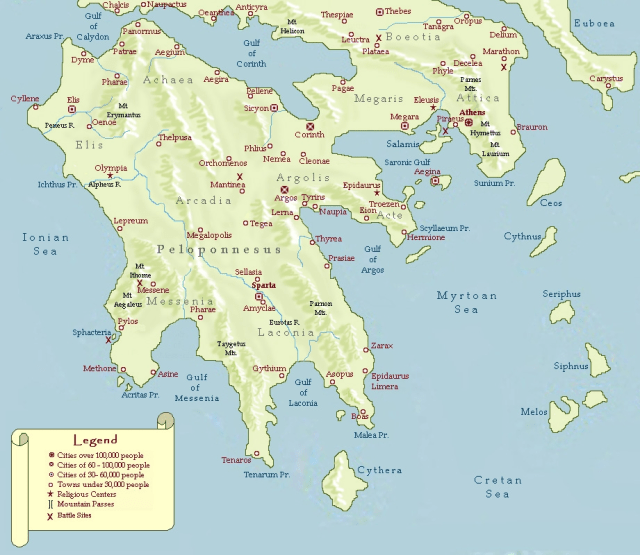
About nine months ago, I decided I was going to read all the fiction I could that was set in or based upon ancient Greece. This does not mean I would or could read everything that was out there. In fact, my local library had some new books in the genre that I picked up, glanced through, and decided weren’t worth my time. It’s a very popular genre, and it has given rise to some incredible classics and some incredible stinkers.
Here’s what I did read:
Date read
Title & author
My reaction
January 2026
Circe, Madeline Miller
heartbreaking in the best way
February 2026
Till We Have Faces, C.S. Lewis
(a re-read) in my opinion, far & away his best novel
Feb – March 2026
The King Must Die, Mary Renault
(a re-read) insanely good research, poetic literary writing
March – May 2026
Christianity and the Hellenistic World, Ronald H. Nash
nonfiction; explores whether Christian ideas were borrowed from Greek culture
May 2026
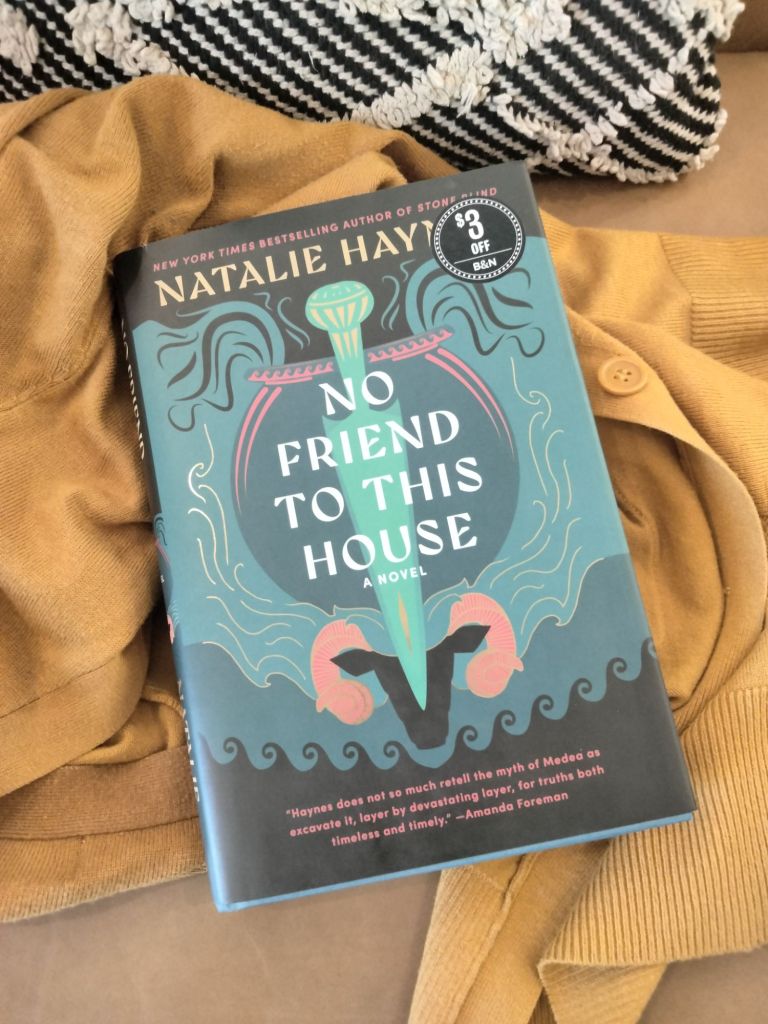
No Friend to This House, Natalie Haynes
perhaps the best you could do with a Jason and Medea re-telling, which isn’t saying much, as they are both royal stinkers who deserve each other
June 2026
The Sea of Monsters, Rick Riordan
a Percy Jackson book: fun, woke-ish, O.K.
July 2026
The Siren Song, Anne Ursu
a better Rick Riordan
in process
The Letters to the Corinthians: Revised ed., William Barclay
What better time to read a commentary on Paul’s letters to the new church in Corinth?
yet to read
The Bull from the Sea, Mary Renault
sure to be demanding but good
yet to read
The Curse of King Midas, Colleen M. Story
I started this, but it just was not the time for it.
In this post I attempt to summarize Graham Hancock’s book Fingerprints of the Gods: The Evidence of Earth’s Lost Civilization (1995). This book influenced the background for my novels. It also, in my mind, dovetails with Douglas Van Dorn’s biblical/archaeological research on giants in ways that I am sure Hancock never intended or imagined.
This post is only a summary. It will naturally be much less convincing than the book itself. My copy of Fingerprints runs 578 pages counting the bibliography and index. Hancock builds up to his thesis slowly, presenting many different lines of evidence and dropping mysterious hints to keep the reader intrigued. He also has to get into some fairly technical topics, particularly when talking about astronomy. I can’t do any of that in a 1,000-word post. So, like a bucket of cold water in the face, you will be treated to Hancock’s thesis in all its bizarre and fascinating glory.
Incredibly Sophisticated, Incredibly Ancient Maps
Hancock’s first two chapters are dedicated to the details of a number of old maps drawn up during the 1500s which show parts of South America that were undiscovered by Europeans at that time. More intriguingly, they show the coast of Antarctica as it appears under the ice. (This was before modern man’s discovery of Antarctica, and before seismic surveys revealed what lay beneath the ice.) The best-known of these is the Piri Reis map (drawn up in A.D. 1513), but there are others, such as the Orontes Finaeus map, the Mercator map, and the Buache map. All these mapmakers drew on older maps, which they compiled. Piri Reis, for example, had access to the Imperial Library at Constantinople, which is probably where he got the sources for his map.
The other amazing thing about these old maps is they often show locations in South America, for example, at accurate longitude and latitude.
The lesson that Hancock draws from these maps is this. Whatever source maps Piri Reis and others used, must themselves have been drawn up by an advanced seafaring civilization that had explored the world and knew how to project longitude and latitude. Amazingly, these seafarer/mathematicians apparently charted Antarctica at a time when it was not yet completely covered in ice. That makes their civilization, how do you say? Very, very old.
Ancient Astronomer/Engineers Again
Hancock then turns to the sophisticated ancient buildings that have baffled us in previous posts. He dedicates ten chapters to the Incan and pre-Incan civilization: the Nazca Lines, the amazing complex at Lake Titicaca, and the tradition that connects these to a bearded culture-bringer (the Viracocha), who came from over the sea.
Eleven more chapters describe the Central American cultures: their obsession with numbers, with calculating exact dates in the distant past and future, with forestalling the apocalypse (including by human sacrifice). They were also sophisticated astronomers. The pyramid complex at Teotihuacan, for example, appears to have been laid out as a scale model of the solar system.
And then there is ancient Egypt. Seventeen chapters are dedicated to it. There are many things to notice. Here are just a few: ancient Egyptian civilization seems to have appeared suddenly as a high civilization, complete with myths, history, engineering, and an obsession with boats. Overall, its history is one of slow decline and loss of knowledge, rather than slow buildup. (Interestingly, the same point has been made about ancient Sumer.)
The pyramids at Giza do not match the pyramids that are supposed to have been built immediately before and immediately after them. They are far more durable and sophisticated than these others. If we accept the received chronology, the Egyptians built some relatively crummy pyramids, then a few generations later built some amazingly good ones, then turned around and went back to building relatively low-quality pyramids again. Hancock suggests that instead, the Giza pyramids are much older than commonly thought. They were built with knowledge or technology that was subsequently lost. The comparatively crummy pyramids are attempts to copy the ones at Giza.
Hancock writes, “Robert Bauval’s evidence showed that the three pyramids [at Giza] were an unbelievably precise terrestrial map of the three stars of Orion’s belt, accurately reflecting the angles between each of them and even (by their respective sizes) providing some indication of their individual magnitudes. Moreover, this map extended outwards to the north and south to encompass several other structures on the Giza plateau … the Giza monuments were so arranged as to provide a picture of the skies … as they had looked – and only as they had looked – around the year 10,450 BC.” (page 356)
The Great Pyramid at Giza has a ratio of 2pi between its original height and the circumference of its base. This strengthens the argument that it was meant to represent a star (a circle). The Pyramid of the Sun at Teotihuacan has a ratio of 4pi between height and base circumference. Both of these pyramids had to have an odd angle of slope to accomplish this (52 degrees for Giza; 43.5 degrees for Teotihuacan), so it seems to have been intentional. Pi was supposedly not calculated correctly until it was done by Archimedes in the third century BC, but apparently the ancient Egyptians and the ancient Mexicans were familiar with it.
Where Hancock is going with all this is that people on both sides of the Atlantic got their amazing engineering, mathematical, and astronomical knowledge from an older “source” civilization. He thinks it was the same seafaring civilization that apparently charted Antarctica. This impression is strengthened by the Egyptian obsession with boats and by the Incan legends that say all this knowledge came from over the sea.
Is Hancock Arguing for Aliens?
Not in this book.
He has written several books about ancient mysteries. I have not read them all. He has now started writing fiction, and in the one novel of his that I have read, it becomes apparent that his interest in all this is decidedly New Age in character. The novel features an angelic/earth mother spirit guide, telepathic Neanderthals, the whole nine yards. So, I can’t swear that aliens won’t show up at some point. But that is not the thesis of Fingerprints. Hancock is arguing that there was a very advanced civilization of people well before 10,000 BC. Whether these people were taught by aliens, spirits, or some other stuff like that, he does not say, thankfully. Because, luckily, this book relies heavily on evidence.
So the ancient cartographers were not aliens, not even according to Hancock. But still we have a problem: Where was this civilization located? You don’t normally get an advanced civilization until you have a critical mass of arable land. In short, a continent. Hancock believes he has solved this problem. He believes there was such a mass of land, but that it has since undergone a cataclysm. And now we come to the really wild part of his thesis.
It’s the End of the World As They Knew It
Mythology about a period of cataclysms in ancient times is universal. Hancock dedicates four chapters to this alone. Flood myths, for example, are very common. But most cultures also record things like earthquakes, fire falling from the sky, the sun not rising for some long period of time, or an endless winter. Hancock discusses myths like this in some detail from the following cultures: Aztec, Sumerian, Greek, Inuit, Chinese, Southeast Asian, Pacific, Indian, Egyptian, Mayan, and Norse. It should not be hard for the reader to track down these myths. Some cultures (the Aztecs and the Hopi, for example) believe that disasters come at regular intervals and that each one ushers in a new age of the world.
Hancock believes that these myths are actually historical records (with all the usual caveats about them becoming garbled, etc.) of a period of geologic upheaval that happened within human history. I’ll put it in his own words:
“This geological theory was formulated by Professor Charles Hapgood and supported by Albert Einstein. What it suggests is a complete slippage of our planet’s thirty-mile-thick lithosphere over its nearly 8000-mile-thick central core, forcing large parts of the western hemisphere southward towards the equator and thence to the Antarctic Circle. This movement is not seen as taking place along a due north-south meridian but on a swivelling course – pivoting, as it were, around the central plains of what is now the United States. The result is that the north-eastern segment of North America (in which the North Pole was formerly located in Hudson’s Bay) was dragged southwards out of the Arctic Circle along with large parts of Siberia [which were dragged into the Arctic Circle].
“In the southern hemisphere, Hapgood’s model shows the landmass that we now call Antarctica, much of which was previously at temperate or even warm latitudes, being shifted in its entirety inside the Antarctic Circle. The overall movement is seen as having been in the region of 30 degrees (approximately 2000 miles) and as having been concentrated, in the main, between the years 14,500 BC and 12,500 BC – but with massive aftershocks on a planetary scale continuing at widely-separated intervals down to about 9500 BC.” (page 471)
So that’s the thesis. Here are the things it explains:
Why North America was once covered with glaciers, centered around Hudson Bay, and why they suddenly started melting.
Why, during the same period of time, Siberia was apparently not covered in glaciers
Why there is evidence that the climate was once much warmer in parts of Siberia. We find flash-frozen mammoths with temperate or even tropical plants still in their mouths and stomachs. (Actually, I still don’t understand how mammoths could be flash-frozen even with Hancock’s thesis. But at least it offers some explanation.)
Why there is evidence that the climate was once much warmer in Antarctica as well.
Furthermore:
According to Hancock’s theory, the survivors of this advanced civilization that previously existed on what is now Antarctica fled their homeland, taking their science with them.
They settled in other parts of the world and tried to rebuild.
Hancock also thinks that they deliberately seeded myths and cults to preserve knowledge and to draw people’s attention to the processional cycle of the constellations because they wanted to warn them. They believed that geological disasters like this occurred cyclically in concert with celestial events. He believes this is why the pyramids were built, for example. A good chunk of his book is about this, but I don’t have time to relate it here.
What’s a Christian Writer to Do With All This?
First of all, it is not possible to integrate everything. It just isn’t.
To take just one example from above, if the earth’s crust took 2,000 years to slip, how did mammoths come to be flash frozen? I have no idea. I don’t think anybody does, whatever their theory.
To take another example, Hancock’s thesis requires that after the age of cataclysms, there were human survivors in scattered parts of the world. These were then visited by refugees from the mother civilization, who taught them things, and they remember these culture-bringers in their mythology. You cannot make this work perfectly with the idea that at one point there was a universal flood that wiped out all humankind except four couples, and that the flood myths are memories of that.
Every culture has stories of culture-bringers (human or divine) who taught them to do things that are basic to that culture. Most cultures with a flood myth have the survivors of the flood landing right in that culture’s homeland and becoming the direct ancestors of that culture. Most of them don’t have a section in there where the survivors land somewhere very far away, and then their descendants travel a really long way to get to the current homeland. Most peoples believe that they live at the mythic center of the world. So you have to take these things into account. Every origin myth cannot be true in all its details.
That said, here is what I, as a Christian, have attempted to do with Hancock’s thesis and more importantly with the evidence that inspired it.
What I appreciate about Hancock is his attempt to take seriously the many lines of evidence that human beings were familiar with advanced mathematics, engineering, and astronomy long ages before we are told that human civilization started. This fits in, far better than the received “cave man” picture, with the ancient world as it is hinted at in the early chapters of Genesis. There we see civilization taking off like rocket, apparently with writing and record-keeping, and flourishing until it is destroyed by the flood.
Hancock’s theory of earth crust slippage does not contradict the Genesis account either. It is not hard to imagine an age of cataclysms leading up to the great flood. We are not told that this happened, but then Genesis, with its laser focus on redemptive history, does not tell us a great many of the things we would like to know. If we imagine earth crust slippage culminating in a worldwide flood, we end up with almost the same picture as that painted in Fingerprints. The only difference is that the amazing monuments at Giza and other places could not have been built by refugees from a mother civilization. They would have to have been built by Noah’s descendants trying to recover lost knowledge … or by the almost-unknown-to-us civilizations before the flood.
Genesis: Even More Daring than Hancock
Genesis does not give us a complete picture of the antediluvian world. It tells us only a few major names and events with very little explanation or context. We are not told how long the antediluvian period lasted; what the world population was before the flood; what the people or animals looked like or their relative sizes; what kind of technology existed; whether there were cities. As a result, we tend to picture Noah and his family, almost all alone, out in the middle of a desert (inspired by the way the Middle East appears today), with a bunch of modern-day animals. But we aren’t told that’s how it was. We aren’t told much at all. In fact, we don’t have – anywhere – any reliable sources that can tell us much about the very ancient world.
Genesis does, however, tell us one very weird thing which fits in well with worldwide myths but which Hancock’s thesis basically ignores.
Interesting as I find Fingerprints of the Gods, it is of course not perfect. Among other problems, it fails to take seriously the universal testimony of human culture that there used to be “gods.” Hancock falls prey (at least in this book) to the materialist notion that anything attributed to gods must be explainable by smarter people with higher technology. Of course, this smuggles in the idea that most ancient humans were stupid and gullible and would apply the “gods” label to anything they didn’t understand. This kind of snobbery dogs Hancock. For example, he quotes with approval a source that wonders how the Mayans could have had such advanced calendars when they hadn’t even invented the wheel.
Genesis, on the other hand, does not patronize ancient humans. Shockingly, it vindicates their myths. It is recorded in Genesis chapter 6 that the “sons of God” (some kind of heavenly beings, members of the divine council) came down to earth and intermarried with human women, and that their offspring were giants.
Obviously, that is a stunning claim. I can’t blame you if you’re not convinced of it on first hearing. Some day I will deal with it in more detail in another post (one that summarizes Douglas Van Dorn’s book). For now, I just want to say a few things about this idea as it relates to Hancock’s thesis.
Every culture, worldwide, has myths about gods and giants. There is a huge body of mythology about this stuff, and it usually shows up in the form of origin stories and tales that purport to be about historical rulers. No doubt the ideas of gods and giants, and many other themes from mythology, are a deep part of the human mental furniture. But this does not necessarily mean they are not also memories of historical events. How and why did this particular furniture get in our particular living room? Perhaps people did not get these ideas just from plumbing the depths of the human psyche. We might want to take these stories seriously as memories of historical events, since we are taking seriously the stories of floods and cataclysms that show up in the same cultures, and often in the very same narratives.
And, if you are still with me, taking seriously the idea of gods and giants might also give us our answer as to how people managed to build incredibly sophisticated monuments out of megaliths. Imagine a world in which people typically live almost a thousand years (per the ages given in Genesis) … in which ten or twelve generations can be alive at the same time, so knowledge is not lost … in which people are smarter and healthier than we are now, since there has been less genetic decay … and in which some of these people are actual giants. All of a sudden it starts to sound … maybe … almost possible. Maybe you and I could build the Giza pyramids too, if we had a thousand years to do it in and if we had intelligent giants helping (even directing?) us.
Now it’s your turn. I am posting this 24 hours late (I usually post on Friday, not Saturday), and even with the extra time, I realize this post is loosely written. This is such a big topic, worthy of an essay weeks or months in the making … not to say years. I did not spend years, months or even weeks on this post (although I have spent a few years thinking about all this stuff). My goal is not to make a watertight argument, just to sketch out some intriguing possibilities. Still, if you find problems with the post, point them out in the comments section (alongside your laudatory comments, of course) and I’ll do my best to tighten and polish it.
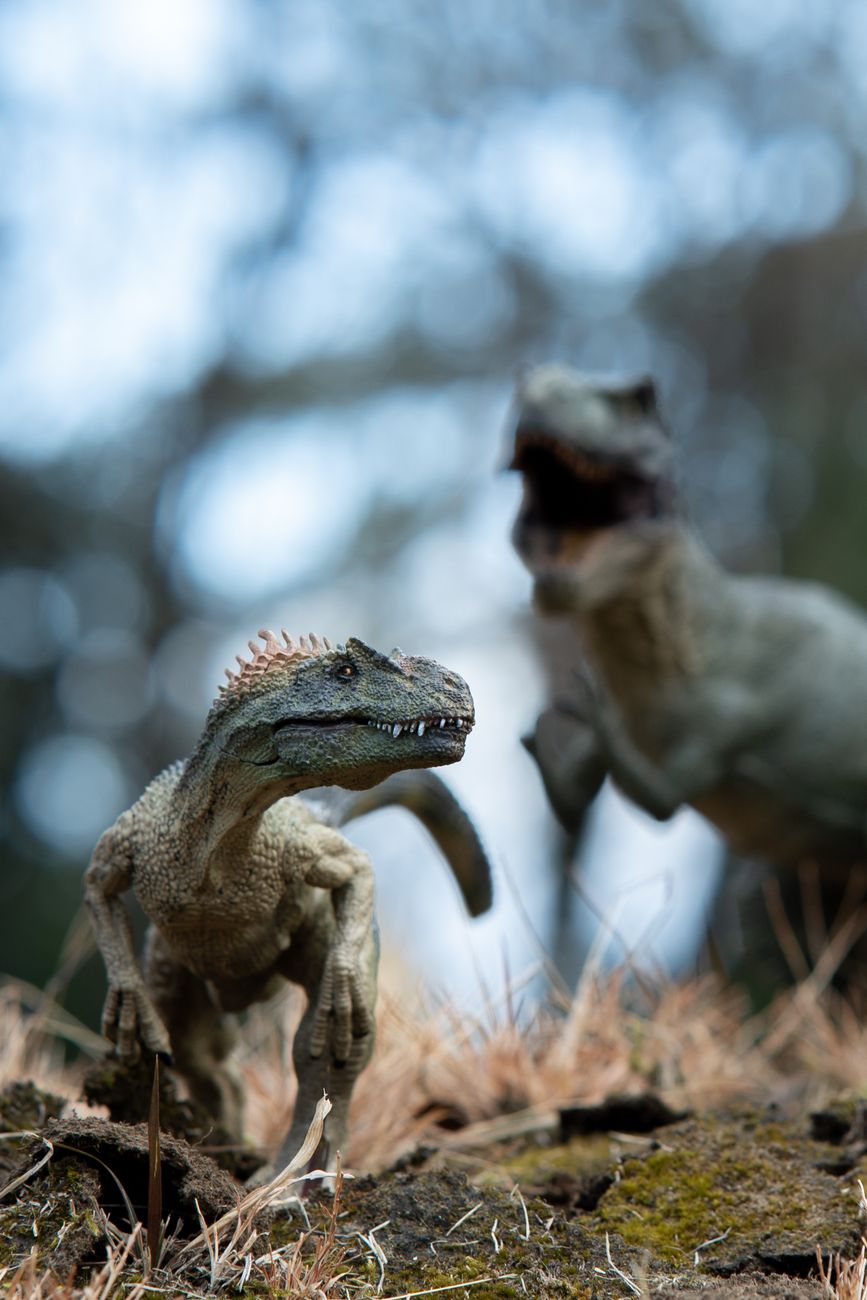
Photo by u7d20u6750u738bu56fd Footage Kingdom on Pexels.com
Readers of The Long Guest have noticed that it features some “dragons.”
These are not the kind that breathe fire, collect treasure, talk in riddles, and sail through the sky on golden wings. Lord knows, I’ve got nothing against that kind. But The Long Guest is not that sort of story. It’s a speculative novel about what life might have been like in the very ancient world. Its “dragons” are basically animals, part of the milieu through which the characters move as they leave Babel.
They are, of course, dinosaurs. Below is some of the research that prompted me to include them.
Wait, ‘Dragons’ Are Dinosaurs?
The evidence from paleontology is complex, incomplete, hotly debated and far, far beyond the scope of this article. But there is plenty of historical evidence that human beings occasionally saw, and even might have interacted with, various kinds of dinosaur. Often they called them “dragons.”
Dragon ‘legends’ exist all over the world. For example, when my husband and I lived in Borneo, there were stories of a long, skinny water dragon (‘naga’) that lived in the rivers. This dragon was part of the local mythology, but it was also believed to be an actual animal. After all, the other prominent animal in the local mythology was the hornbill (a bird similar to a toucan), which still lives in the interior of Borneo in great numbers.
Dinosaurs in Premodern Art
Let’s start with depictions of dinosaurs in premodern art. All the examples I am going to give below appear in the context of art that features many other animals found in the natural world.
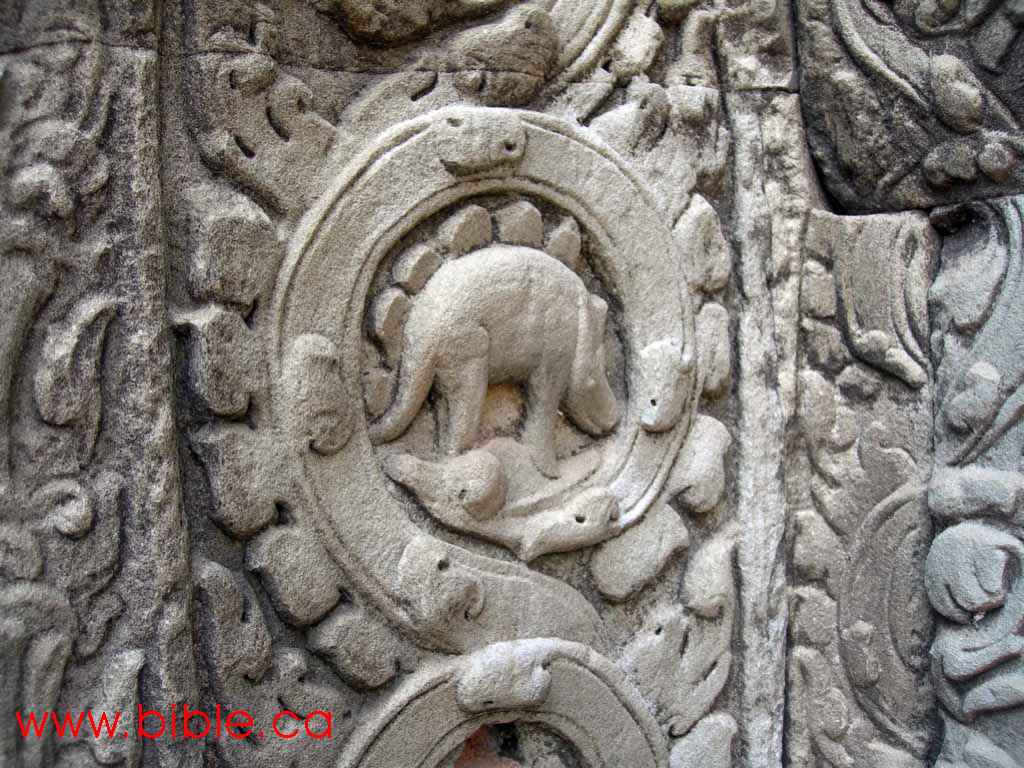
On Ta Prohm temple in Cambodia, there is an image that appears to be a stegosaurus alongside depictions of a monkey, deer, and parrots. On Kachina Bridge in Utah, the Anasazi petroglyphs include an animal that looks like an Apatosaurus. Among the petroglyphs at Havai Supai Canyon, near the Grand Canyon, is an image that appears to be a dinosaur with a long neck, standing upright and balancing on its tail.
Then there are the tens of thousands of small handmade clay sculptures that have been dug out of the ground near the foot of El Toro mountain in Acambaro, Mexico. Besides sculptures of people, musical instruments, idols, and so on, there are – you guessed it – hundreds of recognizable dinosaurs.
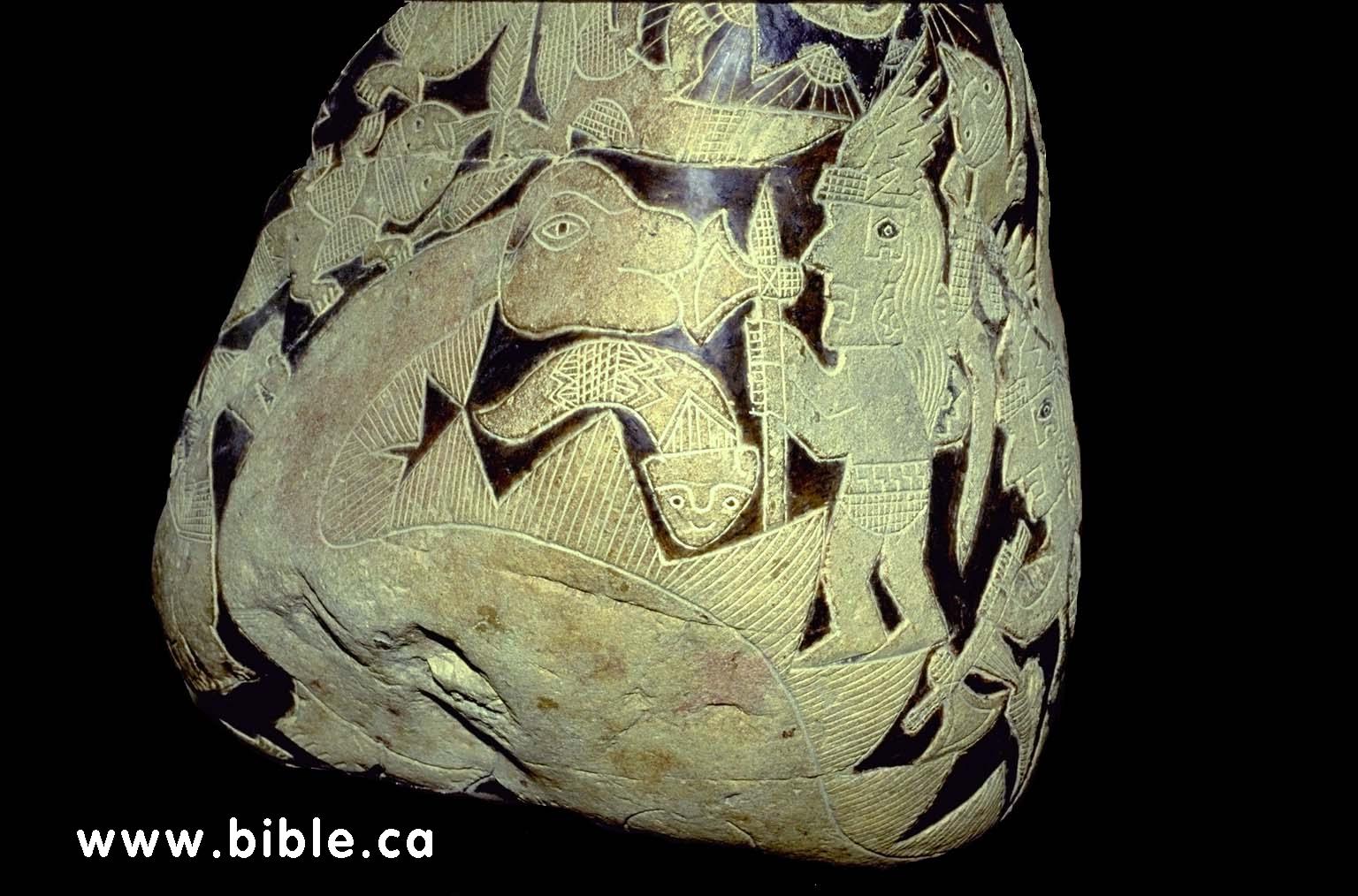
Finally, we have the Ica burial stones of Peru. These have images incised on them, including lots of dinosaur images. Interestingly, they show sauropod-like creatures with spikes on their backs. When I was a kid, sauropods were shown as large, grey, slow, and reptilian, with smooth backs. But apparently, in 1992 we moderns figured out that sauropods had “dermal spines.”
Visual images, especially petroglyphs, can be hard to interpret. As you might expect, the sculptures and images above are beloved of creation scientists and have been the subject of debunking by those who hold that dinosaurs did not survive to overlap with people. Sometimes the debunking takes the form of “That’s not really a dinosaur”; other times, as in the case of the Acambaro sculptures, the refrain is, “It must be a recent hoax.”
In the links above, I have tried to include a mix of both sympathetic and skeptical sources. I wanted you to be able to see the images; when possible, I took you to a skeptical source so that you can verify that the image in fact exists. Using the links above, the curious can find out more about the controversies (and with prehistory, the controversies never end).
But now we turn from visual images to less ambiguous accounts in the form of writing.
Historical Evidence for Dinosaurs
Once we start taking dragon ‘legends’ seriously as possible historical accounts of dinosaurs, we start seeing that there are a lot of accounts to consider. Here are just four:
The ancient Chinese, of course, had a whole cosmology built around different kinds of dragons. So much could be said, but I just want to note two things here. First, Chinese dragons are strongly associated with the Emperor because, among other reasons, of a legend of an early emperor, Xia Yu, who was helped by a wise dragon. (Note in the link above that Xia Yu’s story has other features common to the early chapters of Genesis. He lives hundreds of years; he is a founder and a culture bringer; he helps tame the dangerous floods. He is also an ancestor and founder who is later worshiped as a deity, as seems to have been the case with Nimrod.)
Secondly, Chinese dragons differ from Western dragons because they tend to be bearded. Some depictions even have a mane similar to a lion’s. This could be a case of combining characteristics of different animals, which is explicitly done in Chinese dragon mythology, but — just a thought — it could also be a depiction of hair-like feathers. “Hairy” dragons made no sense as dinosaurs until a few years ago, when we started discovering that many dinosaurs had quills or even feathers. See the following links: First Dinosaur Tail Found Preserved in Amber; Top 10 Dinosaurs that Aren’t What They Were; Fossils found in Siberia suggest all Dinosaurs had feathers.
Speaking of feathered dinosaurs: myths about, and worship of, a feathered serpent go way back in a variety of Mesoamerican cultures. This feathered serpent is called Kukulkan in Mayan, but is better known by his Nahuatl name of Quetzalcoatl. He even has a pterosaur named after him, though in reconstructions it looks more like a big bird than like a winged snake. (But compare this myth to the Hebrew “seraph serpents.”)
Continuing with the ancient Hebrew, here is a passage from the book of Job: “Look at the behemoth, which I [God] made along with you [Job] and which feeds on grass like an ox. What strength he has in his loins, what power in the muscles of his belly! His tail sways like a cedar (!); the sinews of his thighs are close-knit. His bones are tubes of bronze, his limbs like rods of iron. … Under the lotus plants he lies, hidden among the reeds in the marsh. … When the river rages, he is not alarmed …” (Job 40:15-23)
This description, particularly the tail swaying like a cedar, sounds like some kind of sauropod. For comparison, in the chapter before this God has given some poetic, but accurate, descriptions of the behavior of mountain goats; does; wild donkeys; wild oxen; ostriches; war horses, hawks, and eagles.
Job, by the way, apparently lived in the Ancient Near East not too long after Babel, if we go by his lifespan. According to the book of Job, he lived another 140 years after the events he is famous for. In Genesis 11, we see life spans of roughly 200 years becoming commonplace some time between Babel and Abraham. This is also the time period in which my book is set.
And now, we come to my favorite: dinosaurs in Beowulf. For this analysis, I owe Bill Cooper, author of After the Flood (1995). His book has an entire chapter devoted to zoological terms in Beowulf. Among many other rich ethnological and linguistic details, Cooper points out that in the original Anglo-Saxon, Grendel is nowhere referred to as a “troll.” In fact, ‘Grendel’ appears to be not a personal name but a name for a species: there are place-names in England such as “Grendeles Mere” (Grendel’s Lake), Grindles Bec, and Grendeles Pyt. There is even Grindelwald (“Grendelwood”) in Switzerland. (!)
Looking at the characteristics of Grendel as described in Beowulf:
He is in “the shape of a man, though twisted” and “more huge than any human being.” In other words, large and bipedal.
He is a “mearcstapa” (a marsh-stepper), who stalks the marshes.
He is a nocturnal predator (a “sceadugenga” — shadow-goer).
He is a “muthbona,” one who slays with his mouth. He is able quickly to devour human beings (once, 15 in one night). This would be difficult if he had a humanoid type of head and jaw.
Hrothgar’s warriors have been unable to kill Grendel for 12 years, and he is said to be invulnerable to ordinary weapons.
The way Beowulf kills him is to grip him by his “claws,” at which point Grendel, realizing he is in trouble, tries to get away. But Beowulf twists Grendel’s arm off at the shoulder and Grendel runs off to bleed to death.
Later, when Beowulf beheads Grendel’s corpse, it takes four men to carry the head home on a spear (this is my own observation, not Cooper’s).
And another of my own: Grendel and his mother are both referred to as having “locks,” but see the discussion above about feathers or spines.
After offering all this evidence, Cooper doesn’t even bother to name the dinosaur. “Is there a predatory animal from the fossil record known to us, who had two massive hindlegs and two comparatively puny forelimbs? There are several such species.” (page 159)
Thus, four different streams of historical record that I think may be more than myth.
I am not suggesting that every story of a dragon is to be taken seriously as a sober historical record of a dinosaur encounter. Fables have been invented about dragons, just as fables have been invented about other animals that have captured the human imagination (i.e., nearly all of them). But this does not invalidate every historical account. No one thinks that foxes do not exist because of Aesop’s story of the fox and the grapes. No one thinks that whales do not exist because of Moby Dick or Pinocchio.
But Do They Breathe Fire?
The “dragons” in my books do not breathe fire. However, I have nothing in principle against the idea of an animal that could. After all, this world of ours contains the electric eel, the bombardier beetle, bat radar, bio-luminescent beaches, and the platypus, which apparently is able with its bill to detect electric fields put off by living things and so home in on its prey. Since all these things are possible, surely an animal could have existed that could expel superheated liquid, gas, or even – who knows? – actual fire. The process that allowed it to do this would likely be chemically based and so perhaps not visible in a fossil.
Dragons in The Long Guest
Dragons in my first book appear as part of the milieu, not as characters. Since they do not play a major role, I can mention them without spoilers.
Early in the book, two of the men go on a hunting/scouting trip. They observe a duckbill-type dragon with a crest with pink coloring. On the way back, they have an encounter with another dragon of the raptor type, which is hunting a wild boar that they are also hunting.
Much later in the book, the tribe has crossed Mongolia and has almost reached what is now the Liao River (home of the “pig dragon” artifacts). There they have a friendly encounter with a group of strangers who are capturing a dragon to take home to their king. The “dragon” in this scene is a Triceratops-like creature that sports dermal spines, blue-and-gold feathers on its crest (because why not?), and smooth feathers over the rest of its body. (My day was made, once about ten years ago, when I read in a newspaper that a Triceratops had been found covered in feathers. I now can’t track down the source … but it’s too late. Feathered triceratops/Chinese pig dragon has already made it into the book.)
Loosely Related Update
A long time ago, Antarctica had a temperate or tropical climate, lots of animal life, and this cute little reptile.
Sources
Butt, Kyle and Eric Lyons. Dinosaurs Unleashed: The True Story About Dinosaurs and Humans. Apologetics Press, Inc., 230 Landmark Drive, Montgomery, Alabama, 1st ed. 2004, 2nd ed. 2008.
Cooper, Bill. After the Flood: The early post-flood history of Europe traced back to Noah. New Wine Press, PO Box 17, Chichester, West Sussex, England, 1995. The creatures in Beowulf are discussed in Chapter 11, p.146 ff.
Kleeman, Terry & Barrett, Tracey. The Ancient Chinese World. New York: Oxford University Press, 2005.
This is my second post about non-stereotypical hair. See my first one here.
If I were to ask you to draw an Ancient Egyptian, you would probably draw someone with gold, reddish, or dark skin, long dark eyes, and black hair. Red hair would probably not appear in your drawing. However, there has been a red-haired strain in Egyptian genetics apparently from time immemorial.
Ramses II, 90 years old when he died, was tall, thin, and by the time of his death he was stooped and had a tooth abscess. He also had red-gold hair. “Specialists who examined the strands under a microscope found that it had been dyed with henna and in all likelihood had been auburn in Ramses’ youth” (Time-Life, p. 153). Tall, thin, red-haired and hook-nosed, Ramses II does not match my mental picture of a typical Egyptian.
But he is not the only one. A number of red-haired Egyptian mummies have been found. Archaeologists used to assume that the hair was once dark and had been bleached out by the embalming process. But a recent study treated hair samples with the natron salts similar to those the Egyptians used, and found that the process did not change the color of the hair. Apparently these were actually redheads.
When I was taught Egyptian mythology in school, I was told that Seth, the villain of the story of Isis and Osiris, was red-haired. He was also Osiris’ brother. I found this intriguing, and it reminded me of the Semitic story of Jacob and Esau, who were twins one of whom was a dark-haired (?), “smooth” man, and one of whom was “hairy” and “red.”
Now I find out that Seth, as his legend later developed, was a trickster god, usually portrayed as a composite of different animals, with red hair or fur. Also, red was a symbolic color that could represent vitality or anger (no surprise there). So it’s possible that Seth was an entirely invented character and that his unusual hair color was picked to match his personality and symbolism. But, since this is an ancient origin myth, I can’t shake the possibility that there once was actually a founding pair of brothers, one of whom was dark-haired and one of whom was red. (Also, shades of the original Thor, a quick-tempered, red-haired, trickster god!)
If Red Hair is Native to Egypt, Does This Mean that Ancient Egyptians were Indo-Europeans?
No.
It just means that, as for most people groups worldwide, their genetics were more complex than the layperson would first imagine.
The ethnicity of the ancient Egyptians has been a hugely contested topic. Their civilization is so intriguing that everyone wants to claim them. Eurocentrists have tried to claim that the Egyptians were actually “Mediterranean” (specifically the Hellenistic, European-style Mediterranean), because this supports their dogma that Europeans have been the only source of civilization and there has never been a high civilization to come out of Africa. Afrocentrists have countered by claiming the ancient Egyptians were not only not white, but were truly black, the ancestors of the modern-day sub-Saharan Africans. The world’s first high civilizations were African, and everyone else has stolen their ideas!
Both groups are wrong about the ethnicity of the ancient Egyptians. Genetic studies of mummies are difficult to do, and this is truer the older the mummies are, but so far, they have concluded that Egyptians have more or less always been … Egyptian. Uniquely themselves, more closely related to the peoples of the Levant than to any others, and genetically, more or less just like the Egyptians of today.
Also, Could We Stop the Tug-of-War?
And may I just add, this is stupid, human race? Could we please (and when I say we, I mean you, human race) stop all this “I started civilization” “No, I did”?
First of all, Egypt was not the world’s first civilization. Contemporary with them, we have the Sumerians, who though they did not live in Africa were probably also black, and the little-known Balkan civilization that gave us the Vinca signs. And there are good indications that many civilizations existed just as advanced as, and prior to, these. See all my posts about The Lost Civilizations of the Stone Age by Richard Rudgley.
The Afrocentrists are closer to being right than the Eurocentrists. Arthur C. Custance makes the case,
One does not think of Africa as particularly inventive. As a matter of fact, however, so many new things came from that great continent during Roman times that they had a proverb, “Ex Africa semper aliquid,” which freely translated means, “There is always something new coming out of Africa.”
It is true to say that whatever inventiveness [Indo-Europeans] have shown in the past three or four centuries has almost always resulted from stimulation from non-Indo-Europeans. Our chief glory has been the ability to improve upon and perfect the inventions of others, often to such an extent that they appear to be original developments … [I]t does not seem proper to call a people “inventive” who once in a while do invent something, but who 99% of the time merely adapt the inventions of others to new ends.
Custance, Noah’s Three Sons, pp. 199, 215
That said, the idea that any one nationality can claim to have founded civilization is … stupid, human race. Human beings are really smart and civilization springs up wherever they go. Lots of people have invented civilization, many times.
(Furthermore, even if your ancestors did build the Parthenon or the Pyramids or Notre Dame, you didn’t build them personally, did you? Do you really want to start taking credit for amazing stuff that people who share your genetics did 3,000 years ago? Are you also going to take credit for all the atrocities they committed? Human race, you are too smart for this stupid idea.)
Egyptian Red Hair Makes an Appearance in The Long Guest
Nimri, the anti-hero of my novel The Long Guest, is a Cushite, who per Genesis is related to “Egypt.” Mid-novel, after being separated from his own people and dragged off on a journey over the Asia steppes, he observes some red-haired Indo-Europeans.
When I first saw that redhaired fellow I was reminded of my relative Mizra. He had red –gold hair and bright burnished skin like my own – only even more ruddy, just a shade darker than his hair. He was tall and thin, with a long thin arrogant face. Between that and his unusual coloring, he was a very striking-looking man. He used to stalk around the architects’ complex like a very god … how we all admired him, and wanted to be like him! But no one could compare to Mizra.
The Long Guest, Chapter 13
The Hebrew word for Egypt is Mizraim, which is actually plural: “Egypts.” Rather than making Nimri’s relative’s name plural, I have simply called him Mizra.
Nimri never manages to tell anyone about Mizra, because he cannot yet communicate at this stage in the story. But I can tell you. In case you didn’t know, I’ll whisper it in your ear: Some Egyptians had red hair.
Custance, Arthur C. Noah’s Three Sons, The Doorway Papers series vol. 1, Zondervan, 1975. pp. 155 – 216 discuss “The [Technological] Inventiveness of the Hamitic Peoples.” Or you can read the chapter here.
Ramses II: Magnificence on the Nile, by the editors of Time-Life books, Time-Life Books, Alexandria, Virginia, 1993. p. 153 shows the red-gold hair on the mummy of Ramses II.
The gist of this book is that history moves in seasonal cycles. The authors spend a lot of time talking about how expecting seasonal cycles in history is the wisdom of the ancients, and that this has been lost to a linear conception of time that came from Christianity and got even more exaggerated during the Enlightenment. Linear time leads people to expect that things will just keep getting “more so;” that the future will look like an extrapolation of the recent past. As a result, people never expect a turn of history coming, and are always gobsmacked when it arrives.
As they urge readers to accept a cyclical view of history, the authors go slightly overboard and make it sound as if we should worship the circle. They point out circular symbolism in various myths. They say that a cycle is associated with the number four and feminine energy, whereas a line, or triangle, is associated with the number three and masculine energy. While this is not wrong, they then make it sound as if the idea of history as a line, moving in a particular direction, should be rejected and has nothing to offer us.
It’s not a big part of the book, but it is foundational and I found myself trying to integrate their view before I moved forward.
Should We Worship the Circle?
I believe that much of the symbolism they describe is correct. (Not all of it is, since the authors tend to cast a really wide net throughout history and literature, and then throw into the book anything they drag in that looks superficially similar to their thesis. But much of it is.) Seeing history as inescapably circular is an ancient, pagan way to view the world. And it does reflect something about the nature of humans and of creation. However, uncorrected, it tends to leave people fatalistic and trapped in the cycle. Exhibit A would be Hinduism. Christianity did indeed break people out of this endless treadmill by presenting a picture of history where the end is not like the beginning, where history moves in a definite arc or story from creation to fall to redemption to glorification. Of the many things that Christ did on the Cross, He broke us out of the endless cycle. That is why history fundamentally changed after His death and resurrection. You get different types of people, who think in different types of ways, and you get cultures that are Christianized developing in very different ways than any culture before them. Of course, one downstream effect of all this was that it made possible the Enlightenment, materialism, and what C.S. Lewis calls “the fatal serialism of the modern imagination.” These things aren’t good, but to put this in perspective, blaming them on Christianity is sort of like blaming your parents because you scraped your knee while you were on a trip that they took you on to Disneyworld.
Here’s how G.K. Chesterton put it:
As we have taken the circle as the symbol of reason and madness, we may very well take the cross as the symbol at once of mystery and of health. Buddhism is centripetal, but Christianity is centrifugal: it breaks out. For the circle is perfect and infinite in its nature; but is fixed forever in size; it can never be larger or smaller. But the cross, though it has at its heart a collision and a contradiction, can extend its four arms forever without altering its shape. Because it has a paradox at its centre it can grow without changing. The circle returns upon itself and is bound. The cross opens its arms to the four winds; it is a signpost for free travelers.
–Orthodoxy, p. 32
So, yeah. Although in the big picture, history is linear, cycles of development do still exist, both in human lives and in human societies, and we would do well to remember that and work within our nature.
The Seasons of a Saeculum
Briefly, they assert that history moves in cycles of just over or just under 100 years. These, they call a saeculum, following the Roman word for it. The seasons are:
Spring / A High: A time of building, strong families, and strong social cohesion
Summer / An Awakening: A time of spiritual revolution led by idealistic young people
Autumn / An Unraveling: A time when the values of the Awakening are applied to changing society, and things start to fragment
Winter / A Crisis: A time when the society is threatened by a series of shocks that often include war
(Fun fact, if you are into personality typologies, you can also make these seasons match the Four Humors: Sanguine, Choleric, Phlegmatic, Melancholic.)
Each season takes roughly 20 to 25 years. Each one causes the next.
The authors also identify four generational “personalities.” The personality of each generation is determined based upon their experiences in childhood and young adulthood. In what conditions did they grow up, and when did they come of age?
If you came of age during a Crisis, your generation is the Hero type: the can-do ones, prone to hubris.
If you came of age during a High, your generation is the Artist type: passive and conformist.
If you came of age during an Awakening, your generation is the Prophet type: fiery and moralistic.
If you came of age during an Unraveling, your generation is the Nomad type: neglected and cynical survivors.
Armed with these thought tools, you can now make applications.
The Applications
I appreciate the authors for not claiming too much for their rubric. First of all, they point out that these cycles are not precise in the time they arrive. This is an organic cycle, like the seasons. Some years, you might have a cool summer or a mild winter. Sometimes, seasons are delayed beyond what is usual. For example, the authors have a series of detailed charts in which they apply this rubric to American history. They say that during the Civil War, the Crisis came fast and didn’t last the usual 20 years. As a result, the cycle was shorter. That saeculum skipped the Hero generation. It went straight to the Artist generation of traumatized conformists.
Another helpful thing they say is that this year-like cycle in human history does not cause random events. There is still such a thing as chance, and as human will. However, a society’s reaction to events is heavily influenced by what season they are in. The United States did not immediately enter WWI after the sinking of the Lusitania, because we were in an Unraveling period. But we did immediately mobilize for war after the attack on Pearl Harbor, because we were now in a Crisis.
Finally, this cycle of history is not equally prominent in all societies. Because it has to do with changes in public attitudes, fashions, values, and child-rearing practices, in very traditional societies the cycle is muted. One generation is much like the last. When a society throws off tradition and allows its citizens a lot of social mobility and freedom to make their own choices, ironically that is when the cycle becomes a large factor in that nation’s history. It is for this reason, say the authors, that these seasons are particularly easy to spot in the United States.
It can be difficult to spot seasons of history in past societies (beyond speculation) when we know relatively little about them. Sometimes it’s pretty clear, as when we look at the cycle of idolatry-oppression by enemies-repentance-deliverance found in the book of Judges. We can also find many historic diatribes (probably written during an Unraveling) lamenting the loss of civic virtues.
O.K., so, with those caveats, if you are an American, you have probably been applying this rubric to the last hundred years in our country, which is super easy to do. Here we go:
Crisis: Wall Street Crash of Oct. 1929 through the end of WWII. Coming of age: the Great Generation, or what the authors call the G.I. Generation.
High: Late 1940s to early 1960s. Coming of age: the Silent generation. Beatniks.
Awakening: the “Consciousness Revolution,” late 1960s to early 1980s. Coming of age: the now-much-maligned Boomers. Hippies.
Unraveling: late 1980s to early 2000s. Coming of age: Generation X, or what the authors calls 13ers. Slackers.
The Great Generation are Heroes, the Silent are Artists, the Boomers are Prophets, and the Xers are Nomads. Tag yourself. I’m an Xer.
When It Doesn’t Fit Exactly
Now, how do we define a “generation”? It usually works out that once every 20 to 25 years, there is an identifiable new crop of young people. Hero and Prophet generations tend to be bigger, because of what’s going on around the time they are born. Hence, the Baby Boomers are Prophets. Artist and Nomad generations tend to be smaller, because they were born during a time when adults had other things on their minds (the Crisis or the Awakening).
Also, of course, the generations in a nation don’t necessarily fit with the generations in a given family. The authors point out that, often, it takes one big generation more than 20 to 25 years to reproduce, so that, for example, the children of Heroes are Prophets. The Prophets react against what their parents’ generation valued, but they get along better with their grandparents (also Prophets).
Here’s another example. My parents are Boomers. Now, the Boomer culture was rather anti-baby, anti-family, anti-settling down. However, my folks were not typical Boomers. They swam against the tide. They had six children, and my mom stayed home with us when we were small. They tried to raise us in a very pro-family way. So I was shielded from many of the things that my fellow Gen Xers had to deal with, growing up in an environment where kids were considered to “trap” their mothers, or with parents who divorced or went off to “find themselves.” However, I did pick up on the Gen Xer vibe of living in an unravelling society, being blamed for everything from racism to pollution to the hole in the ozone layer. When I read this line,
[O]ne student mockingly tells his friends in River’s Edge: “You young people are a disgrace to all living things, to plants even. You shouldn’t even be seen in the same room as a cactus.”
-p. 195
… I laughed. The fact that I found this funny, tells me that I am a true Gen Xer.
So anyway, I am a younger Xer. But because my parents had a large family, I have younger siblings who are Millennials (supposed to be the Hero generation; more on this later). Meanwhile, my husband’s parents are Silent generation (Artists). My husband has older siblings who are Boomers, and he is an older Xer. And because we waited a while to have children, our own children are … I guess … Zoomers? Who are supposed to be Artists? Or maybe Alphas? Who … I’m not sure what they should be, because this Crisis seems to be extending. Again, more on this later.
The Predictions, Accurate and Otherwise
The Fourth Turning, published in 1997, predicted that beginning around or shortly before 2005, America would enter a Crisis. There were a variety of things they thought could happen:
States secede or try to secede over federal taxes, causing a Constitutional crisis
“A global terrorist group blows up an aircraft and announces it possesses portable nuclear weapons.”
A government budget crisis leads to a government shutdown and a Wall Street crash.
A “new communicable virus” leads to quarantine, which local areas resist, leading to martial law.
War with Russia and Iran.
All these are taken from pages 272 – 273 of the book.
So where are we at now? Something that takes 25 years of your life might be too big to see, but I suggest the following. America’s Crisis era started on Sept. 11, 2001, with an unprecedented kind of terrorist attack, which led to big curtailments of freedom like the Patriot Act and the creation of the TSA, and to a number of wars. Then we had a housing market crash and financial crisis in 2008. Meanwhile, there were a series of incidents that, helped by agitators, caused riots in our cities. Police departments responded by being less active, and crime soared. People started to get freaked out, which led to the election of 2016 (nations tend to turn to a “strongman” in a crisis), which caused more people to freak out. The Crisis reached its climax in 2020 – 2022, with you-know-what.
So counting from Sept. 11, 2001, we are almost exactly 25 years into this Crisis era. According to the authors’ rubric of how these seasons usually go, we should be coming out of our Crisis soon, into either a new High with regenerated values, prosperity, and social order, or else into the total destruction of our society.
Which one do you think is happening? For me, I’m not sure. I see elements of people building new values and communities, but I don’t see any national consensus on these things. Nor do I particularly see signs of the Crisis ending.
To prepare for the Fourth Turning, the authors in 1997 recommended that individuals and families do the following:
“Return to the classic virtues.”
“Do not isolate yourself from community affairs.”
“Build personal relationships of all kinds. Face-to-face contacts … will become newly important.”
“Prepare yourself and your children for teamwork.”
“Maintain relationships of trust with your extended family … your household will function best if it is multigenerational.”
“Gird for the weakening collapse of public support mechanisms.”
“Generalists with survival know-how will have the edge over specialists who skills are useful only in an undamaged environment.”
These are all taken from pp. 318 – 321 of The Fourth Turning.
These are steps that are being, and have been, taken by many who think of themselves as preppers. and by people who are working and hoping for a cultural renaissance. I’m most familiar with those who are doing this within Christian circles.
The only blind spot that the authors seem to have is that they incurably think of the “teamwork” and “coming together” that must take place during a Crisis, as a national affair. They say “we” while thinking primarily of the national government. In the section on “preparing your children for teamwork,” they suggest not pulling your children out of government schools “if the schools are working.” While I have seen many people doing community building throughout this crisis, one thing I have not seen is a newfound trust in, or willingness to comply with, the federal or even in most cases the local governments. People have been coming together in “teams” to found and maintain private schools and other things like that, but not to join federal programs.
O.K., now for the predictions that didn’t prove to be so prescient.
Any book that makes this many predictions (even in general terms) is going to result in some howlers. For example, here’s the authors’ prediction about how the Silent generation would handle Social Security entitlements:
… America’s rising familiarity with the Silent elder persona will erode today’s support for across-the-board senior benefits. Unlike G.I.s, the Silent will not feel entitled. Their prior public deeds will not inspire them (or others) to lobby for a vast elder reward. … [The Silent’s] sense of guilt and instinct for compromise will compel them to give in some, relax their claims on young workers, and drain the electricity out of the third rail of Social Security politics.
— ibid, pp. 220 – 221
This — how to put it?– emphatically did not happen. I have heard with my own ears Silent generation members say, “We paid into the system for a lot of years. Now we need to get out of it.” When you set up a Ponzi scheme, no one wants to be left holding even a little bit of the bag.
They make a similar prediction about Boomers:
When the market hits bottom, millions of Boomers … will immediately have to make do with steeply diminished material consumption. Many will have no choice but to live communally or with their adult children… public spending on elder benefits will necessarily decline. … Congresses will debate massive cuts. To maintain G.I.-style elder dependence on the young, Boomers would have to wage political war on their coming-of-age Millennial children. It is a war they will not wage–and would not win if they did.
ibid, p. 284
Now, the retirement age has been raised, but other than that, I have not noticed any “massive cuts.” And from my observation, Boomers as a group have been perfectly happy to wage political war on Millennials. And they have won it, by convincing Millennials that the solution to their financial woes is more taxes and entitlements, not just for older people but for everyone.
I have not noticed a trend of Boomers moving in with their adult children, either. In the first place, they, not their children, are usually the ones who own homes, a situation brought about by entitlement policy applied to housing. In the second place, their children are often alienated Xers, and relationship isn’t the greatest (present company excepted). Finally, some Boomers I know are effectively the caregivers for their grandchildren.
In short, the collapse of the Social Security/Medicare system has come about more slowly than Strauss & Howe (or, frankly, I) expected. As an Xer, I did not expect to be able to retire, and maybe I still won’t, but my husband is approaching the age when he can start withdrawals to give us some breathing room, and there has not yet been a nationwide apocalypse. Color me surprised.
One more howler:
As they break into their twenties, Millennials will already be accustomed to meeting and beating adult expectations. Basking in praise… they will seek out [their elders’] advice … Every youth domain will become more mannerly, civic-spirited, and emotionally placid. In college, Millennials will lead a renaissance in student decorum and appearance, making profanity as out of date as the backward cap. … On the job, Millennials will be seekers of order and harmony. They will delight employers with their skills, work habits, and institutional loyalties. … Millennials will respond [to economic hard times] with a cheerful patience reminiscent of Depression-era G.I.s.
ibid, pp. 293 – 294
Look, I’m not here to slam on Millennials. I actually have a lot of sympathy for your generation. But there is no way this general picture describes the way things have gone with the Millennial generation.
Strauss & Howe are predicting that the Millennials will emerge as a Hero generation, because that’s what his historical scheme calls for. But this requires a lot more strength and resilience than Millennials, as a group, entered young adulthood possessing.
The authors did not foresee that Millennials would have been intentionally weakened by a number of cultural trends which were pushed on them by earlier generations. These include behavioral meds, and overpraising/participation trophy culture combined with identity politics culture, which gave complimentary messages that, on the one hand, you are so amazing and talented and don’t need to work to improve yourself, and on the other hand, you are a victim of history and society. Each of these messages is weakening; in combination, they are devastating. There is also the horrible sexual confusion that has been foisted upon the Millennial and Zoomer generations. This draws on the power of identity politics (being a sexual minority is an easy way to obtain an oppressed identity), and on the behavioral meds culture (giving powerful new medications in response to emotional distress).
What generation could emerge from such a gauntlet unscathed? It is no exaggeration to compare all these horrors to WWI, which wiped out a generation of young people and traumatized the survivors. These are not conditions that cause young people to “meet and beat adult expectations” in the positive sense, nor to “delight their employers.”
Perhaps Millennials are a Hero Generation in a new sense. If they are functional at all, it’s because they have won through an intense spiritual war. Perhaps we should think of them as veterans. Like veterans, they certainly bear mental and physical scars. But instead of coming back from a physical war and plugging into an existing social structure, they are having to re-invent the wheel in all the most basic domains of life: schedules, self-care, family.
And quite a few Millennials are a “Hero Generation,” itching for action, in the sense that they are committed Marxists who want to see the violent overthrow of society.
Others, like my younger siblings, are more like the G.I. generation after WWII, eager to get married, raise children, contribute to their communities, and build a wholesome cultural high.
The fact that we have Millennials going in these two very different directions makes me rather uncertain about how this Crisis is going to go.
I wonder whether what we have seen is what the author predicted on page 302:
If [the Crisis] ends badly, Millennials would bear the full burden of its consequence throughout their adult lives. If they come of age traumatized, like the Progressive youths of the Civil War, Millennials will thereafter attend to the details of suffering and healing as heirs to the Artist archetype.
It seems to me that our Millennials are behaving more like a “sensitive Artist” generation than like a “hubristic Hero” generation. This would mean that, as with the Civil War, America had once again skipped the Hero generation and gone straight to Artist.
The Prophet, born in the High, seeks vision; the Nomad, born in the Awakening, seeks realism; the Hero, born in the Unraveling, seeks power; and the Artist, born in the (prior or current) Crisis, seeks empathy.
p. 322
Reader, I Read-ed It
So, that’s the outlines of the book plus a few of my thoughts on it. Obviously, there is a lot more material in there. Some of it is really interesting (the parts that apply the seasonal rubric to the past). Other parts feel dated (ironically, the parts written in the future tense). Read it if you’re curious and want to know more. Meanwhile, what do you think? What generation are you? What do you want to do in the coming High?
The Unseen Realm is a scholarly book about the concept of the divine council in Ancient Near Eastern cosmology, especially in Ugarit, which was a near neighbor of Israel both geographically, culturally, and linguistically. Heiser finds this concept of the divine council assumed in the Hebrew Scriptures, similar to how the heliocentric model of the solar system is assumed in anything you see written since Copernicus. That is, it’s never stated or described directly, but it is referenced in many stories, phrases, and figures of speech, and is openly the setting for certain passages, such as Psalm 82.
The idea behind “the divine council” is that there is a Most High God (the Creator) who rules the earth with the help of a sort of committee of divine beings (elohim). This committee is traditionally conceived of as meeting on a high mountain, in a garden setting, often a place that is the source of rivers. Or as Ps. 82 calls it, “the great assembly.”
Heiser spends most of his book establishing that this view is present in Scripture.
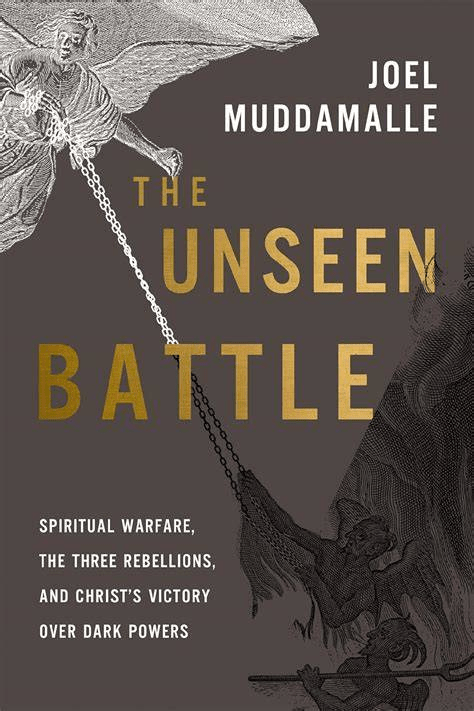
After reading Heiser, I heard a podcast interview with Joel Muddamalle. Muddamalle is the academic protege of Heiser (who has now gone to his reward). He is carrying on with researching this idea of the elohim as an active presence in redemption history, and also with popularizing it in the Christian world. And I heard that he had written a book, The Unseen Battle, which might be viewed as a sequel to Heiser’s book. So naturally, I had to get it.
I expected TUB to be all the same material as TUR, just with Muddamalle’s own personal style. It was not. The first few chapters do recap Heiser’s cosmology, but they don’t spend a lot of time establishing it, as Heiser did. Muddamalle then moves on to the nature of the battle, which Heiser touched on but did not major on.
The nature of the battle is that God wants to get the nations back from the gods.
The way this is done, in the church age, is through evangelism, missions, and building healthy churches and families. In short, obedience. It’s not primarily through a lot of fancy, spooky ghost-hunting or exorcism stuff.
This exegesis, naturally, warmed my little Reformed heart.
Now, it does mean that, if you are attempting to be faithful to your spouse and/or raise your kids; work hard and honestly at a lawful calling; worship the Lord on Sunday and support His people; or do any other forms of healthy, faithful culture-building, you have stepped into the battle. The dethroned powers do not like this sort of behavior. This may, perhaps, explain why just trying to mind your own business and live a quiet, peaceable life can occasion so much resistance: everything from health problems, to Murphy’s Law and attacks of depression and discouragement; to actual hate and legal resistance from human beings who do not like what you are doing. (Per Muddamalle, Scripture makes it clear that the “hosts” on both sides of this battle are mixed, consisting of human beings and of spiritual beings.)
Particularly if you are contributing in any way (including by prayer) to the disciplining of not-yet-Christianized nations, you present a threat to the old gods, who do not want to be cast out as they have been cast out of so many other nations in the last 2000 years. This is why foreign missionaries and native pastors in unreached or partially unreached countries undergo so many hardships: poverty, evil bureaucracy, and all kinds of health and mental problems.
The church itself, existing as an entity comprised of people from many nations, is a rebuke to the powers.
The multiethnic and diverse nature of the family of God, the church, can be seen through Paul’s use of polupoikilos. This term is a combination of two adjectives meaning “much” (polus) and “various kinds, diversified, manifold” (poikilos). The word polupoikilos can also mean “of many colors” or “polychrome.” Classical Greek writers used this word to reference cloth or flowers to convey a sense of intricate beauty. The word poikilos is used in the Septuagint to refer to Joseph’s coat of many colors (Gen. 17:3, 23). As Timothy Gombis observes, “The powers have ordered the present evil age in such a way as to exacerbate the divisions within humanity. God confounds them by creating in Christ one unified, multiracial body consisting of formerly divided groups of people.”
ibid, pp. 169 – 170
How about that. The Rainbow of Diversity, which we have been taught to hate, is actually God’s goal as well. The reason that we have been taught to hate it, is because of the way they have pursued it … trying to force it down by means of human power and moralism, by defining righteous and unrighteous groups and viciously suppressing those deemed to be foes of the rainbow. They have made “inclusion” mean “we exclude you.” This is what happens any time people try to make the world look like the restored heavens and earth, without Christ. They end up bringing about the opposite. True harmony among the ethnic groups is not an easy thing. It can only be obtained by means of the New Birth.
Though this is a scholarly-for-the-layperson work, Muddamalle’s lighter personality shines in it. He has many call-out boxes sprinkled throughout the book, devoting a page or two to questions such as, “Are There Aliens in This World?” and “What About Demonic Exorcisms?”.
That’s it. Just I promised: a short review.
Oh! What are the “three rebellions”?
Adam and Eve’s rebellion at the Tree
The rebellion of the “sons of God,” when they chose to come down and take human wives (Genesis 6)
Humankind’s post-Flood rebellion at Babel (Genesis 11). It was at this point that God divided up humankind among the elohim, giving each people group extant at the time its patron god.
Anyway … back to the battle! God be w ye this weekend!
Like anybody who has ever encountered it, I have “issues” with the story of Jason and Medea.
In case you missed it, he sails off on the Argo to get the Golden Fleece. She is a witch, daughter of the king of Colchis, descendent of Helios, the sun god. Struck by Eros with an inordinate crush on Jason, she helps him accomplish all the tasks necessary to get the fleece and escape alive. He takes her with him on the Argo, and they crash around Greece, leaving a trail of bodies in their wake. Eventually, he throws her over for a younger model, a native Greek gal who is daughter of the king of Corinth. Medea takes a bloody and spectacular revenge, which I won’t spoil (look it up).
I first heard all this from my ninth-grade Lit teacher. She presented it in a very feminist way, but to be fair, this particular story sort of begs for that. I remember, in university, arguing rather incoherently with a male classmate about who was the real villain in this story. Later, when I was home schooling and read a simplified version of the legend to my kids, we decided we didn’t like the story, and we didn’t like Jason or Medea either, and they were both horrible people and they deserved each other.
So, hopefully, this book will be the nadir of my year of reading Greco-fiction: facing the story of Jason and Medea square on, by reading an entire novel about them.
The reason I liked the title of this novel is that it sounded like a phrase taken directly from the Greek — and so it was. The author, Natalie Haynes, has really done her homework.
Euripides’ Medea was the first Greek tragedy I saw performed, and it was the first or second play I read in Greek. … I wrote my dissertation on the heroics of infanticide in Euripides (I don’t have children, before you think about composing your sternly worded letter). … I’ve been reading and thinking about this play for the best part of thirty years, and I have probably seen it performed twenty-five times … I decided that the thing I needed to do [before writing the novel] was translate the Euripides, longhand. This is–in case you are wondering–weapons-grade procrastination. It took me a few weeks …
Haynes, in the Afterword, pp. 359 – 360
Haynes’ treatment of this story has been called feminist. And O.K. … sort of? But it’s not “feminist” in the sense of someone who understands the literature poorly who then reacts against the ancient heroic-age value system and sets out to undermine it. It is, rather, the work of someone who has marinated themselves in the ancient heroic-age mileu, which inherently presented a very broken relationship between men and women (especially husbands and wives). This story, and also the story of Agamemnon and Clytemnestra, bring a lot of tension with them and almost demand that you take what might be called a “feminist” perspective, at least in part, unless you want to take a very simplified view of the whole thing and not really analyze it much at all.
It’s not just me saying this. Apparently, everyone has been arguing about Medea for … well, ever since she came to their attention.
Diodorious Siculus says that the reason we have so many contradictory versions of her story is because tragic poets are drawn to talking about marvels. It’s also worth mentioning that any character who prompts different versions of their story is one who was popular in antiquity. If you want to read more about Medea, I spent many happy hours with “Medea,” a collection of essays edited by James J. Clauss …
ibid, pp. 365 – 366
Apparently, my and my children’s feeling that the whole story is regrettable is echoed by the Nurse of Jason and Medea’s two sons. Here is her opening monologue to the play (translated by Haynes):
If only the Argos had sunk to the bottom of the sea rather than winging its way towards the land of Colchis … For then my mistress Medea would not have sailed to the towers of Iolcus, stricken with love for Jason … and she wouldn’t live here, in Corinth, with her husband and children, pleasing the citizens to whose land she came in flight, helping Jason in everything. That is the greatest help: whenever a wife doesn’t disagree with her husband. But now, everything is hostile .. For Jason–betraying his own children and my mistress–is sharing his bed with royalty … Medea is wretched, dishonored like this. She cries out about the oaths he swore to her .. I’m afraid she is planning something. She’s a strange woman. No one starts a fight with her and takes an easy victory.
ibid, pp. 272 – 273
Successive phrases from this speech are used as chapter headings for the first 3/4 of the book.
I give this book 3 out of 4 stars. (Or 4 out of 5, take your pick.) The research, storytelling and psychology are spectacular. It gets tenser and more tragic towards the end. It is, of course, very hard to read, because this is a tragedy. The hardest parts to read, for me, were the parts where the Nurse speaks to the children. Even though it’s set in the ancient world, this is fundamentally a story about a home that gets broken when the children are very small. That’s hard to bear.
The one missing star? I needed more description.
This book consists almost entirely in monologues by the different characters (except for Jason), punctuated occasionally by dialogue. I guess that makes sense for a novel that is a re-telling of a play. But if I’m going to read a book set in the ancient Mediterranean, which includes a tour of the cities of Iolcus, Colchis, Aeaea (Circe’s island), and Corinth, not to mention the Aegean, Adriatic, and Black Seas, I want more than little hints and scraps about what these places look, sound, and smell like. I want to see the terrain, the buildings, and the clothes people wear. Haynes gives us almost none of that. We only get a little bit of description when it is directly relevant to a plot point, like the Symplegades (giant clashing rocks), or the golden dress that Medea gifts to Glauke. This is where Haynes falls short of Renault, who describes buildings, clothing, and artifacts in detail.
Also, there is almost zero description of how the people look. That’s important to me.
As for Jason, we are only told that he is “good-looking” until he meets Medea, when we find out that he has dark, curly hair and golden skin. This means that we have to go through the Argo’s entire outbound journey making up our own mental image of Jason, and then modify it when we find out what is canon in the novel. In the case of Jason, that may be intentional. Part of his characterization is that he is a chameleon, able to be the figure that people want in order to get what he wants; or, as Haynes puts it, “a blank space where a man ought to be.”
But there are plenty of other characters that Haynes could describe when we first meet them, and she doesn’t. What do the Colchians look like? They are “not Greek.” Do they look Asian? Or is Medea made of gold, like the children of Helios in the novel Circe? What do the different Argonauts look like? The Tutor? The Nurse? Haynes does a better job describing the various goddesses, women, nymphs, and the golden ram whose lives are also busted up by this story … but still, I could use more.
Gentle reader, you have survived the harrowing journey of the Argo with me. What horrible ancient Greek story should we read about next?
If there is an element of Gnosis (not Gnosticism) present in John’s Gospel, it may well reflect the writer’s purpose to counteract Gnostic tendencies (not yet Gnosticism) in his day. In other words, when Paul and John appear to approach the subject of Gnosis, they are clearly anti-Gnosis.
–Ronald H. Nash, Christianity & the Hellenistic World, p. 268
Many of the theories about Paul’s alleged dependence [on the Stoics, Gnostics, or mystery religions] stumble over their inability to come to grips with the radical change produced by Paul’s conversion. Many of them are inconsistent with what we know to be the early church’s repudiation of pagan inclusivism.
–Ronald H. Nash, Christianity & the Hellenistic World, p. 267
But how many serious blunders does a scholar have to make before his reputation is tarnished? If a scientist or even a historian made as many fanciful suggestions in his field that were as devoid of support as some of the theologians we have noticed, or if he begged as many crucial questions, his reputation would surely suffer. But sometimes in theology, it appears, the reverse often holds. I am not sure that this speaks well for theology and biblical studies as intellectual disciplines.
–Ronald H. Nash, Christianity & the Hellenistic World, p. 265