About nine months ago, I decided I was going to read all the fiction I could that was set in or based upon ancient Greece. This does not mean I would or could read everything that was out there. In fact, my local library had some new books in the genre that I picked up, glanced through, and decided weren’t worth my time. It’s a very popular genre, and it has given rise to some incredible classics and some incredible stinkers.
Here’s what I did read:
Date read
Title & author
My reaction
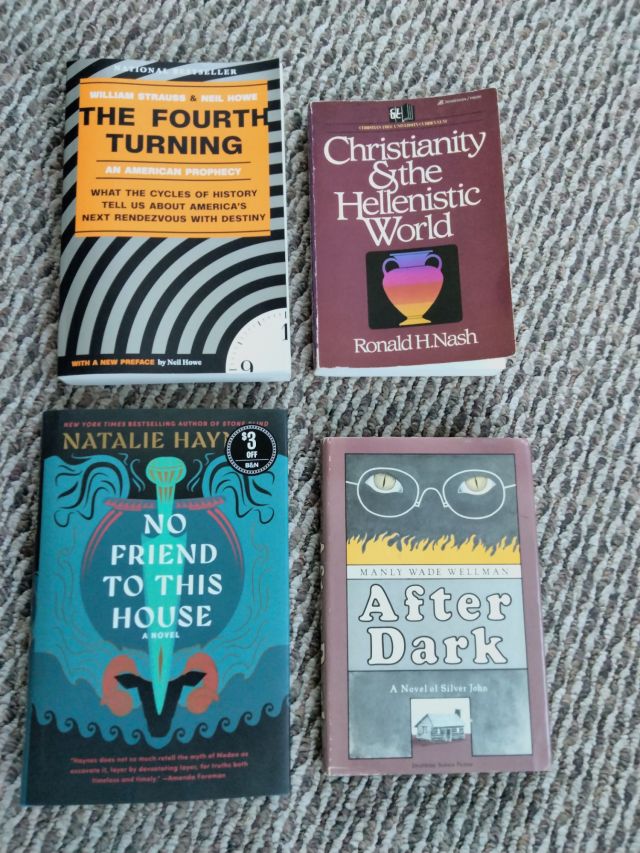
January 2026
Circe, Madeline Miller
heartbreaking in the best way
February 2026
Till We Have Faces, C.S. Lewis
(a re-read) in my opinion, far & away his best novel
Feb – March 2026
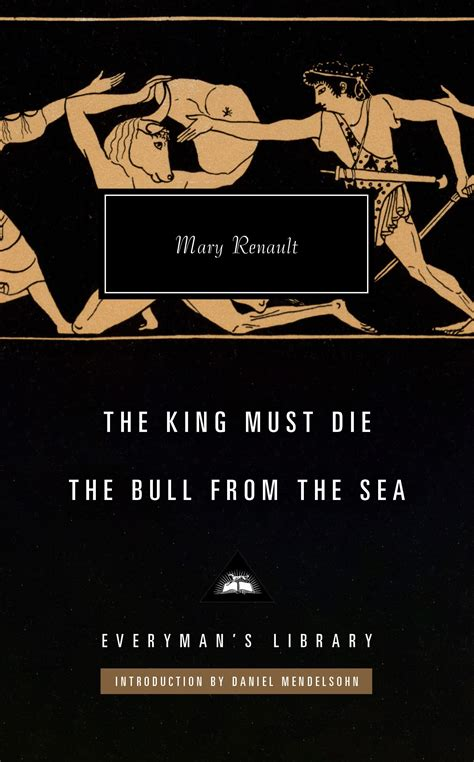
The King Must Die, Mary Renault
(a re-read) insanely good research, poetic literary writing
March – May 2026
Christianity and the Hellenistic World, Ronald H. Nash
nonfiction; explores whether Christian ideas were borrowed from Greek culture
May 2026
No Friend to This House, Natalie Haynes
perhaps the best you could do with a Jason and Medea re-telling, which isn’t saying much, as they are both royal stinkers who deserve each other
June 2026
The Sea of Monsters, Rick Riordan
a Percy Jackson book: fun, woke-ish, O.K.
July 2026
The Siren Song, Anne Ursu
a better Rick Riordan
in process
The Letters to the Corinthians: Revised ed., William Barclay
What better time to read a commentary on Paul’s letters to the new church in Corinth?
yet to read
The Bull from the Sea, Mary Renault
sure to be demanding but good
yet to read
The Curse of King Midas, Colleen M. Story
I started this, but it just was not the time for it.
Cyberpunkgirl recommended Anne Ursu’s Greek-mythology-inspired middle-grade books, after I gave a tepid review of a Percy Jackson book. Not too long afterwards, I found myself at the bookstore, remembered Ursu’s name, and looked her up. Sure enough, they had all the Cronus Chronicles except for the first one. (Why do bookstores do this?) So I got #2, The Siren Song.
I really enjoyed it. While clever and funny, it is somehow more sweet and sincere than the Percy Jackson books. Charlotte is very believable as a spunky, stubborn, impulsive 13-year-old girl. I also liked that it is written in the third person limited (usually from Charlotte’s perspective but occasionally from the perspective of one of the villains, or of her cousin Zee), and in the past tense. Books written in the first person, especially in the present tense, are the bane of my existence most of the time.
In this book, Charlotte tangles with Poseidon. He is extremely self-involved (as we would expect of a god), and has images of himself all over his magical yacht, from mosaics to murals to his face on furniture and light fixtures. Which reminded me of something …
Ahem. Anyway.
My favorite character had to be Sir Lawrence Gaumm, a true English gentleman, and no, I won’t tell you what species he was, but he was delightful.
In this post I attempt to summarize Graham Hancock’s book Fingerprints of the Gods: The Evidence of Earth’s Lost Civilization (1995). This book influenced the background for my novels. It also, in my mind, dovetails with Douglas Van Dorn’s biblical/archaeological research on giants in ways that I am sure Hancock never intended or imagined.
This post is only a summary. It will naturally be much less convincing than the book itself. My copy of Fingerprints runs 578 pages counting the bibliography and index. Hancock builds up to his thesis slowly, presenting many different lines of evidence and dropping mysterious hints to keep the reader intrigued. He also has to get into some fairly technical topics, particularly when talking about astronomy. I can’t do any of that in a 1,000-word post. So, like a bucket of cold water in the face, you will be treated to Hancock’s thesis in all its bizarre and fascinating glory.
Incredibly Sophisticated, Incredibly Ancient Maps
Hancock’s first two chapters are dedicated to the details of a number of old maps drawn up during the 1500s which show parts of South America that were undiscovered by Europeans at that time. More intriguingly, they show the coast of Antarctica as it appears under the ice. (This was before modern man’s discovery of Antarctica, and before seismic surveys revealed what lay beneath the ice.) The best-known of these is the Piri Reis map (drawn up in A.D. 1513), but there are others, such as the Orontes Finaeus map, the Mercator map, and the Buache map. All these mapmakers drew on older maps, which they compiled. Piri Reis, for example, had access to the Imperial Library at Constantinople, which is probably where he got the sources for his map.
The other amazing thing about these old maps is they often show locations in South America, for example, at accurate longitude and latitude.
The lesson that Hancock draws from these maps is this. Whatever source maps Piri Reis and others used, must themselves have been drawn up by an advanced seafaring civilization that had explored the world and knew how to project longitude and latitude. Amazingly, these seafarer/mathematicians apparently charted Antarctica at a time when it was not yet completely covered in ice. That makes their civilization, how do you say? Very, very old.
Ancient Astronomer/Engineers Again
Hancock then turns to the sophisticated ancient buildings that have baffled us in previous posts. He dedicates ten chapters to the Incan and pre-Incan civilization: the Nazca Lines, the amazing complex at Lake Titicaca, and the tradition that connects these to a bearded culture-bringer (the Viracocha), who came from over the sea.
Eleven more chapters describe the Central American cultures: their obsession with numbers, with calculating exact dates in the distant past and future, with forestalling the apocalypse (including by human sacrifice). They were also sophisticated astronomers. The pyramid complex at Teotihuacan, for example, appears to have been laid out as a scale model of the solar system.
And then there is ancient Egypt. Seventeen chapters are dedicated to it. There are many things to notice. Here are just a few: ancient Egyptian civilization seems to have appeared suddenly as a high civilization, complete with myths, history, engineering, and an obsession with boats. Overall, its history is one of slow decline and loss of knowledge, rather than slow buildup. (Interestingly, the same point has been made about ancient Sumer.)
The pyramids at Giza do not match the pyramids that are supposed to have been built immediately before and immediately after them. They are far more durable and sophisticated than these others. If we accept the received chronology, the Egyptians built some relatively crummy pyramids, then a few generations later built some amazingly good ones, then turned around and went back to building relatively low-quality pyramids again. Hancock suggests that instead, the Giza pyramids are much older than commonly thought. They were built with knowledge or technology that was subsequently lost. The comparatively crummy pyramids are attempts to copy the ones at Giza.
Hancock writes, “Robert Bauval’s evidence showed that the three pyramids [at Giza] were an unbelievably precise terrestrial map of the three stars of Orion’s belt, accurately reflecting the angles between each of them and even (by their respective sizes) providing some indication of their individual magnitudes. Moreover, this map extended outwards to the north and south to encompass several other structures on the Giza plateau … the Giza monuments were so arranged as to provide a picture of the skies … as they had looked – and only as they had looked – around the year 10,450 BC.” (page 356)
The Great Pyramid at Giza has a ratio of 2pi between its original height and the circumference of its base. This strengthens the argument that it was meant to represent a star (a circle). The Pyramid of the Sun at Teotihuacan has a ratio of 4pi between height and base circumference. Both of these pyramids had to have an odd angle of slope to accomplish this (52 degrees for Giza; 43.5 degrees for Teotihuacan), so it seems to have been intentional. Pi was supposedly not calculated correctly until it was done by Archimedes in the third century BC, but apparently the ancient Egyptians and the ancient Mexicans were familiar with it.
Where Hancock is going with all this is that people on both sides of the Atlantic got their amazing engineering, mathematical, and astronomical knowledge from an older “source” civilization. He thinks it was the same seafaring civilization that apparently charted Antarctica. This impression is strengthened by the Egyptian obsession with boats and by the Incan legends that say all this knowledge came from over the sea.
Is Hancock Arguing for Aliens?
Not in this book.
He has written several books about ancient mysteries. I have not read them all. He has now started writing fiction, and in the one novel of his that I have read, it becomes apparent that his interest in all this is decidedly New Age in character. The novel features an angelic/earth mother spirit guide, telepathic Neanderthals, the whole nine yards. So, I can’t swear that aliens won’t show up at some point. But that is not the thesis of Fingerprints. Hancock is arguing that there was a very advanced civilization of people well before 10,000 BC. Whether these people were taught by aliens, spirits, or some other stuff like that, he does not say, thankfully. Because, luckily, this book relies heavily on evidence.
So the ancient cartographers were not aliens, not even according to Hancock. But still we have a problem: Where was this civilization located? You don’t normally get an advanced civilization until you have a critical mass of arable land. In short, a continent. Hancock believes he has solved this problem. He believes there was such a mass of land, but that it has since undergone a cataclysm. And now we come to the really wild part of his thesis.
It’s the End of the World As They Knew It
Mythology about a period of cataclysms in ancient times is universal. Hancock dedicates four chapters to this alone. Flood myths, for example, are very common. But most cultures also record things like earthquakes, fire falling from the sky, the sun not rising for some long period of time, or an endless winter. Hancock discusses myths like this in some detail from the following cultures: Aztec, Sumerian, Greek, Inuit, Chinese, Southeast Asian, Pacific, Indian, Egyptian, Mayan, and Norse. It should not be hard for the reader to track down these myths. Some cultures (the Aztecs and the Hopi, for example) believe that disasters come at regular intervals and that each one ushers in a new age of the world.
Hancock believes that these myths are actually historical records (with all the usual caveats about them becoming garbled, etc.) of a period of geologic upheaval that happened within human history. I’ll put it in his own words:
“This geological theory was formulated by Professor Charles Hapgood and supported by Albert Einstein. What it suggests is a complete slippage of our planet’s thirty-mile-thick lithosphere over its nearly 8000-mile-thick central core, forcing large parts of the western hemisphere southward towards the equator and thence to the Antarctic Circle. This movement is not seen as taking place along a due north-south meridian but on a swivelling course – pivoting, as it were, around the central plains of what is now the United States. The result is that the north-eastern segment of North America (in which the North Pole was formerly located in Hudson’s Bay) was dragged southwards out of the Arctic Circle along with large parts of Siberia [which were dragged into the Arctic Circle].
“In the southern hemisphere, Hapgood’s model shows the landmass that we now call Antarctica, much of which was previously at temperate or even warm latitudes, being shifted in its entirety inside the Antarctic Circle. The overall movement is seen as having been in the region of 30 degrees (approximately 2000 miles) and as having been concentrated, in the main, between the years 14,500 BC and 12,500 BC – but with massive aftershocks on a planetary scale continuing at widely-separated intervals down to about 9500 BC.” (page 471)
So that’s the thesis. Here are the things it explains:
Why North America was once covered with glaciers, centered around Hudson Bay, and why they suddenly started melting.
Why, during the same period of time, Siberia was apparently not covered in glaciers
Why there is evidence that the climate was once much warmer in parts of Siberia. We find flash-frozen mammoths with temperate or even tropical plants still in their mouths and stomachs. (Actually, I still don’t understand how mammoths could be flash-frozen even with Hancock’s thesis. But at least it offers some explanation.)
Why there is evidence that the climate was once much warmer in Antarctica as well.
Furthermore:
According to Hancock’s theory, the survivors of this advanced civilization that previously existed on what is now Antarctica fled their homeland, taking their science with them.
They settled in other parts of the world and tried to rebuild.
Hancock also thinks that they deliberately seeded myths and cults to preserve knowledge and to draw people’s attention to the processional cycle of the constellations because they wanted to warn them. They believed that geological disasters like this occurred cyclically in concert with celestial events. He believes this is why the pyramids were built, for example. A good chunk of his book is about this, but I don’t have time to relate it here.
What’s a Christian Writer to Do With All This?
First of all, it is not possible to integrate everything. It just isn’t.
To take just one example from above, if the earth’s crust took 2,000 years to slip, how did mammoths come to be flash frozen? I have no idea. I don’t think anybody does, whatever their theory.
To take another example, Hancock’s thesis requires that after the age of cataclysms, there were human survivors in scattered parts of the world. These were then visited by refugees from the mother civilization, who taught them things, and they remember these culture-bringers in their mythology. You cannot make this work perfectly with the idea that at one point there was a universal flood that wiped out all humankind except four couples, and that the flood myths are memories of that.
Every culture has stories of culture-bringers (human or divine) who taught them to do things that are basic to that culture. Most cultures with a flood myth have the survivors of the flood landing right in that culture’s homeland and becoming the direct ancestors of that culture. Most of them don’t have a section in there where the survivors land somewhere very far away, and then their descendants travel a really long way to get to the current homeland. Most peoples believe that they live at the mythic center of the world. So you have to take these things into account. Every origin myth cannot be true in all its details.
That said, here is what I, as a Christian, have attempted to do with Hancock’s thesis and more importantly with the evidence that inspired it.
What I appreciate about Hancock is his attempt to take seriously the many lines of evidence that human beings were familiar with advanced mathematics, engineering, and astronomy long ages before we are told that human civilization started. This fits in, far better than the received “cave man” picture, with the ancient world as it is hinted at in the early chapters of Genesis. There we see civilization taking off like rocket, apparently with writing and record-keeping, and flourishing until it is destroyed by the flood.
Hancock’s theory of earth crust slippage does not contradict the Genesis account either. It is not hard to imagine an age of cataclysms leading up to the great flood. We are not told that this happened, but then Genesis, with its laser focus on redemptive history, does not tell us a great many of the things we would like to know. If we imagine earth crust slippage culminating in a worldwide flood, we end up with almost the same picture as that painted in Fingerprints. The only difference is that the amazing monuments at Giza and other places could not have been built by refugees from a mother civilization. They would have to have been built by Noah’s descendants trying to recover lost knowledge … or by the almost-unknown-to-us civilizations before the flood.
Genesis: Even More Daring than Hancock
Genesis does not give us a complete picture of the antediluvian world. It tells us only a few major names and events with very little explanation or context. We are not told how long the antediluvian period lasted; what the world population was before the flood; what the people or animals looked like or their relative sizes; what kind of technology existed; whether there were cities. As a result, we tend to picture Noah and his family, almost all alone, out in the middle of a desert (inspired by the way the Middle East appears today), with a bunch of modern-day animals. But we aren’t told that’s how it was. We aren’t told much at all. In fact, we don’t have – anywhere – any reliable sources that can tell us much about the very ancient world.
Genesis does, however, tell us one very weird thing which fits in well with worldwide myths but which Hancock’s thesis basically ignores.
Interesting as I find Fingerprints of the Gods, it is of course not perfect. Among other problems, it fails to take seriously the universal testimony of human culture that there used to be “gods.” Hancock falls prey (at least in this book) to the materialist notion that anything attributed to gods must be explainable by smarter people with higher technology. Of course, this smuggles in the idea that most ancient humans were stupid and gullible and would apply the “gods” label to anything they didn’t understand. This kind of snobbery dogs Hancock. For example, he quotes with approval a source that wonders how the Mayans could have had such advanced calendars when they hadn’t even invented the wheel.
Genesis, on the other hand, does not patronize ancient humans. Shockingly, it vindicates their myths. It is recorded in Genesis chapter 6 that the “sons of God” (some kind of heavenly beings, members of the divine council) came down to earth and intermarried with human women, and that their offspring were giants.
Obviously, that is a stunning claim. I can’t blame you if you’re not convinced of it on first hearing. Some day I will deal with it in more detail in another post (one that summarizes Douglas Van Dorn’s book). For now, I just want to say a few things about this idea as it relates to Hancock’s thesis.
Every culture, worldwide, has myths about gods and giants. There is a huge body of mythology about this stuff, and it usually shows up in the form of origin stories and tales that purport to be about historical rulers. No doubt the ideas of gods and giants, and many other themes from mythology, are a deep part of the human mental furniture. But this does not necessarily mean they are not also memories of historical events. How and why did this particular furniture get in our particular living room? Perhaps people did not get these ideas just from plumbing the depths of the human psyche. We might want to take these stories seriously as memories of historical events, since we are taking seriously the stories of floods and cataclysms that show up in the same cultures, and often in the very same narratives.
And, if you are still with me, taking seriously the idea of gods and giants might also give us our answer as to how people managed to build incredibly sophisticated monuments out of megaliths. Imagine a world in which people typically live almost a thousand years (per the ages given in Genesis) … in which ten or twelve generations can be alive at the same time, so knowledge is not lost … in which people are smarter and healthier than we are now, since there has been less genetic decay … and in which some of these people are actual giants. All of a sudden it starts to sound … maybe … almost possible. Maybe you and I could build the Giza pyramids too, if we had a thousand years to do it in and if we had intelligent giants helping (even directing?) us.
Now it’s your turn. I am posting this 24 hours late (I usually post on Friday, not Saturday), and even with the extra time, I realize this post is loosely written. This is such a big topic, worthy of an essay weeks or months in the making … not to say years. I did not spend years, months or even weeks on this post (although I have spent a few years thinking about all this stuff). My goal is not to make a watertight argument, just to sketch out some intriguing possibilities. Still, if you find problems with the post, point them out in the comments section (alongside your laudatory comments, of course) and I’ll do my best to tighten and polish it.
The Septuagint translation of Isaiah 11:10 references the root of Jesse, the one who “rises up to rule the nations; nations will put their hope in him, and his repose will be honor.” The Septuagint has anistamenos for “rise,” and this is reflected in Romans 15:8 – 12 where Paul quotes Isaiah and refers to the Messiah who “arises” (anistamenos) and is both the ruler and the hope of the gentiles. This same concept is also present in Psalm 82:8, where Yahweh “rises” (anasta in the Septuagint) to judge the earth and inherit the nations. As we will see below, this language closely resembles the ascension language of Paul in Ephesians.
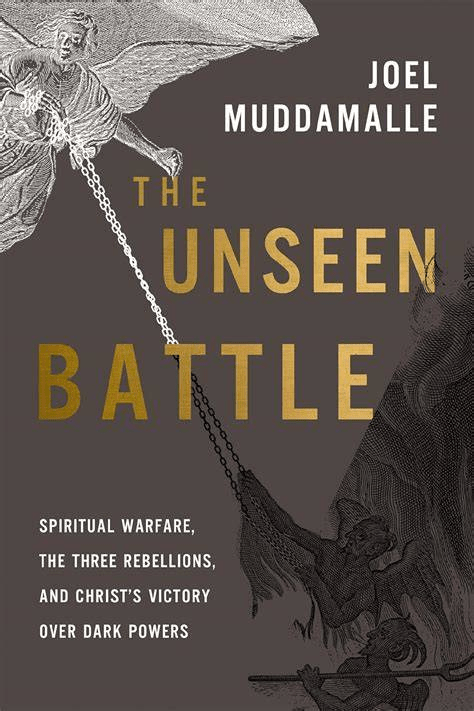
Joel Muddamalle, The Unseen Battle, p. 113
So, in this context, the word “rise” or “rise up” implies a warrior/king rousing himself to battle and conquering (in this case, conquering the gods of the nations). Like the word “inheritance,” it’s a clue that the Scripture is talking about which god has legal rights to a geographical area or a group of people: the unseen battle.
I believe it is also linked to the name Anastasia, which means resurrection.
Not sure why, but it feels very appropriate to me that the word for resurrection should have four or five syllables.
The call of Abraham was more than just a call to go to a strange, unknown land. This call had spiritual implications, perhaps akin to a declaration of war. Spiritual warfare is fundamentally about obedience.
It’s true. My dad was a Protestant pastor, and also sort of hippie about some things. No drug use or sleeping around, but he liked to live “simply” (for example, keeping his old coffee percolator), and around the time I was a baby, he had become a convinced pacifist. That is, he had become convinced based upon the Sermon on the Mount (mostly) that for Christians nowadays, it is never permissible to resist violence with violence. And this went for nations too. For him, principled pacisfism was part of following Jesus.
So here it was, the mid 1980s, late in the Cold War (though we did not know it was late at the time). A no-nukes protest had been planned in a downtown plaza in our large Midwestern city. I believe it was organized by the city’s churches, because among other people, my dad had been asked to sit in a panel onstage.
I was probably 9 or 10 years old. I was excited to go along. It seemed like a good thing. It was pretty clear to me that us, or anybody else, getting killed by nukes was a bad thing, something that we would not want to have happen. I had heard gruesome stories about people’s eyeballs being turned into jelly when the bomb was dropped (by us!) on Hiroshima. This was in a book that we had at home called Peace Be With You.
As the family artist, I made the sign for our protest. I tried to draw the symbol from the cover of Peace Be With You, a dove holding a branch in its beak. I had never drawn a dove before, and I got the beak wrong, so it came out looking more like a parrot.
I don’t remember all the content of the rally, but two things stand out. There was a play about a couple who survive a nuclear holocaust and live in a tent city, only to get radiation sickness. And, I remember the final song.
With the panel of pastors still seated on the stage, a lady came up to give a moving musical number. The first verse was about the Statue of Liberty and how she represents to many people that they have arrived in a place that is free from oppression. The second verse was about the cross of Christ, and how, to the Christian, it means liberty from sin, death, and hell. The refrain was “the Cross is my Statue of Liberty.”
Horribly blasphemous, of course. It was trying to compliment the greater by comparing it to the lesser, which actually reverses the roles of greater and lesser, unintentionally offering a huge insult to Christ.
As soon as he realized where the song was going, my dad abruptly got up from his seat on the stage behind the singer, stalked off the stage in a huff, and marched me and my brother out of there before the rally ended. I’m still proud of him for this. As someone said (I can’t find the reference, but I think it was Spurgeon), “Even a dog barks when its master is attacked.” Referring to himself defending the honor of Christ, however inarticulately.
I think what the organizers were trying to convey with that song was, “We are Christians, and don’t worry, even though we are against nukes we still definitely love our country.” But it was ill chosen.
Although I now think the whole event was incredibly naive, I commend my dad for attending it and for bringing his kids. Kids need to have experiences where they go fight for the right alongside their parents, even if the cause later turns out to have been somewhat misguided. This sends the message, “We have certain values as a family, these are important enough to do something about, my parents are good people” and, above all, “I and my parents are on the same side.” Please, give your kids many experiences like this before they become teenagers!
So, why naive? Well, I can’t blame myself for not noticing this as a kid, but why in the world did we think we were the only people who objected to the idea of a nuclear holocaust? Surely that is something that everyone recognizes is bad? (Except, perhaps, the mullahs, I digress.)
And given that we were not uniquely intelligent or good such that we were the only ones who didn’t like the idea of people being annihilated by a nuclear bomb, it would make sense to connect the next pair of dots (#s 2 and 3) and ask ourselves, since 99% of people don’t like nukes, how is it that they still exist? Could it be that, once you have a nuclear standoff, getting rid of nukes is more complicated than just “getting rid of them”? Perhaps there are people who also don’t want an apocalypse, but whose options are limited?
By the same token, perhaps there are more obstacles standing between humanity and the cessation of wars in general than just a dearth of people saying, “We don’t like war.” After all, most people don’t like wars, including most people who fight them.
But we, the anti-war protestors of the Cold War era, honestly, naively, conceitedly thought we were the only people in our country who saw a moral problem with human suffering. And we thought it would somehow stop if only we were to stand up and heroically say, “We are against this.”
It didn’t work. And not because not enough people were against it. It turns out, just saying that doesn’t do anything.
I’m sure my dad’s generation would say that these antiwar protests were ineffective because “our leaders didn’t listen.” “Listening,” in this context, would mean disarming our nukes and other WMDs, and perhaps completely disbanding our military. After all, if every country did this, peace would flow into the empty space where the weapons used to be. And someone has to go first! So it might as well be us! Someone has to give peace a chance.
This made sense to me at 10, especially when it was coming from respected authority figures. Once we grow up, however, we have a responsibility to ask ourselves what could possibly go wrong with this scenario. And the answer is: a lot. Everything.
War is, unfortunately, the default state of human beings. When we are not at war, it is because a lot of people are working very hard to maintain a precarious balance where things don’t tip into war. Fortunate are we who live in a country or empire large enough, or strong enough, that all that work has paid off and we get to go about our daily lives, assuming that peace is the natural state of things. But it isn’t. It is not the case that wars don’t happen unless some “war monger” goes out and “starts one.” That would be nice, but it’s not what we have here.
There are multiple reasons for this. Until recently, I thought it was sufficiently explained by human beings being sinful, and full of fears, lusts, and cravings. All of that is certainly a huge factor. We usually see wars explained as being caused by “fighting over scarce resources,” but I think that materialistic explanation is far from sufficient. Wars have not become less common as the worldwide standard of living has increased. I have also seen wars attributed to “religion.” There are a number of logical problems with this as well. To test this theory, you’d need a control group of humans who had either no religion, or no war. Since both war and religion are things that humans universally do, such a control group does not exist. To say that because both are universal, means one causes the other, is the post hoc fallacy.
So in general, I think the stubborn persistence of war is adequately explained by the Seven Deadly Sins: Envy, Greed, Lust, Sloth, Gluttony, Anger, and Pride. Especially Pride and Envy.
Say somebody hates you and wants to go to war with you because they are prideful and think their way of life is better, but also, at the same time, they envy some things about, tacitly acknowledging that in those respects, you are better than they are. Is such a person going to put down their weapons because you fold your hands and say, “Look. None of us like war. Let’s all mind our own business and disarm”? No, unfortunately, your enemy may not like war, but they hate you a lot more than they hate war. If they even recognize that you are taking the moral high ground, that is only going to exacerbate the wounded-pride-and-envy problem.
This is why fifty years of “anti-war” protests have done nothing but make the protestors look silly.
But it recently came to my attention that there may be an additional cause besides human sin that keeps stirring up wars in the world.
We need to expand our understanding of spiritual warfare to include the larger social and political structures of our world. Why does war bring ruin to the world? Why do we feel constantly on the verge of a new world war? … Why is peace, specifically the peace the permeates through the spread of the gospel, such a threat to world powers? The answer to these questions falls under the larger context of the unseen battle, a battle that has in mind the final unification of the nations of the world under the banner of Christ.
–Joel Muddamalle, The Unseen Battle, p. 120
Muddamalle is suggesting that the gods of the nations, who would prefer to go on ruling them, feel threatened by the spread of the Gospel and use geopolitical instability as one of their tools to slow this spread. (For more about these entities, see my review of Michael Heiser’s book.)
The idea is that human beings, while plenty fight-y on our own, would sometimes like to rest. But these spiritual entities will not let their people rest. They are hard at work, with demonic delight, stirring up, prolonging, and accelerating generations-long conflicts, to keep the Gospel of Christ out and also perhaps, as a side benefit, because they enjoy human suffering.
This certainly matches the picture of “the gods” that we get in, say, Greek mythology. People are bad enough on their own, but even when you have a majority of people who want to do the right thing, you will see that Fate, or the gods, or whatever, intervene so that exactly the wrong thing happens at exactly the wrong moment. The result: ten years of war.
Peace, it turns out, is not a passive, waterlike thing that flows in wherever a space is opened for it. It has to be established, like a fortress. It is the result of someone coming in, taking names, and routing the false gods. That someone is the Lord Jesus.
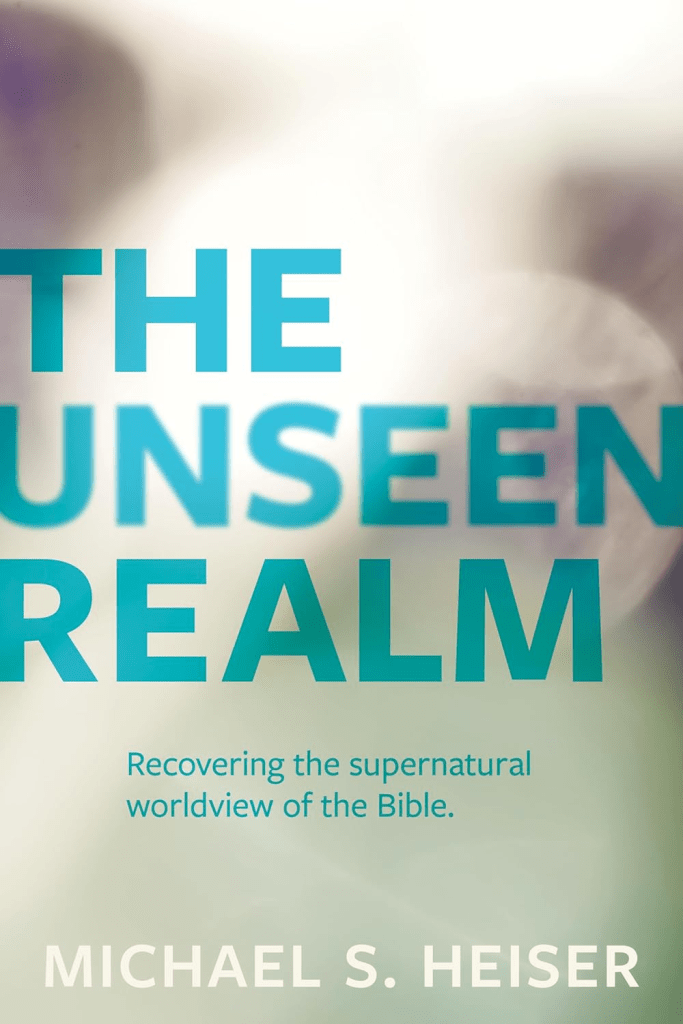
The Unseen Realm is a scholarly book about the concept of the divine council in Ancient Near Eastern cosmology, especially in Ugarit, which was a near neighbor of Israel both geographically, culturally, and linguistically. Heiser finds this concept of the divine council assumed in the Hebrew Scriptures, similar to how the heliocentric model of the solar system is assumed in anything you see written since Copernicus. That is, it’s never stated or described directly, but it is referenced in many stories, phrases, and figures of speech, and is openly the setting for certain passages, such as Psalm 82.
The idea behind “the divine council” is that there is a Most High God (the Creator) who rules the earth with the help of a sort of committee of divine beings (elohim). This committee is traditionally conceived of as meeting on a high mountain, in a garden setting, often a place that is the source of rivers. Or as Ps. 82 calls it, “the great assembly.”
Heiser spends most of his book establishing that this view is present in Scripture.
After reading Heiser, I heard a podcast interview with Joel Muddamalle. Muddamalle is the academic protege of Heiser (who has now gone to his reward). He is carrying on with researching this idea of the elohim as an active presence in redemption history, and also with popularizing it in the Christian world. And I heard that he had written a book, The Unseen Battle, which might be viewed as a sequel to Heiser’s book. So naturally, I had to get it.
I expected TUB to be all the same material as TUR, just with Muddamalle’s own personal style. It was not. The first few chapters do recap Heiser’s cosmology, but they don’t spend a lot of time establishing it, as Heiser did. Muddamalle then moves on to the nature of the battle, which Heiser touched on but did not major on.
The nature of the battle is that God wants to get the nations back from the gods.
The way this is done, in the church age, is through evangelism, missions, and building healthy churches and families. In short, obedience. It’s not primarily through a lot of fancy, spooky ghost-hunting or exorcism stuff.
This exegesis, naturally, warmed my little Reformed heart.
Now, it does mean that, if you are attempting to be faithful to your spouse and/or raise your kids; work hard and honestly at a lawful calling; worship the Lord on Sunday and support His people; or do any other forms of healthy, faithful culture-building, you have stepped into the battle. The dethroned powers do not like this sort of behavior. This may, perhaps, explain why just trying to mind your own business and live a quiet, peaceable life can occasion so much resistance: everything from health problems, to Murphy’s Law and attacks of depression and discouragement; to actual hate and legal resistance from human beings who do not like what you are doing. (Per Muddamalle, Scripture makes it clear that the “hosts” on both sides of this battle are mixed, consisting of human beings and of spiritual beings.)
Particularly if you are contributing in any way (including by prayer) to the disciplining of not-yet-Christianized nations, you present a threat to the old gods, who do not want to be cast out as they have been cast out of so many other nations in the last 2000 years. This is why foreign missionaries and native pastors in unreached or partially unreached countries undergo so many hardships: poverty, evil bureaucracy, and all kinds of health and mental problems.
The church itself, existing as an entity comprised of people from many nations, is a rebuke to the powers.
The multiethnic and diverse nature of the family of God, the church, can be seen through Paul’s use of polupoikilos. This term is a combination of two adjectives meaning “much” (polus) and “various kinds, diversified, manifold” (poikilos). The word polupoikilos can also mean “of many colors” or “polychrome.” Classical Greek writers used this word to reference cloth or flowers to convey a sense of intricate beauty. The word poikilos is used in the Septuagint to refer to Joseph’s coat of many colors (Gen. 17:3, 23). As Timothy Gombis observes, “The powers have ordered the present evil age in such a way as to exacerbate the divisions within humanity. God confounds them by creating in Christ one unified, multiracial body consisting of formerly divided groups of people.”
ibid, pp. 169 – 170
How about that. The Rainbow of Diversity, which we have been taught to hate, is actually God’s goal as well. The reason that we have been taught to hate it, is because of the way they have pursued it … trying to force it down by means of human power and moralism, by defining righteous and unrighteous groups and viciously suppressing those deemed to be foes of the rainbow. They have made “inclusion” mean “we exclude you.” This is what happens any time people try to make the world look like the restored heavens and earth, without Christ. They end up bringing about the opposite. True harmony among the ethnic groups is not an easy thing. It can only be obtained by means of the New Birth.
Though this is a scholarly-for-the-layperson work, Muddamalle’s lighter personality shines in it. He has many call-out boxes sprinkled throughout the book, devoting a page or two to questions such as, “Are There Aliens in This World?” and “What About Demonic Exorcisms?”.
That’s it. Just I promised: a short review.
Oh! What are the “three rebellions”?
Adam and Eve’s rebellion at the Tree
The rebellion of the “sons of God,” when they chose to come down and take human wives (Genesis 6)
Humankind’s post-Flood rebellion at Babel (Genesis 11). It was at this point that God divided up humankind among the elohim, giving each people group extant at the time its patron god.
Anyway … back to the battle! God be w ye this weekend!
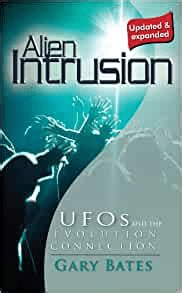
Alien Intrusion: UFOs and the Evolution Connection by Gary Bates, A Book Review
I’ve found myself recommending this book to multiple people in multiple comments sections in recent days, so perhaps it’s time to re-post a shortened version of my review of it from 2024. This is a great resource if you’re wondering about UFOs and the beings that are presumably inside them.
Alien Intrusion is 400+ pages, with endnotes to each chapter, appendices, and an index, yet it is accessibly written. It is a capable survey of the whole phenomenon, starting with the social history of UFO sightings and how aliens are portrayed in fiction; moving on to the science of whether light-speed travel is really possible (it’s not); whether indications of physical life beyond Earth look promising (they don’t); the theory of Directed Panspermia and how it was supposed to save evolution; sightings of lights in the sky and cover-ups associated with them; conspiracy theorists, true believers, and hucksters who have capitalized on the UFO craze; and finally, testimonies of people who have had abduction experiences.
“Abducted — Close Encounters of the Fourth Kind” is a really interesting chapter. Bates has just spent more than half the book showing that the extraterrestrial hypothesis, at least as it is usually understood, cannot be true for multiple reasons. But now, he turns his attention to the many people who have had alien abduction experiences. And instead of dismissing them as hoaxers (dealt with in the last chapter) or gaslighting them, he believes them. And he has a great deal of compassion for them. This is why I think so highly of Bates.
A “Typical” Alien Abduction Story
According to Bates, drawing on the work of other researchers, here are the elements of “Classic Abduction Syndrome [CAS]”: the abductee is captured, often at night, and often while being seemingly paralyzed. Once on the ship, they are typically undressed and subjected to some kind of invasive and humiliating “medical” examination. Often, this escalates to sexual abuse of various kinds. Then, the aliens “teach” the abductee. This involves being told that they have been chosen for a special mission. Predictions are made about the future of earth or of humanity. The aliens are trying, and they want the abductee’s help, to raise humanity’s consciousness or to save humanity. Often, they say they are engaged in a breeding program, creating human/alien hybrids. Sometimes this is explained as a way for humanity to survive when the earth is destroyed. Abductees may be given a tour of the ship or of other locations, and they may meet a divine being or an entity claiming to be Jesus, the pope (!), or a dead relative. After the abductee is returned to his or her surroundings, they often don’t immediately remember their abduction experience. They may experience “lost time,” and recall the experience only later (sometimes under hypnosis, which raises other issues).
Abductees experience lasting physical and mental aftereffects of their experience, whatever its nature may have been. They have PTSD-like symptoms. They have may bruises, scars, or puncture marks on their body, though these are never of an obvious enough nature to prove their story. They may experience new chronic health problems, commonly with their reproductive system, even including uterine or breast cancer.
On the spiritual side, many abductees come out of the experience with a new openness to the occult and to New Age beliefs. Others, though they initially feel understandable anger and fear towards the aliens, after multiple abductions come to a passive state of appearing to love and be fascinated with their tormentors, almost like Stokholm Syndrome.
Assuming that all these people are not just making up these bizarre and traumatic experiences, it is clear that they have come into contact with entities that do not wish them well.
On their own testimony, the “aliens” can be shown to be unreliable. For example, they tell abductee they are torturing them “for your own good.” They say they are wise and want to help human beings evolve to the next level, yet they subject their human subjects to frightening and degrading sexual practices. Either these beings don’t understand humans very well, or they are traumatizing them on purpose to “break” them.
The aliens also seem eager to explain exactly where they are from. In past decades, they would claim to be from Mars or Venus. Now that we know more about those planets, they tend to name a star or star system that is outside of our galaxy. Aliens tend to appear to humans in whatever form is culturally expected at the time.
Over the decades, we have allegedly been visited by long-haired Space Brothers, stacked Space-Babes, black-eyed and large-headed dwarfs, bipedal reptiles, praying mantis-type creatures, and … well … the list goes on and on. But, they all seem perfectly comfortable with Earth’s gravity, temperature, oxygen levels, etc. Doesn’t that strike you as a bit odd?
Nick Redfern, UFO researcher, quoted in ibid, p. 321
So, we have powerful, apparently deceptive entities, which kidnap and traumatize people, and then unfailingly give them a New Age message to take back to earth, often going out of their way to say that the Bible has “gotten it wrong.”
Furthermore, apart from claiming to be from space, these “alien” abduction experiences have a lot in common with abduction stories from past ages where the perpetrators were fairies, demons, or other paranormal entities. It is starting to look as if we are hearing the same song, but a different verse. And in fact, Bates suggests that these “aliens” are probably demonic, or fallen angelic, entities. They are, in short, the “elohim” described by Heiserand identified as “the gods” by Cahn.
Jesus Really Is the Answer
Two UFO researchers, Joe Jordan and Wes Clark, noticed that out of all the abduction cases they had heard of, very few were Christians. They put out a call for anyone who was a Christian and had an abduction experience to contact them. Confusingly, they were contacted by people who said things like “I’m a Christian and I was abducted and saw Jesus on the spaceship.” With further research, they found that people who identified as Christian but did not “walk the walk,” as the researchers put it, were just as likely to experience abduction and subsequent New Age brainwashing by the “aliens.” However, “walk the walk” Christians had a different experience:
Clark said that many of the respondents claimed to be Christians who told of their own abduction experiences. He felt that they were happy to have someone to talk to; they usually felt uncomfortable talking about their experiences because most UFO investigators had New Age inclinations and ideas that opposed their own beliefs. In addition, the Christian church is not equipped to deal with such reports because the UFO phenomenon has been largely misunderstood and dismissed by organized religions. Clark comments:
“As the number of cases mounted, the data showed that in every instance where the victim knew to invoke the name of Jesus Christ, the event stopped. Period. The evidence was becoming increasingly difficult to ignore.”
ibid, p. 267
So, My Prediction
Therefore, here’s what I expect from the government files about UFOs which are being released a chunk at a time.
These files cover years of reports, so they will comprise a bunch of different types of experiences. “Aliens” seem to adjust their approach based not only on the cultural expectations of the time, but regionally as well, and perhaps tailored to the individual. So this will be a very heterogenous mass of stuff.
Most of it will not be conclusive. There will be grainy videos and plenty of eyewitness testimonies. Some of the testimony is going to come from people considered sane and reliable (like Air Force pilots), but most people simply can’t bring themselves to accept testimony of something they believe is impossible, no matter how upstanding the witness. As we have seen with abduction experiences, “aliens” might leave some kind of physical evidence (small puzzling scars), but they tend not to leave anything conclusive. Observe that they have been dropping strange hints, and lots of them, for more than a century, but they have never made an open appearance that would settle all questions.
If there really are, say, powerful and ethically challenged interdimensional beings who wish to sell humankind a narrative by appearing as aliens, why have they not settled on a unified approach and made a big, dramatic appearance with an internally consistent story to back it up? I can think of three reasons.
The first reason is that they want control of the narrative, which means they only want to present themselves openly to people they can successfully brainwash. Presumably, they can’t give Stockholm Syndrome to 300 million people at the same time, so they save the extreme treatment for individuals. For people they can’t directly access for whatever reason, they give ambiguous physical phenomena, such as lights that move as nothing should be able to.
Second reason: They aren’t unified, and/or they don’t have really great self-control. There is no reason to think that fallen angelic beings would all work together. Perhaps they are all going rogue. Clearly, they can’t resist torturing their victims, even when that would seem to work against their goal of presenting as wise and gaining humankind’s trust.
Third reason: They are limited by a greater power. You cannot come into a strong man’s house and take his possessions unless you can first tie up the strong man. Say you want to manifest yourself as a god or with a big obvious spaceship in a randomly chosen country. If that country was, at one time, loyal to the Creator of the Universe, and large sections of it still are, He quite likely will not put up with this.
So, from these government files I expect a bunch of different stuff, maybe even an alien “corpse,” which will be weird and ambiguous and perhaps look like it was made for a movie (because, in a sense, it was) … but nothing that would be seen as conclusive by a skeptic.
In my recent big post about sacrifice (willing and otherwise), I pointed out some similarities between the different sacrificial deaths in Mary Renault’s The King Must Die, and the death of Christ.
Some of these similarities are deep. Theseus, as future king of Athens, has an honorary title the Shepherd of the People. He is the king’s son, and he feels “the god” (Poseidon) calling him “to the bulls,” that is, to go and be a human sacrifice in Crete. Before he departs, he reassures the parents of the other future bull-dancers, “I will go with your children, and take them into my hand. They shall be my people.”
Two thousand years after Christ, we are so saturated in the power of His story and of the things He said that it is hard to read these ancient customs as anything but Christological types. And, since The King Must Die was published in 1958, it’s pretty clear the author also was aware of Christ and was intentionally pulling phrases from Him. More about that in a moment.
Other similarities are superficial, but nonetheless striking. Near the end of TKMD, a sixteen-year-old “king” who is about to be torn to pieces by wild women in a Dionysian rite, goes to his death riding in a cart, crowned with ivy, brandishing a wine cup and scattering wheat seed on his people. Now, this rite is almost nothing like the death of Christ. It’s pagan. It does not happen on Passover, the date of the annual sacrifice of a lamb, but rather it is part of an annual ritual of human sacrifice mixed with orgy. The “king,” along with everyone else, is reeling drunk. He has just spent a year as the consort of the priestess/queen, and he has no choice in what is about to happen to him. It’s hard to imagine a death more different from Christ’s.
And yet, these very superficial similarities do not strike us as coincidences. Instead, they seem significant. On this side of Christ, we can’t help but notice when a man who is about to go up a hill and die shares out bread and cup to his followers.
This sort of horrifying, yet somehow moving, ritual is not something Renault just made up. It’s well-attested in myths, legends, and histories. In this essay, I will argue that Christ did not share out bread and wine because it had been done before. Rather, the pagan one-year king shared out bread and wine because Christ did so one thousand years later. Future events cast backwards shadows.
What was Renault trying to do?
To be clear, that is my thesis, not Renault’s. She was a lesbian who published a number of contemporary gay romance novels before discovering her personal obsession with ancient Greece. Writing about Socrates and Alexander the Great allowed her to write sympathetic historical novels about gay characters who lived in a context where this sort of behavior was considered completely normal. The King Must Die certainly includes all kinds of sexual activity; for example, in the Bull Court, the female bull-leapers cannot be allowed to get pregnant, so they are sequestered from the boys, and turn to relationships with each other. Many of the male bull-leapers become the paramours of upper-class Cretan men. Theseus himself is straight, but as an ancient prince, let’s just say he’s not exactly chaste. (I may have lucked into picking up Renault’s least gay book about ancient Greece.)
All this to say, I don’t think Renault was trying to say that any ancient customs were foreshadowings of Christ. If she was “trying to say” anything at all about Christ, it’s probably that He’s not so unique, and anybody familiar with ancient Hellenistic ideas would understand that. But her novels (at least TKMD) are not really “message” novels. She immersed herself in that world, wrote characters and customs that grew organically out of it, and this is what came out.
So no, I don’t think Renault is projecting Christ back into the ancient Mediterranean customs intentionally, except in the sense that she would have been familiar with biblical phrases as a woman raised in 1900s England. I think she was primarily writing from her research and imagination.
Is Christianity a ripoff from Greek mystery religions?
Still, when I first read TKMD, the tone was familiar to me and I immediately picked up the implications. Not that many years before reading it, I had been through a year of thorough education in Greek mythology by a high-school teacher who could safely be described as feminist. My best friend at the time was a neo-pagan. Between the two of them, this teacher and friend were quick to point out any parallels between Greek paganism and Christian practice, and to accuse Christians of “stealing” it. Looking back, there was a certain defensiveness there, which I did not realize at the time. But my teacher and friend were only two voices in a large crowd of scholars.
During a period of time running roughly from about 1890 to 1940, scholars often alleged that primitive Christianity had been heavily influenced by Platonism, Stoicism, the pagan mystery religions, or other movements in the Hellenistic world. Largely as a result of a series of scholarly books and articles written in rebuttal … Today, most Bible scholars regard the question as a dead issue. [But] even though specialists in biblical and classical studies know how weak the old case for Christian dependence was, these old arguments continue to circulate in the publications of scholars in such other fields as history and philosophy.
–Christianity and the Hellenistic World (1984), p. 10
As an aside, notice that the peak of this theory were the years during which Mary Renault was growing up and going to school.
Sometimes books come to you, serendipitously, just when you are ready for them. As I was thinking about this question of the similarities between fictional (but history-based) sacrificial victims in Renault, and my own Dying God, I imagined how I would build a case that He was clearly not copying them. Although He did grow up in a thoroughly Hellenized environment, He was a Jew. He was extremely faithful to the God of Abraham, Isaac, and Jacob, and was so familiar with the Law and the Prophets that He could quote them off the cuff. His veins seemed to flow with the Hebrew Scriptures. In short, He showed no signs of wanting to throw over the religion of His ancestors for that of the Greeks. Furthermore, many of the elements of how His last days went down came about as a result of the particular historical conditions in which He found Himself. He went up the hill to die because Jerusalem is built on a height. He shared out bread and wine because they were having the Passover, and this ceremony had been established 1400 years before in the desert of Sinai, not 1000 years before in the Ionian islands. He called Himself a king because that was what the Jewish Messiah was supposed to be, and He was of the house and lineage of David … not because He had been selected by matriarchal priestess to live as a king for one year and then die. He called Himself the Good Shepherd because of the Israelite pastoral tradition, not because of the Athenian one. The Roman soldiers put a crown of thorns on His head because they were professionals at humiliating and torturing people. It’s hard to imagine how He could have orchestrated all these historical factors intentionally in order to copy a pagan custom that was practiced far away, and centuries before He was born.
I can assert all this stuff, but there is always some scholar out there who could be quoted to argue with me. I needed a book. And the book came to me. As I was turning all these things over in my mind, I had to venture out to a Christian bookstore that was closing. (“Come get your novels,” they said.) Of course, many of their books were on clearance, and there before me was Nash’s Christianity and the Hellenistic World for the low low price of one dollar, its asking price all out of proportion to its value to me at that moment. Nash can prove what I can only assert.
Nash systematically addresses claims that early Christian writers, particularly Paul, got many of their key concepts from Platonism, Stoicism, the mystery religions, and Gnosticism.
Among the many claims published in this century are the following:
Early Christianity was just another Hellenistic mystery religion.
Important Christian beliefs and practices were either borrowed from, or were heavily dependent on, similar beliefs and practices in the mysteries.
Both baptism the Lord’s Supper evidence the influence of similar rituals in the mystery cults.
Among the many Christian beliefs drawn from the mysteries is the Pauline doctrine of salvation, which parallels the essential themes of the mysteries: a savior-god dies violently for those he will eventually deliver, after which the god is restored to life.
A major movement in the development and promotion of such theories was the History of Religions School (Religionsgeschichtliche Schule).
-ibid, pp. 116 – 177
Nash addresses problems with these claims such as the following: in the mysteries, the dying god does not really rise. Osiris lives on in the underworld; the dead god’s body becomes the wheat, etc. As far as we can tell, ritual washings in the mysteries were just purification rituals, and they had to be repeated. They do not seem to have been a one-time entry into a new life like the Christian baptism. For many of these mystery religions, we don’t actually know much about the content of the rituals, because they were intentionally kept secret. For many mystery-religion practices that are well-attested, such as the taurobolium where the initiate stood beneath a grate while a bull was slaughtered, these practices seem to have developed after Christ rose and Paul wrote his letters. In the case of the mystery religions of the first, second, and third centuries, some of them were actually influenced by Christianity, not the other way round.
But I’ll let German scholar Adolf von Harnack, quoted by Nash, have the last word:
We must reject the comparative mythology which finds a causal connection between everything and everything else, which tears down solid barriers, bridges chasms as though it were child’s play, and spins combinations from superficial similarities … By such methods one can turn Christ into a sun god in the twinkling of an eye, or one can bring up legends attending the birth of every conceivable god, or one can catch all sorts of mythological doves to keep company with the baptismal dove; and find any number of celebrated asses to follow the ass on which Jesus rode into Jerusalem; and thus, with the magic wand of “comparative religion,” triumphantly eliminate every spontaneous trait in any religion.
–ibid, pp. 118 – 119
Too many keys to mythology
In short, the problem is not that there are some key symbolic parallels between Christ and ancient pagan symbolism. The problem is that there are too many parallels, or similarities, right down to the animals involved. Part of this is simply the limitations of living in this world. Jesus had to eat something, He had to ride on something, He had to use some kind of words when He spoke, and there were a finite number of foods, mounts, and terms in the ancient world, just as there are everywhere. I have pointed out before, when addressing the problem of whether Christians “stole” pagan practices like hot cross buns and wedding customs, that there are a limited number of ways to do every human activity. If you eat something, wear something, or go through a life passage, and you are a human being, I guarantee that in the past four thousand years there has been someone who did it that way before you. And that someone was probably pagan.
As G.K. Chesterton said about finding mystical and symbolic connections:
The true origin of all the myths has been discovered much too often. There are too many keys to mythology, as there are too many cryptograms in Shakespeare. Everything is phallic; everything is totemistic; everything is seed-time and harvest; everything is ghosts and grave-offerings; everything is the golden bough of sacrifice; everything is the sun and moon; everything is everything.
–The Everlasting Man, p. 103
These are the givens of the universe that all humans encounter; and, unless we are sorely impoverished, we all have some way of dealing with them. But just because they are ubiquitous does not mean they are unimportant. These things are shadows of what was to come. The reality, however, is found in Christ.
Symbolism in Reality
Last point: Jesus was the fulfillment of all these confused hints in every culture. But the vibe of the New Testament historical records is much less gorgeous, mythical, and poetic than the ancient pagan stories. As C.S. Lewis put it:
When I first, after childhood, read the Gospels, I was full of that stuff about the dying God, The Golden Bough, and so on. It was to me then a very poetic, and mysterious, and quickening idea; and when I turned to the Gospels never will I forget my disappointment and repulsion at finding hardly anything about it at all. The metaphor of the seed dropping into the ground in this connexion occurs (I think) twice in the New Testament, and for the rest hardly any notice is taken; it seemed to me extradordinary. You had a dying God, Who is always representative of the corn; you see Him holding the corn, that is, bread, in His hand, and saying, ‘This is My Body,’ and from my point of view, as I then was, He did not seem to realize what He was saying. Surely there, if anywhere, this connexion between the Christian story and the corn must have come out; the whole context is crying out for it. But everything goes on as if the principal actor, and still more, those close to Him, were totally ignorant of what they were doing. It is as if you got very good evidence concerning the sea-serpent, but the men who brought this good evidence seemed never to have heard of sea-serpents. Or to put it another way, why was it that the only case of the ‘dying God’ which might conceivably have been historical occurred among a people (and the only people in the whole Mediterranean world) who had not got any trace of this nature religion, and indeed seemed to know nothing about it?
–C.S. Lewis, “The Grand Miracle,” in God in the Dock, p. 83
Well, when you put it that way, it’s pretty funny, isn’t it? Jesus’s death reads as disappointingly prosaic compared to the myths only because it actually happened. This is very humble of God. He has quite the sense of humor. As John puts it after his account of the Triumphal Entry, “At first His disciples did not understand all this. Only after Jesus was glorified did they realize that these things had been written about Him and that they had done these things to Him.” John 12:16
Sources
Chesteron, G.K. The Everlasting Man. Ignatius Press: 2008, originally published in 1925.
Lewis, C.S., ed. Walter Hooper, God in the Dock: Essays on Theology and Ethics. Eerdmans: 1970, 1978.
Nash, Ronald H. Christianity and the Hellenistic World. Zondervan: 1984.
Renault, Mary. The King Must Die. Alfred A. Knopf, Everyman’s Library edition pub. 2022, originally published by Pantheon Books in 1958.
“There is only one journey,” [the lady] said, “that all men make. They go forth from the Mother, and do what men are born to do, till she stretches forth her hand, and calls them home.”
Plainly this land was of the old religion. Touching my brow in respect, I said, “We are all her children.”
“But some,” she said, “are called to a higher destiny. As you are, stranger, who come here fulfilling the omens, on the day when the King must die.”
Now I understood. But I would not show it. My wits were stunned and I needed time.
“High Lady,” I said, “if your lord’s sign calls him, what has that to do with me? … if he needs me to serve his death, he will send for me himself.”
She drew herself up frowning. “What is a man to choose? Woman bears him; he grows up and seeds like grass, and falls into the furrow. Only the Mother, who brings forth men and gods and gathers them again, sits at the hearthstone of the universe and lives for ever.”