
“Do you not have a name?” Prism asked.
“No name. I refuse. You should too. … So long as you answer to a name people can make you do things. You write your name down on a piece of paper and suddenly you have obligations. They say Prism go here, Prism go there, and you have to, because you answer to your name.”
Everything Has A Shape, pp. 129 – 130
Tag: book reviews
Quote: All Is Vanity
His slaves carried his litter behind him, acting as a bodyguard, but he was not afraid of Pompeii after dark. He knew every stone of the town, every hump and hollow in the road, every storefront, every drain. The vast full moon and the occasional streetlight–another of his innovations–showed him the way home clearly enough. But it was not just Pompeii’s buildings he knew. It was its people, and the mysterious workings of its soul, especially at elections…
Pompeii, p. 207
Pompeii: A Masterclass in How to Write Historical Fiction
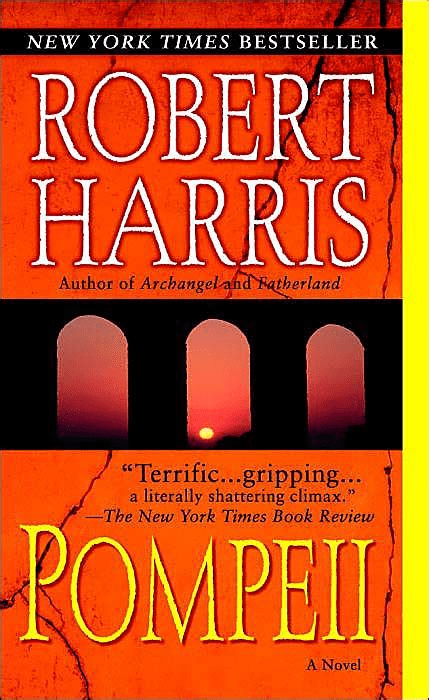
Pompeii by Robert Harris, pub. 2003
Dear Robert Harris,
I am sorry. I am sorry that I left your book, Pompeii, moldering on my bedside bookshelf for … I don’t know … several years after I got it … I don’t know … from my husband’s trucker friend, from the library sale shelf, somewhere like that. I should have picked it up and read it immediately. I thought it was going to be demanding and … you know … educational. I didn’t know it was going to be educational. Or gripping. Or The Perfect Historical Novel.
Spoiler: Vesuvius Blows
I don’t know, reader, whether you would pick up a novel about Pompeii. Perhaps you would worry that the tension would be somewhat lacking, given how everyone knows that the mountain explodes and buries the town. It would be, you might think, sort of like reading a novel called John Dies at the End.
Harris, of course, uses the volcanic eruption’s very fame to his advantage. The people in Pompeii, and Herculaneum, and in the other towns around the bay of Neapolis, don’t know what is about to happen to them. This gives the opportunity for an infinite number of ironic quotes and thematic moments, such as the line, “I ought to die and come back to life more often,” when a narrow escape from death causes a character to be met with newfound respect. You spend much of the book wondering which, if any, of these people are going to survive.
The Historical Background
No, I am not going to sketch all the historical background here. I’ll just tell you that an awful lot is known about Roman society of this period, both general things about the culture, diet, and technology, and specific things about individuals like Pliny the Elder. (And Nero. Nero had a favorite moray eel, did you know that?) Harris makes excellent use of all this research to build a story that grows organically out of the who the characters are and what they value.
At the beginning of the book is a nice clear map of the Bay of Neapolis and surrounding regions, which is critical to visualizing the action of the book. Special attention is given to the Aqua Agusta, an aqueduct which runs from the Apenine Mountains, past all the towns in the region, with spurs providing water to Pompeii, Herculaneum, and so on, until it terminates at the naval base of Misenum, in a reservoir called the Piscina Mirabilis, “Miracle Pool.” When you see how close the Aqua Agusta runs to Vesuvius, you can see that an imminent eruption might well cause problems for the region’s water system.
The Hero
Marcus Attilius, the “aquarius,” comes from a family of men who build and maintain the empire’s aqueducts (which, by the way, like the Aqua Agusta, are often not elevated but rather are underground pipes). He was sent from Rome to Misenum two weeks ago after his predecessor, Exomnius, mysteriously disappeared. When the water running into Misenum first turns sulfurous and then starts to lose pressure, everyone is ready to blame Attilius for not having foreseen or prevented this.
Attilius, realizing the gravity of the situation, orders the city’s water supply to be shut off. There is enough in the Piscina Mirabilis to last Misenum two days with rationing. Attilius, based on which towns have lost water and which haven’t, thinks he knows approximately where the break in the aqueduct is. By pressing very hard, he hopes in two days to sail to Pompeii, send a team inland to find the exact source of the leak, send another team to re-direct the water farther upstream, buy supplies, and work through the night with a team of slaves to fix the blockage. In this way, he hopes to prevent riots and death in the towns without water. The reader knows that Attilius is also racing against time to find the reason the aqueduct broke.
We learn a lot about the Romans’ amazing aqueduct system. All the cities had, essentially, free water as a gift from the Empire. The underground pipe was six feet in diameter, with a three-foot thickness on either side made of the famous Roman cement, made with seawater, which could dry underwater and which got harder with time. There are maintenance manholes at regular intervals, and water sinks along the route which allow the water to drop rocks and silt it’s been carrying. These are then used for gravel.
The great Roman roads went crashing through nature in a straight line, brooking no opposition. But the aqueducts, which had to drop the width of a finger every hundred yards–any more and the flow would rupture the walls; any less and the water would lie stagnant–they were obliged to follow the contours of the ground. Their greatest glories, such as the triple-tiered bridge in southern Gaul, the highest in the world, that carried the aqueduct of Nemausus, were frequently far from human view.
page 181
The Villain
Ampliatus is a former slave. His master, who used him as a toy (yes, the Romans were horrible people), set him free in his will at the age of twenty. Ampliatus, by this time a ruthless social climber, began to amass wealth by buying real estate around Pompeii. Several years before the book opens, the city suffered an earthquake. Most of the aristocrats fled, but Ampliatus is unendingly proud of himself because he stayed, bought up a bunch of buildings on the cheap, fixed them up, and became the nouveau riche. By the time the book opens, he has bought his former master’s estate. His bedroom is the one where he used to be molested. He has gotten his former master’s son in debt to him, and is persuading him to marry Ampliatus’s daughter. He is building an ambitious bathhouse in the middle of the city. As Ampliatus says to the aquarius when he’s trying to corrupt him, water is key to civilization.
As a former slave, Ampliatus outdoes the aristocrats he imitates in both cruelty and ostentatiousness. There is a memorable scene of a feast Ampliatus gives, of the kind that historians would probably call sumptuous. It’s held in Ampliatus’ triclinium (dining room) on a swelteringly hot August night, and no one but Ampliatus wants to be there.
And the food! Did Ampliatus not understand that hot weather called for simple, cold dishes … then had come lobster, sea urchins, and, finally, mice rolled in honey and poppy seeds. … Sow’s udder stuffed with kidneys, with the sow’s vulva served as a side dish … Roast wild boar filled with live thrushes that flapped helplessly across the table as the belly was carved open … Then the delicacies: the tongues of storks and flamingoes (not too bad), but the tongue of a talking parrot had always looked to Popidius like nothing so much as a maggot. Then a stew of nightingales’ livers …
pp. 146 – 147
Reader, I have spared you the most disgusting parts of this dinner.
Ampliatus has commissioned a positive prophecy about the city of Pompeii from a sybil–an older female seer–and is keeping it in readiness for the next time he needs to get the people all excited … probably in order to ensure the election to public office of an aristocrat he has in his pocket. And here is what the sybil has said: Pompeii is going to be famous all over the world. Long after the Caesars’ power has faded, people from all over the world will walk Pompeii’s streets and marvel at its buildings. Ampliatus takes this as a very good sign.
The Scholar
Pliny the Elder, an actual historical person, makes an appearance as a prominent side character. Pliny was stationed as a peacetime admiral at Misenum. When Vesuvius started erupting, it was clearly visible across the bay. Pliny, who had written a whole encyclopedia about the natural world, received a message from an older female aristocrat in Herculaneum, begging him to come and save her library. (In Pompeii, this message is delivered by Attilius.) Pliny launched the navy without imperial permission, intending to save the library and also evacuate the towns near the eruption. But pumice falling from the sky, floating on the water, and clogging the bay prevented the ships from approaching the coast. Pliny and his crew were forced to take refuge belowdecks, and their ship was driven across the bay to Stabiae, where they took refuge overnight. Eventually, they had to evacuate on foot, but Pliny, who was fat and was perhaps suffering from congestive heart failure, chose to stay, and ended up dying in the gaseous cloud that swept along the coast.
The remarkable thing is that during this entire time, Pliny had his scribe with him, and he was dictating his observations about the “manifestation.” His notes were saved. It occurs to me that the stereotype of the British absentminded professor who is never rattled by anything, and always keeps his cool and approaches everything with perfect manners and scientific curiosity (and is an incurable snob), may have roots deeper than England itself.
Go read this book right now!
Despite the large amount of detail in this review, I assure you that I have merely scratched the surface and that this review contains very few spoilers for the novel. I really can’t say anything better about it than that it is, in my estimation, the perfect historical novel. Please go read it if you have any interest at all in the genre.
A Great Book You Cannot Read
The book is called Everything Has a Shape. This particular book is book-shaped. It is a proof copy of a draft written by my brother-in-law, Andrew McKeeth. It’s nicely formatted and readable, but still needs an editor. The main remaining issue is malapropisms and homophones.
Everything Has a Shape is similar to Alice in Wonderland, except that it makes a lot more sense. Alice falls into a world of nonsense, whereas the protagonist of this book, Prism, the daughter of a geometer, is invited into a world where everything makes its own kind of sense.
Everything Has a Shape also reminded me of The Phantom Tollbooth. If you were a kid who loved to read, you probably stumbled across The Phantom Tollbooth and loved it. In that book, Milo travels through a world where everything is a physical manifestation of language. For example, you can see a huge crowd of adjectives thundering over a hill.

Everything Has a Shape is sort of the mirror image of The Phantom Tollbooth, because in the world Prism must navigate, the primary mental unit is not words, but shapes. In fact, the denizens of this new place tell Prism that they did not have language at all until humans started coming into their world.
And what is it called, this strange place that Prism visits? It’s called Place.
“We come from Place. Oh, sorry. Of course this probably doesn’t make any sense either. The place where I live is called Place. It really is a terrible name, I know, but it fit so well that nobody had the heart to change it. It used to be all Space before we called it Place. Anyway, we want to ask you about Nothing. You see in Place, where I come from, there is always something. You humans, however, do believe in Nothing. You think that there is such a thing as void and vacuum. In Place everything has a shape. Even Space, which might seem empty, is really just an undefined shape.”
“If there isn’t Nothing in Place,” [asked Prism], “why are you coming to ask about it?”
“Well, as far as we know there has never been Nothing in Place, but we are beginning to think that there might be a little bit of Nothing now. What is Nothing? Can you measure Nothing? I mean, if there is Nothing, how could you know it?”
Everything Has a Shape, p. 15
The book is full of conversations like this, and they only get worse, which is to say, more confusing but ultimately more insightful as well. I will post quotes from this book in a few weeks, because they are so thought-provoking.
Place, once Prism gets there, is understandably hard to describe, but the author does a fair job of it. It is a world folded over on itself, with a parallel ground above it, called Oversky. Think of it as looking like the center of the earth. Place is populated with strange creatures and paradoxical landscapes that look like an M.C. Escher drawing. There is also a population of humans whose ancestors got into Place years ago and have been living there ever since. Prism’s journey will, of course, take her all throughout this world. She often has to use mental tricks in order to be able to navigate Place’s physical reality. These are similar to the mental tricks we might have to use here on earth, such as occupying ourselves to make time go faster, or closing our eyes to navigate an illusion room, but Prism’s experience in Place is more intense.
Prism ultimately has to face The Twister, an entity that is introducing chaos into Place by convincing the creatures to deform their own shapes. The Twister makes a strong argument that nobody has an inherent shape of their own, that having an unchangeable shape is a kind of prison, and that by helping creatures to destroy their shapes, he is setting them free. Creatures who have encountered the Twister leave broken.
Prism’s time in the Twister’s tower is confusing and poignant, especially when she encounters the Likeness, a girl who looks exactly like Prism but claims to be a better version.
“Did you used to have a shape of your own?” Prism asked.
“You mean before I became a Likeness? Yes, I used to believe that lie, but then I realized the truth that there is no shape. It is better this way. I can be whatever I like. You can only be you.”
“As I said before,” Prism said, “if I could be everything, I would stop being anything. It’s true that I am stuck with my shape, but I’m the only one who can be me.”
“You’re wrong. I am you right now.”
“You’re a copy. You are ‘like’ me, true. You can be like anything you want but you can never be yourself.”
“You don’t know what you’re passing up.”
“I would rather be me than be nobody.”
The Likeness grew angry and the real Prism wondered if she really looked that way when she got mad.
ibid, p. 166
As you can see, Everything Has a Shape is an insightful and compelling read. I hope it can be published someday so it can be enjoyed by more people. Furthermore, I would love to see an illustrated version. The scenes in this book would lend themselves to some amazing surrealist art. At the very least, it needs a beautifully done cover.
What do you think? Would you read Everything Has a Shape if it were available?
The Hunter, by Tana French: a book review

recently posted on my GoodReads account:
Another funny and poignant book by Tana French, set in the Irish village of Ardnakelty.
The humor comes from the way the residents, especially a certain older man named Mart, use the language. Mart is a talker. He and his friends at the pub love to roast each other, and especially Cal, the American ex-cop who has lived there two years now. For example, when they hear Cal is getting married, they try to convince him that there’s a local custom that the prospective bridegroom needs to carry a torch from his house, through the village, around his intended’s house, and then back to his own house … in his underwear.
The poignancy comes from the plot, which I won’t reveal, but suffice it to say that there is plenty of human tragedy.
French has done an amazing job of portraying a close-knit, gossipy, stifling, eccentric small community where communication is indirect, and becomes even more indirect when the stakes become high. Cal is pretty good at reading, and engaging in, this kind of 4D chess that’s played at one remove, but it gets to even him after a while. “The amount of subtlety around here was pretty near to giving him hives.” I have always wanted to write a story set in such a community, but have been unable to because I am woefully literal minded and don’t pick up on cues. I would never survive in Ardnakelty.
There is a small amount of preaching about climate change, but it’s only mentioned directly once that I remember and does not overwhelm the story. This tale takes place during an unusually hot and dry summer in Ardnakelty, which puts everyone on edge. In this way, the weather contributes to the theme and even drives the plot a little bit.
Finally, one thing I forgot to mention on my GoodReads review is that French deserves props for being able to capture the way men think and talk. Cal is the main POV character, and he’s just the quintessential male, both in the way he thinks, how he handles and solves things, and how he banters with the people in the village and deflect questions and comments and barbs when he needs to. This book kind of reminds me of She’s Come Undone, which was the opposite in that it was a well-written book with a female POV character, written by a man.
I was Seldom Disappointed with this funny memoir

The following review was posted on GoodReads on June 27.
I love Tony Hillerman’s Navajo police procedurals. A few years ago, I got to travel through Navajo country (Dinetah), which was amazing because for fans of Hillerman it’s like getting to visit Middle Earth. At the Navajo Cultural Center gift shop, they displayed many of Hillerman’s books, and this memoir. I picked it up, but it took me several years to get around to reading it.
Once I did, it went fast because this is a page-turner. Hillerman’s writing is understated and vivid (he started his writing career as a journalist).
It turns out that Hillerman is closer to the age of my grandparents. He grew up in the Dust Bowl during the Depression, fought in the Battle of the Bulge. Quite a lot of the book is devoted to his memories of France during WWII. He was then injured (legs, and eyes), spent some time in the hospital, and was sent home with crutches and an eye patch. He discovered that “Military Intelligence is usually neither.” He doesn’t dwell on it, but he had PTSD before that was a word. Nightmares, unable to keep his breakfast down. He recounts, in the 1950s, seeing a grisly car accident that made the police officer on the scene vomit, but Hillerman stood there unaffected.
Hillerman and his wife also adopted a number of children, and raised a big, happy family.
All of this is related with almost no self-pity, and it’s often very funny.
This book contained less about the Navajo than I expected. I guess Hillerman has poured his learning about them into his novels rather than into his memoir. But by the time the book reached his later years, when the Navajo became a big theme, I was not disappointed about this because the book itself had already been such an entertaining ride.
There is an appendix which lists a number of Hillerman’s books and sketches out the process that led to each one. They presented different kinds of problems that will be reassuringly familiar to other authors.
All in all, Tony Hillerman is a total mensch, a good egg, and it’s been an honor to get to know him.
The Strange Land gets reviewed by an MFA in Fiction Writing

Click through to the Amazon review for the traffic, or enjoy this excerpt:
Many potentially interesting things are going on in this story, but it is unclear who or what it is about. Endu has the most significant character flaw to overcome, but even he does not create the thin red line necessary to create a cohesive plot line, nor does he have a character arc. None of the characters do. Instead, it’s a series of events tend to ramble too much about mundane things.
…
Luckily, as the story progresses, it becomes very visual. However, it still lacks the emotional connection needed to captivate the reader’s mind because the author tells us some of the dramatic beats, which lessen the impact.
The author is on the cusp of developing a writer’s voice. I found some treasures that express that voice: “Wildflowers rose up like an army.” “Knowing the hidden rocks in the sea.” They are not only vivid, they express the theme and help set up the events.
I’m kind of tickled with this 3-star review. I’m also impressed, because it appears the person read the book over the weekend and then wrote this review to post on Monday.
Forgotten in Death: A Book Review

The following review was recently posted by me on GoodReads:
So, it looks as if the “In Death” series by J.D. Robb is yet another very long-running series that I was unaware of. They are police procedurals set in the 2060s. This future world differs from our own about as much as you’d expect. Things are recognizable, and the terms, trends, and technologies that look different seem like reasonable extrapolations from what we have now. Obviously, this isn’t the only way the world could go, but it’s a plausible one. For example, people live slightly longer in this future world, so that one character casually mentions he’s going upstate for his parents’ 75th wedding anniversary.
The world and characters are introduced masterfully in a way that’s very much showing, not telling … so much so that I almost felt lost during the first few chapters. I don’t know whether this is because of an extreme leaning towards showing, or whether because this particular book comes very late in the series. The one thing I wished for more of was a physical description of Eve and of her husband, Roarke. Perhaps these were given in earlier books.
Forgotten also contains easter eggs. Eve’s husband, Roarke, and another family, the Singers, are both in the construction industry in New York City. Sound familiar? When I first started this book, I wondered whether it was going to be a re-telling of The Fountainhead. It wasn’t. There is also an allusion to The Cask of Amontillado. There are probably other literary allusions that I didn’t pick up on. These allusions take this book to a whole new level beyond its genre.
Realistic speech in books is important to me, and Forgotten excels in this area. The characters all speak differently from one another, whether they are a tough cop, a bubbly teenager, or a Russian gangster. I should also note that, although this book is gritty and deals with horrible domestic abuse and crime, it does not portray the world cynically. There are many characters who are genuinely good people, including main and side characters. I didn’t feel I was being sold a vision of the world where everything is class war or patriarchy or whatever.
Though long, this book covers only about three days of investigation. We follow the detective, Eve, through every minute of her day and night. Like many hard-boiled detectives, she and her team are very driven. She works late into the night. She forgets to eat unless someone makes her. She sleeps for … I don’t know. It looks like five or six hours maybe. I don’t enjoy this aspect of detective fiction, because it makes me tired. However, I know it’s part of the genre.
Personal Addenda because this is a blog:
I got this book from my husband’s trucker friend. After reading it, I checked on FictionDB, and oh my goodness! Forgotten is #53 of a 62-book series! And that series includes some books that are, say, number 11.5 as well. This friend of my husband’s is really expanding my horizons.
One other possible reason that I felt disoriented as I began this book was chronic pain. For the entire time reading it, I’ve been suffering nerve pain in my left arm. On and off, but mostly on. Update: it’s now about 7 weeks later, and the arm no longer painful, just pins and needles.
Finding God in the Literature of Darkness
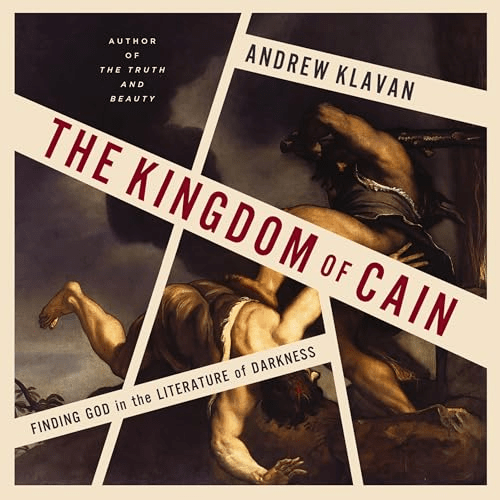
A review of noir writer Andrew Klavan’s The Kingdom of Cain: Finding God in the Literature of Darkness. I have already posted this review on Amazon and Goodreads.
This is a very readable book that fleshes out Andrew Klavan’s thesis:
The opposite of murder is creation–creation, which is the telos of love. And because art, true art, is an act of creation, it always transforms its subject into itself, even if the subject is murder. An act of darkness is not the same thing as a work of art about an act of darkness. The murders in Shakespeare’s Macbeth are horrific, but they are part of a beautiful play.
page 17
In other words, Klavan is wrestling with the problem of evil. Based on his decades of thinking about this, he has concluded that in this life, there is no theological answer that can redeem evil for those who have suffered it. Theological answers there may be, but those are not what redeem it for us. The only answer to suffering is not an answer, exactly; it is beauty. The example he frequently re-visits is the Pieta, “the most beautiful statue in the world,” a statue of Mary cradling her maimed and innocent, dead son.
I think Klavan’s thesis is a very strong one. I think of the book of Job. Job suffers horribly, and apparently undeservedly, and to add to his suffering, he is told that it must be his fault. He asks God why. Now, as it happens, there is an explanation for everything that is happening to Job. But God doesn’t give it. He just starts talking to Job about the wild animals and their habits. This is beauty, it is wonder, and it is far beyond Job’s experience. But ultimately, God answers Job with Himself, with His presence. He answers Job out of the whirlwind. He mentions just a few of His mighty, mysterious works in creation. And this is a good answer. It is enough. It is a much better answer than if God had said, “Well, it all started when I got into this argument with Satan …”
Kingdom of Cain is a hard book to read because of the real-life crimes described in it. Klavan tries not to get too graphic unless he has to, but this is a book about murders after all, including copycat murders. The blurb says it examines the impact of three murders on our culture, but there are a lot more than that, both fictional and–this is the hard to read part–real. The hardest one for me was the kidnap, rape, and murder of a 14-year-old boy by a pair of older teenagers who were later lionized in fiction.
This book is very insightful. Perhaps if I had never heard Klavan make these points before, I’d have given it five stars. But I have been following him for years, and he has been working on this concept for years, so the idea was not new to me. Especially in the later chapters, it felt a little belaboring. Hence, four stars.
The YA Maya-themed Adventure Series of My Dreams
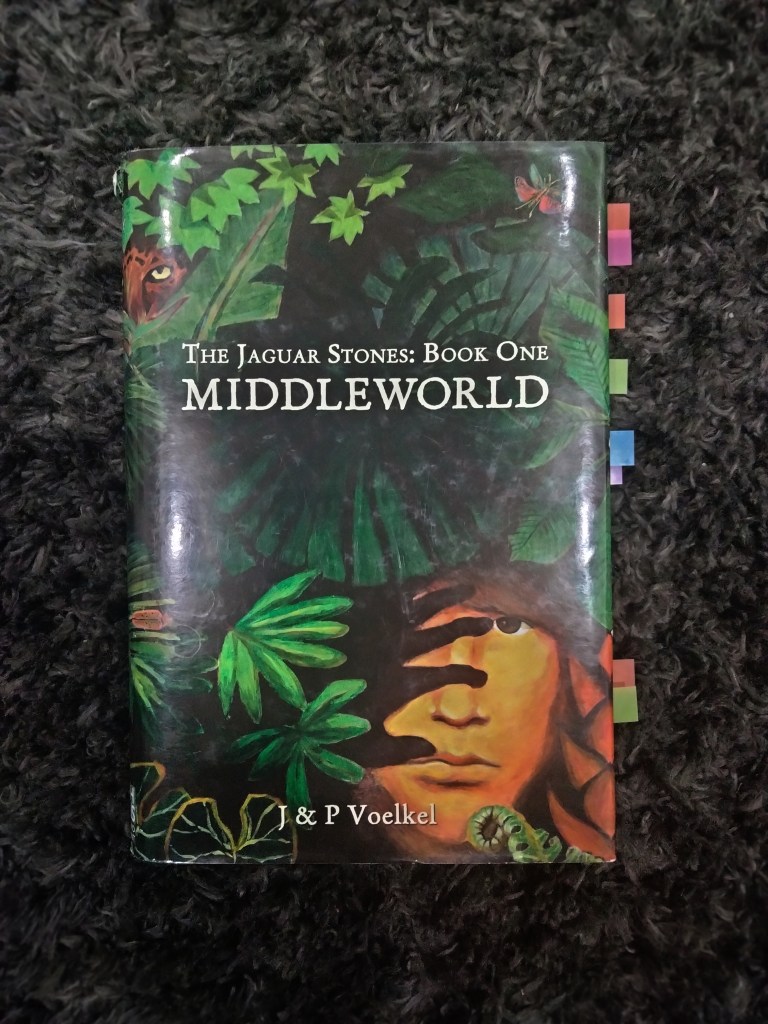
We continue our journey through darkest Jen’s TBR Pile with this book, which I picked up in an Idaho Falls thrift store several years ago and has been waiting patiently, like a pyramid under jungle cover but more durable, to be excavated.
One week ago, Max Murphy’s biggest problem was deciding which pizza to order. Now he’s lost in the perilous rainforest and running for his life with Lola, a modern Maya girl. Their terrifying journey will take them into the heart of an ancient evil and awaken powers that have slept for a thousand years. For fate has delivered an epic challenge to this pampered city boy. From now on, only one thing is for sure: Max Murphy won’t be eating pizza again any time soon.
from the dust cover
This book is the perfect YA Maya adventure. It starts with Max in Boston. His parents are archaeologists. They have to be gone a lot for their work. Max believes they “care more about the Maya than about him,” and he has learned to leverage this guilt into all the video games and snacks, and other luxuries his heart desires. This beginning is presumably there to ease the book’s target audience (American teens) into the Mayan context without a steep learning curve. They aren’t just thrown in; they find out things as Max does.
“Did anyone ever tell you that you’re bossy?” said Max.
“Did anyone ever tell you that you’re lazy?” said Lola.
“Yes,” said Max proudly, “all the time.”
“In the rainforest, lazy boys get eaten by jaguars.”
p. 150
But the book doesn’t stay in boring Boston for long. By Chapter 2, Max is in the fictional country of San Xavier (based on Belize). There is an excellent description of a nightmarish 3rd-world backcountry bus ride, a chapter or two at Max’s estranged uncle’s mansion, and then, he’s off into the jungle.

Behold this perfect author photo. Apparently, Jon grew up in Central America. Note also that the endpapers have a map of San Xavier. The map includes the Monkey River, Villa Isabella (Max’s uncle’s estate), and the five pyramids of Maya cosmology. If a place appears on this map, be sure we will visit it, either in this book or in a sequel.
Middleworld is an excellent introduction to the Maya cosmology, which is incorporated into a very lively adventure. As Max and Lola visit the different pyramids, they discover the purposes of the still-preserved machines within them: controlling the weather, time, etc., and even opening portals to Xibalba, the Maya underworld, into which Max’s parents have disappeared when they jumped into a cenote.
The overall adventure story is a good blend of actual Maya mythology and fictional or fictionalized characters. Lord Six Rabbit, who comes into the story, is a fictional ancient Maya king. The gods and demons we encounter are taken from actual Maya myths. Friar Diego DeLanda, an actual historical person who burned the majority of the Maya codices, makes an appearance. And because the intricate Maya calendar played such a large role in their cosmology, so it does in the events of this book. An Appendix contains an explanation of the interlocking calendar cycles and of how to read Mayan date glyphs, which are quite complex. Other appendices show a diagram of the Mayan cosmos; how to read Mayan numbers; and a glossary of characters and terms which appear in the book. By the time a reader gets to the end of the book, he or she might be interested enough to actually read this material.
It’s clear that the authors love Mayan culture, but they don’t shy away from the fact that many things about it were horrifying. Most of the rituals described call for blood, but the archaeologists have figured out that the blood doesn’t necessarily have to be from a human sacrifice — or even, necessarily, human:
[The archaeologist] Hermanjilio sighed. “Give me a break, will you? I don’t think there’s a precise science to these rituals. As I understand it, they’re more about showing swagger and confidence than following any particular steps. The Maya gods are like children. They like costumes, special effects, and plenty of action. We just have to put on a good show.”
“So you’re going to bluff it?” said Max.
“In a manner of speaking.”
pp. 244 – 245
For example, here is an entry from the glossary:
LORDS OF DEATH: The Maya underworld, Xibalba, is ruled by the twelve Lords of Death. According to the POPOL VUH … their names are One Death, Seven Death, Scab Stripper, Blood Gatherer, Wing, Demon of Pus, Demon of Jaundice, Bone Scepter, Skull Scepter, Demon of Filth, Demon of Woe, and Packstrap [???]. They are usually depicted as skeletons or bloated corpses. It’s their job to inflict sickness, pain, starvation, fear, destitution, and death … Luckily for us, they’re usually far too busy gambling and playing childish pranks on each other to get much work done.
p. 371
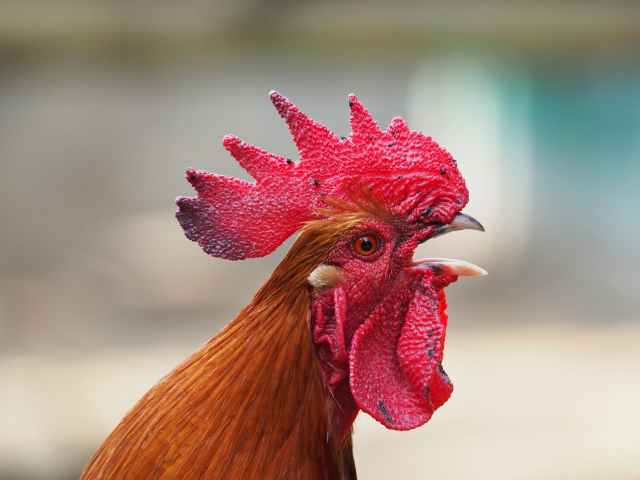
Given that everything in the Maya cosmos is simultaneously gross, horrifying, and (at least in this book) funny, it’s not surprising that Max and Lola are able to convince the Lord Six Rabbit and his mother that their chicken is a fearsome beast much more dangerous than its size would predict.
“Now tell them the bad news,” sighed Lady Coco. “Tell them what we heard!”
“What? What was it?” asked the others anxiously.
“The Chee Ken of Death,” said Lord Six-Rabbit. “We did not see it, but we heard its infernal crowing. It seemed to come from behind the cooking hut. I doubt my sleeping draught will work on that scaly devil.”
“Don’t worry, Lord Six-Rabbit,” said Hermanjilio. “I believe I am more than a match for this Chee Ken.”
“Thou art truly a brave man, Lord Hermanjilio.”
pp. 285 – 286
This book, apparently the first in a series, strikes a good balance between a satisfying end to the adventure, and leaving some significant unfinished business open for later books. Near the end, Max strikes a deal with the Lords of Death in exchange for “a small favor” that they will ask of him in the future. That can’t be good.
My only complaint with this book is that there’s very little publication information on it. I can’t find the year it was published or the titles of the other books in the series. I guess I’ll have to go online to find out more. I will definitely seek to acquire the other Jaguar Stones books if the opportunity arises.
Edit: According to FictionDB, there are four books in the series:
- Middleworld (2010)
- The End of the World Club (2011)
- The River of No Return (2012)
- The Lost City (2015)
 Out of Babel Books