That’s right, this wasn’t even a first-time read, and it destroyed me. Again. Maybe worse this time.
It’s tempting to do a super detailed book review, including an analysis of all the ancient customs, the Bible Easter eggs, and the symbolism. (My God, the symbolism!) But I’m not going to do that, because I really think you should read it if at all possible. And, even though this book is possibly more powerful on re-reads, I still don’t want to ruin your first read with spoilers.
Any analysis I gave, would be less of an immersive experience than the story itself, because that is the power of fiction.
I will just say a few things about the setting and genre, so you can decide whether to subject yourself to it.
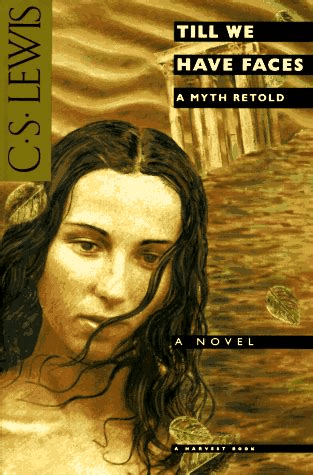
I read TWHF as part of my 2026 “Greco-fiction” project, where I read books set in and/or inspired by the Heroic Age of Greece. When I mentioned this project to someone, they suggested Till We Have Faces. They were right, of course, though I hadn’t put it in the same category in my mind as, say, The Song of Achilles.
The action takes place in a fictional country called Glome. Based upon hints in the text, Glome is located somewhere just south or just north of the Caucasus Mountains, between the Black and Caspian seas. Georgia, Azerbaijan, perhaps southern Russia. Glome is not a mountainous kingdom, but it is near mountains. In the distance, they can see “what we call the sea, though it is nowhere nearly as great as the Great Sea of the Greeks.” This would probably be the Caspian. They are far from Greece, but near enough that they occasionally encounter a Greek captive taken in war. They are near enough to “Phars” (Persia) for that country to present a problem. At one point, the narrative makes a passing mention of “the wagon people, who live beyond the Grey Mountain.” These “wagon people” are probably steppe-dwellers related to the Scythians or Kazaks.
The people of Glome worship a fertility goddess called Ungit, who is embodied in a large irregular black stone that is said to have pushed its way up from the earth. Ungit’s “house” is a group of megaliths joined together with walls. Her worship involves temple prostitution, animal sacrifice, and sometimes human sacrifice, all the usual things that you expect with a fertility religion. Her priest wears a large bird mask on his chest, and dangles with amulets and animal bladders.
The narrator, a little girl named Orual, is frightened of the priest and of Ungit. The story will go on to focus on this fear. Orual very much hopes that the gods are, as her Greek tutor has told her, merely “lies of poets, lies of poets, child.” But are they? Or is there a power in Ungit (and in her son, who dwells on the Grey Mountain) that will leave Orual quite outmatched?
C.S. Lewis is an underrated horror writer. In this story he draws back the curtain on the horror of paganism. We also see, I think, hints of how he himself felt when he was an atheist: desperately hoping there is no spiritual world; uneasily worried that there might be. Relieved, but unsatisfied, by the “clear, shallow” Greek explanations.
So, I’ve said enough. Read it if you dare. I doubt that this year will bring me a better book in the category of Greco-Fiction.
In my Greco-Fiction project, I have briefly set aside The King Must Die in order to re-read Till We Have Faces. I have to read TWHF for a book club, but I can’t complain, really, because I was one who convinced the book club to read it for our February discussion.
If you have never heard of it, Till We Have Faces is one of C.S. Lewis’s lesser-known novels. The point of view character is a young woman, a princess in the ancient, fictional kingdom of Glome, who is cursed with an ugly face, an abusive father, and a horrible fertility goddess for a religion. Her name is Orual. The first bright spot in Orual’s life is a Greek slave her father captured in war, who becomes her tutor. The second, and much brighter, spot is her younger half-sister Psyche.
The back of the book describes it as a “timeless tale of two princesses–one beautiful and one unattractive.” Naturally, when I first picked it up, then in my late teens, I thought, “Well, I know which one of these I will identify with!” Like probably every young woman, I expected to have a grand time wallowing in self-pity on behalf of the ugly princess. However, this is not that kind of story. Orual is not envious of Psyche’s beauty. The jealousy she feels is of a very different kind.
I don’t want to give away the events of the story, because you should definitely read it. However, I do want to post a long passage from the book. This passage is very important thematically, and in terms of Orual’s character development, even though it is not an action scene.
When we topped [the ridge], and stood for a while to let the horse breathe, everything was changed. And my struggle began.
We had come into the sunlight now, too bright to look into, and warm (I threw back my cloak). Heavy dew made the grass jewel-bright. The Mountain, far greater yet also far further off than I expected, seen with the sun hanging a hand-breadth above its topmost crags, did not look like a solid thing. Between us and it was a vast tumble of valley and hill, woods and cliffs, and more little lakes than I could count. To the left and right, and behind us, the whole coloured world with all its hills was heaped up and up to the sky, with, far away, a gleam of what we call the sea. There was a lark singing; but for that, huge and ancient stillness.
And my struggle was this. You may well believe that I had set out sad enough; I came on a sad errand. Now, flung at me like frolic or insolence, there came as if it were a voice–no words–but if you made it into words it would be, “Why should your heart not dance?” It’s the measure of my folly that my heart almost answered, “Why not?” I had to tell myself over and over like a lesson the infinite reasons it had not to dance. My heart to dance? Mine whose love was taken from me, I, the ugly princess who must never look for other love, the drudge of the King, perhaps to be murdered or turned out as a beggar when my father died? And yet, it was a lesson I could hardly keep in my mind. The sight of the huge world put mad ideas into me, as if I could wander away, wander forever, see strange and beautiful things, one after the other to the world’s end. The freshness and wetness all about me made me feel that I had misjudged the world; it seemed kind, and laughing, as if its heart also danced. Even my ugliness I could not quite believe in. Who can feel ugly when the heart meets delight? It is as if, somewhere inside, within the hideous face and bony limbs, one is soft, fresh, lissom and desirable.
Was I not right to struggle against this fool-happy mood? What woman can have patience with the man who can be yet again deceived by his doxy’s fawning after he has thrice proved her false? I should be just like such a man if a mere burst of fair weather, and fresh grass after a long drought, and health after sickness, could make me friends again with this god-haunted, plague-breeding, decaying, tyrannous world.
But that’s partly my own fault. After all, I had to go and listen to this heartrending testimony …
Jonathan Gass’s story is remarkable for how it consisted of essentially unremitting pain until he came to Christ … and then, for how fast he came to Christ and was transformed.
I say remarkable, but I don’t say unique. Many, many other men and women out there are, as we speak, going through the same unremitting pain. This does not make his story easier to listen to. But look at the peace on his face now.
And then, the same week I listened to Jonathan, I was reading my class of elementary-school students The Lion, the Witch, and the Wardrobe, and I came upon this passage:
For a second after Aslan breathed upon him the stone lion looked just the same. Then a tiny streak of gold began to run along his white marble back–then it spread–then the color seemed to lick all over him as the flame licks all over a bit of paper–then, while his hindquarters were still obviously stone, the lion shook his mane and all the heavy, stone folds rippled into living hair. Then he opened his great red mouth, warm and living, and gave a prodigious yawn. And now his hind legs had come to life. He lifted one of them and scratched himself. Then, having caught sight of Aslan, he went bounding after him and frisking round him whimpering with delight and jumping up to lick his face.
The Lion, the Witch, and the Wardrobe, p. 184
Aslan turns him back into a lion, and he immediately starts behaving like … a lion.
But not only the individual creatures, but the Witch’s house itself is a picture of a human soul:
“Now for the inside of this house!” said Aslan. “Look alive, everyone. Up stairs and down stairs and in my lady’s chamber! Leave no corner unsearched. You never know where some poor prisoner may be concealed.”
But at last the ransacking of the Witch’s fortress was ended. The whole castle stood empty with every door and window open and the light and the sweet spring air flooding in to all the dark and evil places which needed them so badly.
[And when the castle gates had been knocked down from the inside], and when the dust had cleared it was odd, standing in that dry, grim, stony yard, to see through the gap all the grass and waving trees and sparkling streams of the forest, and blue hills beyond that and beyond them the sky.
I got this tag from Snapdragon Alcove. I hope it’s OK that I’m posting it after Halloween (life is busy!). Because of the relatively narrow range of my horror consumption, I’m freely mixing movies and books.
Pick your favorite example of a …
Zombie apocalypse
The Book of Eli (a movie)
Not exactly zombies, but as I recall, there is an older couple that seems normal, but then you find out they have some sort of neurological disease from having eaten human flesh to survive. Creepy.
Also, I love the characters Denzel Washington usually plays, and this is no exception. I like my apocalyptic movies to be somewhat uplifting, and this fits the bill.
Vampire
The Unwilling, by C. David Belt (a book). Cheating a little, ‘cause I recently reviewed it here. This one made me cry, because there is a child vampire who wants to be “a real boy.”
Haunted house
I guess I don’t read many haunted house books, because Monster House is the only one I can think of. It is just as sad as ghost stories usually are.
Psychological thriller
Fractured and Shutter Island (both movies). I was very angry with both of these movies, but Fractured probably made me angrier.
Creepy doll
The Collision series, by Rich Colburn. So far, it has only two volumes: The Resolve of Immortal Flesh and The Formulacrum. But The Formulacrum ended on a literal cliffhanger, so that means Colburn owes us another one.
Neither of these books is exclusively about creepy dolls, but one very memorable creepy doll is featured … and that’s just about the only book I have ever read with a creepy doll.
Monster
Beowulf, duh.
And, in case you are not up to speed on this, Grendel is a t-rex. But there are plenty of other monsters in this how-to-defeat-monsters book, including the sea monsters Beowulf encounters while swimming in the North Sea, and Grendel’s mother, who appears to be some sort of octopus.
Comedy-horror
The Tremors franchise. It is the best. Extreme gross-outs, but also extreme humor. Survivalist Ed really steals the show.
Teen Horror
Stranger Things. I will die on this hill.
The series starts out where the kids are about twelve and it more resembles E.T. or The Goonies, but the events cover several years and we see the kids discovering the opposite sex, feeling left out as they grow up at different rates, dealing with problems with their parents and problems involving finding a career and their place in the world. Their lives have all the teen challenges, plus the ghosts and demonic creatures and stuff to deal with. And yes, there are a few make-out scenes that it would be nice if we could skip. I will also say that the series seems to be equally sensitive to the experiences of teen boys and girls.
Some people think the episodes are too long and detailed, but that’s the point. They work in a lot of human drama in addition to the scary stuff, and I am here for it.
Demonic possession
Perelandra and That Hideous Strength by C.S. Lewis both feature possession that gets more terrifying the longer you think about it.
In Perelandra, the possessed man gets to come out and speak instead of the demon once in a while, and this gives a more evocative glimpse into his mind than we might prefer.
In That Hideous Strength, the people that are serving the demons get dehumanized to an even greater extent, and we see the beginning of this dehumanization process happen to one of the main characters. There is also a memorable scene where one of the villains, who up until now has been the most formidable because of his intelligence, wants to put a stop to something, but “he could not think of any words.” This moment of aphasia shows us how close his mind is to total disintegration.
Science fiction
Science fiction reliably pulls towards horror, for obvious reasons. Human nature doesn’t mix well with dimensional portals … or genetic engineering … or time travel.
That second image is from a movie called Paradox. It turns out there are quite a few of those, but this one involves time travel being exploited by a bitter coworker to go postal, and even though the team has an awful lot of information, they can’t figure out what is happening quickly enough.
“Why the dickens couldn’t you have held her feet?” said Eustace.
“I don’t know, Scrubb,” groaned Puddleglum. “Born to be a misfit, I shouldn’t wonder. Fated. Fated to be Pole’s death, just as I was fated to eat Talking Stag at Harfang. Not that it isn’t my own fault as well, of course.”
Any resemblance to reality is entirely due to C.S. Lewis’s wisdom.
A little way off at the foot of a tree sat a merry party, a squirrel and his wife with their children and two satyrs and a dwarf and an old dog-fox, all on stools round a table. Edmund couldn’t quite see what they were eating, but it smelled lovely and there seemed to be decorations of holly and he wasn’t at all sure that he didn’t see something like a plum pudding. At the moment when the sledge stopped, the Fox, who was obviously the oldest person present, had just risen to its feet, holding a glass in its right paw as if it was going to say something. But when the whole party saw the sledge stopping and who was in it, all the gaiety went out of their faces.
“What is the meaning of this?” asked the Witch Queen. Nobody answered.
“Speak, vermin!” she said again. “Or do you want my dwarf to find you a tongue with his whip? What is the meaning of all this gluttony, this waste, this self-indulgence? Where did you get all these things?”
“Please, your Majesty,” said the Fox, “we were given them. And if I might make so bold as to drink your Majesty’s very good health –“
“Who gave them to you?” said the Witch.
“F-F-F-Father Christmas,” stammered the Fox.
“What?” roared the Witch, springing from the sledge and taking a few strides nearer to the terrified animals. “He has not been here! He cannot have been here! How dare you — but no. Say you have been lying and you shall even now be forgiven.”
At that moment one of the young squirrels lost its head completely.
“He has – he has – he has!” it squeaked, beating its little spoon on the table.
Edmund saw the Witch bite her lips so that a drop of blood appeared on her white cheek. Then she raised her wand.
“Oh, don’t, don’t, please don’t,” shouted Edmund, but even while he was shouting she had waved her wand and instantly where the merry party had been there were only statues of creatures (one with its stone fork fixed for ever halfway to its stone mouth) seated around a stone table on which there were stone plates and a stone plum pudding.
“As for you,” said the Witch, giving Edmund a stunning blow on the face as she re-mounted the sledge, “let that teach you to ask favour for spies and traitors. Drive on!”
C.S. Lewis, The Lion, the Witch, and the Wardrobe, Ch. 11
I recently got the third book in my trilogy, The Great Snake, back from my editor. The next step for me is to go through it, noting all her comments, making all the changes that are called for.
I am having a grand old time. I was really unsure about this book during, and even after, writing it, perhaps because, to paraphrase Jordan Peterson, “The artist should not know exactly what it is that he is doing.” Now, reading through it with fresh eyes after an absence of several months, things are clicking in to place. I feel that what this book has done is right.
I think you all are going to like it.
Meanwhile, we have a brand-new war raging somewhere in the world. Women my age, with children the age of my children, are being forced to flee their homes or hunker down in their basements. Grandmothers are preparing to do first aid. War-fever is sweeping my own country. People are going bananas with demonizing the bad guys, and talking about WWIII.
That doesn’t count the crises we have long been praying about, which still have not abated, notably the Uyghurs being imprisoned in concentration camps, but there are a lot of others too.
Real life is a horror story.
Which raises the question: Do I have any right to enjoy myself reading over my little story of fictional horrors? Do I have any right to post about it, and about paintings and sunsets, or about anything at all except the current crisis?
It is time for me to pull out again C.S. Lewis’s wonderful speech “Learning In War-Time,” which addresses these very questions. I posted a quote from it, and a link to it, almost exactly two years ago. Here they are again:
[We] must ask [ourselves] how it is right, or even psychologically possible, for creatures who are every moment advancing either to heaven or to hell, to spend any fraction of the little time allowed them in this world on such comparative trivialities as literature or art, mathematics or biology. If human culture can stand up to that, it can stand up to anything. To admit that we can retain our interest in learning under the shadow of these eternal issues, but not under the shadow of a European war, would be to admit that our ears are closed to the voice of reason and very wide open to the voice of our nerves and our mass emotions.
I think it important to try to see the present calamity in a true perspective. The war creates no absolutely new situation: it simply aggravates the permanent human situation so that we can no longer ignore it. Human life has always been lived on the edge of a precipice. Human culture has always had to exist under the shadow of something infinitely more important than itself. If men had postponed the search for knowledge and beauty until they were secure, the search would never have begun. We are mistaken when we compare war with “normal life.” Life has never been normal.
The insects have chosen a different line: they have sought first the material welfare and security of the hive, and presumably they have their reward. Men are different. They propound mathematical theorems in beleaguered cities, conduct metaphysical arguments in condemned cells, make jokes on the scaffold, discuss the last new poem while advancing to the walls of Quebec, and comb their hair at Thermopylae. This is not panache; it is our nature.
C.S. Lewis, “Learning in War-time,” a speech given in Oxford in autumn of 1939
Long story short? You bet I have a right to post about art and literature and knitting and all the rest of it. Because when you get right down to it, all my posts are in some sense posts about Jesus. And He is exactly what we need, in this current crisis and in every crisis. He is wonderful. He really is.
Writing about the afterlife is tricky. It does not always go well.
Bookstooge recently reviewed a book that was set entirely in the afterlife, and it failed (at least, based on his review, it failed) because writing about the afterlife immediately brings out the limitations of the author’s understanding of: God, eternity, human nature, human embodiment, space, time, etc.
Some of these limitations on our understanding can be fixed with better theology. (For example, the TV show The Good Place could have benefitted from an understanding that the human heart is deceitful and desperately wicked, and who can know it?). Others of these limitations can’t be fixed because they are a consequence of our inability to imagine an existence that transcends space and time. New Age accounts of “out of the body” experiences immediately lose me when they describe things like “a cord coming out from between my shoulder blades that connected me to my body.” (Pro tip: if you are out of the body, you do not have shoulder blades.)
But despite these pitfalls, I find it irresistibly attractive to follow my characters just a step or two beyond death. Perhaps it’s because the moment of death is so poignant in a story, or because there is an opportunity to address unfinished business. “Wrong will be right/when Aslan comes in sight.” We are all longing for that wrong will be right moment.
The 11-minute song below is a ballad that successfully (I think) follows a character slightly past death. I find it very moving. I hope you do as well.
For the comments: when an author attempts to write about the afterlife, do you start rolling your eyes or do you go with it? What are some of your favorite post-death scenes in books or movies?
Up till now I’ve tried to make posts that don’t mention you know what, because I figure that readers come to Out of Babel for fun and weirdness, not for more mentions of you know what. But, I saw this super fun tag over in the book nook of The Orangutan Librarian. I hope by trying it I’m not letting you down. As you can see, I’ve spun it a little, imagining how the characters would handle coronavirus in their own worlds.
Rules
Take 5 or more of your favorite book characters and imagine what they would be doing if they were quarantined with us in the real world.
You can have them be in their own squad if you want, or working on their own.
The Pevensie kids, of course, would not even be here …
For some reason I imagine Edmund and Lucy quarantining with their cousin Eustace and his parents rather than being with their parents (who got stuck in Greece) or with Peter and Susan (who got stuck at their respective universities). Eustace, though less of a know-it-all since his first trip to Narnia, is still extremely well-informed about epidemiology, government policy, and all the latest economic and medical updates. His mother, Alberta, insists that everyone wear masks and gloves even inside the house.
Gandalf the Grey would have caught the coronavirus early (because he travels a lot), come down with complications (because it hits old people the hardest), died, and been resurrected.
Sam Gamgee, humble, hardworking, and patient, would be the perfect person to quarantine with. He’s also a very resourceful cook.
Faramir and Eowyn would be climbing the walls, holed up in the Houses of Healing in Minas Tirith.
Tom Bombadil and the River Daughter are immune to human ills and they also take a long view of the death of much of the rest of the world.
Gimli would rather risk death than give up smoking.
Tony Hillerman Quarantine
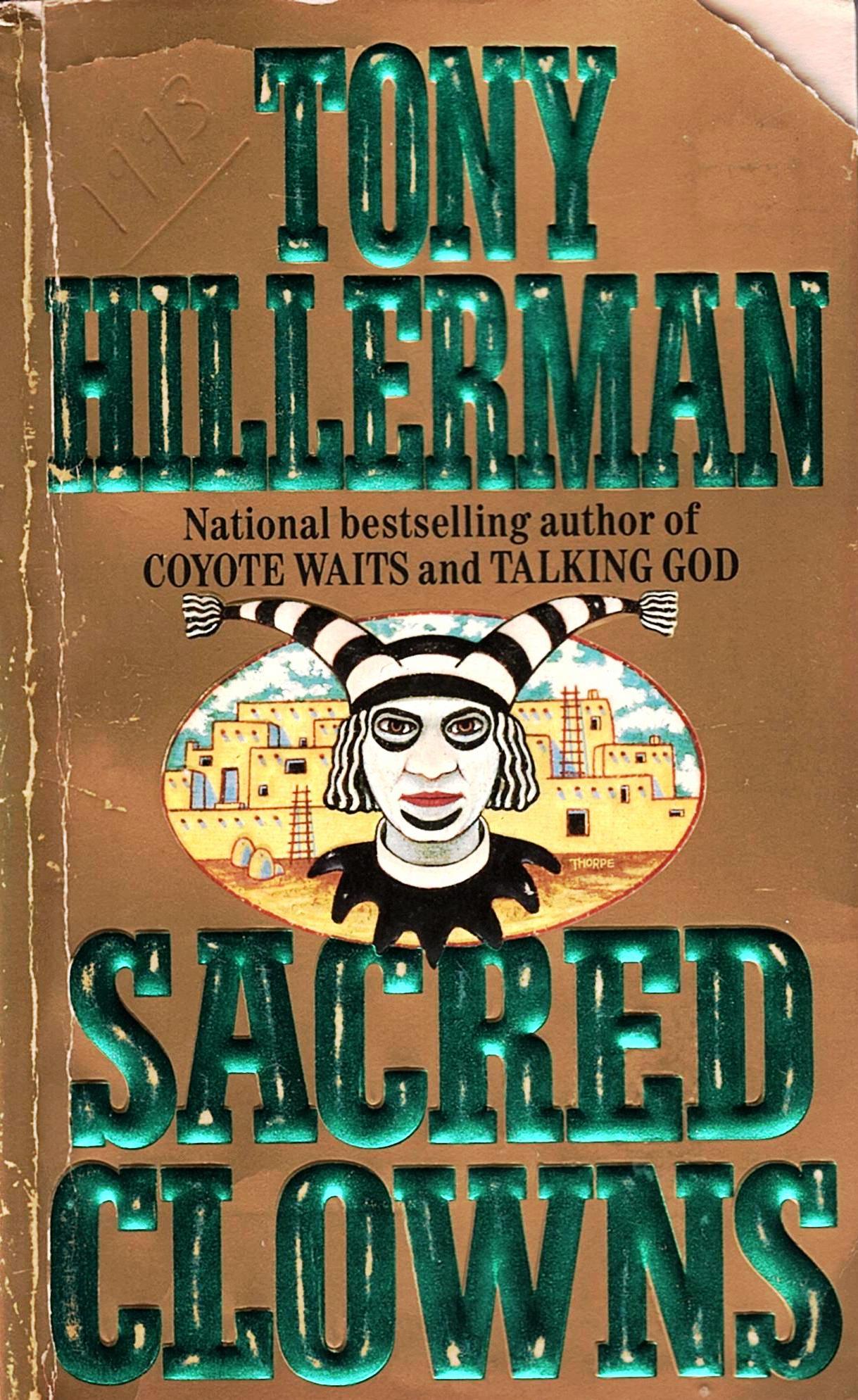
Sadly, in real life, the coronavirus has hit the Navajo nation really hard. Tony Hillerman’s Navajo cop characters, Jim Chee and Joe Leaphorn, would be reacting very differently. Leaphorn, who is older and more of a homebody, would be happily hanging out with his wife Emma at his home in Window Rock. Chee, who is young and restless, would be running around the reservation trying to help everyone he could. He would go to be with an older relative who is dying of the virus, making sure that the person is moved outside as per tradition and that they have someone with them. Though young and healthy, he would unexpectedly develop a bad case himself and would be found recovering in the hospital at the very end of the book, being visited by his girlfriend Janet or Bernie, depending upon where we are in the series.
Emberverse Quarantine
Junie and Mike of the Emberverse have already been through a society-destroying event that resulted in most people dying. Junie heads up a neo-pagan community near Corvallis, Oregon, and Mike runs a more specialized, military one just northwest of Salem. Since the Change destroyed all modern technology, the inhabitants of the Emberverse would probably barely notice the coronavirus. Fewer people develop the diseases of civilization (heart disease, diabetes) in their medieval-style world, living conditions are less crowded, and there are no nursing homes or hospitals. Probably all they would notice was a particularly bad seasonal flu endangering the few remaining old people. They’d be grateful that this sickness, unlike many, was not threatening little children. Junie would be using her herbology and caretaking skills to help as many of her subjects as possible. Because Junie and Mike both grew up in the modern world, before “the Change” happened, they are aware of germ theory and this would help them enforce hygiene on their people.
Miss Marple has lived through two world wars. She would gamely go along with whatever deprivations and regulations the quarantine brought. She’s been through worse. If anyone complained, she would smile sweetly while silently judging you and simply say, “So many things are difficult.”
Hercule Poirot is already a bit of a germophobe. He would take enthusiastically to masks and hand sanitizer, but would become peevish when unable to procure the foods that he’s used to. Whenever Hastings began to panic about the many unknowns, Hercule Poirot would calm his fears through the use of the Little Grey Cells.
Airheaded bachelor Bertie could not stand not going to his club. He would beg Jeeves to come up with a way that Bertie could skirt the rules to get out and about. Jeeves would do so, knowing that within hours, Bertie would be back home with a horrible hangover that he would need to sleep off and then drink one of Jeeves’s miraculous restoratives. Jeeves knows that the coronavirus mostly endangers older people, so even if Bertie should become a carrier, there is little danger that he would infect anyone because even in normal circumstances he cannot be induced to visit his Aunt Agatha.
And … I can’t resist … Quarantine with my own characters!
Nirri is, essentially, already in quarantine all the time. He broke his spine in a fall from the Tower of Babel, becoming paraplegic, and is now being reluctantly cared for by people with whom he does not share a language. He is the nightmare person to be quarantined with: arrogant, demanding, unable to communicate or be reasoned with. Though 130 years old, he is healthy as a horse and there is no way he is dying from this. On the bright side, he is an accomplished musician. Give him a lute and he will entertain you all evening, even if you don’t understand the words to his songs.
Zillah is a born caretaker and the tribe’s resident medical expert. It was she who insisted they rescue Nirri. Though young and even middle-aged people don’t usually show symptoms of the virus, in a tribe their size there might be one or two who do. Zillah would spend herself caring for them, and then get sick herself (she is the tribe’s second oldest person, after Nirri). She would survive, cared for by her daughter Ninna, and the weeks when she was sick would be the loneliest of Nirri’s life.
You Sure You Wanna Do This?
If you do, I tag …
Jyvurentropy, who has been posting so much that I can’t keep up with her









 Out of Babel Books