
God, what hell it is to be young!
Susan Howatch
Tag: cognitive science
Misanthropic Quote from my Son

I miss violence.
I Hope This Post Finds You Well

Well, we have made it through February, when I did a post about something I love every single week. Phew, I’m certainly glad that is over with! What a relief to get into March, and start writing about stuff I hate again.
Just kidding. I didn’t hate this book; in fact, I mostly really enjoyed it. It just wasn’t a perfect bull’s-eye like all the stuff I posted about last month.
This 2024 book is narrated by Jolene, a Canadian woman whose mother is Iranian-Canadian and who works in a regular, that is to say fairly miserable, office. She has social anxiety, a moderate drinking problem, a big cohort of Persian Aunties (her mom’s friends) who really really hope she will get married, and a dark trauma from high school. Oh, and she has a habit of adding passive-aggressive postscripts to her e-mails to her colleagues, hidden in white text.
One day she forgets to turn the text white, and that kicks off her madcap adventures.
If this setup sounds like it’ll be boring and full of self-pity, all I can say is it’s anything but. Jolene, despite her hermitlike ways, is a keen observer of human nature and is mistress of the witty, cunning turn of phrase, which is exactly what makes her e-mail postscripts so devastating, and this narrative so fun to follow.
This little human [baby] doesn’t even realize the greatness of this: the only time in your life when people will simply ignore your public outbursts. The rest of us must cry without actually crying. This child, I learn as Celeste continues to soothe it, is named Thomas. I watch his little eyes dart around the room, taking it all in. Maybe Thomas is just now realizing that eventually he will grow up to spend all his daylight hours under fluorescent lights and water-stained ceiling tiles.
I don’t mean to chuckle at this depressing thought, and I stifle it as soon as I can, but that doesn’t stop a few eyes from drawing my way while I pretend I didn’t just cackle at a technically crying baby.
Then Thomas begins being passed around like a hot burrito. I curl my hands close against my chest and try to back away. When Caitlin takes said bundle, it stops crying in an instant, and her face softens in a way that makes me realize how hard it’s been lately.
“So, how is being a mom?”
Celeste starts describing things that sound dire as sh-t.
Gregory randomly pokes the ——- baby in the belly, and the cries start again in a screeching pitch.
Has anyone ever punched him in the face?
“How was the birth?” Stu for some cursed reason has to ask. I take a step back in order to avoid sticking around for Celeste’s answer.
Rhonda flashes me a disapproving stare. Why is it socially acceptable to discuss a human getting pushed or cut out of a body, yet somehow, it’s unprofessional for me to simply work rather than hold the tiny person I don’t even know?
page 102
That’s a pretty good sample of the writing style — and also a pretty good, lively description of what it’s like to be a woman with social anxiety or maybe autistic tendencies. Very very relatable.
I finished this book very quickly because of the good writing. However, it’s not uplifting or heartwarming. Jolene is engaging in some pretty significant deception throughout almost the entire book, which made it hard to enjoy. She’s under a lot of stress with several different crises bubbling (including one with the Persian Aunties), which keeps the pace fast, but makes the read also stressful. I knock off one star for this dynamic and for the author’s use of the phrase “white-passing.”
The House of Love and Death: A Book Review

I ordered this and it arrived a long time ago, but I just now got to it. (Look at me! I am powering through my TBR like a good girl!) Once I opened it, I finished in just a few days because it’s that good.
This is the third book in the Cameron Winter series. Winter is a character created by Andrew Klavan, reportedly the first character Klavan has created that he’s felt could sustain a whole series. Winter is a former spy who is now a professor of Romantic English Literature at an unnamed university in an unnamed Great Lake state (but pretty obviously Madison, Wisconsin). So he fits into that beloved mystery trope, a character who looks unprepossessing (in this case, because he’s a slight, blond, pretty-boy academic) and whom people consequently underestimate, unaware of his hand-to-hand combat skills.
It was fortuitous that I read House not too long after reading The Bourne Treachery, which is also a spy story featuring a longstanding character. Winter even has, in this book, some experiences similar to those Bourne has in Treachery. However, the two books couldn’t be more different.
Winter does check many of the same boxes as Bourne, and House checks many of the same action-novel boxes as Treachery. It moves a little slower and is a little less intricate, but not much. But it is way more emotional. This is one of those mysteries where, after you find out whodunit, you have to set the book down and (if you are a soft touch) cry for a while as you contemplate just how tragic the whole thing was. And like any good tragedy, it has the simultaneous feel of “This was so preventable! This should have been easily preventable!” and of inescapability.
Winter has a “strange habit of mind” (also the title of the first book in the series), where sometimes he will go into a “fugue state” and zone out for several minutes while his subconscious, essentially, becomes his conscious and works on a puzzle he is contemplating. As a writer and artist, I recognize this habit of mind and actually don’t find it that strange (although it doesn’t help me solve mysteries, more’s the pity). I assume that Klavan has given Winter this “strange habit” because, as an artist and writer, he also has some version of this habit. Certain kinds of mind tend to do this. Call it what you want – hyperfocus, being “in the zone.” Being an introvert. Not everyone is “on” (in the sense of externally focused) all the time.
It does make a person wonder whether this tendency, which is similar to narcolepsy, disadvantaged Winter as a spy. In fact, it makes one wonder how he ever managed to survive his espionage years. If Jason Bourne were to zone out like that even for a minute, he’d be dead. Once in House, Winter is driving somewhere and keeping an eye out for a tail. He briefly enters the fugue state, and when he comes out of it, sure enough, he is now being followed.
Yet somehow, those of us with the strange habit of mind do manage to survive. Some of us even manage to raise children. I dunno.
Anyway (shakes shoulders) aaahh, good book. Recommend. Very very sad though.
Funny Social Commentary of the Week
Stephen Renney was in his windowless office, eating a sandwich and drinking Fanta from a can. He sensed me standing in his doorway, looked up and then started making those slightly embarrassed, fidgety movements we all make when we’ve been caught eating alone. As though eating were some sort of not-quite-respectable indulgence instead of the most natural thing in the world.
“Sorry,” I said, giving the time-honoured response, and looking slightly embarrassed myself, as though I’d caught him on the loo.
“Not at all,” he responded, ridiculously forgiving me.
Sacrifice, by S.J. Bolton, p. 299
Death of the Mentor

I chose this photo off Pexels, and now I almost can’t stand to post it, because it could be my dad in 20 years.
I’ve been thinking lately about how the death of the mentor, in fiction, is often more poignant than the death of the Significant Other. Maybe it’s because the former happens more often. In a normal quest-type story, the mentor gets killed at some point, often kind of early in the action, and the S.O. doesn’t get killed at all, or often even threatened until later in the story. The exception would be crime-fighting superhero tragic back stories, where having a beloved wife killed off to serve as motivation is so common that it has been given a derogatory name (“fridging”).
Anyway, the above paragraph is, of course, just about stories that follow very conventional models. Stories in the wild are quite individual and they go all over the place. Here are some mentor deaths that spring to mind, from stories good, bad, and ugly:
- In Star Wars: Obi-Wan, Qui-Gon Jin, Darth Vader
- In Dr. Strange, which I just watched last night: The Ancient One
- In Harry Potter: Sirius Black, Dumbledore (not to mention Harry’s parents)
- In Narnia: Aslan
- In The Hobbit: Gandalf doesn’t exactly get killed, but he leaves the party right before they enter Mirkwood
- In LOTR: Gandalf
- In Genesis: Jacob, Joseph, Moses, Samuel (I am thinking of mentors who had a chance to give final curses and blessings and instructions before they died. Of course they all die, good and bad, IRL)
In the comments, please add your own.
Perhaps another reason that the mentor’s death is more poignant than the S.O.’s is that the relationship has gone on longer and has been, in a sense, more important to the young protagonist. It is, of course, in a sense the mentor’s job to die. He or she will have to take a less prominent role in the young hero’s life as the latter matures. And, older people tend to die. Joseph, on his deathbed, says, “I am about to go the way of all the earth.” But a tragic mentor death, like the ones above, seems to happen too soon, when we still need them, when we’re not ready.
I myself have ruthlessly killed off my characters’ mentors, sometimes more than one in the same book. I did not plan to do this in order to torture my young protags; it was just the way the story unfolded. One or two deaths even took me by surprise. However, some of my older men and women managed to survive the story long enough in order to be a rock for the rising generation.
Story Deaths and Stages of Life
Some people, sadly, have really tragic childhoods and are faced with death, loss, and betrayal well before they should have been. For young readers not in this position, I find that the type of story death that they find most poignant (and that therefore is most likely to appear in their literature) changes with stage of life:
- for a kid: the stuffed animal or pet
- for a teen: the mentor
- for a young adult: the Significant Other
- for a middle adult: the baby or child
- for an older adult: ??? I don’t know yet, since I haven’t really hit this stage. But my mother-in-law is certainly going through it! Spouse? Best friend? Sister? Everyone your own age who remembers you when you were younger?
So, when I was a kid, it was stories of animals (including toys — I’m looking at you, The Velveteen Rabbit) that really got me. Now that I’m a parent, it’s stories where the baby or toddler dies that I really can’t stand to read.
It’s as if our hearts are pieces of leather that just keep getting softer and more tattered and beat up the more they experience.
I’ve been busy lately, so this post was written in one sitting. I apologize that it’s sort of a mind dump. I’m sure all these things have been articulated before, and much better than this, probably by Jordan Peterson.
Share your thoughts in the comments.
Roasting the Daily Wire Guys, Just Because I Can
This will only be amusing if you know them.
The Daily Wire Alignment Chart

Signature Question of Each DW Host
Matt Walsh: What Is A Woman?
Ben Shapiro: What Are Feelings?
Michael Knowles: What Is the Protestant Reformation?
Andrew Klavan: What Is the Council of Elrond?
DW Hosts as Characters from Wind in the Willows

Badger … Matt Walsh
Toad … Michael Knowles
Mole … Andrew Klavan
Rat … Ben Shapiro
How to Keep House while Drowning: A Book Review

I picked this up in the new-to-us section of the public library. This is a really well-chosen title, really lets you know what you are getting.
From the back:
If you’re struggling to stay on top of your to-do list, you probably have a good reason: anxiety, fatigue, depression, ADHD, or lack of support. For therapist KC Davis, the birth of her second child triggered a stress-mess cycle: the more behind she felt, the less motivated she was to start. …
Inside, you’ll learn to: See chores as a kindness to your future self, not a as rejection of your self-worth; Start by setting priorities; Stagger tasks so you won’t procrastinate; Clean in quick bursts within your existing daily routines; Use creative shortcuts to transform a room from messy to functional.
With KC’s help, your home will feel like a sanctuary again. It will become a place to rest, even when things aren’t finished.
I really wish that I had written this book, or that it had been written by Allie Beth Stuckey. This book, or a version of it, needs to be written by someone who understands human sin nature, grace, and the freedom that is found in Christ Jesus. It’s so, so close, but because of the author’s wokeness, there are jarring notes.
The Practical
To some, this book might sound as if it was written by a sloppy, disorganized person, to sloppy, disorganized people, to help them justify their sloppiness. On the contrary, it was written by a naturally distractible person, to distractible people, to help them achieve the level of organization that they actually want to, without letting the perfect become the enemy of the good.
KC went through rehab as a teenager. She has ADHD, is married with two small children, and is a therapist, which means that people talk to her about their frustrations with themselves and their inability to get their houses in order.
Consequently, the intended audience for this book is people who are responsible for keeping house, but have some major obstacle such as chronic pain, being in the midst of grieving, ADHD, depression, or having “issues” around cleaning due to the way they were raised … or all of the above. The goal is to help these people develop strategies to get over the mental (and sometimes physical) blocks so they can maintain their houses in basic livability. And I am there for it!
People in these situations might not have the time, energy, or attention span for a long book, so this little gem is written in short chapters, each of which gets right to the point. To accommodate people who might be very literal-minded (such as those on the autism spectrum), KC re-states all figurative language very literally. For example: “We are going to flex our motivation muscle” becomes “We are going to practice this skill until we get good at it.”
While I don’t believe that ADHD is a literal, physical brain disease, nor that it should be treated with drugs, I do believe that what we call ADHD is a good description of how some people’s minds, bodies, and sensory-processing work. And while I’ve never been diagnosed with ADHD (and have no desire to), their descriptions of how their minds work, and the strategies they use to get things done, usually sound so familiar and relatable that I find myself asking, “Doesn’t everyone experience that?” So, I could probably get a diagnosis if I wanted to. I just don’t think it would help me. I’m an older person and I’ve learned how to set up systems that work for me.
With that in mind, many of the aphorisms and strategies that KC presents here, are ones that I’ve come to myself, over years of keeping house, in season and out of season, through small children, international moves, unemployment, depression, the lot. Things like this:
- “I have a responsibility to make sure my family always have clean clothes. I don’t have a responsibility to make sure that they never have dirty clothes.”
- Any cleaning is better than no cleaning.
- Better a less efficient method or system that you can actually do, than a perfect system that never gets done.
- Doing “closing chores” the night before is a favor to your future self.
- Most people don’t have a motivation problem (since they do actually want to be able to do the task and enjoy the clean result). Instead, they have a task-initiation problem.
- And the like.
The Spiritual
Of course, there is not a firm frontier between the practical and the spiritual in our everyday lives. As Solzhenitsyn has said, the line between good and evil runs “through every human heart.” Which means that, even as we face mundane choices like do I do the dishes, the laundry, or take a nap, we are interacting with issues of bondage to sin versus freedom, and grace versus shame. So it’s not really possible to talk about practical things like task initiation without also addressing the spiritual.
KC does a pretty good job of this in her book. She starts out by saying (page 11), and this is in bold, “Care tasks are morally neutral. Being good or bad at them has nothing to do with being a good person, parent, man, woman, spouse, friend. Literally nothing. You are not a failure because you can’t keep up with laundry. Laundry is morally neutral.”
Now, since I can hear howls of objection, let me address this. What she is trying to express here, is that shame does not energize people. It paralyzes them.
Yes, moms do have a duty to keep on top of the laundry cycle and yes, (contra KC Davis), there IS such a thing as laziness, and laziness IS sinful.
But when it comes to “care tasks,” many people (most people?) grew up being shamed not for character flaws such as laziness, but for lack of technical skills in the tasks, for not doing them up to an adult’s standard, for not doing them perfectly, or for not knowing where to start. Consequently, many (most?) people have a huge burden of shame and failure around household tasks. And this burden of shame, and this perfectionism, makes it much, much more difficult to get these tasks accomplished (or in some cases even started). See? KC is not saying, “Let’s get rid of the shame because it is 100% OK to never clean your kitchen.” She is saying, “Let’s get rid of the shame associated with these tasks because only then will you be able to do them.”
In other words, KC in her self-examination and her work as a therapist has stumbled upon that biblical truth: “the law kills, but the Spirit gives life.” The only people who are free to act and move in this world are those who are not paralyzed by shame.
It’s at this point that I wish this book had been written by a Christian, because this point really deserves to be developed further. How does one set others free from shame? Certainly, if people have indeed been shamed over things that are morally neutral (such as being slow at doing chores, or doing the dishes a different way than your parent), then this needs to be clarified. But this is not enough, because not all our shame is spurious. We actually are sinners, and we actually do know it. It is not enough to say, as KC says, “I don’t think there is any such thing as laziness.” Even when we have gotten rid of the spurious shame over morally neutral things like being naturally untidy, even if your particular client is not actually lazy … what about the other shame? What are we going to do about that?
In other words, the only way that people can truly be set free from shame is when they turn to Jesus, the living Christ, who alone has the power to free us from shame, so that we can “do the good works that He prepared in advance for us to do.” I think Allie Beth Stuckey could do a lot with this. In fact, I’d love it if she were to have KC Davis on her podcast.
But then, she proceeds to shoot herself in the foot
The other problem I have with this book is as follows. For the most part, KC does a great job of being gentle with her readers and treating them like responsible human beings. But every so often, she turns around and sucker-punches them with identity politics.
Many self-help gurus overattribute their success to their own hard work without any regard to the physical, mental, or economic privileges they hold. You can see this when a thin, white, rich self-help influencer posts “Choose Joy” on her Instagram with a caption that tells us all joy is a choice. Her belief that the decision to be a positive person was the key to her joyful life reveals she really does not grasp just how much of her success is due to privileges beyond her control.
pp. 14 – 16
It’s hard to know where to start with this paragraph. Does KC really think that a “thin, rich, white influencer” posts “Choose Joy” because she is already joyful? That such people have no insecurities or struggles? That all that is necessary for joy is having circumstances line up in your life such that you avoid three major conditions which the Identity Crowd considers to be disadvantages? This is so dehumanizing as to beggar belief.
I’m not saying “Choose Joy” is advice that would be helpful to anyone, really, but I at least recognize that most people who say things like “Choose Joy” obviously mean “Choose joy in spite of all the awful things that are happening in your life.” If people are happy, at peace, and free from shame or struggle, they don’t go around saying stuff like “choose joy.” And based on the practical wisdom in the rest of her book, I think KC actually knows this. But, blinded by identity politics, she considers it OK to lay aside what she knows and take a swipe at some of her readers in a misguided attempt to build up others of her readers. Unfortunately, this undercuts her message that she doesn’t want to shame anyone. You see, this book is not for you if you are rich, thin, or especially, white. And as we know, those always go together.
In the very next paragraph, KC says what she was actually trying to say, but in a much more sane and humane way, namely that different things work for different people:
Different people struggle differently — and privilege isn’t the only difference. Someone might find a way to meal plan, or exercise, or organize their pantry that revolutionizes their life. But the solutions that work for them are highly dependent on only their unique barriers but also their strengths, personality, and interests.
p. 16
Really, that paragraph would have been sufficient, excepting the word privilege. I do wish people would stop using the word privilege — which is a legal term — when what they actually mean is “advantage.” But that’s a rant for another day.
What I Learned from Losing My Voice
Last week, I lost my voice for four days. (Actually, as I write this, it is Day 5 and my voice is coming back occasionally, fading in and out like an AM radio. By the time this post goes up, it will be “last week.”)
I didn’t even feel sick particularly. I had taken a shower, then gone outside with a hat over my wet hair to move my chickens into the garage because the temperatures were in the negatives. Turns out Grandma was right: don’t go outside with wet hair. By about 48 hours later, my voice was getting froggy, and the next day, it was gone.
I’m a Latin teacher. You see my dilemma.
I had always disliked talking to people (nearly always women) who whisper everything they say. Unless there is a baby sleeping in the house, these women always gave the impression that they were so much more elegant, refined and nice that I could never hope to compete. (And I couldn’t. I am naturally blunt, with a rich, resonant, rather loud speaking voice.) Now I was one of them. For the first day or two, I couldn’t make myself heard at all. After that, if I really forced the air out, I would sound like a tracheotomy patient … or like our President when he’s about to make what he considers a really telling point.
The first thing I found out is how terrific my students are. They happily complied with me teaching by mime. They helped read passages out loud to one another. They were far, far more cooperative than usual.
I know that someone is immediately going to make the point that this is why I should lower my voice to a whisper whenever the classroom becomes loud. Yeah, yeah, yeah. The problem with that is that is that you have to keep it up for quite a while before it starts working. Also, I don’t like to inflict a raspy whisper on my interlocutors as a matter of course. It sounds, frankly, unpleasant.
I actually had to whisper a lot more to my family at home than to my students at school. So much of what happens in the classroom is based on routines and chants that they already know. All I had to do was indicate the chant or poem or verse, and they could say it. At home, things are more organic. Needless to say, my family found the whisper unpleasant.
Second point: The instinct to match your interlocutor in tone and volume is really, really, strong. My students tended to whisper back to me, even though they knew they did not need to. Anybody I encountered in public, such as at the library or the diner, tended to do the same. Many of them, by the way, clearly found this annoying, which leads to the third discovery: I’m not the only one who feels shushed by people who whisper.
I hope you all don’t mind this personal-story post. I enjoy reading personal stories by the bloggers I follow from time to time.
Conversion: A Book Review
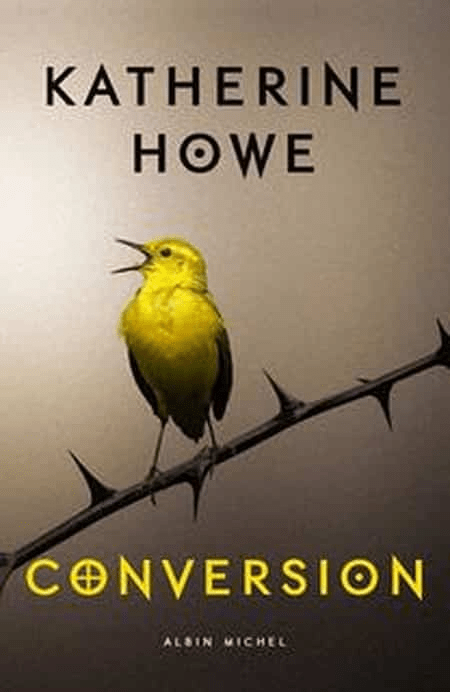
My vision is crowded with whispers and movement and strange shapes narrowing in. I feel my heart thudding in my chest, the sweat flowing freely in my hair, under my arms.
Something inside me breaks. I close my eyes and open my mouth, and a piercing scream tears out of me. The scream relieves the pressure in my head, and it feels so good that I scream again.
“It’s there!” I jabber, lurching in my seat. “I see it there! Goody Corey’s yellow bird sits on Reverend Lawson’s hat! I see it plain as day, the Devil’s yellow bird sits on the Reverend’s hat!”
Conversion, p. 362 – 363
I picked up this book from the public library, among a few others, to have fiction to read over Christmas break. After one false start (a high-school drama that was unable to hold my attention), I cracked open Conversion, and it was a winner.
Here’s the blurb from Howe’s website:
A chilling mystery based on true events, from New York Times bestselling author Katherine Howe.
It’s senior year, and St. Joan’s Academy is a pressure cooker. Grades, college applications, boys’ texts: Through it all, Colleen Rowley and her friends keep it together. Until the school’s queen bee suddenly falls into uncontrollable tics in the middle of class.The mystery illness spreads to the school’s popular clique, then more students and symptoms follow: seizures, hair loss, violent coughing fits. St. Joan’s buzzes with rumor; rumor erupts into full-blown panic.
Everyone scrambles to find something, or someone, to blame. Pollution? Stress? Are the girls faking? Only Colleen—who’s been reading The Crucible for extra credit—comes to realize what nobody else has: Danvers was once Salem Village, where another group of girls suffered from a similarly bizarre epidemic three centuries ago . . .Inspired by true events—from seventeenth-century colonial life to the halls of a modern-day high school—Conversion casts a spell.
The story goes back and forth between modern St. Joan’s and 17th-century Salem. The excerpts from Salem are fairly long. I would say they take up a quarter to a third of the book. The Salem storyline is told from the perspective of Ann Putnam, one of the “afflicted” girls who, years later, made a public apology which stated that she now thought the people accused of witchcraft had been innocent.
Coming into this, I wasn’t sure I would finish it. Books about the Salem witch frenzy, after all, can easily go sideways into facile Christianity / patriarchy bashing. And at first, it did look like Howe was implying that: It’s suh-sigh-uh-tee! These girls had no pow-er! Some of them were servants! The first person they accused was a slave! However, Howe never veered into caricatures. She painted a fairly complex picture, held the girls also responsible, and the writing was good enough that I ended up finishing the book.
I do think Howe’s interpretation of what went down would be more feminist than my own. In the Salem scenes, the men are, to a person, cold, harsh, and uncaring as fathers. (Also, the women can’t read.) However, in the Danvers scenes, Colleen has loving, involved parents who are still married, a kindly younger brother, an apparently goodhearted boyfriend, and a priest at her school who seems like a good egg. The pressure on the Danvers girls comes more in the form of an academically competitive environment where they are all hoping to get into Ivy League colleges. In fact, the fact that none of the girls’ parents seem to be divorced is striking.
Spoiler Town
Howe’s diagnosis of the St. Joan’s girls – and, apparently, of the Salem girls also – is a medical phenomenon called conversion, whereby intense mental stress is “converted” into bizarre physical symptoms.
In the case of the Salem girls, as Howe tells it, it begins with one little girl who genuinely takes sick with what used to be called a nervous breakdown. It’s implied, but never drawn out, that she has been abused by her father. The phenomenon is then taken up by a servant girl living in the same house who is clearly faking at first, for attention and to get out of being worked hard. She even bites herself on the arm to manifest mysterious wounds. The phenomenon then spreads through a combination of this particular girl enjoying the attention; other girls being unwilling to speak up but just saying what they think the adults want to hear; possible suggestion as the girls work themselves into a genuine state; and simmering resentments in the town, as the girls and their parents use the trials to get revenge on those they envy.
In the case of the St. Joan’s girls, Howe is able to offer medical explanations for even the most bizarre physical phenomena. For example, one girl who has been coughing up pins turns out to have pica (a mineral deficiency that causes a compulsion to eat things that are not food, such as dirt). You see, there is a medical explanation for everything!
This book was published in 2014 and the modern-day story is set in 2012. Now, since the Plandemic, Howe’s trust of the medical establishment struck me as naive and dated. The Department of Public Health is the voice of sanity in the St. Joan’s hysteria, and it’s they who figure out that conversion (not the HPV vaccine or environmental pollution) is what’s causing it. Near the end of the book, when the phenomenon has been taken care of by these experts, Colleen narrates that “We are all on the same antidepressant.” This is a red flag to anyone who’s familiar with the research about how harmful behavioral meds can be to kids and teenagers, and how they have been chronically overprescribed, often for way too long at a time, and what a huge moneymaker they are for pharmaceutical companies. I have only a very basic, passing familiarity with this stuff, and even I was concerned. But Howe seems to believe in The Science just as firmly as the Puritains believed in The Devil.
Nevertheless, Howe draws back from explaining away the strange phenomena completely. There’s an odd scene near the end of the book when Colleen’s best friend’s mother, who is always described as pale blonde, ghostly, suffering from migraines, and almost never leaving her house, pulls Colleen into a dark corner and whispers creepily that her daughter is “like me.”
“She’s prone to spells. But it can be managed. Helps to have the family close by. I’m only telling you so you don’t have to worry.”
My mouth went dry.
“But how did you –” I stopped, because it almost seemed as though her eyes were glowing faintly red.
“Anyhow,” Mrs. Blackburn said, her smile widening, a tooth glinting in the darkness under the stairs, “They said what caused it, in the news. Didn’t they.”
“Y — yes.” I swallowed.
“Good. So there’s no problem.”
The hand released my wrist.
ibid, p. 393
I’m not sure what the purpose of this creepy scene is. Is Howe trying to buy back the “mystery” element of her book, even though by that point in the story, all the explanations have been offered? If she is trying to keep the story somewhat paranormal, I’d say the attempt is not successful. Nothing else that happens in the book, not even the scenes in Salem, hint that any actual paranormal activity might be going on. It is all just the girls’ minds deteriorating. Or is Howe trying to imply that Mrs. Blackburn is displaying Munchhausen by Proxy and is somehow making her own daughter sick? If that’s the theory, it’s way too late in the novel to introduce it, and it never gets further explored. There does seem to be a longer version of this book (“not condensed”) out there. Perhaps the Mystery of Mrs. Blackburn is explained in the longer version, but in the book I read, it just comes off like the author wants to add complexity even though she clearly believes the Harmless Medical/Societal Pressure Explanation.
When Witchcraft Was a Thing
I do not know enough about the Salem witch trials — or witch trials in general — or even the Puritains, although I have read some of them — to speak authoritatively about the degree to which Howe’s explanations are correct. Howe has done a lot of research about the Salem trials, and even includes long excerpts from the transcripts in her novel. It’s not clear, however, whether she has done much research about other witch trials in New England (or Old England), or about Puritan theological beliefs.
Fortunately, I have a book by someone who has.

When you read a lot, serendipities sometimes happen. I bought this book many, many years ago, at a used book shop in Kansas City, when I was there for a vacation with extended family. My dad has Used Bookstore Radar, and he always likes to visit the used bookstores whenever he is in a strange city. So I went with him and bought my own armload. This book was an impulse buy that survived several rounds of elimination, because Salem was one of those historical topics that I “really needed to learn more about.” Well, now the time has come.
John Putnam Demos, interestingly, found out only after he had begun witchcraft research that he is descended from the Putnams, the family who were instrumental in many of the witchcraft convictions in Salem.
I’ve only begun the book, but here is what I can tell you. Although Salem has become famous for cases getting out of hand, witchcraft (“entertaining Satan”) was a recognized crime during the 1600s, on both sides of the Atlantic. As with other crimes under English common law, any accusation had to be first investigated informally, and many of these were settled without going to court, which means we have no official records of them. If the stage of going to court was reached, there were still legal proceedings, evidence presented, and so forth, and the magistrates could and often did acquit the accused or void the case on a technicality. People who had been accused of witchcraft could also sue their accuser for slander. Some countries, and some regions of each country, prosecuted people for witchcraft far more often than others.
It is this background of which Demos wants to draw a detailed picture. He tells us that he is going to look at the biographical details of certain accused and accusers. He is going to look at this from a sociological, psychological, and historical point of view. I am sure I will learn a lot from him. But, when it comes right down it, Demos is still studying witch trials as a sociological phenomenon. He is not examining whether the paranormal may have played an actual role.
The Dominant Narrative
Possibly the most annoying scene in Conversion is when Colleen’s teacher, Ms. Slater, tells Colleen that a good historian should “look beyond the dominant narrative” about Salem. I’m not certain what Slater thinks the “dominant narrative” about the Salem witch trials is. Surely, in modern times, most people see nothing more than a story of injustice and superstition played out in an overly rigid, hierarchical society. That’s certainly not the narrative that was dominating in Salem at the time. The only way I can detect that Slater’s preferred emphasis differs from the dominant modern narrative, is that she wants us to have more sympathy for the teenaged girls who were doing the accusing, for the pressure they were probably under.
This is actually a new thought. If I may speak from my own experience, when we read accounts of the trials, the girls definitely come off as the villains of the piece: screaming accusations, making their adult victims cry. The tendency is to attribute malice. I wouldn’t say that comes from listening to a narrative told by people in power, though; rather, it’s the immediate first impression that we get from just observing their behavior.
By contrast, here’s how Ann Putnam’s experience went down in Conversion:
“Oh, Annie, tell them how we suffer!” Abigail beseeches me.
“I … I …” I stumble over my words, terrified. If I continue the lie, I’m sinning in the eyes of God. A vile, hell-sending sin. If I speak the truth, I’ll be beaten sure, and all the other girls will, too. My mouth goes dry, and bile rises in my throat.
At length, I whisper, “I cannot say whose shape it is.”
page 221
And here:
I’m beginning to panic, and I want to get up and run away [from the courthouse] and hide in the barn behind our house, but everyone is there and everyone is watching me, and my father is there and I have to stay strong and do what they want me to, and so I stay where I am, making myself small on the pew, and soon enough the tears are springing from my eyes, too.
page 258
The picture here is of a girl trapped in a story she knows there is something wrong with, but afraid to out her friends and to displease the adults. This is also very plausible. It reminds me of so-called “trans” children, trapped in an even more harmful delusion foisted upon them by the adults in their lives and by their peers, manipulated into believing this is what they themselves want and have chosen. This could have been one of many factors operating in Salem. This is how social contagions work. There is a big lie; there are vulnerable, confused children or teenagers; there are culpable adults and confused adults; there is social pressure; there is mass deception.
Multiple Causes
So let’s look at some factors, remembering that many things can be true at once.
- Hysterical Teenaged Girls: Teen and pre-teen girls tend to be stressed out in every society. Their bodies are changing, they are noticing boys, hormones are making them nervous and emotional and edgy. No, they don’t have much social power, but we need to consider whether it is actually a good idea to give teen girls a lot of social power. I think most girls hate themselves at thirteen (the age of Ann Putnam when the story takes place). Teen girls are also known to be susceptible to fads, suggestion, and yes, physical symptoms of stress. The fact that they are not very mentally stable is not an indictment of them or even necessarily of their society; it’s more of a fact that we all have to deal with. This is also the age when, unless guided, girls develop an interest in the occult. So yes, it does seem very natural that the accusers at Salem should have been a bunch of teen girls, and it’s very believable that they were not just “faking,” but had worked themselves into an actual altered state. This created a perfect storm at Salem, because the evidence to be examined a witch trial generally consisted of eyewitness testimony. These were not very reliable witnesses. But the fact that teen girls’ testimony was accepted as evidence actually argues against Salem being a sexist hellhole.
- Vengeance / Scapegoating: Already in Demos’ book, it has become evident that people who got accused of witchcraft tended to be those who had annoyed their neighbors in some way. Maybe they were the sort of person who is always arguing with everyone, or maybe they were upper-class or especially pious and so the target of envy. It’s pretty clear, even to someone not deeply familiar with the records, that accusers saw in a witch trial a way to get revenge on someone who they had perceived wronged them. Envy, resentment, and scapegoating are actually very common in human life, especially in village settings (say as opposed to city settings). If the culture in question believes in magic, then people are likely to suspect their enemies of sabotage by magic, in whatever magical idiom is local to the culture. People find it hard to accept that things can just go wrong for them. They prefer to blame someone when something goes wrong.
- Superstition: If by “Superstition” we mean “There’s no such thing as witchcraft,” then we will get to that in a moment. But if by superstition we mean, “If the New Englanders had not believed in witchcraft, the injustice of the Salem witch trials would never have happened,” then that is manifestly untrue. Of course, they would not have happened in the same way. But what scares us about Salem is not the suggestion of the paranormal so much as the purge-like quality of the proceedings, where an accusation is tantamount to a conviction, and it’s impossible for the accused to prove their innocence. Something has gone wrong with way rules of evidence are applied. A moment’s reflection will show that it is completely possible to conduct a purge in the absence of belief in witchcraft. Purges have been conducted on charges of capitalism, communism, being a heretic, being a Christian, sympathizing with the enemy in wartime, abusing children in daycare centers, date rape on college campuses, racism, not taking the government vaccine, and being insufficiently supportive of the trans agenda. If the purge mentality is present, then any superstition will do. That’s why it is foolish for us to feel superior to the Salem townspeople, as if, not being Puritans, we could never be subject to this common human practice.
- Medical Causes: I have heard theories that there may have been some physical factor, such as a particular kind of mold in their diet, that caused the girls to develop delusions and hallucinations. This seems to me like a modern materialist grasping at straws. We don’t want to believe that a bunch of teenaged girls could be so wicked as to deliberately send their neighbors to their deaths, and we certainly don’t want to consider the paranormal as a real possibility, so it must be the mold. It’s true that certain medical conditions can cause irrational behavior (even heat stroke or fever can do it), because we are embodied people. However, in a case like that I wouldn’t expect the affliction to spread like a fad among just the teen girls in a community … the very ones who are vulnerable to delusions and drama for a bunch of other reasons already covered.
- Actual Occult Activity: Not being a strict materialist, I can’t rule this possibility out. Modern Western materialists don’t believe that a spiritual world exists at all, so when it comes to interpreting things that happened in the past, we have some blind spots. We are quick to accuse people who we know to be otherwise intelligent of making ridiculous things up out of whole cloth, or of believing ridiculous things completely without evidence. But it is actually possible that there was a lot more paranormal activity in the past than now. Paranormal activity tends to manifest itself in forms that make sense to the culture where it is manifesting; so, people in Ireland have encounters with fairies, American Indians might encounter the Windigo, and modern Americans are more likely to be abducted by aliens. This doesn’t mean that nothing spiritual is going on, just that malevolent spiritual forces know how to make themselves intelligible to humans. If we accept that there was actual paranormal (dare I say, demonic) activity happening in Salem, this does not mean that we have to accept that every person who was accused – or even every person who confessed – was in fact a witch in league with the devil. There have been cases before where people confessed to things they didn’t do, because they were worn down by interrogation, eager to please, or easily manipulated. However, there could have been some people practicing the occult in Salem. The girls themselves could have gotten involved in some occult practice, which could have left them open to demonization. And in fact, even if their symptoms were entirely faked, the kind of mob/purge mentality that they displayed is always the work of the devil in the sense of being the fruit of envy, deception, and a false ideology. When people get involved in occult practice or philosophy, one tragic result is often that they lose their ability to think clearly. That certainly seems to have happened in Salem, in some form or other. The devil certainly got a lot of publicity during those months, and I’m sure he was loving it.
 Out of Babel Books