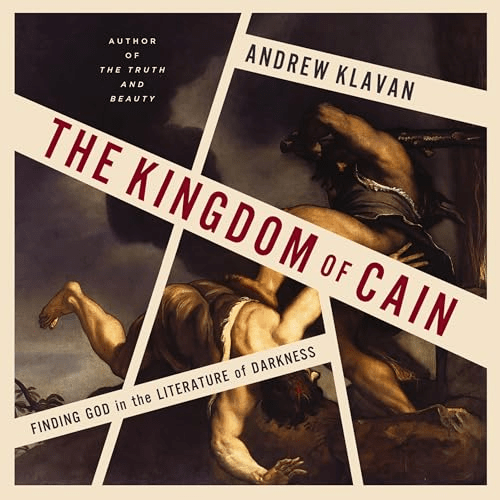
A review of noir writer Andrew Klavan’s The Kingdom of Cain: Finding God in the Literature of Darkness. I have already posted this review on Amazon and Goodreads.
This is a very readable book that fleshes out Andrew Klavan’s thesis:
The opposite of murder is creation–creation, which is the telos of love. And because art, true art, is an act of creation, it always transforms its subject into itself, even if the subject is murder. An act of darkness is not the same thing as a work of art about an act of darkness. The murders in Shakespeare’s Macbeth are horrific, but they are part of a beautiful play.
page 17
In other words, Klavan is wrestling with the problem of evil. Based on his decades of thinking about this, he has concluded that in this life, there is no theological answer that can redeem evil for those who have suffered it. Theological answers there may be, but those are not what redeem it for us. The only answer to suffering is not an answer, exactly; it is beauty. The example he frequently re-visits is the Pieta, “the most beautiful statue in the world,” a statue of Mary cradling her maimed and innocent, dead son.
I think Klavan’s thesis is a very strong one. I think of the book of Job. Job suffers horribly, and apparently undeservedly, and to add to his suffering, he is told that it must be his fault. He asks God why. Now, as it happens, there is an explanation for everything that is happening to Job. But God doesn’t give it. He just starts talking to Job about the wild animals and their habits. This is beauty, it is wonder, and it is far beyond Job’s experience. But ultimately, God answers Job with Himself, with His presence. He answers Job out of the whirlwind. He mentions just a few of His mighty, mysterious works in creation. And this is a good answer. It is enough. It is a much better answer than if God had said, “Well, it all started when I got into this argument with Satan …”
Kingdom of Cain is a hard book to read because of the real-life crimes described in it. Klavan tries not to get too graphic unless he has to, but this is a book about murders after all, including copycat murders. The blurb says it examines the impact of three murders on our culture, but there are a lot more than that, both fictional and–this is the hard to read part–real. The hardest one for me was the kidnap, rape, and murder of a 14-year-old boy by a pair of older teenagers who were later lionized in fiction.
This book is very insightful. Perhaps if I had never heard Klavan make these points before, I’d have given it five stars. But I have been following him for years, and he has been working on this concept for years, so the idea was not new to me. Especially in the later chapters, it felt a little belaboring. Hence, four stars.
I agreed with onlinebookclub.org to make TSL Book of the Day on June 14, but only on the condition that it was free on Kindle. As of drafting this post, I’m still communicating with my publisher to make the durn thing free. As John Piper might say, Brothers, We Are Not Professionals. I’m certainly not. But, with plenty of prayer, I trust that TSL will be free on this Saturday and will of course, with plenty of prayer, rocket into the stratosphere due to large numbers of positive reviews.
Edit: 99 cents was the best I could do. I have made arrangements with onlinebookclub. It will be 99 cents.
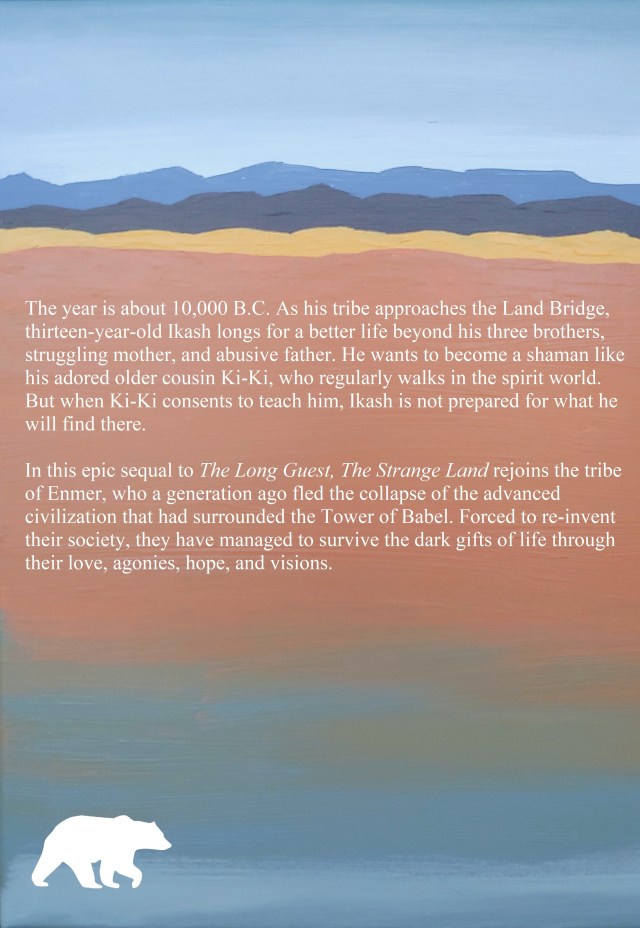
The Strange Land is a family saga that takes place in Beringia, the vast plain that used to exist where the Bering Strait now is, in approximately 10,000 B.C. Please go out and get it, if that’s just what you were looking for in your summer reading! Thanks in advance.
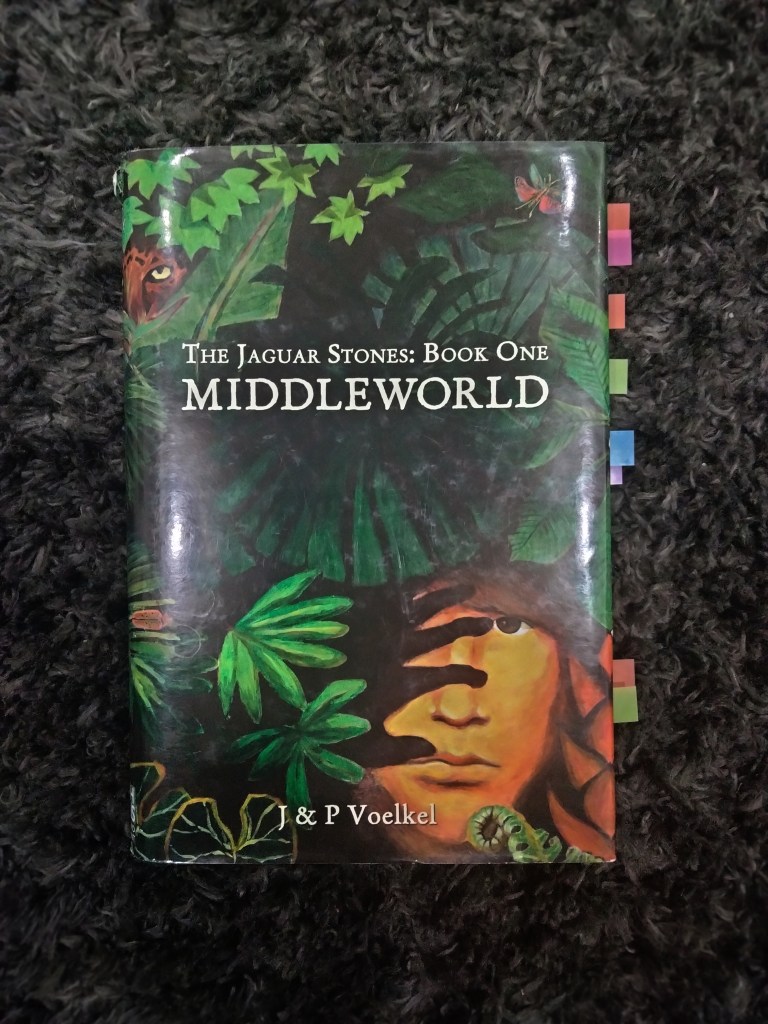
We continue our journey through darkest Jen’s TBR Pile with this book, which I picked up in an Idaho Falls thrift store several years ago and has been waiting patiently, like a pyramid under jungle cover but more durable, to be excavated.
One week ago, Max Murphy’s biggest problem was deciding which pizza to order. Now he’s lost in the perilous rainforest and running for his life with Lola, a modern Maya girl. Their terrifying journey will take them into the heart of an ancient evil and awaken powers that have slept for a thousand years. For fate has delivered an epic challenge to this pampered city boy. From now on, only one thing is for sure: Max Murphy won’t be eating pizza again any time soon.
from the dust cover
This book is the perfect YA Maya adventure. It starts with Max in Boston. His parents are archaeologists. They have to be gone a lot for their work. Max believes they “care more about the Maya than about him,” and he has learned to leverage this guilt into all the video games and snacks, and other luxuries his heart desires. This beginning is presumably there to ease the book’s target audience (American teens) into the Mayan context without a steep learning curve. They aren’t just thrown in; they find out things as Max does.
“Did anyone ever tell you that you’re bossy?” said Max.
“Did anyone ever tell you that you’re lazy?” said Lola.
“Yes,” said Max proudly, “all the time.”
“In the rainforest, lazy boys get eaten by jaguars.”
p. 150
But the book doesn’t stay in boring Boston for long. By Chapter 2, Max is in the fictional country of San Xavier (based on Belize). There is an excellent description of a nightmarish 3rd-world backcountry bus ride, a chapter or two at Max’s estranged uncle’s mansion, and then, he’s off into the jungle.
Behold this perfect author photo. Apparently, Jon grew up in Central America. Note also that the endpapers have a map of San Xavier. The map includes the Monkey River, Villa Isabella (Max’s uncle’s estate), and the five pyramids of Maya cosmology. If a place appears on this map, be sure we will visit it, either in this book or in a sequel.
Middleworld is an excellent introduction to the Maya cosmology, which is incorporated into a very lively adventure. As Max and Lola visit the different pyramids, they discover the purposes of the still-preserved machines within them: controlling the weather, time, etc., and even opening portals to Xibalba, the Maya underworld, into which Max’s parents have disappeared when they jumped into a cenote.
The overall adventure story is a good blend of actual Maya mythology and fictional or fictionalized characters. Lord Six Rabbit, who comes into the story, is a fictional ancient Maya king. The gods and demons we encounter are taken from actual Maya myths. Friar Diego DeLanda, an actual historical person who burned the majority of the Maya codices, makes an appearance. And because the intricate Maya calendar played such a large role in their cosmology, so it does in the events of this book. An Appendix contains an explanation of the interlocking calendar cycles and of how to read Mayan date glyphs, which are quite complex. Other appendices show a diagram of the Mayan cosmos; how to read Mayan numbers; and a glossary of characters and terms which appear in the book. By the time a reader gets to the end of the book, he or she might be interested enough to actually read this material.
It’s clear that the authors love Mayan culture, but they don’t shy away from the fact that many things about it were horrifying. Most of the rituals described call for blood, but the archaeologists have figured out that the blood doesn’t necessarily have to be from a human sacrifice — or even, necessarily, human:
[The archaeologist] Hermanjilio sighed. “Give me a break, will you? I don’t think there’s a precise science to these rituals. As I understand it, they’re more about showing swagger and confidence than following any particular steps. The Maya gods are like children. They like costumes, special effects, and plenty of action. We just have to put on a good show.”
“So you’re going to bluff it?” said Max.
“In a manner of speaking.”
pp. 244 – 245
For example, here is an entry from the glossary:
LORDS OF DEATH: The Maya underworld, Xibalba, is ruled by the twelve Lords of Death. According to the POPOL VUH … their names are One Death, Seven Death, Scab Stripper, Blood Gatherer, Wing, Demon of Pus, Demon of Jaundice, Bone Scepter, Skull Scepter, Demon of Filth, Demon of Woe, and Packstrap [???]. They are usually depicted as skeletons or bloated corpses. It’s their job to inflict sickness, pain, starvation, fear, destitution, and death … Luckily for us, they’re usually far too busy gambling and playing childish pranks on each other to get much work done.
p. 371
Given that everything in the Maya cosmos is simultaneously gross, horrifying, and (at least in this book) funny, it’s not surprising that Max and Lola are able to convince the Lord Six Rabbit and his mother that their chicken is a fearsome beast much more dangerous than its size would predict.
“Now tell them the bad news,” sighed Lady Coco. “Tell them what we heard!”
“What? What was it?” asked the others anxiously.
“The Chee Ken of Death,” said Lord Six-Rabbit. “We did not see it, but we heard its infernal crowing. It seemed to come from behind the cooking hut. I doubt my sleeping draught will work on that scaly devil.”
“Don’t worry, Lord Six-Rabbit,” said Hermanjilio. “I believe I am more than a match for this Chee Ken.”
This book, apparently the first in a series, strikes a good balance between a satisfying end to the adventure, and leaving some significant unfinished business open for later books. Near the end, Max strikes a deal with the Lords of Death in exchange for “a small favor” that they will ask of him in the future. That can’t be good.
My only complaint with this book is that there’s very little publication information on it. I can’t find the year it was published or the titles of the other books in the series. I guess I’ll have to go online to find out more. I will definitely seek to acquire the other Jaguar Stones books if the opportunity arises.
Edit: According to FictionDB, there are four books in the series:
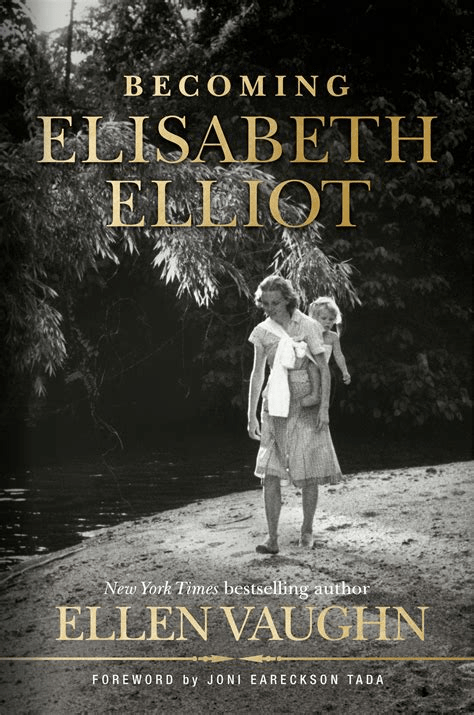
Quick! Who do we know who’s a linguist, a former missionary, a gifted writer, and wants to capture in novel form the human condition and God’s grace to us in it?
Who is awkward, reserved, and can come off as rude and abrupt, but actually has passionate emotions, a deep love for others, and a rich inner life?
Who loves nature? Crosses cultures happily, but doesn’t fit in so well in the American evangelical context? Who has a secret desire to be admired, but also suffers from poor judgement about the opposite sex?
Why, Elisabeth Elliot, of course!
Me and Elisabeth Elliot
When I was college and just discovering the things I ranted about last Friday, like the fact that we as a culture could use some guidelines about the how the sexes ought to relate to each other, I came across Elisabeth Elliot’s book Passion and Purity. I devoured it.
This book was exactly suited for me at the time. I was just starting to grow in Christ. I really wanted to do God’s will. I also, unbeknownst to me, had a lot in the common with the author of Passion and Purity: socially awkward, ascetic tendencies, perfectionistic, a longing for old-fashioned values. This book is basically about the lessons Betty, as she was called at that time, learned during her five years (!) of waiting for Jim Elliot to make up his mind that God had given him the go-ahead to marry her. Their courtship story strikes many Christian young people as really spiritual upon first hearing, and then on a second look, it starts to look as if he didn’t treat her very well possibly. But I bought into it fully.
Anyway. Full of missionary zeal to win other young people over to the idea of an extremely awkward, chaste, long courtship, I gave this book to a friend. She read it, and her reaction was, “There are the Elisabeth Elliots of this world, but I am not one of them.”
That annoyed me at the time (someone had rejected my idealistic ideal!), but from my perspective now, that friend of mine didn’t know how right she was. In fact, not even Elisabeth Elliot herself was one of the Elisabeth Elliots of the world, at least not in the sense of having perfect wisdom and self-control. At the time she was writing this (early 1980s), Elisabeth was enduring an extremely controlling marriage with a man she married because she didn’t want to be lonely. She stayed with him for the rest of her life, despite an intervention by her family. It’s chilling to realize that the woman who wrote Passion and Purity could make such a foolish decision.
Before Passion and Purity, I remember as kid seeing black-and-white photos of Elisabeth toting her small daughter Valerie into the jungle to serve the Waorani people (then called the Auca), a few years after her husband Jim was killed by them. These were the photos taken by Hungarian photographer Cornell Capa. They, and the books Elisabeth wrote about the Waorani, had made her and her martyred husband Jim famous throughout the evangelical world.
Both greater and lesser than I thought
When you think you know a story, you expect it to be boring. I put off for some time reading this duology by Ellen Vaughn, until it finally floated to the top of my reading list. Once I opened the books, I found that I couldn’t put them down. Vaughn is an excellent researcher and a vivid and sympathetic writer, and though I had read a number of books by and about the Elliots, I certainly didn’t know as much of their story as I thought.
Vaughn, aware that she is telling a story the outlines of which are familiar to readers, moves skillfully back and forth through time, as in a novel (though in rough outline, the first book deals with Betty’s early life and the second book with her post-Ecuador years). Vaughn doesn’t try to tell every story–there are too many, many of which have been told elsewhere, and others of which are apparently too private and will stay hidden forever in Elisabeth’s prolific journals. In fact, as I read these books, I felt I was getting to know two fellow woman writers: Elliot and Vaughn.
When you are a former missionary, it’s difficult to read other missionaries’ stories without comparing them to your own. Usually, this means you are reading about people who were far ahead of you in dedication, selflessness, toughness, and in what they suffered. This is certainly true of the Elliots. At the same time, so much of their personalities and stories seemed shockingly familiar. For example, young Jim Elliot was, besides being a great guy, an insufferable holier-than-thou know-it-all, of the “I’m going to go read my Bible” type. Betty, as Elisabeth was then called, was quiet and reserved and often didn’t realize that she was coming off as standoffish. Jim’s family verbally eviscerated her after her first visit to their home in Portland, and foolish young Jim passed all these criticisms on to Betty in a letter. She was devasted, but thought and prayed over the things they had said, and then concluded that none of them were things she could actually change. Later, Jim couldn’t believe he had shared his family’s words with Betty. As Bugs Bunny would say, “What a maroon. What an imBAYsill.”
They were just people, you see. Not angels. Which means that “just people” can always serve God.
Jim Elliot, you beautiful dunce.
The things they suffered also rang poignantly familiar. They suffered setbacks that lost them a year of their work–for her, language work; for him, building a mission station. Neat and tidy Elisabeth at some points had to live in squalor, and felt guilty for the fact that it bothered her. Fellow missionaries (not all) and Waorani Christians alike (not all) proved manipulative and controlling. In fact, it was relationship difficulties that caused Elisabeth eventually to leave the Waorani, after spending only a few years with them. This was not Elisbeth’s fault: person after person found it impossible to work with Rachel Saint, her fellow translator. But she took on as much of the responsibility for it as she possibly could, agonizing before God in her journals, because that was the kind of person she was.
Elisabeth the Novelist
Now we are getting into events of the second book, Being Elisabeth Elliot. Elisabeth knew that she had a gift of writing. She had made so much money from her books Through Gates of Splendor and The Shadow of the Almighty that she was able to build a house for herself and her daughter near the White Mountains of New Hampshire (talk about living the dream!) and settled down to become a writer. She really wanted to write great literature, the kind that would elevate people’s hearts and give them fresh eyes to see the great work of God all around them in the world.
If I were writing a novel about Elisabeth Elliot, I would end it there, and let her have a period of rest, in the beautiful mountains, with her daughter, writing her books, for the rest of her days. I wish that was how it had gone. I kept hoping, as I read this duology, for there to come a point when Vaughn could write, “And then, she rested.” Alas, that moment never came.
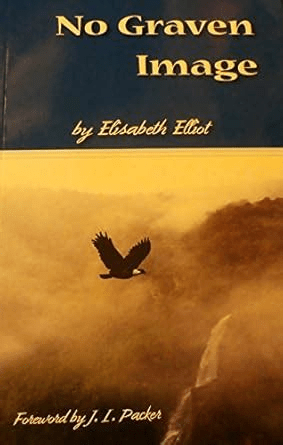
Elliot was indeed a really good writer. Sometime in the twenty-teens, when I was a young mom who had come back from the mission field hanging my head over my many failures, and had unpacked my books and settled into a rented house to minister to my small children, I found on an upstairs shelf a slim volume that looked as if it had been published in the 1960s or 70s, called No Graven Image. This was the novel that Elliot wrote when she first settled down in New Hampshire. She wished, through fiction, to give her readers a more powerful, truer picture of missionary life than her biographies had done.
This is not the cover my copy of the book had, though it also had an image of a condor.
No Graven Image was not well received when it came out. It was the old problem of marketing. To what audience do you market a genre-bending book? The people who liked to read tragic, worldly novels were not interested in a so-called “novel” about a young missionary woman, probably expecting that it would be preachy. The Christians who liked to read missionary stories were shocked and dismayed by a novel in which the protagonist flounders around, makes mistakes, and ultimately, accidently kills her language informant when he has a bad reaction to a shot of penicillin. And then decides that her desire to have a successful language project had been a form of idolatry.
Some readers appreciated the novel (particularly overseas missionaries), but most found it shocking, even blasphemous. They wanted a triumphant novel, not the story of Job. They wondered whether Elisabeth had lost her faith.
When I picked it up, in the twenty-teens, it made me feel extremely understood.
One thing that killed me as I read of Elisabeth’s later years is that this was the only novel she wrote. She very much wanted to write others, and she got as far as making notes for another novel. But life (read: men) intervened, and she was in demand for speaking and for writing nonfiction books such as Passion and Purity. She wasn’t able ever again to get the extended periods of time to concentrate that it would have taken to gestate a novel. She convinced herself that she just didn’t have what it took to write actual good fiction (and perhaps, that it was selfish to try). I am so sad to watch this dream die. I believe that she would have been a good novelist. I don’t know whether her publisher would have kept publishing her books if she had turned to fiction, or whether she would have had trouble finding another publisher. Spiritual non-fiction was what she had already become known for. She probably would have made less money, perhaps found it difficult to support herself. But still … you know … it’s hard to watch. So many things about the second volume of her biography are hard to watch. At the same time, because of Vaugh’s amazing research and writing, it’s hard not to sit back and just stare at this major accomplishment.
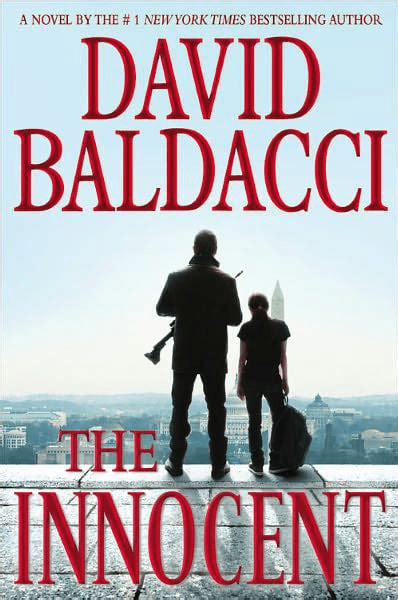
The Innocent, by David Baldacci, Grand Central Publishing, 2012
What can get me to read outside my accustomed genre?
That’s right, free books can!
My husband, a truck driver, knows another truck driver who likes to read. This man has somehow found out that I am also a reader, so when he finishes a book, he sometimes passes it on to me through my husband. I have never met the man, but we now share a number of harrowing mental experiences. Such is the secret society of readers.
The Innocent is a spy thriller. The first several chapters follow the lonely life of crack government assassin Will Robie as he carries out two different hits. (Apparently, this is going to be “the first Will Robie novel.”) We see that Robie is tough, cool under pressure, and professional at killing people. He’s covered in scars, which are covered in tattoos. Due to the nature of his job, he leads a lonely life. He goes to many exotic locales but never has relationships with any of the people there. He gets to eat good food and drink alcohol sometimes, but he has to keep insane hours with very little sleep sometimes. His home base is in Washington, D.C.
Robie was an inch over six feet and a rock-solid one hundred and eighty pounds. He possessed a compact musculature that relied more on quickness and endurance than sheer strength. His nose had been broken once, due to a mistake he had made. He had never had it reset because he’d never wanted to forget the mistake. One of his back teeth was false. That had come with the broken nose. His hair was naturally dark and he had a lot of it, but Robie preferred to keep it about a half inch longer than Marine buzz cut. His facial features were sharply defined, but he made them mostly forgettable by almost never making eye contact with anyone.
the first page
I love that that’s on the first page. That’s how you introduce a character, boys and girls! Now I have a clear mental picture of Robie (like a shorter Jim Caviezel), and the author won’t need to say much about his appearance for the rest of the book. Also, the description is given in a way that’s woven in with a sketch of his history.
It’s a good thing Robie has a cute last name that sounds like a first name. It’s the only thing softens him for some time.
For the first eight chapters (per the thriller genre, they are very short chapters), we see Robie go about his business. He carries out two hits. He withdraws from each successfully. He goes back to D.C. He starts to make tentative friends with a young lady who lives in his apartment complex, though he wonders whether this is a good idea. He gets ready to carry out his next hit, which is local.
Then, finally, in Chapter 9, we meet The Innocent.
She’s a fourteen-year-old girl named Julie Getty. Julie is smart and scrappy. Her parents love her, but they are druggies, so she’s been in and out of foster homes. Nonetheless, she’s in AP Calculus. In Chapter 9, Julie sneaks out of a subpar foster home to go meet up with her mom, who has sent her a note saying they are moving. When she gets to her house, though, she witnesses her parents get shot by unknown men. Not having a phone, Julie flees. Her story and Robie’s will soon intersect.
Julie came along at just the right moment. I didn’t want to read a whole novel that was basically Jason Bourne, consisting only of action + Hero Is No Longer A Normal Person Because of His Past. Once Robie starts to feel responsible for Julie, he now has to behave like a normal person in ways that he didn’t before. He also has to put up with a canny teenager who, naturally, wants to be involved in finding out why her parents were killed. And he has to do this while keeping her safe.
I’ll stop there because of spoilers, but this book was an outstanding example of its genre. It’s mostly action, but the plot is also a twisty puzzle. I don’t think the reader is meant to be able to figure out the puzzle in time to Save the World, but Robie is meant to be able to. Even the assassinations in the early chapters become relevant later. All the subplots get tied in together. There is a satisfying debrief at the end, where it’s all explained from a bird’s-eye view in case the reader missed any pieces. There is some emotional turmoil (Robie might not be normal, but he’s still human, you see). And there are hints that Robie has a heartbreaking back story, no doubt to be alluded to in later novels. Four stars.
February, month of Posts of Stuff I Love, continues with the category “novels by Andrew Klavan” for 500. What I didn’t anticipate was the way that putting title and author together would make the author sound a bit like a serial killer. Anyway … onward!
Here is Andrew Klavan, known by some as “hot Gandalf.” (No, I’m not kidding.) Ironically, given that he is a fiction writer, my first discovery of Andrew Klavan came through his autobiography, The Great Good Thing, where he chronicled his journey from tough, noir-loving Jewish kid from Long Island to tough, Jesus-loving Jewish geezer from California. Klavan always loved the old-school tough-guy private-eye stories and aspired to write more of them. He got really good at tension, pacing, and action scenes. He’s also good at psychology, and particularly loves stories where the character isn’t sure he can trust his own mind.
Now, in his golden years and arguably at the peak of his art, Klavan is finally writing a mystery series. (His other novels have been stand-alones, plus movie scripts and a fantasy trilogy.)
The hero of this series is Cameron Winter, a former poor little rich boy and former spook whose Apollonian good looks and tweedy job as an English professor do a poor job of hiding the fact that he is still a dangerous man. Because this is by Klavan, about 30% of each novel is spent in Winter’s shrink’s office, where we find out through a series of sessions about different aspects of Winter’s tragic past. In the very first book, we heard that Winter’s childhood crush was Charlotte Schaefer, the daughter of his German-immigrant nanny. Winter has been looking back on Young Charlotte as his feminine ideal, and kind of not really growing up partly as a consequence of the Ghost of Charlotte. In this book, Winter finally has to deal with that. He has to go to the aid of the real Charlotte. But time has been flowing for her, too, of course, and Real Charlotte has her own ghosts.
(By the way, A Woman Underground is book 4 in the series, but I had to go crawling on my hands and knees to Amazon to find this out. Please, Mysterious Press, put the book numbers in a prominent place both on the spine and on the title page!)
I won’t give anything further away, but like all Klavans, the book weaves through time, giving us satisfying action in several different forms: international spy games, local mystery that is really none of Winter’s business, sentimental looks at the way things used to be … or did they? Plus a psychologically satisfying twist at the end.
You may wonder, since this is a series, do you have to read the earlier books first? No, you don’t, because Klavan does a fine job making each book work on its own. However, just in case you want to, here they are:
#1 When Christmas Comes
#2 A Strange Habit of Mind
#3 The House of Love and Death
So, what do you think? Do these sound like something you would like? Are you also in favor of book numbers being put on spines? Let me know in the comments!
To recap, I joined a readalong with Bookstooge of a book with a cover that looks like this:
and whose author looks like this:
… which gives you a better sense of what the book is like than the cover does, really.
Barbara Cartland turned out a book every two weeks for the last twenty years of her life. Keep that in mind.
So, I finished this book pretty quickly. I was expecting a formulaic romance, and that’s what I got. The book does not drag. I can’t say I was super invested in it emotionally, but that’s because I’m a cynical middle-aged woman. And when Richard thinks to himself,
Oh, God, he loved her so much.
page 109
… I believed him. Behold the magic of Barbara Cartland!
Now, this book remains a first draft, and there are some first draft-y things in it, such as a shawl starting out as “lace” in one chapter, and getting transformed into “green silk” in the next. My favorite of these “first draft” moments is this one:
But now — how can I bear to be his wife knowing that he is already be in love with someone else?
page 106
I mean, I can relate. The most comical and confusing typos always show up in my most emotional scenes … and I always get so carried away when re-reading the scenes, that I can never catch them myself.
So, all in all, this was a not-terrible romance novel that read sort of like an outline, because it basically was an outline. If the book had been re-written to be much longer, then I feel certain that many of the minor plot holes/historical vaguenesses would have been ironed out, plus the potential emotional heft might have been successfully deepened to actual emotional heft. But, every author has to say “done” at some point, and in Cartland’s case, that was after whipping up the first draft, because that was her business model. She let readers take care of the historical details and the emotions, handling them with suspended disbelief and imagination. And that’s fair.
There was only one thing I did not like: the angry almost-kiss. (“Almost” because the couple are interrupted by a maid, so they don’t actually kiss except once at the very end of the book.) Anyway … “angry” and “kissing,” they do not go well together, no precious, they do not. I do not want Tiana’s marriage to be the kind of relationship where Richard ever kisses her angrily. And in fact, in most of the book, that is quite out of line with his character. It just happens in one scene, where they both lost their tempers “horribly” (actually quite mildly), and then were nearly overcome with passion. I don’t know why this is a romance trope. I guess I’ve missed something during my four decades of living. But, tip for you guys, in the middle of a fight is not the greatest time to start kissing your beloved.
My faithful fellow blogger, Bookstooge, is doing a readalong of a book someone, possibly as a prank, recommended to him: Love Saves the Day by Barbara Cartland. I went so far as to order this book from Amazon in order to participate. I don’t usually read in the romance genre, but I have read a few, and I don’t despise the genre or its readers or anything like that.
I waited to post this until after Bookstooge’s first reaction post went up on Friday, but I am composing my reaction before I see his.
First, let’s talk about this cover, eh? The word “terrifying” comes to mind. The guy looks more like Dracula – or a 60-year-old uncle- than like a romantic hero. Note that he is grasping the heroine by the upper arms. She, for her part, appears to be very concerned and trying to get away. I don’t mind the fact that this is impressionistically rendered – I don’t even completely mind that her hair is not, as it is described in the book, curly — but the emotional tone of this cover does not match the promised content.
I am, as of this posting, almost all the way through Chapter 4 because I mistakenly remembered that Bookstooge was going to be writing about chapters 1 – 6 in his first post. My impression so far: the plot is a very capable romance plot. The heroine is young, brave, idealistic; the hero is a little older, world-weary, etc.; there’s a rival romantic hero in the picture who is young, blond, and charming; financial circumstances are forcing the couple into co-operation they wouldn’t otherwise undertake. There’s even a bitter, scheming housekeeper a la Rebecca. I can’t see any big holes in the plot.
My first impression of the wordsmithing is that this is a first draft.
There are a ton of comma splices. There is head-hopping. (Though that may be intentional; sometimes it’s hard to tell head-hopping from an omniscient narrator. I omnish, myself.) The tone of the dialog is slightly inconsistent. It’s as if Cartland wants this to be an Edwardian-era novel, like Austen, or even earlier, but it’s set in 1903, and sometimes it comes off as if the characters are pretending to be from an earlier era. I can’t tell whether clothes, technology, and so forth, contain any anachronisms. The clothes are fairly generically described, but there are “omnibuses.” (Edit: I just looked it up, and oops! Edwardian is 1901 – 1910. So, spot on. So, the language sounds like it’s going for … Victorian? But obviously I’m not very savvy about this, so perhaps her language is also period accurate.)
Anyway, after noticing that this read like a first draft, I then went back to the introduction (which, like a good fiction reader, I had skipped), and, lo and behold …. it is a first draft.
Dame Barbara Cartland[‘s] most amazing literary feat was to double her output from 10 books a year to over 20 books a year when she was 77 to meet the huge demand.
She went on writing continuously at this rate for 20 years and wrote her very last book at the age of 97, thus completing an incredible 400 books between the ages of 77 and 97.
Her publishers finally could not keep up with this phenomenal output, so at her death in 2000 she left behind an amazing 160 unpublished manuscripts, something that no other author has ever achieved.
Barbara’s son, Ian McCorquodale, together with his daughter Iona, felt that it was their sacred duty to publish all these titles for Barbara’s millions of admirers all over the world who so love her wonderful romances.
So in 2004 they started publishing the 160 brand new Barbara Cartlands as the The Barbara Cartland Pink Collection, as Barbara’s favourite colour was always pink — and yet more pink!
The Barbara Cartland Pink collection is published monthly exclusively by Barbaracartland.com and the books are numbered in sequence from 1 to 160.
–the introduction
Barbara Cartland was cranking out about one novel every two weeks for twenty years. I’m not even mad, I’m impressed. And I am now a little bit jealous of her. Imagine having such high demand for your books that you can just dash off all your ideas and the publisher will publish them as fast as they can.
Also, I’m tickled. That selection above gets funnier every time I read it. I mean, it sounds made-up, like something from a Bertie Wooster novel. Even the names of Barbara’s son and granddaughter sound like characters from her books. And the fact that they are calling it the pink collection because that was her favorite color … the fact that she loved pink so much … the fact that her author photo looks like this:
Now that I think about, the section above might be my favorite part of the book. The romance between Tiana and Richard is going to have to get awfully good in order to compete with Cartland herself.