Me: Let’s pray that we don’t get sick very often this year.
Fourth-Grader: I’m not sick, except sometimes my stomach hurts really bad but when I eat it goes away.
Me: That’s called being hungry.

Me: Let’s pray that we don’t get sick very often this year.
Fourth-Grader: I’m not sick, except sometimes my stomach hurts really bad but when I eat it goes away.
Me: That’s called being hungry.
Except for learning things, Otis liked school. He could find so many ways to stir up excitement.
-Otis Spofford, by Beverly Cleary, pub. 1953

This painting is me in twenty years. I hope. Note my cottage in the background.
I want to talk about another lovely gift that I have been given by reactionary feminist author Mary Harrington. I reviewed her book, Feminism Against Progress, here.
In the video below, Jordan Peterson interviews Harrington. She gets to talk a lot. I don’t know whether this is because Peterson is mending his monologuing ways, or because Harrington is confident, articulate, and not afraid to take long turns, but in any case, we definitely get to hear her thoughts. They are not the exact same thoughts as the ones she expressed in Feminism Against Progress. You can see that her thinking is still developing, particularly the terms she likes to use to describe things.
It’s a very long video, and well worth the listen if this topic interests you, but for your reading pleasure I have transcribed the section that I want to talk about. Here it is:
At about 46:24, Peterson says, “The thing about women is that their mythological orientation is multidimensional and complex.” He mentions Beauty and the Beast, and Woman and Infant, as two possible hero myths for women, but notes that “our society does not hold sacred the image of Woman and Infant as a fundamental unit of female identity” (so we’re really only left with Beauty and Beast, which gets us into trouble).
Then at about 49:00 he asks Harrington, without asking a direct question, what she thinks is the woman’s Heroic Journey. And she’s got an answer for him!
After a detour into why she felt lonely as a young mother, Harrington answers at 51:45,
“In my observation, there is a hero’s journey for women, it just doesn’t follow the same track as the male one. And in fact, it has three parts, which correspond to a very ancient female archetype, which is the Maiden, the Mother, and the Matriarch. The triple goddess. And anecdotally, it stacks pretty closely to me with actually what a majority of normal women’s lives look like.
“You know, as the Maiden, you’re free, you do have more of a warrior aspect. The Mother is more oriented towards home and the domestic sphere, and probably bluntly just doesn’t care about [outside] work as much.
“But then, later on – and this was something I found very interesting when I did therapy training in the late aughts and early tens, was just how many of the trainees on that course were women in their 50s and 60s. So these were women who had pretty much done the motherhood arc, and they were moving into a new phase of life. They were moving into the Matriarch space. I mean the classic, three-part-goddess term for this is Crone. But they were some way from cronehood. These were lively, vital, energetic, public-spirited women who had some life experience. They had a lot of connections, they had a rich social life, they had met lots of people, and they were ready to give something back.
“And in my observation, there are a huge number of women who reach the end of the Mother part of that journey, and will then re-train. And those women are a huge, rich force for deepening reflection in the culture, for public service, for all manner of incredibly productive, usually quite self-effacing, but incredibly productive, life-giving contributions to the social fabric. And they’re incredibly marginalized. They’re almost completely invisible in terms of the liberal feminist narrative, which really centers the Maiden. And it wants to foreground the Maiden and to tell women that the hero’s journey means essentially being the Maiden for their entire life. At best, if the Mother is noticed, it’s as a problem to be solved. And the Matriarch doesn’t really get a look-in at all, and if she does, it’s only so that she can be denounced for being a TERF, or in some other way spat on for being a dinosaur or obsolete or old-fashioned or out of touch, or in some other way irrelevant or ridiculous.
“And in fact, these [older] women are the backbone of the social fabric. I mean, those are the women who are making weak cups of tea for slightly traumatized new mothers like I was in small-town England. (laughs) And telling me I’m doing fine. And really, that mattered a lot at the time. I mean, those are the women who are running Brownies groups for no money every Wednesday because they can and because they want to give back. Those are the women who are re-training as counselors and helping traumatized people for free. Those are the women who keep things going. (laughs again) And yet, somehow, the liberal feminist version of the hero’s journey just doesn’t see them at all.”
I love what Harrington has to say here. But I must make a note of how she shies away from the word “crone” in favor “matriarch.” Based on the qualifications she puts around even mentioning the word, it’s apparent that Harrington thinks crones are women at the very end of their lives, who are listless and isolated: the opposite of “having a lot of energy” and “lots of connections” and “a rich social life.” The word crone in Harrington’s mind apparently conjures up a bedridden hospice patient who enjoys her only social interaction when the pastor visits once a month.
I got a similar reaction out of my editor when I went to describe Zillah (one of the main characters of my trilogy) as a crone. The word crone, said Editor, reads “old and ugly.” I convinced her to leave it, because I wanted to broaden the meaning of the word, or perhaps recover some of its original meaning.
Zillah, in my series, is in her sixties when we meet her in The Long Guest. I’m cheating a little with having a protagonist in her 60s, however, because my books are set in the immediate post-Flood era, when people lived into their 250s, and a woman in her sixties could still be fertile. Zillah has grown children in The Long Guest, but she still looks like a young woman, and in fact she gets her own romance arc.
In later books, Zillah gets older. By The Great Snake, when I was calling her a crone, she was over one hundred. By the standards of the time, this is only middle-aged, and in fact she is strong enough to hike all day, do dryland farming, and so forth. However, her role in the community is definitely what Harrington describes above as Matriarch. She practices emergency medicine and herbology, innovates in farming maize, counsels her family through crises, and brings potential problems to the attention of the patriarch (who is not her husband but her son). She can’t do everything, and in fact she has had some costly failures. But my trilogy would be much darker without Zillah.
I’m not saying my books anticipated what Harrington is saying, but … my books anticipated what Harrington is saying.
Of course, she is not the only one saying it (though she may be saying it the most eloquently, and with the biggest platform), and she is not the only one thinking it. Every woman is thinking through these things, whether she realizes it or not, and most women come to some kind of resolution. You have to, if you don’t want to live your life with a pathological fear of aging. This is not an attractive look, and most people figure this out and make some kind of effort to “age gracefully,” that is, to embrace their status as an older person.
This task is made more difficult in modern Western society, where we as a culture don’t value our elders at all and don’t really have any special role for them in the community. This is true of old men, to a lesser degree, but it’s really true of old women. Has anyone heard the phrase, “old women of both sexes”? It’s usually used in the following context: “I want to do bold plan XYZ, but when I said so, it really upset the old women of both sexes.” Old women, we learn, are fragile, risk-averse, set in their ways, and prudish. Probably bureaucrats. Also, they are not athletic or healthy (two other things our culture really values).
Our culture’s disdain for old women traces back to its disdained for motherhood and family life. If you don’t value mothers as such, then you are less disposed to respect your own mother when she is old. Further, if a culture does not have a lot of young moms who need help at home, then there really is no job for the old ladies to do other than go to work in an office, where the hours, tasks, and working conditions are often uncongenial to their nature and where admin would really like to push them out before they develop a bunch of expensive health problems.
On the other hand, if your culture prioritizes a large, thriving household of the kind described in Feminism Against Progress and in Proverbs 31, then there is plenty of useful work for Grandma to do. Furthermore, it’s exactly the kind of work she has spent decades becoming good at. She’s baking her famous dessert, she’s sewing outfits for the little kids, she’s quilting, she is babysitting. She’s answering Mom’s panicked questions about how to garden, get that stain out, and how in the world do I manage everything. This is work that is actually useful and needed (which is the kind of work that keeps people alive and happy). But it’s not like going to work in a shop or office in your fifties. There is more variety, and the schedule is freer. There is room for Grandma to go home and be by herself for a few days. There is room for her to take a nap. And unlike admin at the office, your grown children will not fire you and wash their hands of you when you develop health problems (not ideally, anyway).
Of course, all this is the ideal, and we all know that reality is different. Not every family relationship is a happy one that would allow this kind of close community (especially 60 years after the Sexual Revolution began its relentless campaign to break up families). And even in ideal circumstances, we can get on each other’s nerves. That’s why, in the painting, I am living in a cottage in the woods, where I can garden, paint, and keep a library. Ya gotta’ know your limits. But there is a world of difference between having some tension with your children in a context that values and honors older people for their wisdom and experience, and having to get a 9 to 5 job that really calls for a younger person, just to prove you’ve still “got it” and to justify your existence. This is the difference between Zillah’s world and ours.
I have been fortunate that I was a given a husband and children. I’ve moved through the stages and am now standing on the threshold of matriarchy/cronehood. And I’m liking the view.
Don’t get me wrong … I’m frightened as well. What scares me most is the prospect of chronic pain or disability — my own, or a loved one’s. But I’m not scared of aging itself. I like the idea of less pressure to look beautiful, of a lightening of parenting responsibilities (in exchange for others), and of time to keep getting better at my various crafts.
As a Christian, I am surrounded by a world that despises motherhood, families, and old women … but I have access to a world that honors them. I am in the world but not of it.
Also, I realize that I need to do a better job appreciating the older women who have surrounded me since I was small, my own mother included. I didn’t ever like being taught new things, because of the amount of correction it involved, but now I see how much we must listen to these ladies, honor them, eat the food they cook for us. Send in the crones!

I did not need to look this up in my Falcon Guide to Central Rocky Mountain Wildflowers. Husband identified it, and kids immediately started throwing it at each other.
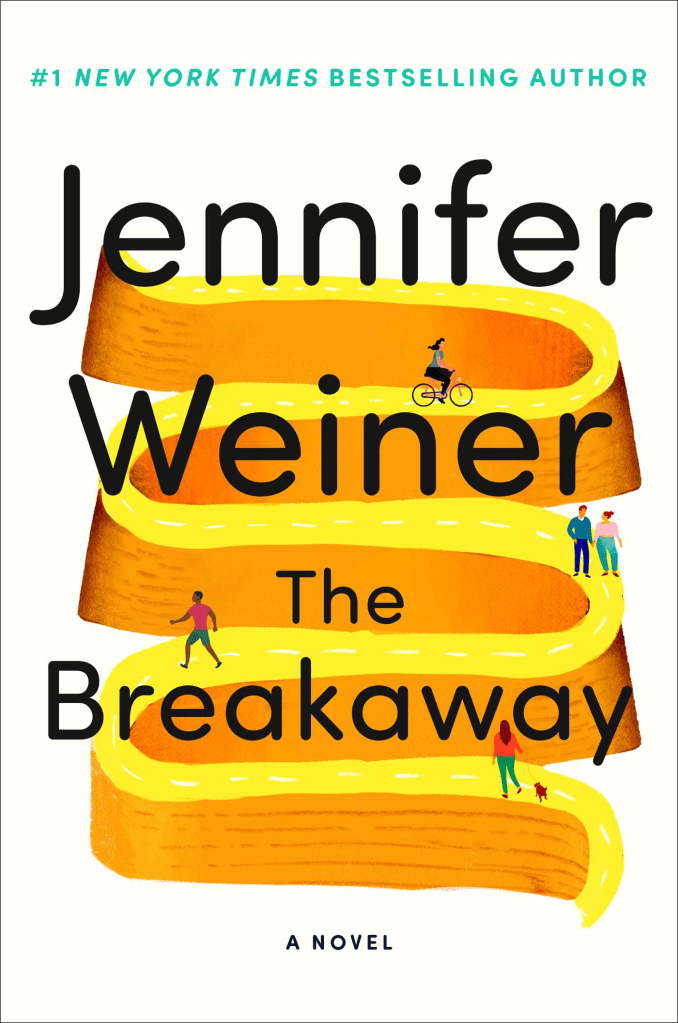
Snarky review, cross-posted at GoodReads, incoming!
This is a Message book.
Abortion is good. It doesn’t kill a baby. The baby is not a baby. Or, it is, but if you abort it, its soul goes back to heaven and comes back to you in the next child you have. (Yes, really.)
No one should force a 15-year-old to have a baby. People who help the 15-year-old sneak behind her mom’s back to get an abortion are heroes. People at Planned Parenthood are super nice, professional, and caring, and never put pressure on the 15-year-olds or rush them through. The abortion process itself is super safe.
Blue states good, red states bad. Ohio is a red state. (Actually, it’s purple.) Pastor from red state is, of course, a televangelist and the only reason he preaches against abortion is because he doesn’t sufficiently love his daughter.
Also … we shouldn’t stop sleeping around if we want to. If you are 33 and don’t want kids yet, you can “just freeze your eggs.” Look, here are two elderly couples who have been spouse-sharing for 30 years and it hasn’t wrecked their friendships and no one has gotten jealous and they’re perfectly happy!
This other guy is extremely promiscuous, but that’s only a problem because it’s part of toxic masculinity, and he isn’t being self-reflective enough. This habit in no way damages his ability to want just one woman and be faithful to her when he decides to do so. He also doesn’t have an STD.
Jennifer Weiner always writes spunky, usually plus-sized female heroines who realize they have been wrong about the thinner woman they judged, whether it was their mom or their college roommate or their sister. This might lead you to think her books are cozy or relatable. Or that they actually contain life wisdom of some kind. In fact, they’re extremely radical.
And, when the heroine starts healing and growing as a person, here’s what it sounds like:
ibid, p. 372
She couldn’t stop herself from thinking about him, but she didn’t let herself call or text. For the first month, she crossed each day off her calendar, getting through them hour by hour. She started a gratitude journal and a skin-care routine.
I mean, this is just sad.
I’m giving this three stars because, as always with Weiner, the writing is really good and compulsively readable. I stuck around and finished the book for the romance. Actually, the fact that Weiner’s writing and characterization are so good make this book that much more of a menace. If you read without paying attention, you could come out of this thinking that abortion, spouse sharing, and freezing your eggs are No Big Deal, and that by getting girls secret abortions and starting a gratitude journal you can save your own soul.
https://www.dailywire.com/news/petas-coming-for-your-kids-favorite-carnival-ride
In the last few years, quite a few actual headlines have sounded like jokes … but I think this one is the jokiest of all. In fact, I once saw a comic where a kid, dressed as the back half of a camel at a Nativity display, is “liberated” by PETA.
Him: I’m not really a camel.
PETA activist: Don’t tell me they’ve brainwashed you too!
Now that joke has become a reality.
“Animal-themed carousel sets reinforce the notion that these sentient beings are simply here for our entertainment, rather than individuals with the same capacity to experience fear, pain, joy, and love as any of us,” the letter added.
PETA President Ingrid Newkirk said in a press release, “Children learn through play, and teaching them to have respect and compassion for all living, feeling beings can help create a more just and merciful world.”
actually from this article
Right. Kids will never learn to love animals if they are allowed to interact with … portrayals of animals. They will never want to ride on or care for real horses if they are allowed to ride on artificial horses. We should remove all references to animals from their environment, and then they will become animal lovers.

I picked this up in the new-to-us section of the public library. This is a really well-chosen title, really lets you know what you are getting.
From the back:
If you’re struggling to stay on top of your to-do list, you probably have a good reason: anxiety, fatigue, depression, ADHD, or lack of support. For therapist KC Davis, the birth of her second child triggered a stress-mess cycle: the more behind she felt, the less motivated she was to start. …
Inside, you’ll learn to: See chores as a kindness to your future self, not a as rejection of your self-worth; Start by setting priorities; Stagger tasks so you won’t procrastinate; Clean in quick bursts within your existing daily routines; Use creative shortcuts to transform a room from messy to functional.
With KC’s help, your home will feel like a sanctuary again. It will become a place to rest, even when things aren’t finished.
I really wish that I had written this book, or that it had been written by Allie Beth Stuckey. This book, or a version of it, needs to be written by someone who understands human sin nature, grace, and the freedom that is found in Christ Jesus. It’s so, so close, but because of the author’s wokeness, there are jarring notes.
To some, this book might sound as if it was written by a sloppy, disorganized person, to sloppy, disorganized people, to help them justify their sloppiness. On the contrary, it was written by a naturally distractible person, to distractible people, to help them achieve the level of organization that they actually want to, without letting the perfect become the enemy of the good.
KC went through rehab as a teenager. She has ADHD, is married with two small children, and is a therapist, which means that people talk to her about their frustrations with themselves and their inability to get their houses in order.
Consequently, the intended audience for this book is people who are responsible for keeping house, but have some major obstacle such as chronic pain, being in the midst of grieving, ADHD, depression, or having “issues” around cleaning due to the way they were raised … or all of the above. The goal is to help these people develop strategies to get over the mental (and sometimes physical) blocks so they can maintain their houses in basic livability. And I am there for it!
People in these situations might not have the time, energy, or attention span for a long book, so this little gem is written in short chapters, each of which gets right to the point. To accommodate people who might be very literal-minded (such as those on the autism spectrum), KC re-states all figurative language very literally. For example: “We are going to flex our motivation muscle” becomes “We are going to practice this skill until we get good at it.”
While I don’t believe that ADHD is a literal, physical brain disease, nor that it should be treated with drugs, I do believe that what we call ADHD is a good description of how some people’s minds, bodies, and sensory-processing work. And while I’ve never been diagnosed with ADHD (and have no desire to), their descriptions of how their minds work, and the strategies they use to get things done, usually sound so familiar and relatable that I find myself asking, “Doesn’t everyone experience that?” So, I could probably get a diagnosis if I wanted to. I just don’t think it would help me. I’m an older person and I’ve learned how to set up systems that work for me.
With that in mind, many of the aphorisms and strategies that KC presents here, are ones that I’ve come to myself, over years of keeping house, in season and out of season, through small children, international moves, unemployment, depression, the lot. Things like this:
Of course, there is not a firm frontier between the practical and the spiritual in our everyday lives. As Solzhenitsyn has said, the line between good and evil runs “through every human heart.” Which means that, even as we face mundane choices like do I do the dishes, the laundry, or take a nap, we are interacting with issues of bondage to sin versus freedom, and grace versus shame. So it’s not really possible to talk about practical things like task initiation without also addressing the spiritual.
KC does a pretty good job of this in her book. She starts out by saying (page 11), and this is in bold, “Care tasks are morally neutral. Being good or bad at them has nothing to do with being a good person, parent, man, woman, spouse, friend. Literally nothing. You are not a failure because you can’t keep up with laundry. Laundry is morally neutral.”
Now, since I can hear howls of objection, let me address this. What she is trying to express here, is that shame does not energize people. It paralyzes them.
Yes, moms do have a duty to keep on top of the laundry cycle and yes, (contra KC Davis), there IS such a thing as laziness, and laziness IS sinful.
But when it comes to “care tasks,” many people (most people?) grew up being shamed not for character flaws such as laziness, but for lack of technical skills in the tasks, for not doing them up to an adult’s standard, for not doing them perfectly, or for not knowing where to start. Consequently, many (most?) people have a huge burden of shame and failure around household tasks. And this burden of shame, and this perfectionism, makes it much, much more difficult to get these tasks accomplished (or in some cases even started). See? KC is not saying, “Let’s get rid of the shame because it is 100% OK to never clean your kitchen.” She is saying, “Let’s get rid of the shame associated with these tasks because only then will you be able to do them.”
In other words, KC in her self-examination and her work as a therapist has stumbled upon that biblical truth: “the law kills, but the Spirit gives life.” The only people who are free to act and move in this world are those who are not paralyzed by shame.
It’s at this point that I wish this book had been written by a Christian, because this point really deserves to be developed further. How does one set others free from shame? Certainly, if people have indeed been shamed over things that are morally neutral (such as being slow at doing chores, or doing the dishes a different way than your parent), then this needs to be clarified. But this is not enough, because not all our shame is spurious. We actually are sinners, and we actually do know it. It is not enough to say, as KC says, “I don’t think there is any such thing as laziness.” Even when we have gotten rid of the spurious shame over morally neutral things like being naturally untidy, even if your particular client is not actually lazy … what about the other shame? What are we going to do about that?
In other words, the only way that people can truly be set free from shame is when they turn to Jesus, the living Christ, who alone has the power to free us from shame, so that we can “do the good works that He prepared in advance for us to do.” I think Allie Beth Stuckey could do a lot with this. In fact, I’d love it if she were to have KC Davis on her podcast.
The other problem I have with this book is as follows. For the most part, KC does a great job of being gentle with her readers and treating them like responsible human beings. But every so often, she turns around and sucker-punches them with identity politics.
Many self-help gurus overattribute their success to their own hard work without any regard to the physical, mental, or economic privileges they hold. You can see this when a thin, white, rich self-help influencer posts “Choose Joy” on her Instagram with a caption that tells us all joy is a choice. Her belief that the decision to be a positive person was the key to her joyful life reveals she really does not grasp just how much of her success is due to privileges beyond her control.
pp. 14 – 16
It’s hard to know where to start with this paragraph. Does KC really think that a “thin, rich, white influencer” posts “Choose Joy” because she is already joyful? That such people have no insecurities or struggles? That all that is necessary for joy is having circumstances line up in your life such that you avoid three major conditions which the Identity Crowd considers to be disadvantages? This is so dehumanizing as to beggar belief.
I’m not saying “Choose Joy” is advice that would be helpful to anyone, really, but I at least recognize that most people who say things like “Choose Joy” obviously mean “Choose joy in spite of all the awful things that are happening in your life.” If people are happy, at peace, and free from shame or struggle, they don’t go around saying stuff like “choose joy.” And based on the practical wisdom in the rest of her book, I think KC actually knows this. But, blinded by identity politics, she considers it OK to lay aside what she knows and take a swipe at some of her readers in a misguided attempt to build up others of her readers. Unfortunately, this undercuts her message that she doesn’t want to shame anyone. You see, this book is not for you if you are rich, thin, or especially, white. And as we know, those always go together.
In the very next paragraph, KC says what she was actually trying to say, but in a much more sane and humane way, namely that different things work for different people:
Different people struggle differently — and privilege isn’t the only difference. Someone might find a way to meal plan, or exercise, or organize their pantry that revolutionizes their life. But the solutions that work for them are highly dependent on only their unique barriers but also their strengths, personality, and interests.
p. 16
Really, that paragraph would have been sufficient, excepting the word privilege. I do wish people would stop using the word privilege — which is a legal term — when what they actually mean is “advantage.” But that’s a rant for another day.

Once upon a time, in the 1950s, dating just meant “going on a date.” It was a very short-term commitment, lasting only a few hours. You went out for ice cream or whatever, and then you went home. If you couldn’t stand the person, there was a natural limit to how long to you had to spend with them (the length of the date). If you liked each other, you might go on another date some time. But you were not bound to go on date after date with the same person. The idea was to go out with a variety of people, to get a sense of what sort of person might be for you. Eventually, you might “go steady” with a person you really liked, and maybe eventually get married.
But then … the Sexual Revolution happened. The expectation that a date might mean actually having sex was introduced. Suddenly, dating a variety of people made less sense. It clashed with the old-fashioned sexual mores (and with common sense) that said it wasn’t good to sleep around. Now, “going steady” with one person became the norm, and people who dated around were seen in a negative light. After all, if you were going to be sexually involved with somebody, it had better be with just one person at a time.
Futhermore, because this was a big societal shift, now nobody knew what the rules were. On the part of some of the drivers of the sexual revolution, this was intentional. They thought that society, rules, and norms as such were inherently oppressive, and that getting rid of all these things would usher in a hippie, free-love paradise. What it actually ushered in was total confusion. And while total confusion might work to the advantage of a few libertines who want to live completely unrestricted, it stresses out regular people (especially young people) who just want to know what they are supposed to do.
This confusion has persisted from my generation (X) down to the present day. It creates endless amounts of frustration, misunderstanding, and wheel-spinning as generation after generation struggles to re-invent the wheel. It also creates lots of tension and hostility between the sexes, because as it turns out, the way men naturally approach things and the way women do, do not mesh terribly well when completely unguided by any kind of norm.
Christians, naturally, had their own reactions to all of this. We looked at modern dating, which could mean getting very sexually involved as a teen, cohabiting as a young adult, and so on, clapped our palms to our cheeks, and went “AAAAAG! This is not right!” Nor were we wrong. When I was growing up, in the 90s, the choice seemed to be between trying to do the highly risky methods of modern dating – but hopefully in such a way that you didn’t have sex before marriage, although that was kind of a crapshoot to be honest – or taking the sensible course and not dating at all. I, and many other Christians, went for the latter, but this left us without any path to get to know the opposite sex or find a suitable spouse.
Some Christian communities decided that the solution to all this confusion was “courtship” — or, as some called it, “biblical courtship.” One of the early advocates of this system was Douglas Wilson, a pastor and writer for whom I still have great deal of respect. Courtship seemed to a lot of people, myself included, like a godly alternative to the train wreck we were witnessing. Unfortunately, in an effort to avoid the train, the courtship car drove directly into the other ditch, into a wreck that was equally fiery. That’s what Thomas Umstattd Jr.’s book is about.
As older Gen Xers, my now-husband and I dodged a bullet on this one. We had both read some Douglas Wilson and we both saw the problems with modern dating since the 60s, and so when we met and realized we kinda liked each other, we wanted to do some kind of courtship. However, both of us were adults, out of the house, and living hundreds of miles away from our parents. I had gone to university, then lived with my parents again for a year while working so I could go to missions school. My husband, almost a decade older, had been to university, grad school, and had lived in various countries overseas. So, we were fully launched. Still, we tried to “court.” My husband e-mailed my dad (yes, e-mailed) and asked for permission to date me. I called my dad and said, “Aren’t you going to ask me what I think?” and he said, “Well, I assume you like him?”
In our case, “courtship” ended up meaning little more than meeting each other’s parents, getting to know them, and showing them honor as we prepared for marriage. And that’s certainly not a bad thing. But it’s very different from how it was implemented in some Christian communities, where the parents were hard-core.
When I write about courtship online, defining courtship often becomes the most controversial point in the comments. I believe that the lack of clear definition may be contributing to the crisis.
Each community feels that its form of courtship is superior to the others. Many feel that any problem pointed out in Modern Courtship as a whole doesn’t apply to them.
Umstattd, p. 53
As such, Umstattd describes courtship with a list of common characteristics:
These bullet points are taken from pages 53 to 64 of the book.
Getting too serious too soon is a problem that Modern Dating and Modern Courtship share. Both of these systems result in singles going through one committed, heartbreaking relationship after another. They differ only in frequency and style of intensity. Modern Dating is more physically intense, while Modern Courtship of often more emotionally intense. Going steady too soon is one of the leading causes of unnecessary heartbreak for young people.
ibid, p. 88
In other words, the courtship crowd, in an effort to fix the inappropriate sexual involvement of modern dating, turned the dial in exactly the wrong direction: in the direction of more intensity, not less! This leads to more heartbreak, not less. That, if I had to sum it up, is the thesis of this book.
Umstattd goes into some detail about additional problems, one of which is the enormous amount of leverage that the courtship system gives to overprotective dads. The result is young men who are never allowed even to take a young woman out for coffee, and consequently feel like failures, and young women who feel unattractive, unaware that there are many young men who would like to date her, but her dad has been screening them out without even telling her.
The [Christian] Baby Boomers created the rules of courtship out of fear. They wanted to protect their children from the mistakes they made during the Sexual Revolution and its aftermath. The rules came from good intentions.
During the 1990s and early 2000s, millions of young people embraced the tenets of courtship in part or in whole. And it’s no wonder why — in a culture where we demonized dating, and divorce ran rampant, Modern Courtship seemed like the only alternative.
Many of those young people are still single today, but they don’t have to be.
If you’re one of the millions of frustrated singles, there’s hope for you: there’s an easier path to marriage that’s more fun and still honors God.
If we want to get back to the marriage rates of our grandparents, we need to learn from them and adopt their approach. It’s my hope that the Traditional Dating practiced by our grandparents will be part of the solution to resolving the Courtship Crisis.
Umstattd, p. 68
In other words, according to Umstattd, the way to date like a normal person is to date the way your grandmother (or maybe now, great-grandmother) would have: don’t go out with the same fellow twice, and be home by ten.
I really wish this had been the system when I was growing up. Courtship wasn’t really a thing in my circles, so we were left, as I said, with Sexual Revolution or Nothing. Or Make It Up As You Go. Consequently, although not scarred by purity culture or courtship, I was one of those women who felt unwanted and never got asked out … and was afraid to say yes on the rare occasions when I was.
I would like my kids to be able to enjoy the practice of Traditional Dating. However, there’s a problem. Traditional Dating, like any society- or community-wide custom, depends upon everybody knowing the rules. Everybody does not know the rules. In my observation, most Zoomers still have the expectation that once a boy and girl go out or hang out once, they are “a couple” until further notice (whether that means they are sexually involved or not), and would have to “break up” if they wanted to go out with someone else. I’d like to take this pressure off our kids. But, as with so many cultural rebuilding tasks, it looks as if we are going to have to do this the hard way. Which means doing it on a case-by-case basis, with parents of Christian young people talking to one another about norms and expectations.
I would really love it if the parents of all the young women my sons know would read this book.
A major goal of the courtship trend, as well as purity culture (“guard your heart!”) was to avoid heartbreak. And yes, there is a large amount of totally unnecessary heartbreak that the sexual revolution had brought to those who faithfully practices its tenets. (Idols always devour their worshippers.) I absolutely agree that it ought to be possible to live in this world without throwing your heart and body out into the arena, going out and collecting heartbreak after heartbreak, trauma after frustrating and degrading trauma.
However, that doesn’t mean that it’s possible to go from being a kid to being a married adult without ever getting your heart broke.
Being a teenager is rough in every society. You feel things more intensely. Finding a wife or husband is a challenge in every society. Most people are going to have some near misses.
In other words, no system, certainly not courtship but also not Traditional Dating, guarantees protection from living in a fallen world. And no system, however wise, guarantees every person a smooth, easy path to marriage.
When applying Scripture, particularly the Old Testament, we have to differentiate between biblical practice, principle, and command. Just because Jacob had two wives and a seven-year engagement doesn’t mean that God wants all men to have two wives and seven-year engagements.
What we have in the Old Testament are a lot of stories: each one different from the others.
Sometimes a woman is the protagonist in a romance (such as Ruth with Boaz) and at other times the man takes the lead (like Jacob with Rachel). There are arranged marriages (Isaac and Rebekah) and women who entered marriage through a harem (David and Abigail, Michal, and Bathsheba). Some women even chose their own husbands (Zelophehad’s daughters).
The Bible is surprisingly quiet when it comes to laying out a system of courtship. In fact, Jesus even qualified the Old Testament marriage laws when He said the divorce code was written because of the hardness of Israel’s hearts (Matt. 19:8).
The Apostle Paul, who is usually very direct, speaks with all kinds of qualifiers when talking about romantic relationships. He makes a special point to say that not all of his instructions are from the Lord in I Corinthians 7:25 – 28. I can’t think of another topic where Paul is this cautious with his words.
Could it be that God expects courtship systems to reflect the culture of the folks getting married?
What we need is a system to help young people make good decisions.
Umstattd, pp. 65 – 67

Here he is enjoying sushi on his 16th birthday.
I love this photo because it captures something about him … nerdy, techy, fit, into all things Japanese.
I also love the gritty urban look of this photo.
Naturally, I had to edit it so that his image is blurred and his privacy somewhat protected. (Guess who helped me find out where I could edit it? That’s right)
The other cool thing is this: We live in rural southeastern Idaho. You would think, all that’s available to eat out here is prickly pear, river fish, beef, and potatoes. But no, thanks to the fact that we live in this once-great empire that is falling into ruins but is still incredibly wealthy, we can drive less than an hour and get sushi. In Idaho. As this new year begins, that’s something I’m thankful for. Such convenience and prosperity certainly make it easier to raise this lovely young man. Who is, of course, another gift for which I’m incredibly thankful.
 Out of Babel Books