
… they make a yarn color that perfectly matches your new book’s cover.
On sale May 3.


The Strange Land comes out on May 3rd. (It’s that handsome fella on the right.)
Be amazed at how long it is!
Be horrified at what transpires between its covers!
Be entertained as you cross the Land Bridge!
Be sure you leave a review, even if it’s only one sentence!
Then your shelf can look as good as mine.

Uploading you was tricky. It was a two-week ordeal that gave me fits. Now, that could have been because I am nearly computer illiterate, but I prefer to think it was Satan — a.k.a. Resistance — trying to keep you from being published. You know, because you are so important and all.
Anyway, here we are.
The Strange Land is set go on sale May 3, in honor of a certain dear older relative’s birthday. You should be able to pre-order it soon. I just checked, and it doesn’t appear to be on Amazon yet, but that’s probably because I only released it for publishing just a few hours ago. When I have a link, I will give you one on this very blog. I’m also updating the “buy my books” page.
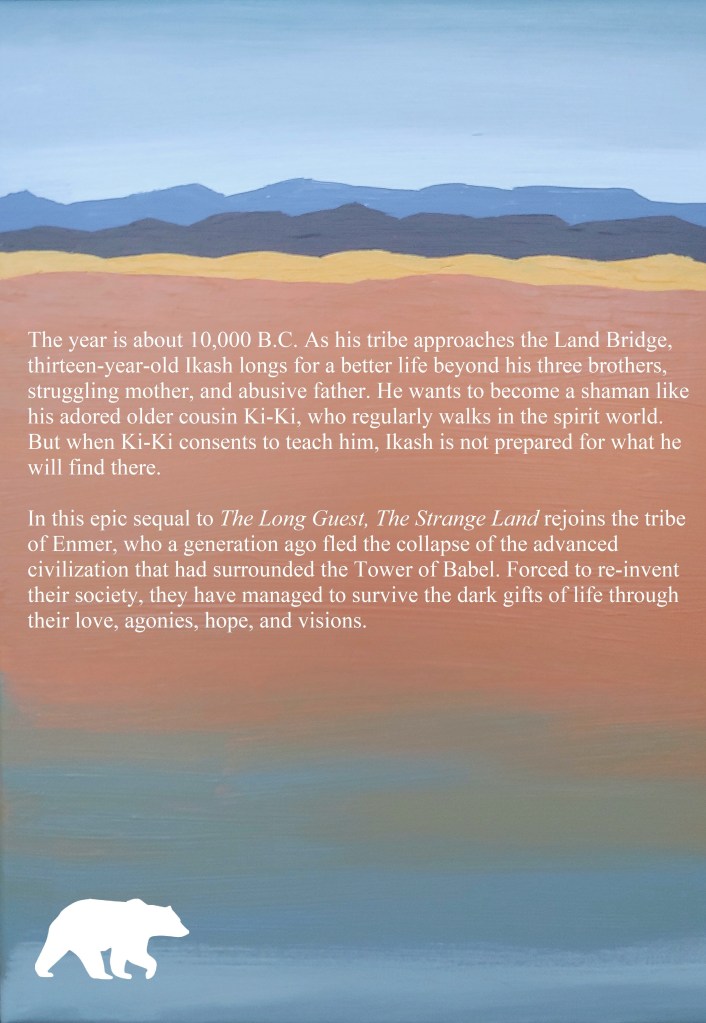
The Strange Land picks up more or less where The Long Guest left off and follows the second generation of Enmer’s family. Here is the back cover:
And just for the thrill of it, here is the spine:

A sample print copy is on the way to my house. Let’s hope that by the time it arrives, the typo will have vanished!
Have a great week, all, and I will keep you updated.
So, this last week, I got the following e-mail from an agent:
“Sorry for the delay in responding to your query. This novel doesn’t look like it’s for me, but good luck with your writing.”
A pretty standard, polite, inoffensive reply. The second most popular kind after No Response Means No.
Why is this both amusing and annoying?
Because I sent the query eleven months ago.
I had forgotten that I was still querying in April of last year. That’s around the time that I decided to go ahead with self-publishing. Apparently, I was still sending off a few queries for Book #2, on the off chance that someone would love it and call me the same day to beg for the file of the whole novel. In the year since, I’ve had Books 1 and 2 professionally edited, done cover design, indie published Book 1 … and, this week, I was preparing finally to upload for indie publishing Book 2. The same week I got the reply to this query.
A delay of almost a year before a reply isn’t actually that unusual in traditional publishing? I guess? It wouldn’t seem very insulting except that, for me as for many people, this past year has seemed much longer. The idea that I could still be sitting by my laptop, waiting for replies to queries, is kind of sad.
Now, my book sales aren’t anything to boast about yet. On the other hand, because I took action instead of waiting on agents, I can now say the phrase “my book sales.” And that’s priceless.
If you are a father of daughters, and you are in a Mugrage novel, just be warned you might find yourself in this situation.
* * *
Hur grinned as he saw out of the corner of his eye his daughter Amal slipping away with some young man. Then he took a sharp second look at the man’s tall, lean silhouette. He darted into the dark and seized his daughter’s wrist.
She jerked back, pulled for a second between the two of them. The man realized what was happening and came to a halt. He approached, and Hur’s face fell.
It was as he had feared. Amal had her eye on Jai, Endu’s eldest son.
“Absolutely not,” said Hur.
Now it was Amal’s face that fell. “But, Papa!” She looked at him in dismay. Her face was round and pale in the twilight; her black hair was falling loose around it. She looked on the verge of tears.
Jai was not on the verge of tears. He was, as always, master of the situation. He took a step closer, looming over Hur without letting go of Hur’s daughter’s hand.
“Do you have something to say to me, Uncle?”
“I do,” said Hur. “No daughter of mine is going to marry a son of Endu. That is final.”
“Oh, Papa!”
“It has happened before,” said Jai.
“I am ending it now,” said Hur.
Jai shrugged as if to say that his heart was not broken. “I will take this up with the chief,” he said. He let go of Amal’s hand. Then he walked away, trying to appear nonchalant, off into the darkness.
He stood head and shoulders taller than Hur. Hur could remember when Jai was born.
He could remember when Amal was born, very vividly at this moment.
“I am nineteen years old, Papa,” she snapped.
“I held you nineteen years ago,” he replied, dragging her back towards their hut. “I made a covenant then to protect you. And I still intend to.”
There was no further confrontation when they reached home. Amal hid herself in her bunk, white-faced and crying.
Hur’s wife looked at him with a question in her eyes. Hur cast up his hands and sank to a seat, elbows on knees. He felt weak and dismayed.
He did not say to himself, What was my daughter thinking? She was a nineteen-year-old girl; he did not expect her to think clearly. It was his job to think for her.
And he had failed, or at least left it a bit too late. “It has happened before.” Had Jai been lying, trying to rattle him, or had he told the truth? Hur thought it was the truth. He could think of a few times recently when Amal had been unaccounted for. Well, now she would hate Hur when he forbade the match. She would just have to hate him. Better that she should hate her father for a little while than that she should suffer an abusive fate.
* * *
So now I find myself writing a horror story.
Well, horror-ish.
I didn’t plan things this way. I guess it’s what I get for writing about The Great Snake. I mean, did I expect it to be nice?
So, just a warning to anyone who is planning to read all the way through my trilogy … it’s heading in a sort of horror direction. Sorry if that’s not your thing.
So, apparently, I now have you guys trained to send me links about Neanderthals. Which is great. It saves me a lot of time.
Here’s the latest, sent in by a fellow author. (By the way, go buy his book: The Accidental Spy. It’s about a submarine and stuff).
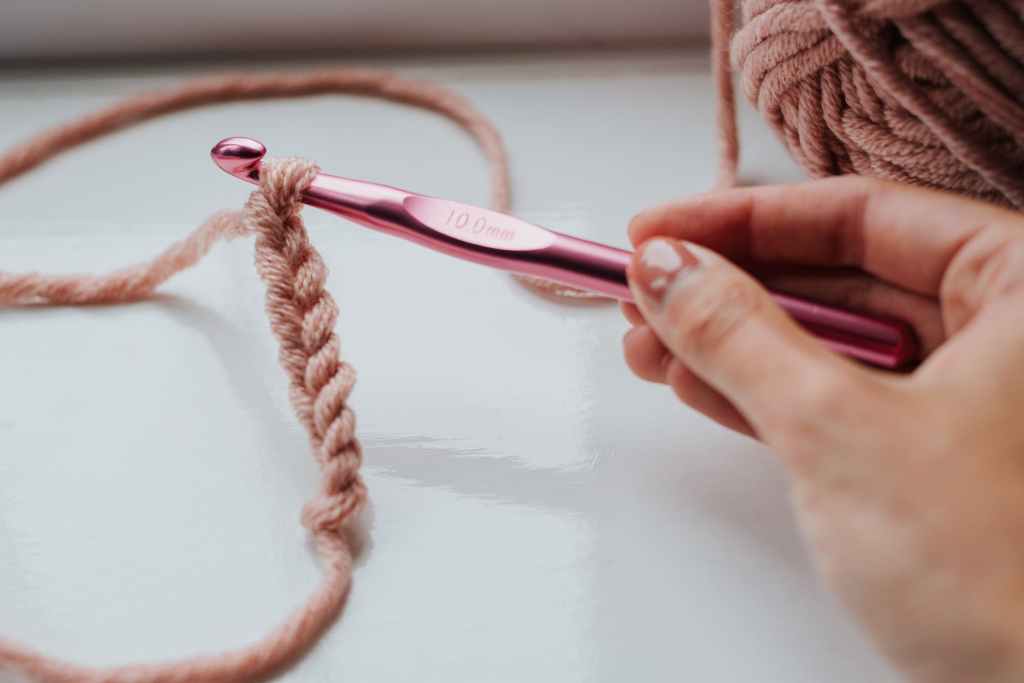
Anyway, this link, “Neanderthals may have used their hands differently from humans,” apart from distinguishing Neanderthals from humans in the title, makes claims that I find impressively modest; you might say, impressively unimpressive. The general idea is that Neanderthals’ thumb bones appear to be a little different from those of modern humans, such that they may have found precision grips a little more difficult. But the article points out that Neanderthals did have a precision grip, and were able to make yarn, thread seashells for jewelry, etc. So, there you go.
As a layperson, it seems to me that these are still guesses based on reconstructing a hand from the bones and using 3-D imaging of how the joints would have worked. Again as a layperson, as far as I can tell, 3-D imaging is just a really sophisticated, computer-aided series of guesses. So it isn’t necessarily accurate. I remember that time that we thought the T-rexes stood upright and put their tails on the ground to support themselves, and then we changed our minds and decided that they ran with their weight leaning forward and the tail stuck out behind for balance.
But, whichever. I have no problem with Neanderthal thumbs being a little bit clumsy, or not a little bit clumsy. I suppose we will find out some day.
Hello everyone! To my American readers, I hope your holiday weekend was restful. I hope it went fantastic. (Mine did.)
But perhaps your holiday weekend didn’t “go fantastic.” Perhaps it went horrible.
Thanksgiving has betrayed me just enough times that I get nervous around it. I can think of three or four past Thanksgivings where there emerged, on that very weekend, a crisis of life-and-death proportions. I’m not sure why, but holidays and other non-ordinary times seem to attract these things.
In my upcoming book, The Strange Land, the tribal chief notes ruefully that moving days are subject to the same phenomenon:
Enmer had seen this time and again. If anyone was going to get sick, if anyone was going to get pregnant, if anyone was going to miscarry or commit a petty crime or simply snap under the pressure of survival, they were more likely to do it at the exact moment of transition. These in-between times [when the tribe was getting ready to move] were dangerous.
Enmer had given this a lot of thought and had concluded that though he could — and did — blame his people for their actual actions, he could not blame them for their bad timing. Things happened with horrible timing. That was the way of the world.
The Strange Land, chapter 10
I hope this Thanksgiving was kind to each of you, though. See you next time!
Some books need warning labels. Especially history books. Heck, history needs a warning label! Heck, this entire world needs one! It should read something like: Fallen World. Danger, Difficulty, Death.
For all these reasons, the brilliant graphic artist Nathan Hale puts warning labels on the the brilliant historical books he produces for children. The labels are tailored to each individual story. For example:

Note the delightfully specific terrors promised, such as “underwater toilets” and “Swedish swearing.” (And yes, the book delivers those very things. It makes sense in context. So does the bomb on a stick.)
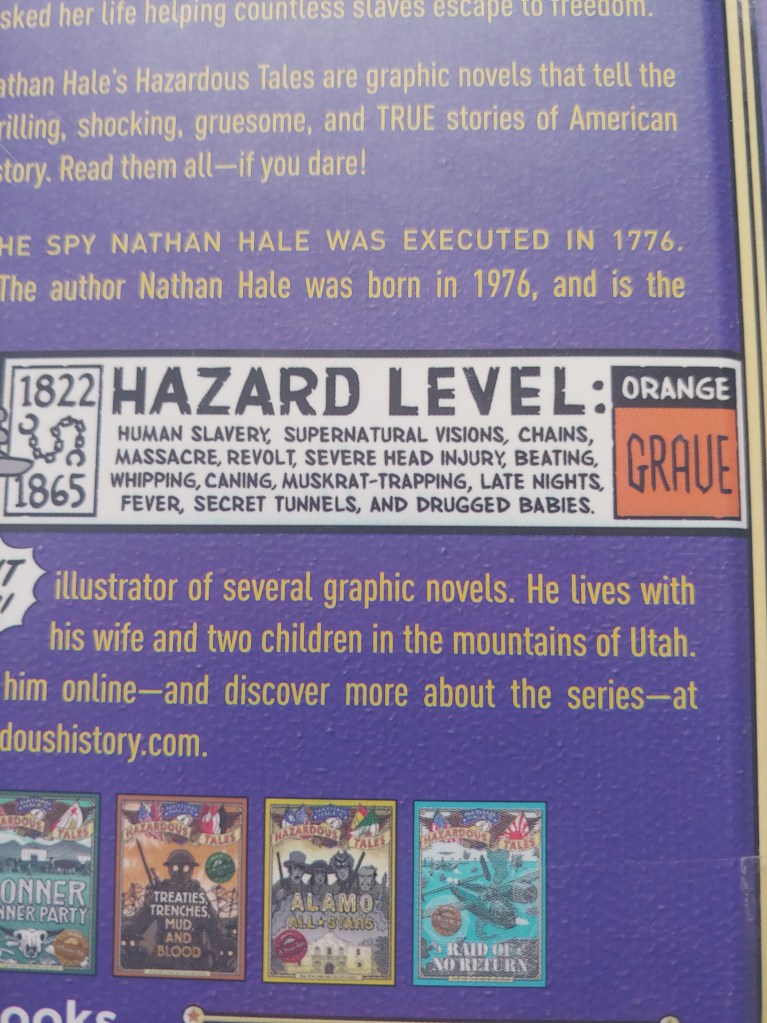
Besides the horrors and heroics that we all know her life contained, we get “supernatural visions” (Harriet’s and, before her, Nat Turner’s); “massacre” (led by Nat Turner); “muskrat trapping” (more of a hardship than it sounds); and, of course the “drugged babies” are so that the escapees would not be caught.
Now, I write fiction, and it’s pretty dramatic and everything, but nothing I or anyone else will write can compare to the drama and poignancy of Harriet Tubman’s life.
With that disclaimer, here — and you can tell that I worked really hard on this — is a warning label of my own, done in the style of graphic artist Nathan Hale, applied to my book The Long Guest.

In the comments, please post a goofy warning label of your own about your own book or a favorite book.
 Out of Babel Books