

Tag: the natures
Idaho Wildflowers: This Stuff

I photographed this stuff growing, as you see, in/near a stream near the Hiawatha Bike Trail in northern Idaho. N.b.: the taller, thicker plants in the immediate foreground are not the same ones I am talking about. I am focused on the feathery, jointed ones near the stream.
Using my Central Rocky Mountain Wildflowers guidebook and the Internet, here is a list of possible identifications I considered:
- star gentian
- red mountain heather or yellow mountain heather. One problem with these two is they seem to prefer dry, sunny spots. Another problem is that their leaves are likely too thick to match.
- swamp laurel. This is still a good candidate, as it prefers wet spots and, though native to eastern North America, also is said to live in “Montana.”
- perhaps the young version of some variety of Indian Paintbrush plant. The problem, again, is that they seem to prefer dry, sunny areas.
- rough wallflower. Problem: “found on open, lightly wooded slopes.”
Then I broke down and asked Google to examine the photo, which means, like it or not, I was enlisting the help of AI. Here were Google’s two suggestions:
- Amsonia hubruchtii or
- Bassia scoparia a.k.a. Summer Cyprus or Burning Bush.
Bassia scoparia is our best candidate, and here’s why. It can be found in “riparian areas,” according to the article that I linked. “It naturalizes and self-seed easily.” “This plant is a noxious weed in several states.”
Edit: Beth has suggested it may be “horsetail,” Equisetum arvense. I looked it up, and Horsetail is the most likely candidate yet! According to Wikipedia,
Equisetum arvense, the field horsetail or common horsetail, is an herbaceous perennial plant in the Equisetidae (horsetails) sub-class, native throughout the arctic and temperate regions of the Northern Hemisphere. … Many species of horsetail have been described and subsequently synonymized with E. arvense. One of these is E. calderi, a small form described from Arctic North America.
Northern Idaho isn’t exactly Arctic, but it’s gettin’ close.
Idaho Wildflowers: What’s This?

Oh. It’s Lupine again.
The Top Five Best-Smelling Trees
5. All other pines besides Ponderosa. Especially creosote.
4. Ponderosa pines. They have a sweet smell that’s natural and can’t be faked.
3. Trees in the aspen/poplar/cottonwood family. They have a slightly spicy smell that lets you know you are outside.
2. Sycamore trees. They have wide-spaced branches and flaky bark that make them terrible for climbing, and their foliage isn’t particularly beautiful, but their smell …? Amazing. Instantly calms me whenever I am near them.
- Russian olives trees. Just the perfect balance of sweet, fresh, and smelling like water. Most of the time, their smell is not as strong as the other trees on this list, but for the few weeks in the year that it is, I’m in heaven whenever I am outdoors.
Notice that none of the trees on this list grow in the tropics. Sorry, tropical jungle! I have lived there, and while the tropical jungle may have much to recommend it (it is certainly better than the tropical city!), I am sorry to say that it does not smell good. Its trees and bugs are generally weird-smelling or stinky. And don’t get me started on the odor of unprocessed rubber!
I Like Bears, Part III: I Go to Bear World
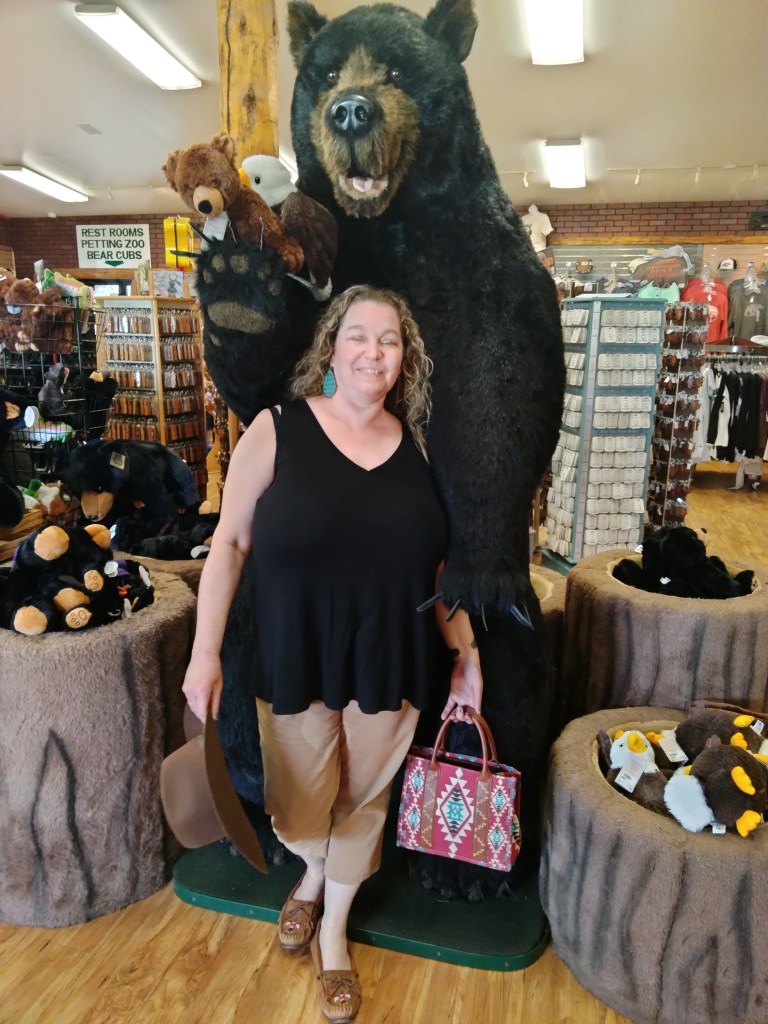
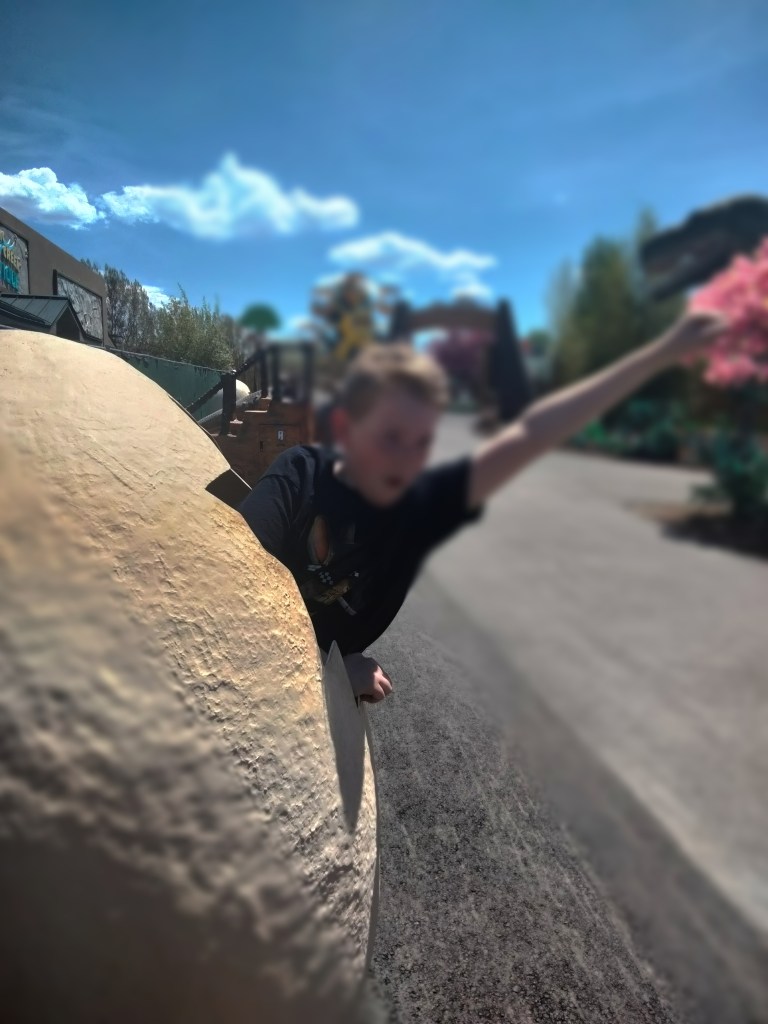
Recently, we had Mother’s Day here in America. My beloved children are now getting big enough that they can take the initiative to do things for me. Thirteen heard on the radio that Bear World was letting moms in free, so he decided we should go. Here he is with the bear, face blurred for privacy. My son is the blonde one and the bear is the dark-haired one.
“Yellowstone” Bear World, despite its name, is not at or in Yellowstone Park but actually closer to Rexburg, Idaho, where you can see the foothills of the Grand Tetons but not the Tetons themselves. The day we went was beautiful and sunny:

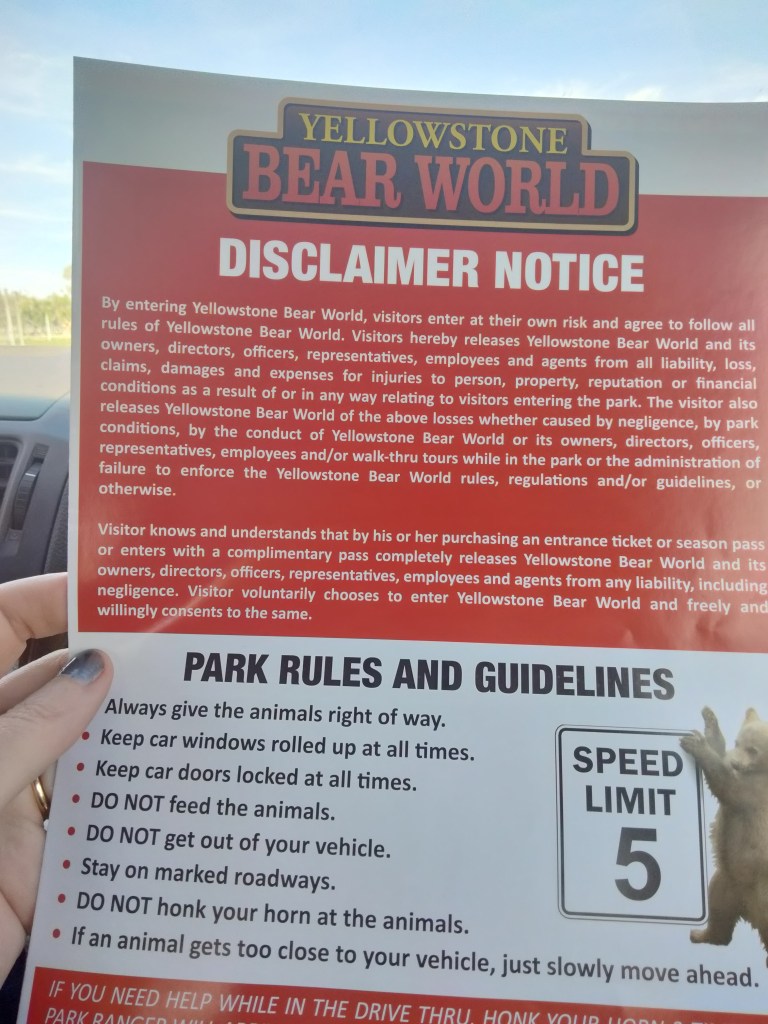
The way it works is that you first drive through an animal park, and then you access the parking lot and other attractions. You can drive back through the animal park as many times as you like on one ticket. But there is a very stern warning:
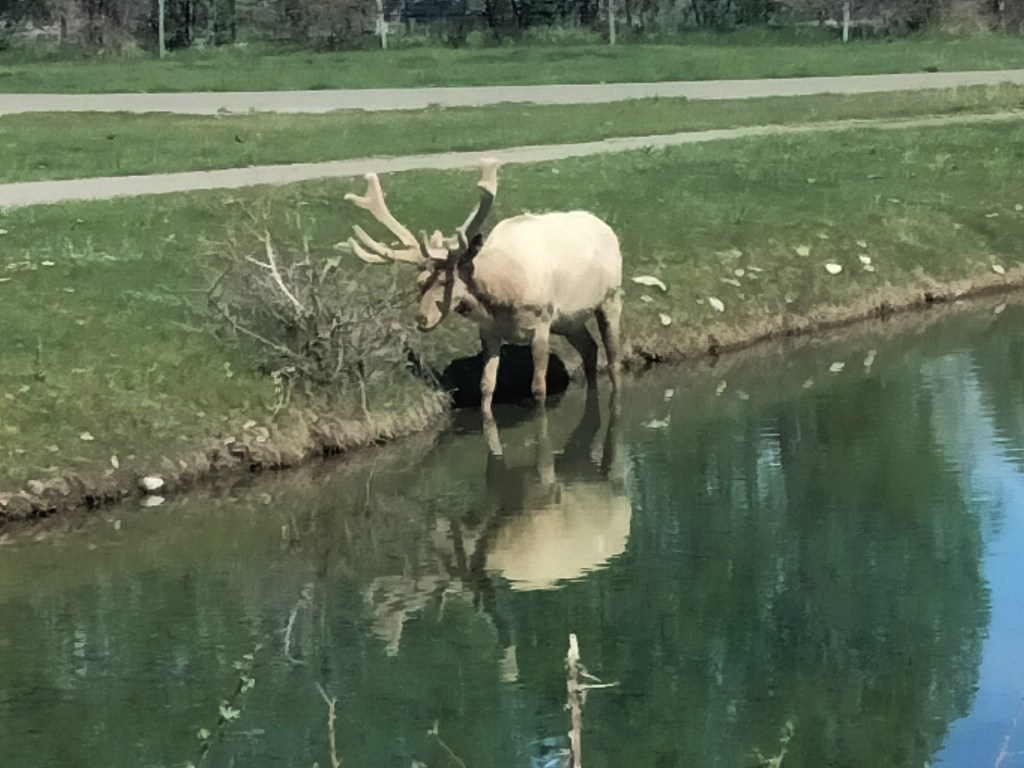
The first part of the park has various ungulates like this rare albino elk:

and this regular elk:
… and also bison.
Then you go through a gate where an employee checks your receipt and reiterates the instructions. Beyond the gate, you are in the bear part of bear world, where you can see multiple bears just hanging out. There are, at least in the black bear area, far more bears than you would normally see all in one place. The trees all have metal cuffs on them, I guess to prevent them from being destroyed by all those bears.
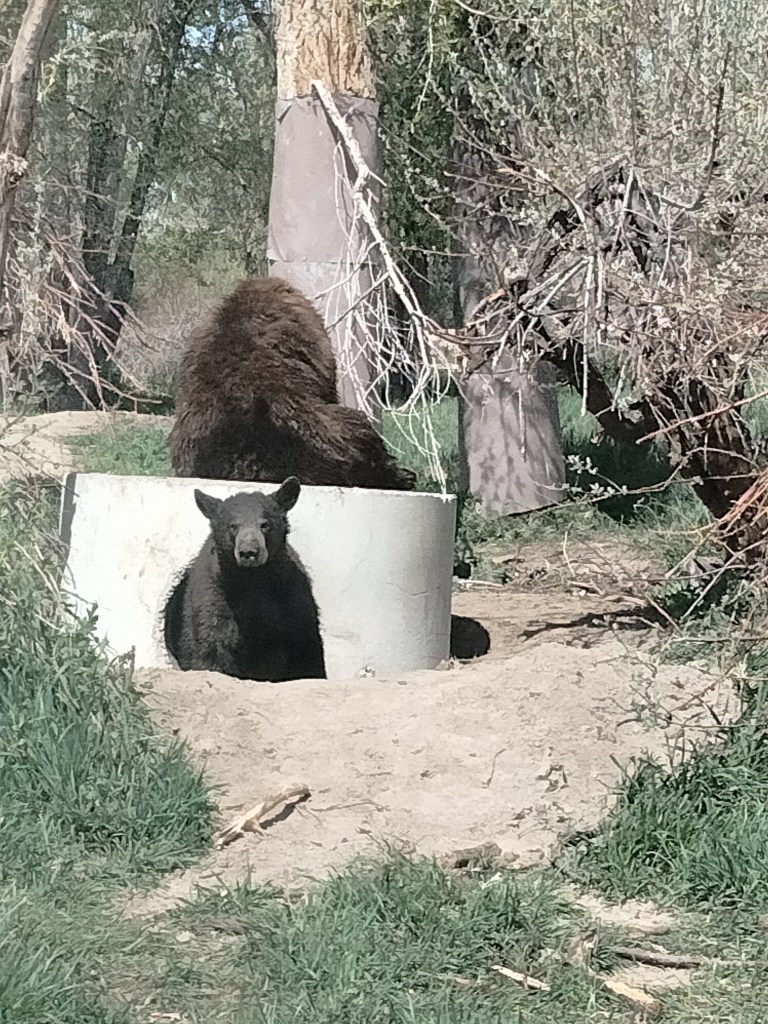
There are feeding troughs for the bears,

and shady places for them to sleep. Many of them were doing just that.
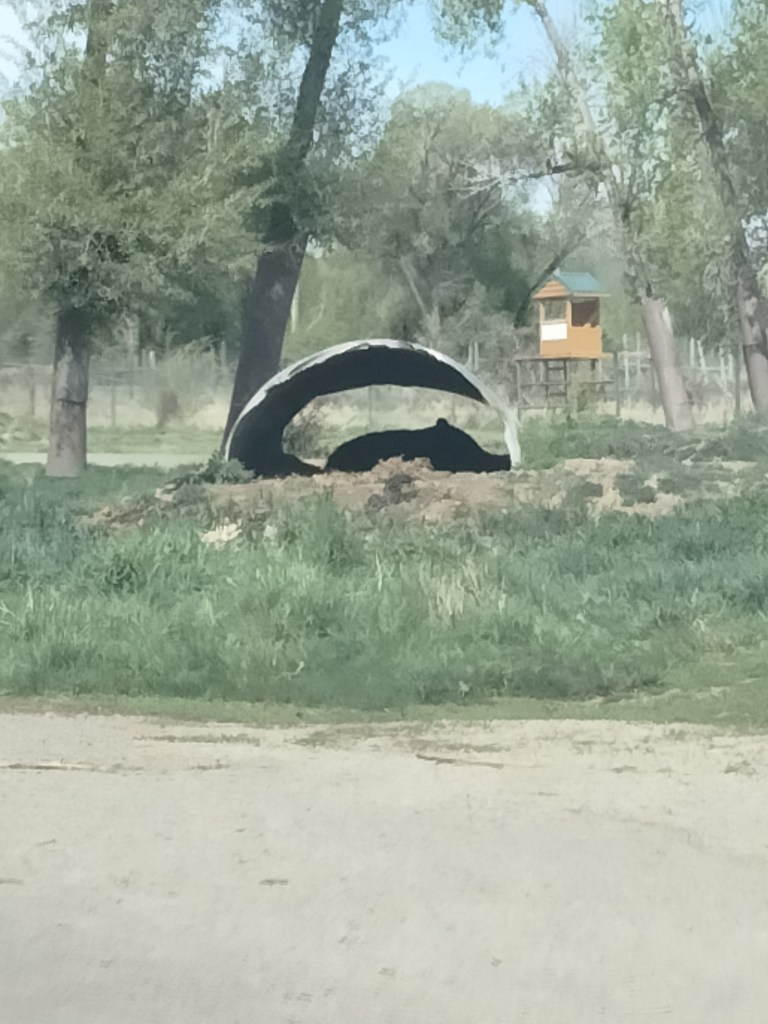
But before you get to where the black bears are, you pass an enclosure with a few grizzly bears. The grizzlies are behind an electric fence.

This is gal is pacing the perimeter.
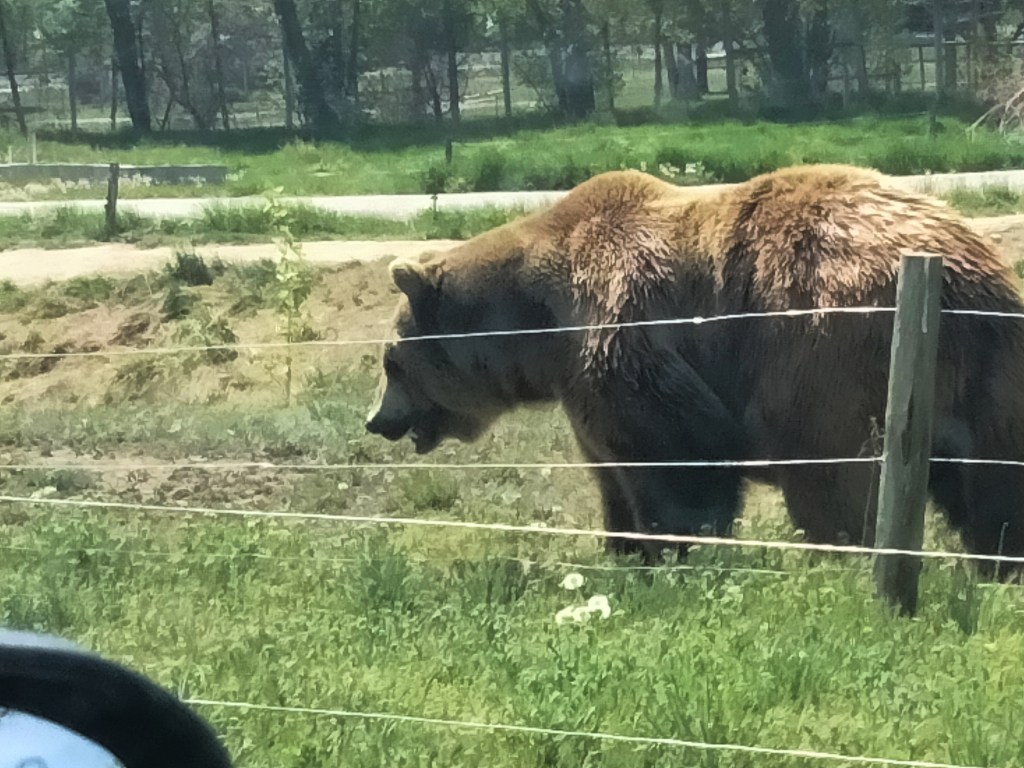
Notice that she has the distinctive grizzly look: the concave or “dished” face, and the grizzly shoulder hump. They are also a lot larger than black bears.
I say “she.” We assumed all the bears in the park were females, because it’s hard to imagine you could keep one or more males in these conditions without them fighting each other.

Back to the black bear area. The black bears were free to roam across the road if they liked, even right in front of your car. Notice the black bear silhouette: straight muzzle, no hump, smaller. I love the curving feet!
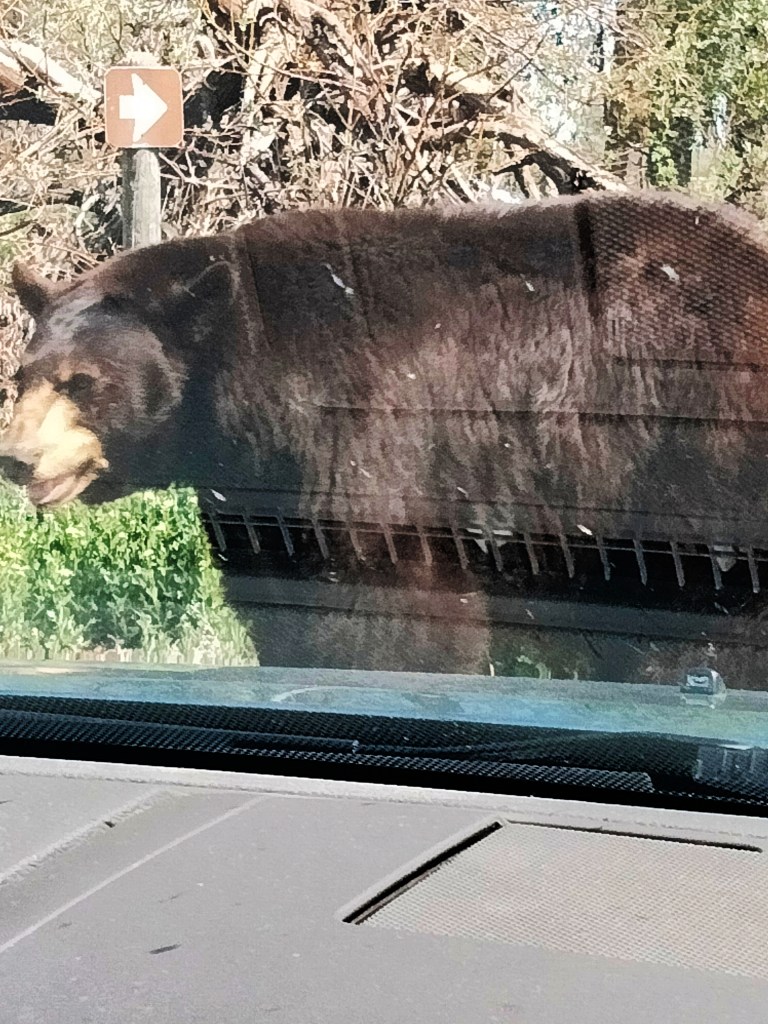
At one point, we even saw some employees standing among the black bears! They were photographing a large tree whose trunk had been torn up. The bears seemed unconcerned.
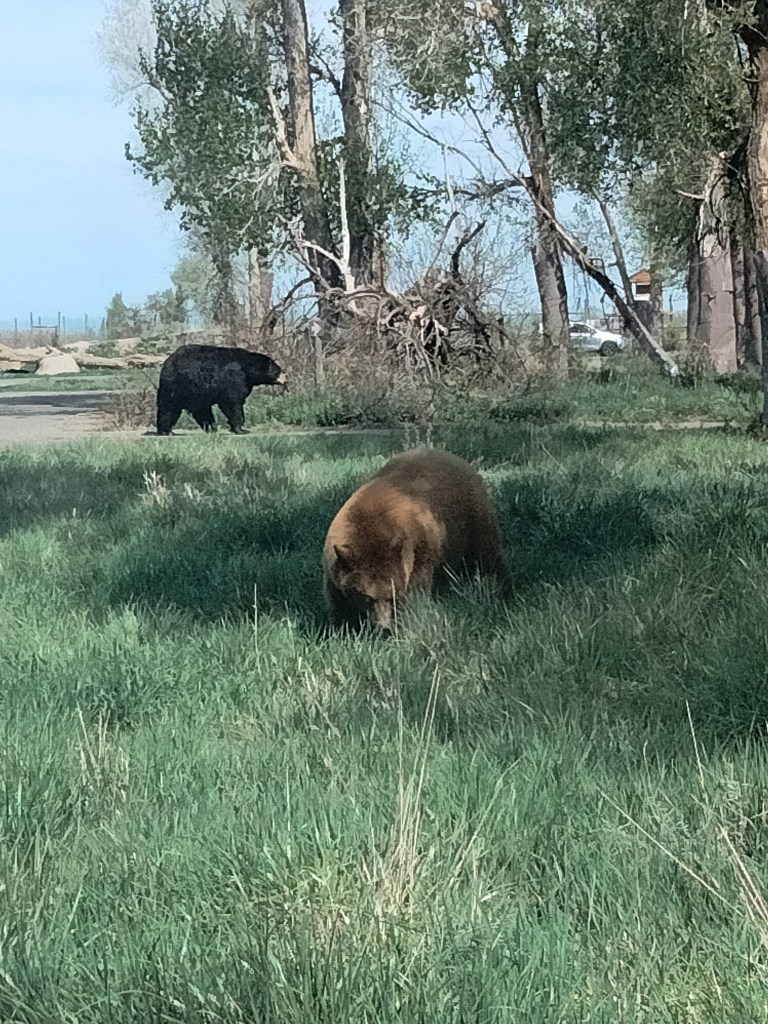
And now we get to my favorite thing! You see, “black” bears (and actually grizzlies as well!) can be any color. (I am learning so much from Bear World!) They can be blond, for example. We did see one that was black-and-blond patches. But this here … is a cinnamon bear! It’s hard to tell from the picture, but its brown coat was almost ginger. The hair also looked thicker and more luscious than on some of the other bears, almost as if it had been groomed.
Also … and I bet you didn’t see this coming … Bear World also has DINOSAURS!
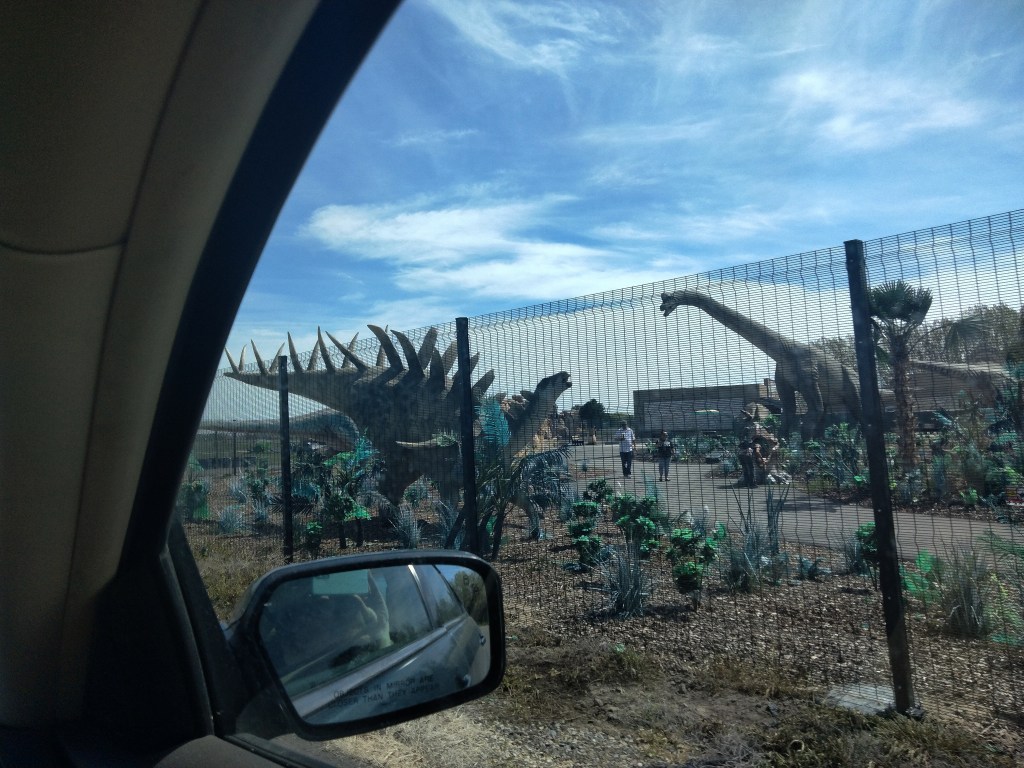
One of them went so far as to eat Mr. Mugrage.

Thirteen, meanwhile, snuck into a dino’s nest and hatched out of its egg:
I have seen better dinosaur parks, but I have never seen more bears.
Wonder What Happened Here?
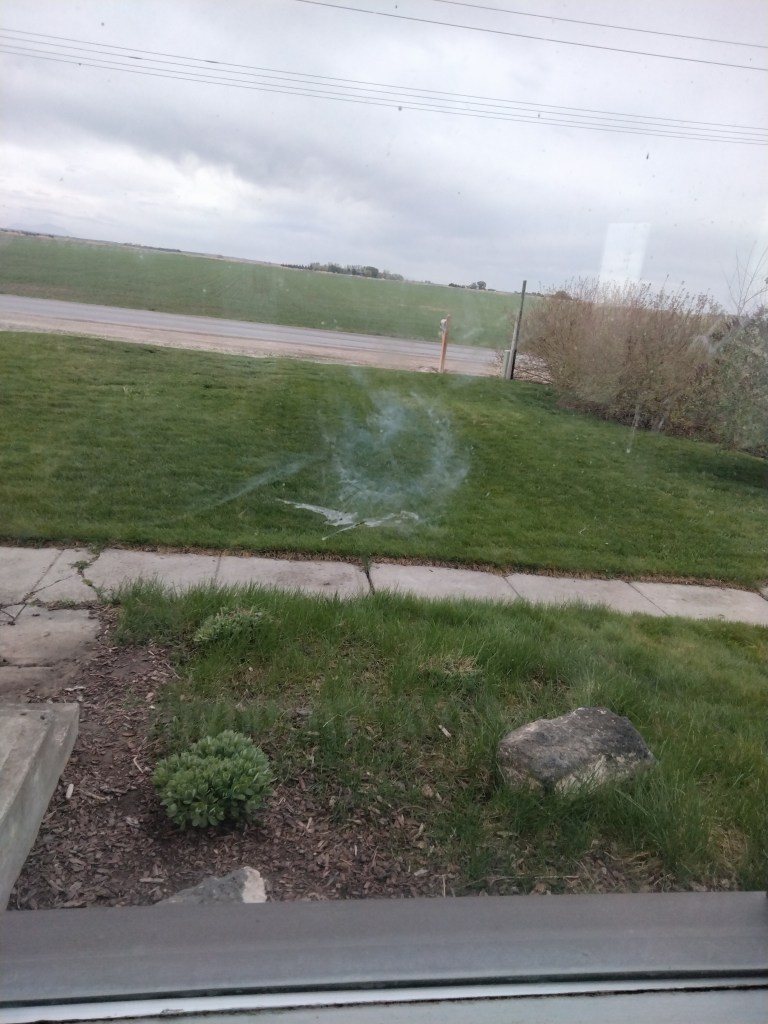
Behold, the imprint of a bird on our front window!

Big Sky Country, with Canal

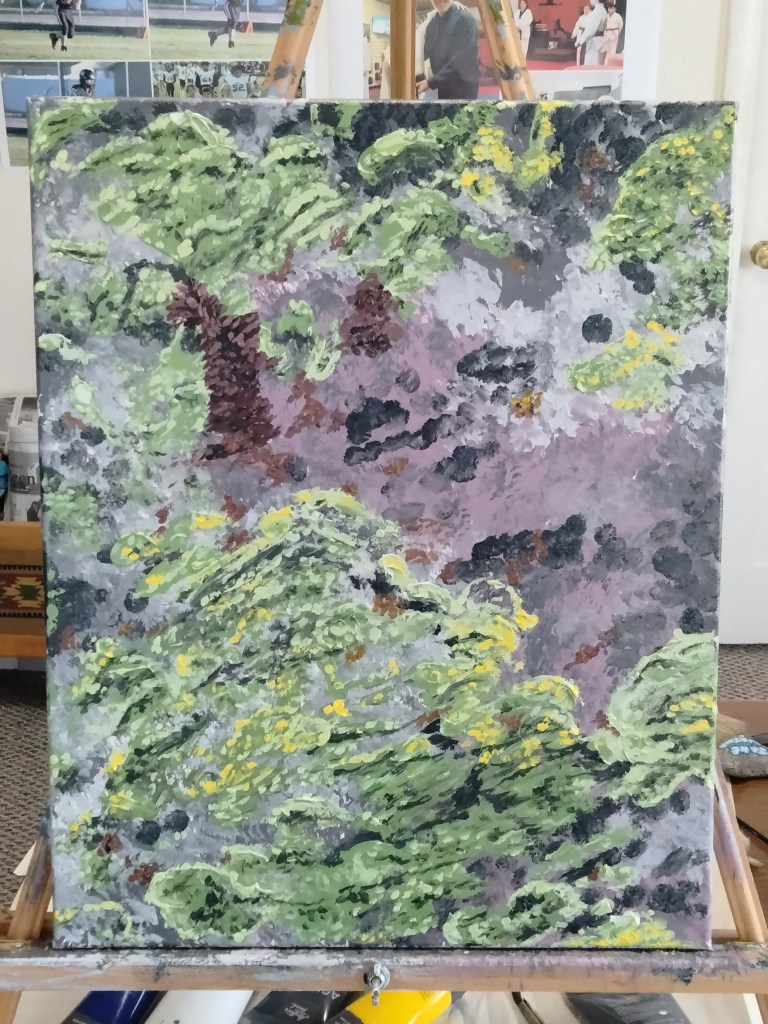
This little (8×6) landscape acrylic painting is one of my favorites that I’ve done recently.
The water portrayed is actually a stream leading to the Snake River Reservoir, because the canals are not running at this time of year. However, I thought I’d give you some history about our local irrigation canals, because they are really remarkable.
The scheme diverts water from the [Snake] river about ten miles above Blackfoot. The main canal was planned to be 60-85 feet wide, carrying a depth of six feet of water about sixty miles, with many more miles of laterals and smaller ditches. … The canal is 60 feet wide and 8 feet deep, beginning near Firth and ending near the Lamb Weston Potato Plant at American Falls where a small amount of water then empties into the Snake.
Aberdeen, Idaho: Our Small Town Story, by Celia Klassen, p. 14
The canal system was constructed, essentially by hand, using horses, scrapers, and large baskets, and dynamite for rocky areas, between 1894 and approximately 1910. There were a series of investors, some working groups that fell apart, and two different canal companies that were formed to head up the project. The system includes many “fills” … areas where the canal was built up above the surrounding land, as to pass through a low spot.
During the construction, “Tent camps … were set up at various points, and everything the laborers needed had to be brought through the sagebrush by wagon … Families of canal workers lived along the canal while it was being built in what were called ‘ditch camps’.” (ibid, p. 15)
The canal system allows us to farm the Idaho soil, which is volcanic and very fertile, but doesn’t get enough rain for dryland farming. The Aberdeen-Springfield canal company still maintains the 190 miles of main and lateral canals, with sluice gates and the like. A canal runs right past my backyard, built up above the surrounding fields. The canals are drained in the winter months, and last year, an excavator worked its way slowly by our property, deepening the canal and creating large piles of soil on its banks. In the summer, “canal riders” patrol the system, checking for leaks. This is a wonderful system, and it takes a lot of effort to keep it working properly.
Despite being man-made, the canals also beautify the countryside. The presence of water attracts Russian olive trees, cattails, showy milkweed, and birds. Many farm kids grew up inner-tubing in the canals in the summertime, and their raised banks make a natural hiking route for people who want to walk in nature.
The source for this post was the book Aberdeen, Idaho: Our small town story, published by Celia Klassen in 2019. Celia did not grow up in Aberdeen, but married in. As so often happens, it took someone from the outside to appreciate that our local history was worth researching and recording.
Beautiful Nature Quote
It was ideal apple-eating weather; the whitest sunlight descended from the purest sky, and an easterly wind rustled, without ripping loose, the last of the leaves on the Chinese elms. Autumns reward western Kansas for the evils that the remaining seasons impose: winter’s rough Colorado winds and hip-high, sheep-slaughtering snows; the slushes and the strange land fogs of spring; and summer, when even crows seek the puny shade, and the tawny infinitude of wheatstalks bristle, blaze.
Truman Capote, In Cold Blood, p. 10
I didn’t realize bighorn sheep were quite so … big

I mean, look at that thing! It’s almost the size of a cow.
Usually, you see pictures of them poised on a rocky outcrop, looking all delicate.
 Out of Babel Books