“The bright yellow flowers give way to a grapelike cluster of purple berries with whitish coating. In the fall, some of the leaves often turn bright red, orange, or bronze.
“The tart berries make a refreshing, lemonade-like drink and fine jelly or wine. The yellow inner bark was used by Native Americans as a yellow dye and as a medicine with many applications.”
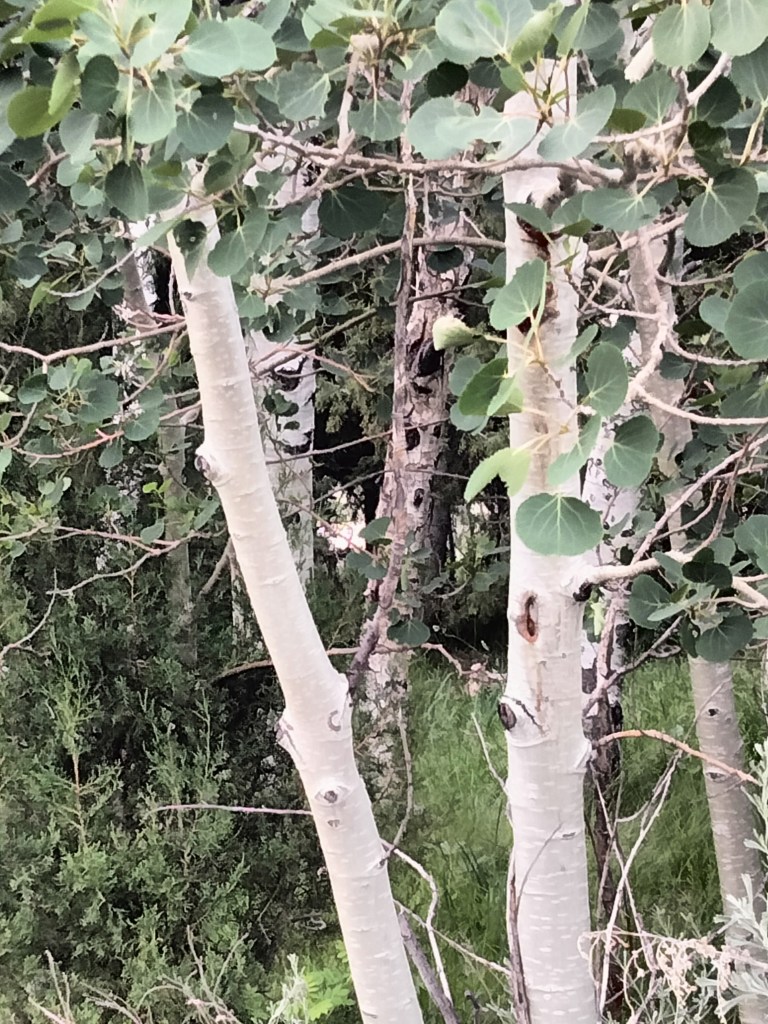
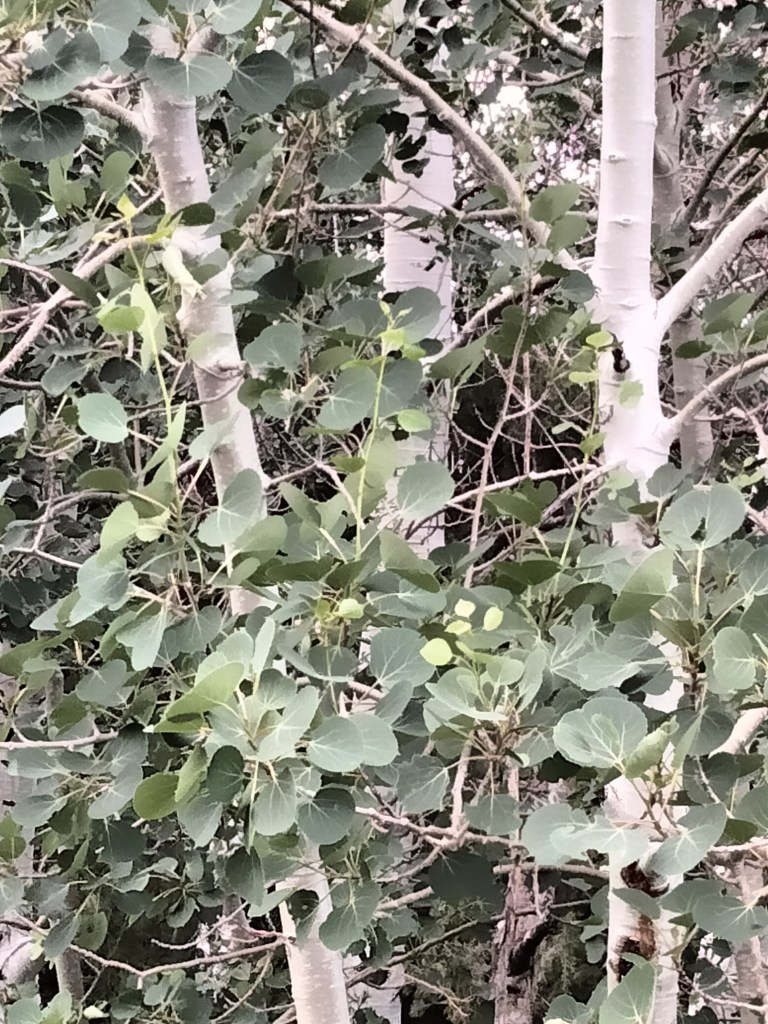
It may seem strange to call the aspen tree a flower, but it does appear in my Falcon Guide Central Rocky Mountain Wildflowers.
“Aspen’s leaves (as distinct from birches’) are rounded or heart-shaped in outline, with vertically flattened pettioles (leaf stalks) that are responsible for their distinctive trembling, rotating action in the slightest breeze.
“Aspen is a colonial tree that spreads by shallow underground stems. Patches of aspen trees are often just vertical stems (clones) of a single genetic individual. The borders of the clone patches are often obvious in the spring and fall, when the genetic differences in leafing out and fall coloration are expressed between clone patches. The underground stems enable aspen to survive forest fires with ease. Aspen twigs are a favorite food for browsing deer, elk, and moose, especially in winter.” (page 246)
Here’s a path leading past Silver Sage into an aspen grove (clone patch? Or between clone patches? I’m sticking with grove – sounds less disturbing).
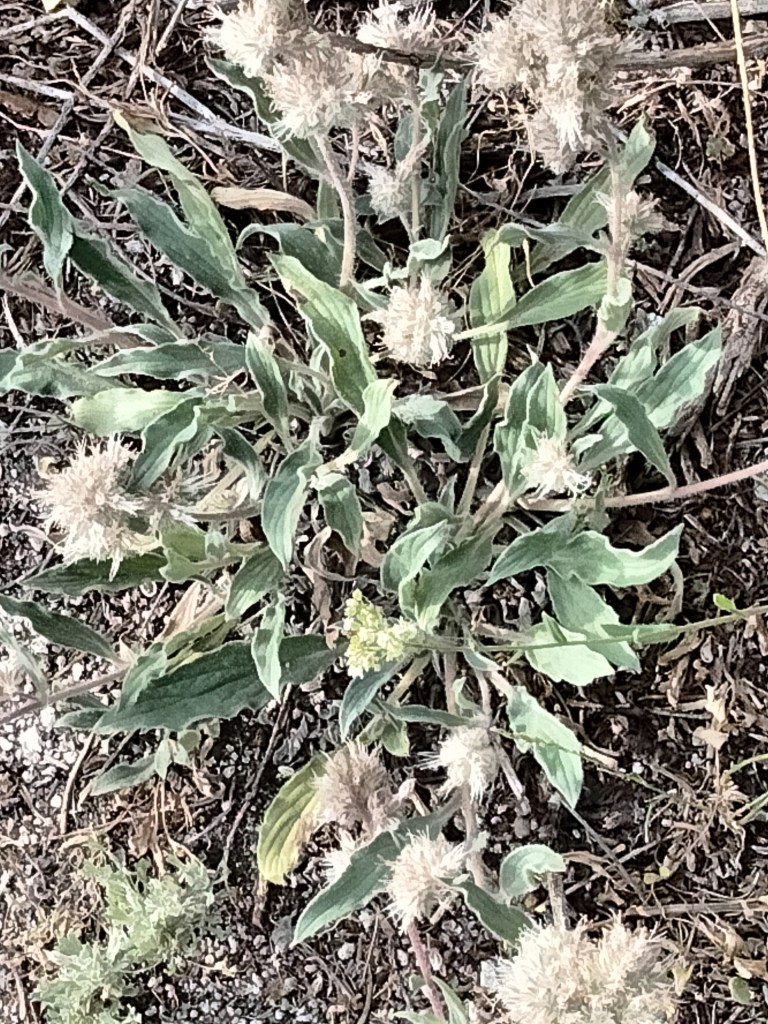
I think I may have managed to photograph a flower that is “endemic to this area and found nowhere else in the world.”
White Frasera, according to my Falcon Guide, is “found in the montane forests of central and west-central ID” (page 209). Citadel of Rocks, where I found this, doesn’t technically fit the bill, since it is in the southern part of the state. Other possible candidates are Black Elderberry and Edible Tobacco Root.
It’s an older Asian couple taking each other’s picture in front of a teepee, in Yellowstone.
I also saw a Pakistani family doing the same thing, which was also super cute.
I can’t remember who it was, but one commentator I listen to pointed out, in response to the move to take American Indians out of team names and products, that American Indians are famous all over the world.
Anyway, I’m here at Yellowstone with the fam and it’s very international here. Languages I heard in the space of a few hours:
Hindi (? – pretty sure)
German
Mandarin
Korean
Spanish
British English
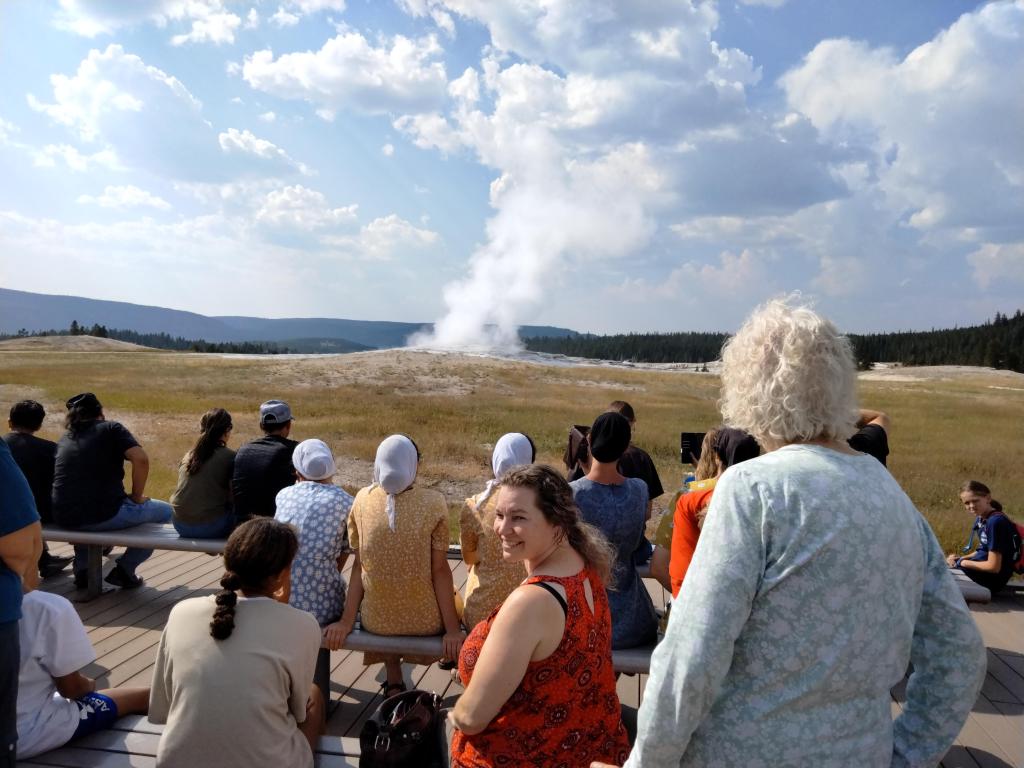
They all came to see Old Faithful, the geyser. Even more faithful than old faithful were the people. We all came at the time it was predicted to blow. We all sat quietly, as if at church, except that occasionally someone would say, “It’s starting! It’s starting!” – and it would be a false alarm.
When Old Faithful did demonstrate its power once again, we all raised our phones in unison, and faithfully recorded it.
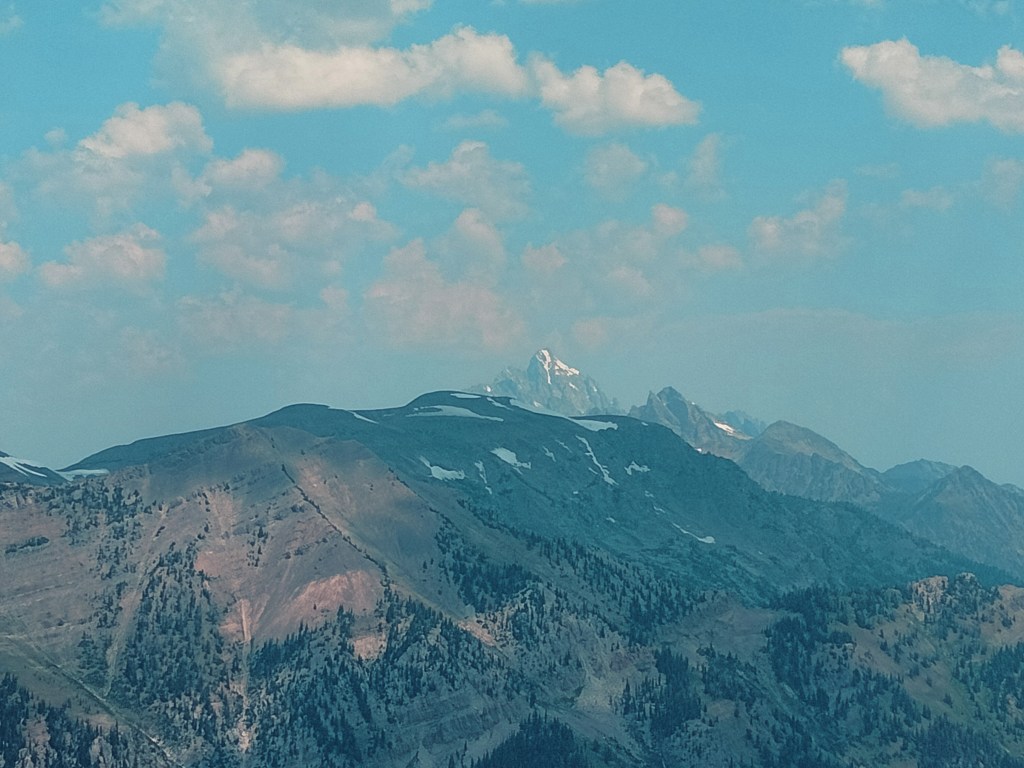
The human kindness continued the next day at this lookout point (veiwing Grand Teton peak), reachable by tram from Teton Village. 10,450 feet in the air, we faithfully offered to take each other’s family photos in front of the panorama, exchanging phones and then giving them back.
Human beings can be faithful, and kind, for a couple of days while on vacation.
The One who made the mountains is faithful forever.
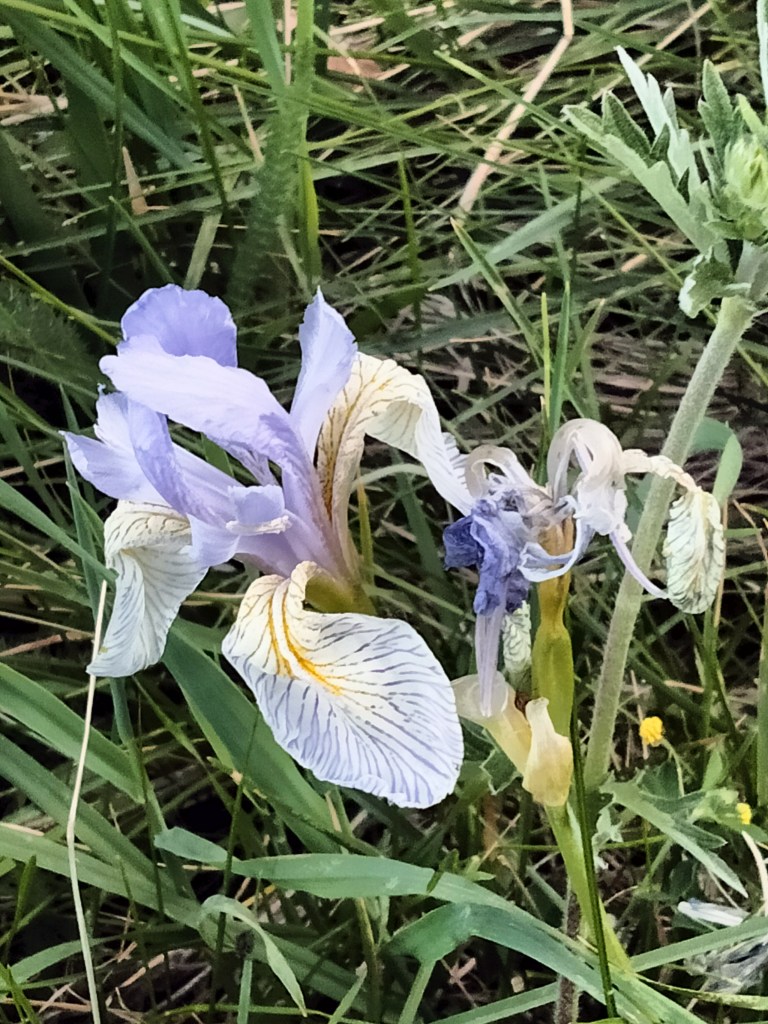
Also known as Missouri Iris. Photographed at Citadel of Rocks.
“This is the Central Rocky Mountains’ only native iris … Iris, or fleur-de-lis, is the national flower and emblem of France and the state flower of Tennessee. Iris is both a dangerous poisonous plant and a valuable medicinal herb.” (Central Rocky Mountain Wildflowers Falcon Guide, p. 37)
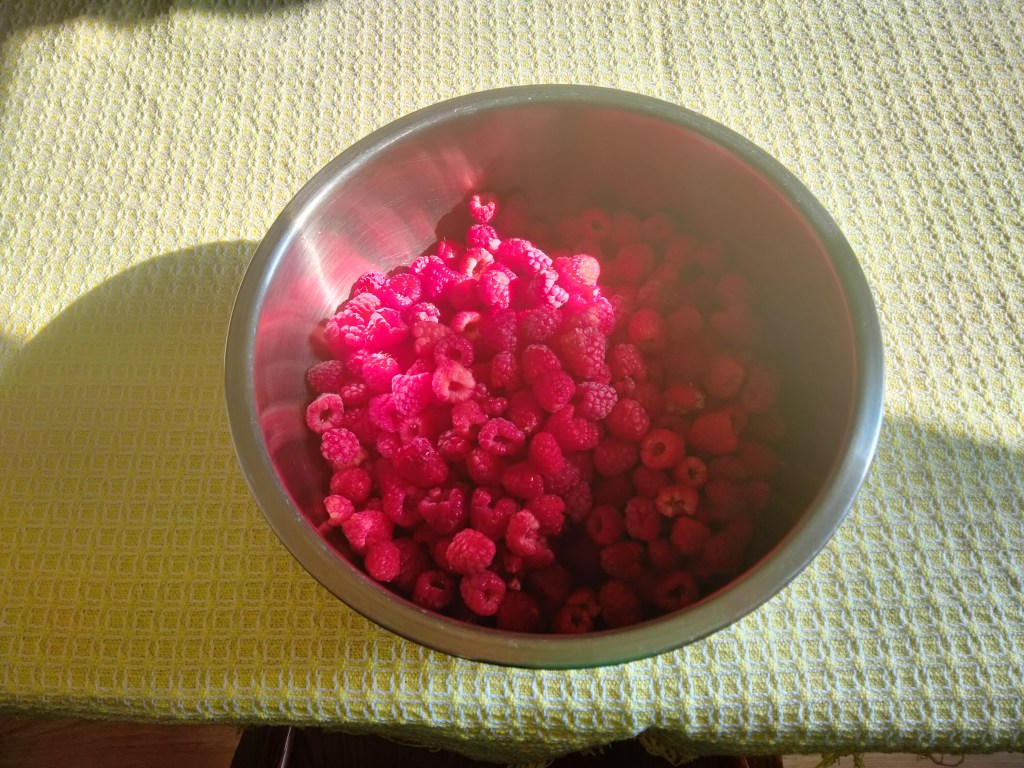
Here I am, using my color vision to spot the ripest raspberries in the thicket. Darker ones are ready. I can distinguish fine grades of color.
Then, I use my specially designed opposable thumbs to pick the ripest raspberries. My fingers have been given the ability to sense, and calibrate their grip for, the finest gradations of pressure. This allows me to pull each berry off its core without squishing it. Most of the time.
The raspberries, for their part, have been specially designed to be picked and eaten by me. Every year, they produce a ridiculous bumper crop. “Pick us!” they groan. They have been given thorns, of course, but these are at best a halfhearted attempt to fight back. All I need to do is put on a long-sleeved shirt, and the prospect of a nasty scratch is no match for the motivation furnished by the berries’ taste.
The raspberry bushes are very good at surplus. They produce far more berries than I can realistically pick, and they hide them where I will never find them all.
They taste sweet-tart. They provide fiber and Vitamin C and I don’t know what all. They look so pretty paired with yogurt and oatmeal on a summer morning.
This morning while I was deep in the raspberry patch, my son picked up one of our chickens and at that moment she laid, the egg dropping from his arms to the ground. It didn’t break. Food was literally falling from the sky.
Sphaeralcea coccinea, Greek for “scarlet sphere mallow.”
Grows in the “dry prairies of the valleys and plains and foothills zones as far as the Bitterroot Valley, MT; Bannock County, ID; and parts of OR.”
“Scarlet globe mallow has slimy, viscous sap that can stick to skin or mucous membranes and thus provide a protective coating. The native Dakota people chewed the plant and applied it to inflamed sores and wounds as a salve. It was said to cool inflammation and promote healing.”
I can’t believe the first two wildflowers I chose to blog about this year both turned out to be medicinal. But there ya go, God puts ’em in the ground for us to find! Once again, the Falcon Guide Central Rocky Mountain Wildflowers has shown its usefulness. All in the information in this post, except the photographs, came from page 93. I took the photographs at Citadel of Rocks, where the sphaeralcea was obediently growing exactly where described.
I think this is White Geranium. According to the Central Rocky Mountain Wildflowers Falcon Guide, it is a medicinal herb that can be used to treat diarrhea, dysentery, ulcers, and hemorrhoids, and to stop bleeding (211). It’s found in shady woodlands, plains, valleys, montane, and lower subalpine zones. This is exactly where I found it! This, and the flowers that will follow, were photographed on a weekend trip to Citadel of Rocks, Idaho.







 Out of Babel Books