I Like Farmlands

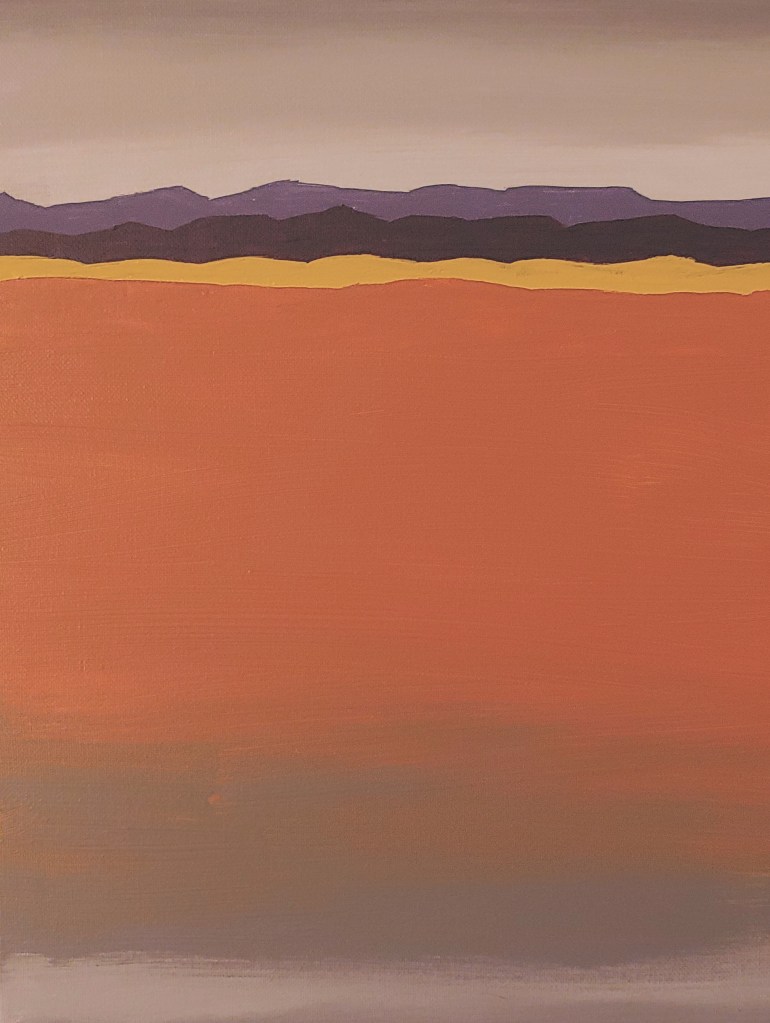
This is a view of my neighbor’s house on a smokey afternoon late last summer. It’s also part of the internal landscape of my mind.

Farmlands are one of my favorite biomes. (Yes, they are a biome. I will die on this hill. They are a part of Naure. They are what nature looks like when people live in it.)

Farms and I go way back. I didn’t grow up on one, but I grew up around farms and farmers.

My early years were spent in eastern Pennsylvania, which is a country of rolling green hills and low mountains. My dad was the pastor of a small country church, and most of its members were dairy farmers. Whenever we visited anybody, which was often, we would first be taken into the cow barn. These were black-and-white milk cows. As soon as you stepped into the barn, your senses would be filled with cow sensations: the chorus of moos, the smell. To this day, when I smell a cattle lot, it doesn’t smell bad to me, just like a clean farm smell.

And even cleaner farm smell was the “milk room,” a little brick building with a large stainless-steel tank of milk in the center, and a drain in the middle of the wet floor. It smelled like coolness, milk, and water.

These are memories from when I was very small. That same family that I have in mind, although they had indoor plumbing, also still had a working outhouse in their back yard. There were bees, and the smell wasn’t so nice, but it was raised up on several steps, not just thrown together but definitely constructed. My brother and I would torment this family’s chickens by pulling backwards on their tails so that they flapped. (Not recommended.) We would sit in corrugated buckets filled with water to cool down in the summer, and drink from the garden hose. This family had Dobermans, and I can remember a black bear hanging up in their barn after the father shot it while hunting. Later, it was stuffed in a scary pose and placed in their study.

The dairy farmers in our church also had fields of crops. Our own house had a yard of about an acre and a half. At the back of this yard was a line of poplar trees, and right beyond them, fields rolling away towards the creek. Beyond that, you could see a mountain. They must have rotated the crops in these fields, but I know that at least one year, they were soybeans. We were allowed to pick the pods, open them, and eat the tiny, hard beans out from inside. There was a lot of milkweed, which was fun to pull open and let the tufty parachutes out when it was ripe. There was a lot of ragweed, which my brother turned out to be allergic to, and one year a plague of tent caterpillars turned the mountainside brown.

My dad had a somewhat free schedule, and he would take my brother and me (and later, our sister) on walks in the countryside. These were probably short walks, given that we were little kids, but I remember them lasting hours. We could walk along the borders of the fields and find new fields, or the creek. This habit set “walking between farm fields” permanently in my mind as a normal thing to do. If it was nighttime during this walk, my dad would sing “Walking at Night,” which, in retrospect, is probably a German hiking song.

When I was eight, we moved to western Michigan. Worse, we moved to a city. I complained hard about this. It was the first remotely tragic thing that had ever happened to me, and I was determined to milk it. By this time, my crush on American Indians was well-developed, and I was keenly aware that it was tragic to be driven off your land.

However, despite that we technically lived in a city, our tiny church there was still about half farmers. There were still many opportunities, on prayer meeting and picnic and potluck nights, to run on vast grassy lawns while the adults sat and talked, to climb trees, walk between fields, and hide in the hay lofts and corn cribs.

The countryside in Michigan was flatter and dryer than it had been in Pennsylvania. Furthermore, my small denomination (the “Michiana Mennonites”) straddled the border between Michigan and its neighbor to the south, Indiana, which is really flat. The summer camp we went to served kids from both states, and we often found ourselves crossing the border for pulpit exchanges and things like that. I have attended church in what was literally a tiny, plain white chapel perched at the edge of a sea of fields with no other building nearby. I have tramped over Indiana farms, again with my brother and usually another farm boy, while the adults sat in the house and talked. And these Indiana farms are truly the farmland biome, because there is nothing there but farms, not even a hill to break up the monotony.

The farmland biome combines the best features of wilderness and human habitation. You can walk for as long as you like in solitude. There is wind, there is the changing sky, there are wildflowers, and flora and fauna on the windrows. You can get lost if you want, and if it’s winter, you can get cold and miserable too. But as the sun goes down, you can see in the distance the lights of houses. Coming back from the walk to the warmly glowing farmhouse provides all the romance that a kid with a big imagination and a copy of The Lord of the Rings could desire.

Farms have always been with us, and, though technology has changed somewhat, the logistics of having fields surrounding clusters of buildings mean that farmlands in every place and time look essentially the same. You have the wide horizon, the walls, canals or windrows carving the space up and giving some sense of distance, and the lights low to the ground. Perhaps one reason I like fantasy, as a genre, is that it naturally includes farms surrounding the town and castle.

Some of my favorite fantasy series start with, and often return to, the humble but honest farming community. O.K., actually I can only think of two, but they are good ones. The Belgariad starts off with Garion growing up on Faldor’s farm in Sendaria. Actually, it starts in one of my favorite parts of the farm, the kitchen. And, of course, The Lord of the Rings. Bilbo is not really a farmer, he’s more of a country squire, but the Shire is definitely a farming countryside. The four hobbits’ journey starts out hiking through the fields, as every journey should. Their first encounter with one of the Nine takes place on an otherwise ordinary country road. Farmer Maggot, a wholesome character, takes the four friends in, feeds them, and gets them safely to the river crossing in his wagon. And, when the journey is over, the four hobbits must come back and rescue from collectivization the ordinary, boring farms that they sacrificed to save. What would we do without ordinary, boring farms, after all? We’d starve, that’s what. And we would go insane, because the farming life, though hard, represents a very basic pattern for the way people were designed to live.

I like ’em.
The Tragedy of the Chickens

So it was my fault.

Now that I no longer have to get up early to teach, I like to sleep in a little bit in the mornings. In the summertime, this means that I am getting up well after it is light outside.

I didn’t want the chickens to be trapped in their tiny run for two hours between 6 and 8 when I finally got out there.

I thought they would be overcrowded and start pecking each other.

So I left the door to the run open, allowing them to let themselves out in the morning.

*deep sigh*

That worked great for a few weeks. Then, disaster struck! A raccoon, a raider, a being of violence, came in the dark of the night, in the wee hours of the morning, probably around 5 a.m. He slaughtered my poor girls in their beds. I feel the worst about my three sweet silky bantams. Their heads were bitten off literally in the coop where they sleep. They were the only ones who had started laying, and who would crouch down when they saw a human, in case the human wanted to pick them up.

The Barred Rocks put up a fight. One, either Ginny Cash or Andrea, was dragged away without a trace (possibly she had been taken the day before). Another was found, partially eaten, near the lilac bushes.

But the rooster — ah, the rooster. Meriadoc Brandybuck. He seems to have fought the predator. His carcass was found, mostly eaten, in the small tunnel-like pass-through between house and garage. Damp raccoon tracks led away from it towards the front of the house. And … still alive, hiding under the lilac bushes, was the smallest of the Barred Rocks, Jane Wayne.

We don’t know, but we imagine that he gave his life for her. “You go! I’ll hold him off!” he cried, dashing into the gap while Jane, clucking and shedding feathers, fled. Merry, as we call him, had previously shown signs of behaving like a rooster in the sense of pushing the hens around a bit and being selfish about the food, but he had never yet displayed any protective behavior. But in the darkest hour, Meriadoc rose to the occasion – so we imagine – and showed his quality: the very best.

Tears were shed. Carcasses were gathered up. Blood was cleaned from the inside of the coop, which looked like a crime scene, which in fact it was. Certain members of the family wanted to give the chickens a “Viking” funeral, where we would put them on a small, flammable boat, push it out into the irrigation canal, and then shoot an arrow (this step was unclear) to set the boat on fire. This was felt to be impractical, so we settled for a pyre in the burn barrel that involved firewood and a little bit of gasoline. A funeral was held. Prayers were said. The brave deeds of Meriadoc were recited (this is how stories help us make sense of tragedy). We also recalled the endearing little habits of the dead, particularly Jasmine, the black bantam silky, who was our sweetest, the most reliable layer, and will always remain “the bestest of chaekens.”

And, lesson learned. Just because a predator hasn’t come so far, does not mean that one never will. I will make the coop more secure, and will lock it in the future.

I’m a Luddite, all right. A really, really bad one.

Kind of Disorganized Over Here

… my thoughts, I mean.

This post might be a little … rambling. A poorly thought-out combination of recent events in my life, vague political implications, and nostalgic revisiting of old favorite fantasy novels. You know, the way blogs used to be back in the day. Because I am just so dedicated to bringing you, my faithful Internet friends, content, even if it is crummy content.

Over the past few weeks, I’ve done a couple of knitting marathons (about which, more in the near future). I like having something to watch while knitting, and the least repellant thing on Netflix was The Lord of the Rings, so I have recently watched through all three movies. I enjoyed the movies mostly because they reminded me of the books, which I haven’t read in a long time. Yeah, I’m a purist. I couldn’t believe they left out Old Man Willow, Tom Bombadil, the Barrow Wights, and they completely messed up the scene in Bree, and they Hollywooded up Gandalf’s confrontation with Saruman and with Theoden, and they destroyed Faramir … but even so, even so, they kept enough of the original plot that watching the movies was edifying.

The theme that jumped out to me this time — well, there were a couple. One was the way that every single member of the party pays a high cost in the service of the quest. Even people with fairly minor roles, such as Merry and Pippin, suffer greatly – Merry from stabbing the Witch King, and Pippin has to deal with Denethor’s madness. Multiple people had to be willing to pour out their lives. Not just Gandalf, and not just Frodo. This rings true to me. Whether we are fighting the good fight by building a family, a school, or a local church, everyone feels like they are giving 110%, and then the job just barely gets done.

The other theme that I noticed this time was that of despair. Denethor succumbs to despair, kills himself, and nearly kills Faramir. Well before that, he essentially abandoned his duty to the people of Minas Tirith because he believed the cause was lost. And it turns out, this was a stratagem of the enemy, who had been showing him misleading things in the Palantir.

Meanwhile, over in Rohan, Wormtongue has gotten Theoden to abandon his duties to his people by convincing him that he’s old and tired and the heroic age has ended. Wormtongue gets inside Eowyn’s head, getting her to see Edoras, the glorious hall of her ancestors, as a stupid redneck hovel, and her own role in it as boring and stultifying. She ends up, essentially, suicidal, but luckily the presence of Aragorn has turned her suicidal impulses in the direction of brave self-sacrifice, rather than foolish action like Denethor’s. But this is another case where despair doesn’t just happen, it is a direct, intentional action of the enemy.

Other characters suffer feelings of, or temptations to, despair, pretty much in direct proportion as they come in contact with the enemy. Physical contact with the Ringwraiths pulls a personal partially into their world, as happens to Frodo at Weathertop, and the Eowyn and to Merry, who says to Pippin, “Are you going to bury me?” Victims don’t just despair of victory, but they doubt their own judgment, their own senses, even their own existence. It’s at times like these that we need the shoulder of a friend.

James Lindsay has posted recently about how modern-day deceivers will try to induce despair by robbing us of epistemic authority (“you don’t know what you are talking about.” “Do you have a degree?”), psychological authority (“you are crazy/phobic”), and moral authority (“you are a bigot/oppressor” “It’s so heartless/insensitive to say that”). The goal is to get their interlocutor to stop trusting their own mind and conscience, and just accept the new system of thought they are being offered. Perhaps this podcast of his was the thing that caused me to notice this dynamic happening in Middle Earth.

Anyway, you can make your own applications. Don’t despair. Your mind is probably working OK. You are probably not a crazy bigot oppressor who doesn’t have a working conscience. You are not the only one who has questions. There are friendly shoulders to lean on.

I was going to call this post “Don’t Despair,” but I thought that would sound too cliched and I wasn’t sure I could follow through on the promise of such a title.

Teal Veyre Interviews Me

Teal Veyre is really interesting thinker whose blog I’ve been following for a few years now. (She’s the angry bespectacled cartoon gal on the left.) In this episode of her Viridescent Storms book podcast, she and I talk about dinosaurs, giants, utilitarianism, worldbuilding, and of course, The Lord of the Rings. Many of the topics are ones that faithful Out of Babel-ites will recognize, but with Teal’s unique perspective, it’s all fresh! Plus, you get to hear our voices. The interview with me takes up about the first 30 minutes, and then the Storms offer a tutorial on a program called Notion and how it can be used by indie authors.

I notice that so far, the video has only one like, which is of course disgraceful. Get over there and like it and club some sense into those YouTube algorithms!

What More Could You Ask in a Reconstructed Face?

He’s a Dutch Neanderthal. Seriously.

As you know, I am both.

Take a minute and go look at his face.

Now come back.

Cute, right? Plus, he’s thought to have lived in “Doggerland, the now-submerged region between the United Kingdom and continental Europe.” If that’s not cool I don’t know what is. I recently saw a theory somewhere that Doggerland was the inspiration for Tolkien’s map of Middle Earth, that his cycle of stories is supposed to be a history of very ancient times before those lands were swallowed up by the sea.

Now, we could quibble about how much this facial reconstruction owes to imagination. We’d need to know how big was the “piece of skull” used in it. Was it just a fragment, or was it a good bit of the skull? But as for me, I’m not going to look a gift Neanderthal in the mouth. (So to speak.) Also, I know someone who looks a bit like this. A little more chin, a little less nose, but still a human face.

The Desolation of Smaug, the Movie: A Review. Sort Of.

I just finished watching this with my kids, and I … I just …

Why is all this stuff happening?

I mean … I just …

We are just so far off script here. I don’t even know at this point whether Bard is going to kill Smaug or what … or whether we are going to see an elf-dwarf marriage …. or why Gandalf is such a moron … and there are so many brand-new plot holes that I just …

Wow.

Do Your Part. Stop Eating, Going to the Bathroom, and Reproducing.

So, this might be a little bit of a rant.

Today we have this lovely article, the link for which was sent to me by my husband:

Hobbits and other early humans not ‘destructive agents’ of extinction, scientists find

I’ll give you a moment to click on the link and go read the article in all its awful glory.

Ah.

There. You back?

Let’s take a moment to appreciate everything going on with this article. First of all, the unironic use of “hobbits” in the headline. Waaay down in the article we get the explanation, “For example, on Flores in Indonesia, where the “Hobbits,” or Homo floresiensis, lived …” I kind of have an issue with naming an actual group of humans, “hobbits.” Granted, maybe they were short, like some people groups living in the Philippines, Australia, and Africa today. And at least, in the explanation, the term is put in quote marks. But when you use Hobbits with no quote marks in a headline, it gives the impression that you don’t know what you are talking about, sort of like some of the news articles that came out when the Lord of the Rings movies did, which incorrectly summarized the books.

Secondly, when we did start calling everyone hominins instead of hominids? That also looks like a typo. I’m guessing what it actually is, is some newfangled anthropological term that is meant to imply a class of beings that were somehow even less human than hominids. You all know my feelings on that. (Human rights for Neanderthals!)

Thirdly, as a not-too-dim layperson, I’ve got to say that the “findings” in this article strike me as a sort of rickety Tower of Babel of assumptions (see what I did there?), piled on top of one another, each one of which could possibly turn out to be bunkum. First, there is the difficulty and inconsistency of dating events millions of years in the past. Related to this is the uncertainty of determining, at this time depth, such things as exactly when and why a given species went extinct, and when a population actually arrived on an island.

Finally, the word “jerk.” I don’t mind this word; I use it when called for. In this article, all it takes to be a jerk, apparently, is to exist as a human and cause some kind of detectable change to the natural environment. This is coming out of the whole world view where humans are not part of any kind of design for the world and are not supposed to alter it in any way; hence any human-caused environmental change is by definition bad. I mean, I’m with you; I think the Mediterranean dwarf elephant was cute and it’s too bad if humans contributed to its demise. But when things pass away, we can mourn them even if it was their time to pass away.

Example: I recently heard the argument made that “the earth is fragile.” Evidence to back this up was that the Everglades, a unique swamp ecosystem in Florida, will vanish if sea levels rise. Now, that would be a shame. We would indeed lose many things if sea levels rose. But the Everglades are not the same as the earth. Sea levels have been lower in the past, as evidenced by many archaeological sites that we discover off the coasts. Sea levels rose, and those parts of the land were lost to us. But the earth went on. On the other hand, much of North America was once, I am told, a shallow inland sea. Now it’s plains, mountains, deserts, etc. Again, the ecosystems changed — a lot — but the event was more properly termed change than just purely destruction.

Assuming that the many premises in this article are actually true, and that they actually support the conclusion that ancient humany people had less of an impact on the natural environment than did people in the last 12,000 years or so, I can think of one major reason that would be the case: population density. Lower populations have less impact on their environment. They just do. You cannot eat all the mammoths when the mammoths outnumber the people. Also, if you have a teeny tiny village of just a few dozen people, even your sewage is not that big a deal. You can go and do your business back in the woods behind your garden. People don’t even really see the point of toilets until a certain population density is reached.

So, if a larger population means more environmental impact, and environmental impact means you are a “jerk,” then we have finally identified the problem. The problem, on this value system, is that there are too damn many of you. Put another way, the big problem with you is that you exist.

So, if you want to be morally upright according to this value system, but you don’t quite feel up to suicide, I suggest you that make like Harry Potter and “be in [your] room, being very quiet and pretending [you] don’t exist.”

Here are some practical ways to apply that.

Stop eating all the animals. (Ideally, stop eating.) Stop breathing out so much carbon dioxide. Try not to fart, of course, and also not to produce too much sewage. (That will be easier once you stop eating.) And whatever you do, for God’s earth’s sake don’t produce any more awful human beings! They will just go on eating and breathing and pooping and doing all those icky things that destroy the beautiful Everglades.

The Finally Fall Tag

I thought this image looked sort of autumnal.

Today I will be doing the Finally Fall Book Tag, which I got from Riddhi. A tag is a series of prompts that the blogger responds to, usually by naming one or more books. At the end, we are supposed to “tag” other bloggers, but we all know that I don’t do that because it just gets too complicated, what with not wanting to leave anyone out, not wanting to hand anyone a task they hate, etc., etc. It’s sort of like planning a wedding that way.

In fall, the air is crisp and clear: Name a book with a vivid setting.

The Lord of the Rings.

OK, look, TLOTR could actually be the perfect answer for every one of these prompts, am I right? So I’ll just name it for each of them, and then one other one that is my backup answer.

Beyond Middle Earth, I suggest you check out the setting in Ursula Le Guin’s Hainish cycle. It’s on a planet that, because of its orbit, experiences seasons that last for lengths of time that we on Earth would call years. The people who live there have eyes with no whites to them. After intermarrying with immigrants from Earth, they develop a skin tone that is navy blue in the upper classes and “dusty” blue in the lower classes. It’s fascinating, brutal, and beautifully written.

Nature is beautiful… but also dying: Name a book that is beautifully written, but also deals with a heavy topic like loss or grief.

The Lord of the Rings. They kill off Gandalf.

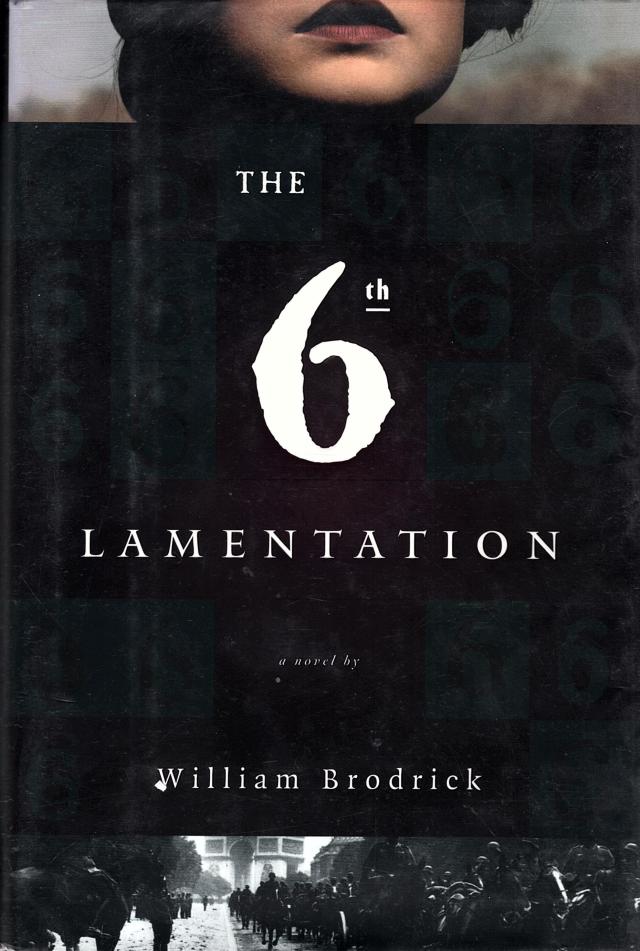
The 6th Lamentation by William Brodrick

Also, this book. The Holocaust, survivor’s guilt, lost children, neurological disease. Are those topics heavy enough? See my full review of it here.

Fall is back to school season: Share a non-fiction book that taught you something new.

The Lord of the Rings will teach you terms like weregild (“person-money” – money paid in compensation for someone’s death).

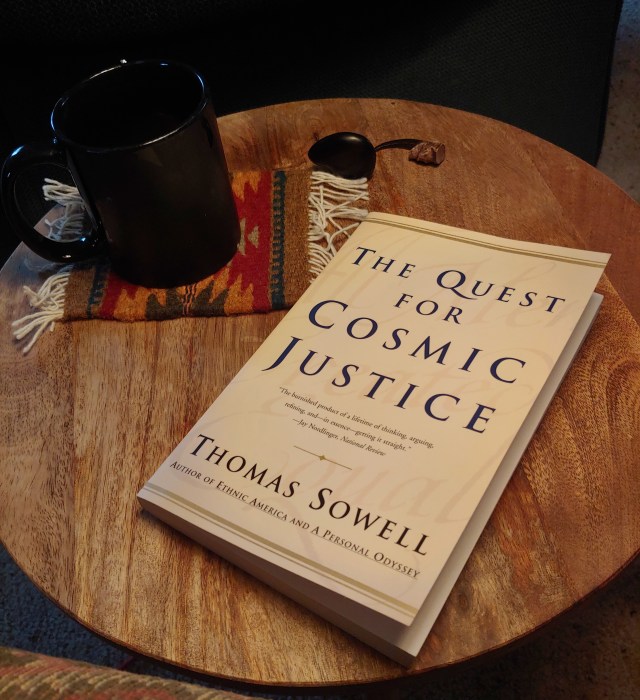
The Quest for Cosmic Justice by Thomas Sowell

Everybody please go read this and as many other Thomas Sowell books as you can get your hands on.

In order to keep warm, it’s good to spend some time with the people we love: Name a fictional family/household/friend-group that you’d like to be part of.

I would like to live with Tom Bombadil and the River Daughter.

Failing that, I would be honored to live and work with Mma Potokwane, the forceful woman who runs the orphanage in The No. 1 Ladies’ Detective Agency series.

The colourful leaves are piling up on the ground: Show us a pile of fall coloured spines!

I didn’t intend it, but every book in this pile except for The Family Mark Twain is indie published.

And Neanderthal Woman is homemade.

Also … the golden-leaved mallorn trees of Lothlorien.

Fall is the perfect time for some storytelling by the fireside: Share a book wherein someone is telling a story.

One of the best things about Lord of the Rings is the way you keep getting hints of yet more ancient places, people, and stories.

And for my backup answer, we have Ursula Le Guin again. In her Earthsea trilogy, there is a very creepy story told about a stone that if you so much as touch it, steals your soul. In her book Left Hand of Darkness, the main story is interspersed with short myths to help us get a feel for the culture of the planet the story is set on, where glaciers cover about half the landmass and people are sexless for most of each month.

The nights are getting darker: Share a dark, creepy read.

The Balrog, and Shelob, and the Ring and the effect it has upon people, are all pretty doggone creepy.

Also, The Dark is Rising and the whole series that follows it deals with pre-Roman paganism still alive in Britain.

The days are getting colder: Name a short, heartwarming read that could warm up somebody’s cold and rainy day.

The Hobbit. Annndddd …

Allie Brosch’s new book Solutions and Other Problems.

It’s not heartwarming in the sense that it presents the universe as a rational or hopeful place, BUT it did make me laugh so hard it brought tears to my eyes. It’s not short in the sense that it’s a big, thick hardcover, BUT that’s only because it is packed with her funny (and actually very artistic) drawings. It’s a fast read.

Fall returns every year: Name an old favourite that you’d like to return to soon.

THE LORD OF THE RINGS.

The Everlasting Man by G.K. Chesterton

Also, this book, The Everlasting Man, by the ebullient GKC. I recently ordered my own copy so that I could mine it for future quotes on the blog, and I quickly discovered that GKC was the original source of all my suspicions about ancient people having been just like us, but smarter.

Fall is the perfect time for cozy reading nights: Share your favourite cozy reading “accessories”!

Bears and coffee.

Bearing a Burden: the INFP

Just so you know up front, this post is going to talk about a Meyers-Briggs personality type, and also rely on the reader having some background knowledge of The Lord of the Rings.

Now that I’ve weeded out 90% of readers, let’s proceed.

The Meyers-Briggs Typology

The Meyers-Briggs (MBTI) is a personality typology that describes people’s preferences on how to process information and make decisions. People can be Extraverted or Introverted (E vs. I); Intuitive or Sensing (N vs. S); Thinking or Feeling (T vs. F), and Perceiving vs. Judging (P vs. J). I’ve discussed elsewhere the limitations of these binaries. Some people fall right in the middle between two of the preferences, for example, and the four MBTI preferences don’t tell everything about a person’s personality. That said, I still find the typology interesting and useful. In an earlier post, I discussed the ESTP, who is often the disruptive force in the story. Today, I’m going to discuss a much more passive type, the INFP, who is almost the ESTP’s opposite.

Frodo as an example of the INFP

When I say the INFP is “passive,” that’s not a slam. I’m an INFP myself.

The INFP is Introverted. This means that he or she has a rich inner life, and draws his/her energy from within. Interacting with the outer world drains him. (Extraverts get their energy from the outer world.) Many of the strongest characters in The Lord of the Rings are Introverted, from which we can guess that J.R.R. Tolkien probably was as well. That’s not surprising, given that he was a professor who created, just for fun, several languages and an elaborate world with its own history and mythology. Introverts are less than 50% of the population, but they are overrepresented in literature because so many authors are Introverts.

As an NF (Intuitive and Feeling), the INFP is very sensitive to the feelings of those around him. He or she cares a lot about all relationships being harmonious at all times. Conflict of any kind stresses the INFP out to a greater degree than other types. This can mean the that INFP will unhealthily say or do anything to avoid conflict. The up side is that the INFP wants to have a good relationship with, and believes that he can reach, anyone. Exhibit A is Frodo’s ability to understand and even win the loyalty of Gollum.

INFPs are not quick to thrust themselves forward, take leadership, or take the initiative. They don’t want to do a task until they feel they understand it and can do it well. Mistakes are an unacceptably high cost when you can’t tolerate any damage to any relationship (read: criticism).

As a not very quick, ambitious, or assertive type, the INFP can often appear to be contributing nothing to the group.

This is really apparent when we look at Frodo’s role in the Ring saga. He delays a long time leaving on his quest and needs a push from his friends. Once he does set out, he spends all three books getting into hot water and getting rescued by people who are more powerful, capable, or (in the case of Sam) harder working. Like the other hobbits (but even more so), for about the first half of the adventure Frodo appears to be almost a pure taker. In fact, some of the most famous scenes in LOTR involve someone literally carrying him: the humans carrying the hobbits down out of the snow drifts on Carhadras. Aragorn running out of Moria with Frodo in his arms after Frodo gets speared by an orc. Sam carrying Frodo up Mt. Doom.

What is this guy good for, anyway?

Of course, as we all know, Frodo is weak and passive not just because of his personality but because he is in fact carrying a heavy, but unseen, burden: the Ring. It’s a spiritual burden that occupies his mind, allows him to see what others can’t, and exposes him to terrors. It also, more and more as the story goes on, saps his strength. He may not appear to be contributing anything, but he is doing real work for the group, though that work is hard to quantify.

Tolkien makes it so that the work Frodo does, bearing his burden, is obvious to the reader and is also clear to, and appreciated by, the rest of the Fellowship. Most people don’t read The Lord of the Rings and come away saying, “I don’t see what the big deal was about Frodo. He didn’t do anything.”

Non-Frodo INFPs also bear a burden. They bear the burden of their worry about every single person and relationship they are aware of, and of their ability to take personally everything that happens in the world. Of course, the nature of this burden varies with the maturity of the INFP. When immature, our burden is self-absorbed in nature. We want everyone to like us, we want never to be criticized. But as we mature, this can move on to becoming genuine concern for the well-being of all the people whose existence we know of.

This is a heavy burden indeed. When news travels around the world in seconds, no problem or tragedy can fail to come to the attention of the INFP. An INFP who really takes every human tragedy to heart will be too overwhelmed. Only one Man (who, in my opinion, was the perfect example of all the Meyers-Briggs types) is capable of bearing the sins of the world. As an INFP of a certain age, I have had to master the skill of consciously setting things aside as not my problem to worry about so that I can function.

Still, even if we limit the INFP’s burden to the sins and sorrows of the people in his or her immediate circle, that’s a lot. If you know an INFP (and you are not one), they are probably thinking about all of this stuff a lot more than you are. They are expending a lot of mental energy on it. That may be why they need so much sleep. If they are a Christian INFP, they are no doubt also wrestling in prayer for you and for everyone in their circle.

Bearing a burden.

What My Favorite Characters Would Be Doing in Quarantine

Up till now I’ve tried to make posts that don’t mention you know what, because I figure that readers come to Out of Babel for fun and weirdness, not for more mentions of you know what. But, I saw this super fun tag over in the book nook of The Orangutan Librarian. I hope by trying it I’m not letting you down. As you can see, I’ve spun it a little, imagining how the characters would handle coronavirus in their own worlds.

Rules

  • Take 5 or more of your favorite book characters and imagine what they would be doing if they were quarantined with us in the real world.
  • You can have them be in their own squad if you want, or working on their own.
  • Tag 5 friends.
  • Link back to this post and credit Reader Voracious.

Narnia Quarantine

Wardrobe

The Pevensie kids, of course, would not even be here …

For some reason I imagine Edmund and Lucy quarantining with their cousin Eustace and his parents rather than being with their parents (who got stuck in Greece) or with Peter and Susan (who got stuck at their respective universities). Eustace, though less of a know-it-all since his first trip to Narnia, is still extremely well-informed about epidemiology, government policy, and all the latest economic and medical updates. His mother, Alberta, insists that everyone wear masks and gloves even inside the house.

Middle Earth Quarantine

two bare trees beside each other during sunset
Photo by Johannes Plenio on Pexels.com

Gandalf the Grey would have caught the coronavirus early (because he travels a lot), come down with complications (because it hits old people the hardest), died, and been resurrected.

Sam Gamgee, humble, hardworking, and patient, would be the perfect person to quarantine with. He’s also a very resourceful cook.

Faramir and Eowyn would be climbing the walls, holed up in the Houses of Healing in Minas Tirith.

Tom Bombadil and the River Daughter are immune to human ills and they also take a long view of the death of much of the rest of the world.

Gimli would rather risk death than give up smoking.


Tony Hillerman Quarantine

Sacred Clowns book

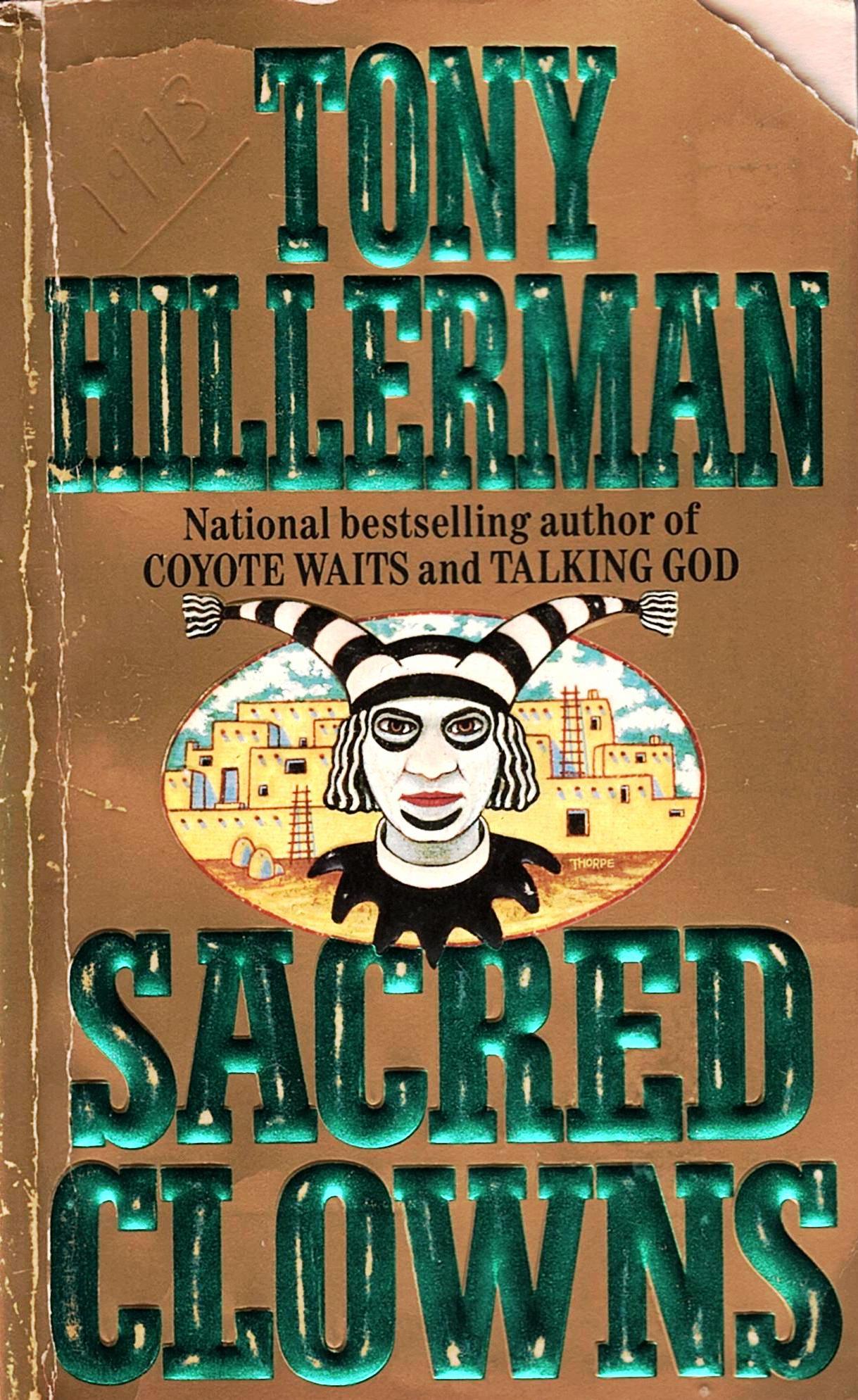
Sadly, in real life, the coronavirus has hit the Navajo nation really hard. Tony Hillerman’s Navajo cop characters, Jim Chee and Joe Leaphorn, would be reacting very differently. Leaphorn, who is older and more of a homebody, would be happily hanging out with his wife Emma at his home in Window Rock. Chee, who is young and restless, would be running around the reservation trying to help everyone he could. He would go to be with an older relative who is dying of the virus, making sure that the person is moved outside as per tradition and that they have someone with them. Though young and healthy, he would unexpectedly develop a bad case himself and would be found recovering in the hospital at the very end of the book, being visited by his girlfriend Janet or Bernie, depending upon where we are in the series.

Emberverse Quarantine

Corvallis

Junie and Mike of the Emberverse have already been through a society-destroying event that resulted in most people dying. Junie heads up a neo-pagan community near Corvallis, Oregon, and Mike runs a more specialized, military one just northwest of Salem. Since the Change destroyed all modern technology, the inhabitants of the Emberverse would probably barely notice the coronavirus. Fewer people develop the diseases of civilization (heart disease, diabetes) in their medieval-style world, living conditions are less crowded, and there are no nursing homes or hospitals. Probably all they would notice was a particularly bad seasonal flu endangering the few remaining old people. They’d be grateful that this sickness, unlike many, was not threatening little children. Junie would be using her herbology and caretaking skills to help as many of her subjects as possible. Because Junie and Mike both grew up in the modern world, before “the Change” happened, they are aware of germ theory and this would help them enforce hygiene on their people.

Agatha Christie Quarantine

photo of teacup on top of books
Photo by Ylanite Koppens on Pexels.com

Miss Marple has lived through two world wars. She would gamely go along with whatever deprivations and regulations the quarantine brought. She’s been through worse. If anyone complained, she would smile sweetly while silently judging you and simply say, “So many things are difficult.”

Hercule Poirot is already a bit of a germophobe. He would take enthusiastically to masks and hand sanitizer, but would become peevish when unable to procure the foods that he’s used to.  Whenever Hastings began to panic about the many unknowns, Hercule Poirot would calm his fears through the use of the Little Grey Cells.

P.G. Wodehouse Quarantine

alcohol bar blur celebration
Photo by Terje Sollie on Pexels.com

Airheaded bachelor Bertie could not stand not going to his club. He would beg Jeeves to come up with a way that Bertie could skirt the rules to get out and about. Jeeves would do so, knowing that within hours, Bertie would be back home with a horrible hangover that he would need to sleep off and then drink one of Jeeves’s miraculous restoratives. Jeeves knows that the coronavirus mostly endangers older people, so even if Bertie should become a carrier, there is little danger that he would infect anyone because even in normal circumstances he cannot be induced to visit his Aunt Agatha.

And … I can’t resist … Quarantine with my own characters!

architecture buildings city cityscape
Photo by Pixabay on Pexels.com

Nirri is, essentially, already in quarantine all the time. He broke his spine in a fall from the Tower of Babel, becoming paraplegic, and is now being reluctantly cared for by people with whom he does not share a language. He is the nightmare person to be quarantined with: arrogant, demanding, unable to communicate or be reasoned with. Though 130 years old, he is healthy as a horse and there is no way he is dying from this.  On the bright side, he is an accomplished musician. Give him a lute and he will entertain you all evening, even if you don’t understand the words to his songs.

Zillah is a born caretaker and the tribe’s resident medical expert. It was she who insisted they rescue Nirri. Though young and even middle-aged people don’t usually show symptoms of the virus, in a tribe their size there might be one or two who do. Zillah would spend herself caring for them, and then get sick herself (she is the tribe’s second oldest person, after Nirri). She would survive, cared for by her daughter Ninna, and the weeks when she was sick would be the loneliest of Nirri’s life.

You Sure You Wanna Do This?

If you do, I tag …

  • Jyvurentropy, who has been posting so much that I can’t keep up with her
  • Bookstooge, for his sarcasm
  • Colin, because I want to hear his thoughts
  • The hilarious Christopher Waldrop, even though I’m unable to comment on his posts
  • … and the always insightful Eustacia, if she has time to do this tag