
“Well, yeah, but I work for the good guys. Don’t I?”
“Who can say? Not you, certainly. In your lunatic dream of a godless universe, good and evil can only be determined by the opinions of your fellow madmen, and morality is just a matter of democracy in the asylum. Mind you, I can work with that. The government can always find a use for lunatics as long as they’re homicidal. Speaking of which, I have another assignment for you.”
The House of Love and Death, by Andrew Klavan, p. 79
Author: Jennifer Mugrage
I'm a wife, mother, Christian, closet Luddite, Neanderthal advocate, incurable book hound.
I'm also the author of The Scattering Trilogy, which is set in 10,000 B.C. Buy, read, pass it on!
Leave comments. Let's talk!
Botany: Plains Prickly Pear
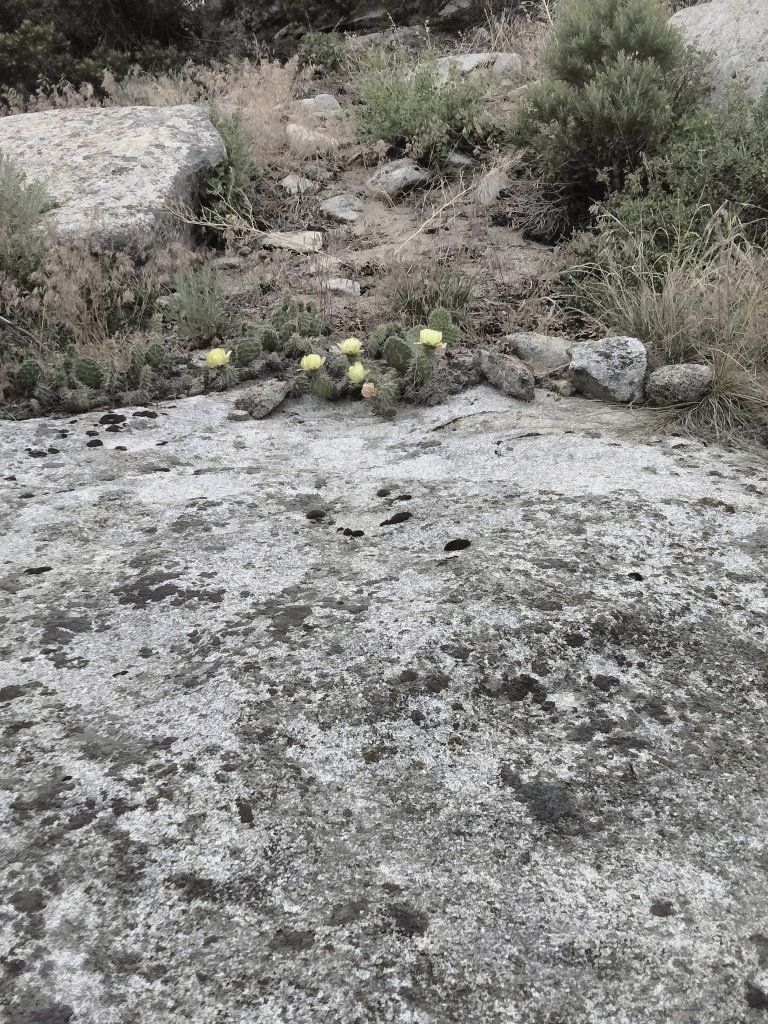


I know I’ve blogged about these plants before, but please enjoy these pictures of them as seen at Citadel of Rocks.
Movie Review: Gone in the Night
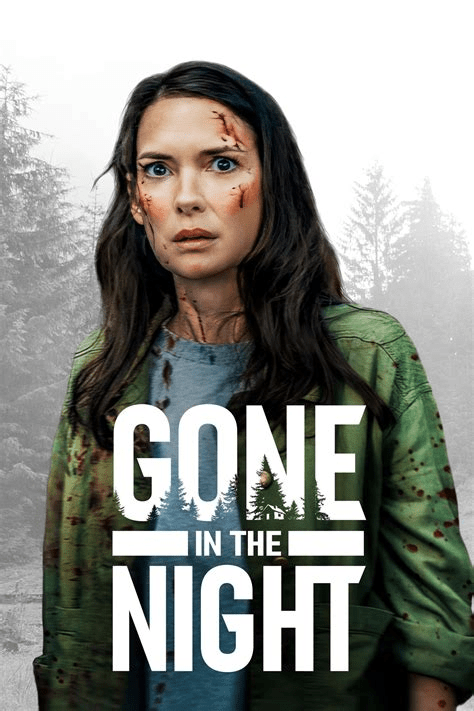
“When Kath and her boyfriend arrive at a remote cabin, they find a mysterious young couple already there. But when her boyfriend disappears with the young woman, Kath becomes obsessed with finding an explanation with the help of an unlikely supporter.”
I checked this 2022 film out of the library so I’d have something to watch while knitting in the evening. I like Winona Ryder, although her character in this film is very different from the beloved Joyce of Stranger Things. As you can see from this cover, she doesn’t look at all like the same person.
This is a mystery/thriller. I won’t give away the plot, except to say that it is disturbing. Instead, I want to talk about the movie’s theme: aging and the way our culture fears it.
Gone does a fabulous job of working the theme into almost every scene. (And, now that I think about it, it’s even arguably present in the title … you wake up and your youth has “gone in the night.”) Some things are very subtle: for example, when the boyfriend (I think his name is Max) gets out of the car to retrieve his hat, the camera lingers on Kath, sitting in the driver’s seat. She opens the mirror on the sun visor and looks at her reflection, then wrinkles her forehead and touches the lines there.
Max is having a beer with a young couple. The woman is flirting with him. She asks how old he is, and he jokingly replies, “Fifty.”
“Fifty? You look good for fifty,” she responds. “You look like you work out.”
“Oh, God, no, I was kidding! I’m not fifty!”
In fact, Kath and Max are both probably closing on 40, or perhaps in their early 40s. They don’t have grey hair or use a walker. They are not old enough to be grandparents. They are middle-aged. Kath seems OK with this. She would be happy to live with “my books, my plants, and have it quiet … forever.” Max, on the other hand, seems to be trying to cling to lost youth. He wants to go to raves and concerts, hike up mountains, and do all the things done by adrenaline junkies in their 20s. He and Kath, since they are not married and don’t have children, are still sort of trying to live in youth culture, but they keep getting messages that they don’t belong.
“How long have you been married?” the twenty-something woman asks Kath.
“What makes you think Max and I are married?”
“Oh! It’s just that people like you are usually either married or alone.”
“What do you mean, ‘people like me’?”
Awkward silence.
In another scene, Kath is following someone. The person leads her to what appears to be a rave happening in an old warehouse. Kath says to bouncer, “I need to get in for a minute. I can pay whatever.”
The bouncer, who is eating a snack, eyes her up and down and then says through a mouthful of food, “Dyahavakidinere or somethin’?”
“What?”
With an eye roll, he clears his mouth, and then articulates very clearly, “Do – you – have – a – kid – in – there?”
Fear of aging – and ultimately, of death – ends up being highly relevant to the plot of Gone. And, really, unless you happen to be a Christian with the certain hope of the resurrection of the body and the life everlasting, how could you not fear it? As Kath says, in a memorable line, “We are all scared.”
Quote: When your government handler gots religion
The second I sat down across from him, he said, “So, Poetry Boy, here you are. And you’ll be awestruck to learn that with a single glance through the glassy surface of your idiot gaze, I can see straight into the black heart of nothingness that is your godless and therefore soulless experience of this our only mortal life. And on that evidence of my own senses, I feel safe in saying you have now become morally dead in the service of your country and are therefore ready for your next government assignment.”
“Uh .. thank you?” I asked.
The House of Love and Death, by Andrew Klavan, pp. 4 -5
Botany: Speargrass
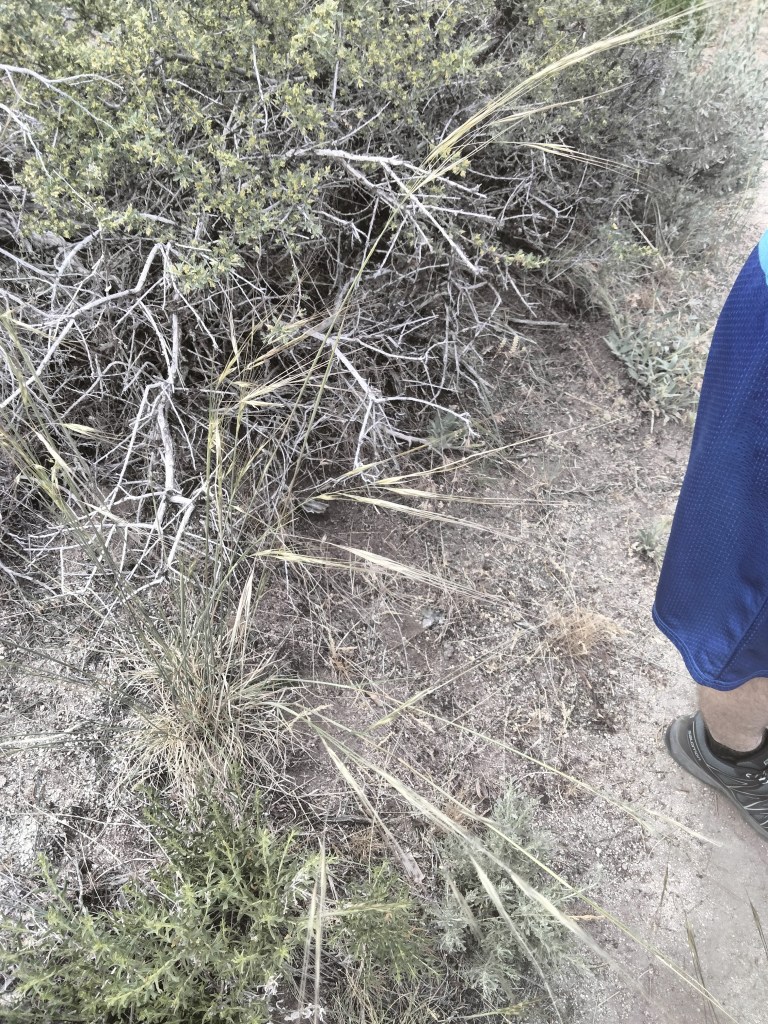
I did not need to look this up in my Falcon Guide to Central Rocky Mountain Wildflowers. Husband identified it, and kids immediately started throwing it at each other.
The House of Love and Death: A Book Review

I ordered this and it arrived a long time ago, but I just now got to it. (Look at me! I am powering through my TBR like a good girl!) Once I opened it, I finished in just a few days because it’s that good.
This is the third book in the Cameron Winter series. Winter is a character created by Andrew Klavan, reportedly the first character Klavan has created that he’s felt could sustain a whole series. Winter is a former spy who is now a professor of Romantic English Literature at an unnamed university in an unnamed Great Lake state (but pretty obviously Madison, Wisconsin). So he fits into that beloved mystery trope, a character who looks unprepossessing (in this case, because he’s a slight, blond, pretty-boy academic) and whom people consequently underestimate, unaware of his hand-to-hand combat skills.
It was fortuitous that I read House not too long after reading The Bourne Treachery, which is also a spy story featuring a longstanding character. Winter even has, in this book, some experiences similar to those Bourne has in Treachery. However, the two books couldn’t be more different.
Winter does check many of the same boxes as Bourne, and House checks many of the same action-novel boxes as Treachery. It moves a little slower and is a little less intricate, but not much. But it is way more emotional. This is one of those mysteries where, after you find out whodunit, you have to set the book down and (if you are a soft touch) cry for a while as you contemplate just how tragic the whole thing was. And like any good tragedy, it has the simultaneous feel of “This was so preventable! This should have been easily preventable!” and of inescapability.
Winter has a “strange habit of mind” (also the title of the first book in the series), where sometimes he will go into a “fugue state” and zone out for several minutes while his subconscious, essentially, becomes his conscious and works on a puzzle he is contemplating. As a writer and artist, I recognize this habit of mind and actually don’t find it that strange (although it doesn’t help me solve mysteries, more’s the pity). I assume that Klavan has given Winter this “strange habit” because, as an artist and writer, he also has some version of this habit. Certain kinds of mind tend to do this. Call it what you want – hyperfocus, being “in the zone.” Being an introvert. Not everyone is “on” (in the sense of externally focused) all the time.
It does make a person wonder whether this tendency, which is similar to narcolepsy, disadvantaged Winter as a spy. In fact, it makes one wonder how he ever managed to survive his espionage years. If Jason Bourne were to zone out like that even for a minute, he’d be dead. Once in House, Winter is driving somewhere and keeping an eye out for a tail. He briefly enters the fugue state, and when he comes out of it, sure enough, he is now being followed.
Yet somehow, those of us with the strange habit of mind do manage to survive. Some of us even manage to raise children. I dunno.
Anyway (shakes shoulders) aaahh, good book. Recommend. Very very sad though.
Quote: Sangfroid
“Why do you torment me?” Stan-Stan growled. Then he shouted, “I can’t get your voice out of my head! What do you want from me? I have nothing to do with you! Leave me alone!”
Since this was something a schizophrenic might say to his demons and also something Stan-Stan said to Winter [his contact] almost every time they met, Winter had to admire the subtlety of it.
“I need a favor, Stan-Stan,” Winter said.
The reeking mass of rags and sores leapt at him, jamming his unrecognizable features to within an inch of Winter’s tortured nose.
“Arrrgh-gnarr-ach,” Stan-Stan remarked.
“Be that as it may,” said Winter, struggling not to gag on the stench of him, “It concerns a town called Maidenvale.”
The House of Love and Death, by Andrew Klavan, p. 135
Update: I have edited my FAQs page
I have edited the question about the age of the earth extensively to reflect changes in my thinking.
I have also added some information about my next book.
Also, you will see some more breathless quotes added to my home page (outofbabelbooks.com) from volunteer reviewers who gave The Strange Land and The Great Snake three or four or five stars.
Idaho Wildflowers headscratcher: Silvery Lupine?

I first assumed this was a yucca, but the leaves are all wrong.
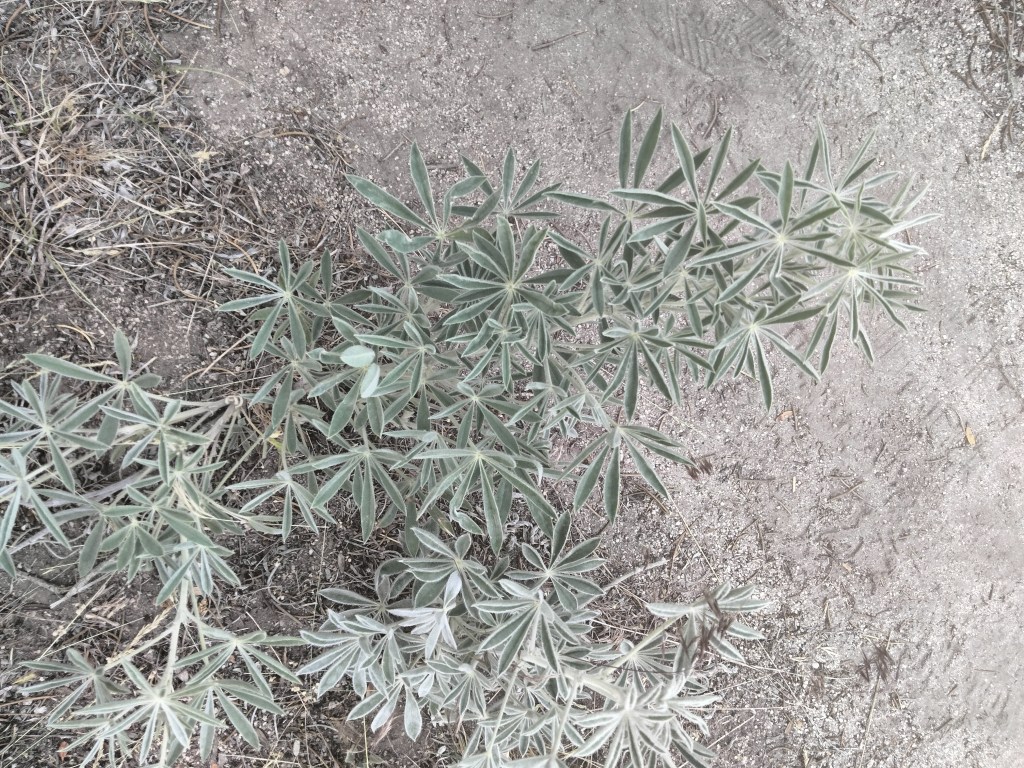
I looked up these leaves with the help of the Google machine, and it suggested Silvery Lupine.

Sure enough, here’s a more typical-looking example of the flower from the same trip.
I can only conclude that the freakishly tall and white silvery lupine is an unholy hybrid of lupine and yucca.
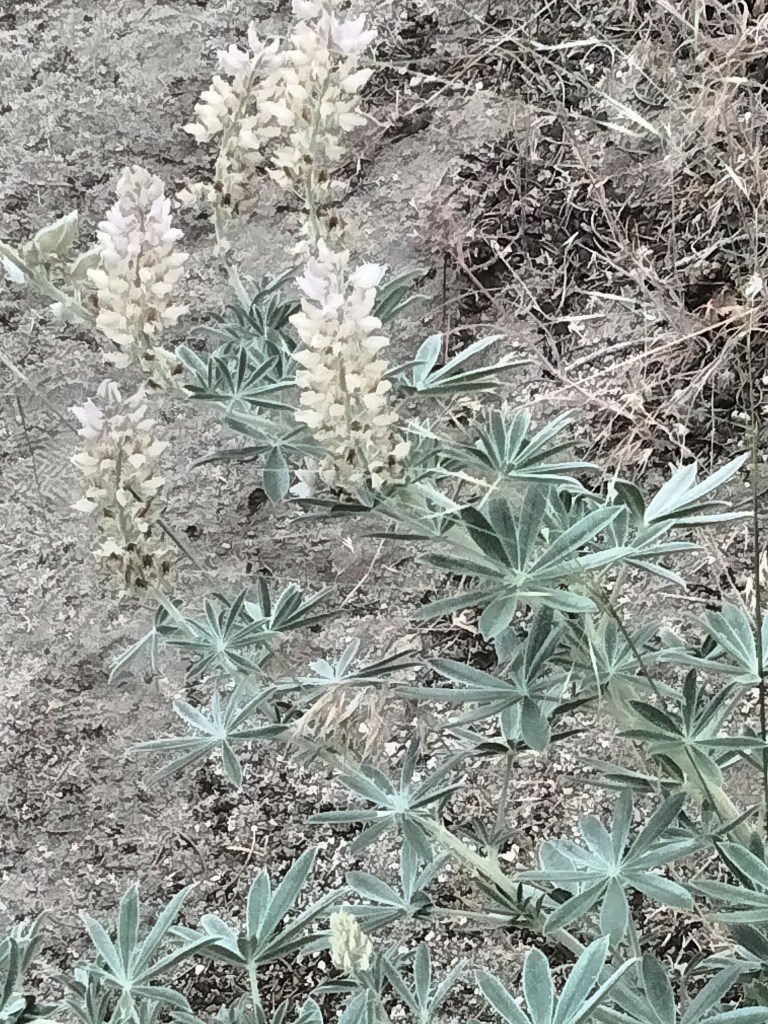
Here’s an in-between-looking specimen.
Botany is hard.
Out of Babel, the movie
Some of you may be aware that a while back, I sold my url outofbabel dot com to someone else. Well, what have they done with it?
They are making a really cool movie that is due to come in out 2026.
No, it’s not based on my books in any way, but it has all the themes of my series, turned up to 11. I mean to say, if you click on the link above, you will see that their web site features American Indians fighting a dinosaur. Things do not get cooler than that, and as it turns out, they also do not get better historically supported.
Here is a quote from their FAQs section:
The Walam Olum or “Red Record,” which is central to our movie, is very much not alone from multiple Native American historical narratives that provide a clear and consistent telling of giants—especially giants associated with the mound builders and earth works, of which there are tens of thousands in America. The Lenni Lenape’s account of the Nephilim is central to their history (see the “snake people” and the makowini, translated “big men” that existed before and after their Flood account, were part of the reason for the Flood, matching our Bible history). See the Glyphs in Book 2 and Glyphs 1-2 in Book 3. Several other historical documents also mention giants affiliated with tribes around the Lenni-Lenape people.
In other words, these people are kindred spirits, which is why they wanted to buy my url in the first place.
My little url is all grown up, and I couldn’t be prouder.
Still buy my books, I mean. They have their own peculiar charm. But by all means, go and see this movie too.
These cool kids also have a YouTube channel:
https://www.youtube.com/c/GenesisApologetics
And a previous movie about the Flood: https://genesisapologetics.com/ark/
 Out of Babel Books