
1 The heavens declare the glory of God;
the skies proclaim the work of His hands.
2 Day after day they pour forth speech;
night after night they display knowledge.
3 There is no speech or language where their voice is not heard.
4 Their voice goes out into all the earth, their words to the ends of the world.
In the heavens He has pitched a tent for the sun,
5 which is like a bridegroom coming forth from his pavilion,
like a champion rejoicing to run his course.
6 It rises at one end of the heavens and makes its circuit to the other;
nothing is hidden from its heat.
7 The law of the LORD is perfect, reviving the soul.
The statutes of the LORD are trustworthy, making wise the simple.
8 The precepts of the LORD are right, giving joy to the heart.
The commands of the LORD are radiant, giving light to the eyes.
9 The fear of the LORD is pure, enduring forever.
The ordinances of the LORD are sure and altogether righteous.
10 They are more precious than gold, than much pure gold;
they are sweeter than honey, than honey from the comb.
11 By them is your servant warned; in keeping them is great reward.
12 Who can discern his errors? Forgive my hidden faults.
13 Keep your servant also from willful sins;
may they not rule over me.
Then will I be blameless, innocent of great transgression.
14 May the words of my mouth and the meditation of my heart
be pleasing in your sight,
O LORD, my Rock and my Redeemer.
–Psalm 19, of David
The following is a reader-response literary analysis of Psalm 19.
This is an extremely famous psalm. If you have been around Bible circles for any length of time, you probably have heard it quoted. I was no different, but for some reason, it took me 40 years to really understand why the elements of this psalm are here and how they all work together. So perhaps you can find some benefit from following my plodding steps.
The first four verses of Psalm 19 are often quoted. They describe how the skies and space themselves testify to all humankind that there is a God and that He is glorious. Paul alludes to this in Romans 1, where he says, “since the creation of the world God’s invisible qualities–His eternal power and divine nature–have been clearly seen, being understood from what has been made, so that men are without excuse.” Of course, God makes it abundantly clear to the Israelites that the sun, moon, and stars are in fact creatures and that He is not pleased when people worship them … which raises the question of sun-worship … which we will get to momentarily.
Similarly, the last three verses of the psalm–the prayer for personal cleansing from sin–are also often quoted. These are very accessible. You could pick them up and pray them, with no obstacles to understanding, if you became a Christian just yesterday. On a slightly deeper level, I have heard these verses taught as a very savvy description of the progressive nature of sin. It starts out as “hidden faults,” then if unrepented becomes “willful,” which leads to sin ruling over a person, and this state of being ruled by sin eventually leads to some egregious “great transgression.”
And this is really a psalm that is best understood back to front. If the last three verses are the most easily accessible, verses 7 – 11, about the law of God, are a close second. True to Hebrew poetry, David uses a bunch of different synonyms: law, statutes, precepts, commands, ordinances, and, interestingly, fear. Obviously these are English translations of Hebrew words for God’s law, of which the language had quite a number.
To David, he wasn’t just referring to the Ten Commandments or to the book of Leviticus. By all these synonyms he meant the whole “law of God,” that is all the revealed word of God that they had at the time. And by his inclusion of fear, it’s also clear that he meant the revelation of God’s nature, His presence with His people, and the holy awe that they were supposed to have in response.
However, I don’t want to unsay what the psalm says. The emphasis in these verses is clearly on the moral, right-and-wrong aspect of God’s word. God has given us a law. But rather than just being an obscure collection of ancient rules, this is a law that somehow revives the human soul, makes the simple wise, gives joy to the heart, light to the eyes, endures forever, warns, and is sweeter than honey.
It was for this passage that I returned to Psalm 19 recently. I had noticed after forgetting for a while–again–as one does–that without some kind of moral standard coming from outside ourselves, human beings are really and truly sunk. If there is no objective right and wrong, then might makes right and all truth claims are actually just attempts to grab power. (Thank you, Derrida!) The last couple of hundred years have been a big social experiment demonstrating this. Again.
So, my original reason for pulling out Psalm 19 was so I could pray verses 7 – 11 and thank God for His Word. Of course, as a Christian, I had an even more in-depth appreciation for the treasure that Bible truly is. It doesn’t just give us the only extra-human set of truth claims upon which a civilization can be built. It’s also, by far, our most comprehensive and reliable source text on ancient history. As if that weren’t enough, it’s not written in dry legalese or as lists of facts, but in the form of stirring stories, terrifying mythological scenes, and challenging and moving poetry. Books, and libraries, are already a treasure, but this particular library of books is truly “more precious than gold, than much pure gold.”
So I really just wanted to quote that back to God. But it’s a short psalm, and the confession verses at the end are sooo good, so of course I ended up reading the whole thing out loud whenever I went to use it.
The only sour note in this symphony of devotion were the verses about the sun. They seemed overdone. I get that we are talking about the skies and things in the skies, but why devote three whole verses just to poetically describing the sun? Rabbit trail much, David?
Then, after I don’t know how many iterations, it dawned (even) upon me that there might, possibly, be a few similarities between the sun and the law of God as described in the verses that follow it. Let’s see: nothing is hidden from its heat. It covers the whole earth and all people. It’s inescapable. It gives light to the eyes, and it revives the soul (think about the effect of sunlight after a long night!). It gives hope. But it can also be kind of oppressive. It “warns.” It also disinfects things that are exposed to it. Hiding from the sun is not usually a good sign. It can be a metaphor for hiding wrongdoing. However, we do still need shelter from the sun, because it’s pretty intense. Almost as if it were a small picture of the One Who is too holy to look upon.
Haha! I get it now!
There was just one remaining fly in the ointment. I really didn’t see why it was necessary for David to compare the sun to “a bridegroom coming forth from his pavilion” … that is, to a young man who has just had sex with his wife for the first time. Yeah, I suppose that does give a guy a certain glow. Yeah, Hebrew poetry is earthy. I get it. But … why? Is this just there to make modern readers squirm?
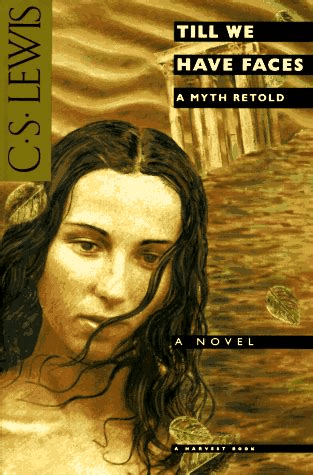
In the providence of God, I happened to be reading Till We Have Faces. In this book, the narrator (Orual) has a little sister (Psyche) who marries a god. This is literal, not figurative. It is a retelling of the Cupid and Psyche myth.
Orual meets her divine brother-in-law twice. The first time, it is in terrible judgment:
There came as it were a lightning that endured. That is, the look of it was the look of lightning, pale, dazzling, without warmth or comfort, showing each smallest thing with fierce distinctiveness, but it did not go away. This great light stood over me as still as a candle burning in a curtained and shuttered room. In the center of the light was something like a man. It is strange that I cannot tell you its size. Its face was far above me, yet memory does not show the shape as a giant’s. And I do not know whether it stood, or seemed to stand, on the far side of the water or on the water itself.
Though this light stood motionless, my glimpse of the face was as swift as a true flash of lightning. I could not bear it for longer. Not my eyes only, but my heart and blood and very brain were too weak for that. A monster would have subdued me less than the beauty this face wore. And I think anger (what men call anger) would have been more supportable than the passionless and measureless rejection with which it looked upon me.
-Till We Have Faces, pp. 172 – 173
The second time, Orual’s literal and metaphorical ugliness has been cleansed, and the god coming to judge her is going to see only beauty:
“Did I not tell you, Maia,” she said, “that a day was coming when you and I would meet in my house and no cloud between us?”
Joy silenced me. But now, what was this? You have seen torches grow pale when men open the shutters and broad summer morning shines in on the feasting hall? So now. Suddenly, from a strange look on Psyche’s face, or from a glorious and awful deepening of the blue sky above us, or from a deep breath like a sigh uttered all round us by invisible lips, or from a deep, doubtful, quaking and surmise in my own heart, I knew that all this had been only a preparation. Some far greater matter was upon us. The voices spoke again; but not loud this time. They were awed and trembled. “He is coming,” they said. “The god is coming into his house. The god comes to judge Orual.”
The air was growing brighter and brighter about us; as if something had set it on fire. Each breath I drew let into me new terror, joy, overpowering sweetness. I was pierced through and through with the arrows of it. I was being unmade. And he was coming. The most dreadful, the most beautiful, the only dread and beauty there is, was coming. The pillars on the far side of the pool flushed at his approach. I cast down my eyes.
“You also are Psyche,” came a great voice.
–ibid, pp. 306 – 308
The bridegroom is actually the one Who links everything together in this poem. C.S. Lewis had to hit me over the head with an extremely long, vivid description before I could see it, but I see it now. The god–Christ–is the bridegroom and He’s also the sun. He comes in horrible, revealing judgment, he comes in shining beauty, He overwhelms the senses. He convicts and purifies and beautifies the people that His light touches. And, of course, He is also the Word. And Word also does all these things.
Amen. Come, Lord Jesus.








 Out of Babel Books