
If there is an element of Gnosis (not Gnosticism) present in John’s Gospel, it may well reflect the writer’s purpose to counteract Gnostic tendencies (not yet Gnosticism) in his day. In other words, when Paul and John appear to approach the subject of Gnosis, they are clearly anti-Gnosis.
–Ronald H. Nash, Christianity & the Hellenistic World, p. 268
Baby Knits Don’t Have to Be in Pastel Colors

They can be in the khaki-and-black of your school uniform.
Christianity & the Hellenistic World: A Book Review

Christianity & the Hellenistic World, by Ronald H. Nash, pub. 1984 by Zondervan and Probe Ministries International. This review was published on GoodReads on May 8, 2026.
C&THW is a capable review of the scholarship around the question: Did Christianity actually arise from Platonism/Stoicism, Gnosticism, or the Hellenistic mystery religions?
The view that it did, became popular in the late 1800s/early 1900s, especially in a German school of thought called Comparative Religions, or the “History of Religions School” (Religionsgeschichtliche Schule — one of the many great ideas that German philosophers have given us). (p. 117) These claims were fairly quickly debunked by theologians and early-church historians, and they stopped being taken seriously in theological circles.
However, as often happens, the bad idea had escaped the barn and was wandering freely throughout the neighborhood. The idea that Christianity’s inception lay in Hellenistic thought-systems and not in the Jewish Law & the Prophets followed by the events of 30 A.D. was still being taught as fact by various philosophers and historians years later. (p. 11)
Nash’s book was written to survey the Comparative Religionists’ claims and present the debunking evidence for the lay person. It’s what I would call a popular-level scholarly book. The topic is scholarly and there are a ton of references, but it never gets too far into the weeds on any one topic. For example, I would have liked a lot more detail about the mystery religions, but that is not this book’s purpose, and you don’t need to know a lot about the mystery religions before you see that they are nothing like the Christian communion ceremony, for example.
The writing itself is matter-of-fact, capable, and not flashy. Probably many people would find this book boring. I certainly wouldn’t have picked it up ordinarily. But my interest in this topic had been piqued because I recently read Mary Renault’s The King Must Die, a lot of which is about ancient Greek “solar kings.” I was struck by how they parallel Jesus, and yet are very different from Him at the same time. I wondered whether anyone has tried to claim that Christianity was just the solar king myth repackaged for the Jews. Turns out, they have. So this book came to me at just the right moment to be pretty interesting. It’s going in my home library for sure.
Misanthropic Quote: Paul Secretly Pagan?
Many of the theories about Paul’s alleged dependence [on the Stoics, Gnostics, or mystery religions] stumble over their inability to come to grips with the radical change produced by Paul’s conversion. Many of them are inconsistent with what we know to be the early church’s repudiation of pagan inclusivism.
–Ronald H. Nash, Christianity & the Hellenistic World, p. 267

I Made a Real Good Thing

Here it is.
I’m Finally Going to Run My Mouth About AI
Within the last week, I consumed two thoughtful pieces of commentary about AI, both by thinkers I trust for different reasons.
The recently independent Jeremy Boreing on the topic of AI. Him I trust because of the actual thought process displayed in the video.
https://dougwils.com/books-and-culture/s7-engaging-the-culture/ai-and-the-cream-rising.html
Doug Wilson’s blog post about AI. Wilson I trust because of the volumes of material that he’s written and I’ve read.
I won’t add much to what they have to say. It’s going to be a busy week, for reasons that will be revealed tomorrow. However, I know that most of you won’t listen to the podcast, and only a small number will read the article, so I will summarize the salient parts of each in a sentence or two.
Boreing makes the point that every new technology comes with the fears and negative effects front-loaded, and the benefits arrive in the medium to long term, as we figure out where it fits in human society and how to limit its harms. He further points out that no new technology has ever delivered on any promises made on its behalf to create “less work.” New tech always creates more work: new industries, but also lots of new things that can be done by people who see the potential.
Wilson, too, points out that lazy folks will try to use AI as a way to avoid work, whereas the diligent and the geniuses will see vast new fields of work open up to them. He adds the obvious (but often overlooked) point that a “workless” utopia would actually be a dystopia.
In short, both men sensibly point out that AI is not going to change human nature. Humans do human things no matter how much tech they have. And we were designed to work.
This is, on the whole, a great relief to me. It is good to hear that the scary new thing is not going to change human nature. Granted, human nature isn’t great, but we already knew that, and all attempts to completely remake it always seem to get rid of the only parts worth saving.
Still, I’m not a total AI-o-phile, unlike, say, our friend Ben Shapiro. That’s because I’m a writer and a visual artist. My thinking is still developing on this, but as of spring 2026 here’s where I’m at.
Everyone senses that stories and art (including music) are the sort of things that ought to be made by people and nothing else. Unfortunately, it’s possible that AI will get good enough at “making” these things, that it will be impossible to detect it. You want a gritty, soulful story with human flaws? It will give you a gritty, soulful story with human flaws. It will get rid of the overly vivid colors and unrealistic smoothness in its paintings. It has already produced a country song by a hard-livin’ male voice about overcoming working-class obstacles.
When this happens, it’s like debasing the currency, but with stories and music and art. These things are much more valuable than currency. That’s bad.
From the creators’ side, everyone’s work will become suspect. This is already starting to happen.
From the consumer side, I am possibly even more upset. I DO NOT like it when I look closely at what appears to be a model wearing colorful European folk clothing, and realize that it’s an AI approximation of same. But at least, I can still realize it. I REALLY won’t like it when I have no way of knowing whether the “human” culture I’m imbibing is actually human culture.
That’s all I got today.
Misanthropic Quote about “Creative” Scholarship
But how many serious blunders does a scholar have to make before his reputation is tarnished? If a scientist or even a historian made as many fanciful suggestions in his field that were as devoid of support as some of the theologians we have noticed, or if he begged as many crucial questions, his reputation would surely suffer. But sometimes in theology, it appears, the reverse often holds. I am not sure that this speaks well for theology and biblical studies as intellectual disciplines.
–Ronald H. Nash, Christianity & the Hellenistic World, p. 265

I Think It’s Time Again to Post my Review of This Book About Aliens
Alien Intrusion: UFOs and the Evolution Connection by Gary Bates, A Book Review
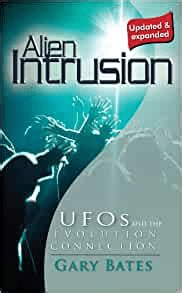
I’ve found myself recommending this book to multiple people in multiple comments sections in recent days, so perhaps it’s time to re-post a shortened version of my review of it from 2024. This is a great resource if you’re wondering about UFOs and the beings that are presumably inside them.
Alien Intrusion is 400+ pages, with endnotes to each chapter, appendices, and an index, yet it is accessibly written. It is a capable survey of the whole phenomenon, starting with the social history of UFO sightings and how aliens are portrayed in fiction; moving on to the science of whether light-speed travel is really possible (it’s not); whether indications of physical life beyond Earth look promising (they don’t); the theory of Directed Panspermia and how it was supposed to save evolution; sightings of lights in the sky and cover-ups associated with them; conspiracy theorists, true believers, and hucksters who have capitalized on the UFO craze; and finally, testimonies of people who have had abduction experiences.
“Abducted — Close Encounters of the Fourth Kind” is a really interesting chapter. Bates has just spent more than half the book showing that the extraterrestrial hypothesis, at least as it is usually understood, cannot be true for multiple reasons. But now, he turns his attention to the many people who have had alien abduction experiences. And instead of dismissing them as hoaxers (dealt with in the last chapter) or gaslighting them, he believes them. And he has a great deal of compassion for them. This is why I think so highly of Bates.
A “Typical” Alien Abduction Story
According to Bates, drawing on the work of other researchers, here are the elements of “Classic Abduction Syndrome [CAS]”: the abductee is captured, often at night, and often while being seemingly paralyzed. Once on the ship, they are typically undressed and subjected to some kind of invasive and humiliating “medical” examination. Often, this escalates to sexual abuse of various kinds. Then, the aliens “teach” the abductee. This involves being told that they have been chosen for a special mission. Predictions are made about the future of earth or of humanity. The aliens are trying, and they want the abductee’s help, to raise humanity’s consciousness or to save humanity. Often, they say they are engaged in a breeding program, creating human/alien hybrids. Sometimes this is explained as a way for humanity to survive when the earth is destroyed. Abductees may be given a tour of the ship or of other locations, and they may meet a divine being or an entity claiming to be Jesus, the pope (!), or a dead relative. After the abductee is returned to his or her surroundings, they often don’t immediately remember their abduction experience. They may experience “lost time,” and recall the experience only later (sometimes under hypnosis, which raises other issues).
Abductees experience lasting physical and mental aftereffects of their experience, whatever its nature may have been. They have PTSD-like symptoms. They have may bruises, scars, or puncture marks on their body, though these are never of an obvious enough nature to prove their story. They may experience new chronic health problems, commonly with their reproductive system, even including uterine or breast cancer.
On the spiritual side, many abductees come out of the experience with a new openness to the occult and to New Age beliefs. Others, though they initially feel understandable anger and fear towards the aliens, after multiple abductions come to a passive state of appearing to love and be fascinated with their tormentors, almost like Stokholm Syndrome.
Assuming that all these people are not just making up these bizarre and traumatic experiences, it is clear that they have come into contact with entities that do not wish them well.
On their own testimony, the “aliens” can be shown to be unreliable. For example, they tell abductee they are torturing them “for your own good.” They say they are wise and want to help human beings evolve to the next level, yet they subject their human subjects to frightening and degrading sexual practices. Either these beings don’t understand humans very well, or they are traumatizing them on purpose to “break” them.
The aliens also seem eager to explain exactly where they are from. In past decades, they would claim to be from Mars or Venus. Now that we know more about those planets, they tend to name a star or star system that is outside of our galaxy. Aliens tend to appear to humans in whatever form is culturally expected at the time.
Over the decades, we have allegedly been visited by long-haired Space Brothers, stacked Space-Babes, black-eyed and large-headed dwarfs, bipedal reptiles, praying mantis-type creatures, and … well … the list goes on and on. But, they all seem perfectly comfortable with Earth’s gravity, temperature, oxygen levels, etc. Doesn’t that strike you as a bit odd?
Nick Redfern, UFO researcher, quoted in ibid, p. 321
So, we have powerful, apparently deceptive entities, which kidnap and traumatize people, and then unfailingly give them a New Age message to take back to earth, often going out of their way to say that the Bible has “gotten it wrong.”
Furthermore, apart from claiming to be from space, these “alien” abduction experiences have a lot in common with abduction stories from past ages where the perpetrators were fairies, demons, or other paranormal entities. It is starting to look as if we are hearing the same song, but a different verse. And in fact, Bates suggests that these “aliens” are probably demonic, or fallen angelic, entities. They are, in short, the “elohim” described by Heiser and identified as “the gods” by Cahn.
Jesus Really Is the Answer
Two UFO researchers, Joe Jordan and Wes Clark, noticed that out of all the abduction cases they had heard of, very few were Christians. They put out a call for anyone who was a Christian and had an abduction experience to contact them. Confusingly, they were contacted by people who said things like “I’m a Christian and I was abducted and saw Jesus on the spaceship.” With further research, they found that people who identified as Christian but did not “walk the walk,” as the researchers put it, were just as likely to experience abduction and subsequent New Age brainwashing by the “aliens.” However, “walk the walk” Christians had a different experience:
Clark said that many of the respondents claimed to be Christians who told of their own abduction experiences. He felt that they were happy to have someone to talk to; they usually felt uncomfortable talking about their experiences because most UFO investigators had New Age inclinations and ideas that opposed their own beliefs. In addition, the Christian church is not equipped to deal with such reports because the UFO phenomenon has been largely misunderstood and dismissed by organized religions. Clark comments:
“As the number of cases mounted, the data showed that in every instance where the victim knew to invoke the name of Jesus Christ, the event stopped. Period. The evidence was becoming increasingly difficult to ignore.”
ibid, p. 267
So, My Prediction
Therefore, here’s what I expect from the government files about UFOs which are being released a chunk at a time.
These files cover years of reports, so they will comprise a bunch of different types of experiences. “Aliens” seem to adjust their approach based not only on the cultural expectations of the time, but regionally as well, and perhaps tailored to the individual. So this will be a very heterogenous mass of stuff.
Most of it will not be conclusive. There will be grainy videos and plenty of eyewitness testimonies. Some of the testimony is going to come from people considered sane and reliable (like Air Force pilots), but most people simply can’t bring themselves to accept testimony of something they believe is impossible, no matter how upstanding the witness. As we have seen with abduction experiences, “aliens” might leave some kind of physical evidence (small puzzling scars), but they tend not to leave anything conclusive. Observe that they have been dropping strange hints, and lots of them, for more than a century, but they have never made an open appearance that would settle all questions.
If there really are, say, powerful and ethically challenged interdimensional beings who wish to sell humankind a narrative by appearing as aliens, why have they not settled on a unified approach and made a big, dramatic appearance with an internally consistent story to back it up? I can think of three reasons.
The first reason is that they want control of the narrative, which means they only want to present themselves openly to people they can successfully brainwash. Presumably, they can’t give Stockholm Syndrome to 300 million people at the same time, so they save the extreme treatment for individuals. For people they can’t directly access for whatever reason, they give ambiguous physical phenomena, such as lights that move as nothing should be able to.
Second reason: They aren’t unified, and/or they don’t have really great self-control. There is no reason to think that fallen angelic beings would all work together. Perhaps they are all going rogue. Clearly, they can’t resist torturing their victims, even when that would seem to work against their goal of presenting as wise and gaining humankind’s trust.
Third reason: They are limited by a greater power. You cannot come into a strong man’s house and take his possessions unless you can first tie up the strong man. Say you want to manifest yourself as a god or with a big obvious spaceship in a randomly chosen country. If that country was, at one time, loyal to the Creator of the Universe, and large sections of it still are, He quite likely will not put up with this.
So, from these government files I expect a bunch of different stuff, maybe even an alien “corpse,” which will be weird and ambiguous and perhaps look like it was made for a movie (because, in a sense, it was) … but nothing that would be seen as conclusive by a skeptic.
 Out of Babel Books