The Unwilling: A Book Review

Mormon vampires. Need I say more?

Actually, that calls for a lot of explanation, doesn’t it?

The Setup

Carl is a faithful Mormon who is grieving his family. His wife, Sharon, and their three small children were killed by a drunk driver who ploughed over them on the sidewalk. But, Carl knows that if he remains faithful, he will be reunited with his family in the Celestial Kingdom. Per the Mormon promises, they’ll be together forever.

Then, Carl’s sister, who has had a troubled history, is killed by a mysterious woman in an alley. Carl becomes obsessed with finding the killer (the police seem to have given up). He tracks her to what appears to be a sex cult with gothic trappings. Thinking he is just going undercover to collect evidence, Carl takes an oath he doesn’t mean and finds himself becoming a vampire.

He doesn’t finish the ceremony, though. As soon as it becomes clear that he is supposed to drink the blood of an innocent girl, Carl instead breaks free and takes her to the nearest hospital. There, he collapses, and is rescued by Moira. Moira is another well-intentioned vampire (a “Penitent”), who works at the hospital so that she can work nights and have access to blood without having to attack people. Moira shows Carl the ways of surviving as a vampire without doing evil. Incredibly, it later turns out that she too is Mormon. She actually became a Mormon after she was already a vampire, thanks to two very persistent missionaries. For about fifty years, one Mormon bishop after another has handed down to his successor a letter explaining Moira’s special “condition.”

Like I said … Mormon vampires.

Pros and Cons, and Why I Was Crying in Public
(P.S. This section turned out kind of long. Sorry about that.)

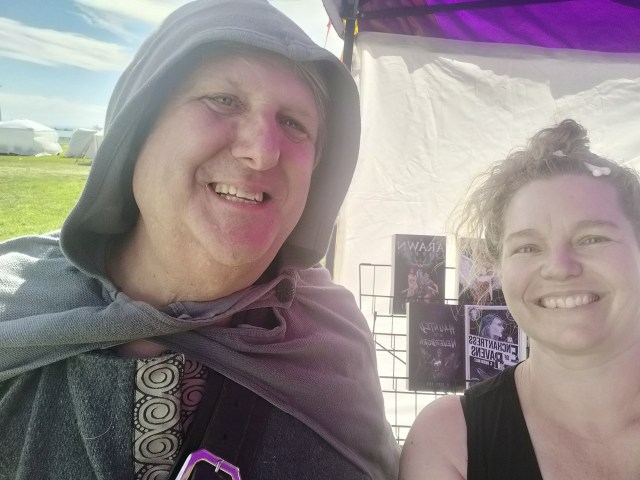
C. David Belt (shown here with me at the recent Fantasy Faire) is a fantastic horror writer because he pairs the horror writer’s instincts and penchant for research with a uniquely right-side-up view of the world.

Take, for example, his take on vampires. I don’t usually read vampire books because the vampires are usually presented as like mortals, but better: they don’t age, they’re beautiful, they’re sexy. Mortals who don’t want their blood sucked are prudes and bigots and super intolerant. Not so with Belt. In his books, vampires are actually, you know, evil. Vampirism is actually a horror, like it would be if you encountered it in real life. That’s what I mean by a right-side-up view of the world.

Now, this strong sense of the wholesome can shade into a bit of naivete about the human heart. The whole premise of this series is based upon the idea that Carl took the vampire oath and even allowed his own blood to be drunk … “innocently.” Because he “didn’t mean it” and “didn’t think it was real,” he is blameless. He is, in all of history, the only Unwilling vampire.

This raises two questions. Now, perhaps these will be raised by the author himself later in the series, but I’m taking The Unwilling on its own terms. So here we go.

First, is it really possible to take an oath and not be responsible for it because “you don’t mean it”? That would be an extremely convenient thing, if so. Picture this: you are a follower of the One True God. But you live in a pagan environment, and you’re being pressured to take an oath of loyalty to Kukulkan, or Zeus, or the divine Caesar, or Big Brother is requiring you to “just say” there is no God but Big Brother. I think you see where I’m going with this. Now, granted, in The Unwilling Carl was not clinging to secret reservations just to get out of martyrdom when he took the oath to be loyal to Lilith. We know this because he fled the ceremony room, endangering himself, as soon as he realized what he was really being asked to do. So there are degrees of culpability, and of self-awareness. However, the principle that “I didn’t really mean it” or “I thought it was a game” is a dangerous one to introduce. As G.K. Chesterton has pointed out in The Everlasting Man, there is an element of game to much of pagan worship. It’s not always 100% clear how seriously the pagan followers themselves take all their superstitions. However, God still tells Israel in no uncertain terms not to pour out libations to any foreign god or take up their names in oath. So, “it was a game” or “it was maybe partly a game” is not going to cut it.

This leads directly to the second question. How is it possible that, in all of history, Carl is the first person to take the vampire oath without realizing it is real? Wouldn’t we expect that to be true of almost every person that gets inducted into the vampire cult? Or true of at least 50%? In modern times, most people do not really believe that vampires are an actual thing. Surely, the majority of the people that join this “empowering” gothic sex cult think of it as a sort of cosplay.

After all, this is how people join cults: there are concentric circles. There are the hangers-on or wannabes, then the neophytes, then the journeymen, and so on. Typically only the people in the inner circle know what the cult is really about. By the time someone gets that far in, however, they have so much trauma bonding, Stockholm syndrome, sunk cost fallacy, mental confusion and spiritual deception that they tend not to be repelled by even the most bizarre and obviously evil beliefs.

The only way I can square this circle is to figure that, if there were any other Converted who didn’t take the vampire element seriously, then when it came time to commit the ritual murder, unlike Carl they didn’t balk, but rather went ahead. And this because, we can assume, they were not as strong-minded as Carl, or not as pure of heart and motive.

One downside of having a right-side-up view of the world, where you recognize that good and evil actually exist and that people can choose to do good or evil, is that there’s a tendency to think as though the world consists of some good people and some bad ones. Belt falls prey to this, to a certain degree. I don’t want to overstate this flaw, because on the whole he is quite insightful about human psychology, as any good novelist has to be. But here are some examples of what I mean.

Vampires, it appears, can “smell” when a person is truly depraved, truly far gone in their evil. Such a person’s blood “calls” to the vampire, creating an almost irresistible urge to kill. In this book, occasionally Carl will encounter such a person. One is a crooked cop, who is also molesting his stepdaughter. Another is a random mother we encounter at the Mormon church service. The precise nature of her evil is never revealed, but as Carl puts it when he warns the bishop about this woman, “something is very wrong” in that house.

So far so complex, right? I actually love the scene where Carl and Moira have to restrain themselves from attacking this apparently pious Mormon woman. My beef with this phenomenon is that there are far too few of these people who call to Carl with their rotten/sweet-smelling blood.

Technically, on an orthodox Christain view of the world, the taint is in everybody. “There is none righteous, no, not one. All have turned aside; they have together become corrupt.” But let’s grant that this does not mean (as indeed the doctrine of total depravity doesn’t) that everyone is as bad as they could possibly be. Nevertheless, part of a mature Christain world view is realizing more and more uncomforable truths like the following:

  • Given the intervening steps, anyone is capable of anything.
  • I am far weaker and more sinful than I ever realized, but the grace of God is far deeper and stronger than I ever realized.
  • “I know that in myself lives no good thing.”
  • “Cheer up! You are worse than you think.”
  • “Christ Jesus came into this world to save sinners, of whom I am the chief.”

So, to modify our illustration, if The Unwilling had been written by an orthodox Christian, it would show a world where every single person had this taint in their blood, but some of them were in remission. Nevertheless, the proportion of people who had gone far down the road towards “capable of anything” would be quite large – large enough that Carl would be certain to be distracted by their intoxicating scent every time he went out in public.

But Belt is a Mormon, so although his worldview is basically right-side-up, it doesn’t include total depravity. His picture of the world is basically a bunch of lost, but essentially wholesome and well-meaning people, and a few stinkers. Furthermore, in the Mormon cosmology, salvation is not for the stinkers. It is for the well-meaning people who do their best to save themselves and trust God for the rest.

Take this scene, where Carl and Moira are trying to convince a mortal-turned-vampire to repent of his sins. Things start out well enough:

“You’re Catholic, aren’t you?” I ask him.

He laughs bitterly. “Lapsed.”

“Go to your priest,” I say. “Or go to a Mormon bishop. Only God can help you now.”

So far so good. Carl continues,

“Stop killing. Go to your priest or to a Mormon bishop. Pray. Lean on God. I believe you can find your way back. Atone for your sins as best you can. Put your trust in the Savior to take care of the rest. It’s the only way you can ever find redemption.”

And there we have the difference between Mormonism and orthodox Christianity. Ephesians 2:8 – 9 says, “For by grace you are saved, through faith, and this [faith] is not of yourselves, not of works, lest any man should boast.” The Mormons have a similar verse, but it runs like this: “We are saved by grace, through faith, after we have done all we can.” What this misses is that, if we are “doing all we can,” then one of two things is going on. If we are truly repenting and making restitution, then that itself is a gift and is a sign that the Holy Spirit is already revivifying our heart. Which means that He started this good work in us before we were repentant. The other possibility is that we are “doing all we can” in a cynical way, as a work of our own righteousness, so as to put God in a position where He “has to” forgive us. This is a grievous sin against God, probably far worse than the original bad things we did.

To an orthodox Christian, “Atone for your sins as best you can. Put your trust in the Savior to take care of the rest” is a HUGE insult to the Savior. Did He really suffer torture and the wrath of God to take care of our leftovers? Doesn’t it seem that we could have done a little more and spared Him all that? Or, if there was a portion of our sins that called for torture and death on His part, then doesn’t that suggest that the rest of them were equally bad and probably can’t be dealt with by “doing the best we can”?

These are the things that crossed my mind as I read this book. The psychology is good, and somewhat deep, but it’s not the deepest of the deep. That is reserved for writers like Dostoyevsky and St. Paul.

Finally, I won’t give the background of this because you really should read the book, but there was a certain character whose story had me in tears in the doctor’s office. I had brought this book with me to my son’s doctor appointment, to read in the waiting room, as one does. And – well, it was a really hard to put down part, and so it was that the doctor came in to see us just at the moment when my heart got broke. And I had to knuckle a tear away and say, “Sorry, we are fine. This book made me cry.” Good job, Mr. Belt, good job.
Send in the Crones

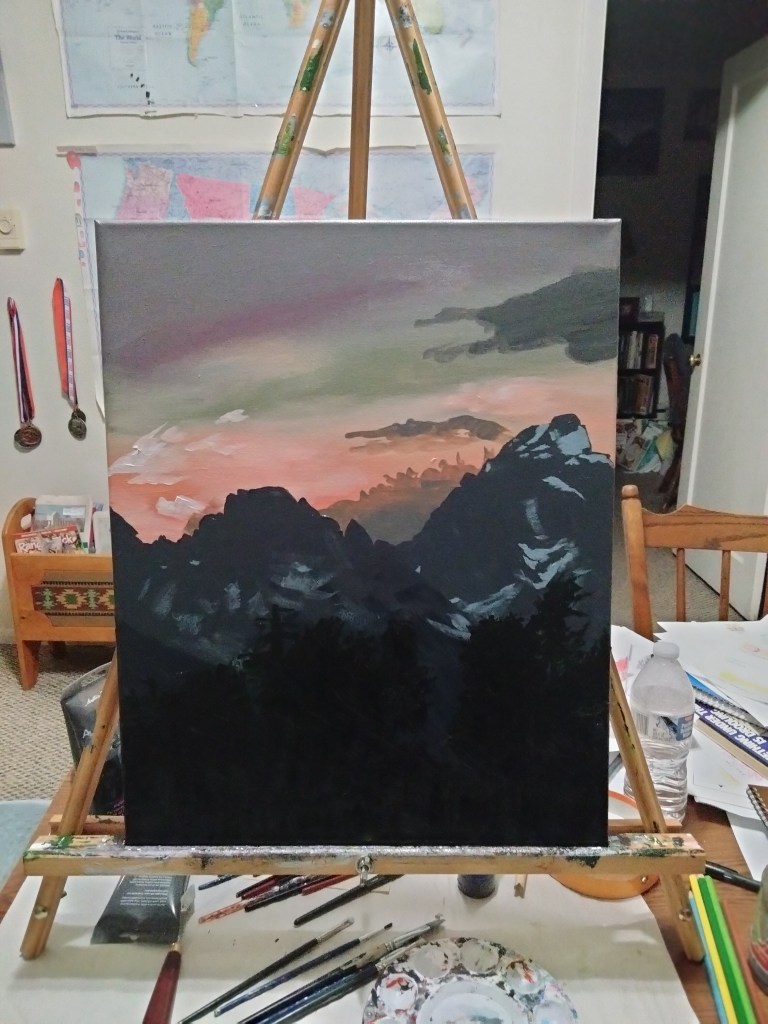
This painting is me in twenty years. I hope. Note my cottage in the background.

Our Friend Mary Harrington

I want to talk about another lovely gift that I have been given by reactionary feminist author Mary Harrington. I reviewed her book, Feminism Against Progress, here.

In the video below, Jordan Peterson interviews Harrington. She gets to talk a lot. I don’t know whether this is because Peterson is mending his monologuing ways, or because Harrington is confident, articulate, and not afraid to take long turns, but in any case, we definitely get to hear her thoughts. They are not the exact same thoughts as the ones she expressed in Feminism Against Progress. You can see that her thinking is still developing, particularly the terms she likes to use to describe things.

It’s a very long video, and well worth the listen if this topic interests you, but for your reading pleasure I have transcribed the section that I want to talk about. Here it is:

At about 46:24, Peterson says, “The thing about women is that their mythological orientation is multidimensional and complex.” He mentions Beauty and the Beast, and Woman and Infant, as two possible hero myths for women, but notes that “our society does not hold sacred the image of Woman and Infant as a fundamental unit of female identity” (so we’re really only left with Beauty and Beast, which gets us into trouble).

Then at about 49:00 he asks Harrington, without asking a direct question, what she thinks is the woman’s Heroic Journey. And she’s got an answer for him!

After a detour into why she felt lonely as a young mother, Harrington answers at 51:45,

“In my observation, there is a hero’s journey for women, it just doesn’t follow the same track as the male one. And in fact, it has three parts, which correspond to a very ancient female archetype, which is the Maiden, the Mother, and the Matriarch. The triple goddess. And anecdotally, it stacks pretty closely to me with actually what a majority of normal women’s lives look like.

“You know, as the Maiden, you’re free, you do have more of a warrior aspect. The Mother is more oriented towards home and the domestic sphere, and probably bluntly just doesn’t care about [outside] work as much.

“But then, later on – and this was something I found very interesting when I did therapy training in the late aughts and early tens, was just how many of the trainees on that course were women in their 50s and 60s. So these were women who had pretty much done the motherhood arc, and they were moving into a new phase of life. They were moving into the Matriarch space. I mean the classic, three-part-goddess term for this is Crone. But they were some way from cronehood. These were lively, vital, energetic, public-spirited women who had some life experience. They had a lot of connections, they had a rich social life, they had met lots of people, and they were ready to give something back.

“And in my observation, there are a huge number of women who reach the end of the Mother part of that journey, and will then re-train. And those women are a huge, rich force for deepening reflection in the culture, for public service, for all manner of incredibly productive, usually quite self-effacing, but incredibly productive, life-giving contributions to the social fabric. And they’re incredibly marginalized. They’re almost completely invisible in terms of the liberal feminist narrative, which really centers the Maiden. And it wants to foreground the Maiden and to tell women that the hero’s journey means essentially being the Maiden for their entire life. At best, if the Mother is noticed, it’s as a problem to be solved. And the Matriarch doesn’t really get a look-in at all, and if she does, it’s only so that she can be denounced for being a TERF, or in some other way spat on for being a dinosaur or obsolete or old-fashioned or out of touch, or in some other way irrelevant or ridiculous.

“And in fact, these [older] women are the backbone of the social fabric. I mean, those are the women who are making weak cups of tea for slightly traumatized new mothers like I was in small-town England. (laughs) And telling me I’m doing fine. And really, that mattered a lot at the time. I mean, those are the women who are running Brownies groups for no money every Wednesday because they can and because they want to give back. Those are the women who are re-training as counselors and helping traumatized people for free. Those are the women who keep things going. (laughs again) And yet, somehow, the liberal feminist version of the hero’s journey just doesn’t see them at all.”

About that word “Crone”

I love what Harrington has to say here. But I must make a note of how she shies away from the word “crone” in favor “matriarch.” Based on the qualifications she puts around even mentioning the word, it’s apparent that Harrington thinks crones are women at the very end of their lives, who are listless and isolated: the opposite of “having a lot of energy” and “lots of connections” and “a rich social life.” The word crone in Harrington’s mind apparently conjures up a bedridden hospice patient who enjoys her only social interaction when the pastor visits once a month.

I got a similar reaction out of my editor when I went to describe Zillah (one of the main characters of my trilogy) as a crone. The word crone, said Editor, reads “old and ugly.” I convinced her to leave it, because I wanted to broaden the meaning of the word, or perhaps recover some of its original meaning.

Zillah, in my series, is in her sixties when we meet her in The Long Guest. I’m cheating a little with having a protagonist in her 60s, however, because my books are set in the immediate post-Flood era, when people lived into their 250s, and a woman in her sixties could still be fertile. Zillah has grown children in The Long Guest, but she still looks like a young woman, and in fact she gets her own romance arc.

In later books, Zillah gets older. By The Great Snake, when I was calling her a crone, she was over one hundred. By the standards of the time, this is only middle-aged, and in fact she is strong enough to hike all day, do dryland farming, and so forth. However, her role in the community is definitely what Harrington describes above as Matriarch. She practices emergency medicine and herbology, innovates in farming maize, counsels her family through crises, and brings potential problems to the attention of the patriarch (who is not her husband but her son). She can’t do everything, and in fact she has had some costly failures. But my trilogy would be much darker without Zillah.

I’m not saying my books anticipated what Harrington is saying, but … my books anticipated what Harrington is saying.

Hats off to Grandma! Or are they?

Of course, she is not the only one saying it (though she may be saying it the most eloquently, and with the biggest platform), and she is not the only one thinking it. Every woman is thinking through these things, whether she realizes it or not, and most women come to some kind of resolution. You have to, if you don’t want to live your life with a pathological fear of aging. This is not an attractive look, and most people figure this out and make some kind of effort to “age gracefully,” that is, to embrace their status as an older person.

This task is made more difficult in modern Western society, where we as a culture don’t value our elders at all and don’t really have any special role for them in the community. This is true of old men, to a lesser degree, but it’s really true of old women. Has anyone heard the phrase, “old women of both sexes”? It’s usually used in the following context: “I want to do bold plan XYZ, but when I said so, it really upset the old women of both sexes.” Old women, we learn, are fragile, risk-averse, set in their ways, and prudish. Probably bureaucrats. Also, they are not athletic or healthy (two other things our culture really values).

Our culture’s disdain for old women traces back to its disdained for motherhood and family life. If you don’t value mothers as such, then you are less disposed to respect your own mother when she is old. Further, if a culture does not have a lot of young moms who need help at home, then there really is no job for the old ladies to do other than go to work in an office, where the hours, tasks, and working conditions are often uncongenial to their nature and where admin would really like to push them out before they develop a bunch of expensive health problems.

On the other hand, if your culture prioritizes a large, thriving household of the kind described in Feminism Against Progress and in Proverbs 31, then there is plenty of useful work for Grandma to do. Furthermore, it’s exactly the kind of work she has spent decades becoming good at. She’s baking her famous dessert, she’s sewing outfits for the little kids, she’s quilting, she is babysitting. She’s answering Mom’s panicked questions about how to garden, get that stain out, and how in the world do I manage everything. This is work that is actually useful and needed (which is the kind of work that keeps people alive and happy). But it’s not like going to work in a shop or office in your fifties. There is more variety, and the schedule is freer. There is room for Grandma to go home and be by herself for a few days. There is room for her to take a nap. And unlike admin at the office, your grown children will not fire you and wash their hands of you when you develop health problems (not ideally, anyway).

Of course, all this is the ideal, and we all know that reality is different. Not every family relationship is a happy one that would allow this kind of close community (especially 60 years after the Sexual Revolution began its relentless campaign to break up families). And even in ideal circumstances, we can get on each other’s nerves. That’s why, in the painting, I am living in a cottage in the woods, where I can garden, paint, and keep a library. Ya gotta’ know your limits. But there is a world of difference between having some tension with your children in a context that values and honors older people for their wisdom and experience, and having to get a 9 to 5 job that really calls for a younger person, just to prove you’ve still “got it” and to justify your existence. This is the difference between Zillah’s world and ours.

Looking forward to being a Crone

I have been fortunate that I was a given a husband and children. I’ve moved through the stages and am now standing on the threshold of matriarchy/cronehood. And I’m liking the view.

Don’t get me wrong … I’m frightened as well. What scares me most is the prospect of chronic pain or disability — my own, or a loved one’s. But I’m not scared of aging itself. I like the idea of less pressure to look beautiful, of a lightening of parenting responsibilities (in exchange for others), and of time to keep getting better at my various crafts.

As a Christian, I am surrounded by a world that despises motherhood, families, and old women … but I have access to a world that honors them. I am in the world but not of it.

Also, I realize that I need to do a better job appreciating the older women who have surrounded me since I was small, my own mother included. I didn’t ever like being taught new things, because of the amount of correction it involved, but now I see how much we must listen to these ladies, honor them, eat the food they cook for us. Send in the crones!

Another Mediocre Painting

The inspiration: Logs and rocks visible under water at Jenny Lake.

The execution: The first painting I’ve ever done entirely with a pallette knife.

Yes, yes. Underwhelming, I know. I have so many ideas and limited time, so I have decided to go the route of prodigious quantity over quality, based on the theory that if you churn out enough quantity, your quality will also improve eventually. Actually, I have seen this principle operate in my son’s paintings. However, in this case the quality is more potential than realized.

I have seen amazing, photorealistic paintings of pebbles under shallow water by professional Western artists. I’d love to return to that theme some day, when I have weeks or months to spend on it, and do a better job. Bucket list.

New Review of The Great Snake

https://forums.onlinebookclub.org/viewtopic.php?f=21&t=521141

This review is through the Online Book Club, a book discussion site where volunteers review books in exchange for a free copy or, sometimes, a small fee. As an author, I had purchased a batch of reviews. They are done by book lovers who select the books to review based on whether it sounds like something that would interest them. They agree to give an honest review.

I appreciate this review by Li Zapata. She has picked up on how The Great Snake is the story of not just one person, but of a community and how they develop. (This is true of the entire trilogy, actually. Ensemble cast.) The weaknesses she found in the book have been noted by others as well, so I can’t fault her there.

Check out her review, my book, and onlinebookclub.

Another jaded quote about the government

“Well, yeah, but I work for the good guys. Don’t I?”

“Who can say? Not you, certainly. In your lunatic dream of a godless universe, good and evil can only be determined by the opinions of your fellow madmen, and morality is just a matter of democracy in the asylum. Mind you, I can work with that. The government can always find a use for lunatics as long as they’re homicidal. Speaking of which, I have another assignment for you.”

The House of Love and Death, by Andrew Klavan, p. 79

Movie Review: Gone in the Night

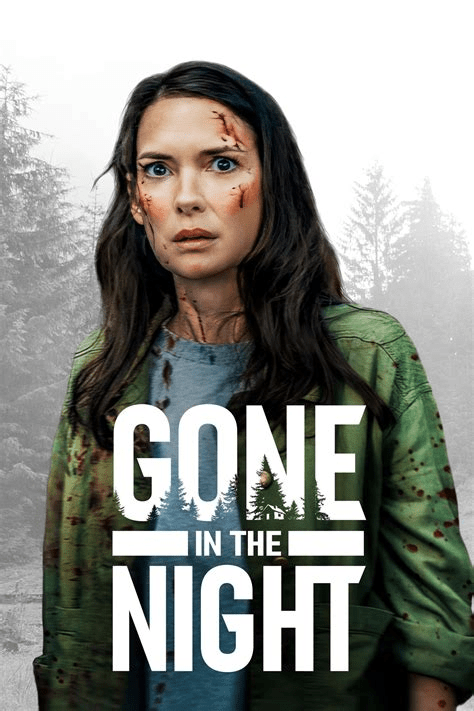
“When Kath and her boyfriend arrive at a remote cabin, they find a mysterious young couple already there. But when her boyfriend disappears with the young woman, Kath becomes obsessed with finding an explanation with the help of an unlikely supporter.”

I checked this 2022 film out of the library so I’d have something to watch while knitting in the evening. I like Winona Ryder, although her character in this film is very different from the beloved Joyce of Stranger Things. As you can see from this cover, she doesn’t look at all like the same person.

This is a mystery/thriller. I won’t give away the plot, except to say that it is disturbing. Instead, I want to talk about the movie’s theme: aging and the way our culture fears it.

Gone does a fabulous job of working the theme into almost every scene. (And, now that I think about it, it’s even arguably present in the title … you wake up and your youth has “gone in the night.”) Some things are very subtle: for example, when the boyfriend (I think his name is Max) gets out of the car to retrieve his hat, the camera lingers on Kath, sitting in the driver’s seat. She opens the mirror on the sun visor and looks at her reflection, then wrinkles her forehead and touches the lines there.

Max is having a beer with a young couple. The woman is flirting with him. She asks how old he is, and he jokingly replies, “Fifty.”

“Fifty? You look good for fifty,” she responds. “You look like you work out.”

“Oh, God, no, I was kidding! I’m not fifty!”

In fact, Kath and Max are both probably closing on 40, or perhaps in their early 40s. They don’t have grey hair or use a walker. They are not old enough to be grandparents. They are middle-aged. Kath seems OK with this. She would be happy to live with “my books, my plants, and have it quiet … forever.” Max, on the other hand, seems to be trying to cling to lost youth. He wants to go to raves and concerts, hike up mountains, and do all the things done by adrenaline junkies in their 20s. He and Kath, since they are not married and don’t have children, are still sort of trying to live in youth culture, but they keep getting messages that they don’t belong.

“How long have you been married?” the twenty-something woman asks Kath.

“What makes you think Max and I are married?”

“Oh! It’s just that people like you are usually either married or alone.”

“What do you mean, ‘people like me’?”

Awkward silence.

In another scene, Kath is following someone. The person leads her to what appears to be a rave happening in an old warehouse. Kath says to bouncer, “I need to get in for a minute. I can pay whatever.”

The bouncer, who is eating a snack, eyes her up and down and then says through a mouthful of food, “Dyahavakidinere or somethin’?”

“What?”

With an eye roll, he clears his mouth, and then articulates very clearly, “Do – you – have – a – kid – in – there?”

Fear of aging – and ultimately, of death – ends up being highly relevant to the plot of Gone. And, really, unless you happen to be a Christian with the certain hope of the resurrection of the body and the life everlasting, how could you not fear it? As Kath says, in a memorable line, “We are all scared.”