
The second I sat down across from him, he said, “So, Poetry Boy, here you are. And you’ll be awestruck to learn that with a single glance through the glassy surface of your idiot gaze, I can see straight into the black heart of nothingness that is your godless and therefore soulless experience of this our only mortal life. And on that evidence of my own senses, I feel safe in saying you have now become morally dead in the service of your country and are therefore ready for your next government assignment.”
“Uh .. thank you?” I asked.
The House of Love and Death, by Andrew Klavan, pp. 4 -5
Botany: Speargrass
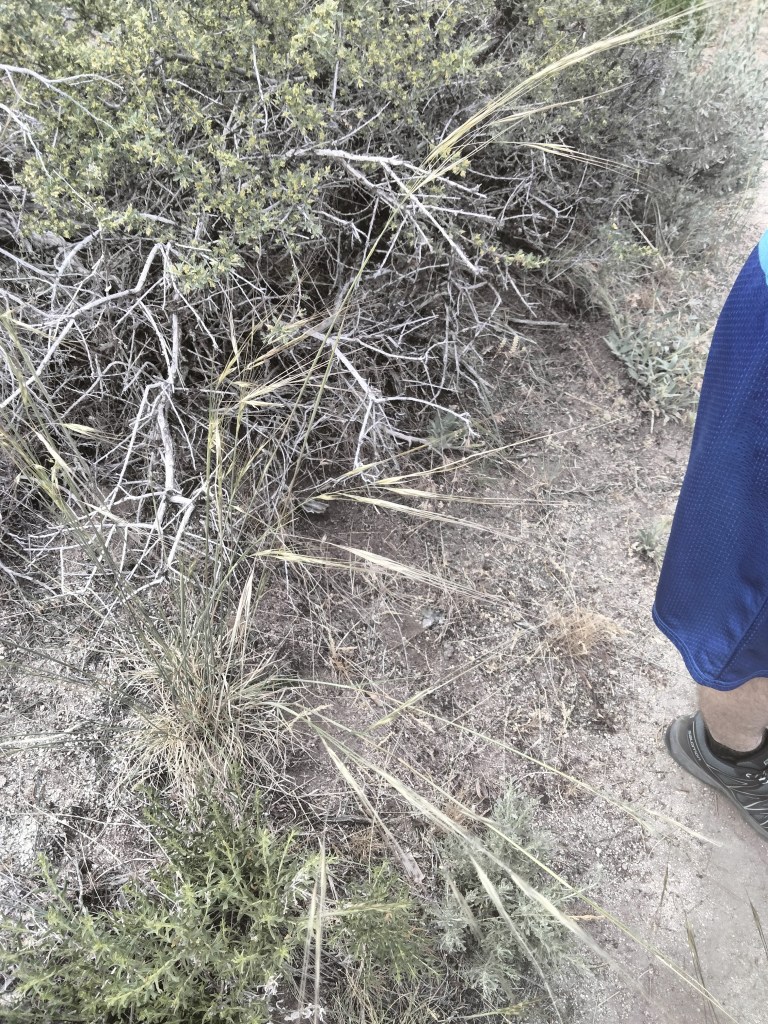
I did not need to look this up in my Falcon Guide to Central Rocky Mountain Wildflowers. Husband identified it, and kids immediately started throwing it at each other.
The House of Love and Death: A Book Review

I ordered this and it arrived a long time ago, but I just now got to it. (Look at me! I am powering through my TBR like a good girl!) Once I opened it, I finished in just a few days because it’s that good.
This is the third book in the Cameron Winter series. Winter is a character created by Andrew Klavan, reportedly the first character Klavan has created that he’s felt could sustain a whole series. Winter is a former spy who is now a professor of Romantic English Literature at an unnamed university in an unnamed Great Lake state (but pretty obviously Madison, Wisconsin). So he fits into that beloved mystery trope, a character who looks unprepossessing (in this case, because he’s a slight, blond, pretty-boy academic) and whom people consequently underestimate, unaware of his hand-to-hand combat skills.
It was fortuitous that I read House not too long after reading The Bourne Treachery, which is also a spy story featuring a longstanding character. Winter even has, in this book, some experiences similar to those Bourne has in Treachery. However, the two books couldn’t be more different.
Winter does check many of the same boxes as Bourne, and House checks many of the same action-novel boxes as Treachery. It moves a little slower and is a little less intricate, but not much. But it is way more emotional. This is one of those mysteries where, after you find out whodunit, you have to set the book down and (if you are a soft touch) cry for a while as you contemplate just how tragic the whole thing was. And like any good tragedy, it has the simultaneous feel of “This was so preventable! This should have been easily preventable!” and of inescapability.
Winter has a “strange habit of mind” (also the title of the first book in the series), where sometimes he will go into a “fugue state” and zone out for several minutes while his subconscious, essentially, becomes his conscious and works on a puzzle he is contemplating. As a writer and artist, I recognize this habit of mind and actually don’t find it that strange (although it doesn’t help me solve mysteries, more’s the pity). I assume that Klavan has given Winter this “strange habit” because, as an artist and writer, he also has some version of this habit. Certain kinds of mind tend to do this. Call it what you want – hyperfocus, being “in the zone.” Being an introvert. Not everyone is “on” (in the sense of externally focused) all the time.
It does make a person wonder whether this tendency, which is similar to narcolepsy, disadvantaged Winter as a spy. In fact, it makes one wonder how he ever managed to survive his espionage years. If Jason Bourne were to zone out like that even for a minute, he’d be dead. Once in House, Winter is driving somewhere and keeping an eye out for a tail. He briefly enters the fugue state, and when he comes out of it, sure enough, he is now being followed.
Yet somehow, those of us with the strange habit of mind do manage to survive. Some of us even manage to raise children. I dunno.
Anyway (shakes shoulders) aaahh, good book. Recommend. Very very sad though.
Quote: Sangfroid
“Why do you torment me?” Stan-Stan growled. Then he shouted, “I can’t get your voice out of my head! What do you want from me? I have nothing to do with you! Leave me alone!”
Since this was something a schizophrenic might say to his demons and also something Stan-Stan said to Winter [his contact] almost every time they met, Winter had to admire the subtlety of it.
“I need a favor, Stan-Stan,” Winter said.
The reeking mass of rags and sores leapt at him, jamming his unrecognizable features to within an inch of Winter’s tortured nose.
“Arrrgh-gnarr-ach,” Stan-Stan remarked.
“Be that as it may,” said Winter, struggling not to gag on the stench of him, “It concerns a town called Maidenvale.”
The House of Love and Death, by Andrew Klavan, p. 135
Update: I have edited my FAQs page
I have edited the question about the age of the earth extensively to reflect changes in my thinking.
I have also added some information about my next book.
Also, you will see some more breathless quotes added to my home page (outofbabelbooks.com) from volunteer reviewers who gave The Strange Land and The Great Snake three or four or five stars.
Idaho Wildflowers headscratcher: Silvery Lupine?

I first assumed this was a yucca, but the leaves are all wrong.
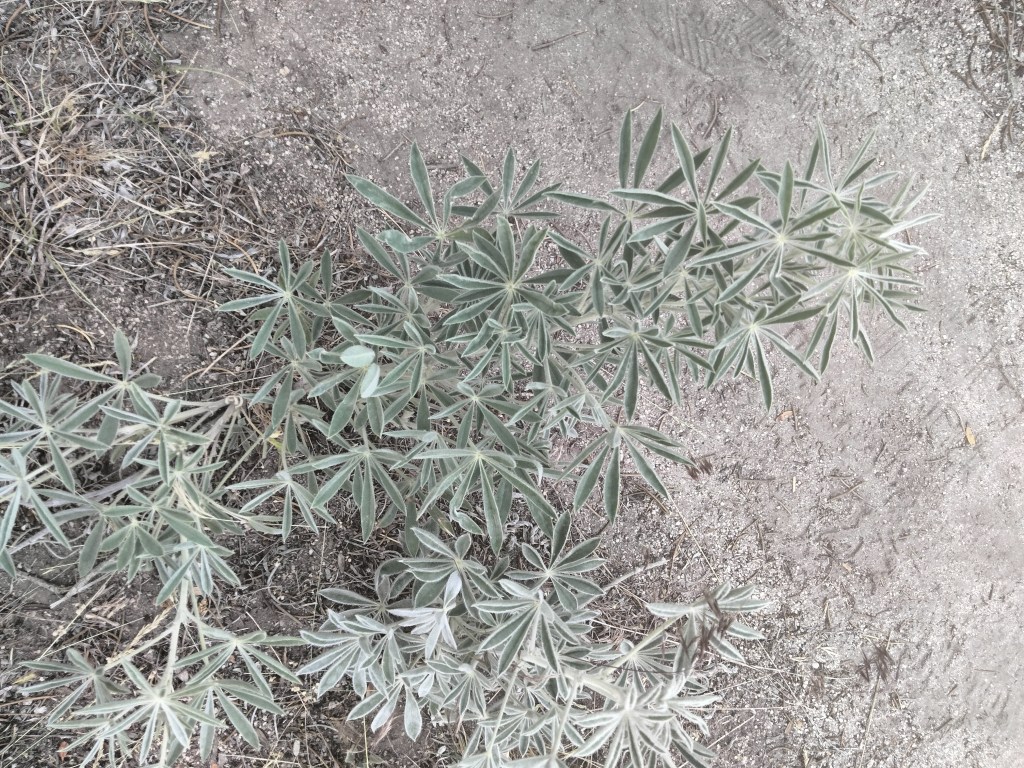
I looked up these leaves with the help of the Google machine, and it suggested Silvery Lupine.

Sure enough, here’s a more typical-looking example of the flower from the same trip.
I can only conclude that the freakishly tall and white silvery lupine is an unholy hybrid of lupine and yucca.
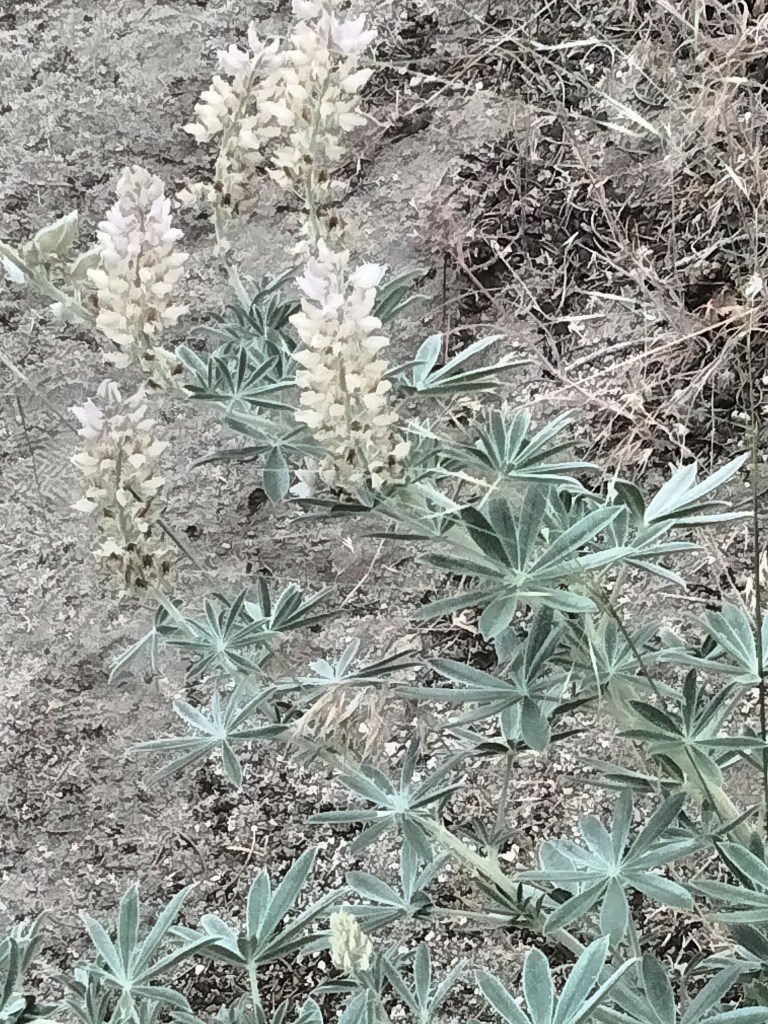
Here’s an in-between-looking specimen.
Botany is hard.
Out of Babel, the movie
Some of you may be aware that a while back, I sold my url outofbabel dot com to someone else. Well, what have they done with it?
They are making a really cool movie that is due to come in out 2026.
No, it’s not based on my books in any way, but it has all the themes of my series, turned up to 11. I mean to say, if you click on the link above, you will see that their web site features American Indians fighting a dinosaur. Things do not get cooler than that, and as it turns out, they also do not get better historically supported.
Here is a quote from their FAQs section:
The Walam Olum or “Red Record,” which is central to our movie, is very much not alone from multiple Native American historical narratives that provide a clear and consistent telling of giants—especially giants associated with the mound builders and earth works, of which there are tens of thousands in America. The Lenni Lenape’s account of the Nephilim is central to their history (see the “snake people” and the makowini, translated “big men” that existed before and after their Flood account, were part of the reason for the Flood, matching our Bible history). See the Glyphs in Book 2 and Glyphs 1-2 in Book 3. Several other historical documents also mention giants affiliated with tribes around the Lenni-Lenape people.
In other words, these people are kindred spirits, which is why they wanted to buy my url in the first place.
My little url is all grown up, and I couldn’t be prouder.
Still buy my books, I mean. They have their own peculiar charm. But by all means, go and see this movie too.
These cool kids also have a YouTube channel:
https://www.youtube.com/c/GenesisApologetics
And a previous movie about the Flood: https://genesisapologetics.com/ark/
A quote that demonstrates that action can be well written
Lenny Guerrero was Search and Rescue, Truck 48, the first truck. A broad, strong, boyishly handsome man in his mid-thirties, he was at the truck’s side near the curb, near the lawn. The light arrays from the truck and the nearby engine, Engine 39, flashed scarlet and shadow over him as he worked to get himself game ready. Strapping his air pack on, his mask on, his hood on, his helmet.
The House of Love and Death, by Andrew Klavan, p. ix
Look at the poetic use of repetition that doesn’t seem strained.
Idaho Wildflowers : Oregon Sunshine
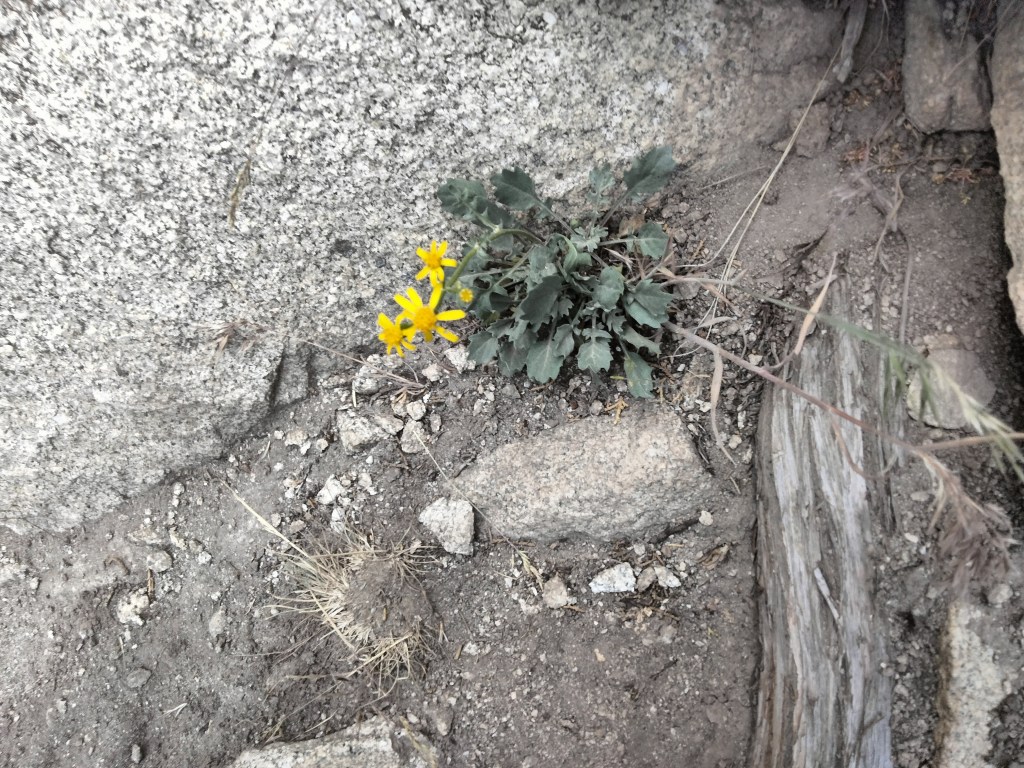
(Why, you ask, is Oregon so greedy with the plant names? Well, remember that at one time, Idaho was part of Oregon Territory. The name Idaho was made up and used later.)
“The leaves may be entire, lobed, or deeply cleft into several narrow segments. Open, dry places, valleys and plains to alpine zones. Meriwether Lewis collected a specimen of this species on June 6, 1806, along the high uplands of the ‘Kooskooskee’ (Clearwater) River, near ‘Camp Chopunnish,’ or present-day Kamiah, Idaho.” (Falcon Guide, p. 108)
The Bourne Treachery: A Book Review

by Robert Ludlum, but actually by Brian Freeman
As you might expect from a Ludlum novel written by somebody else, this book has the feel of something made on an assembly line. It has all the parts and doodads that you expect from the genre, and it does what you want it to do (in this case, be thriller), but it has no particular artistry or character. To be fair, this also means it’s lacking some of the flaws that might show up in quirkier, more idiosyncratic books.
Pacing and Action: A+
This is, I gather, the outstanding characteristic of Bourne books. The action is almost constant. Nevertheless, the author does a good job of introducing characters and explaining the setup and the stakes, so that we don’t get the phenomenon of action that we don’t know the significance of. I will say that to a certain degree, tension is inflationary, so the shock and horror isn’t quite as shocking and horrible as it would be with a slower buildup.
Tours of Foreign Cities: A
Traveling the world is one of the things we expect from the Bourne novels. Freeman does a good job of making us feel as if we are familiar with the cities where the action takes place by mentioning particular roads, parks, markets, and squares. He also does a decent job with the weather and atmospherics.
Russians Betraying Each Other: A
Also other spies betraying Bourne, and Bourne possibly betraying other people (who knows, since he lost his memory). The hypocrisy of people in espionage, as well as the messed-up kind of person that years in espionage makes you, is a major theme of this book. Speaking of which:
Character Development: B-
The book tries to do some character development with Bourne discovering his past, wishing he could get out of the espionage game, and realizing that he has been made into the kind of person who probably isn’t capable of anything else. There’s a fair amount of character development given that this is a thriller. But, the thriller distinctives limit the emotional impact of all this, at least for me. The pace is too fast and the writing too matter-of-fact for character development to get really emotional. Speaking of which:
Relationships between Men and Women: C-
Okay, so there is a lot of sex. Including one scene that lasts several pages. But it’s written the way a man would write it, which is to say, the emotional element is minimal. Speaking of which:
Portrayal of Women: D
Hmm, where to start?
Obviously, we are talking about spy women, so that skews the sampling. But these ladies are ruthless killers. They are also … how to put it …? Not overly concerned with monogamy. They can go from killing to kissing, or worse, in no time flat. They don’t seem to get emotionally attached as a result of sexual involvement, the way a normal woman would. They aren’t adversely affected by all the gruesome things they have to do, even as much as Bourne is.
There are two women who don’t appear to be nymphos, but they are both cool as cucumbers. One only cares about science, one about spycraft. You know, like most women you meet.
Also, spy goddess is petite and very athletic, but also has “deep curves.” I dunno. Deep curves (such as wide hips) affect the way a person runs, tumbles, throws, etc. I went through most of the book picturing her as wiry and boyish, and then all of a sudden the author threw these curves at me. Also, their hair is always loose. Not very practical, ladies.
I’m not even trying to be feminist here. I just find these women hella unrealistic and unrelatable, which in turn makes the “romance” (such as it is) tepid.
Russians Talking: F-
This was the thing that annoyed me the most, because it messed with the verisimilitude even more than the Bond-style spy women. Many of the characters in this book are expatriate Russians. Many of them need to monologue to explain their positions. All of them talk exactly like an American explaining something in a business seminar. Listen, Russian sentence structure, word choice, and so on, is very distinctive, even when they are speaking English. It should not have been hard to watch a few movies where this was well done, and then imitate it in this book. If you are going to research foreign cities and bring them to life, why not make the dialogue believable too? I think I would have enjoyed this book a lot more if the Russians had sounded like Russians. And it would have supported the theme. Make them sound like Russians!
 Out of Babel Books