
So, it turns out that Arizona has its own version of Sasquatch. The Mogollon Monster got my attention because the Mogollon are a tribe that plays a major role in the plot of People of the Silence, helping to bring down the civilization centered in Chaco Canyon. MM, however, does not feature in that book.
Botany: Lupine
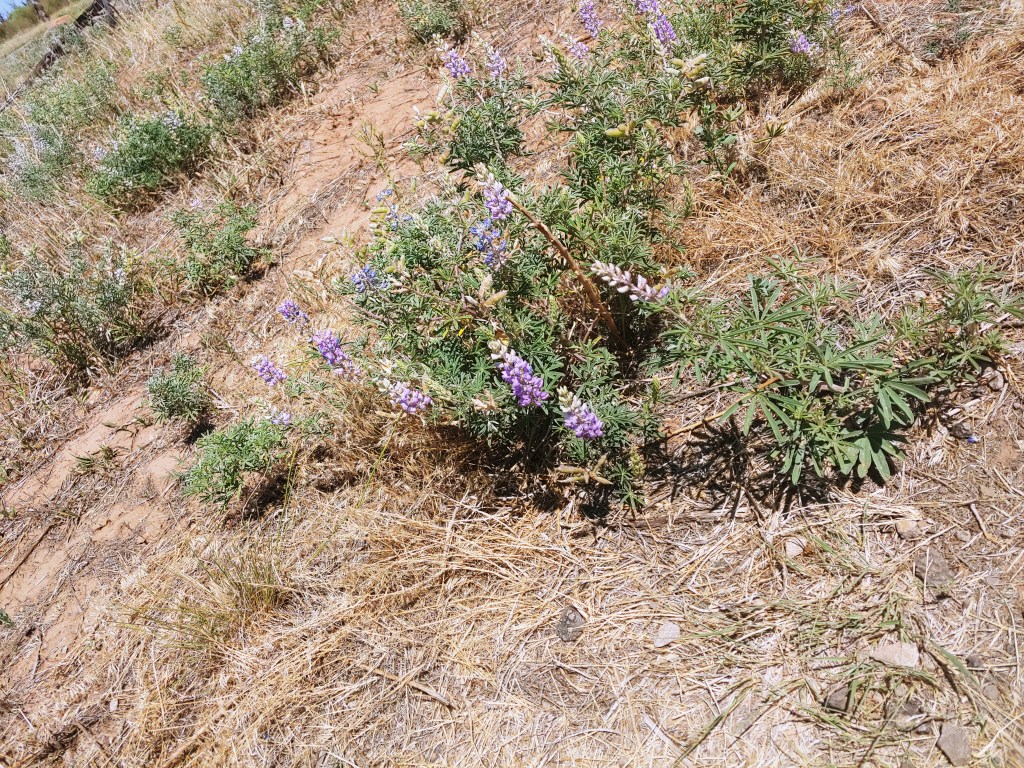
Here is some Silvery Lupine (Lupinus argenteus) I photographed while hiking atop Wetherill Mesa in Mesa Verde, Colorado. It is probably so named “because of the silvery sheen to the leaves in a certain light.”
I noticed that it bears bean pods:
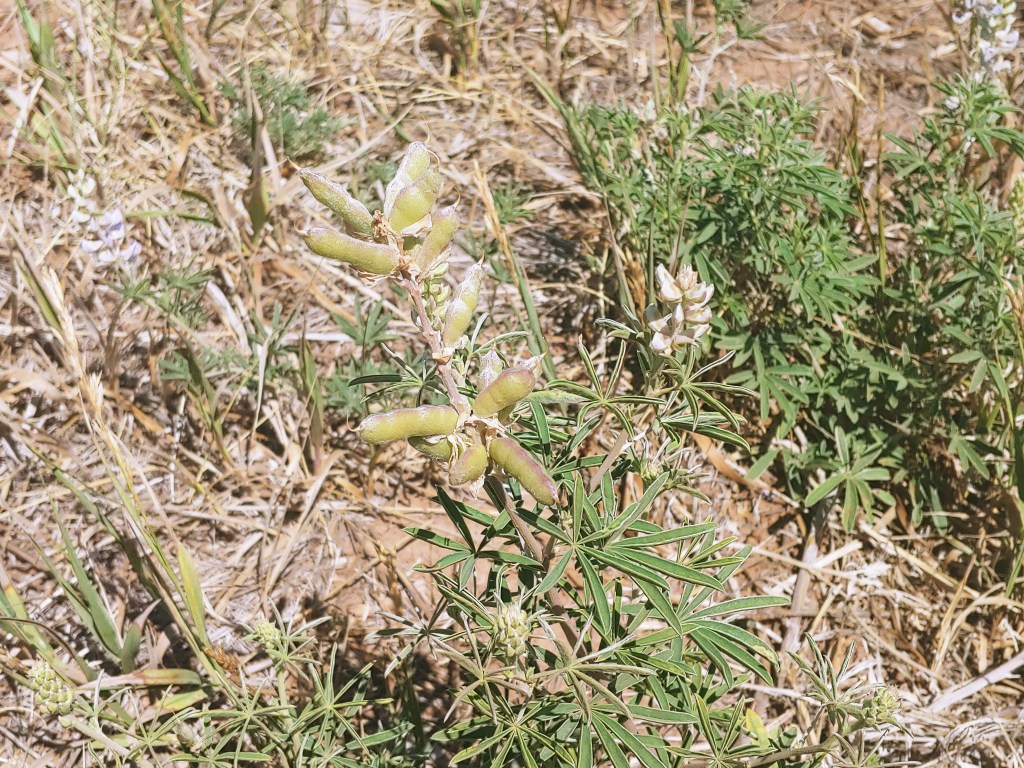
Good thing I didn’t try to eat these, because according to FalconGuides’ Central Rocky Mountain Wildflowers, “Lupines have poisonous alkaloids concentrated in their seeds.” (page 32)
Review: People of the Silence
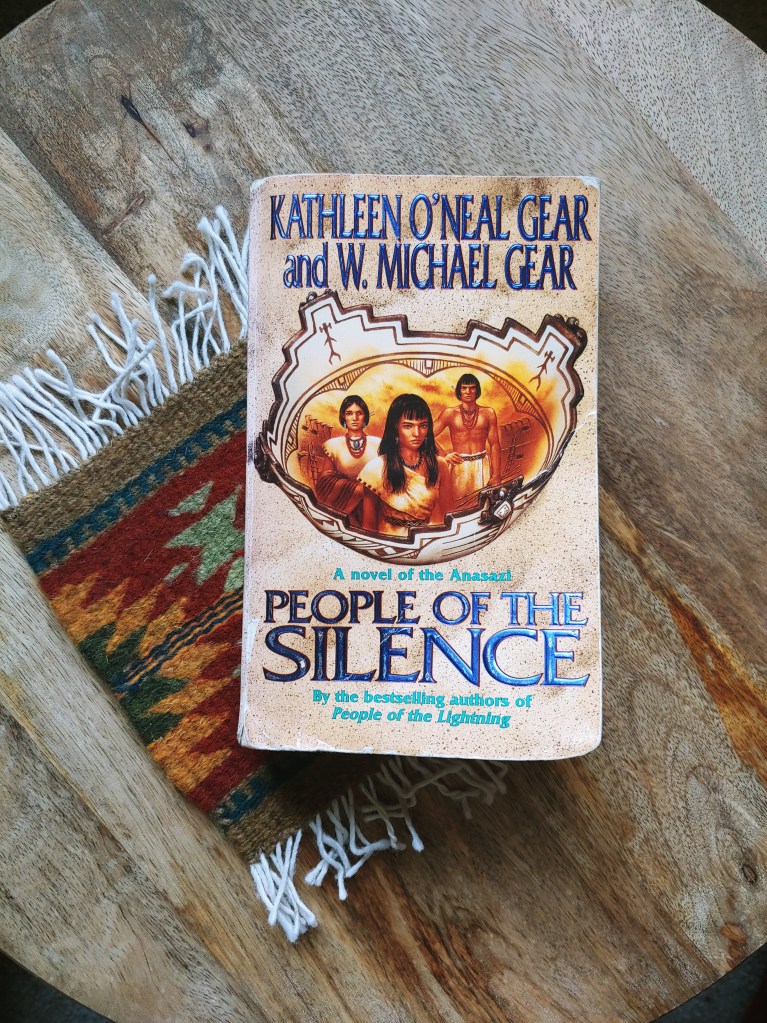
Husband-and-wife team W. Michael Gear and Kathleen O’Neal Gear write thoroughly researched novels about the different people groups living in North America in pre-Columbian times. This one, about the Anasazi or Pueblo Indian ancestors, is actually set in about 1150 A.D. This culture is “prehistoric” only in the sense that we don’t have a formal, written record of everything that went down, although there is plenty of archaeological evidence and oral tradition.
A Ceremonial City
This book comes with three maps. (I love me some maps!) The first shows North America with the general locations of the people groups who will come into play in the novel: “The Tower Builders,” “The Straight Path People,” the Mogollon, and the Hohokam. A second shows the Four Corners region, including Mesa Verde and Chaco Canyon, New Mexico, where most of the action in this book takes place, including the Great South Road built by the Anasazi and the Straight Path People’s names for all the surrounding features. I flipped back to this map many times throughout the course of the book. A third map shows a closeup of Chaco Canyon, or as the characters call it, Straight Path Wash. It shows the locations of the towns there. These can still be seen today, but the authors have given them names that the ancient Pueblo Indians might have used, such as Talon Town, Starburst Town, etc.
Talon Town (the book’s name for what is now called Pueblo Bonito in Chaco Canyon) is the capital of the Straight Path people’s civilization. It is occupied by their priest/king, the Blessed Sun; his wife, the nation’s Matron; a seer, the Sunwatcher; the nation’s War Chief; a number of warriors; and numerous slaves, mostly people captured from neighboring groups such as the Hohokam, who are there to serve these aristocrats. Talon Town produces almost no goods of its own. Food, clothing, blankets, shells, turquoise, etc. are brought in as tribute from surrounding villages over quite a wide area, or are obtained through trade. This is what the archaeological record seems to show us.
Talon Town has two large plazas, each with a kiva in it, so that it can host religious gatherings such as solstice ceremonies and funerals for important people. Here is the authors’ description of what it might have looked like inside one of the Great Kivas as a young apprentice prepares the Blessed Sun’s body for burial:
Thlatsina [=kachina] masks hung over the small wall crypts, glittering with precious stones. Thirty-six in all, they wore brilliantly colored headdresses of blue, yellow, red, and deep black feathers. Tufts of pure white eagle down crowned many masks. Neck ruffs of buffalo, badger, rabbit, and other hides gave the appearance of beards. But Poor Singer’s eyes lingered on the sharp fangs and polished beaks that glinted in the fire’s amber glow.
The circular kiva stretched at least a hundred hands across, supported by four red masonry pillars and encircled by three bench levels. Each bench had its own sacred color, yellow, red, and blue topped by white walls.
Another body rested on the opposite foot drum, covered completely by a beautiful Death Blanket. Poor Singer couldn’t guess who it might be.
People of the Silence, p. 416
Now, the Plot
Here is the review of People of the Silence I posted on Goodreads a month ago.
Some historical novels or speculative novels set in ancient times seem to cut-and-paste modern concerns onto those supposedly ancient characters. The Gears definitely don’t do that. That is one of my top concerns in historical fiction, so props to them.
It did take me a looong time to finish this. The novel starts with a steep climb through a lot of info dumps about Anasazi cosmology, including an extended vision that happens to a young man whom we haven’t gotten to know yet. All during the vision, I kept trying to figure out what the different elements in the vision represented in the cosmological scheme that had just been presented. Later, it turned out that we weren’t supposed to totally understand the vision at the time, and it would be revealed later. Perhaps, if I had read any other books by the Gears, I would have realized this sooner, but as this was my first one, I didn’t at first have that confidence.
The steep climb continues, as we are introduced to a large cast of characters. For about the first half of the novel, it wasn’t clear to me which characters, if any, I was supposed to sympathize with. In the book, the Anasazi have a brutal caste system based on “First People” and “Made People,” and slaves captured in raids on other tribes. Some of the First People later turn out to be sympathetic characters, but you don’t find that out until about halfway through the novel. Also, some characters who are supposed to be sympathetic are seen committing atrocities when we first meet them. Eventually it becomes clear that this is a very brutal society, and the prevalence and unavoidability of violence is part of the point of the novel; but again, the violence does make it hard to figure out who we are meant be to rooting for.
After the steep climb, which lasts about half the novel, we have a long plateau (a mesa top, if you will) where we are getting to know the characters and the intricate machinations taking place in their dying society. Wheels within wheels! The whole novel also includes a lot of beautiful, lyrical descriptions of the Four Corners landscape. The Gears do a great job giving you a sense of what time of day it is, what the weather and background look like, and details of what people are eating and wearing, and how they are wearing their hair. Almost every dialogue tag comes with a one-sentence description of what the character looks like at the moment (e.g. “Her greying black hair had come loose around her beautiful triangular face, which was covered in smears of reddish dust”). Stephen King would hate this, but I don’t mind it. It helps you keep track of the different characters by forming mental images of them, and it gives that much-coveted visual glimpse into what the Anasazi looked like. (For example, they dressed in bright colors, and their royalty decorated themselves with copper bells and macaw feathers.)
Finally, having scaled and then trekked across the mesa, once you are comfortable in the world and familiar with all the power dynamics, the last hundred or so pages take you on a mad, roller-coaster rush down the other side, as secrets are revealed, violence explodes, and desperate, last-minute measures are tried. This book even turned out to be a rather creepy murder mystery, with an unexpected but satisfying reveal of the murderer.
After the novel, there is an extensive bibliography of all the archaeological and anthropological sources the Gears consulted.
If you liked my book The Long Guest, you will probably like People of the Silence, and vice versa.
Quote: Stay Edgy
“Don’t water so much, boy. These plants are like people, they need to be a little scared.”
“They need to be scared?”
Black Mesa nodded. “If the seedlings aren’t scared, they won’t sink their roots deeply into Mother Earth. Then when the droughts come they’ll blow away without a fight. If you want to save them, don’t make their lives easy, force them to prepare for the worst.” He nudged Poor Singer with his elbow. “Hurting makes everybody stronger.”
People of the Silence, p. 265
This Link Has Everything
“Possible shaman’s snake stick from 4,400 years ago discovered in a Finnish lake”
First of all, the tongue twister. Shaman’s snake stick. Say that five times fast! The stick was a carved wooden snake, found in a lake (stop me before I rhyme again!) or swamp, so … possibly released there on purpose?
Secondly, an adorable picture of Finns digging in the mud. They look so happy. (As anyone should when they get to dig in the mud and find archaeological artifacts.)
Thirdly, this quote: “[S]nakes are loaded with symbolic meaning in both Finno-Ugric and Sámi cosmology, and shamans were believed to be able to transform into snakes.” Add these remote people, living at the far northern edge of the world, to the long long list of the world’s peoples who find spiritual and/or cosmological significance in snakes.
This link even has a book tie-in for me! Yes, it does! The upcoming third book in my trilogy will be called The Great Snake. And yes, it has snake cosmology. And no, this is not very original, but it is based in research. TGS is not available for pre-order yet, but you can get ready for it by buying and reading The Strange Land if you haven’t already done so. TSL is where the serpent makes its debut, at least in my books.
Remember the Brothers and Sisters Who Are Suffering
In Afghanistan.
If you can stand to read about it, here is some of the horror they are going through.
Those Creepy Fates
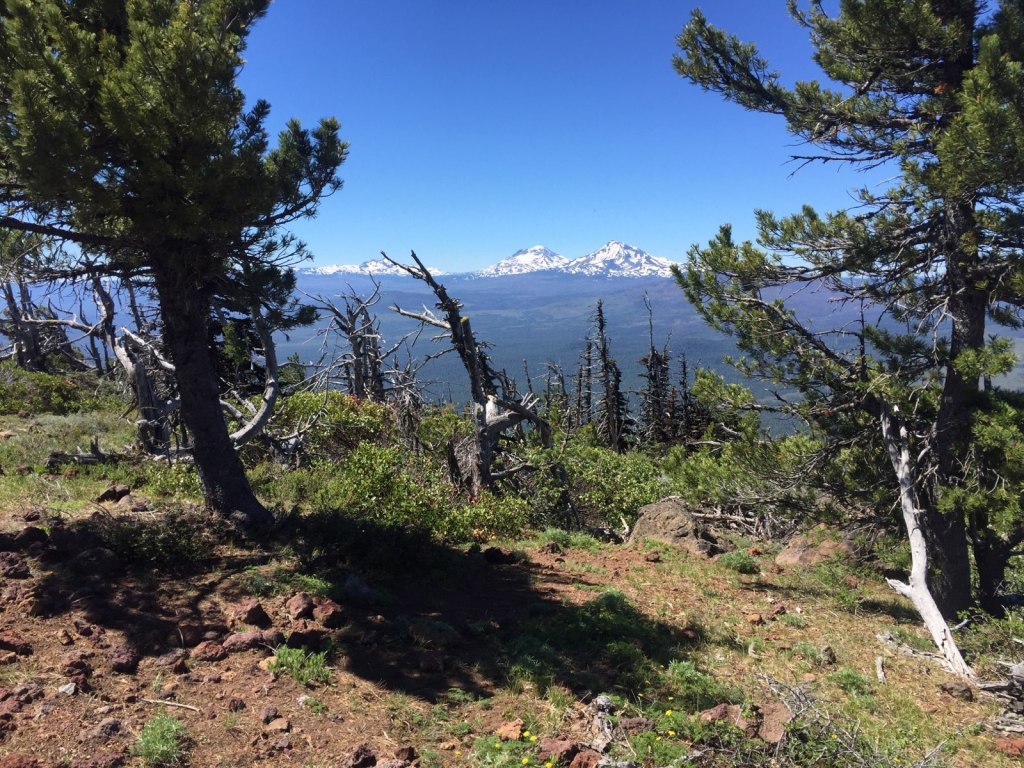
There is a trio of mountains in Oregon called the Three Sisters. In fact, the town of Sisters, OR, is named for them. In this picture, you can only see two of the them (the third is hiding behind).
I use this picture for my illustration because, while there is a lot of great art portraying the Three Fates, it’s a little hard to find a picture that I can use without copyright infringement.
I recently read, with my kids, The Black Cauldron. My imagination was captured by the three swamp-dwelling little old ladies (if human?) who guard the Cauldron: Orddu, Orwen, and Orgoch. As far as I can tell, Lloyd Alexander made up these ladies and imported them into his story. Though triple goddesses are a recurring feature in Celtic mythology, they are not really the same as the three fates and it’s even a falsehood that they always came in the form of maiden, mother, and crone, as you will see if you read the scathing 1-star reviews of the book The White Goddess by Robert Graves.
The Greek fates are named Clotho, Lachesis, and Atropos. Clotho spins the thread of a mortal’s life, Lachesis measures out its predetermined length, and Atropos cuts it. Norse cosmology also has fates, called the Norns … in some versions three, named Past, Present and Future; in some versions a large but unknown number, according to this article. Evidently the idea of fate personified as three or more women (or woman-like beings) goes way back in Indo-European cosmology. It shows up as late as Macbeth’s three witches.
I had ignored the Fates for some time (as one does); but reading The Black Cauldron made me wonder whether you can write a fantasy that draws on Indo-European cosmology and not at least tip your hat to them.
By their very nature, the Fates are creepy. Lloyd Alexander does a great job of making this feeling come through when he introduces Orddu, Orwen, and Orgoch. The heroes of the book, on first seeing the fates’ house (and by the way, the word ‘fates’ is not used), think it is abandoned because it looks so run-down and blends so well into the swamp shrubberies. There’s a loom set up inside the house, on which is a tangled mess of a weaving. (Don’t touch!) Then the ladies show up. Rather like Tom Bombadil in The Lord of the Rings, they seem cavalier about things that ordinary people regard as matters of life and death. Orddu keeps offering to turn the travelers into toads (“You’ll grow to like it”). Orgoch is excited about this because if they were toads, it’s implied she could eat them. Orgoch, the only one of the three who is clad in a black cowl, seems to want to eat everything. As Orddu says, “It’s hard to keep pets with Orgoch around.”
The three ladies light up when they hear that the travelers know Dallben, who it transpires they discovered as a foundling and raised. They refer to him as “little Dallben.” (Dallben is over 300 years old.)
The travelers stay the night in an outbuilding belonging to the three ladies. Taran, the main character, wakes up in the middle of the night and sneaks up to the window of the dilapidated cottage, which is now alight. He returns, reporting, “They’re not the same ones!” Orwen, Orddu and Orgoch now look young and beautiful, and they spend all night working on their weaving. The next morning, however, they appear looking just as they did before, and with the same apparent disregard for human life.
Lloyd Alexander has set a really high bar with this fictional, Welsh version of the fates, and I’m not even sure I could approach it. Here is an article that dives more deeply into an analysis of the fates and of all of Prydain, the fantasy world in which the book is set. Be warned, the article assumes you are familiar with the whole series.
Quote: How Moms “Vacation”
What, oh what, will I do to fill the days that are usually taken up with errands and housecleaning and laundry and Max and Ron and their various time-sucking wants and needs? Don’t for one minute think I don’t absolutely adore my life as a wife and mom. But even the best lives need a vacation and, let’s face it, renting a house with your family at a ski resort is NOT a vacation. It’s basically moving your life from one location to another. Unless someone else is making the beds, doing the laundry, and cooking, it’s just the same old life with the added inconvenience of not knowing where anything is in the kitchen.
from Class Mom by Laurie Gelman, page 219
From Pangaea to Modern Continents in … One Year???
Dr. Kurt Wise, in his inimitable, adorably enthusiastic nerdy paleontologist way, presents a detailed model of how it could have happened.
Cover Draft for The Great Snake
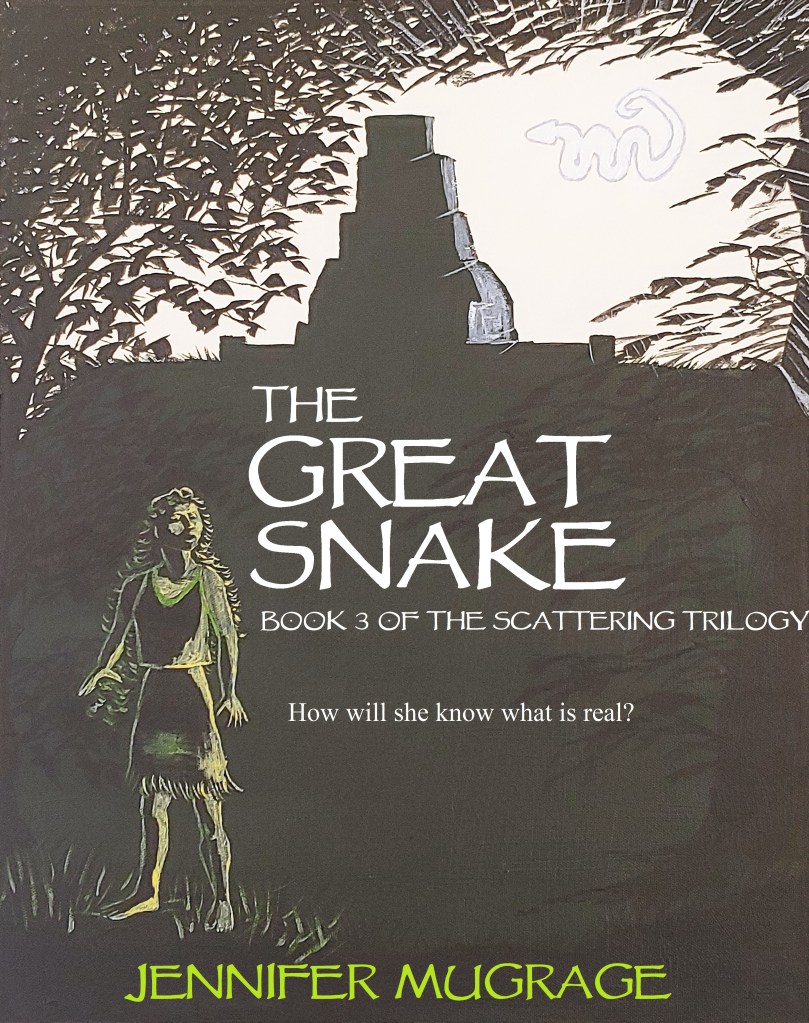
Feedback welcomed.
 Out of Babel Books