Kiva vs. Pit House

If you can bear with me, we are going to do one more Mesa Verde post before we start mixing it up again.

As mentioned last week, when I went to Mesa Verde this July, we did not visit the famous Cliff House (which was closed), but instead the lesser-known Wetherill Mesa. Last week I showed you a smaller cliff house, called Step House, that is part of the Wetherill Mesa area. This week, I am going to show you a pit house.
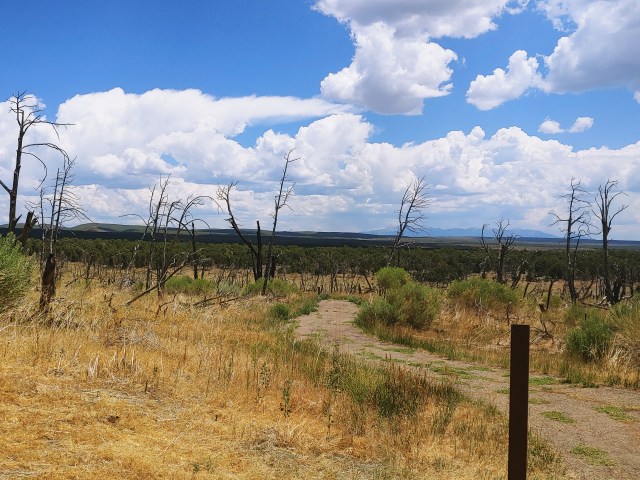
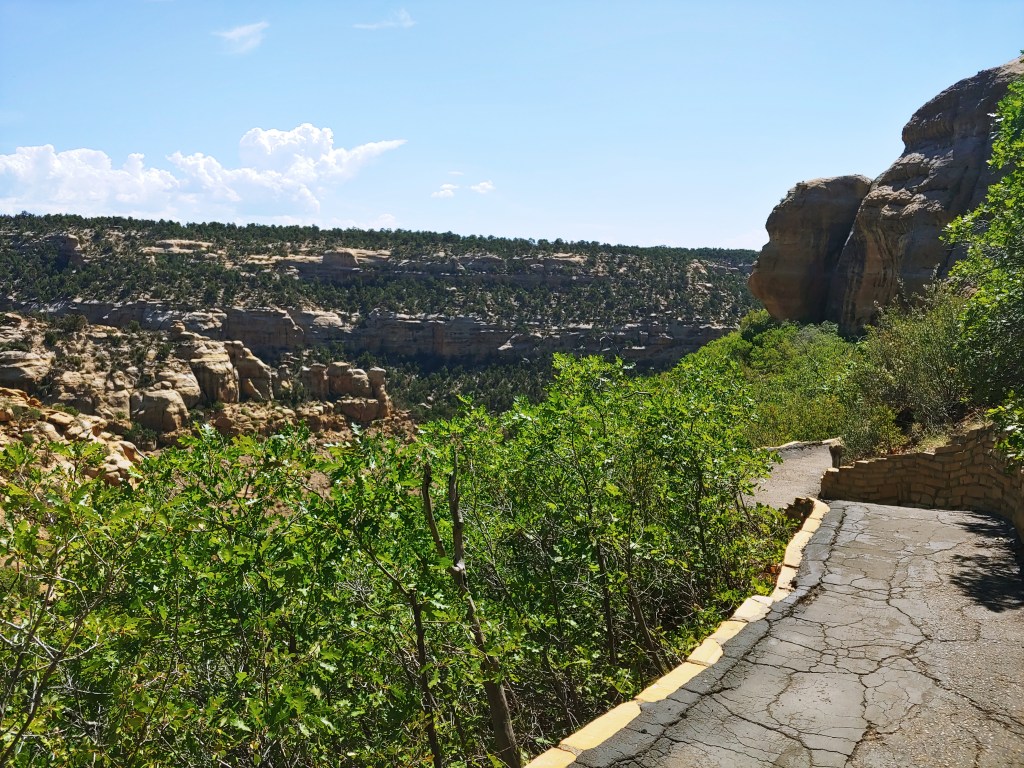
Here’s part of the path to it.

The ruin sites that have been excavated on top of Wetherill Mesa have had sheds built over them that are open on one or two sides. I imagine this protects the excavated ruins, but it’s also great for the tourists. It is so hot out there in the Four Corners desert that, were these sites not shaded, no one would stop for very long to look at them. As it is, you come over the blistering trail, and that shed represents a welcome oasis of shade where you can cool down, take a breath, and then spend some time studying the ruins.

A Pit House

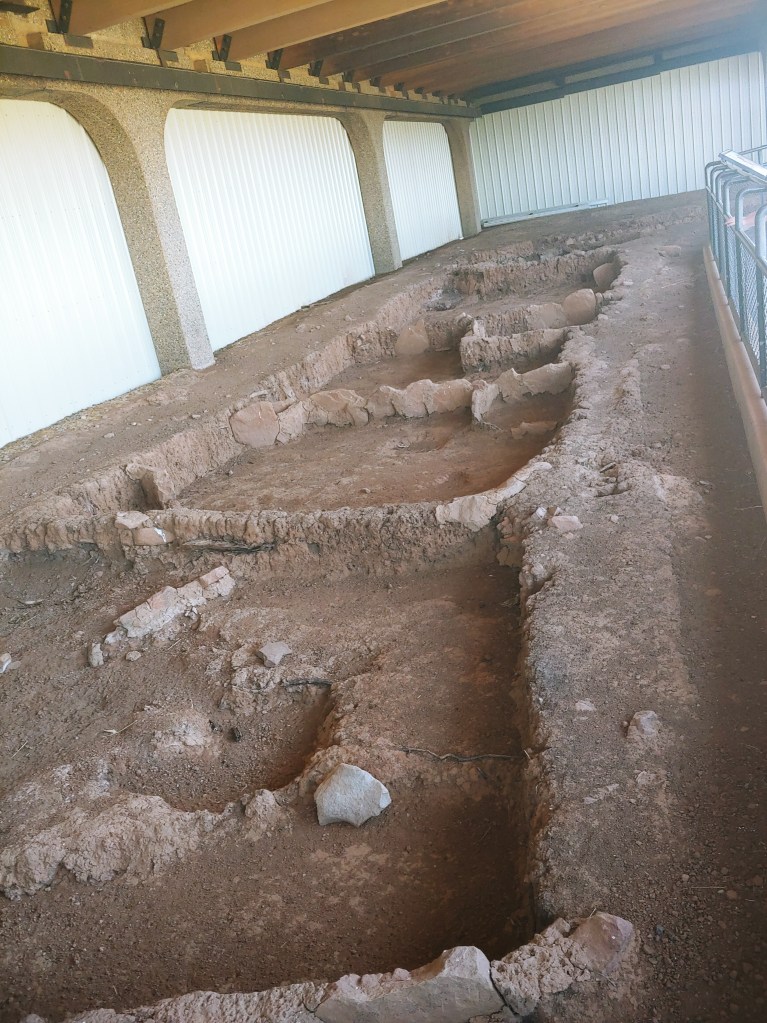
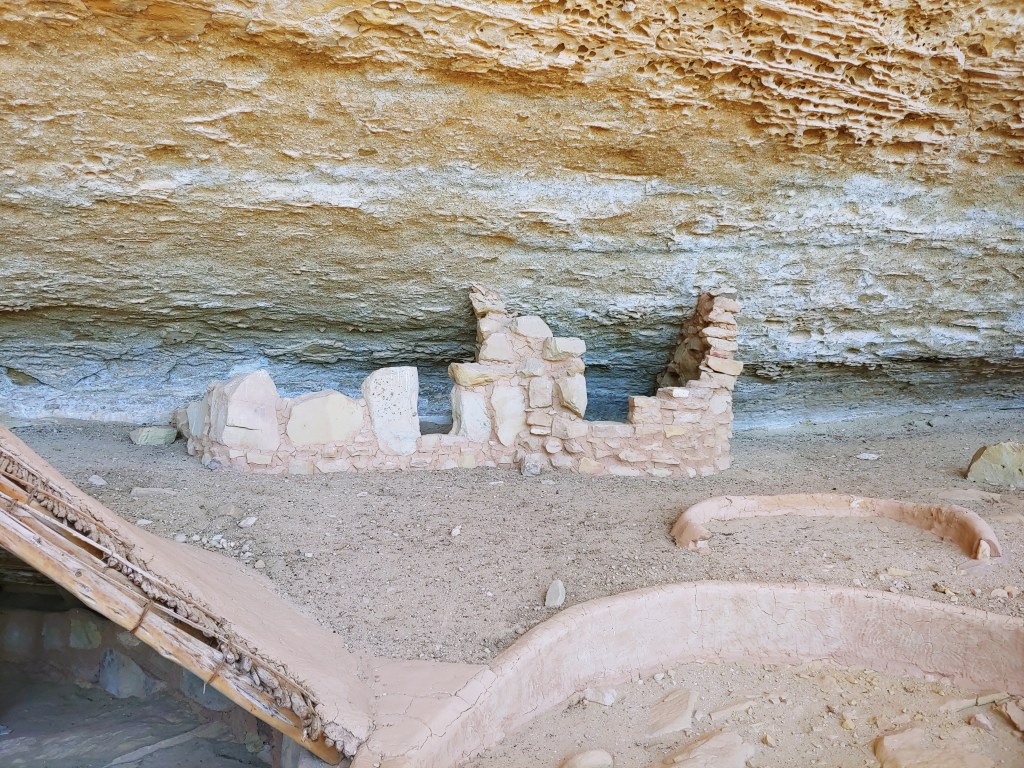
Here we are standing at the entrance to Badger House, viewing it through the first two anterooms, towards the inner room at the back. The inner room has a bench around the edge of it, a narrow little door leading into it, and a big slab of stone sitting right in front of that door, blocking our view in. When in use, this pit house would have had walls extending a little way up from ground level and then a roof. All of this would have been made with wood posts for the basic structure, and then adobe applied in a wattle-and-daub manner. These pit houses had the people living partially but not completely underground. This kind of housing is super practical in a desert, because it insulates the inhabitants from the wild swings of temperature that come not only seasonally, but also between day and night.

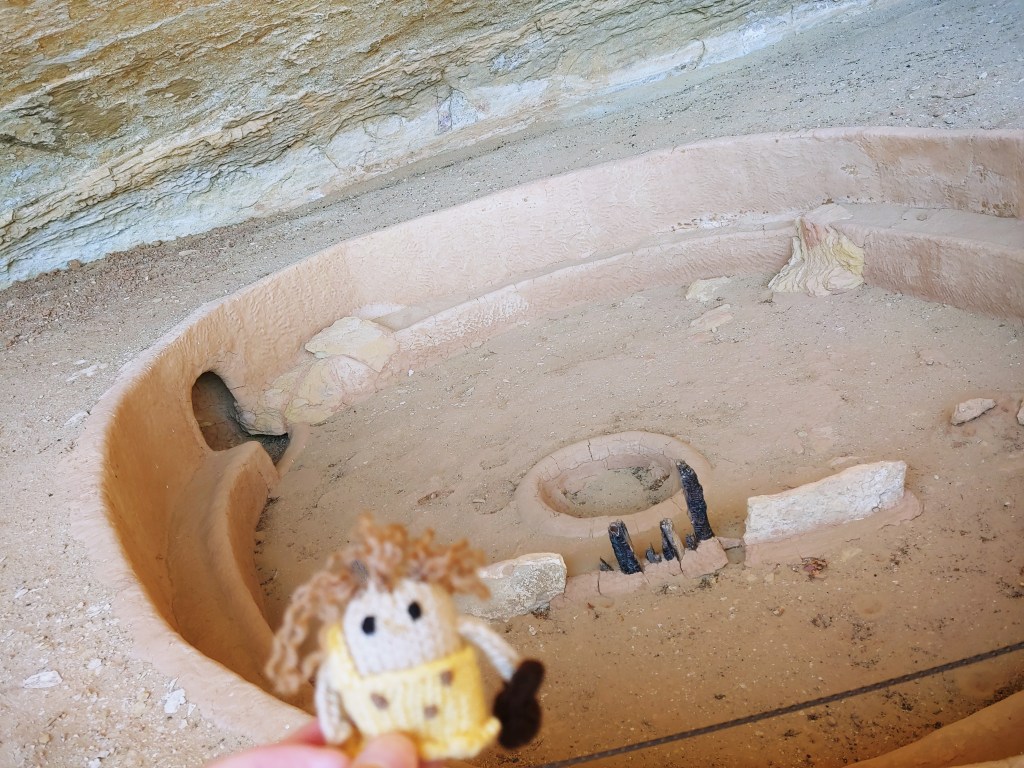
Here’s a view of the inner room of Badger House, taken from the side. As you can see, in the foreground there is a little stone closet area (for grain storage?). Opposite it, on the other side, is another stone half-wall (for privacy?). On the left, there is a line of three post-holes for wooden posts that would have helped hold up the roof. (The holes in the bench are also thought to have been put there so that wood beams could be rested in them.) The star of the show is the sunken fire-pit, with the upright slab of stone standing between it and the door that leads from the anteroom.

When I first saw this slab of stone, which seemed to me to be randomly and inconveniently placed, my thought was, “What the heck?” Then my mind immediately went to privacy for people in the inner room, or a Feng-shui type arrangement for blocking bad spirits or energy that might try to enter, or even a physical barrier to make it easier to corral pets and toddlers. But the actual explanation may be even simpler. It’s to protect the fire from drafts. I hadn’t considered this explanation at first, because I expected such a stone to be placed right next to the fire. (A Native friend once told me that if you build a fire right next to a stone, the stone will cause the smoke to draw upward.) But apparently, this is how the Anasazi people dealt with drafts. The informational posters at the site call it a “deflector stone.” If this is where they needed to deflect drafts, that also gives us clue about how the air was flowing through this pit house. The builders were aware of the need for ventilation, as we will see in a moment when we look at a kiva.

The small hole just to the left of the fire pit may be a sipapu. Every kiva has a sipapu, and we know from modern Four-Corners area Indians (the descendants of these builders), that the sipapu symbolizes (or is an iteration of) the hole through which people’s ancestors emerged in their origin legends. In Navajo origin legends, for example, people start out living in a world that in some ways resembles ours, but is four levels down under the earth. Through a series of disasters, they have to abandon each level and flee to the one above it. If I remember correctly, the final level is destroyed by a flood, and then the people finally emerge onto the bare surface of the earth.

So, this is a pit house that shares some characteristics with a kiva. This article explains (or at least introduces the topic) of how, before the Anasazi started using adobe brick to build structures aboveground, they apparently lived in pit houses that also functioned as kivas. When they started building aboveground dwellings, they would then build a kiva for every settlement, but in pit house dwellings, the distinction between kiva and living area is not as clear. So, in Badger House (this is my own thinking now), it’s possible that the three rooms we see are anteroom, then the living area in the middle, and then the more elaborate room at the back is the kiva.

A Kiva

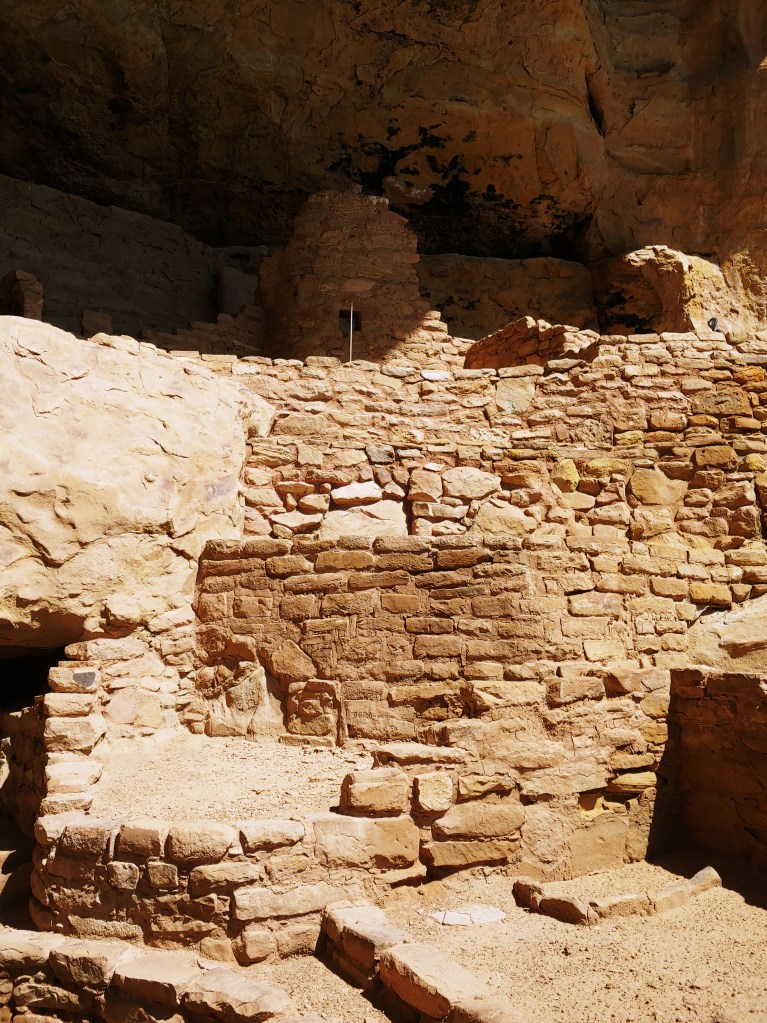
Farther along the path on Wetherill Mesa, we see complexes like these, which are called pueblos. Though still partially dug (again, practical) these are not pit houses but little villages or apartment complexes that are laid out in a row and employ adobe brick. In the first photo, you can see multiple layers of brick walls laid down at different times and not quite square with each other. Once you start getting pueblos like these, each comes with a proper kiva.

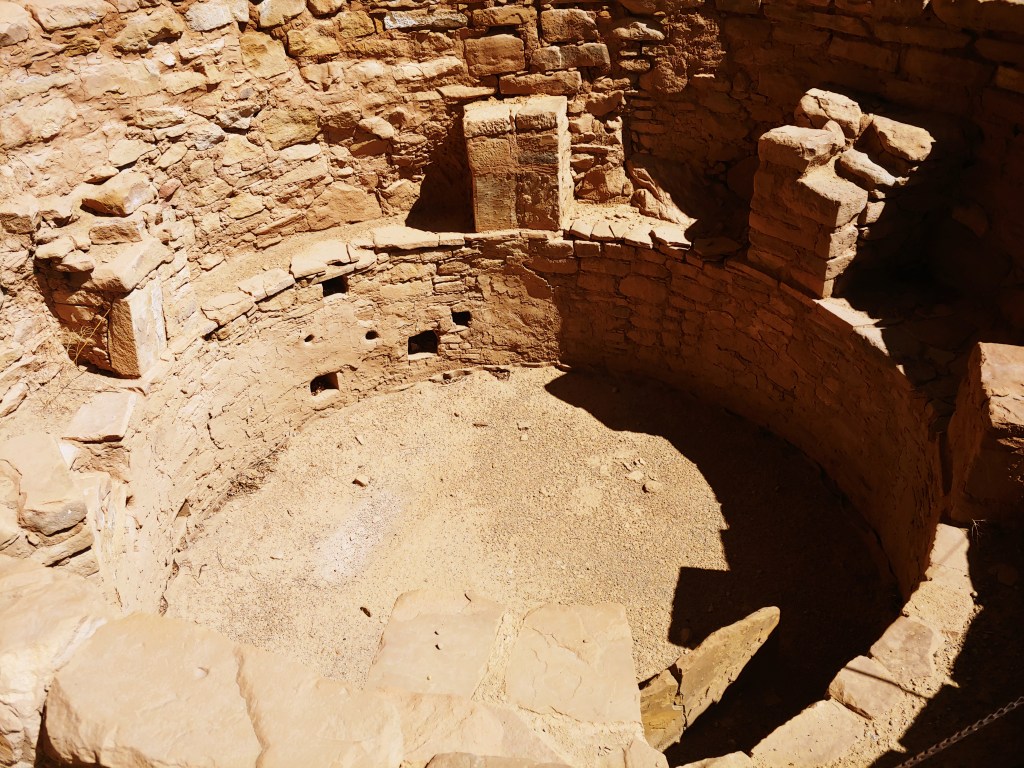
It was difficult to get a wide enough angle to properly photograph this small kiva, but here are my attempts.
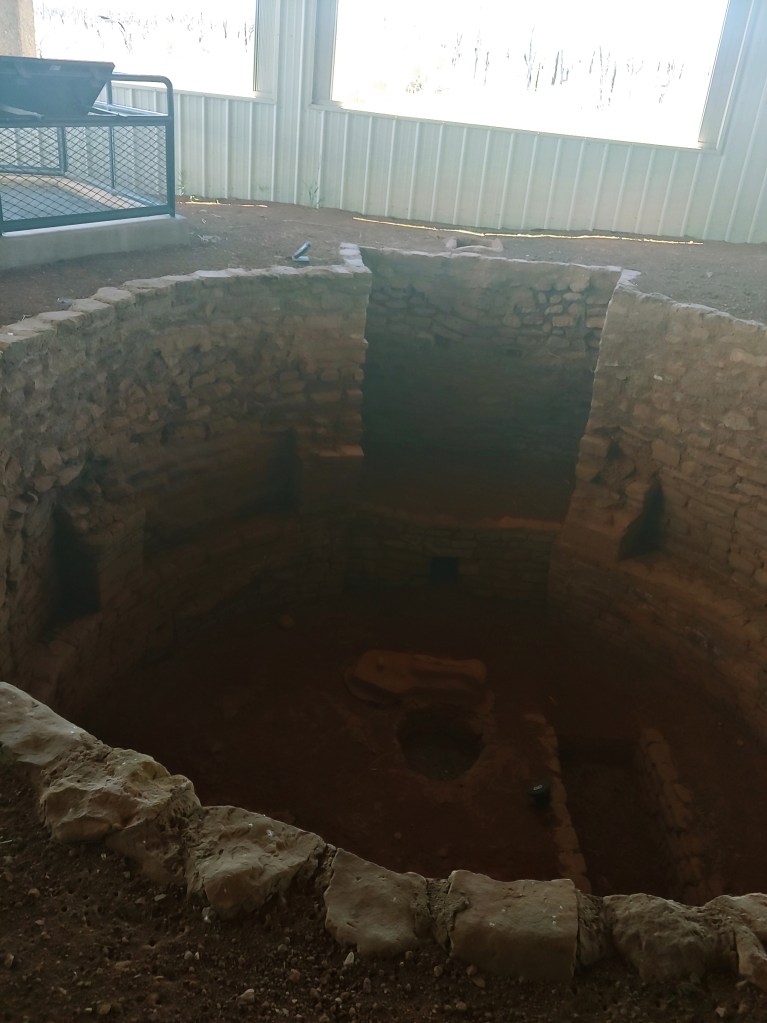
As you can see, there is a bench around the edge just as in the kiva area of the pit house. There is a fire pit with a deflector stone. There is a deep recess on one side (second photo), and there is also a raised platform area in the wall behind the deflector stone. Under this comes the ventilation. You can see the little hole at the bottom of the platform, which is the ventilation shaft. The other end of the ventilation shaft is aboveground, here.

When my kids first saw this, they speculated that it was for pouring water into; but no, it is for air.

The kiva would have been covered with a roof, and of course the interior would have looked much smoother than this, perhaps with plaster, paint, etc. After all, this thing is about 1000 years old.

This poster has some good information about the kiva, although the drawing on the right cracks me up. It shows that the artist didn’t really know how the kiva was decorated, what kinds of clothes the Anasazi wore (so they just gave them almost none), or what they did in the kiva. (Weaving? Wouldn’t that be done in a house? Oh, what do I know …) More detailed, colorful, and elaborate speculation about all these things shows up in the novel People of the Silence, which I will soon review.

A Great Kiva

Here, near one of the pueblo sites on Wetherill Mesa, is a partially excavated Great Kiva, a kiva big enough to serve a whole community (or a larger community). I’m a little confused by this excavation, because if I understand the informational poster correctly, its total circumference is much bigger, and it looks to me liked it would overlap with pueblo ruins that it shares the site with. So it’s a little hard to picture how this complex looked in real life.

Here’s a poster that explains the excavation. It almost looks like the Great Kiva was filled in, and then a pueblo built over it.
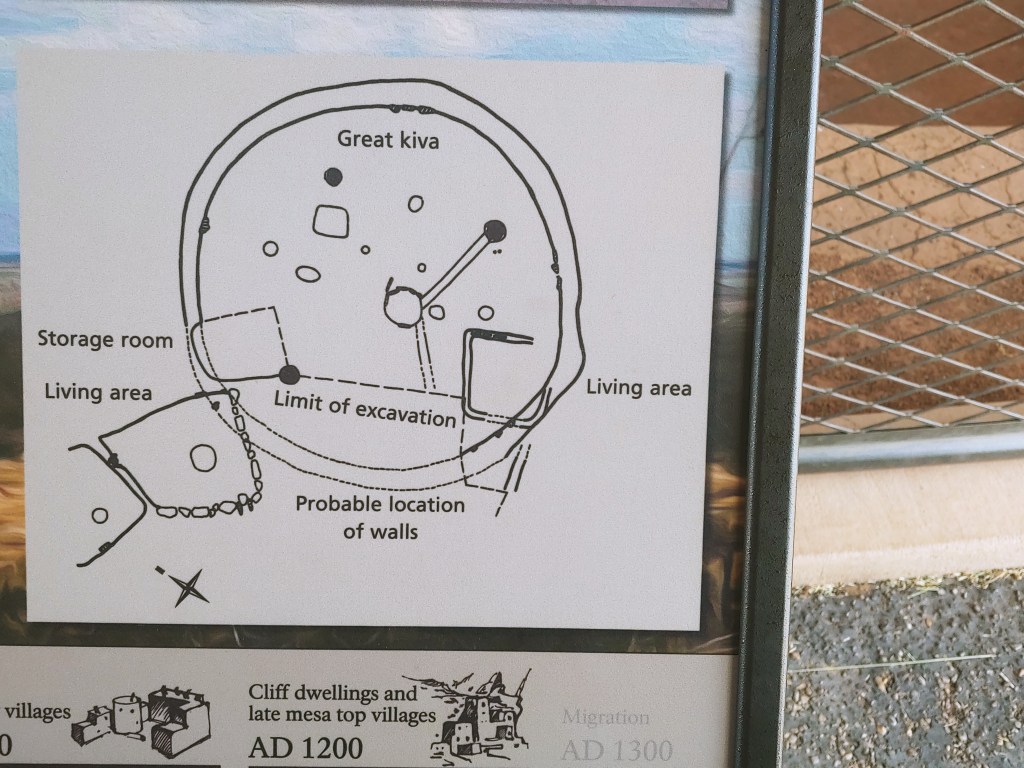
The ruins at Chaco Canyon, where People of the Silence is set, include not only large towns with many rooms, but multiple Great Kivas, well-preserved, in each town. Unlike this rather confusing site, things were planned out so that the town was built in a semicircular shape, people lived in rooms around the edges, and the kivas were in the plaza in the middle. This was a large culture area that extended over what are now four western States.

Other Cool Stuff
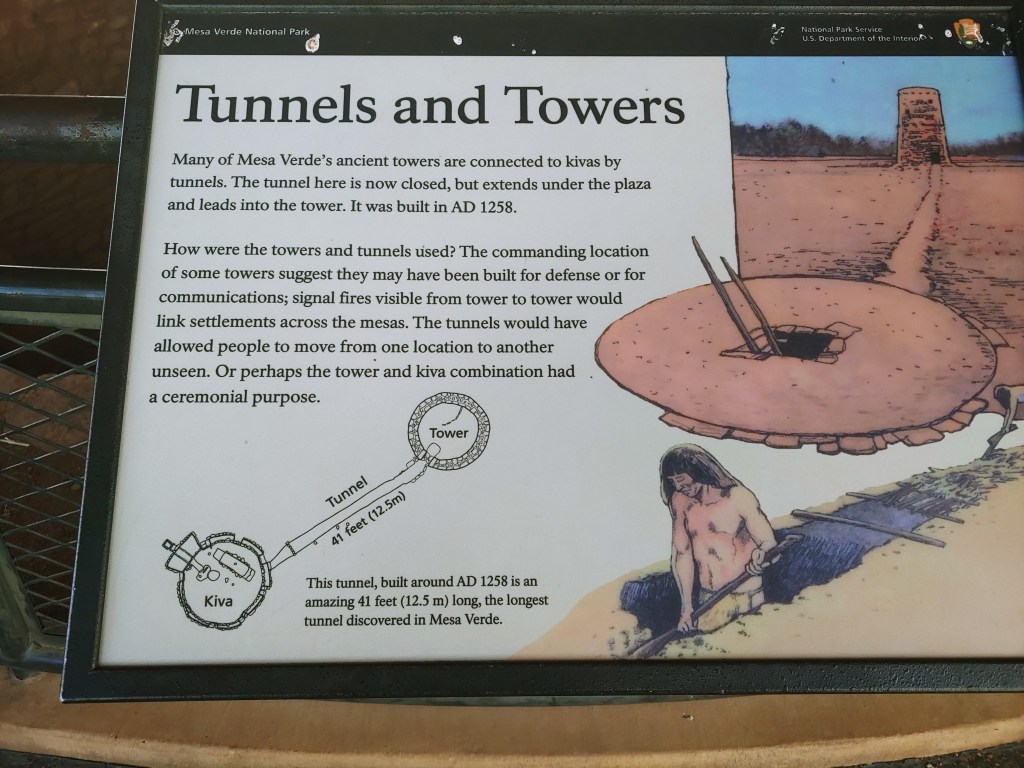
This tunnel-tower arrangement is apparently connected to the smaller kiva that I showed you earlier. What I called a “deep recess” was actually the entrance to the tunnel!

Again, I love how the illustration shows nothing but the kiva, tunnel, and tower in the middle of a desert. No people, no fields, no animals, no other buildings. Maybe they had strict instructions not to go beyond what is proved.

I don’t know whether this tunnel and tower were constructed for war, but in Chaco Canyon, we see archaeological evidence that the people started fortifying their previously accessible town, sealing up the entrances and even windows, until there was only one small door leading in and out. All around this region, we find massacres.

I can’t now find the map I photographed, but as I mentioned last week, these excavated sites are not the only ones on this mesa. There are other known sites that have not been excavated (which we walk by on our way to these convenient shelters), and there are probably many undiscovered sites as well. This is not wild and unsettled country, and it has not been for millennia.
The Quieter Side of Mesa Verde

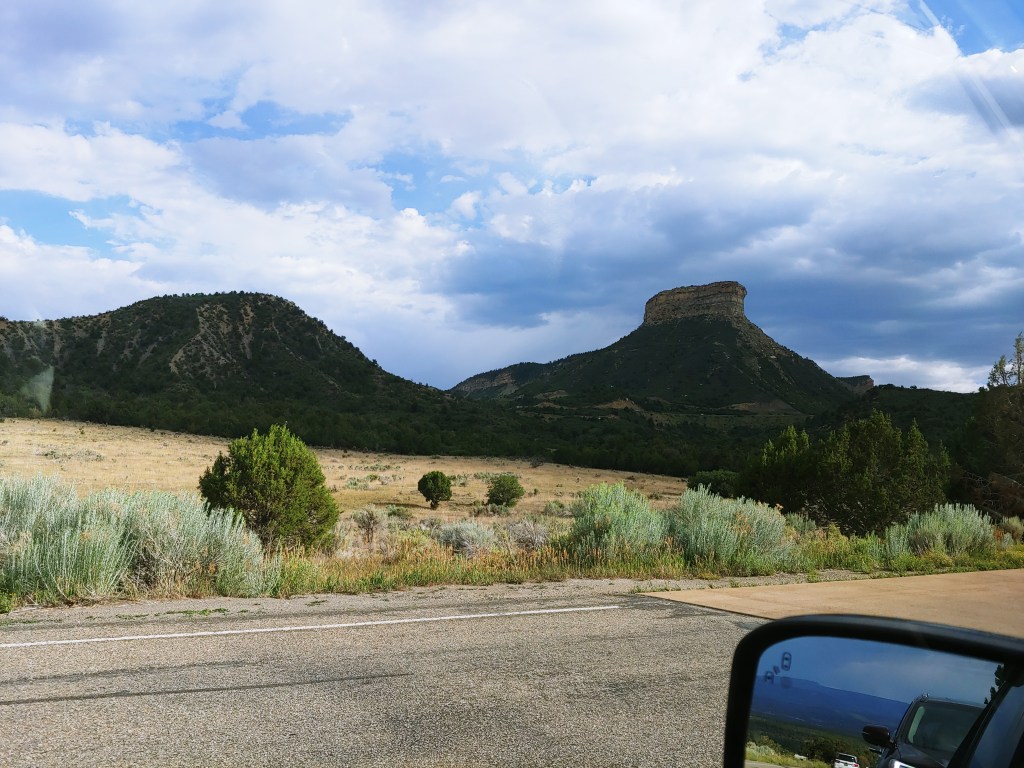
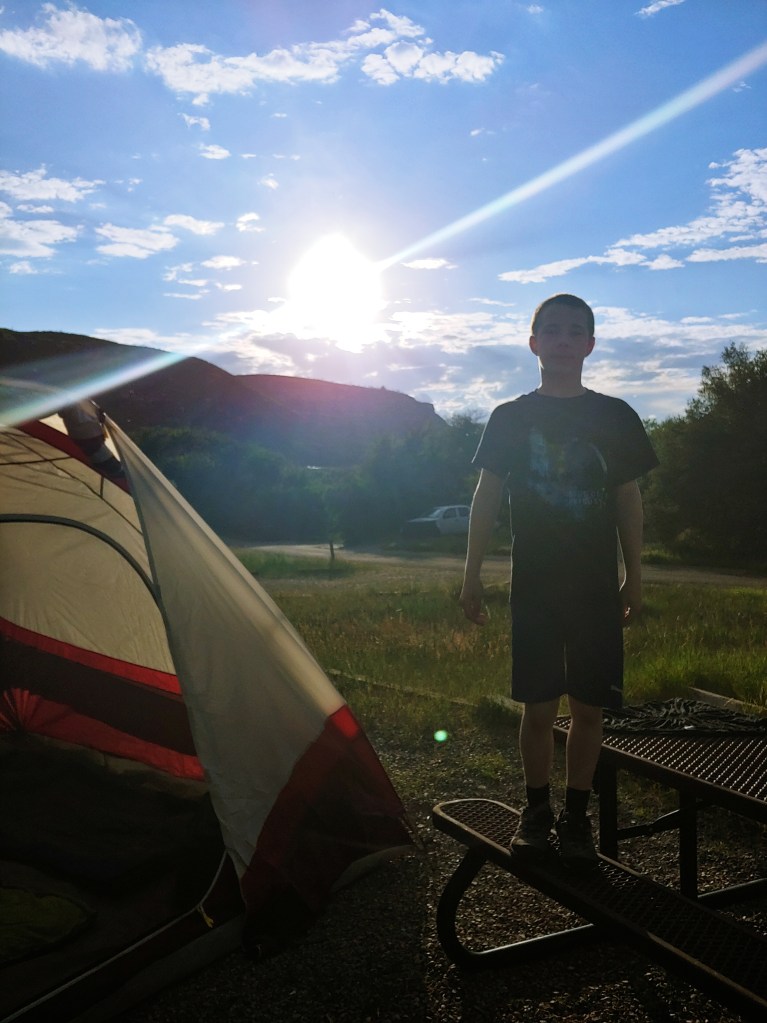
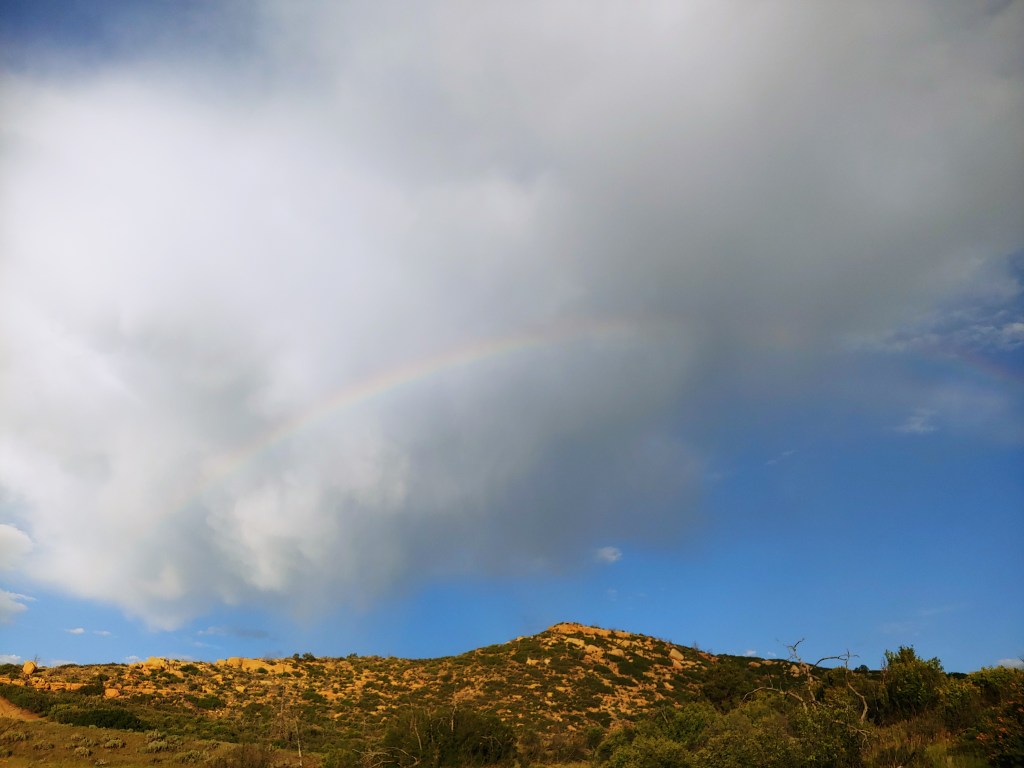
Here is a small part of the Mesa Verde formation, seen from the North, as we head west along Highway 160 towards the town of Cortez. My boys and I “camped” at Mesa Verde last month, but we didn’t really camp camp. We just slept in a tent. We drove into town to get our meals, so I don’t call that camping. There were some much more hard-core campers in the sites near ours, including a family who had come all the way from Maine.

Once you have entered the park and the road has begun to climb, you can stop at an overlook and look out towards the East, over Mancos Valley.

The most famous cliff house in Mesa Verde is called Cliff Palace. It’s the one that you usually see pictures of. To get to it, you take a short but steep hike down into a canyon with a ranger for a guided tour. I’ve done this once in the past, but this year, Cliff Palace Loop road was closed for maintenance. So, we (along with every other visitor) went instead to “the quieter side of Mesa Verde” (per the brochure), namely Wetherill Mesa.

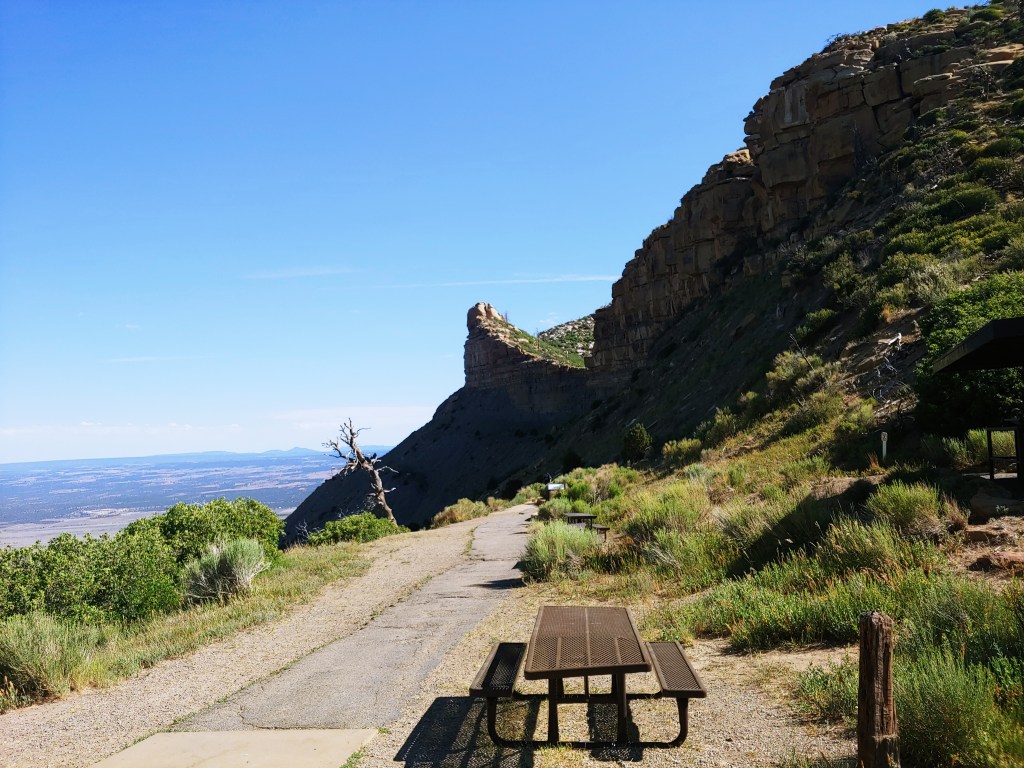
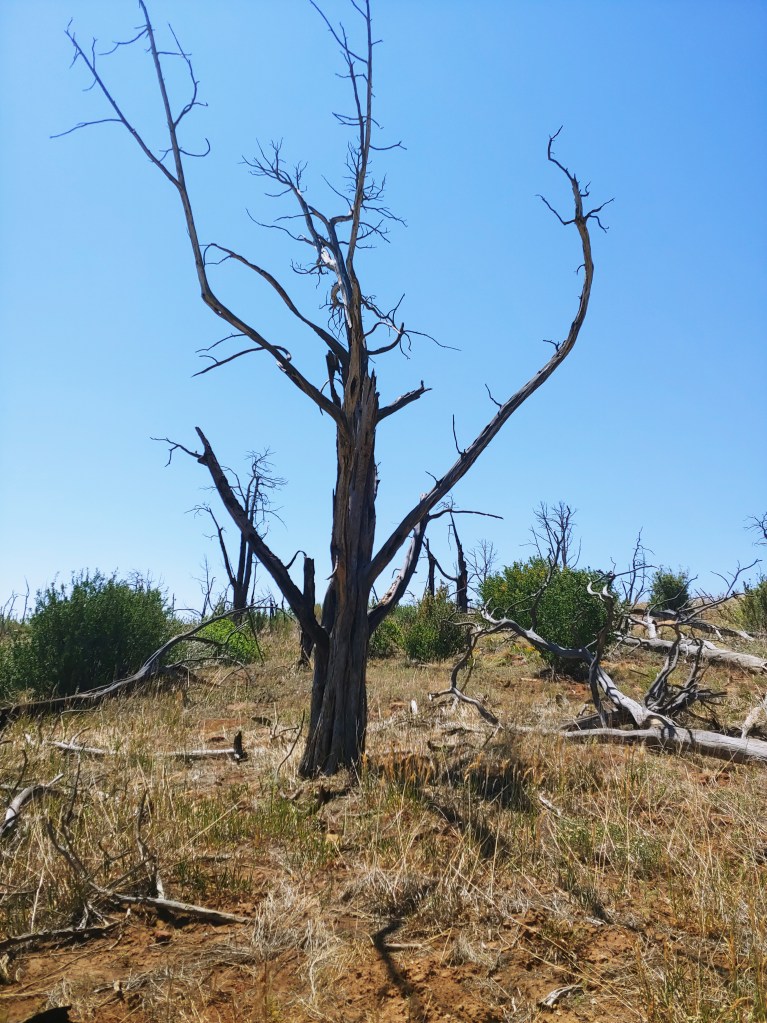
Here’ a view from the top of Wetherill Mesa. As you can see, it’s at a very high elevation, with views in the distance of some of Colorado’s majestic mountains. Notice also the many burned trees. The climate is so dry here that you can see the skeleton forests left by many generations of past forest fires.

Wetherill Mesa is a very large area. There are several different sites of ruins that you can visit, including a couple of “overlooks” from which you can see cliff dwellings but not walk to them. As noted last week, my boys and I did one cliff dwelling hike on Wetherill Mesa, to a site called Step House. Unfortunately I don’t have a picture of the whole complex from a distance, just close-ups of its features. It is not a large ruin, but here are the steps that made it famous:

They look like scattered rocks, but if you look closely, you can see that they have been fitted into steps. To the right is the edge of the “proto-kivas” found at Step House. Farther to the right of that, you would find the dwelling itself, and in front of it a proper kiva (though still smaller than those at some other sites).

This proto-kiva has burned wood still as it was left about 800 years ago, much as that blows the mind.

Some small rooms behind the proto-kivas (the one on the lower left has a reconstructed roof on it).

Here’s the proper kiva, which is in front of the dwelling part of pueblo.

And here are the walls of the pueblo, rising up from the edge of the kiva in the foreground to the underside of the overhang.

The other place we visited on Wetherill Mesa was a series of dwelling sites that were not cliff houses, but were built up on top of the mesa. A few of these sites were pueblo-style (square buildings made with stones, and attendant kivas), but one was an earlier pit house (cool!). I’ll show you pictures of this stuff another time, and give you some basic archaeological information as well, but for now I’ll close because this post is getting pretty long already. I do just want to add that, as we were informed by a sign, as you walk from the parking lot to get to the excavated dwellings, you are walking past other sites that have not yet been excavated. Mesa Verde, and in fact the Four Corners region in general, is literally covered with archaeological sites, some known, some unknown! You think of people in, say, Jerusalem as people whose daily lives are literally lived atop layers of history, but the more I learn, the more it seems this is true everywhere you go in the world. They are even finding ancient human settlements in the Amazon rainforest now.

O.K., that’s enough archaeological nerding out for one day. I hope you enjoyed the tour! Have a great weekend!

Quote: Alternatives Actually Available

Judicially expanded “rights” to appeal state court decisions to the federal courts led to an increase in such appeals for habeas corpus from fewer than 100 in 1940 to more than 12,000 by 1970. … This is not to say that there are literally no innocent men ever convicted in a country with a quarter of a billion people. It is simply to raise the question whether extended federal second-guessing of state apellate courts will turn up many or any … and at what cost, not only in terms of money, but in terms of innocent people sacrificed as victims of violent criminals walking the streets longer and longer, while legal processes grind on slowly in a seemingly interminable way.

In short, while saving some individuals from a false conviction is important, the question is whether it is more important than sparing other, equally innocent individuals from violence and death at the hands of criminals. Is saving one innocent defendant per decade worth sacrificing ten innocent murder victims? A hundred? A thousand?

Once we recognize that there are no solutions but only trade-offs, we can no longer pursue “cosmic justice,” but must make our choices among alternatives actually available. These alternatives do not include guaranteeing that no harm can possibly befall any innocent individual. The only way to make sure that no innocent individual is ever falsely convicted, is to do away with the criminal justice system and accept the horrors of anarchy.

Thomas Sowell, The Vision of the Anointed

I realize this might seem a little esoteric, but I’m posting it for two reasons. 1) I love Thomas Sowell, and 2) This theme of having to choose between existing options, none of which are perfect and all of which may be awful, is a major theme of both my second and (freshly drafted) third novels.

NW Visits Mesa Verde

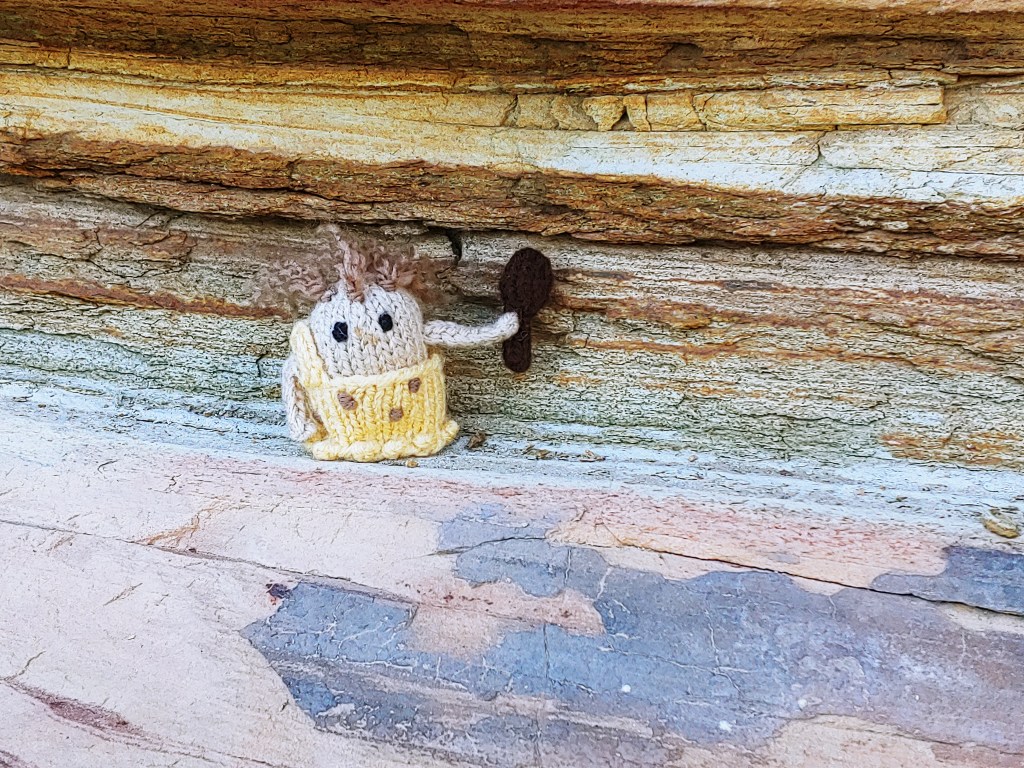
I’ll give you serious Mesa Verde pictures, plus a bit more commentary, next week. But here is NW on her visit there …

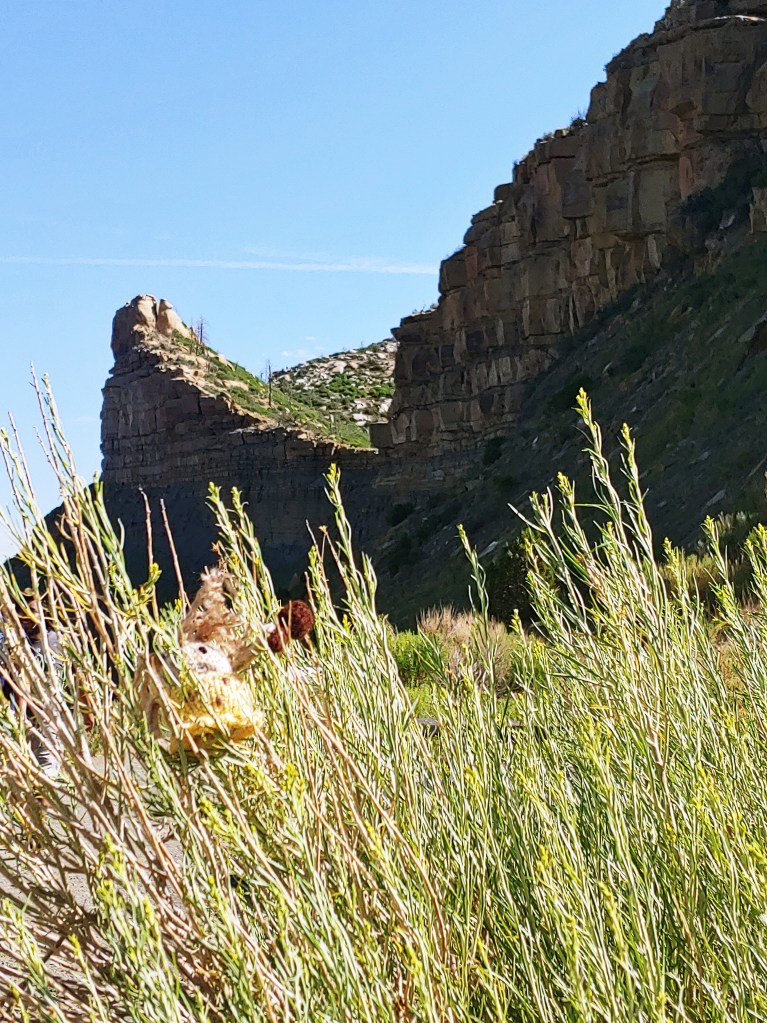
This is the edge of Mesa Verde. (As you can see, NW is nearly overwhelmed by it.) You approach it from the north, where impressive cliffs like this loom over you. The road climbs, and then Mesa Verde itself is a vast elevated area with multiple smaller mesas and canyons where you find archaeological sites. Some of them are built along cliffs in the canyons, others are up on top of the mesa(s).

The whole region is studded with forests of burned trees. As we drove south from the entrance towards Wetherill Mesa (which is in the Southwest corner of the park), periodically we would see signs that said what year the fire in question happened. Some of these fires happened 10, 20, or 30 years ago. The climate is so dry that the burned trees are still standing and look fresh.

Here is the path created for tourists that leads down to Step House, which is a small cliff dwelling. As you can see, it’s leading down into a canyon.

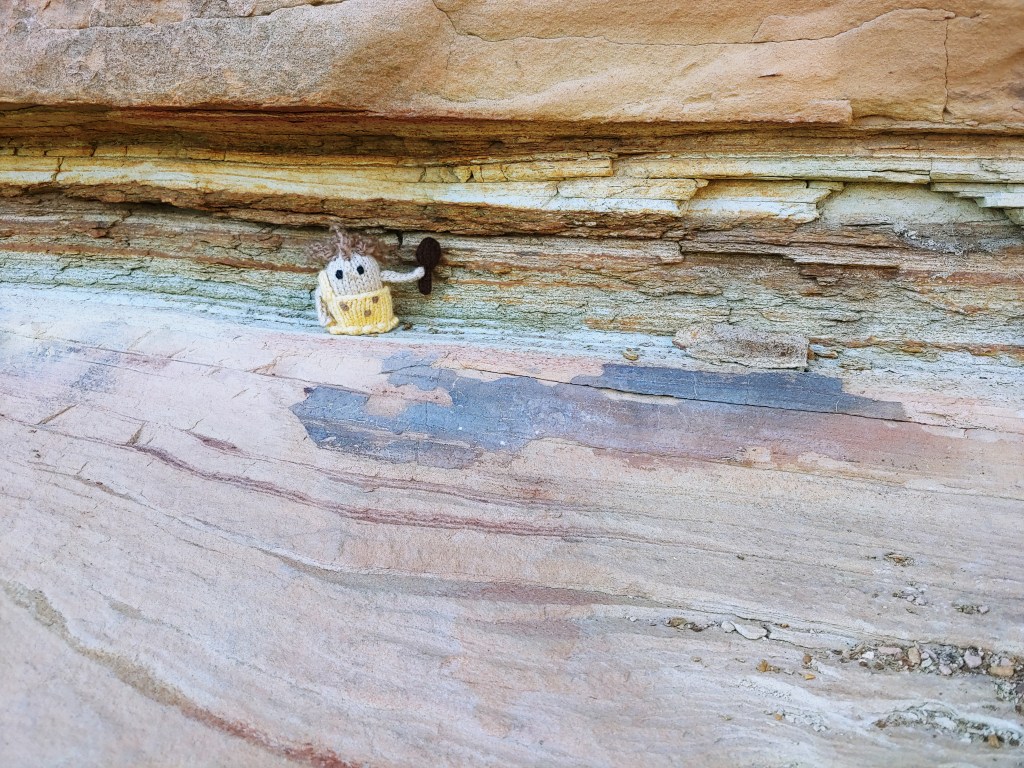
The path down to Step House leads right past exposed sandstone cliffs like this one. Not surprisingly, rock shops are a really big deal all throughout the Four Corners region.

Step House, besides the remains of stone walls (cool!) also has one kiva and a few other, “proto-kivas,” like this one. A kiva is a round underground room. Modern pueblo Indians use kivas for ceremonies, so we assume that is how they were used by their ancestors at Mesa Verde, Chaco Canyon, and other sites. This one is called a proto-kiva because it’s smaller. The ranger, who was standing there, told me the Step House was settled around 600 AD, which is when the proto-kivas were built. Then there was a gap of a few hundred years, and it was settled again around 1200 AD, when the larger kiva was built. Apparently it was settled by the same people, or at least by people who made the same kind of pots. (But remember the archaeological caveat, “Pots are not people.”) The burned wood is still there from about a thousand years ago! This dry climate is fantastic for archaeology!

Here is a shot looking down into the bigger kiva, though NW did not photobomb this one.

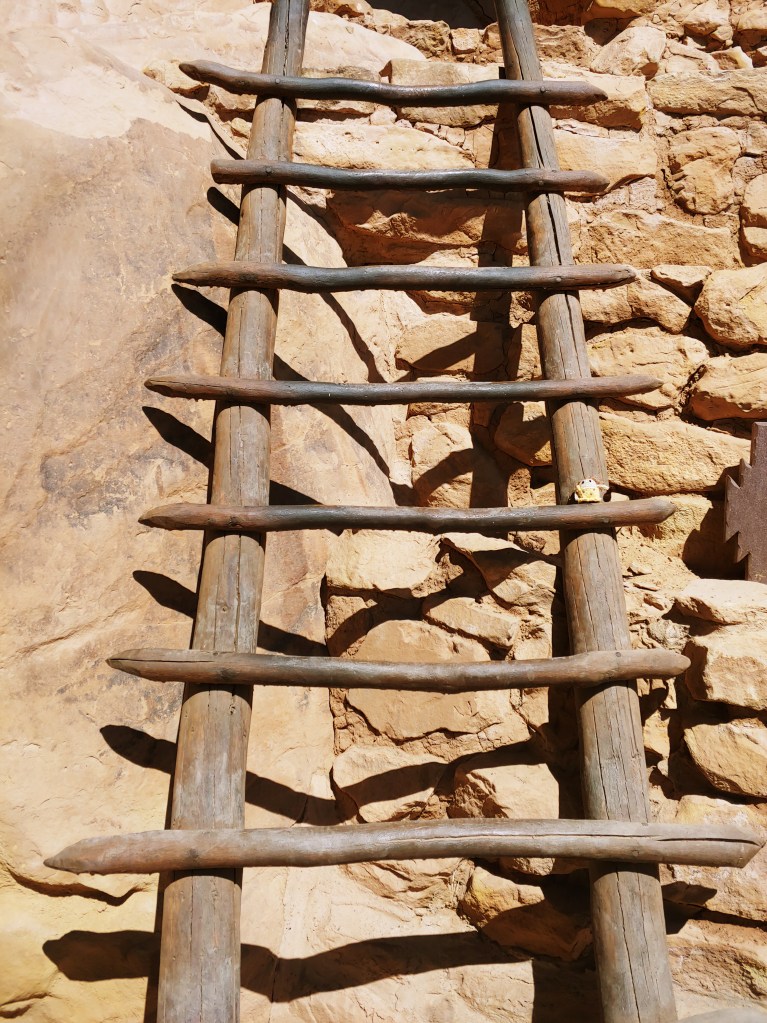
But she did pose on this ladder, which is a re-constructed one leading up into the house part of the pueblo.

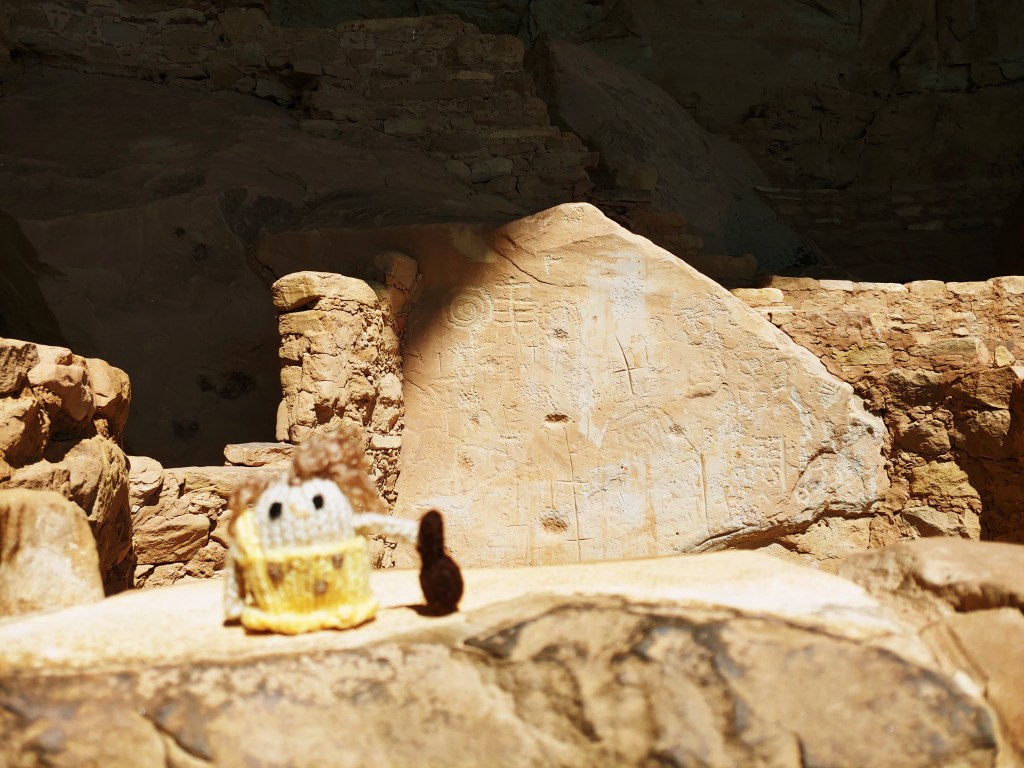
Somewhere in the Step House complex, NW found these petroglyphs. She is resting her club in a satisfied manner as though she just completed these herself. She did not, though. But they were obviously made by people, and the people were obviously kindred spirits in their desire to incise symbols, some of which look an awful lot like the Ice Age writing that NW herself once used.

Quote: The Kindest of Lies

We waltzed slowly around the room, between the rows of booths, past the pool table and the chairs, never hitting anything. I guess the loser had spent so much time in that bar that he knew where everything was. He had the gift of all the best dancers: he led you so that you felt as though there was no leading or following involved … The scar tissue above his empty white eyes was furrowed with concentration, and he smelled of sweat and gin.

“Are you beautiful?” the loser whispered toward the end of the song.

I lied a little. “Yes,” I said. “Very.”

The loser smiled to himself and closed his sightless eyes.

Fulton County Blues, by Ruth Birmingham, p. 52