Numbers Chapter 25: A Manual for Misbehavior

Disclaimer: I write this post with fear and trembling.

The adult Sunday School in my tiny church is reading through the book of Numbers together. Numbers, although it does contain a lot of numbers of the census variety, also has a lot of other stuff too. It covers the Israelites’ journey from Sinai to the Promised Land, their second-guessing of the decision to go into the Promised Land, and then there’s a time skip and it picks up near the end of their forty years in the wilderness. Along the way, they have to deal with a lot of stuff. This is a large population that’s just been displaced and given a new set of laws to live by. They have the dangerously holy Tabernacle, plus their own tents, to manage. They’re in a survival situation, and they need to learn to move through the wilderness in an organized manner, to get along with each other, and to trust their leaders. There is an attempted coup every few chapters basically. That’s leaving aside the enemies they encounter, and the new problems that arise as their nation grows, such as how inheritance works when a man has only daughters. This is the book that has the bizarre episode with the “seraph-serpents” and the comedy/horror story of Balaam.

All this to say, Numbers will land as highly relevant for anyone who’s been in a tense situation with a group of people that you are trying to get to gel. If you’ve ever wondered, “Why can’t my church/school/family get along?”, remember that the people of Israel could not get along, or trust God for more than about a day, even though they had His visible glory cloud towering over their camp every night. This is human nature. As a teacher (not even a headmaster!) at a Christian school, it was hard not to sympathize with Moses, whose life is endangered a number of times, not from outside foes but from fellow Israelites who think they could do the leadership better.

So, in Numbers 25, we see the people of Israel (not all, but some of them) once again get dangerously out of control. This time, quite a few of the Israelite men start participating in worship of pagan gods because they have been invited to an orgy by women of the Moabites and (nomadic?) Midianites. We later find out that these ladies have been put up to this by Balaam, who in a previous chapter found himself unable to curse Israel directly, so he decided to go for undermining them instead.

This is a pretty big scandal, and Moses handles it as the recently given Law prescribes: namely, the death penalty for the offenders.

Not incidentally, a plague was also apparently raging through Israel as God’s response to this incident. The plague only stops when the death penalty has been carried out, but not before 24,000 people die of it. Although I believe this really happened, it’s hard not to notice the symbolism of a plague. That is indeed what sexual sin in an institution resembles. It’s an unclean disease that, if not swiftly dealt with, rages out of control and quickly claims many innocent victims.

I am not arguing for the death penalty for sexual sin in the Christian era (at least, not all sexual sin), but what I got out of this passage was: swift and decisive action.

The passage that struck me was this:

Moses said to Israel’s judges: “Each of you must put to death those of your men who have joined in worshipping the Baal of Peor.”

Num. 25:3

Seems simple, but what stood out me was the assumption that it was possible to find out which of the men had participated. Just that week, I’d read an article by a mom whose daughter was bullied from second through fourth grade. The only thing that stopped the bullying was that the parents pulled their daughter out of that school. As with many instances of bullying, the bullies were former friends whose parents wouldn’t admit to what was going on. The bullied girl was often made by teachers to apologize to the class, as if she were the source of trouble. At the same time, all the other children knew she was being mistreated, and would come home shaken up by what they had seen done to her.

Moses would have had those bullies expelled before the end of the first semester.

Now, I want to be careful here. As a teacher (not to mention a parent), I realize that it can be difficult, at first glance, to tell whether bullying is taking place. Sometimes, it’s friendship drama. (Every girl in fourth grade feels left out by every other girl.) Sometimes, you’ve got a sensitive kid and a rough game. My own kids used to accuse each other of “bullying me” when their brother did something that annoyed them. Almost always, the incident was not witnessed by the teacher. Often, there is a history that was also not witnessed. All that to say, unless you are willing to do a lot of investigation, and have Solomonic wisdom in weighing motives, it is very easy to accidentally identify the wrong person as the prime offender.

But what this passage tells me is that you do have to be willing to do a lot of investigating, and you do need to pray for Solomonic wisdom in weighing motives, and you need to do this as soon as you become aware of the problem. And this means you may need to set aside the original program for that hour or day.

This is what I strive to do. God help me! I don’t do it perfectly. But I know what not to do, which is what organizations naturally tend to do: Postpone, procrastinate, dither, wring their hands, “investigate” forever but never take any action, and above all, avoid coming to unpleasant conclusions. Meanwhile, the plague goes on raging.

Forgotten in Death: A Book Review

The following review was recently posted by me on GoodReads:

So, it looks as if the “In Death” series by J.D. Robb is yet another very long-running series that I was unaware of. They are police procedurals set in the 2060s. This future world differs from our own about as much as you’d expect. Things are recognizable, and the terms, trends, and technologies that look different seem like reasonable extrapolations from what we have now. Obviously, this isn’t the only way the world could go, but it’s a plausible one. For example, people live slightly longer in this future world, so that one character casually mentions he’s going upstate for his parents’ 75th wedding anniversary.

The world and characters are introduced masterfully in a way that’s very much showing, not telling … so much so that I almost felt lost during the first few chapters. I don’t know whether this is because of an extreme leaning towards showing, or whether because this particular book comes very late in the series. The one thing I wished for more of was a physical description of Eve and of her husband, Roarke. Perhaps these were given in earlier books.

Forgotten also contains easter eggs. Eve’s husband, Roarke, and another family, the Singers, are both in the construction industry in New York City. Sound familiar? When I first started this book, I wondered whether it was going to be a re-telling of The Fountainhead. It wasn’t. There is also an allusion to The Cask of Amontillado. There are probably other literary allusions that I didn’t pick up on. These allusions take this book to a whole new level beyond its genre.

Realistic speech in books is important to me, and Forgotten excels in this area. The characters all speak differently from one another, whether they are a tough cop, a bubbly teenager, or a Russian gangster. I should also note that, although this book is gritty and deals with horrible domestic abuse and crime, it does not portray the world cynically. There are many characters who are genuinely good people, including main and side characters. I didn’t feel I was being sold a vision of the world where everything is class war or patriarchy or whatever.

Though long, this book covers only about three days of investigation. We follow the detective, Eve, through every minute of her day and night. Like many hard-boiled detectives, she and her team are very driven. She works late into the night. She forgets to eat unless someone makes her. She sleeps for … I don’t know. It looks like five or six hours maybe. I don’t enjoy this aspect of detective fiction, because it makes me tired. However, I know it’s part of the genre.

Personal Addenda because this is a blog:

I got this book from my husband’s trucker friend. After reading it, I checked on FictionDB, and oh my goodness! Forgotten is #53 of a 62-book series! And that series includes some books that are, say, number 11.5 as well. This friend of my husband’s is really expanding my horizons.

One other possible reason that I felt disoriented as I began this book was chronic pain. For the entire time reading it, I’ve been suffering nerve pain in my left arm. On and off, but mostly on. Update: it’s now about 7 weeks later, and the arm no longer painful, just pins and needles.

Finding God in the Literature of Darkness

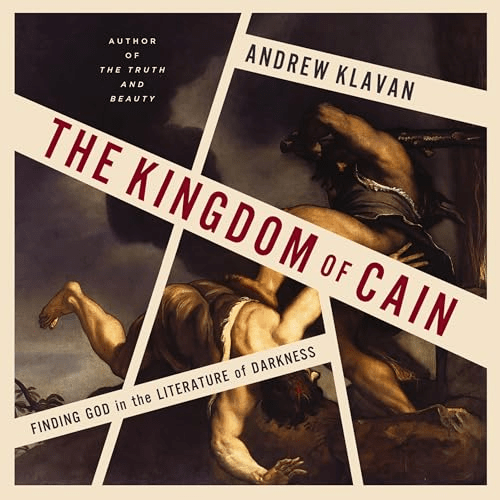
A review of noir writer Andrew Klavan’s The Kingdom of Cain: Finding God in the Literature of Darkness. I have already posted this review on Amazon and Goodreads.

This is a very readable book that fleshes out Andrew Klavan’s thesis:

The opposite of murder is creation–creation, which is the telos of love. And because art, true art, is an act of creation, it always transforms its subject into itself, even if the subject is murder. An act of darkness is not the same thing as a work of art about an act of darkness. The murders in Shakespeare’s Macbeth are horrific, but they are part of a beautiful play.

page 17

In other words, Klavan is wrestling with the problem of evil. Based on his decades of thinking about this, he has concluded that in this life, there is no theological answer that can redeem evil for those who have suffered it. Theological answers there may be, but those are not what redeem it for us. The only answer to suffering is not an answer, exactly; it is beauty. The example he frequently re-visits is the Pieta, “the most beautiful statue in the world,” a statue of Mary cradling her maimed and innocent, dead son.

I think Klavan’s thesis is a very strong one. I think of the book of Job. Job suffers horribly, and apparently undeservedly, and to add to his suffering, he is told that it must be his fault. He asks God why. Now, as it happens, there is an explanation for everything that is happening to Job. But God doesn’t give it. He just starts talking to Job about the wild animals and their habits. This is beauty, it is wonder, and it is far beyond Job’s experience. But ultimately, God answers Job with Himself, with His presence. He answers Job out of the whirlwind. He mentions just a few of His mighty, mysterious works in creation. And this is a good answer. It is enough. It is a much better answer than if God had said, “Well, it all started when I got into this argument with Satan …”

Kingdom of Cain is a hard book to read because of the real-life crimes described in it. Klavan tries not to get too graphic unless he has to, but this is a book about murders after all, including copycat murders. The blurb says it examines the impact of three murders on our culture, but there are a lot more than that, both fictional and–this is the hard to read part–real. The hardest one for me was the kidnap, rape, and murder of a 14-year-old boy by a pair of older teenagers who were later lionized in fiction.

This book is very insightful. Perhaps if I had never heard Klavan make these points before, I’d have given it five stars. But I have been following him for years, and he has been working on this concept for years, so the idea was not new to me. Especially in the later chapters, it felt a little belaboring. Hence, four stars.

A Tale of Two Lost Boys: Perry Smith vs. Ikash son of Endu

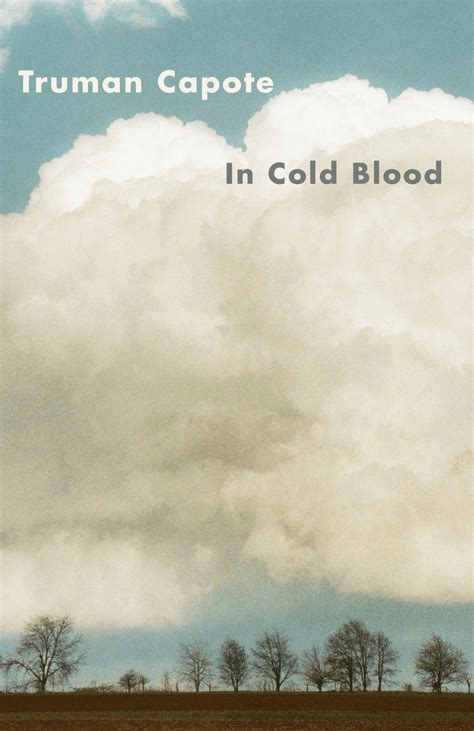
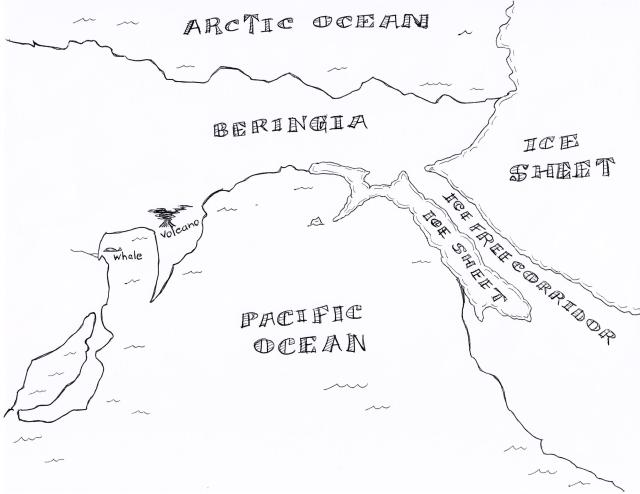
Left to right: Dick Hickcock and Perry Smith, killers of the Clutter family; In Cold Blood by Truman Capote; The Strange Land by Jennifer Mugrage; “Don’t Eat My Family” by Jennifer Mugrage.

I hope this image gallery shows up right. I’ve never tried to make one before.

It’s unfortunate that I couldn’t find an image of either Perry or Ikash alone, but in some ways it’s fitting that the image I found for Perry features a mugshot and the image of Ikash shows him protecting his family.

This post will contain spoilers for The Strange Land, which has been out since 2021, and In Cold Blood, which has been out since 1966. This will be a rambling comparison between two character studies. Come along if you like that sort of thing.

It may seem — and O.K., it is — pretentious to compare a book of my own to Truman Capote’s masterpiece. My reasons for comparing the two characters will become clear, but to belabor the obvious, I am not comparing myself to Capote as a writer. It’s my blog, so I can be a little bit pretentious if I want, right? Shall we?

What the two lost boys have in common

The character of Perry Smith has a great deal in common, on a superficial level, with Ikash, the focus of my coming-of-age story The Strange Land. The similarities were strong enough to disturb me when I read Capote’s classic. After all, Perry drifts through the world aimlessly and then commits a senseless murder, whereas Ikash remains kind and courageous and goes on to become the shaman of his people. Perry is real, Ikash is fictional. Does this mean that I had fatally romanticized my character Ikash, a person who would not be nearly so noble in real life?

I do have a tendency to romanticize the sensitive, artistic guys, and ladies, if you share this tendency, it is something you need to watch. Just because a guy is not harsh, does not necessarily mean he is kind. As Jordan Peterson has said, “If you think strong men do a lot of damage, wait ’til you see the damage weak men will do!”

To start at the most superficial level, Smith and Ikash kind of look alike. Both are short and stocky (Smith had underdeveloped legs and feet), with wide faces, fine features, and dark eyes and hair. In fact, both are American Indian, though they are so far removed in time that this fact has no relevance for anything except their appearance. Smith’s father was John “Tex” Smith, an Irishman, and his mother was Florence Buckskin, a Cherokee. Ikash is a fictional character but was supposed to come from a tribe that was ancestral to the American Indians.

Both grew up in rough circumstances and eventually suffered the breakup of their families. Smith’s parents were both drunks. His mother left his father when he was small, and he turned to crime, lived in a series of orphanages, then on the Alaskan frontier with his father as a teenager. He eventually joined the Navy, then proceeded to drift from friend’s house to friend’s house to park bench to jail, not really having a place to go home to. His shrimpy stature was probably from malnutrition as a young child.

Ikash (again, fictional) had it slightly better. He did not suffer from hunger, because the tribe’s Beringian environment provided for them abundantly. However, his father was abusive to mother, leading eventually to her suicide, and periodically to his sons as well. After his mother’s suicide, Ikash’s family essentially broke up, and he and his brother lived together as bachelors. He was a bit of a pariah in the tribe because of his family’s reputation.

Both men are quiet, sensitive types. Both play the guitar (lute, in Ikash’s case) and sing. Both think of themselves as spiritual. In Perry’s case, he has occasional premonitions, visions, and, as he gets more beat up by the world, what appear to be dissociative episodes.

“I could give you a hundred examples. I don’t care if you believe me or not. For instance, right before I had my motorcycle accident I saw the whole thing happen: saw it in my mind–the rain, the skid tracks, me lying there bleeding and my legs broken. That’s what I’ve got now. A premonition.”

… “About that premonition stuff. Tell me this: If you were so damn sure you were gonna crack up, why didn’t you call it quits? It wouldn’t have happened if you’d stayed off your bike–right?”

That was a riddle that Perry had pondered. He felt he’d solved it, but the solution, while simple, was also somewhat hazy: “No. Because once a thing is set to happen, all you can do is hope it won’t. Or will–depending. As long as you live, there’s always something waiting, and even if it’s bad, and you know it’s bad, what can you do? You can’t stop living. Like my dream. Since I was a kid, I’ve had this same dream … What it comes down to is, [in my dream] I want the diamonds more than I’m afraid of the snake. So I go to pick one, I have the diamond in my hand, I’m pulling at it, when the snake lands on top of me… he starts to swallow me. Feet first. Like going down in quicksand.”

Perry hesitated. He could not help noticing that Dick was uninterested in his dream.

Dick said, “So? The snake swallows you? Or what?”

“Never mind. It’s not important.” (But it was! The finale was of great importance, a source of private joy. [It was a] towering bird, the yellow “sort of parrot” … which had first flown into his dreams when he was seven years old, a hated, hating half-breed child living in the California orphanage run by nuns–shrouded disciplinarians who whipped him for wetting his bed. It was after one of these beatings, one he could never forget, that the parrot appeared, arrived while he slept, a bird “taller than Jesus, yellow like a sunflower,” a warrior-angel who blinded the nuns with its beak, fed upon their eyes, slaughtered them as they “pleaded for mercy,” then so gently lifted him, enfolded him, winged him away to “paradise.”

As the years went by, the particular torments from which the bird delivered him altered, but the parrot remained, a hovering avenger.

pp. 90, 92 – 93

Perry has no outlet for his artistic nature and believes that no one appreciates his depth and intelligence.

Ikash, for his part, wants to have visions like his cousin Ki-Ki who is the tribal shaman, and eventually does have visions, but then worries that they are endangering his loved ones.

Ikash can spend a lot of time alone, thinking or praying. Smith travels with a box full of books, papers, maps, and magazines, even when homeless, which is a habit that endeared him to me before I heard more details about the murder he committed.

Ikash, as has been mentioned, moves into a protective role towards members of his tribe. Smith, despite being an unstable character in some other ways, several times protects girls and young women from the predations of his partner in crime, Dick Hickcock.

he had “no respect for people who can’t control themselves sexually,” especially when the lack of control involved what he called “pervertiness”–“bothering kids,” “queer stuff,” rape. And he had thought he had made his views obvious to Dick; indeed, hadn’t they almost had a fist fight when quite recently he had prevented Dick from raping a terrified young girl?

page 202

Finally, another burden these two young men have in common is chronic, or recurring, pain. Smith’s legs were smashed up in his motorcycle crash and appear not to have healed properly. There’s a memorable scene in In Cold Blood where the two criminals, on the way to their heist, stop at a gas station. Perry goes into the bathroom and stays in there for so long that both Dick and the gas station attendant are filled with disgust and impatience. In fact, Perry is first sitting on the toilet, then trying to rise to a standing position, with his legs hurting so badly that he’s holding onto the sink, sweating, and shaking. Ikash has periodic recurring pain from some old broken bones (collarbone, ribs), and also suffers periodic “phantom” pains in other parts of his body, that while short-lived, are severe enough to be temporarily debilitating. Ikash believes that these episodes represent instances of his “bearing” the actual sufferings of other members of his tribe, for them. They can also be understood as the lingering effects of trauma and grief, stored in the body. As can Smith’s health problems.

So what accounts for the different outcomes between these two lost boys?

Easy, you might say. You made Ikash up, so you can make him turn out however you like. Perry Smith lived in the real world, where there are no happy endings.

Well, O.K. I did not write a nihilistic book where characters are trapped by their abusive pasts, character flaws, and poor decisions by themselves and others, because I don’t believe that the world is, ultimately, a nihilistic place. But if you’re going to write hope into a book, it has to come from somewhere. It can’t be deus ex machina hope; it has to be Deus ex caelo, or should I say credo in unum Deum, Patrem Omnipotentem, Factorem caeli et terrae.

Some reviewers of my book said they found the scenes of domestic abuse difficult to read. Actually, I kept them as minimal as I could and still convey the problem, and there is much that I spared Ikash, as can be seen when we compare him to Perry Smith, who had it much worse.

Smith was the youngest in his family, so he was very small when things got chaotic between his mother and father. His mother would bring strange men home and fornicate with them in view of the children, something Ikash’s mother Sari definitely would not do. One of these episodes led to a fight “in which a bullwhip, hot water, and gas lamp were used as weapons.” After the breakup of the family, Perry ended up in orphanages where the nuns would shame and beat him for bedwetting. Ikash was also a bedwetter, as is not uncommon among little boys. Perry Smith had even more reason for it given the instability in his home. This problem continued into adulthood. He believed that his kidneys had been ruined by a childhood diet of bread dipped in sweetened condensed milk, which during the Smith family’s nomadic days was often all they had for supper.

Ikash’s family, though unhappy, remained intact until he was fifteen.

When Smith joined the Merchant Marine, Capote strongly implies that he had another horrible experience which Ikash escaped.

“But I never would have joined [the Merchant Marine] if I’d known what I was going up against,” Perry once said. “I never minded the work, and I liked being a sailor–seaports, and all that. But the queens on the ship wouldn’t leave me alone. A sixteen-year-old kid, and a small kid. I could handle myself, sure. But a lot of queens aren’t effeminate, you know. Hell, I’ve known queens could toss a pool table out a window. And the piano after it. Those kind of girls, they can give you an evil time, especially when there’s a couple of them, they get together and gang up on you, and you’re just a kid. It can make you practically want to kill yourself.”

pp. 133 – 134

Apparently, Smith was the victim of homosexual predators while he was at sea. This kind of violation, arguably the ultimate in horror, is not something I’ve ever felt up to subjecting my characters to. It is, sadly, quite common in the world (especially the ancient world), and I am not saying it’s something that a person cannot come back from. The grace of God is enough to redeem and restore anyone, no matter what they have been through (see The Sparrow.) But I have never had the slightest ability nor desire to put my male characters through this. Real life, on the other hand, is not so merciful.

Ultimately, though, it’s not Perry’s additional bad experiences that left his character to turn sour; instead, it’s relationships that he lacked and Ikash had.

Like Perry, Ikash’s immediate family was not great. His father and his older brothers bullied him. Unlike Perry, Ikash lived in a tribal situation where there were, close at hand, uncles and aunts, cousins, and a grandmother. This kind of situation is not automatically good, of course; tribes can be hotbeds of gossip and social pressure. And indeed, Ikash’s early experiences do cause him to mistrust older relatives who might otherwise be helpful to him. But he is fortunate to have quite a number of kind people in his life who wish to aid him and his mother. Grandmother Zillah does her best to provide breaks for Sari; cousin Ki-Ki mentors Ikash, and a model of a healthy marriage is provided by his father’s sister Ninna and her husband. Even with all these good helpers and models, it is barely enough.

Perry does not seem to have had anything like this kind of potentially beneficial community. His father and mother were itinerant, having met on the rodeo circuit. They don’t seem to live near any extended family. Perry does form connections with friends who he believes understand him, but because of his vagrant lifestyle, the connections are not lasting. At one point, he travels across the entire United States hoping to stay with an old Army buddy, only to find to his dismay that the buddy has moved and left no forwarding address. These kinds of near misses are the story of Perry Smith’s life. What might be called his last friend, Dick Hickock, is a cellmate who wants to use him to pull off a heist, and ultimately puts him in a situation that leads to the moral ruination, and then the death, of both of them. Dick does not understand Perry, nor does he have any concern for the best interests of Perry, the Clutter family–or anyone but himself.

In a counterintuitive dynamic, Perry’s very isolation tends to make him not only lonely, but also increasingly conceited. Having no long-term relationships means there is no check on his delusions. With no one to praise, appreciate and love him properly, there is also no one whose critiques he can take to heart. He’s left to his own assessment of himself, and not able to develop strength of character or clarity of mind. Ultimately, when he cuts Mr. Clutter’s throat, he does it without intending to. “I didn’t want to harm the man. I thought he was a very nice gentleman. Soft-spoken. I thought so right up to the moment I cut his throat.” (p. 244)

Ikash, on the other hand, is surrounded by judgmental relatives who have known him since he was small, who can love on, scold, praise, and criticize him.

Without Hope and Without God in the World

At fourteen, Ikash begs his older cousin Ki-Ki, the tribal shaman, to teach him how to have a vision.

Ki-Ki, the shaman, seemed to be in love with the world and with the many specific things in it. He was in love with his dogs, for example, with the horses, with the wild animals, in love with his wife, in love with God. It was this quality that drew Ikash to him. Ikash would love to approach the world like that. But he had never felt such love for anything, except when it was stirred in him for a few moments by some story or song of Ki-Ki’s. He longed to live in the world of the stories, but he had never been able to manufacture such love inside himself.

p. 93

Ki-Ki is uncertain this will work, or that is even viable (as he says, “visions are dangerous“), but he is willing to give it a try.

They sat, cross-legged, each with his back against a tree. Upstream, there was a view of the grey top of a mountain.

The atmosphere seemed somewhat lacking to Ikash. He looked at his older cousin and muttered, “Aren’t you going to beat a drum or something?”

Ki-Ki grinned whitely. “Then you wouldn’t be sure it was real,” he said. “Besides, God is everywhere. We need no drum to talk to God.”

As soon as he said the word “God” for the second time, a presence was felt in the gully. It was so palpable that Ikash actually gasped.

Ki-Ki apparently felt it too, for he reached out a large, hard hand and grasped Ikash firmly around the wrist as if to keep him from being swept away.

Immediately Ikash knew what his cousin had meant about danger that was not a physical danger. He felt no threat, nor any hostility, such as he had often felt from his father. But the presence was overwhelming, crowding, as of something too huge for the valley to contain.

This was not the sort of vision he had hoped for.

He heard Ki-Ki speak. “It’s too much for him,” he said, and for a second it was as if some great face had turned its terrible eyes towards Ikash … and then, oh thank goodness, the presence was gone suddenly.

pp. 100 – 102

In other words, Ki-Ki, without really trying to, functions as an intermediary to introduce Ikash to God. Later, when quite a few other tragedies have happened and Ki-Ki has been taken from Ikash, the young man has a vision of his own that he can only describe as “a father.”

“A father?” [his brother] Sha blinked, completely thrown.

“A good father.” Ikash was staring earnestly at his brother, as if willing him to grasp this difficult concept. “It gave me a sense of a really good father, the kind we’ve always wanted but never known.”

“What did it look like?” asked [cousin] Mut. He was picturing a bigger, two-eyed version of his own father.

“I told you, it wasn’t visual. I didn’t see anything except the cloud. But I felt the Father. … We have a father.” He made a slight sweeping gesture with his hand that took in himself and, somehow, the entire camp as well. “That’s what makes us able to bear the loss of all the others.”

pp. 512 – 514

A perceptive reader has pointed out that the definition of a horror story is all the bad stuff in the world that happens, minus God. God is what keeps Ikash’s story from remaining one of unremitting horror. This was the horror–the horror of other people’s sins against him, the horror of a complete lack of adequate love, the horror of his own increasingly weak mind, and eventually, his own grievous sins against others–that Perry Smith lived.

Before Smith and Hickock committed their planned robbery, to which Hickock insisted they leave “no witnesses,” they stopped by a Catholic hospital. Perry Smith knew that nuns were guaranteed to have black nylons, and he wanted Hickock to obtain some so the two could cover their faces when they went to rob the Clutter family. Perhaps, if the two had managed to do this, they would not have ended up killing the Clutters. Dick, however, came out of the hospital without having tried to get any nylons (“it was a pukey idea”). Perry was not willing to go in. He believed that nuns were bad luck.

After Smith and Hickock’s arrest, Perry Smith was kept in a cell in the home of the town undersheriff and his wife, a cell that until then had been reserved for female prisoners. (The reason was a desire to keep the two culprits separated.) Sherriff and Mrs. Meier were “deeply Catholic.”

Mrs. Meier had been rebuffed by Perry when she had suggested a consultation with Father Goubeaux, a local priest. (Perry said, “Priests and nuns have had their chance with me. I’m still wearing the scars to prove it.”)

pp. 288 – 289

Now, of course, “nuns and priests” are not necessarily the only way to find out about the redemption offered to us by the God who gives life to the dead, and calls things that are not as though they were. They might not even be the best way. My only point is that unfortunately, for Perry Smith, the only people in his life whom he associated with God, were also people who were abusive to him. He never had a chance to be introduced to the concept of God by anyone he loved and trusted. This is the opposite of the case with Ikash.

Later, in jail, Perry did make friends with a former pastor, now a fellow inmate, who was mystical and simpatico with Perry. This man, however, seemed to be a bit of an apostate, and by that time Smith had already hardened against the whole idea of God. God, certainly, can overcome stories this sad and sadder, but in this case, for whatever reason, He didn’t.

We don’t know whether Perry Smith had a deathbed conversion in the last few seconds before being hung, but tragically, from all appearances, it doesn’t appear so. Neither did Dick Hickcock. That, plus the apparent senselessness of the fate of the Clutters, is what makes In Cold Blood such a tragedy. It underlines how much Smith and Hickock–and indeed all of us–need Jesus, and that is what makes this unedifying event such an appropriate topic for this Easter season.

In Cold Blood made my Blood Run Cold

Well, I will be thinking about this one for a long time.

On November 15, 1959, in the small town of Holcomb, Kansas, four members of the Clutter family were savagely murdered by blasts from a shotgun held a few inches from their faces. There was no apparent motive for the crime, and there were almost no clues. As Truman Capote reconstructs the murder and the investigation that led to the capture, trial, and execution of the killers, he generates both mesmerizing suspense and astonishing empathy.

from the back of the book

The first thing to know about In Cold Blood that it’s incredibly well-written. Each paragraph is a work of art. Truly. It’s not ornate, which is why I don’t say “each sentence,” but it’s simply and eloquently told.

The book reads like a novel. It goes in chronological order – roughly – but it also slips through time seamlessly, like a good novel should, filling in glimpses of each character’s backstory just when it is needed, and in just the right dosage, no more. The details of the crime itself aren’t revealed until the last quarter of the book, though before Part II of the narrative, the crime has already taken place.

The other thing about this book is that it is really, really tragic. And not just because a family of four were shot in their beds. Just about every conceivable tragedy happens to someone, somewhere in this book. The only ameliorating thing I can say about it is that no indecent assault happens, as it were, “on camera.” We are given to understand that people have experienced it, but we have to read between the lines. The author uses the smallest effective dose.

The thing I really can’t forgive, though, is the way that Capote made me care about the murderer … one of them, that is. Dick Hickock is what today we would call a sociopath (the psychiatrist’s diagnosis is “severe character disorder”). I don’t give two figs for him, except that I wish he wasn’t crashing around the world, ruining everybody’s lives. The other one, though, is more complicated.

Perry Smith (“very nearly a paranoid schizophrenic” according to the doctor) is basically a lost man-child. He is “sensitive,” prescient, plays the guitar, and cherishes a dream, left over from boyhood, of finding sunken treasure. He “has a brilliant mind” (his words) and resents that he never got more than a third-grade education. (He got his high school equivalence during one of his stints in jail.) Perry travels with a cardboard suitcase full of books, journals, maps, and adventure magazines.

… his personal dictionary, a non-alphabetically listed miscellany of words he believed “beautiful” or “useful,” or at least “worth memorizing.” (Sample page: “Thanatoid = deathlike; Omnilingual = versed in languages; Amerce = punishment, amount fixed by court; Nescient = ignorance; Facinorous = atrociously wicked; Hagiophobia = a morbid fear of holy places & things; Lapidicolous = living under stones, as certain blind beetles; Dyspathy = lack of sympathy, fellow feeling; Psiloper = a fellow who fain would pass as a philosopher; Omophagia = eating raw flesh, the rite of some savage tribes; Depredate = to pillage, rob, and prey upon; Aphrodisiac = a drug or the like which excites sexual desire; Megalodactylous = having abnormally large fingers; Myrtophobia = fear of night and darkness.”)

page 146

This is a remarkable list, especially if it was truly taken from Perry Smith’s papers. It is remarkable for the way that every single entry seems to have some special relevance to Perry. Taken together, they almost constitute his biography as it is starting to emerge from the book at this point.

So, what makes him dangerous? Perry has dissociative tendencies, and a substratum of rage that he’s not even aware of. He thinks of himself as a genius with spiritual depths whom nobody appreciates. His is the rage that comes from being inadequately parented. Perry came from an unstable home and spent time in orphanages, where (to take just a sample incident) the nuns would beat and humiliate him for wetting the bed. He’s never had a good mother or father, and has roamed the world trying to find a home. All this deprivation has made him weak, and so he is dangerous in the way that weak, conceited men are dangerous. He is too weak to control his own actions when it matters.

Dad snatched a biscuit out of my hand, and said I ate too much, what a greedy, selfish bastard I was, and why didn’t I get out, he didn’t want me there no more. He carried on like that till I couldn’t stand it. My hands got hold of his throat. My hands–but I couldn’t control them. They wanted to choke him to death.

page 136

Perry also suffers chronic pain. A motorcycle accident left his legs never the same again, and the pain in his legs (and head) tends to flare up when he gets emotionally disturbed, making it even harder for him to concentrate.

I started feeling the tragedy within a page of meeting Perry. The first thing the book tells us is that it’s his dream to learn to skin dive and find buried treasure, and I had a feeling that dream was never going to come to pass. Damn you, Truman Capote!

I may do a whole separate post about Perry as a character, but there’s one more thing I will say about this book. Both Perry and Dick are types of people that you meet very often today. Perry’s history, in particular, is mirrored by many, many others. In fact, his wild, nearly fatherless youth of knocking about the American West reminds me very much of the family history of some of my own cowboy relatives.

Both murderers are treated by the psychiatrist who is called to write reports about them as if they are uniquely mentally ill individuals. Perhaps at the time they were (or perhaps the fact that they had already committed murder made them seem more egregious), but as I look at our society nowadays, their mental landscapes seem more like the rule than the exception. Do with that what you will.

Read this book if you don’t cry easily and want to enjoy 343 pages of the most amazing writing. But just be aware of what you are getting into.

Death of the Mentor

Photo by Vlad Cheu021ban on Pexels.com

I chose this photo off Pexels, and now I almost can’t stand to post it, because it could be my dad in 20 years.

I’ve been thinking lately about how the death of the mentor, in fiction, is often more poignant than the death of the Significant Other. Maybe it’s because the former happens more often. In a normal quest-type story, the mentor gets killed at some point, often kind of early in the action, and the S.O. doesn’t get killed at all, or often even threatened until later in the story. The exception would be crime-fighting superhero tragic back stories, where having a beloved wife killed off to serve as motivation is so common that it has been given a derogatory name (“fridging”).

Anyway, the above paragraph is, of course, just about stories that follow very conventional models. Stories in the wild are quite individual and they go all over the place. Here are some mentor deaths that spring to mind, from stories good, bad, and ugly:

  • In Star Wars: Obi-Wan, Qui-Gon Jin, Darth Vader
  • In Dr. Strange, which I just watched last night: The Ancient One
  • In Harry Potter: Sirius Black, Dumbledore (not to mention Harry’s parents)
  • In Narnia: Aslan
  • In The Hobbit: Gandalf doesn’t exactly get killed, but he leaves the party right before they enter Mirkwood
  • In LOTR: Gandalf
  • In Genesis: Jacob, Joseph, Moses, Samuel (I am thinking of mentors who had a chance to give final curses and blessings and instructions before they died. Of course they all die, good and bad, IRL)

In the comments, please add your own.

Perhaps another reason that the mentor’s death is more poignant than the S.O.’s is that the relationship has gone on longer and has been, in a sense, more important to the young protagonist. It is, of course, in a sense the mentor’s job to die. He or she will have to take a less prominent role in the young hero’s life as the latter matures. And, older people tend to die. Joseph, on his deathbed, says, “I am about to go the way of all the earth.” But a tragic mentor death, like the ones above, seems to happen too soon, when we still need them, when we’re not ready.

I myself have ruthlessly killed off my characters’ mentors, sometimes more than one in the same book. I did not plan to do this in order to torture my young protags; it was just the way the story unfolded. One or two deaths even took me by surprise. However, some of my older men and women managed to survive the story long enough in order to be a rock for the rising generation.

Story Deaths and Stages of Life

Some people, sadly, have really tragic childhoods and are faced with death, loss, and betrayal well before they should have been. For young readers not in this position, I find that the type of story death that they find most poignant (and that therefore is most likely to appear in their literature) changes with stage of life:

  • for a kid: the stuffed animal or pet
  • for a teen: the mentor
  • for a young adult: the Significant Other
  • for a middle adult: the baby or child
  • for an older adult: ??? I don’t know yet, since I haven’t really hit this stage. But my mother-in-law is certainly going through it! Spouse? Best friend? Sister? Everyone your own age who remembers you when you were younger?

So, when I was a kid, it was stories of animals (including toys — I’m looking at you, The Velveteen Rabbit) that really got me. Now that I’m a parent, it’s stories where the baby or toddler dies that I really can’t stand to read.

It’s as if our hearts are pieces of leather that just keep getting softer and more tattered and beat up the more they experience.

I’ve been busy lately, so this post was written in one sitting. I apologize that it’s sort of a mind dump. I’m sure all these things have been articulated before, and much better than this, probably by Jordan Peterson.

Share your thoughts in the comments.

Becoming Free Indeed: My story of disentangling faith from fear, by Jinger Duggar Vuolo: A Review

Wow. This was devastating. It shows exactly how, not only the weird Christian subculture created by Bill Gothard, but the patriarchy and Christianity itself, which supports it, create an environment where sexual abuse and cover-ups are rampant.

Just kidding. That’s what the media desperately wanted this book to say. And because it doesn’t, that’s why they are going to call this book just another cover-up. In a moment, I’ll address the claims in the paragraph above. But first, what is this book actually?

A Memoir and A False Teacher

I would say the book has two goals. One, it’s a memoir. Two, it tackles head-on the false teaching offered by Bill Gothard’s Institute in Basic Life Principles, and distinguishes it from the true Gospel. These two purposes are woven together in a very natural way in this book.

In case you didn’t know, Jinger was one of the Duggar family. They were a Christian family who, partly because of the teachings of Bill Gothard, came to the conviction that it is wrong to use birth control of any kind. Now, some families who make this decision only end up with a few children. But the Duggars ended up having nineteen. Later, they were approached about making their family the subject of a reality show, and after praying about it, decided to do it. They did not expect that the show would continue for ten years. Part of their rationale for agreeing to do the show was that they believed their family could be an example to the watching world of how following Gothard’s teachings leads to happiness.

Unfortunately, Gothard was, in retrospect, an obvious false teacher.

In the late 1960s, Gothard started teaching his seminars at churches, Christian schools, camps, and youth programs around the country. His timing could not have been better. For Bible-believing Christians, [the 1960s] were a scary, uncertain time. Parents feared losing their children to sex, drugs, and rock and roll. Bill Gothard offered parents confidence. In his lectures, he claimed that he had discovered the key to a successful Christian life. According to Gothard, to enjoy God’s blessing, a Christian should closely follow the seven principles he laid out in his seminars.

ibid, p. 26

Right away, Gothard displays several marks of a false teacher. The number one red flag is that he made himself indispensable to living the Christian life. He would find secret principles in the Bible that no one else had, and would identify unintentional sins that a person could commit that could wreck their entire life. Like a classic cult leader, he created fear in his followers (in this case, fear of accidentally displeasing God, which could lead to any number of bad consequences including death). Then, he offered himself as the solution to that fear. In other words, he was trying to take the place of Christ, the Bible, and the Holy Spirit.

I shouldn’t need to point this out, but Gothard was teaching what the Apostle Paul would have called “a different gospel.” In this case, it was the hoary old heresy of works righteousness, whereby a person can save themselves simply by following the right rules. Gothard didn’t seem to understand that sin nature is far too powerful to be restrained by rules. Nor did he understand the need for the new birth. It was a new insight to Jinger to realize:

Contrary to what I grew up believing, the ultimate threat to you and me is not the world. Instead, the ultimate threat to me is … me. I need freedom not from the influence of world, not even from a religious system, but from myself. I am born enslaved by my own sin.

ibid, p. 130

(Reformed folks call this idea “total depravity,” and it’s the first of the five theses in the TULIP acronym. Needless to say, Bill Gothard’s teaching was far from Reformed.)

Gothard also didn’t seem to think that God has revealed His plan of salvation clearly in the Bible, implying instead that God was a trickster who hides His will from people. Jinger gives many examples in this book of how Gothard would cherry-pick proof texts to support whatever point he was trying to make, but never taught straight through a long passage of the Bible, following the flow of thought. Finally, Gothard appears to have added a little “health and wealth” heresy to his teaching: follow these rules, and you will be blessed in every way.

Interestingly, Jinger remembers having an overall positive experience as she grew up in the Duggar household. Her parents did actually understand the Gospel and teach it to her, so she got that alongside Gothard’s harmful false teaching. However, Gothard’s false teaching seriously stunted her spiritual growth, causing her to live with an attitude that was simultaneously fearful and Pharisaical. It wasn’t until she met her future husband that she was exposed to better, more solid biblical teaching and was encouraged to study the Bible on her own, looking at what the passages were actually saying, not through the lens of Gothard. She left his false teaching in order to step in to a truer, richer understanding of the Gospel. I think it’s entirely appropriate that she share her story in a memoir that also examines Gothard’s false teachings. Through no choice of her own, as a Duggar she has been made a minor public figure and a representative of Christianity (not to be confused with Gothard’s teachings).

However, not everyone who grew up in a Gothard community was so fortunate. Gothard himself, who never married even though he gave lots of marriage and parenting advice (think that’s a red flag???), for years flirted with and sexually abused young women in his community. And Jinger’s older brother, Josh, became a sexual predator who ended up going to jail for possession of child pornography. As Paul points out about rules like Gothard’s, “Such regulations indeed have an appearance of wisdom, with their self-imposed worship, their false humility, and their harsh treatment of the body, but they lack any value in restraining sensual indulgence.” (Col. 2:23)

However, instead of seeing these sexual sins as an indictment of false teaching like Gothard’s, many people will see them as the natural outcome of Christianity. They will hold Jinger, as it were, responsible for these things unless she also rejects Christ. So, let’s look at the claims in my intro paragraph.

A Series of Theses About Sexual Abuse in the Church

  • Claim: Sexual abuse in any church, anywhere, proves that Christianity is harmful and false. Reality: By some estimates, 1 in 4 girls and 1 in 6 boys are sexually molested. Some people think this sounds high, but I have found it to be true. Any time I am in a group of three to five women, it invariably comes out that one of them was molested. This is true in all kinds of different contexts. What this tells me is that the human heart is deceitful and desperately wicked. Another lesson: Any group of, say, twenty or more people is going to have a molester in it, whether that group is a public school, a private school, a camp, a church, or yes, a large family. Every institution that involves people and lasts more than a year or two is going to have to deal with a molester. I’m not happy about this, but it is better to face this reality.
  • Claim: Anything short of immediate jail time is a cover-up. Reality: Sadly, most institutions don’t know what to do with cases of abuse, especially with young offenders. This requires a lot of wisdom, which many leaders don’t have. Some institutions do, indeed, cover things up, and protect and keep moving their offenders. Others don’t do this, but nevertheless don’t handle the situation perfectly (which is very hard to do). Even if there is not an actual cover-up, the victims often feel that there has been, or that they have been blamed (often because the abuser has told them they will be blamed). This, too, is a less than ideal situation. Acknowledging reality #1 would help mitigate this somewhat.
  • Claim: Sexual abuse is caused by Christianity, because it is sexist, or by the patriarchy, which Christianity supports. Reality: Sexual abuse is caused by the depraved human heart. Not every religion acknowledges that the human heart is “deceitful and desperately wicked.” Christianity does, so Christians at least start out in a better position to tackle this issue. (Note, again, that Gothard’s teaching was subChristian, and did not recognize human depravity or the need for a new birth). Regarding the alleged sexism of Christianity, see Nancy Pearcy’s book Love Thy Body, which points out that the most reliable historical index for the spread of Christianity in the ancient world, was the outlawing of sex slavery.  As for “the patriarchy” causing sexual abuse, this is true only if by “the patriarchy” we mean “human sinful nature and a fallen world.” Men are more powerful than women; in a fallen world, men and women are both sinful; therefore, in a fallen world, the powerful sinners tend to exploit the less powerful ones. This the world into which Christ came to redeem it. It is foolish to look only at the exploitation that has happened during Christian history, without looking at the much worse exploitation that happened before Christ came, and still happens in many places that have not been deeply Christianized.
  • Claim: Christians are in favor of sexual abuse, because they think women are inferior to men. Reality: Give me a break. That is slander.
  • Claim: Cover-ups are more common in religious institutions, because of concern about looking righteous at all times. Reality: Most human institutions are concerned with looking righteous at all times, and therefore are tempted to engage in cover-ups. This is true whether or not they are overtly religious in the sense of talking about a God or gods. I give you Exhibit A: Loudon County School district.
  • Claim: Jinger Duggar Vuolo should have written this book denouncing her brother, not telling her own story.  Reality: Reader, have you ever been in a workplace, school, church, or family where sexual abuse occurred? Did you therefore condone it? Should you not be allowed to talk about any topic without first mentioning and denouncing that incident?

Quotes from a Book I Binged

The book is Before the Ruins, 2020, by Victoria Gosling.

It’s been a while since I binged a book, but I finished this one in just a few days. It is so well-written that it’s almost like unrhymed poetry. Almost every page has something quotable, even when the quotes are ones I disagree with, like the following …

I remember Peter’s father in the church telling the story of Jesus and Pilate, and jesting Pilate asking Jesus what the truth was but then not staying for an answer, and so we never got to find out, not any of us, not ever. I was so disappointed and on our way back to the vicarage, hell-bent on my share of the roast dinner — chicken, chicken, let it be chicken! — I pestered the vicar, “But why didn’t the disciples ask him instead? There he was on the cross, it’s not like he was going anywhere. Why didn’t they ask him?” With his hand on the gate, he turned. A watery smile. “Sometimes, Andy, I think you are the only one who is listening.” Which, of course, was no answer at all.

Nor was there anything in the Gospels that shed light on what Jesus would have said about [my abuser]. I don’t remember anywhere in the Bible Jesus meeting a truly wicked man.

Before the Ruins, p. 114

*pinches brow*

No, Jesus never met a truly wicked man … except the ones who hunted, slandered, gaslit, and betrayed Him. And then tortured Him to death. Except the majority of people he met. Except those.

He never said anything about child abusers … though there were certain passages about the sea and millstones and whitewashed graves and the fires of hell.

His disciples never asked Him “What is truth?” … except all those times they did, and He said “I am the truth,” and the time Philip said to Him, “Show us the Father,” and Jesus said, “Don’t you know me, Philip, even after I have been with you for such a long time? Anyone who has seen me, has seen the Father.”

It’s interesting, because a big theme of Before the Ruins is how difficult it is to really know people, even people you love very much. And how difficult it is to let people know you, even if you really want to.

When not on the subject of the Gospels, the book has a lot of insight and achingly evocative passages about childhood and growing up. Passages like that will break your heart. Passages like this one:

It made me aware of how dormant I was most of the time. How my life — my job, my screens — made it easy to be occupied every waking moment, hurrying, distracted, and equally, on some level almost entirely asleep, comforted by dreams of effortless transformation.

But I was not Cinderella. Instead, there was another story Peter and I had often found in the books of our childhood. It came in different disguises. It was the one about the traveler who arrives at an island, or a castle, or a secret door into the side of a mountain. There, welcomed, the traveler stays, perhaps against their instincts. Often they eat or drink — strange fruit, or wine from a goblet. There is always something they should be doing, an important task for them to fulfill, but they forget it, they are waylaid, and if they ever remember, their companions, if there are any, distract them with promises, or songs, or riddles to ponder.

Often the traveler sleeps, sometimes they dream, always they are nagged by the sense that there is something they are forgetting, something they must do. Their true love is waiting, or their aged parents. There is a sick child they must bring herbs to, a kingdom for them to inherit. But they do nothing; they are paralyzed. And when they wake, if they ever get away, once back in the world they find that centuries have passed, that they are too late, too late for everything, and that all that they loved, everything that truly mattered, is lost forever.

To sleep on? Or to wake? This was the question facing me. To sleep, or to wake and face the reckoning, to find out what had been lost.

Before the Ruins, p. 181

The “Never Have I Ever” Tag for Writers

How appropriate that just as I am starting to do a bunch of posts about publishing, the orangutan librarian should tag me with this bunch of questions about the writing process! The original idea was created by the Long Voyage- so definitely check out the original here!

This tag asks writers about whether they have ever engaged in a number of (mostly disreputable) behaviors. The headings will say the behavior, and then I’ll comment about whether it applies to me.

Never Have I Ever …

. . . started a novel that I did not finish.

I have started, and not finished, a number of novels. You know that whole idea that an artist can create a complete work in his or her head and then it’s irrelevant whether they ever put it on paper or canvas or whatever? That’s baloney. The actual process of enfleshing the work forces you to include so much more detail than you do in your head when you see the end from the beginning.

. . . written a story completely by hand.

(gets dreamy look)

As teenagers, my BFF and I used to write stories together. We would pass a notebook back and forth. Each of us controlled certain characters. We would write notes to each other and argue with each other in the margins.

My parts of those particular stories were the worst tripe ever written. We all have to write our awful tripe on the way to becoming writers.

. . . changed tenses midway through a story.

What?

. . . not researched anything before starting a story.

It’s never possible to do enough research.

But the experts don’t agree.

Also, if you research too long, you can end up talking yourself out of the premise for your story, at which point you’ve ripped out its heart.

So far, my stories have been inspired by cool theories (“research”) about the ancient world. So, I take the premise from the research. (See the ‘ancient world’ tag on my blog for all the stuff that interests me.) I have, so far, avoided setting my stories in really well-documented periods of ancient history (such as Rome) because of the sheer amount of research that would be required so as not to make glaring errors about the details of daily life.

Anyway, see the Bibliography page of this blog for a constantly slightly outdated, constantly growing tally of my sources.

. . . changed my protagonist’s name halfway through a draft.

I like stories that feature someone assimilating to a foreign culture. A total or partial name change is often part of this. So my protagonist Nimri starts out being called Nimri, which is basically Sumerian, but as they get to know him, the people around him eventually start calling him Nirri and that’s how he finishes the story. This is kind of an inconvenient feature, actually, because it makes it difficult to refer to him in summaries.

As for changing a name completely, just for the heck of it, I haven’t done so yet. But Find & Replace will make it easy to do if someone ever comes to me and says, “This name means [dirty word] in [major world language].”

. . . written a story in a month or less.

Short stories, yes.

. . . fallen asleep while writing.

What?

. . . corrected someone’s grammar irl / online.

Scene: Husband and I have been married less than a year, visiting a friend of his.

Friend: I need to go get some groceries. [Names several cleaning supplies, none of which are edible]

Me: Those things are not normally included in the core definition of ‘groceries.’

Friend: Well, excuuuuse me!

Me: (laughing) You are talking to a linguist.

Friend: That’s not the word that I thought of.

. . . yelled in all caps at myself in the middle of a novel.

No.

. . . used “I’m writing” as an excuse.

More like finding other tasks as an excuse not to write.

. . . killed a character who was based on someone I know in real life.

Mmm sooo …. I used to create characters based on my crushes and then kill them off. Yes, I was a sick puppy. Putting the best possible construction on it, I had figured out that killing off a character was the most poignant thing you can do in a story and I was overusing that tool sort of like a kid constantly dropping a new vocabulary word.

. . . used pop culture references in a story.

I avoid these because I am certain to use them clumsily, plus they will soon become dated. It’s part of the reason that my novels are set in the distant past, and that I may never try a “contemporary” novel.

. . . written between the hours of 1am and 6am.

Only at university, when finishing a paper due the next day. (Fun fact: if I stay up all night, I throw up!)

. . . drank an entire pot of coffee while writing.

While writing papers in college, yes, remembering that my “pot” only made two or three cups at a time. Also, vending machine brownies. Good times!

. . . written down dreams to use in potential novels.

Only once, age eleven.

. . . published an unedited story on the internet / Wattpad / blog.

No, but I have turned in a crummy first draft of a devotional essay to a church magazine. I believe the editor used his discretion and didn’t run it.

. . . procrastinated homework because I wanted to write.

Well, this gets into the whole topic of my work habits, which I’d rather not discuss …

. . . typed so long that my wrists hurt.

Not that I recall. I tend to take pauses for thinking.

. . . spilled a drink on my laptop while writing.

No, but that’s probably just dumb luck. I don’t take care of my equipment nearly as well as I should.

. . . forgotten to save my work / draft.

No, and I have even been known to send copies of Word documents to relatives so that copies exist out there in case my house burns down.

. . . finished a novel.

Two and counting.

. . . laughed like an evil villain while writing a scene.

… Um … I don’t think so? Not aware of the sounds I make while writing. Possibly grunts.

. . . cried while writing a scene.

Even in real life I am more likely to cry when angry, frustrated, or humiliated, rather than when sad. I’m not sure what that says about me. Nothing good, probably.

But I have certainly given myself the sads with my writing.

. . . created maps of my fictional worlds.

. . . researched something shady for a novel.

Giants and chimeras in history

horrible pagan practices of the ancient world

abusive husbands

what happens when a person falls into a super-hot sulpherous pool, as at Yellowstone National Park

All equally terrifying.

Now, Your Turn

In the comments section, tell me all your writerly habits! Or, judge mine!