

Tag: American West
We Go to Big Southern Butte

Big Southern Butte is not really a butte, more of a freestanding hill or mountain. But that’s what we call it around here, and in this post it will be abbreviated BSB.
BSB is one of the biggest perks of living in the particular farmhouse where we do. Our house is perched on a rather high spot in the midst of relatively flat farms and desert. Looking north from our yard, you can see 30 miles to Big Southern Butte, and on clear days, to the Sawtooths beyond. It looks best around sunset, when it and the Twin Buttes to east of it are lit dramatically and often attract their own clouds. I have been trying to photograph it since we moved here, usually without much success, but in the picture of our downed tree above, you can see BSB in the distance. And here it is looming over the wheatfields:
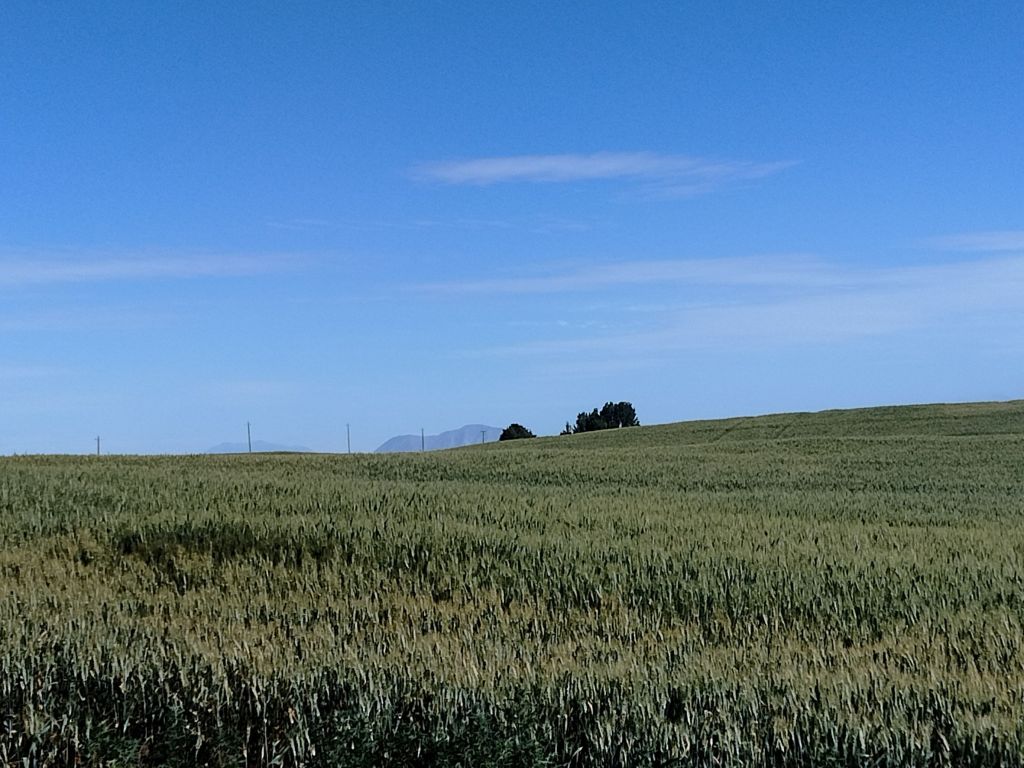
A few weeks ago, the explorer to whom I am married expressed a desire to drive up BSB and then hike the last hundred yards to the top. He had read some travel materials that said the road was passable. (bum bum bum) Of course I had to come along, because it has long been my dream to actually go to the butte.
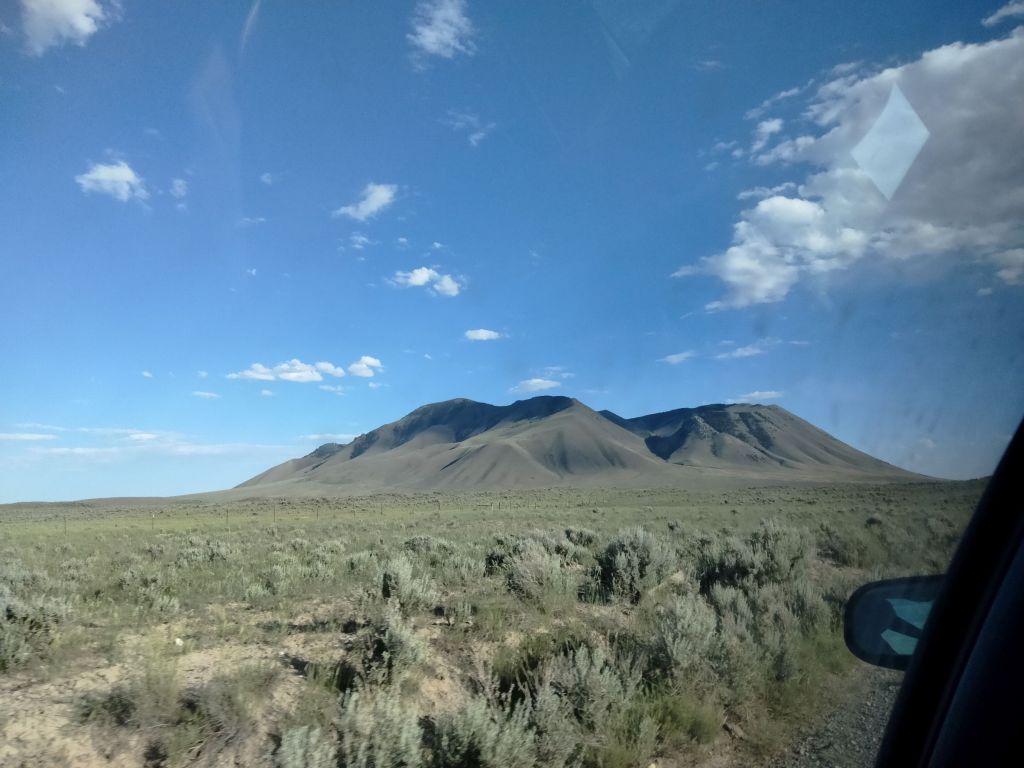
The road leading to BSB from Atomic City is dirt with patches of basalt rock sticking out. We approached our goal from the southeast and drove completely around it, which was satisfying. There are quite a few roads tracks in the area, but all of them are better suited for pickup, jeep, or ATV. Above is a view of the butte from the North, as we were leaving.
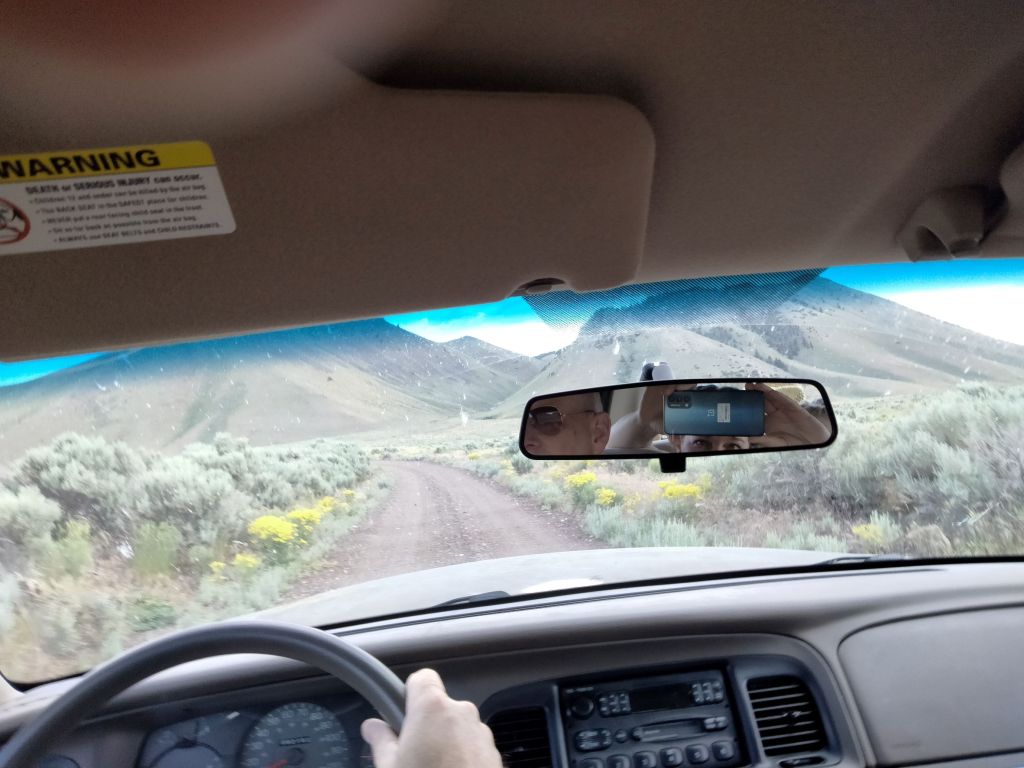
The road that supposedly led to the top of the butte enters it via a crack (the “butte crack”) on the northwest side. Here we are approaching it. You can see the terrain, which is basically “high desert,” with rabbitbrush and silver sage.
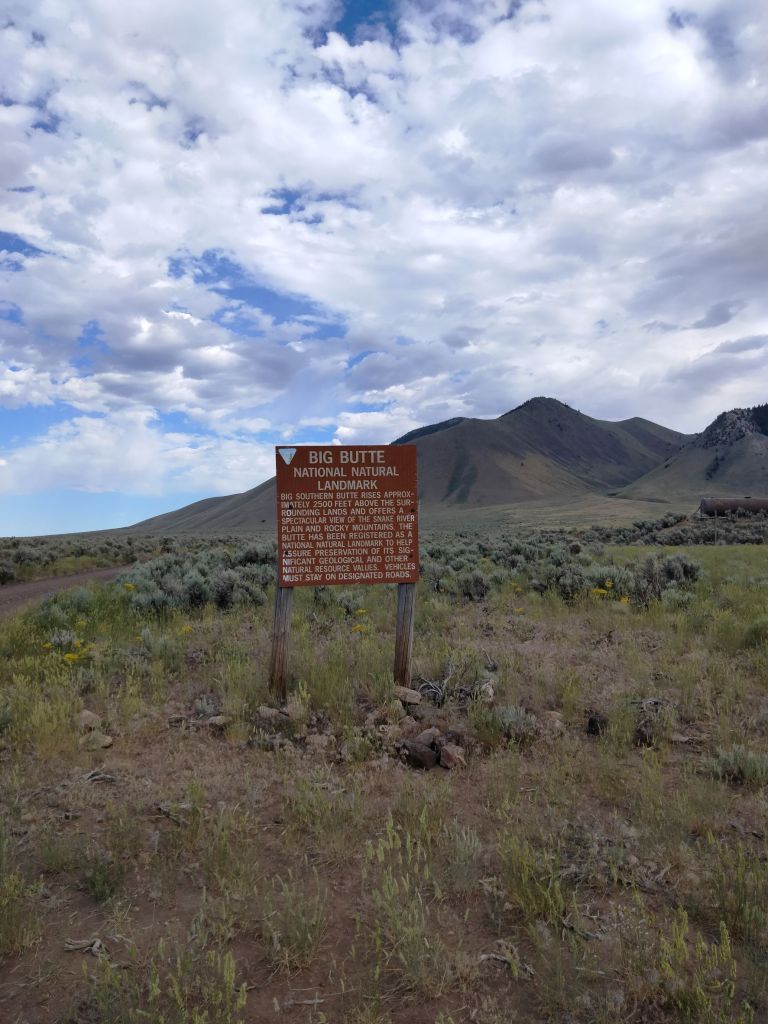
Here are the butte’s bona fides.
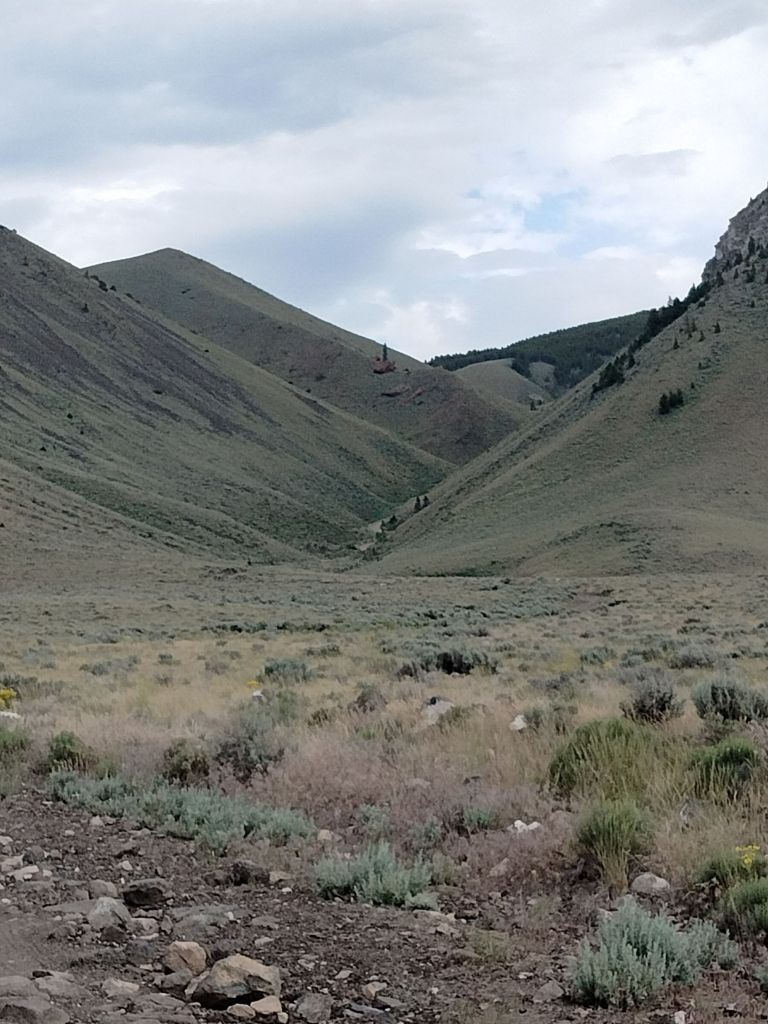
We drove a ways into this crack, but whatever travel articles said the road was good must have been written a season or two ago. My husband did an amazing job maneuvering our sedan over many patches of rock, but at last we reached a point where it was pretty clear we could get high-centered if we were to continue.
Luckily, that point was partway up the side of the butte (past the first turn you see in the photo above) and there was a pull-out place to park. Some of our party hiked a ways farther up the trail, but did not go all the way to the top as it would have been 3 miles from there.
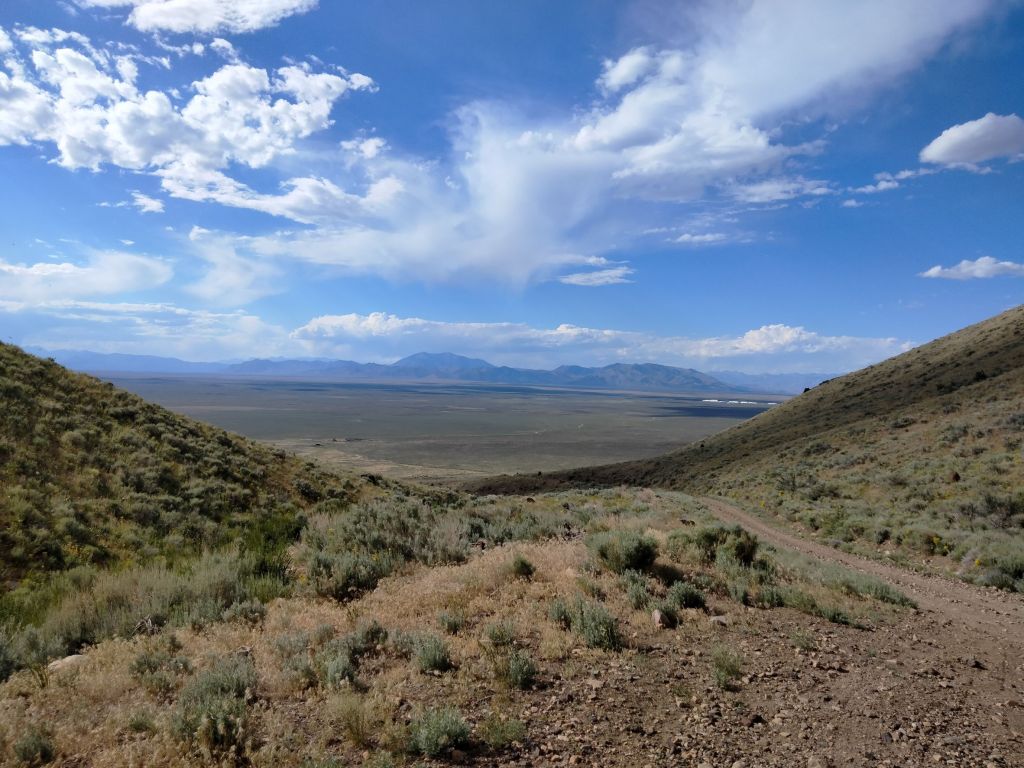
Here are the Sawtooths as seen from our parking spot. My husband says these are not the actual Sawtooths. I understood the whole region was called the Sawtooths, and then there were sub-ranges within the region, so I don’t know. Even with this little bit of height, you can start to see into the ranges. Back here are the Pioneer Mountains and the Lost River Range, among others.
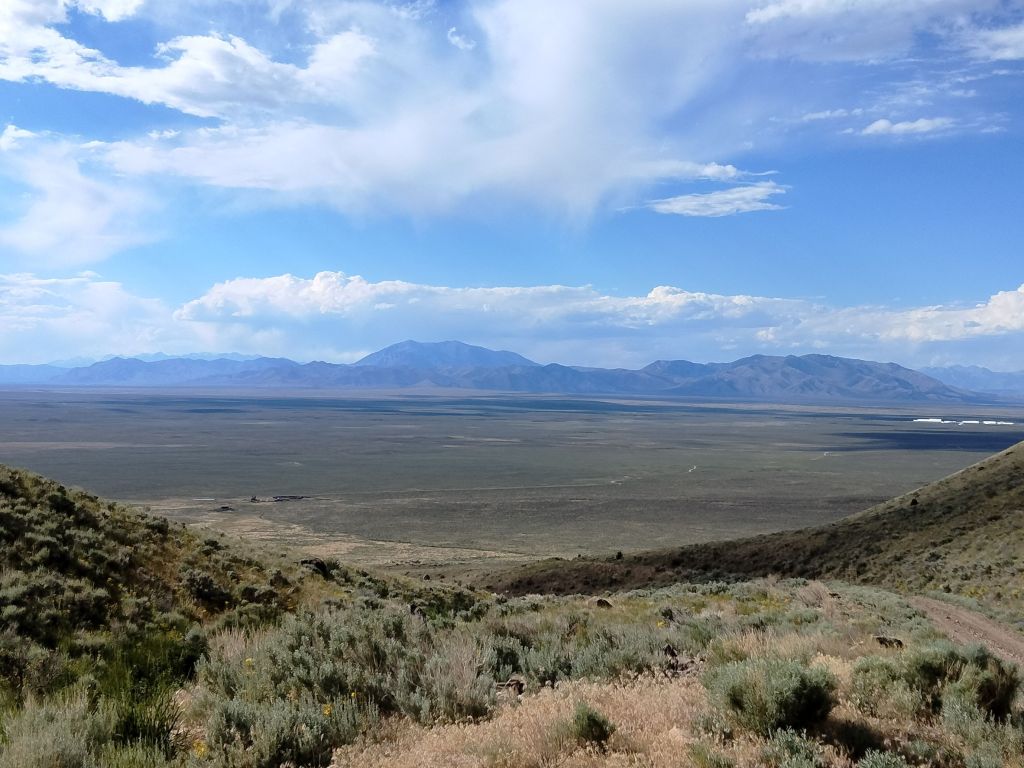
It’s amazing what a difference results from going a mere 30 miles north and attaining just a little bit of height. From our house, it looks as if there is just one large mountain beyond BSB. From BSB itself, you can see that there is a whole range, and we plain-dwellers can just see the tallest.
For now, I’m content with having seen BSB up close. I would like to go to the top some day, but that will have to wait until we have, or borrow, a more suitable vehicle. In the meantime, at least we don’t have to say that we lived near a topographical wonder and never touched it.
Idaho Wildflowers: Plains Prickly Pear
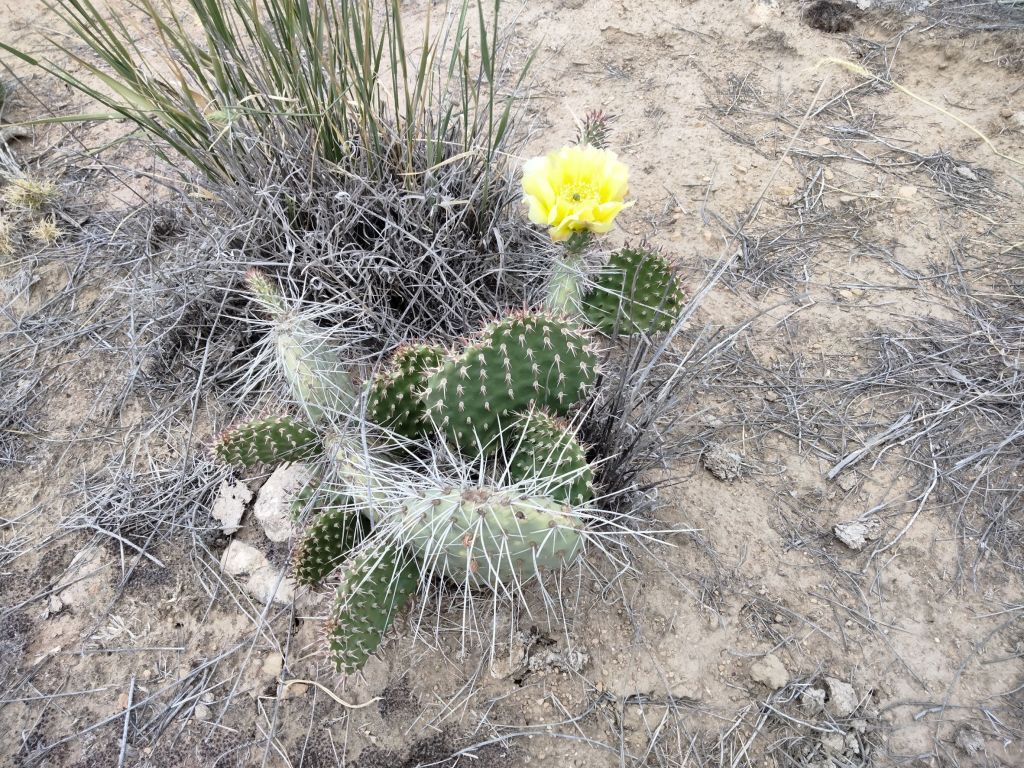
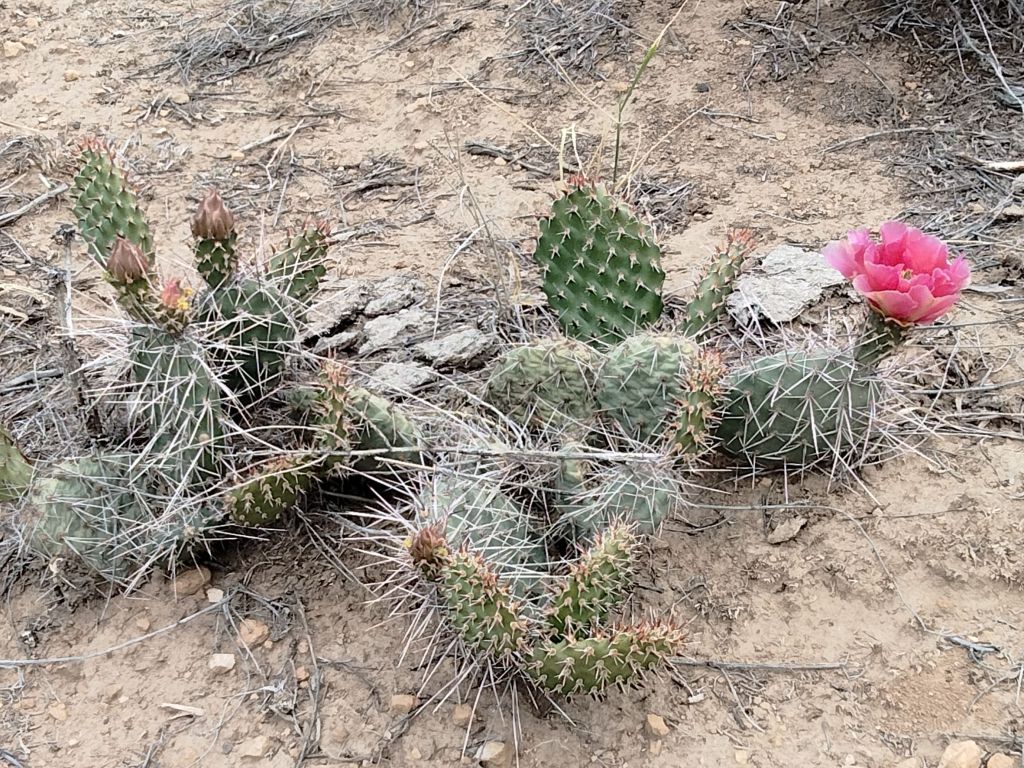
The long spines and flattened, blue-green pads of the plains prickly pear are familiar to anyone who has had the misfortune to step on one. As if the sharp, long spines are not trouble enough, the plants are also armed with a ring of tiny, hairlike barbs (glochids) at the base of the larger spines. These tiny barbs look harmless, but once touched they penetrate the skin and refuse to let go. However, the beautiful flowers of prickly pear more than compensate for the dreaded spines. The flowers are large, up to 3″ or more, with numerous red to yellow petals. The fruit is a pear-shaped berry, dry and very spiny, unlike the juicy “tunas” of some southwestern species of prickly pear.
Habitat/Range: Dry grasslands from the valleys and plains into the foothills, canyons, and montane forests.
Comments: This was the most dreaded plant encountered by the Lewis and Clark Expedition (1804 – 6), because the spines would penetrate the explorers’ moccasins, causing great discomfort. On July 15, 1805, while ascending the Missouri River near the mouth of the Smith River, Lewis noted in his journal: “[T]he prickly pear is now in full blume and forms one of the beauties as well as the greatest pest of the plains.”
Central Rocky Mountain Wildflowers, by H. Wayne Phillips, p. 125
Idaho Wildflowers: Ball-Head Gilia (?)

I had a little trouble identifying these, as they are clearly yellow, whereas the Ball-Head Gilia described in my trusty Central Rocky Mountain Wildflowers Falcon Guide are “white and sometimes flecked with purple” (page 233). But everything else seems to fit.
This is Ipomopsis congesta, from the Phlox family (Polemoniaceae). It grows in “[d]ry, open places from the valleys and plains to the alpine zones” and “[s]everal varieties occur.”
How Does Your Garden Grow?
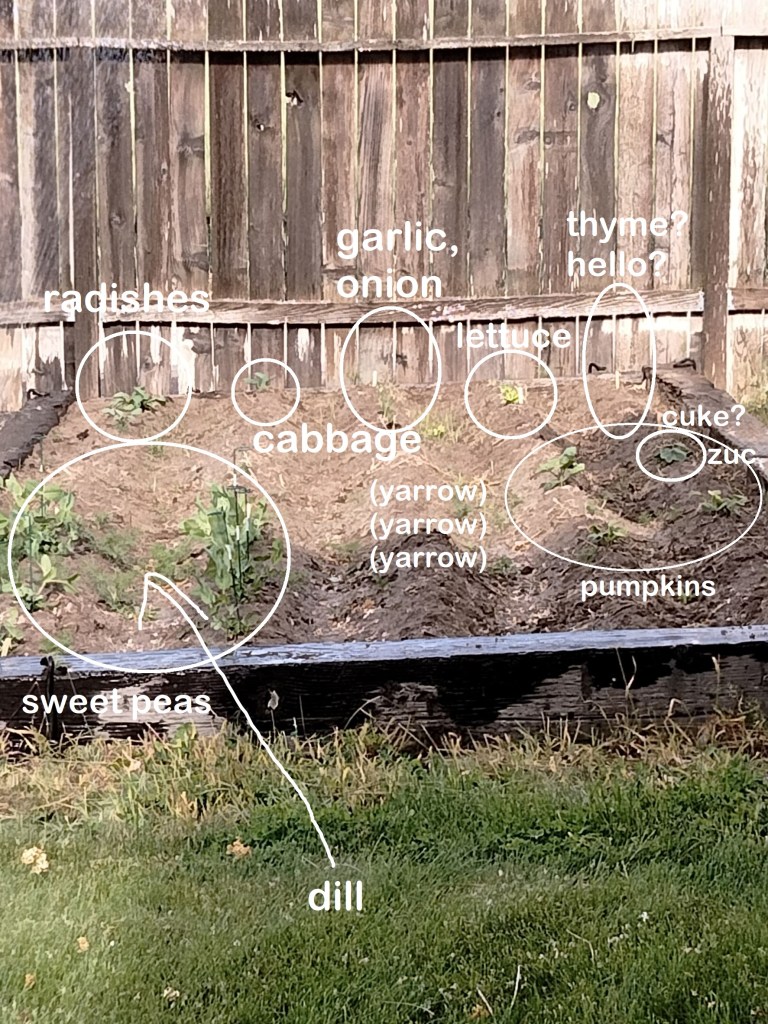
Really slow.
We had a cold, late Spring, and some things aren’t even up yet.
Meanwhile, I planted dill and yarrow seeds on the actual rows (both plants are supposed to repel pests and support the growth of other veggies), but with the strong winds we had around here, they apparently got carried into the furrows and that is where they are coming up.
I’m just a beginner.
Metroplex Monsters: A Book Review
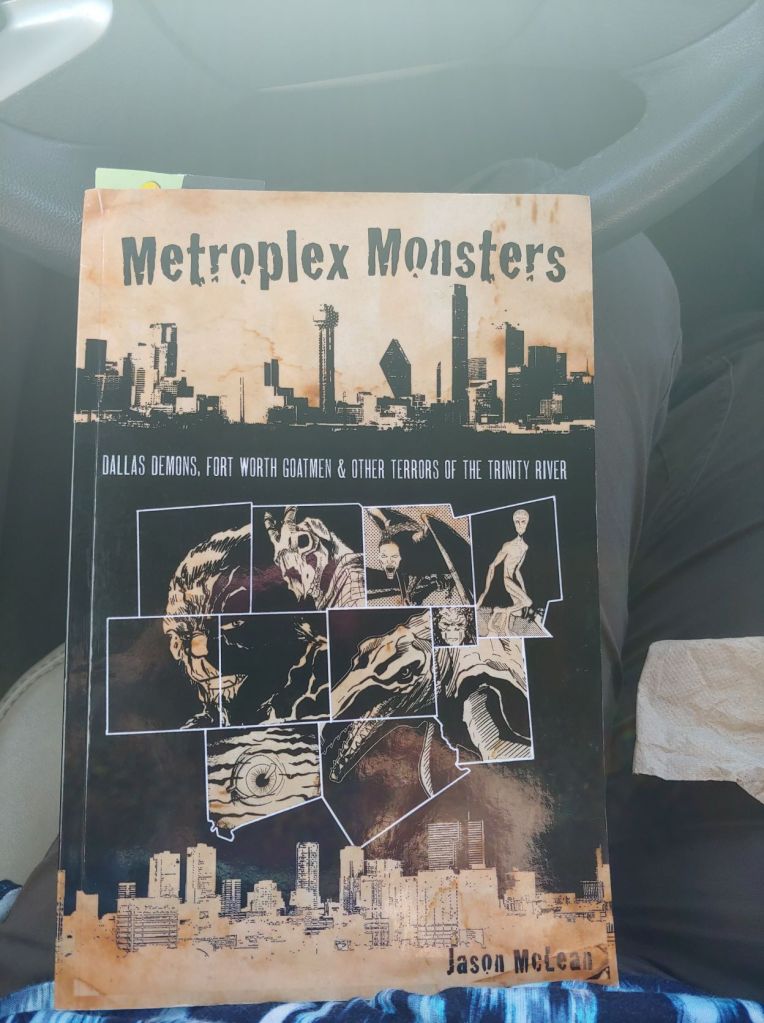
This one was pure fun.
What, I ask you, could be more of a romp than a book about cryptids, urban legends and paranormal experiences, set in a metro area in which you once lived and even taking place in parks you have walked in?
Almost nothing, expect maybe gifting same on Father’s Day to your husband, who lived in said metro area longer than you did and who knows it even better.
Or, enjoying the fact that the book is illustrated in a retro, pulp-fiction style by the author, who is also a graphic artist.
All of these minor delights are now mine.
The D/FW metro area is not the first place one would think of when hearing the word “Bigfoot,” or the word “spooky.” Even as a city, it is not very attractive. The area is sprawling, and tends to be unwalkable, with wide streets, vast parking lots, hot temperatures, and glaring daylight. It gets lot of Wild West points for its cowtown/railroad/cotton growing local history (all documented in the book), but it gets almost no gothic points.
However, despite being a vast metro area, D/FW is seamed through with green spaces around the Trinity River and its tributaries. As the book points out, the brushy edge of this greenspace is so dense that it could really be called a “green wall.” As is alleged to have happened, surprisingly recently, you could drive by this “green wall” and be unaware that Bigfoot was quietly standing 40 feet from the highway.
The area also has a quite a few large lakes, such as Joe Pool Lake (I’ve been there!) and White Rock Lake (I’ve been there too!). These are man-made, created by damming various tributaries of the Trinity River. They are popular recreational areas, but also big enough and old enough to have spooky urban legends associated with them and to allow people to have hard-to-believe encounters.
Finally, because of the river system and the associated lakes, the D/FW area has a lot of large birds, such as egrets and blue herons. I can confirm that it is very common to see these feathered creatures while simply driving from place to place in the metro area. One really fascinating contention in this book is that some of these “herons” are actually, on a closer look, featherless and are in fact a kind of small pterosaur. A few people have gotten a good enough look to realize that the “heron” looked more like a lizard, but they have understandably kept quiet.
About the Author
Jason McLean, the author of Metroplex Monsters, is the founder of the SIRU papers podcast on YouTube. I found out about him, and his book, when the two of us were on yet another podcast discussing the weirder elements of the Old Testament. So, this book, while I have described it as a romp, is actually in deadly earnest. McLean traces the origins of various Dallas urban legends somewhat in the style of Snopes, though more along the lines of let’s-find-out-the-actual-history rather than whatever-it-is-we-will-debunk-it. Though you can’t tell from Metroplex Monsters alone, he has a worldview that allows for quite a few paranormal phenomena to make sense within a biblical, and entirely rational, framework. If you are interested in that sort of thing, I encourage you to check out SIRU papers (and of course, The Unseen Realm by Michael Heiser, Giants: Sons of the gods by Douglas Van Dorn, and The Scattering Trilogy by a distinguished novelist. But SIRU papers is even more hair-raising). If you are not interested in how a Christian could possibly countenance the paranormal, but just want to laugh and shake your head over how even a seemingly banal metro area like D/FW can have cryptids, feel free to read, and enjoy, Metroplex Monsters at face value.
“Nevertheless, She Persisted”: Botanical Version
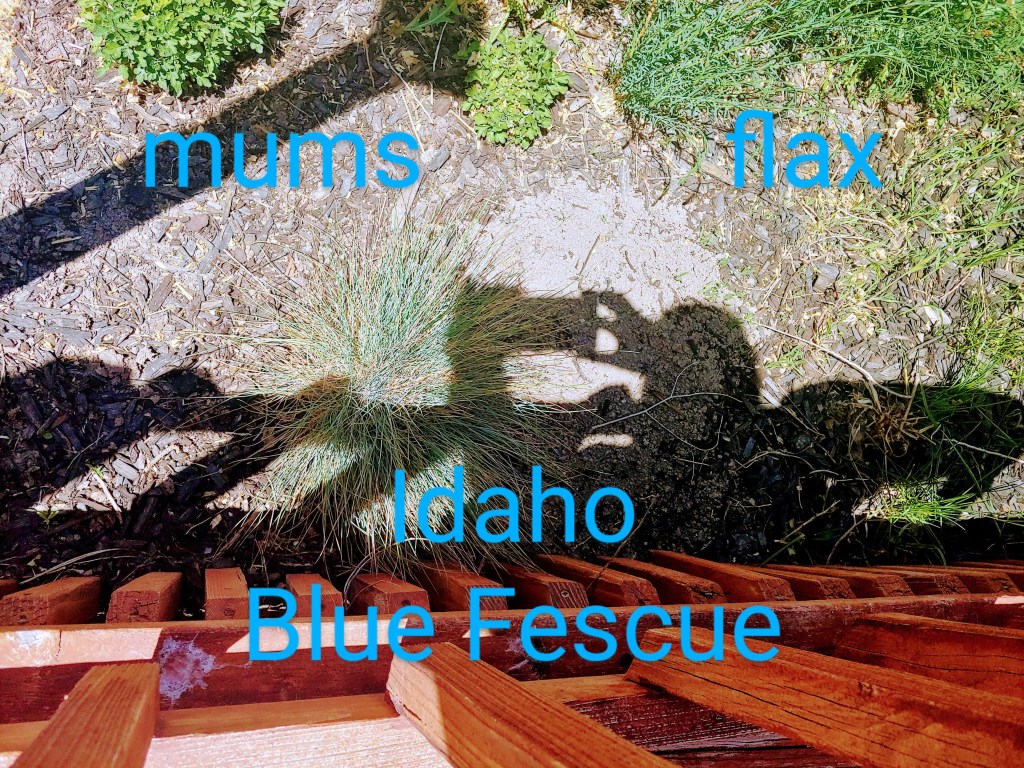
At first it was …
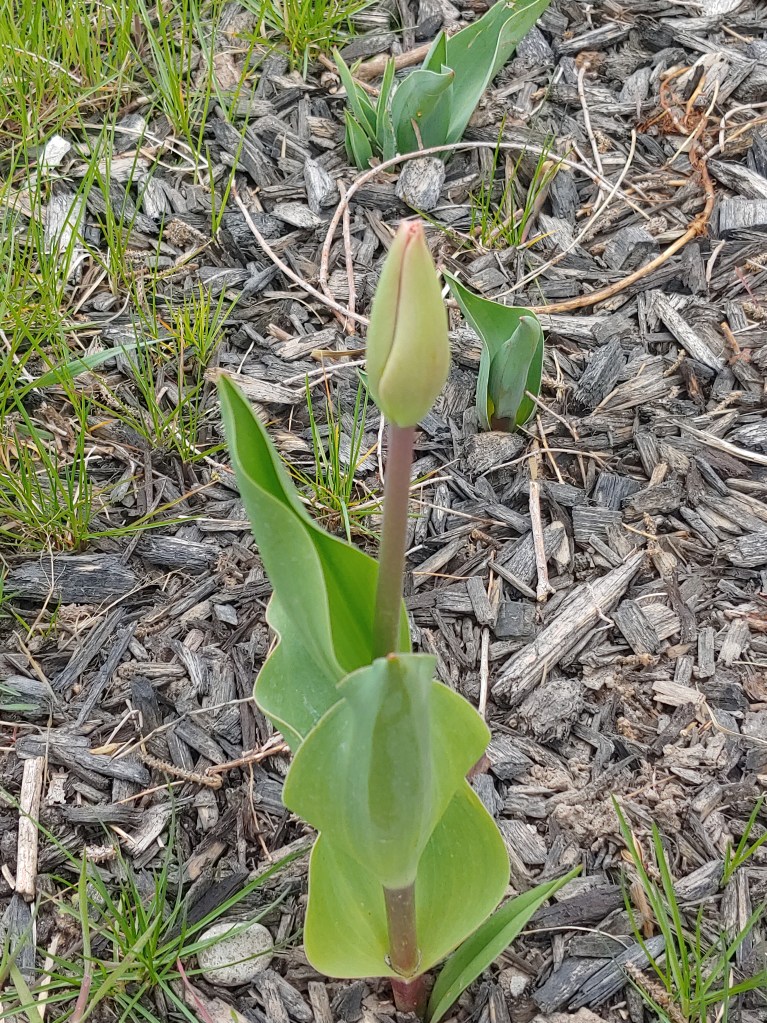
But then …
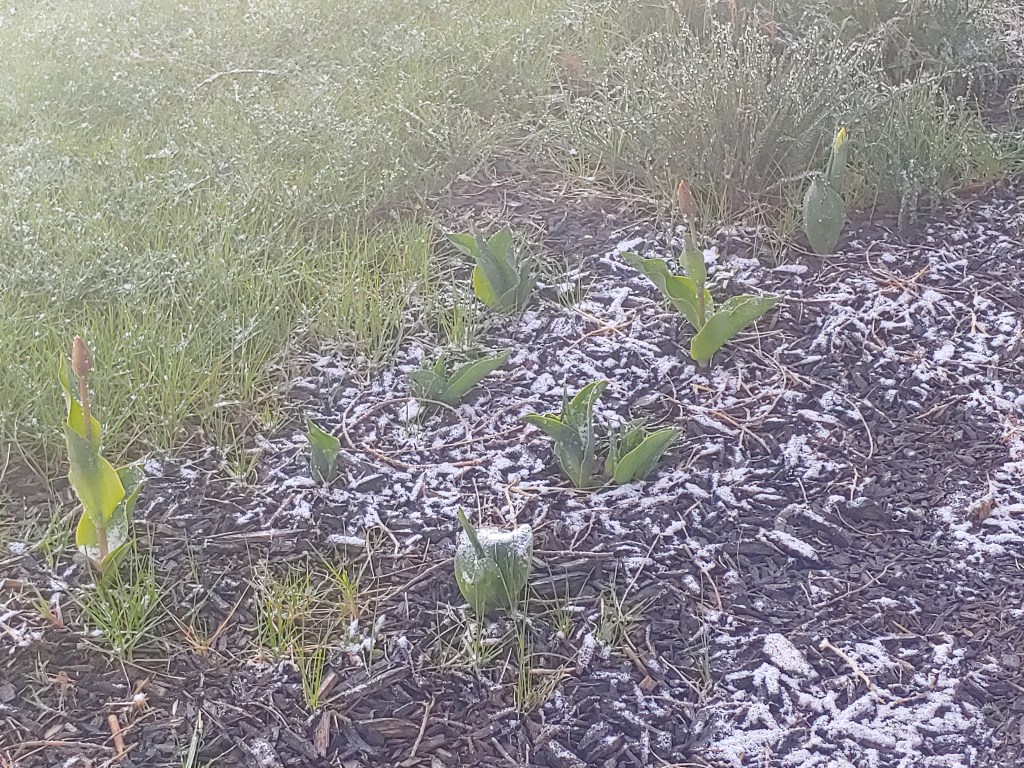
And also …

But finally …
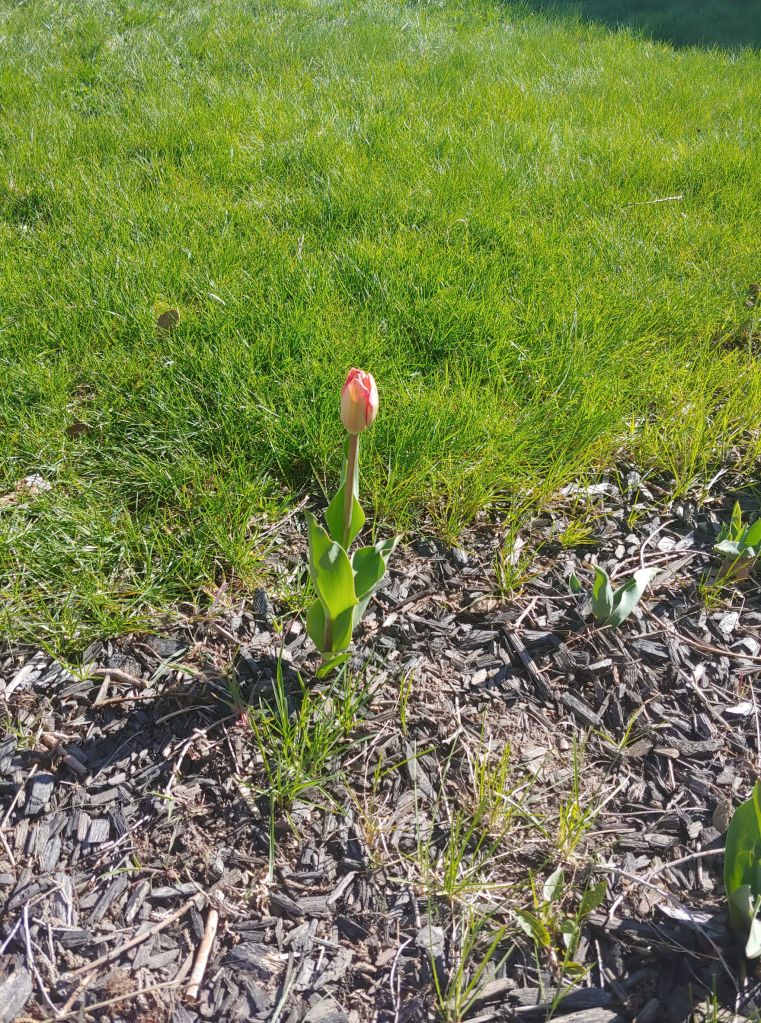
Tulip Update
Welp … it’s snowing.
This is Exactly How I Feel about my Cowboy Hat
“Why did you decide to be a cowboy?” she asked.
“There are no real cowboys anymore, just a lot of pickup drivin’ wanna-be’s.” He shrugged. “Me, I love the wilderness, horses, and saddle leather. They just sorta come together out here.” He removed his hat and stared at it. “This is just functional gear that goes with it all I suppose.”
White Out, by Robert Marcum, p. 24
… by which I mean it is practical for sunny, windy environments. Not that I have horses like he does.
 Out of Babel Books