
Here she is on top of lovely Black Butte in Sisters, Oregon. I think those are the Three Sisters in the background. The caterpillar is, of course, Neanderthal jewelry, sort of like an ear cuff.

Here she is on top of lovely Black Butte in Sisters, Oregon. I think those are the Three Sisters in the background. The caterpillar is, of course, Neanderthal jewelry, sort of like an ear cuff.
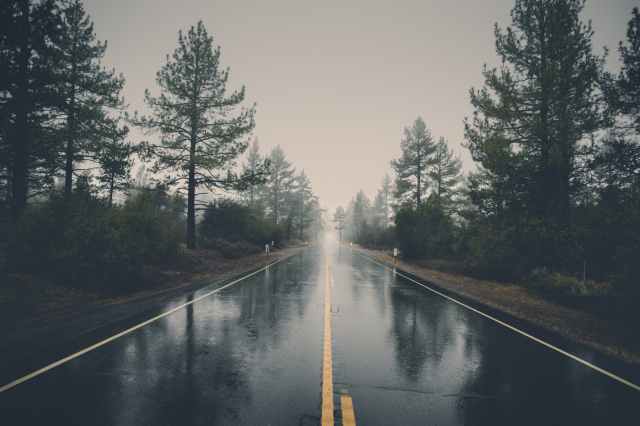
Okay, perhaps I won’t be completely off the grid for the next five weeks … but I will take a hiatus from blogging. The last three weeks of June, plus the first two or so of July, will be taken up with family travels. As I don’t yet have pictures from those travels, I am giving you lots of nice nature pictures in this post to hold you over: old favorites from both Pexels and my own stash of photos.

Last time I went “off the grid,” I posted this log cabin. (Not my actual house.)


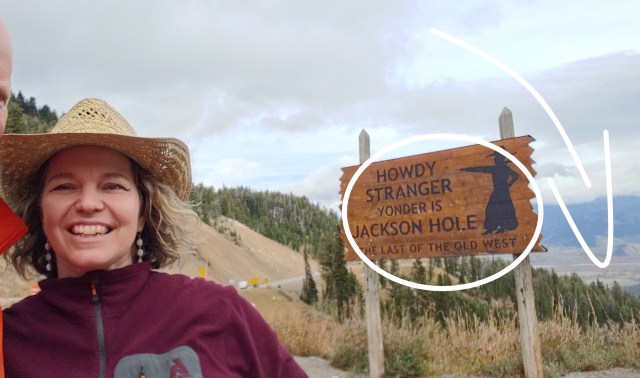
This year, during our travels, I’ll try to bring along Neanderthal Woman and get some pictures of her in various locations.


And yeah, I might do some gardening.
You may see a few blog posts go up while I’m gone. I have been trying to get The Long Guest converted to e-book format. If/when that succeeds, I’ll inform you via a post. I also have a special Muppet guest blogger planned for the Fourth of July.
Other than that … Have a great month! I hope you get to do lots of fun, summery things while I am doing same!
“Yellowstone park ranger fends off charging grizzly bear“
(Just as a reminder, the Proto-Indo-European word for bear was probably rtko-. Watch out for those rtko-.)
“What are your thoughts on Judgment Day?”
“It’s every day, in my experience.”
Yellowstone, the TV series

This review was recently posted in shorter and sloppier form on Goodreads.
I give Black Elk in Paris (2006) by Kate Horsley five stars for its amazing historical research, French-doctor voice, and dynamic characters.
A few years ago, I stumbled across a children’s book about Lakota medicine man Black Elk. My response to him was pretty much the same as that of this book’s fictional heroine, Madeline: I was fascinated. (I mean, look at him!) At the age of nine, Black Elk had a troubling vision that encouraged his tribe to choose life rather than bitterness. (They were going to need this later.) At age 15, he was present at the battle of Little Bighorn. Later, he went to England with Buffalo Bill Cody’s Wild West show.
None of that is in this book.
Apparently, Buffalo Bill accidentally stranded Black Elk and one other Lakota guy in England. They took up with a character called Mexican Joe, who was running a knockoff Wild West show, and toured Europe with him. Black Elk ended up in Paris, where he stayed with a Parisian woman and her family until eventually he was able to get back to his homeland.
This book imagines the effect that Black Elk had on the Parisian woman, her family, and her doctor friend, Philippe Normand. It so happens that the period the Lakota warrior was in Paris coincided with the building of the Eiffel Tower in preparation for the Universal Exhibition (the Paris world’s fair). The tower is mentioned frequently in the book as the characters watch it grow menacingly over their usual haunts. They never call it the Eiffel Tower. It’s usually “the metal tower, looking like a dead tree” or something like that. An ongoing theme in the book is the tension between the apparent triumph of colonialism, including modern science and medicine, with the appeal of Black Elk’s way of life.
My hope had been that we would get to see Paris from Black Elk’s point of view, but alas, he is not the point-of-view character in this story. Perhaps it was wise of the author to create a little distance from Black Elk, not to presume to speak in his voice, which has been well documented. Instead, she writes in the voice of Normand. The 19th-century French tone is spot on, right down to the navel-gazing, romanticism, and cynical asides about human nature. The writing honestly comes off as if it were translated from French, and in fact, each chapter opens with its first sentence in French, then in English.
Normand is on the cutting edge of medical developments. He is friends with many famous historical doctors and goes to their weekly meetings where they argue theory, banter, tease each other, and engage in petty backbiting and politics. Normand honestly wants to relieve human suffering with medicine, but is frustrated by the limitations on what he can accomplish. And over the few years that the book covers, he begins to see some problems with the arrogant and intellectualized attitude taken by French doctors and psychologists of the day. At one point, he complains that he has witnessed doctors not trust the patient to report on his or her own symptoms!
Consequently, though Black Elk does change Normand and Madeline, this book is more about Paris of that time than about the Lakota. My first impression, as a reader who was eager to get to the part with Black Elk, was what awful people these 19th-century Parisians are. (They are snobs! They do recreational drugs! They sleep around! They say the most horrible things to their friends and family!) I definitely did not like Normand at first. I think I was going through culture shock. Normand changes, however, and as he grew and I got used to him, he became as much a hero of this story as Black Elk.
Horsley has, in this book, pulled off the accomplishment that I aim for in my books. She has examined a cross-cultural relationship sensitively, without romanticizing or demonizing either culture. She has also written in an authentic voice from one culture, but told the story in such a way that we can gather some of Black Elk’s perspective as well. The story does not tie things up in a neat little bows, but it is more about connections (however tenuous) that the characters make, rather than about an inability to connect. Also, kudos to her for noticing these two very different worlds touching each other at an actual point in history and making us notice it. To the extent that the book ultimately comes down on the universal human condition rather than on cynicism, it validates both Black Elk’s spiritual values and Normand’s ideals. Not every book set in Paris does this. Nor does every book about colonialism.
Read this if you are interested in the French or, to a lesser extent, the Lakota.
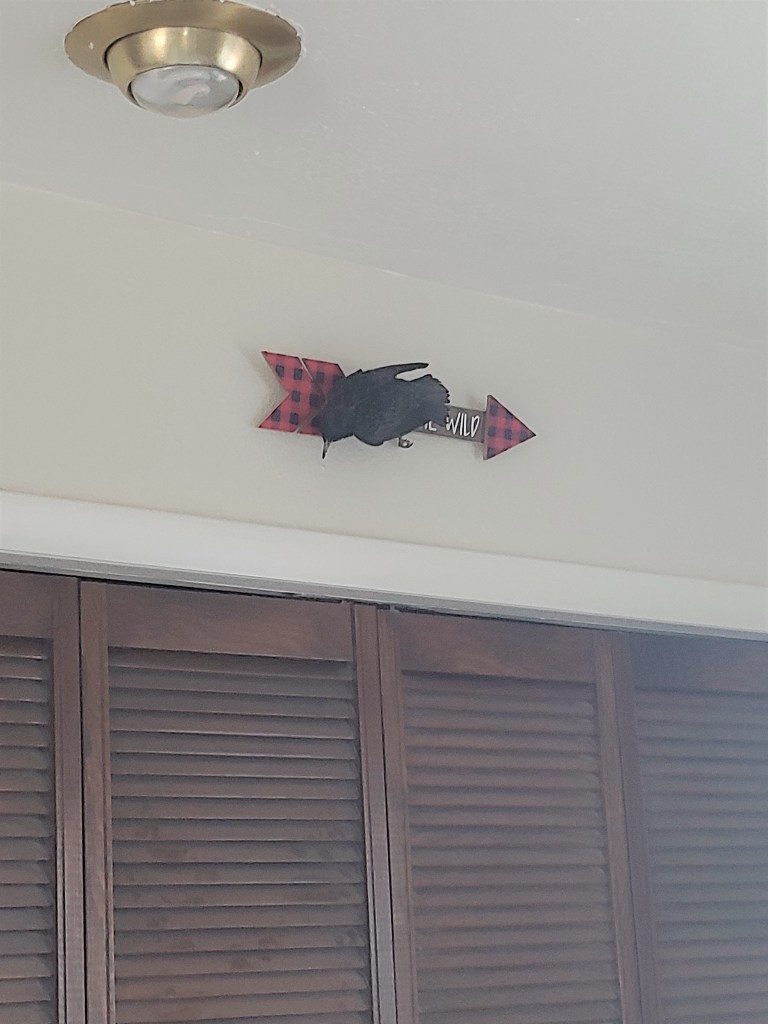
The sign clearly says that “Into the Wild” is to the right. Yet he is facing left.
He got in to our house through the woodstove pipe, possibly under the mistaken impression that it would be a good place to nest. He bumped around inside the pipe for about 24 hours. Then, when I was sure he had died, my son opened the stove and out he came! He was so shocked by his experiences that I was able to pick him up in my hand and let him outside.
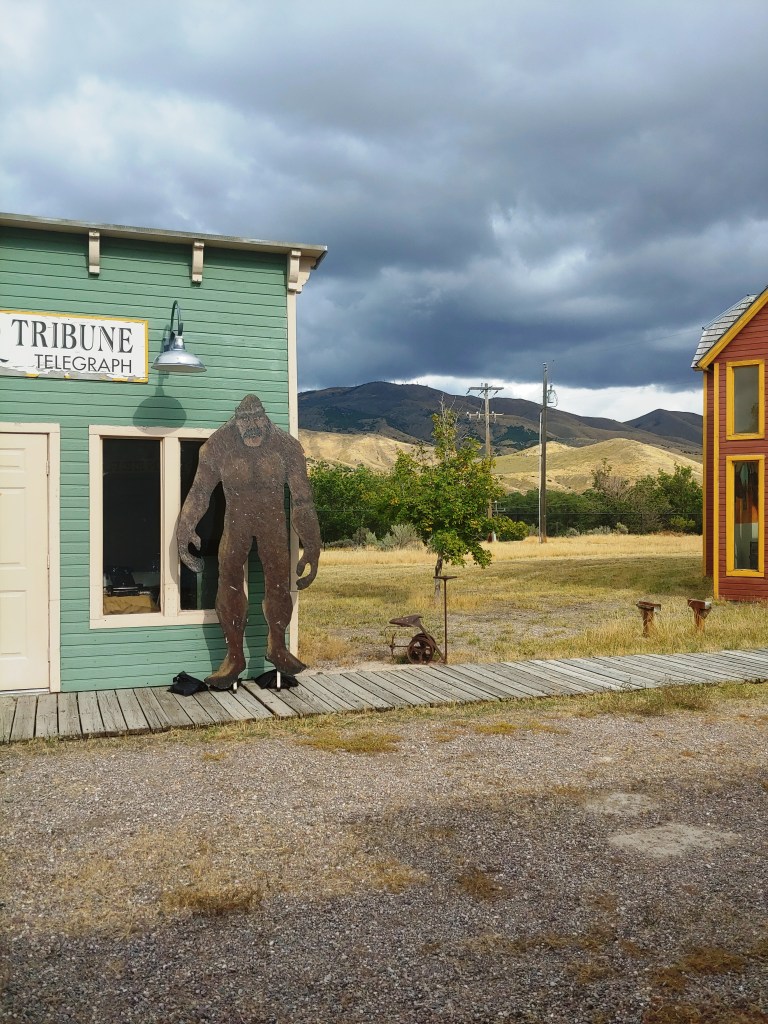
This is a re-post from 2019, but let’s face it: Bigfoot never gets old!
Bigfoot is a cryptid, which means “hidden animal,” i.e. an animal whose existence has not been proved. Cryptid is a big category. Some cryptids, when researched, turn out not to exist (for example the Loch Ness Monster, as far as we can tell). Others eventually get moved from the category of cryptid to that of actual animal. (Europeans did not believe in the existence of gorillas until the corpse of one was brought to Europe.) Other cryptids are 100% hoax (the Fiji mermaid, constructed by sewing a preserved monkey torso onto the preserved tail of a large fish). This post will argue that Bigfoot is in the gorilla category. In fact, he is almost exactly like a gorilla: a large, elusive primate native to the deep forests of North America.
Obviously I did not research all this stuff myself. My source is the research done by Jeff Meldrum, Ph.D., associate professor of anatomy and anthropology at Idaho State University. He has written a lot of stuff, but the source I am using is his book Sasquatch: Legend Meets Science (Tom Doherty Associates, 2006).
By the way, I had already read the book, but last month I got to attend a Bigfoot conference in Pocatello (home of Idaho State University) and hear Meldrum give a talk. Turns out he’s a very nice guy, with none of that defensiveness that we might expect from a cryptid researcher. The pictures in this post are from that event.
It’s hard for a blog post adequately to cover a scientific topic like this one. (And yes it is scientific: detailed analysis of footprint casts, human and primate gaits, fossils, local legends, and more.) I’ll just try to summarize some of Meldrum’s main arguments, but obviously, if you want to delve deeper, you can buy the book yourself.
Bigfoot is often reported in places that are conducive to taking casts of footprints, such as a muddy forest floor at a logging site. Many casts have been taken of footprints in such places. Some are up to 17 inches long. None of them match the stiff, narrow, 15-inch wooden fake feet supposedly used by Ray Wallace and his family to fake all(!) of the Bigfoot tracks in the Northwest. Some have a step length of 50 – 60 inches and a depth that indicates whatever made them weighed more than 800 pounds (Sasquatch chapter 2). There is even an instance of a very large club foot (page 238), a few knuckle and hand prints (105 – 111), and a hilarious butt print where the sasquatach apparently sat in the mud, then leaned on its left forearm to reach for a fruit (111 – 115).
Large, deep tracks with a 65 – 70 inch stride have also been photographed in the sand on the Oregon coast, after a sighting the previous evening (190).
The famous October 1967 Patterson film “was shot during the day, in full sunlight, out in the open on 16mm film. Independent researchers examined the location immediately after the encounter, and footprint casts and countless measurements and photos were taken … and yet this film remains controversial, written off as an obvious hoax by many” (134 – 135).
Not surprisingly, the star of the video, dubbed “Patty,” has had everything about her analyzed, from her gait, to her saggital crest, to the speed of the film, to the color of the soles of her feet. The book covers this in more detail over several chapters. The upshot is that experts, when asked to view the Patterson film, tend to be very impressed at first, then panic, back off, and start thinking the film is a fake is because if it isn’t, they would have to “believe” in Bigfoot. One typical protest is that this film is suspect because it was shot by someone who was specifically looking for evidence of Bigfoot. It’s hard to imagine, though, how we could get such a film from anyone else.
It’s also hard to imagine how the creature on the film could have been faked. Consider:
The Bigfoot in the Patterson film appears to have breasts, and as it walks, you can see its muscles moving underneath the hair. An experienced Hollywood costume designer who has designed many ape costumes opined that it does not look like a man in a suit. He felt that instead of a suit it would have to have been a minimum ten-hour makeup job in which the hair was glued directly to the actor’s skin (158). (The actor would then have to have been delivered to the film site and just as quickly spirited away, without leaving any vehicle tracks.) A computer graphics animator adds that “the boundaries of the human form do not even fit within the form of the creature” (176). Six-foot men have tried to re-create “Patty’s” walk in the same spot, and have found it difficult to match her stride and impossible to make footprints as deep as the ones she made.
Many Native American tribes, all over the continent, have Bigfoot legends. This is particularly true in the Northwest, where you can see stylized carved stone heads, masks, and statues of the buk’wus (a Kwakiutl word), or his female counterpart, the dsonoqua. Their faces look ape-like and distinct from similar carvings of bears. (In the picture below, some of the souvenirs are adapted versions of this native art.) The Northwestern tribes seem to have more zoological detail in their legends about Bigfoot and have testimonies of sightings right down to the present day. They also, of course, ascribe spiritual qualities to the creature, as they do to other animals.

As we move farther East, Bigfoot becomes a more purely spirit-like figure. This may imply that the creatures died in out first in the eastern part of the continent, where they are remembered only as a myth.
On Painted Rock, in central California, there is a large (2.6 meter high) pictograph of Hairy Man with tears streaming from his eyes. According to the local creation story, Hairy Man is crying because people are afraid and run away from him.
At any rate, these legends definitely pre-date Ray Wallace, who supposedly “created” Bigfoot all by himself. The descriptions of Bigfoot’s behavior in the Northwestern native traditional knowledge match well with what has been reported in sightings and surmised from the behavior of other great apes.
Much of the Bigfoot behavior that is sometimes reported in sightings has parallels in the intimidation behavior of other primates. This includes grimacing, throwing things, banging wood on trees, pushing snags of dead branches at an intruder, hair bristling, emitting a pungent stink when agitated (male mountain gorillas do this), and vocalizing (chapters 9 and 10). There are also behaviors that resemble that of other primates but are not intimidation behaviors, such as making sleeping nests from branches. Of known primates, the one that Bigfoot most seems to resemble is Gigantopithecus (89 ff).
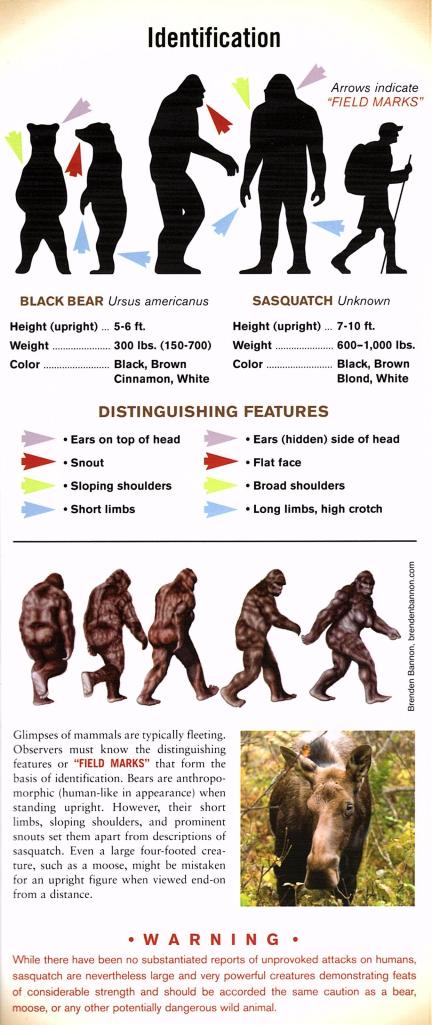
Bigfoot’s range, as determined by footprints and reported sightings, overlaps almost perfectly with the range of the bear. To a believer, this means the two animals share a similar habitat: temperate forests and rainforests. To a skeptic, this means that all “Bigfoot” sightings are actually bears.
This was the subject of the lecture by Jeff Meldrum that I attended. It is certainly true that photographs of black bears have been put forward as photographs of Bigfoot, only to be exposed later. Meldrum showed a series of bear photos which, at first glance, can look surprisingly humanoid, especially if the animal is skinny and is standing on its hind legs. However, he went on to point out, telling the difference between a bear and a huge, bipedal ape “isn’t rocket science.” Bears do not have a clavicle, so when standing, they don’t have protruding shoulders. Their legs are much shorter in proportion to their body. And, of course, there are the prominent round ears.
Bear tracks don’t resemble Bigfoot tracks at all, except in cases of multiple, overlapping, unclear bear tracks. A bear’s inside toe is its shortest, their feet are shorter and very narrow at the back, and they leave claw marks. Their stride is, of course, very different, although when a bear is walking quickly its footprints can overlap, “giving an impression of elongated footprints spaced in a two-footed pattern.”
Skeptics have also raised the question of whether two large animals can fill the same niche. Bigfoot, if it exists, is probably a fructivore like the other large primates and like Gigantopithecus, whose jaw and teeth are designed for grinding, not for predation. Bears, while also ominivores, have a very different shaped set of chompers. So even if the two animals share a range, they would not be occupying exactly the same ecological niche.
(Fun near-fact: based on his estimate of how many Sasquatch compared to bears a given region of wilderness can support, Meldrum estimates there could be as many as 175 individual Bigfoot in the state of Idaho.)
It turns out that, despite usually having much less wilderness than the Great Northwest, nearly every state in the Union has its own version of the Bigfoot legend. I’ll let you make up your mind about these on a case-by-case basis. In Ohio, until recently my home state, we have “the Grassman.” Here is a Hubpages article about him. If you follow the link and read the comments, you will no doubt see many personal testimonies about Grassman sightings.
Update: another WordPress blogger, The Traveling Maiden, had an experience while camping in the Great Northwest that may have been Bigfoot. Read about it here.
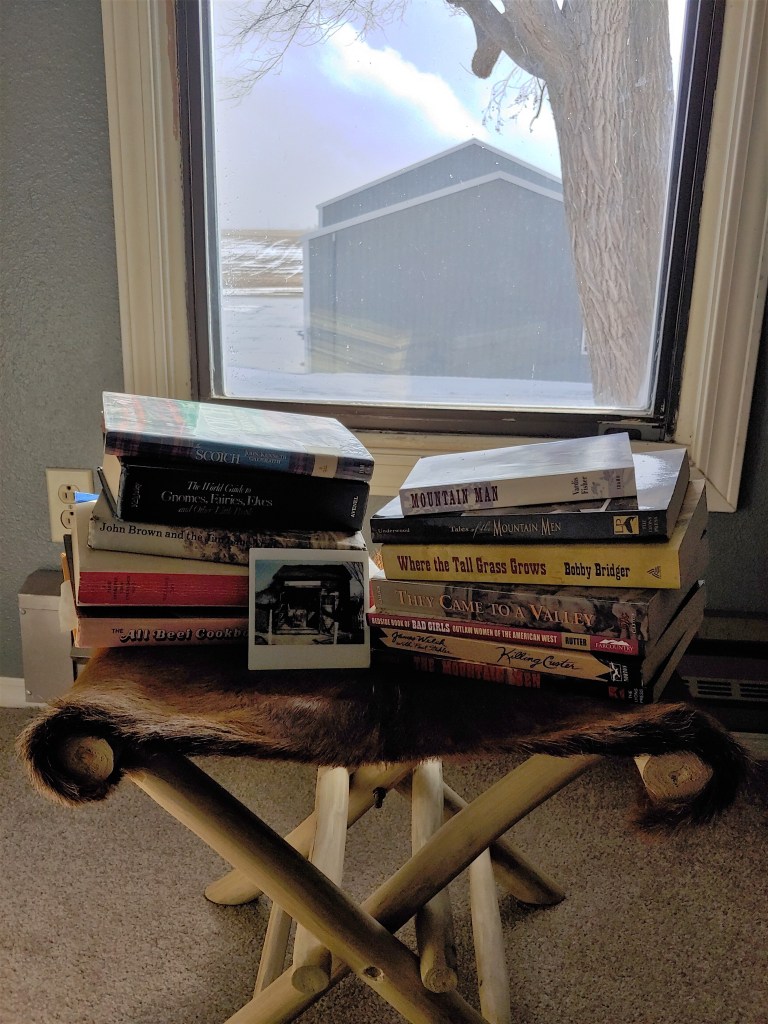
Notice how about half of them are about mountain men and the American West? And the other half are about: Scotland, gnomes, language, and “The All-Beef Cookbook.” Seems like a haul tailor-made for me, no?
Guess where this came from.
A friend, who works at the library, showed up with a pipe-smoke-scented box of books that were being thrown out.
That’s right.
This haul was selected for my reference library by God Himself.
Also, the photograph of a nameless old shack was in the box too.

 Out of Babel Books