Sphaeralcea coccinea, Greek for “scarlet sphere mallow.”
Grows in the “dry prairies of the valleys and plains and foothills zones as far as the Bitterroot Valley, MT; Bannock County, ID; and parts of OR.”
“Scarlet globe mallow has slimy, viscous sap that can stick to skin or mucous membranes and thus provide a protective coating. The native Dakota people chewed the plant and applied it to inflamed sores and wounds as a salve. It was said to cool inflammation and promote healing.”
I can’t believe the first two wildflowers I chose to blog about this year both turned out to be medicinal. But there ya go, God puts ’em in the ground for us to find! Once again, the Falcon Guide Central Rocky Mountain Wildflowers has shown its usefulness. All in the information in this post, except the photographs, came from page 93. I took the photographs at Citadel of Rocks, where the sphaeralcea was obediently growing exactly where described.
I think this is White Geranium. According to the Central Rocky Mountain Wildflowers Falcon Guide, it is a medicinal herb that can be used to treat diarrhea, dysentery, ulcers, and hemorrhoids, and to stop bleeding (211). It’s found in shady woodlands, plains, valleys, montane, and lower subalpine zones. This is exactly where I found it! This, and the flowers that will follow, were photographed on a weekend trip to Citadel of Rocks, Idaho.
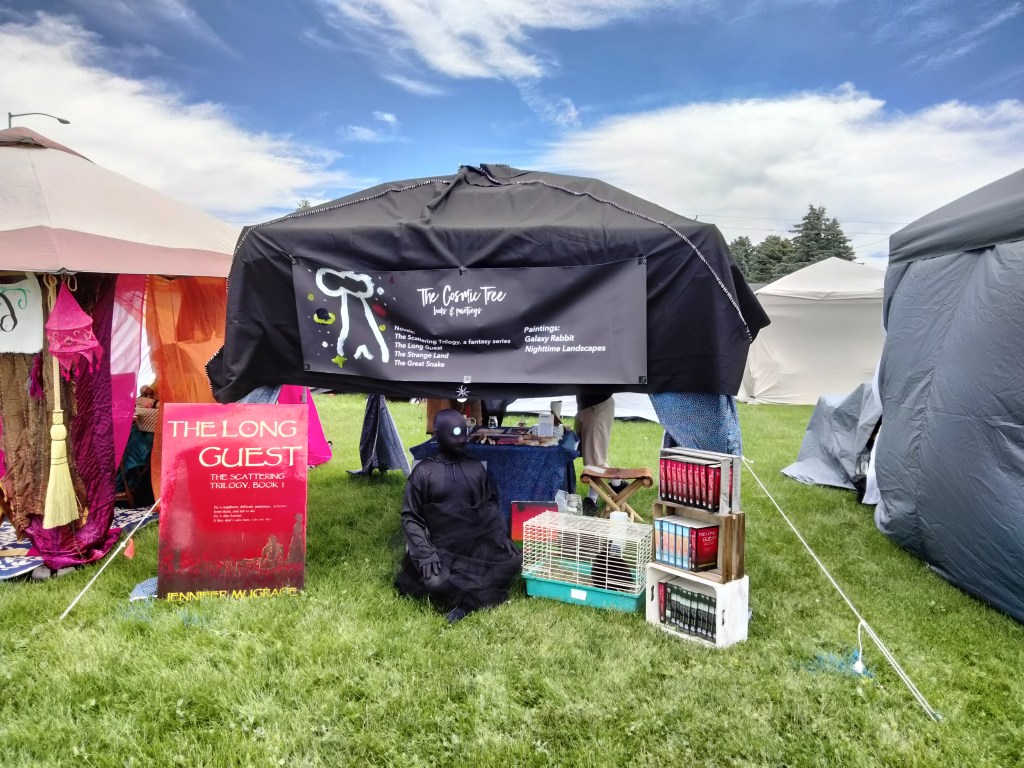
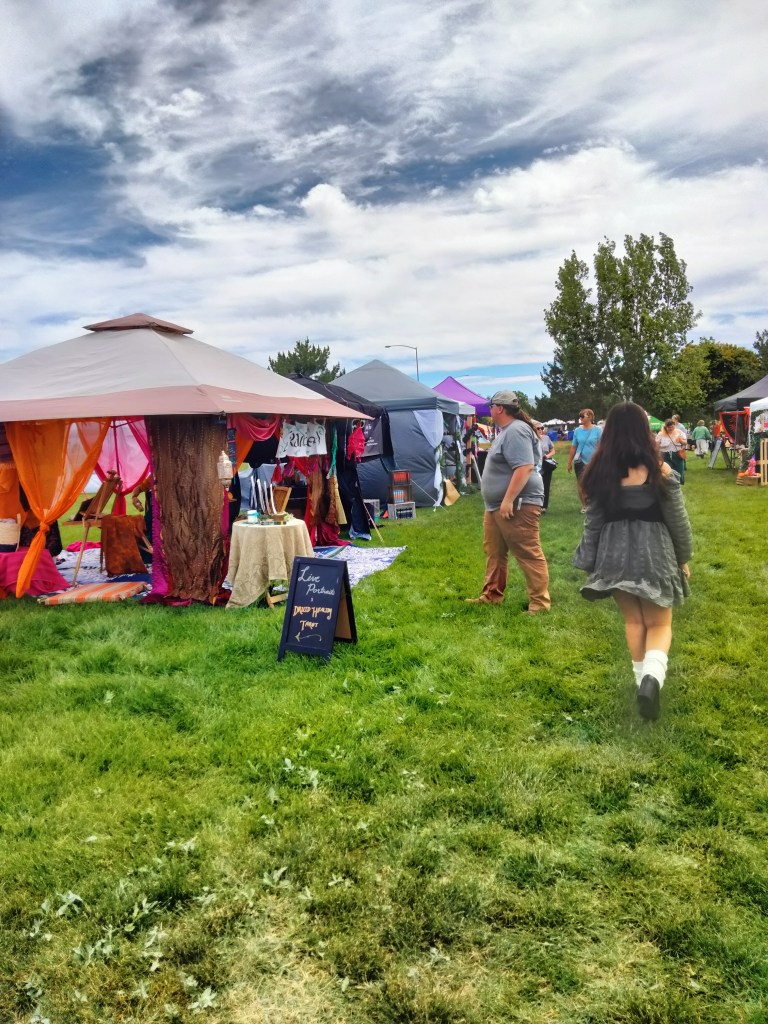
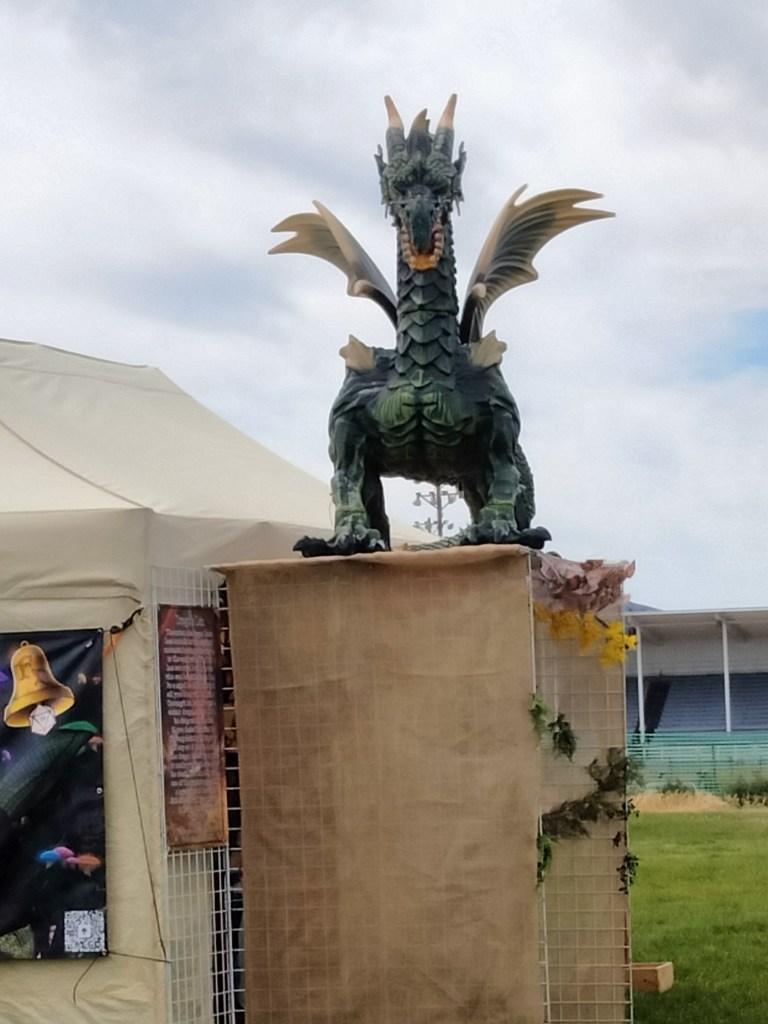
The Mystic Realms Fantasy Fair runs this Friday, Saturday, and Sunday (June 28, 29, and 30) at the Bannock County Fairgrounds in Pocatello, Idaho. My son and I will be there, I selling books, he paintings. I will be dressed as my online avatar, Neanderthal Woman. Our booth is called the Cosmic Tree (his idea). And there are many other amazing vendors and entertainers as well.
I’ll try to upload pictures as the weekend progresses, so this post should get more and more colorful.
UPDATE: Well well well! Before this post goes live, we already have an update. We are known for strong winds here in Idaho. So strong, in fact, that the wind just BROKE OUR 10×10 TENT when my son and I set it up in the backyard for a dry run. It looks as if, tonight, we will be buying something sturdier.
Bought the new tent. Here’s our booth. The event is much bigger than last year’s.
a smith
The position of village idiot is open… think I should apply?
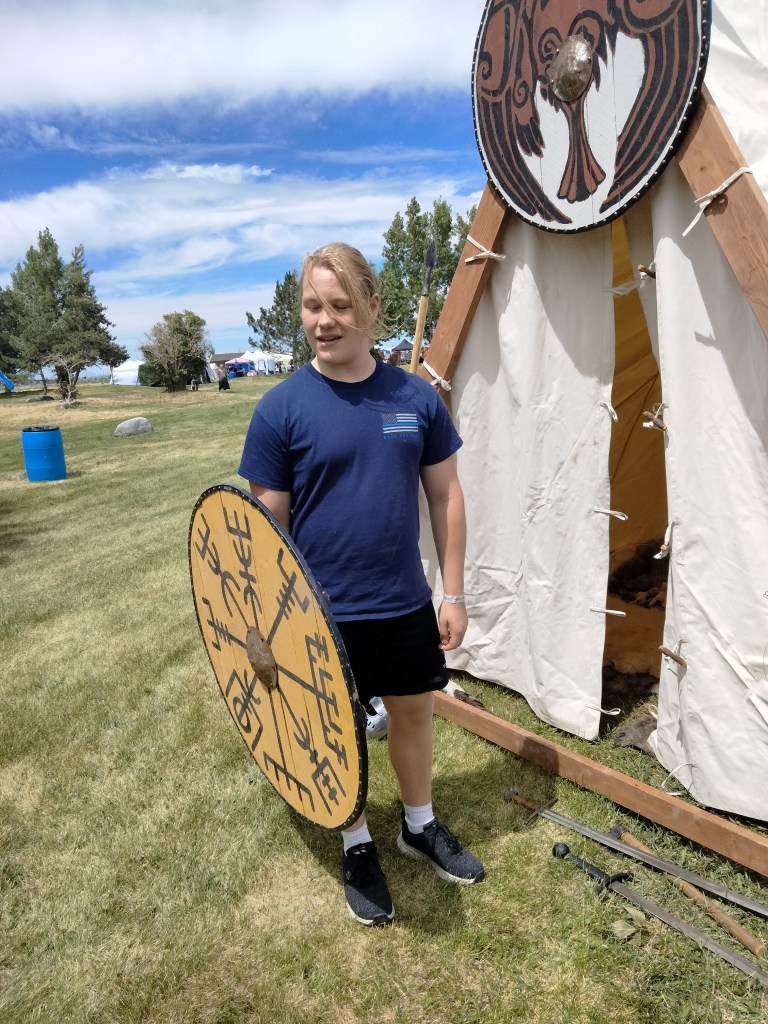
a viking
This man is working a lathe. The top end of that string attaches to the branch of a tree, so he doesn’t need another person on the other side to help him work it. Neanderthal woman is impressed at this technological leap.
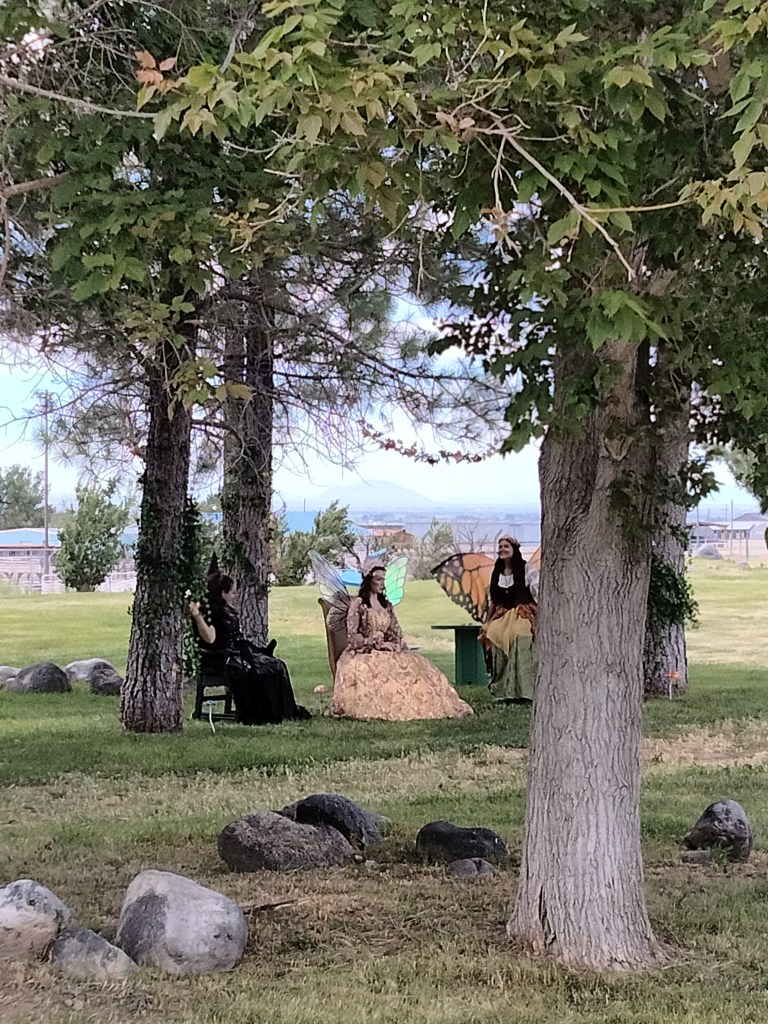
Big Southern Butte in the background of the fairy bower.
Meeting Other Authors
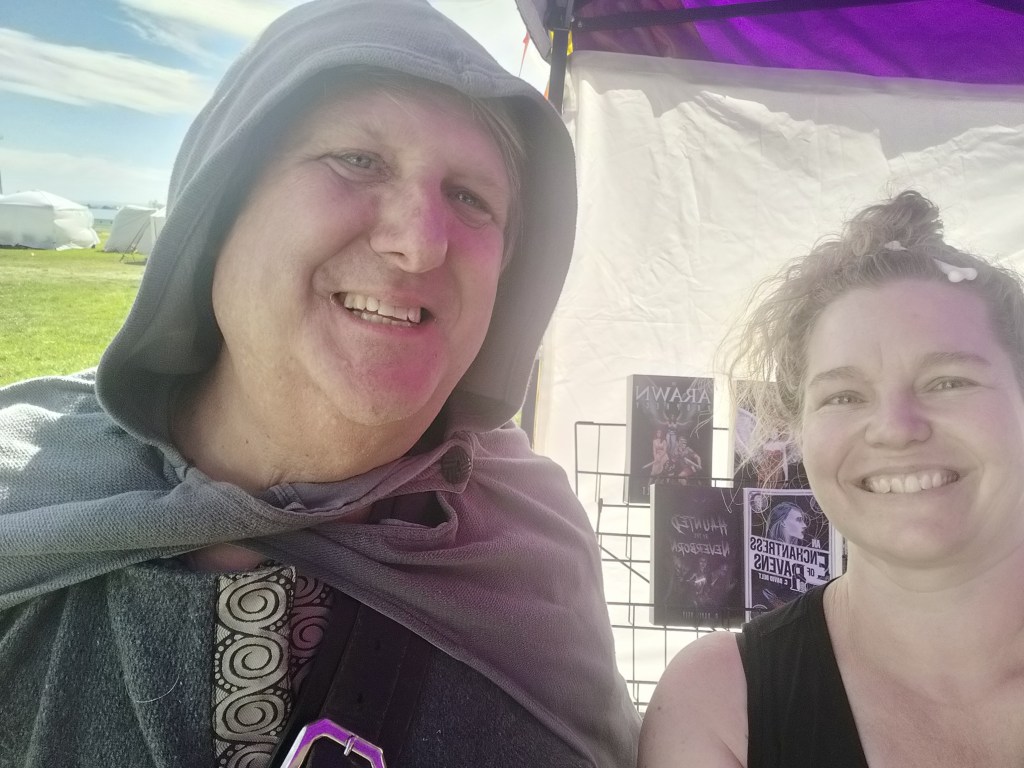
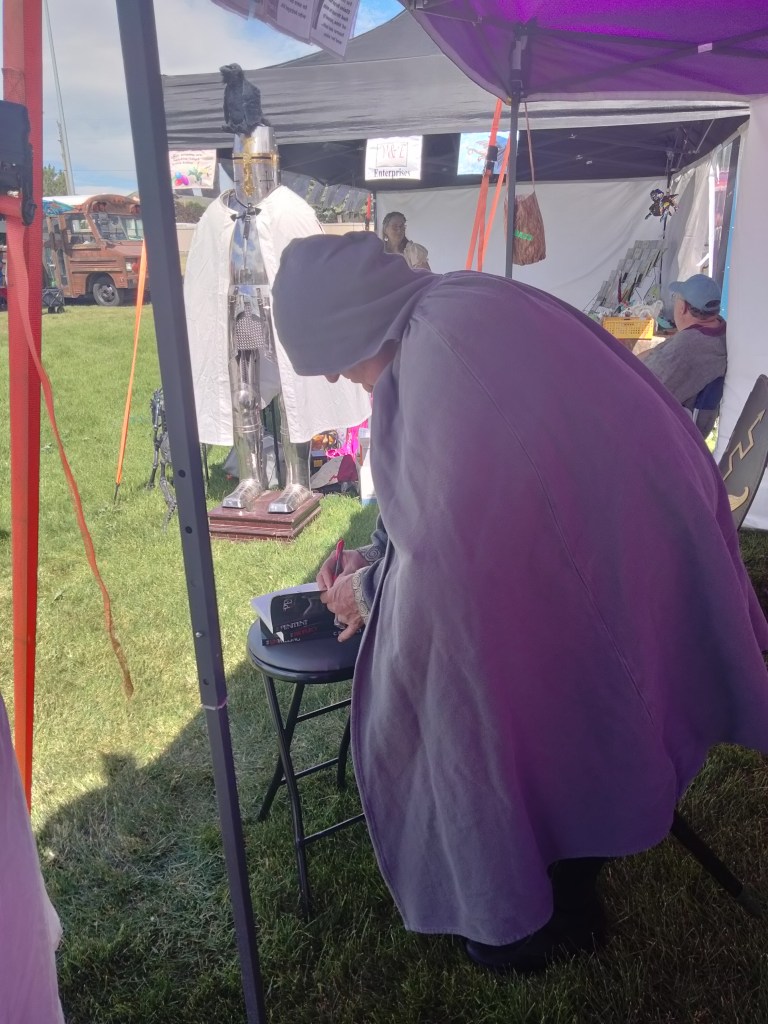
C. David Belt, who is taking his costume in a Scottish direction and was rocking a Scottish accent, is an LDS (Mormon) horror writer. Last year, I bought and reviewed his book The Sweet Sister. This year, I bought his Lilith trilogy. Here he is signing them for me.
Here’s his booth. This man sat in front of his booth and sang ballads, off and on, for six hours.
J.M. Cullen is a new-to-me writer with a particularly photogenic costume. I bought his duology that involves time travel to the waning days of the Mayan empire. So far, I have bought far more books than I’ve sold. Hopefully, that will come back around to me. But even if it doesn’t, I now have a lot of great summer reading material.
What are these extra fishbone looking thingies on the side of the t-rex’s neck?
Look, this little guy has them too.
And so does this sauropod.
Are we sure we have these attached at the correct angle? Is it possible the dinosaurs could swell out their neck like a grouse or something? Should we be reconstructing them more like birds, with thicker, sleeker appearances?
Speaking of which… that’s basically a chicken foot, right?
Also … I’m not an expert, but I am weirded out by how big of a shoulder blade t-rex seems to need for his tiny hands. Were there possibly wings attached to these?
Basically chickens, amirite?
The chicken status of dinosaurs has been confirmed. They ate gastroliths, which are stones that help an animal digest, just as hens do.
Basically a moose .
A huge, terrifying moose.
I’m sure he looked better with skin on.
Speaking of what we call things, how are we supposed to keep up with prehistoric animals if they keep changing their names in this manner?
Now let’s look at some really cool petrified “wood.” Some of the specimens actually look like modern hardwood grain, but this one looks as if, when alive, it had the texture of a giant celery.
This one had some really disturbing strawlike structures inside that are creeping me out. Cork perhaps?
This one has the ghost of the tree trapped inside, going “Heeeelp meee!”
And these last two…. what the heck? I’m guessing the first one is a giant lichen and the second one is petrified slime mold or something like that.
What parts of this dinosaur are not made up? The ones in red.
Ah, my old friend, the iguanodon! I remember you from the dinosaur book I loved when I was a kid, published in the 1970s. My iguanodon back then looked like the guy on the far left. In case you can’t read the sign, it says, “These are all models of the same dinosaur.”
Next question : Triceratops. I always took its appearance for granted, ever since that same beloved dinosaur book, but now I am asking myself, What in the world did it need that huge expanse of bone for? Wasn’t it heavy? Are we sure it was all made of bone? Or was it cartilage or something lighter? Was anything attached to it … like even more expansive flaps of skin, or feathers?
This is the “death pose.” Here are some more:
Per this sign, evolutionists’ best guess about the death pose is that it’s caused by ligaments constricting as the animal begins to decay. Of course, animals that get a chance to decay don’t generally become fossils. You have a much better chance of becoming a fossil if you are suddenly buried in an anaerobic environment, such as under a giant tsunami of mud during, say, a cataclysmic worldwide flood. Which might also smash you in this position.
These different-sized femurs belong to a large herd of allosauruses (allosauri?) who were apparently all buried together.
This is pretty cool: There’s such a thing as a “brain cast” when a dinosaur’s brain gets “pickled” in peat.
Finally: Trilobites. I knew this guys existed, but I was thinking of them as basically glorified pillbugs.
I had no idea their spines were so … um … 3-D.
Will I ever be comfortable knowing these guys existed? No. No, I will not.
Thanks to the George C. Eccles Dinosaur Park in Ogden for an enjoyable afternoon feeling dwarfed by chickens and other horrors, in their pleasant air-conditioned museum!
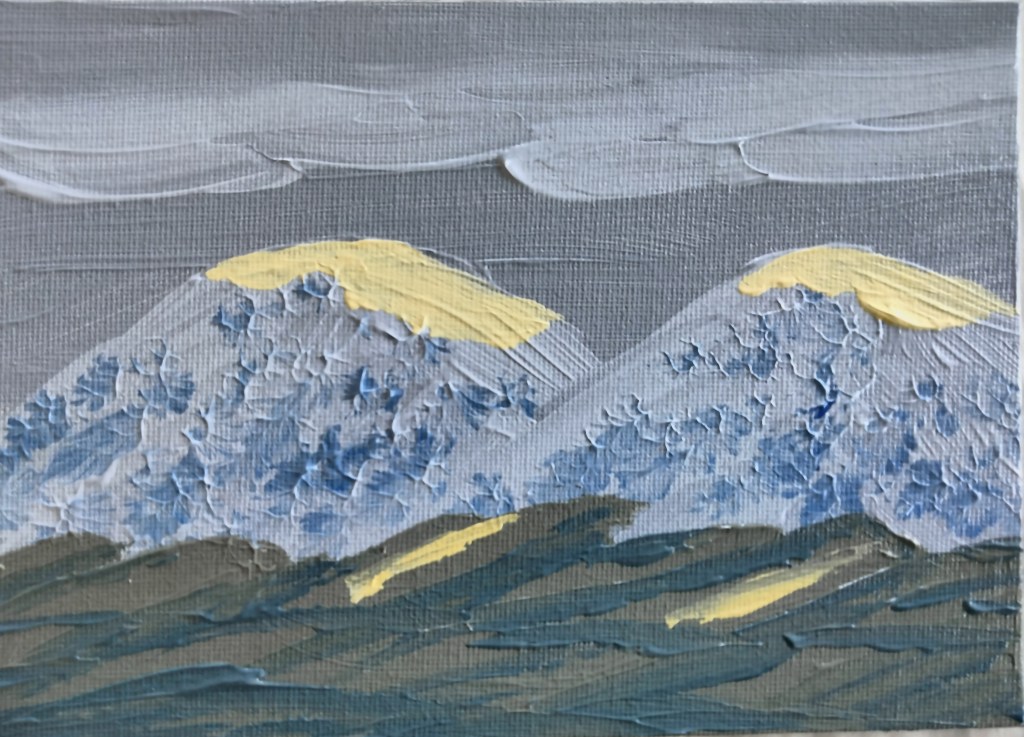
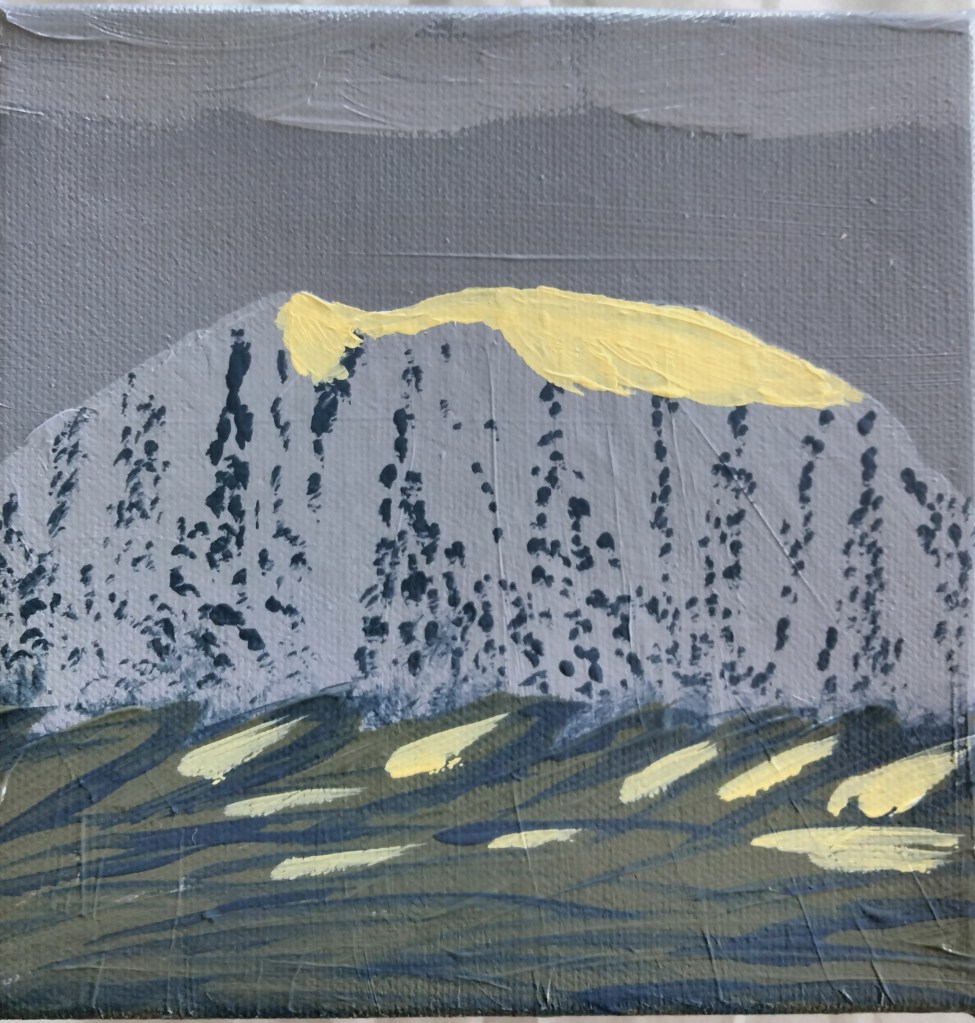
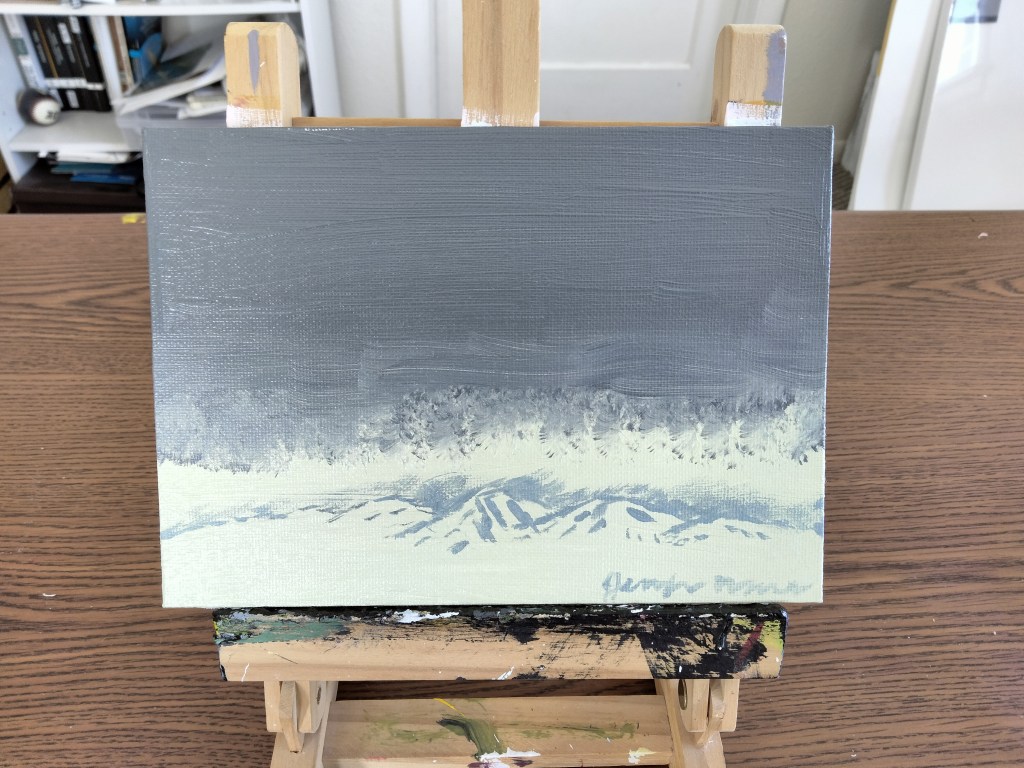
These acrylic paintings of late-winter Idaho clouds are suitable for a living room, den, or hallway that has neutral colors and needs a large (but not huge) accent painting.