Behold, Three Books

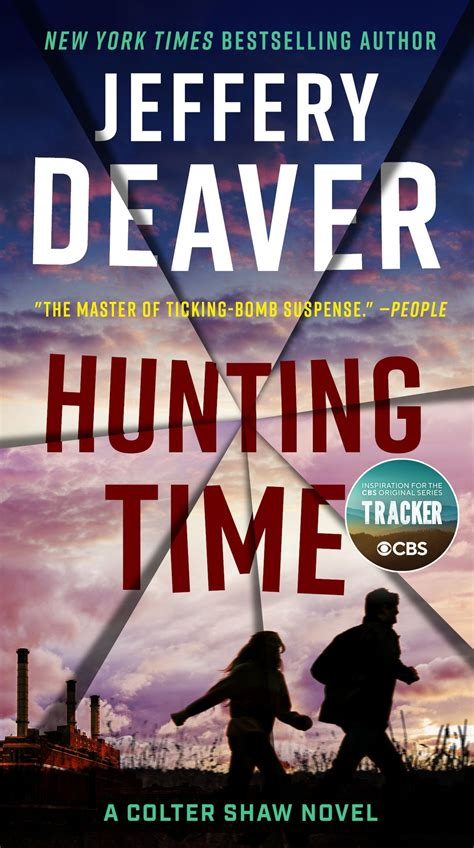
Hunting Time, a Colter Shaw Novel, by Jeffery Deaver.

By the way, it’s “hunting TIME,” not “HUNTing time.” The sense is not “time to hunt,” but “we don’t just save time, we hunt it down.”

This is a very professional modern thriller and the author has tons of blurbs on the back from other modern thriller writers. The plot was intricate, the pacing tense, and the characters were distinctive enough to keep them straight and give some emotional momentum to the story. There was also at least one major twist that I did not see coming, and that I really thought was clever.

Possibly the best-drawn “character” is the Midwestern city of Ferrington, the picture of urban blight but without the glamour of a big coastal city. Ferrington used to be an industrial capital, but then many industries left the city, leaving people out of work. Now the place seems to be nothing but drugs, crime, and despair. There are lot of chain-link-fence-surrounded empty lots filled with trash, long streets full of abandoned warehouses, and there is a badly polluted river. The ugliness of the scenes described rises to the level of beauty. The cops are corrupt in some cases and spread too thin in others. I think the name Ferrington is supposed to remind us of Ferguson, Missouri, and this is where we start to get into the book’s flaws.

Though Deaver mostly sticks to the story, when laying his scenes he makes sure to get in occasional digs at the reader. Bigots are everywhere. Trans is good, gay is good. We capitalize Black but not white. Stuff like that. Oh, and of course, capitalists are the one who ruined Ferrington in the first place.

My other issue with this book is the female characters. They’re not terrible, but … but … well. They are just missing a certain je-ne-sais-quois. For example, one of the point of view characters is a woman, Allison Parker. Deaver uses third person limited with her and with Colter Shaw, the sleuth. When we are inside Allison’s point of view, he frequently calls her Parker. That is just a bit confusing. It makes it sound like there is another person in the room. I am pretty sure that most women don’t think of themselves by their last name. Although maybe men do. Which is really the problem: All Deaver’s “female” characters (he has three main ones in this book) think more like men. Allison Parker is an engineering genius, very organized, very no-nonsense. Her daughter Hannah is a math genius, also no-nonsense. Sonja Nilsson is a former military operative (you guessed it, no-nonsense!) who is willing to sleep with Shaw after having known him for a day or two.

This is not a problem with Deaver alone. Many, many female authors write “male” characters who think and talk like women. It’s just awfully difficult to get into the head of the opposite sex.

Finally, there are occasional little things that made me scratch my head. “Seahorses can be sensuous.” (They can?) “Five-high.” (It’s high-five.) Nilsson lost forty pounds, and kept it off, in order to go into witness protection. (Oh, I didn’t realize it was that easy. Especially since she left the military at the same time! But, as we all know, the only thing keeping fat people from losing weight is the want-to. Eye roll)

Due to all these little flaws, and because the reveal of the villain was less satisfying than I had hoped, I give this book three out of five stars.

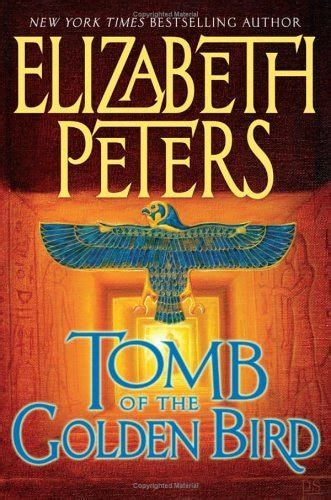
Tomb of the Golden Bird, by Elizabeth Peters

This was pure fun.

The Emersons are a family of British Egyptologists. Emerson, “Father of Curses,” the paterfamilias, is married to Amelia Peabody, whom he calls “Peabody.” This hot couple began their Egyptian adventures back in the Victorian era, but now it is 1922. Their grown son, nicknamed Ramses, is married and has children, and the Emersons have a large, motley household of employees, longtime family friends, relatives, and adoptees, both Egyptian and British. They have returned to Luxor, Egypt, for yet another season of digging. Of course, there are going to be capers, skullduggery, and so forth, and all the Emersons will be involved up to their elbows. Will they be deceived by Emerson’s half-brother Sethos? Will they foil an international plot? Most importantly, will they ever get a peek into the intact tomb that was discovered–technically, by Emerson–and is now being opened by the odious Carter?

This series is exquisitely researched. About 60% of the story is told in the first person by Amelia Peabody, in near-perfect late Victorian/Edwardian language. Scattered everywhere are gems like this one:

… I identified several other [party] guests as journalists. I can always spot them by the bulges in their coat pockets which indicate the presence of notebooks, and by their predatory looks. Messieurs Bradstreet of the New York Times and Bancroft of the Daily Mail were known to me personally (through no fault of mine).

p. 241

The other 40% of the story is told in third person from the point of view of Ramses, who is a quieter character than his colorful parents, but it also includes gems:

He had thought of several innocent explanations for David’s behavior, including the one he had given. It was understandable that [David] might feel the need to be alone; the family en masse or individually could be wearing.

p. 254

I originally came to this series hoping for ancient Egyptian mystical mysteries. It’s not that. It’s more of a romp. Much of this book felt like following the Keystone Cops, but eventually there did turn out to be some twists that gave the whole plot shape and direction. Four out of five stars.

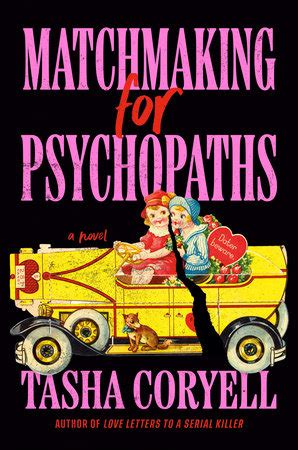
Matchingmaking for Psychopaths, by Tasha Coryell

I picked this up off the New Books shelf at the library. Perhaps I should have left it there, based on the title, but I had read the first few pages and found them engaging. Alas, I returned the book without finishing it. I would have liked there to be at least one main character who I was sure wasn’t a psychopath. A little psychopathology goes a long way.

When I returned the book, the librarian giggled and said, “Oh, that one was silly.” It was indeed silly. But silly and serial murder don’t mix well. At least not for me.

Quote: Indirect Communication III

Everyone here [in the pub] has stuff to tell him and ask him, and stuff they want to tell each other about him. Not a one of these things will be said in so many words; lack of clarity is this place’s go-to, a kind of all-purpose multi-tool comprising both offensive and defensive weapons as well as broad-spectrum precautionary measures.

Tana French, The Hunter, p. 350

Unintentionally Serendipitous Book Haul

Thriving with Adult ADHD was suggested to me by Amazon when I was buying How to Keep House While Drowning. The price was under $10, so I added it to my cart. I thought it could help … myself and … others.

Something They Will Not Forget was given to me as assigned reading. I brought it home from work, intending to binge on it at home, and misplaced it. Today I found it again. I won’t draw the obvious connection here…

These books are also serendipitous in the way they match the newly purchased orange tablecloth. We are having Fall* here in America. Fall* is a retail season in which stores like Hobby Lobby try to convince us to buy all-new Fall-themed decorations. In the case of this tablecloth, I fell for it, and I have no regrets. It makes the room look so cozy.

A Great Book You Cannot Read

The book is called Everything Has a Shape. This particular book is book-shaped. It is a proof copy of a draft written by my brother-in-law, Andrew McKeeth. It’s nicely formatted and readable, but still needs an editor. The main remaining issue is malapropisms and homophones.

Everything Has a Shape is similar to Alice in Wonderland, except that it makes a lot more sense. Alice falls into a world of nonsense, whereas the protagonist of this book, Prism, the daughter of a geometer, is invited into a world where everything makes its own kind of sense.

Everything Has a Shape also reminded me of The Phantom Tollbooth. If you were a kid who loved to read, you probably stumbled across The Phantom Tollbooth and loved it. In that book, Milo travels through a world where everything is a physical manifestation of language. For example, you can see a huge crowd of adjectives thundering over a hill.

Everything Has a Shape is sort of the mirror image of The Phantom Tollbooth, because in the world Prism must navigate, the primary mental unit is not words, but shapes. In fact, the denizens of this new place tell Prism that they did not have language at all until humans started coming into their world.

And what is it called, this strange place that Prism visits? It’s called Place.

“We come from Place. Oh, sorry. Of course this probably doesn’t make any sense either. The place where I live is called Place. It really is a terrible name, I know, but it fit so well that nobody had the heart to change it. It used to be all Space before we called it Place. Anyway, we want to ask you about Nothing. You see in Place, where I come from, there is always something. You humans, however, do believe in Nothing. You think that there is such a thing as void and vacuum. In Place everything has a shape. Even Space, which might seem empty, is really just an undefined shape.”

“If there isn’t Nothing in Place,” [asked Prism], “why are you coming to ask about it?”

“Well, as far as we know there has never been Nothing in Place, but we are beginning to think that there might be a little bit of Nothing now. What is Nothing? Can you measure Nothing? I mean, if there is Nothing, how could you know it?”

Everything Has a Shape, p. 15

The book is full of conversations like this, and they only get worse, which is to say, more confusing but ultimately more insightful as well. I will post quotes from this book in a few weeks, because they are so thought-provoking.

Place, once Prism gets there, is understandably hard to describe, but the author does a fair job of it. It is a world folded over on itself, with a parallel ground above it, called Oversky. Think of it as looking like the center of the earth. Place is populated with strange creatures and paradoxical landscapes that look like an M.C. Escher drawing. There is also a population of humans whose ancestors got into Place years ago and have been living there ever since. Prism’s journey will, of course, take her all throughout this world. She often has to use mental tricks in order to be able to navigate Place’s physical reality. These are similar to the mental tricks we might have to use here on earth, such as occupying ourselves to make time go faster, or closing our eyes to navigate an illusion room, but Prism’s experience in Place is more intense.

Prism ultimately has to face The Twister, an entity that is introducing chaos into Place by convincing the creatures to deform their own shapes. The Twister makes a strong argument that nobody has an inherent shape of their own, that having an unchangeable shape is a kind of prison, and that by helping creatures to destroy their shapes, he is setting them free. Creatures who have encountered the Twister leave broken.

Prism’s time in the Twister’s tower is confusing and poignant, especially when she encounters the Likeness, a girl who looks exactly like Prism but claims to be a better version.

“Did you used to have a shape of your own?” Prism asked.

“You mean before I became a Likeness? Yes, I used to believe that lie, but then I realized the truth that there is no shape. It is better this way. I can be whatever I like. You can only be you.”

“As I said before,” Prism said, “if I could be everything, I would stop being anything. It’s true that I am stuck with my shape, but I’m the only one who can be me.”

“You’re wrong. I am you right now.”

“You’re a copy. You are ‘like’ me, true. You can be like anything you want but you can never be yourself.”

“You don’t know what you’re passing up.”

“I would rather be me than be nobody.”

The Likeness grew angry and the real Prism wondered if she really looked that way when she got mad.

ibid, p. 166

As you can see, Everything Has a Shape is an insightful and compelling read. I hope it can be published someday so it can be enjoyed by more people. Furthermore, I would love to see an illustrated version. The scenes in this book would lend themselves to some amazing surrealist art. At the very least, it needs a beautifully done cover.

What do you think? Would you read Everything Has a Shape if it were available?

A Peek Inside the Author’s Mind

So, this post may only apply to those of you who have read and/or enjoyed my books … or to fellow fiction-writers who like to talk about the writing process. Others can bow out now, no hard feelings.

I’ve heard that some writers create a “mood board” or a collection of images or media that give a feel for how they want their book to be, when they are building their world. I don’t do that, because I kind of do worldbuilding and plot discovery more or less at the same time, as an iterative process. It’s usually not until I am deep into the draft (or at the end) that the theme of the book emerges.

Nevertheless, with all three of the books in my trilogy, as I neared the end of the drafting, a song or a poem floated up to the surface that seemed perfectly to capture the emotional tone of the book or the experience of a main character. Here they are:

For The Long Guest, it was this poem by Emily Dickinson:

My life closed twice before its close–

It yet remains to see

If immortality unveil

A third event to me

So huge, so hopeless to conceive

As these that twice befell.

Parting is all we know of heaven,

And all we need of hell.

This poem, obviously, represents Zillah’s experience in a much more succinct way.

For The Strange Land, as I wrote about Ikash’s difficult child and teen years and eventual redemption, I was haunted by this hymn:

“She hath suffered many a day / Now her griefs have passed away.”

Ikash is not unique. His story in some sense happens to everyone.

As I wrote The Great Snake, I realized that the dilemma Klee finds herself in was perfectly captured by this Bryan Duncan song:

And … as for the book I am currently drafting … no data

Update: The official mind-worm for The Bright World is Why Not Me? by the Judds.

How about you, fellow writers? How does your mind work? Do you often have media serendipitously match your book as you are writing it?

Readers, do you get a relevant song or quote stuck in your head as you are reading?

Misanthropic Quote of the Week: Man-Centered

Classical theology has erred in its insistence that theology be ‘God-centered,’ not ‘man-centered.’

Robert Schuller, quoted in Happy Lies, p. 198

This is what the LORD says:

‘Cursed is the one who trusts in man,

who depends on flesh for his strength

and whose heart turns away from the LORD.

He will be like a bush in the wastelands;

he will not see prosperity when it comes.

He will dwell in the parched places of the desert,

in a salt land where no one lives.

But blessed is the man who trusts in the LORD,

whose confidence is in Him.

He will be like a tree planted by the water

that sends out its roots by the stream.

It does not fear when heat comes;

its leaves are always green.

It has no worries in a year of drought

and never fails to bear fruit.’

The heart is deceitful above all things

and beyond cure.

Who can understand it?

Jeremiah 17:5 – 9, NIV

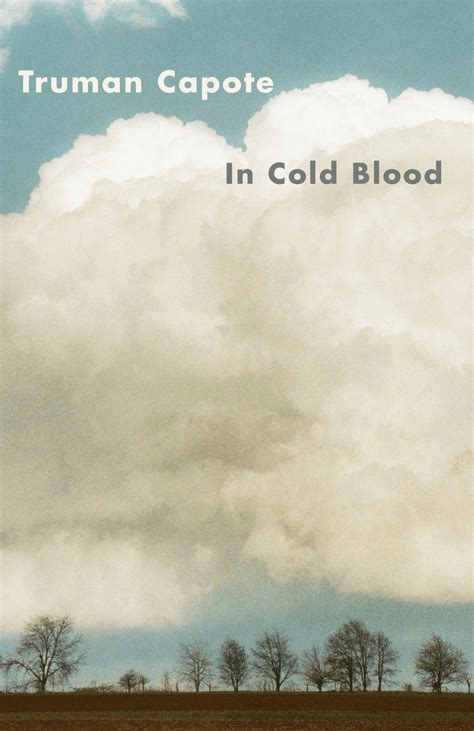
In Cold Blood made my Blood Run Cold

Well, I will be thinking about this one for a long time.

On November 15, 1959, in the small town of Holcomb, Kansas, four members of the Clutter family were savagely murdered by blasts from a shotgun held a few inches from their faces. There was no apparent motive for the crime, and there were almost no clues. As Truman Capote reconstructs the murder and the investigation that led to the capture, trial, and execution of the killers, he generates both mesmerizing suspense and astonishing empathy.

from the back of the book

The first thing to know about In Cold Blood that it’s incredibly well-written. Each paragraph is a work of art. Truly. It’s not ornate, which is why I don’t say “each sentence,” but it’s simply and eloquently told.

The book reads like a novel. It goes in chronological order – roughly – but it also slips through time seamlessly, like a good novel should, filling in glimpses of each character’s backstory just when it is needed, and in just the right dosage, no more. The details of the crime itself aren’t revealed until the last quarter of the book, though before Part II of the narrative, the crime has already taken place.

The other thing about this book is that it is really, really tragic. And not just because a family of four were shot in their beds. Just about every conceivable tragedy happens to someone, somewhere in this book. The only ameliorating thing I can say about it is that no indecent assault happens, as it were, “on camera.” We are given to understand that people have experienced it, but we have to read between the lines. The author uses the smallest effective dose.

The thing I really can’t forgive, though, is the way that Capote made me care about the murderer … one of them, that is. Dick Hickock is what today we would call a sociopath (the psychiatrist’s diagnosis is “severe character disorder”). I don’t give two figs for him, except that I wish he wasn’t crashing around the world, ruining everybody’s lives. The other one, though, is more complicated.

Perry Smith (“very nearly a paranoid schizophrenic” according to the doctor) is basically a lost man-child. He is “sensitive,” prescient, plays the guitar, and cherishes a dream, left over from boyhood, of finding sunken treasure. He “has a brilliant mind” (his words) and resents that he never got more than a third-grade education. (He got his high school equivalence during one of his stints in jail.) Perry travels with a cardboard suitcase full of books, journals, maps, and adventure magazines.

… his personal dictionary, a non-alphabetically listed miscellany of words he believed “beautiful” or “useful,” or at least “worth memorizing.” (Sample page: “Thanatoid = deathlike; Omnilingual = versed in languages; Amerce = punishment, amount fixed by court; Nescient = ignorance; Facinorous = atrociously wicked; Hagiophobia = a morbid fear of holy places & things; Lapidicolous = living under stones, as certain blind beetles; Dyspathy = lack of sympathy, fellow feeling; Psiloper = a fellow who fain would pass as a philosopher; Omophagia = eating raw flesh, the rite of some savage tribes; Depredate = to pillage, rob, and prey upon; Aphrodisiac = a drug or the like which excites sexual desire; Megalodactylous = having abnormally large fingers; Myrtophobia = fear of night and darkness.”)

page 146

This is a remarkable list, especially if it was truly taken from Perry Smith’s papers. It is remarkable for the way that every single entry seems to have some special relevance to Perry. Taken together, they almost constitute his biography as it is starting to emerge from the book at this point.

So, what makes him dangerous? Perry has dissociative tendencies, and a substratum of rage that he’s not even aware of. He thinks of himself as a genius with spiritual depths whom nobody appreciates. His is the rage that comes from being inadequately parented. Perry came from an unstable home and spent time in orphanages, where (to take just a sample incident) the nuns would beat and humiliate him for wetting the bed. He’s never had a good mother or father, and has roamed the world trying to find a home. All this deprivation has made him weak, and so he is dangerous in the way that weak, conceited men are dangerous. He is too weak to control his own actions when it matters.

Dad snatched a biscuit out of my hand, and said I ate too much, what a greedy, selfish bastard I was, and why didn’t I get out, he didn’t want me there no more. He carried on like that till I couldn’t stand it. My hands got hold of his throat. My hands–but I couldn’t control them. They wanted to choke him to death.

page 136

Perry also suffers chronic pain. A motorcycle accident left his legs never the same again, and the pain in his legs (and head) tends to flare up when he gets emotionally disturbed, making it even harder for him to concentrate.

I started feeling the tragedy within a page of meeting Perry. The first thing the book tells us is that it’s his dream to learn to skin dive and find buried treasure, and I had a feeling that dream was never going to come to pass. Damn you, Truman Capote!

I may do a whole separate post about Perry as a character, but there’s one more thing I will say about this book. Both Perry and Dick are types of people that you meet very often today. Perry’s history, in particular, is mirrored by many, many others. In fact, his wild, nearly fatherless youth of knocking about the American West reminds me very much of the family history of some of my own cowboy relatives.

Both murderers are treated by the psychiatrist who is called to write reports about them as if they are uniquely mentally ill individuals. Perhaps at the time they were (or perhaps the fact that they had already committed murder made them seem more egregious), but as I look at our society nowadays, their mental landscapes seem more like the rule than the exception. Do with that what you will.

Read this book if you don’t cry easily and want to enjoy 343 pages of the most amazing writing. But just be aware of what you are getting into.