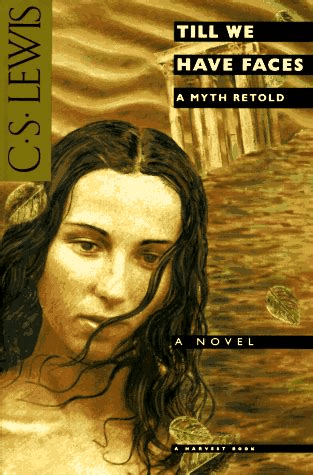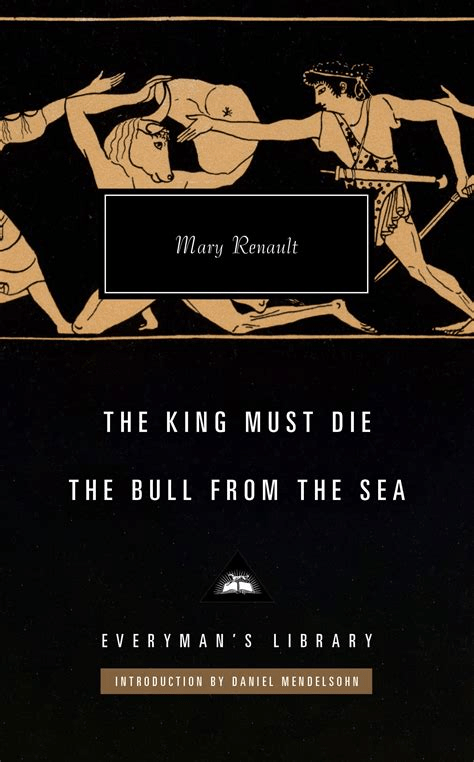
I read The King Must Die back in university. My education up to that point had some gaping holes, but I had been privileged to attend a school one time where they spent an entire year getting us thoroughly familiar with Greek myths and history. My point is, I knew the story of Theseus. I knew the labyrinth and the Minotaur were the main event. And I was eager to get to them. So I moved through the first part of the book at a pretty good clip, the part that tells of Theseus’ childhood in Troizen, his coming of age, and his journey across the Peloponnesian Peninsula to find his father, the king of Athens.
I thought then, and still think now, that Theseus is not an especially likeable character to modern eyes. He’s a prince of Heroic Age Greek culture, and he is, as they say, a product of his time. He is proud, ambitious, pious towards the gods, stoic, brave, and clever (those are his virtues), and also snobby, entitled, callous, cruel, sexist, and promiscuous. He has all the virtues of ancient paganism, but none of the virtues a Christian man. You can’t endorse all his actions or even his value system. (By the way, that is exactly what makes this such a fantastic historical novel.) But despite all this, there are moments in his story that ring incredibly poignant. And these are moments that I either forgot since my first reading, or missed entirely.
You want to hear about the Minotaur? Let me tell you about a son and his father.
Theseus’s grandfather is king in Troizen, a small Greek kingdom on the east coast of the Peloponnesian Peninsula (or what they call the Isle of Pelops). His mother, a princess, had him when she was a teenager. She lives, still unmarried, in the palace, and serves as a priestess of the Mother, who is goddess left over from before the Greeks arrived, whom they feel they must give her due.
Theseus’s mother has always told him that he is the son of Poseidon. Theseus takes this seriously as a little child. He views the sacred horse, also called a son of Poseidon, as his brother. He whispers “Are you there, Father?” into the sacred well that sometimes grumbles when Poseidon is stirred up. But as he gets a little older, he sees that other people doubt he has a divine father. He becomes defensive.
Truly “god-got” children are known to be really tall, and Theseus has always been small for his age. He waits and waits to grow (he hopes to be six or seven feet tall). He develops “short man syndrome,” taking daring risks in order to prove himself in front of the other boys. He is the best at every sport except for Hellene-style wrestling, because that requires mass and weight.
Once, he even swims way out into the ocean, figuring either Poseidon will prove he is his father, or Theseus will welcome a death by drowning. The current sweeps him back to the island, and he figures he has his answer.
Then Theseus turns seventeen, and his mother shows him the rock that his father said he should try to raise in order to prove whose son he is. So, it wasn’t Poseidon after all.
Theseus tries and can’t raise it by brute strength. He is broken, furious with his mother who won’t tell him anything.
But eventually, he realizes that he can raise it with a lever. That’s when he finds the sword.
His grandfather tells him the story, which is full of the tragedy, ugliness and beauty of ancient paganism is and basically a mini novel within this novel. There was a plague, a drought. Apollo claimed not to be responsible. Poseidon wasn’t answering. Finally, the priestess said it was the Mother. “A virgin must go and wait in the myrtle-house and give herself to the first man who comes along.” The priestess disliked Theseus’s mother, because she was an attractive young girl. His grandfather couldn’t see a way to get her out of this.
But it happened that Aigeus, the thirtysomething king of Athens, was visiting Troizen. He agreed with Theseus’s grandfather that he would be the man. At least the princess would lose her virginity to someone she had met before, and he would be kind and gentle with her. They could not tell her about this arrangement beforehand, because when a member of the royal family is in some way sacrificing themselves for the people, their willingness to make the sacrifice is a critical element. Only then will the god bless it.
The thunderstorm was already arriving. Aigeus stripped and swam across the channel to the sacred island where the Myrtle House was. A flash of lightning revealed to the princess a dark-haired man rising up out of the water, with a ribbon of seaweed on his shoulder. She thought he was Poseidon. She knelt, and crossed her arms over her chest, as one would do for a god.
Why didn’t he wait for the boat? Why did he jump into unknown waters, in a rainstorm, and swim across? Was Poseidon indeed possessing him? say these pagans. Who knows?
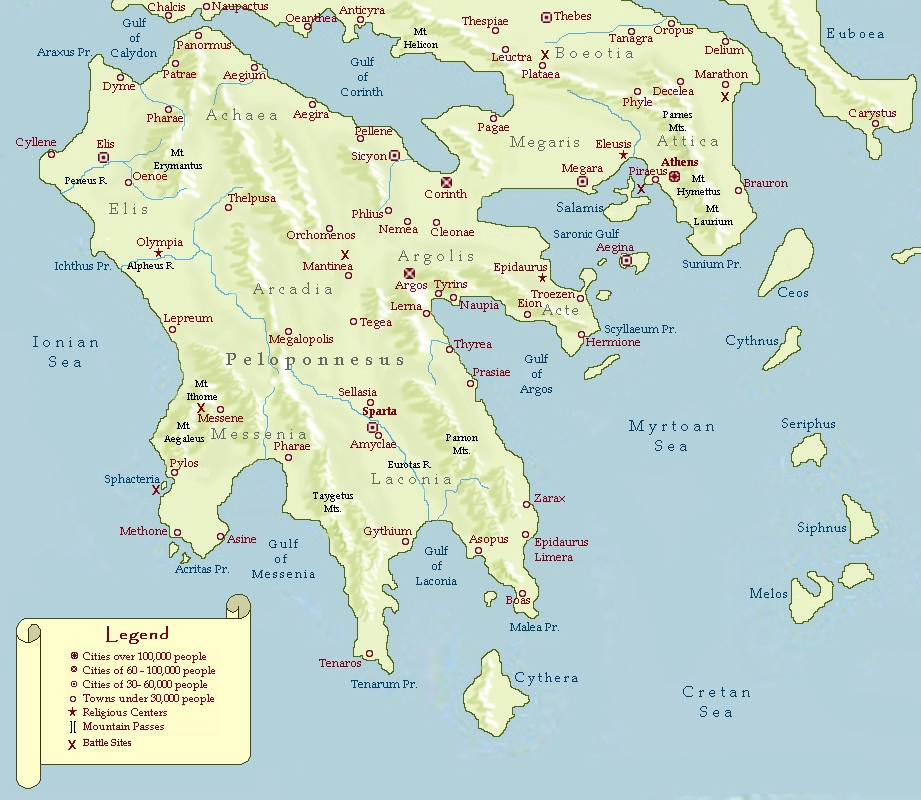
Theseus is disappointed, but intrigued, to find out that he has a human father. He travels over the Isthmus (a dangerous and lawless place), gets entangled with the earth-mother-worshipping people of Eleusis, which is very creepy, and eventually makes it to Athens and reveals himself to his father, narrowly escaping being assassinated first.
On the map above, if you look around the Saronic Gulf, you can see Troezen on the south side, Athens on the north side, and Eleusis just a bit west of Athens. I wish I’d had this map 25 years ago, when I first read the book.
Aigeus has no other sons. He is thunderstruck and delighted to see Theseus.
There’s not exactly hugging and crying, because both of them are proud, aristocratic, cautious men. On the whole, Aigeus probably wears his feelings closer to the surface than Theseus does. Still, they start getting to know each other.
Theseus’s birthday is approaching. Aigeus wants to have a feast for him. Theseus suggests sending to Troizen to bring his mother for the feast, but Aigeus dismisses this plan. If they wait, the time will get too close to “the tribute” (the sending of young men and women to Crete), and he doesn’t want to be celebrating his long-lost son when some of his subjects have just had to give up theirs.
It’s at this point that the reader who knows the outline of the story realizes that Theseus and his father are not going to have much more time together.
The day of the feast comes. Aigeus gifts Theseus a chariot, “of dark polished cypress-wood, with ivory inlays and silver-bound wheels, a craftsman’s masterpiece.”
It was a gift beyond my dearest wish. I thank him on one knee, putting his hand to my brow; but he said, “Why this haste, before you have seen the horses?”
They were matched blacks, with white-blazed foreheads; strong and glossy, sons of the north wind. My father said, “Aha, we slipped them up here, as neat as Hermes the Trickster lifting Apollo’s steers. The chariot while you were in Eleusis; and the horses this very morning, while you still slept.”
He rubbed his hands together. I was touched at his taking all this care to surprise me, as if I had been a child. “We must take them out,” I said. “Father, finish your business early, and I will be your charioteer.” We agreed that after the rites, we would drive to Paionia below Hymettos.
pp. 154 – 155
In case you missed it, Aigeus just gave his son a sports car.
After the rites, Theseus goes to the stables and waits and waits for his father. When the king does show up, he seems to have forgotten their plan to take a ride. He is stressed out by something. He urges Theseus to ride by himself, but to leave by the back gate.
The reader realizes, with a sinking feeling, that the representatives from Crete have come early to collect the youths and maidens for the tribute.
Aigeus, almost in tears, is trying to get Theseus away from there. But Theseus, too sharp not to realize something is wrong and too proud to be hustled out the back, quickly finds out what is happening and insists on entering the deadly lottery.
And now, the reader realizes that they are never, ever going to take that chariot ride.
The youths and maidens of Athens are chosen by putting their names on scraps of pottery, which are then drawn at random out of a bowl. Aigeus puts in a lot for his son, on which he has surreptitiously written some other youth’s name. But Theseus, standing among the crowd, realizes what has happened when he sees that his father is not worried. What should he do? Should he let the deception stand? Or should he stride forward and insist on being among those who are sacrificed?
I thought, “What was it? What has my father done? What every father would do if he could. And he is King. He has to think for the kingdom. It is true enough that I am needed here. I ought not to think like a warrior only. Has someone else gone to Crete for me? I have led such lads to war, and never thought I wronged them, though some were sure to die. Why then do I hate my father, and myself still more, and feel I cannot bear my life?”
I looked at my father, and remembered how he had invoked Poseidon, praying him to choose the victims. And I thought, “Yes! That is it! He has mocked the god, the guardian of the house, who brought him to beget me. Well may I be angry! This man has mocked my father.”
p. 163
Theseus begins praying his heart to Poseidon. He senses that the god wants him to go to Crete. It is time to make the sacrifice.
Sorrow fell black upon my eyes and the sun grew cold. I thought of what I had planned to do in Athens: small things I had to hoped to force my father’s hand to, great ones when my own time came. I knelt where I was, with my hair hiding my face, and thought of my life; of hunting with the Guard, of feasts and dances, of my room with the lion walls; of a woman I wanted, and had meant to speak to at the festival; of my beautiful horses, who had scarcely felt my hand; of the war paean, the bright rage of battle, and the triumph song. And I thought, “The god cannot mean it. He sent me here to be king.”
“Father Poseidon,” I whispered, “take something else from me. I will not ask to live long, if I can make a name and be remembered in Athens. Now it will be as if I had never been born.” I heard the name called of some Athenian. It was the last of the seven. “Lord Poseidon, I will give you my horses, the best I ever had. Take anything but this.”
The sea-sound grew fainter in my ears. And I thought, “The god is leaving me.”
p. 164
So off he goes. Rather than lose the unction of the god to rule, Theseus insists on going to Crete, where, he has been told, bull-dancers last six months at the most.
“Don’t grieve, Athenians. The god is sending me. He has called me to the bulls, and I must obey his sign. But don’t weep for me, I will come again.” I did not know these words till I had spoken them; they came to me from the god. “I will go with your children, and take them into my hand. They shall be my people.”
They had left off weeping, and their voices sank to a hush. I turned, and faced my father.
I saw the face of a man who has got his death-wound.
p. 165
I mean!