
We now get up to seven a day, including blue from our Americauna, white from our Leghorn, pale brown from various ones, dark brown possibly from the Rhode Island Red, the occasional brown speckled one, and someone is laying pink.


We now get up to seven a day, including blue from our Americauna, white from our Leghorn, pale brown from various ones, dark brown possibly from the Rhode Island Red, the occasional brown speckled one, and someone is laying pink.

Here is the basic wooden door pull that finally came off my son’s closet in our rented farmhouse. The closet is plywood or chipboard or something like that, hollow, and from repeated usage, this screw had stripped around itself and now just popped out whenever you tried to open the accordion door.

Here is the replacement, from my best bud, Hobby Lobby.
I love Hobby Lobby. It’s my source for knitting supplies, including wool and cotton yarns and needles; affordable canvases, acrylic paints, palettes and brushes for my (and my son’s) painting vice; model-railroad materials for whenever I need to build a model of Tenochtitlan; fabric for a Renfaire tent or a cave woman costume; and wood for those hippie woodburning projects, not to mention the usual scrapbooking supplies, gift wrap, stickers, and Christmas decorations.
Sadly, or perhaps happily, this post is not a paid promotion.
In addition to all this, Hobby Lobby has an impressive selection of themed shelf brackets, towel and key hooks, and drawer pulls, often in cast-iron. These are not just cutesy country style fixtures (though they do have that). You could put together a goth or steampunk or French Country or Log Cabin look for a room, easily, with the supplies found there.
Long story short, I walked into the Hobby Lobby variety-drawer-pull section, and within seconds I had found the beauty above. It was 50% off, so I think I paid about two bucks for it. In order to put it into the plywood door, I had to use a plastic drywall anchor.
The thing that made this find so serendipitous, though, was that the closet in question resides in the room of my rabbit-obsessed son. (Rabbits!) Additionally, said room has the following window valance:
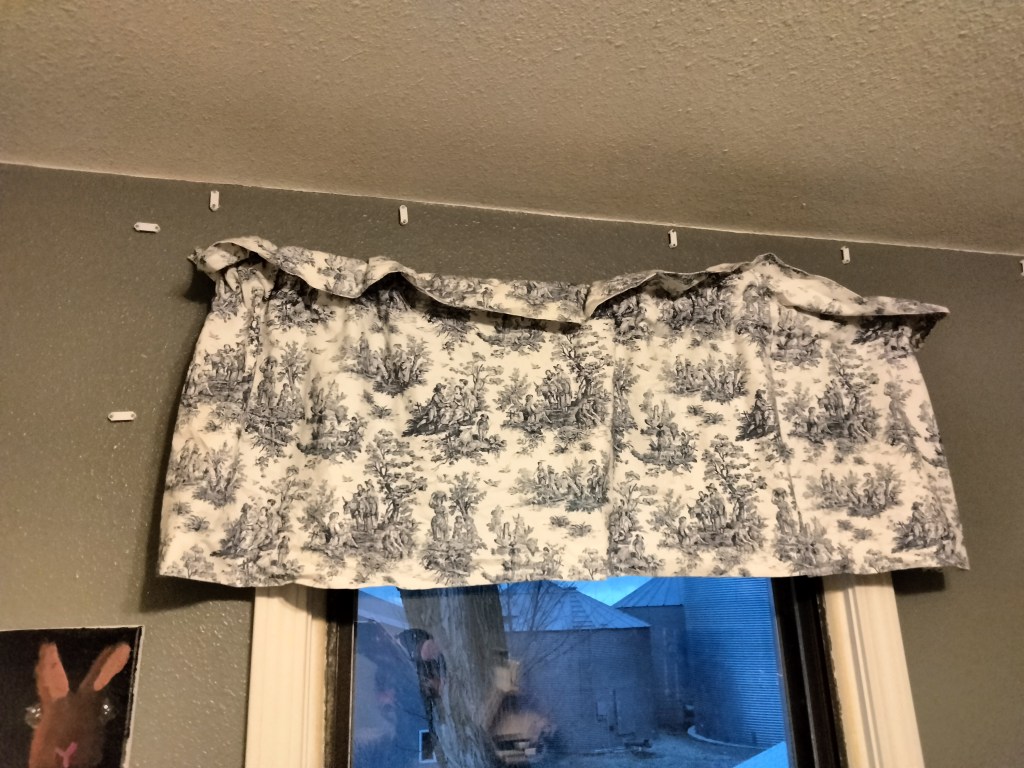
I mean.
The only downside is that, as I now notice in the picture, the rest of the door looks kind of bad by comparison.
The upside is that this post is now long enough to appear on a Friday and not on a Monday.

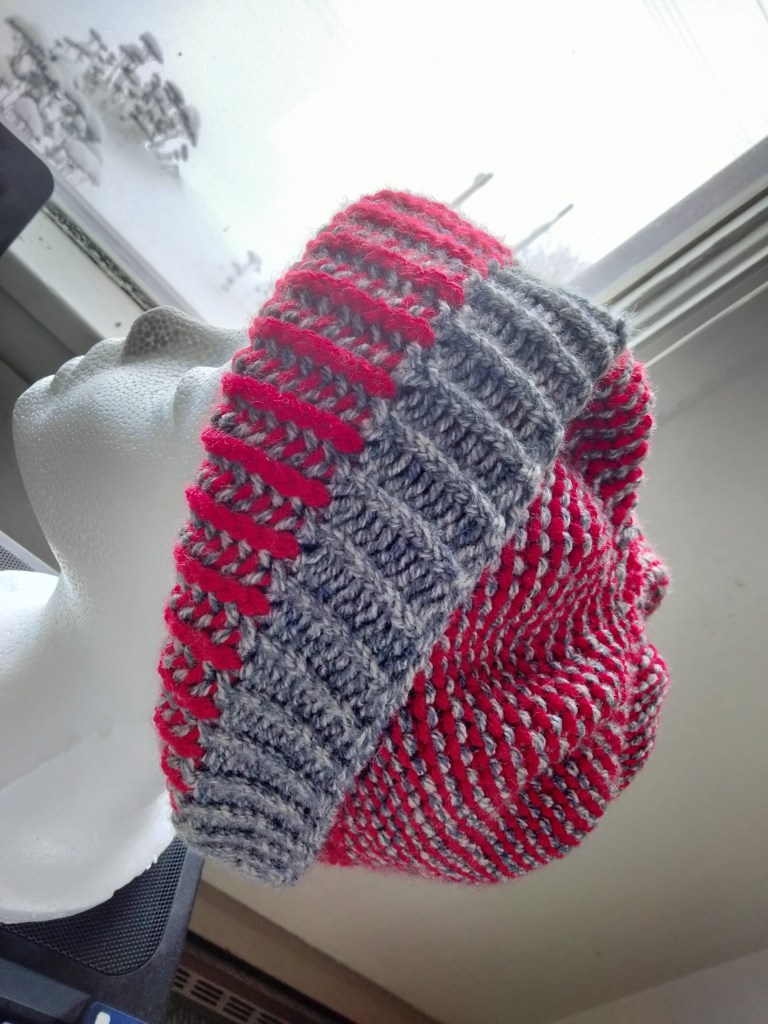
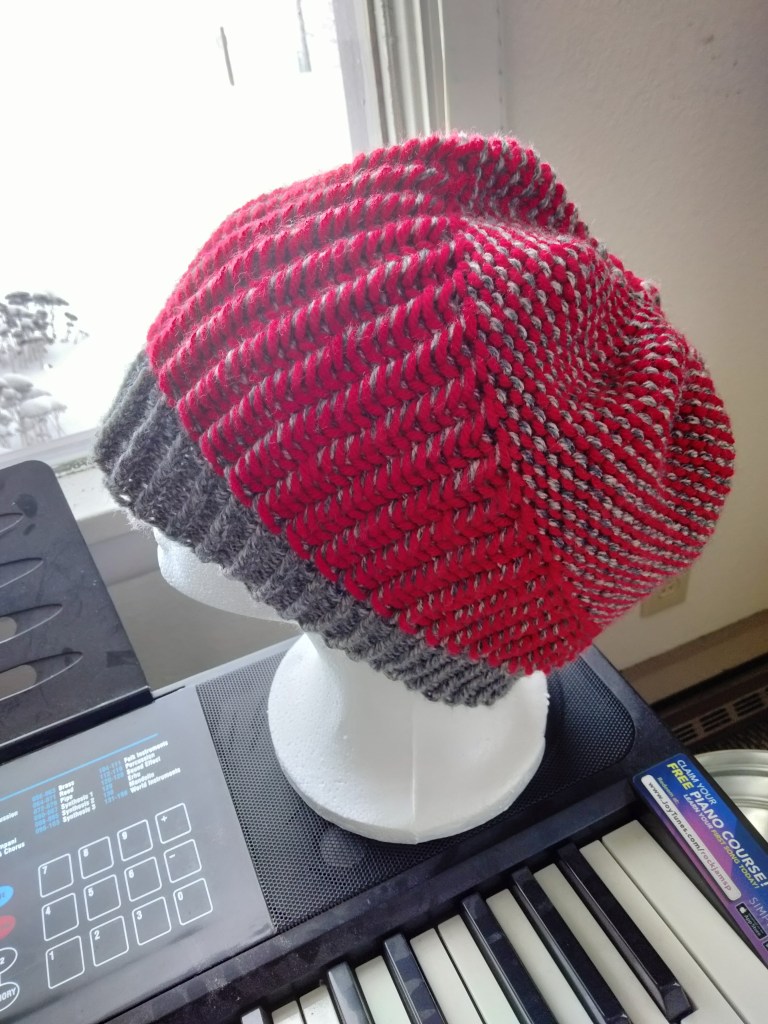
This is such a great pattern for showcasing different color combinations.
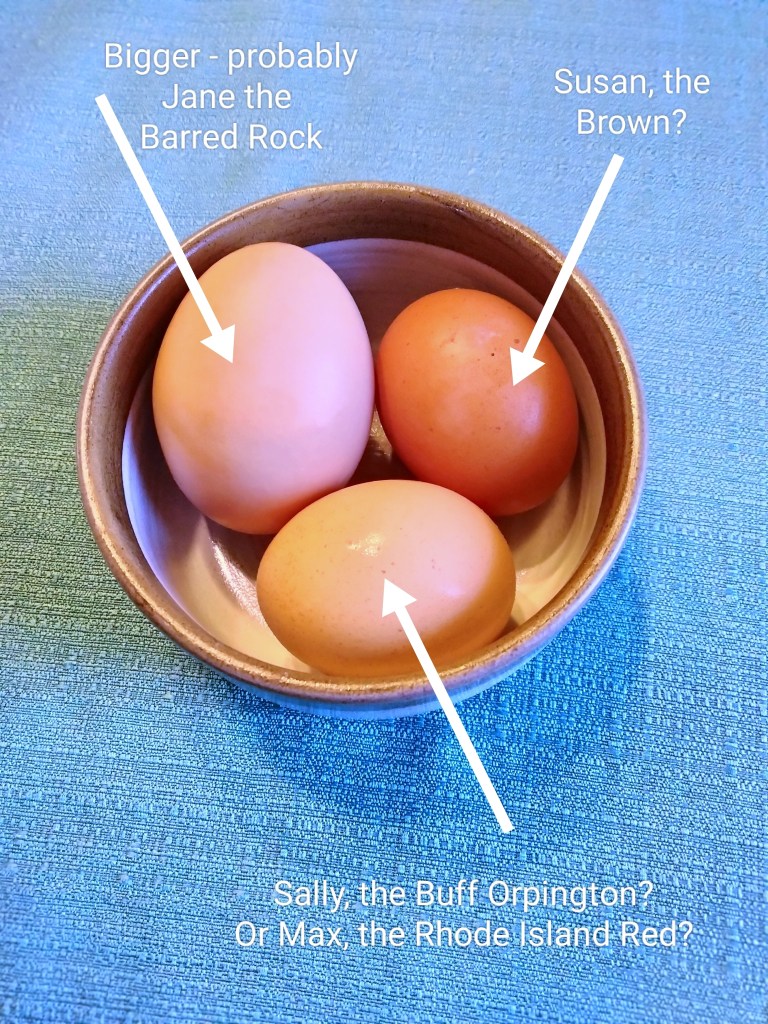
… but who laid them?

I picked this up in the new-to-us section of the public library. This is a really well-chosen title, really lets you know what you are getting.
From the back:
If you’re struggling to stay on top of your to-do list, you probably have a good reason: anxiety, fatigue, depression, ADHD, or lack of support. For therapist KC Davis, the birth of her second child triggered a stress-mess cycle: the more behind she felt, the less motivated she was to start. …
Inside, you’ll learn to: See chores as a kindness to your future self, not a as rejection of your self-worth; Start by setting priorities; Stagger tasks so you won’t procrastinate; Clean in quick bursts within your existing daily routines; Use creative shortcuts to transform a room from messy to functional.
With KC’s help, your home will feel like a sanctuary again. It will become a place to rest, even when things aren’t finished.
I really wish that I had written this book, or that it had been written by Allie Beth Stuckey. This book, or a version of it, needs to be written by someone who understands human sin nature, grace, and the freedom that is found in Christ Jesus. It’s so, so close, but because of the author’s wokeness, there are jarring notes.
To some, this book might sound as if it was written by a sloppy, disorganized person, to sloppy, disorganized people, to help them justify their sloppiness. On the contrary, it was written by a naturally distractible person, to distractible people, to help them achieve the level of organization that they actually want to, without letting the perfect become the enemy of the good.
KC went through rehab as a teenager. She has ADHD, is married with two small children, and is a therapist, which means that people talk to her about their frustrations with themselves and their inability to get their houses in order.
Consequently, the intended audience for this book is people who are responsible for keeping house, but have some major obstacle such as chronic pain, being in the midst of grieving, ADHD, depression, or having “issues” around cleaning due to the way they were raised … or all of the above. The goal is to help these people develop strategies to get over the mental (and sometimes physical) blocks so they can maintain their houses in basic livability. And I am there for it!
People in these situations might not have the time, energy, or attention span for a long book, so this little gem is written in short chapters, each of which gets right to the point. To accommodate people who might be very literal-minded (such as those on the autism spectrum), KC re-states all figurative language very literally. For example: “We are going to flex our motivation muscle” becomes “We are going to practice this skill until we get good at it.”
While I don’t believe that ADHD is a literal, physical brain disease, nor that it should be treated with drugs, I do believe that what we call ADHD is a good description of how some people’s minds, bodies, and sensory-processing work. And while I’ve never been diagnosed with ADHD (and have no desire to), their descriptions of how their minds work, and the strategies they use to get things done, usually sound so familiar and relatable that I find myself asking, “Doesn’t everyone experience that?” So, I could probably get a diagnosis if I wanted to. I just don’t think it would help me. I’m an older person and I’ve learned how to set up systems that work for me.
With that in mind, many of the aphorisms and strategies that KC presents here, are ones that I’ve come to myself, over years of keeping house, in season and out of season, through small children, international moves, unemployment, depression, the lot. Things like this:
Of course, there is not a firm frontier between the practical and the spiritual in our everyday lives. As Solzhenitsyn has said, the line between good and evil runs “through every human heart.” Which means that, even as we face mundane choices like do I do the dishes, the laundry, or take a nap, we are interacting with issues of bondage to sin versus freedom, and grace versus shame. So it’s not really possible to talk about practical things like task initiation without also addressing the spiritual.
KC does a pretty good job of this in her book. She starts out by saying (page 11), and this is in bold, “Care tasks are morally neutral. Being good or bad at them has nothing to do with being a good person, parent, man, woman, spouse, friend. Literally nothing. You are not a failure because you can’t keep up with laundry. Laundry is morally neutral.”
Now, since I can hear howls of objection, let me address this. What she is trying to express here, is that shame does not energize people. It paralyzes them.
Yes, moms do have a duty to keep on top of the laundry cycle and yes, (contra KC Davis), there IS such a thing as laziness, and laziness IS sinful.
But when it comes to “care tasks,” many people (most people?) grew up being shamed not for character flaws such as laziness, but for lack of technical skills in the tasks, for not doing them up to an adult’s standard, for not doing them perfectly, or for not knowing where to start. Consequently, many (most?) people have a huge burden of shame and failure around household tasks. And this burden of shame, and this perfectionism, makes it much, much more difficult to get these tasks accomplished (or in some cases even started). See? KC is not saying, “Let’s get rid of the shame because it is 100% OK to never clean your kitchen.” She is saying, “Let’s get rid of the shame associated with these tasks because only then will you be able to do them.”
In other words, KC in her self-examination and her work as a therapist has stumbled upon that biblical truth: “the law kills, but the Spirit gives life.” The only people who are free to act and move in this world are those who are not paralyzed by shame.
It’s at this point that I wish this book had been written by a Christian, because this point really deserves to be developed further. How does one set others free from shame? Certainly, if people have indeed been shamed over things that are morally neutral (such as being slow at doing chores, or doing the dishes a different way than your parent), then this needs to be clarified. But this is not enough, because not all our shame is spurious. We actually are sinners, and we actually do know it. It is not enough to say, as KC says, “I don’t think there is any such thing as laziness.” Even when we have gotten rid of the spurious shame over morally neutral things like being naturally untidy, even if your particular client is not actually lazy … what about the other shame? What are we going to do about that?
In other words, the only way that people can truly be set free from shame is when they turn to Jesus, the living Christ, who alone has the power to free us from shame, so that we can “do the good works that He prepared in advance for us to do.” I think Allie Beth Stuckey could do a lot with this. In fact, I’d love it if she were to have KC Davis on her podcast.
The other problem I have with this book is as follows. For the most part, KC does a great job of being gentle with her readers and treating them like responsible human beings. But every so often, she turns around and sucker-punches them with identity politics.
Many self-help gurus overattribute their success to their own hard work without any regard to the physical, mental, or economic privileges they hold. You can see this when a thin, white, rich self-help influencer posts “Choose Joy” on her Instagram with a caption that tells us all joy is a choice. Her belief that the decision to be a positive person was the key to her joyful life reveals she really does not grasp just how much of her success is due to privileges beyond her control.
pp. 14 – 16
It’s hard to know where to start with this paragraph. Does KC really think that a “thin, rich, white influencer” posts “Choose Joy” because she is already joyful? That such people have no insecurities or struggles? That all that is necessary for joy is having circumstances line up in your life such that you avoid three major conditions which the Identity Crowd considers to be disadvantages? This is so dehumanizing as to beggar belief.
I’m not saying “Choose Joy” is advice that would be helpful to anyone, really, but I at least recognize that most people who say things like “Choose Joy” obviously mean “Choose joy in spite of all the awful things that are happening in your life.” If people are happy, at peace, and free from shame or struggle, they don’t go around saying stuff like “choose joy.” And based on the practical wisdom in the rest of her book, I think KC actually knows this. But, blinded by identity politics, she considers it OK to lay aside what she knows and take a swipe at some of her readers in a misguided attempt to build up others of her readers. Unfortunately, this undercuts her message that she doesn’t want to shame anyone. You see, this book is not for you if you are rich, thin, or especially, white. And as we know, those always go together.
In the very next paragraph, KC says what she was actually trying to say, but in a much more sane and humane way, namely that different things work for different people:
Different people struggle differently — and privilege isn’t the only difference. Someone might find a way to meal plan, or exercise, or organize their pantry that revolutionizes their life. But the solutions that work for them are highly dependent on only their unique barriers but also their strengths, personality, and interests.
p. 16
Really, that paragraph would have been sufficient, excepting the word privilege. I do wish people would stop using the word privilege — which is a legal term — when what they actually mean is “advantage.” But that’s a rant for another day.

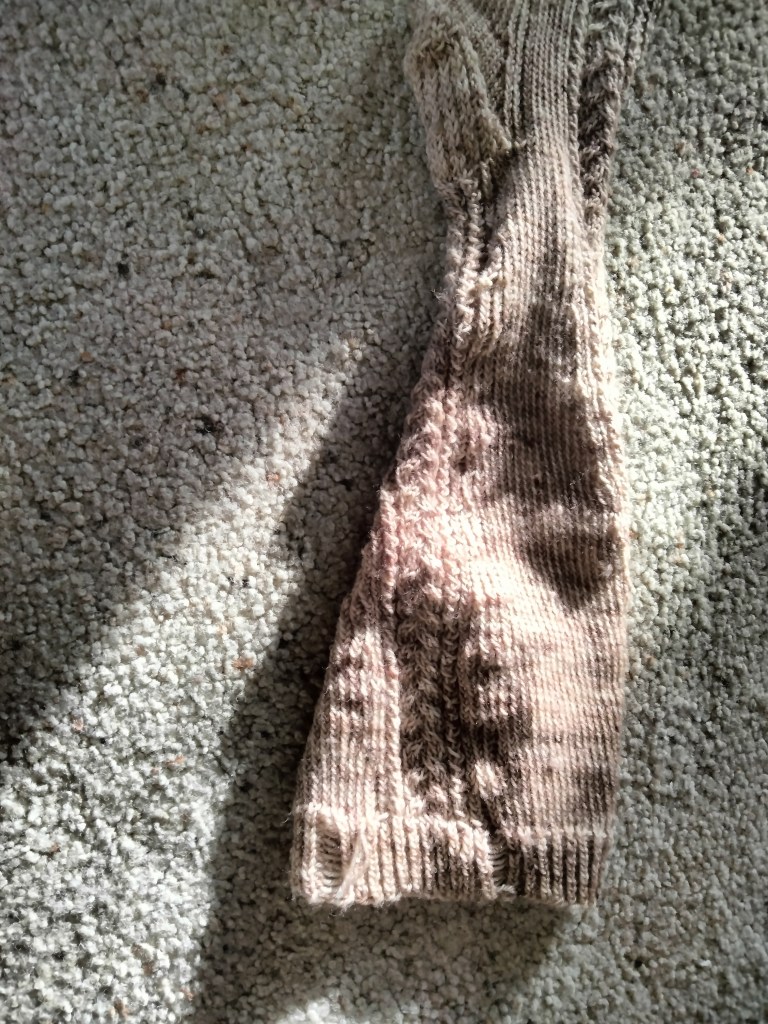
Got one done. Just need to be sure & finish the other before Winter ends.
Many other book bloggers did “2024 Goals” posts in January. That seems like a nice way to generate a blog post, even if this goal post (haha) is a little late.
Books to be read or, if already begun, finished:
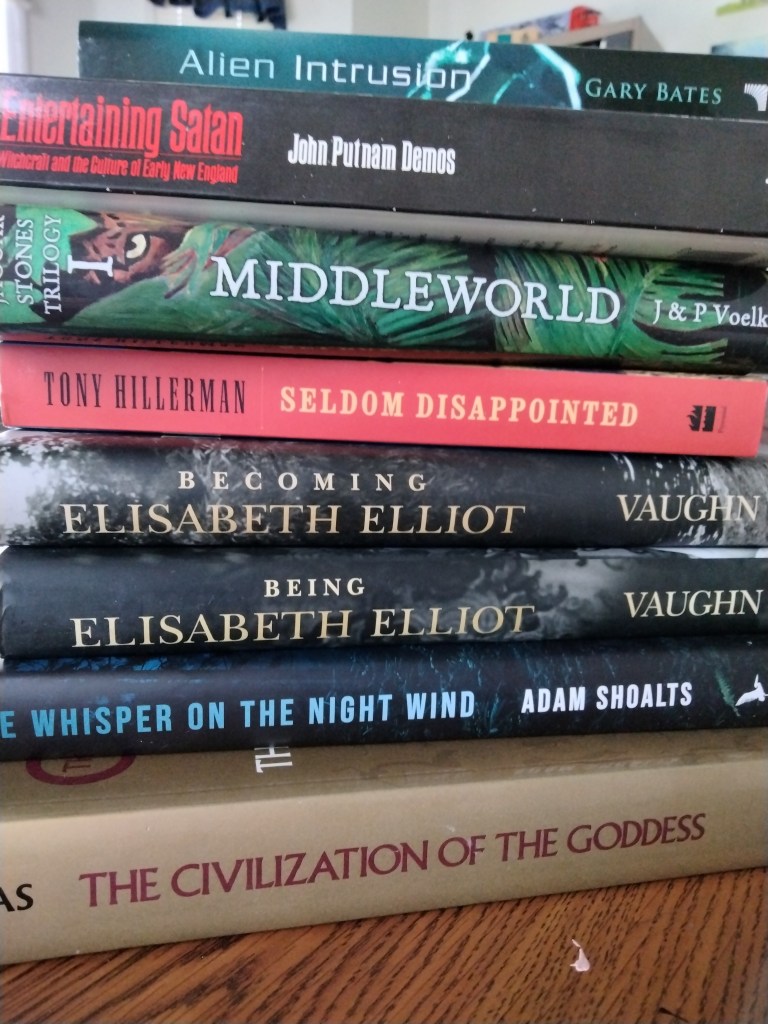
Events to be attended:
https://mysticrealmsfantas.wixsite.com/mysticrealmsfair
https://www.newchristendompress.com/conference
Items to be knitted:
To be set up: My classroom in the new school building, which we hope to be moved into by Fall.
To be wrote: The book that goes with this map:

Last year, I went on a writing retreat in order to make some progress on the draft. At this rate, it looks as if I may have to do the same thing again.
To be cleaned/planted: Clean chicken coop (add more space for hens?), maybe actually plant a garden this year???
Various family events with loved ones, which privacy forbids blogging about.
Now listen, you who say, “Today or tomorrow we will go to this or that city, spend a year there, carry on business and make money.” Why, you do not even know what will happen tomorrow. What is your life? You are a mist that appears for a little while and then vanishes. Instead, you ought to say, “If it is the Lord’s will, we will live and do this or that.”
James 4:11 – 15
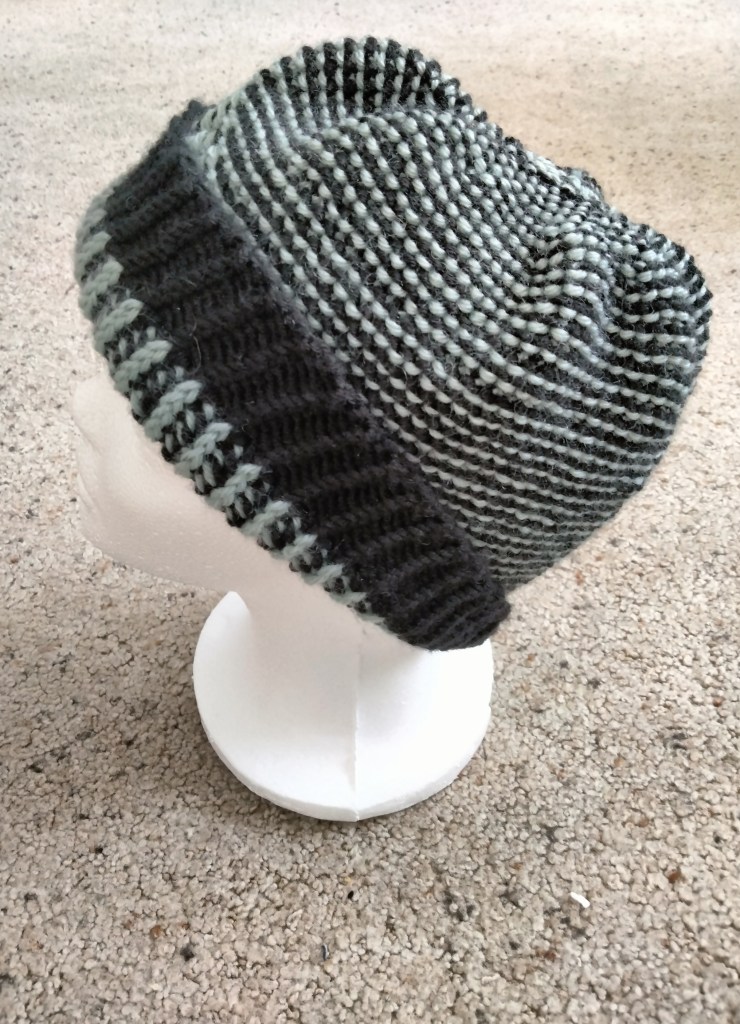
I bought this pattern from Etsy seller Lavanya Paricella, here.
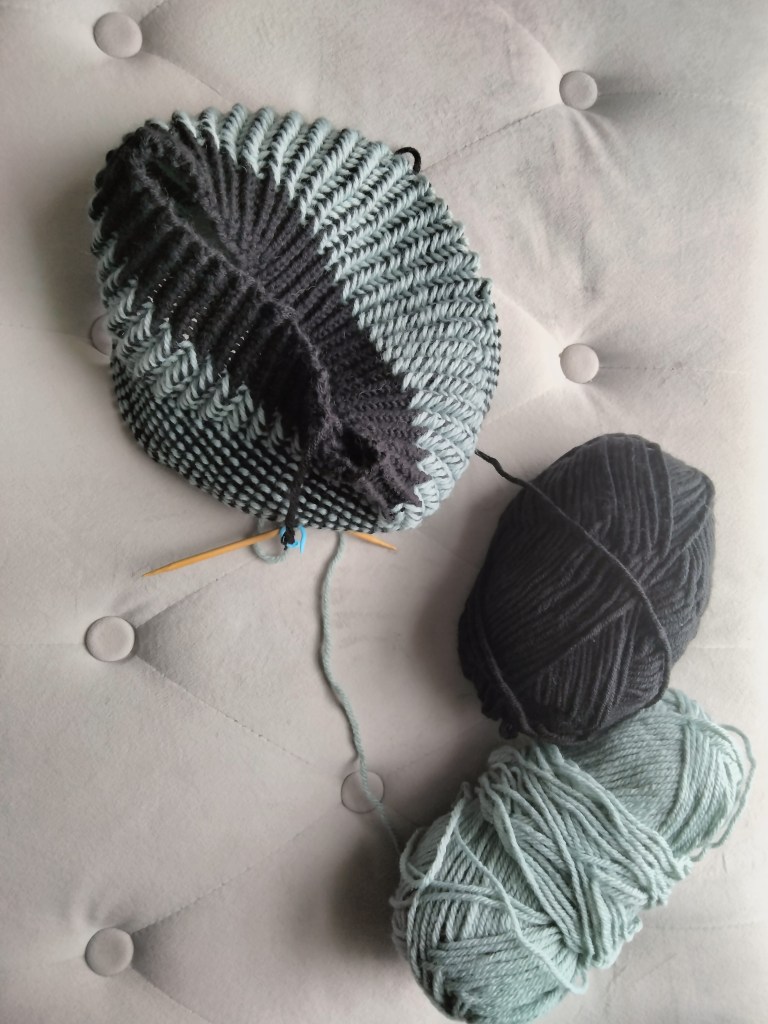
I had never brioche knit before, but this pattern was easy to follow. It turns out, with brioche you knit the same stitch again with a second color. Lavanya’s pattern accomplishes that by having you knit all the way around the hat in Color A (black in my case), using yarn-overs, and then all the way around in Color B (muted teal). With each round, you knit together the yarn-overs from the previous one and also make new yarn-overs in the current color. This is no harder than doing colorwork where you carry the yarn over, and in many ways it’s easier.
I have seen hints that some brioche patterns have you knit the two colors successively as you go around (or maybe that is something you need to do when brioche knitting flat, since otherwise your two yarn balls would end up on opposite ends of the piece). Anyway, I still have a lot to learn, but I consider this experiment successful.
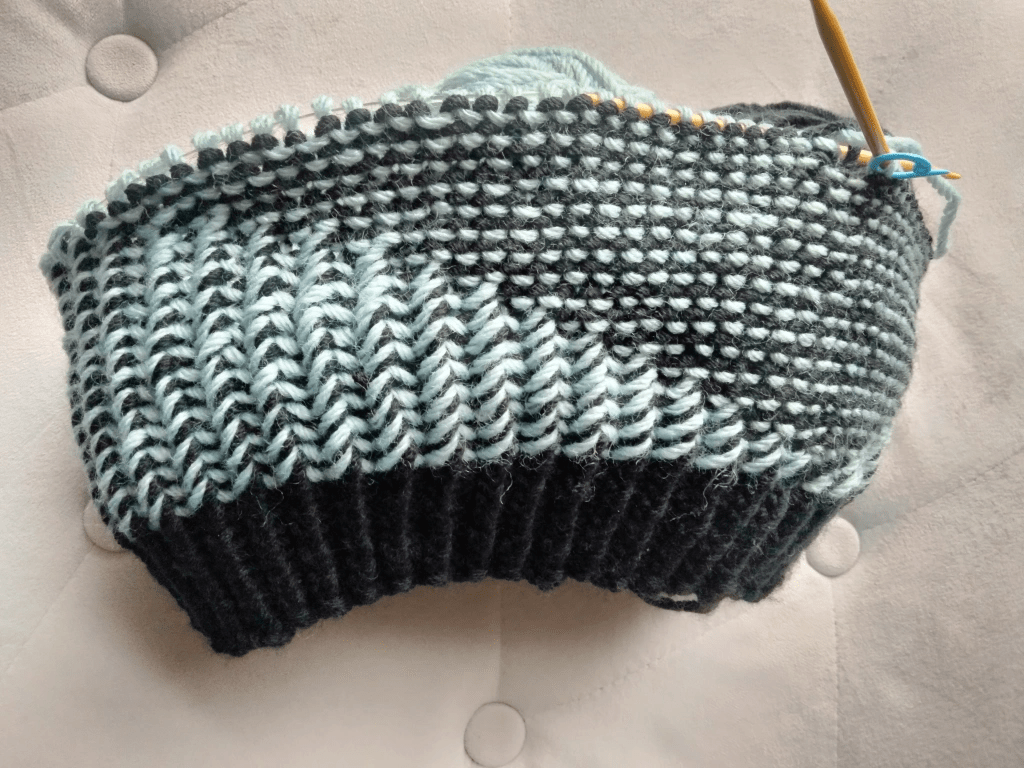
When you read about brioche, you’ll read that it’s “twice as thick” as regular knitting. I wouldn’t say it’s quite twice as thick, especially if we are comparing it to cables, but it is certainly thicker, plushier, and stretchier. It creates a reversible fabric, where one side is that houndstooth type pattern you see above, and the other side looks like a rib knit, with Color B standing forward and Color A in the background. (This particular hat has garter stitch above the brioche.)
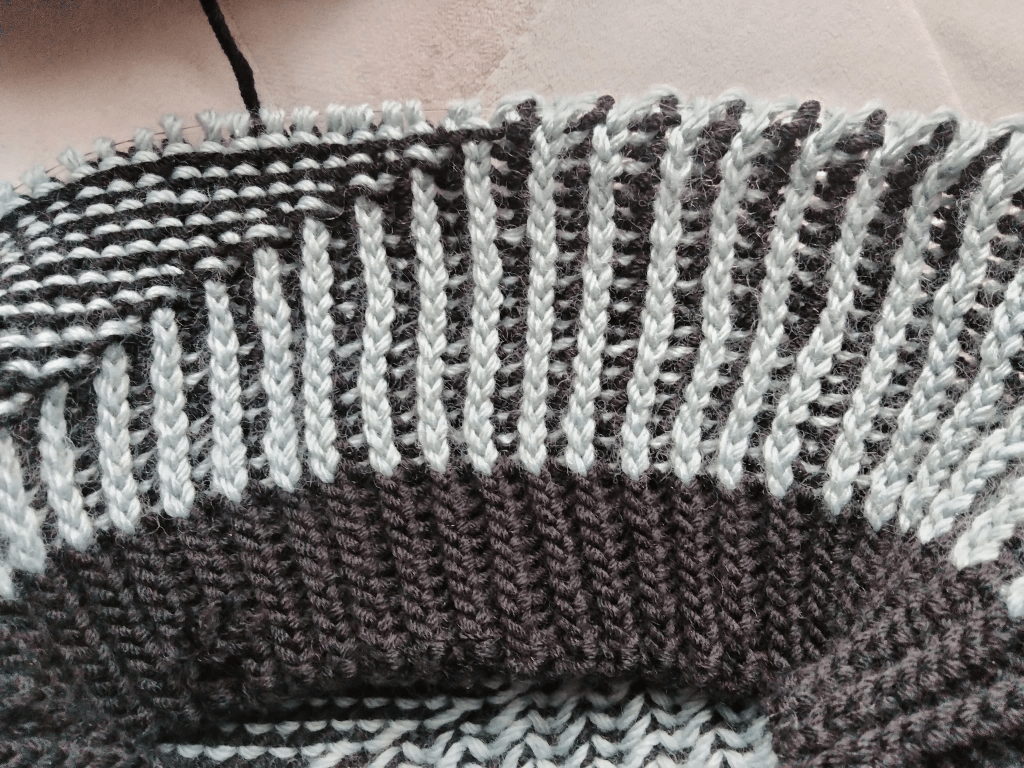
I bought this pattern because it had the look I was seeking for a hat I wanted to gift to a certain nephew. Now that I’ve seen how fast it knits up and how well it shows off a color story, I can’t wait to knit this pattern with all kinds of other color combinations!
The pattern comes in two weights: fingering weight yarn (very fine), and DK yarn (normal, medium yarn). I used DK on this pattern because a) that’s what I had on hand and b) I wanted to finish quickly in time for the birthday. The fingering-weight version looks even better in the pictures, because as you can imagine, it has a finer pattern. I want to try it sometime, but for now, DK is just fine. I happened to have a ball of black and a ball of pale teal, both of them wool blends, so apart from buying the pattern (very affordable), this hat was “free.”
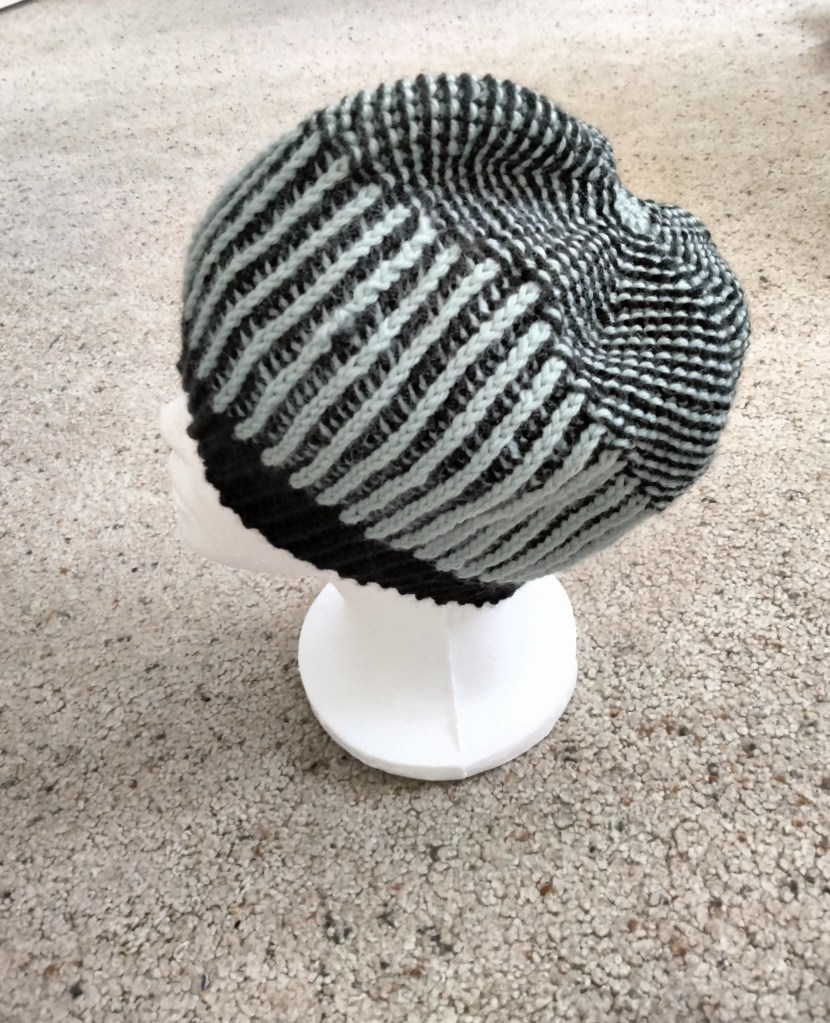
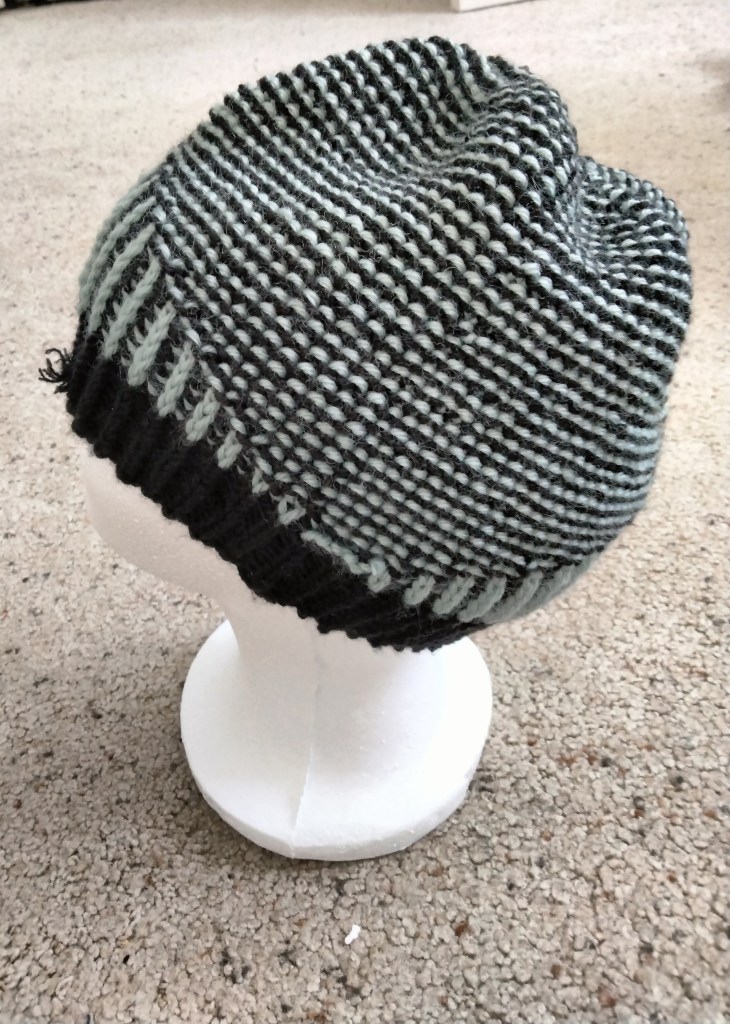
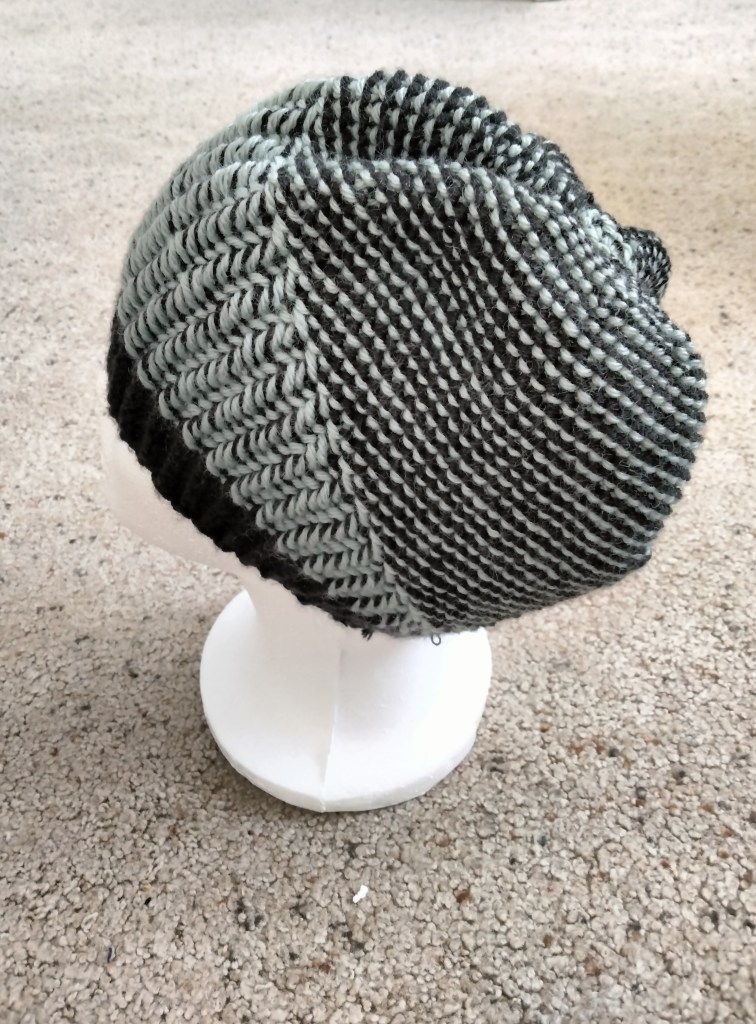
Here are some different ways to wear it.
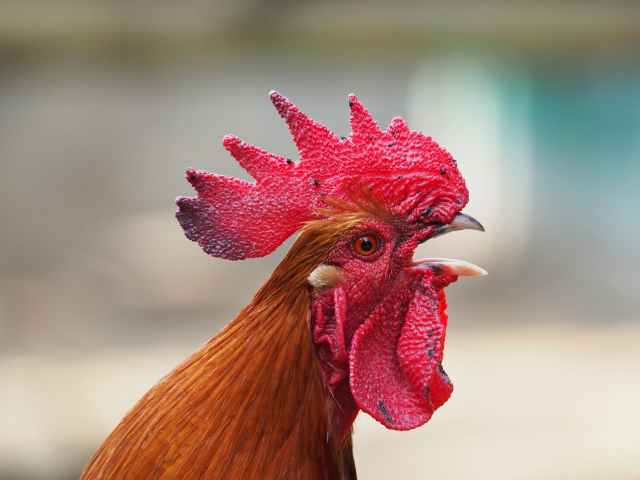
A recent conversation with my son (the chicken-loving one):
Him: Why are there cows and sheep in the manger scene, but no chickens? Did they just not have chickens back then?
Me: No, probably chickens were just so common that no one thinks to include them. Remember, they definitely had chickens because Jesus told Peter he would deny him three times before the rooster crowed.
Him: Oh, that’s right!
We decided that every manger scene needs a few chickens, actually. The presence of the rooster would foreshadow Christ’s suffering and death. They are Easter birds, but they are Christmas birds, too. Christmas chickens!





 Out of Babel Books