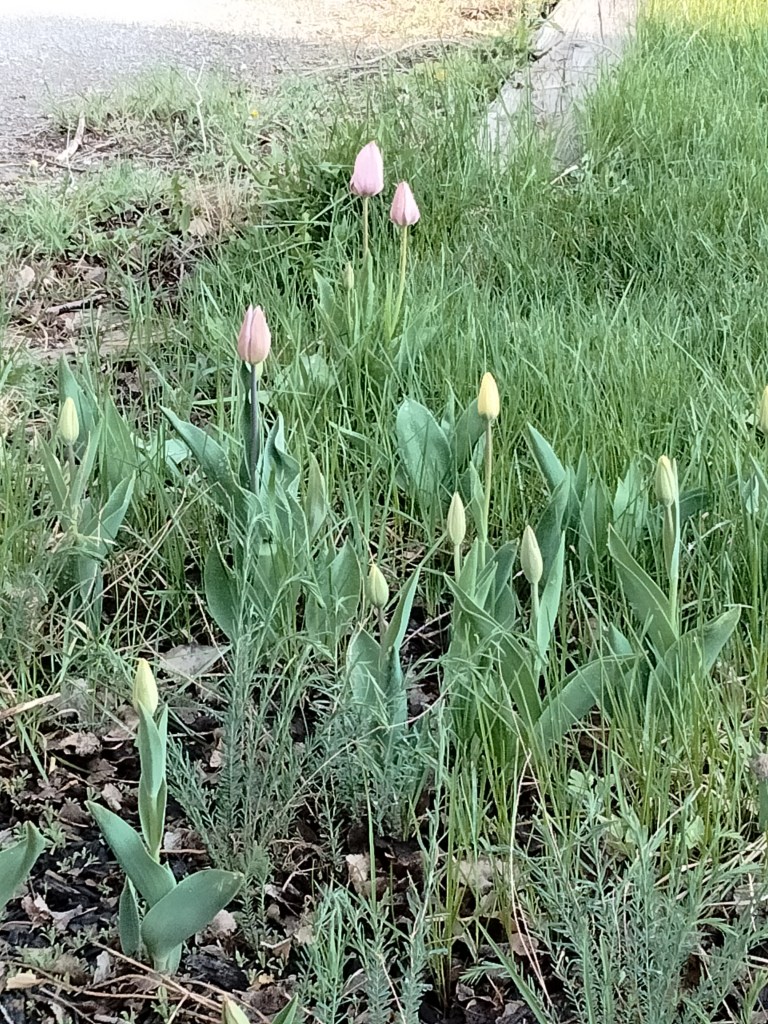
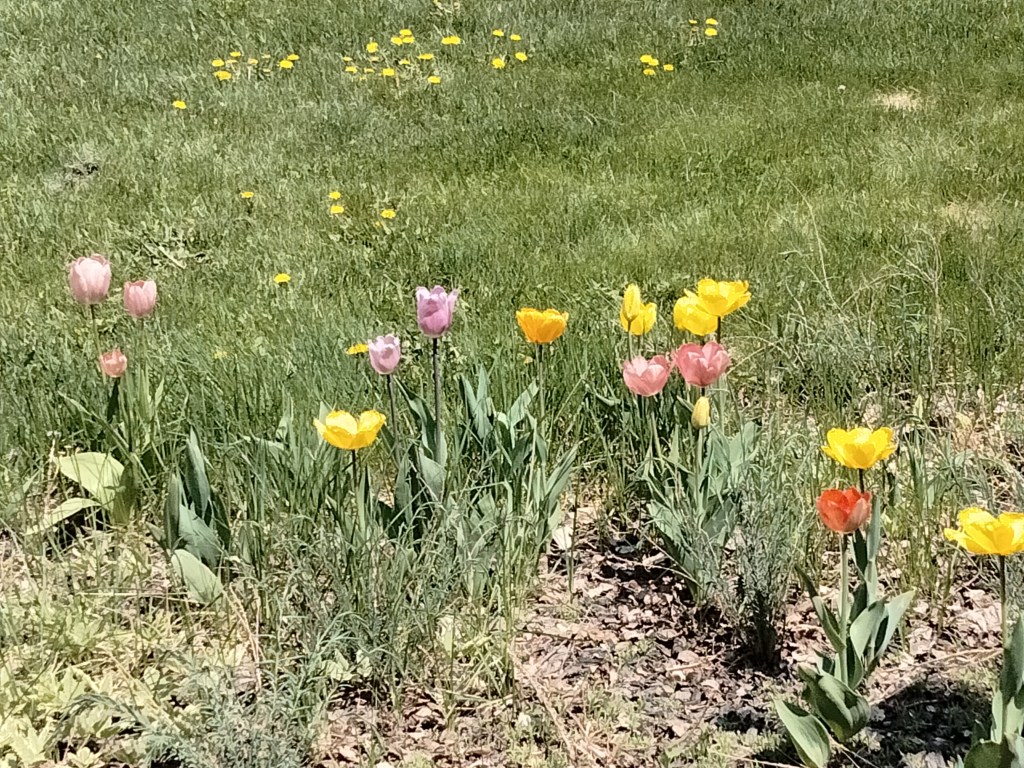
We had a late Spring this year.

We had a late Spring this year.
Tom, you won’t be able to see this, because it’s a gif and you can never view those. It’s a short video of a man holding at bay three velociraptors … which is exactly what it now looks like when I feed my chickens.
I now wonder whether a chicken owner was behind the animatronic dinos in the Jurassic Park franchise.
He’s the one with the extra-red comb.
I don’t really feel that I’m outdoors unless I can smell Roundup or cow poop.
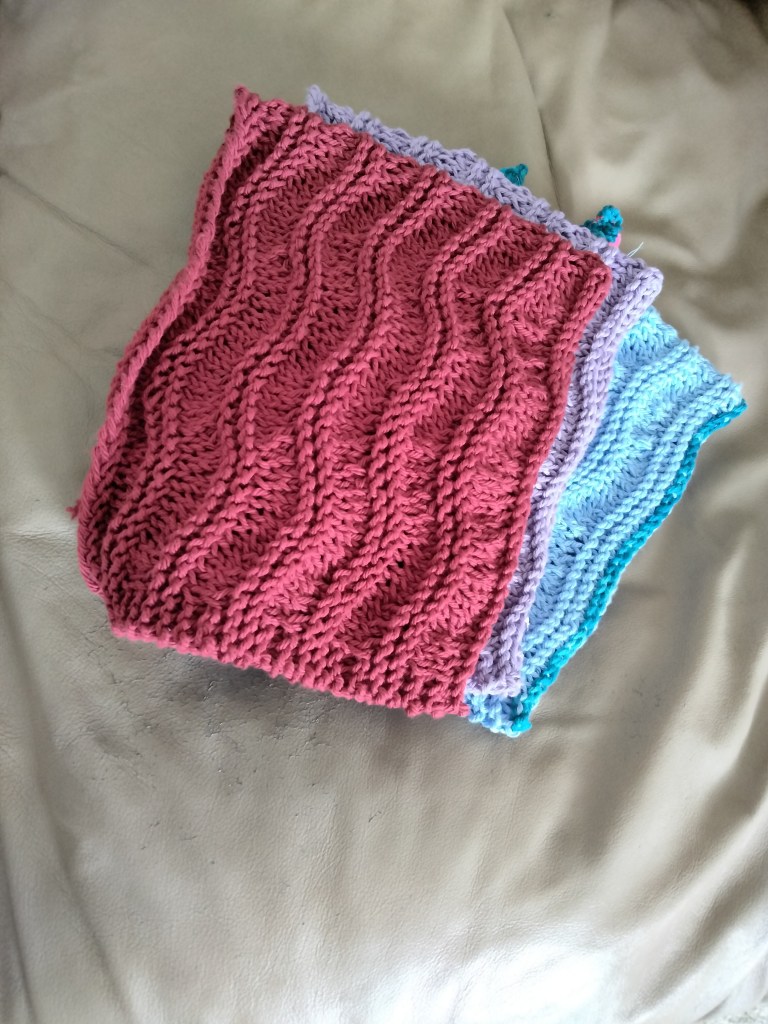
Here are three “fairy bonnets” that I made using a pattern I bought off Etsy. It’s a very simple, easy pattern. The bonnet is worked flat and then sewed up the back. You can do it with one ball of yarn if you are making a child’s size. In this case, I used cotton because these were meant to be spring bonnets for some little girls I know.
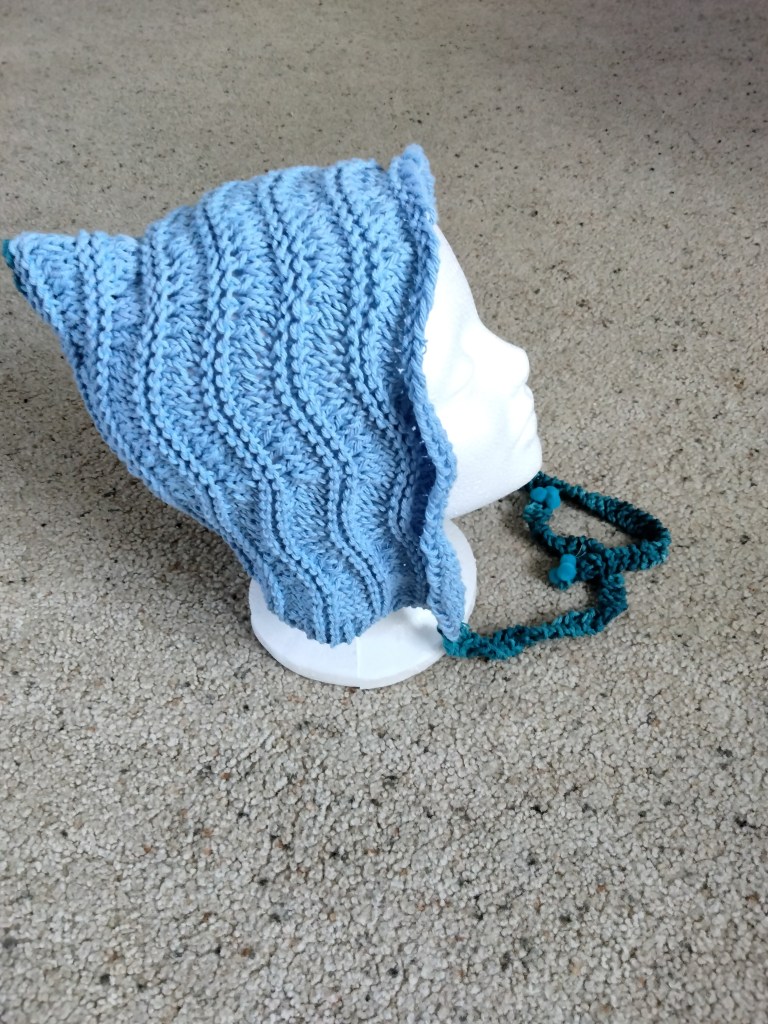
It’s not good to post picture of kids’ faces, so this Styrofoam model will have to do. As you can see, the corner where the bonnet was sewed becomes an adorable point on the wearer’s head. The wavy, tipsy effect is achieved as follows. On one row, a bunch of extra stitches are added. Two rows later, these stitches are reduced, alternately using Knit Two Together (which tends to lean right), and Slip-Slip-Knit (which tends to lean left).
I later made a navy-blue version of this same bonnet, and then completed one with a varicolored ball of yarn. They knit up quickly and make good gifts. (At least, I think they are good gifts!)

I am experimenting with adding a large button on one side and a crocheted loop on the other, rather than the long knitted tie strings, which look cool but might be inconvenient. I’ve had good luck with the button/loop arrangement on bonnets I’ve made for myself. The loop is less obtrusive than a string or a tassel when the bonnet is not fastened, and you can pull the loop across and hook it around the button one-handed if you need to.
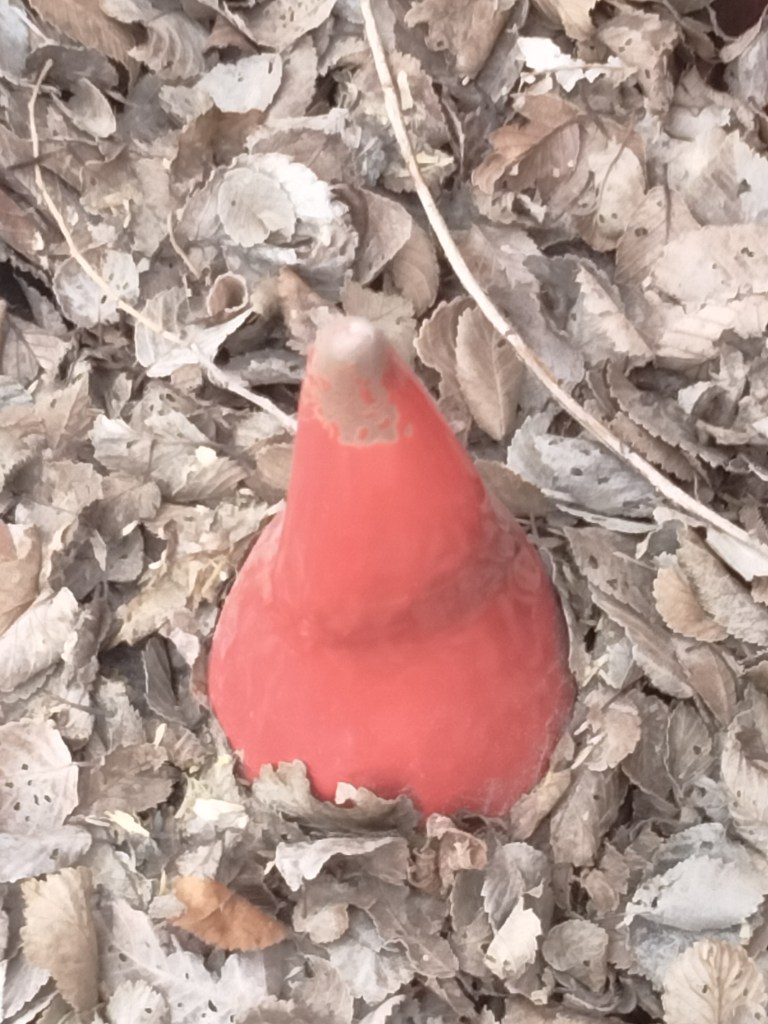
A gnome is emerging hat-first from his hibernation.
You can see that they are bigger and more developed just in the day or two between the first and second videos.
Now, as I post this, they are so much bigger as to be unrecognizable.
Arguably, the most fun part of getting baby chicks is the naming of them. Meet:
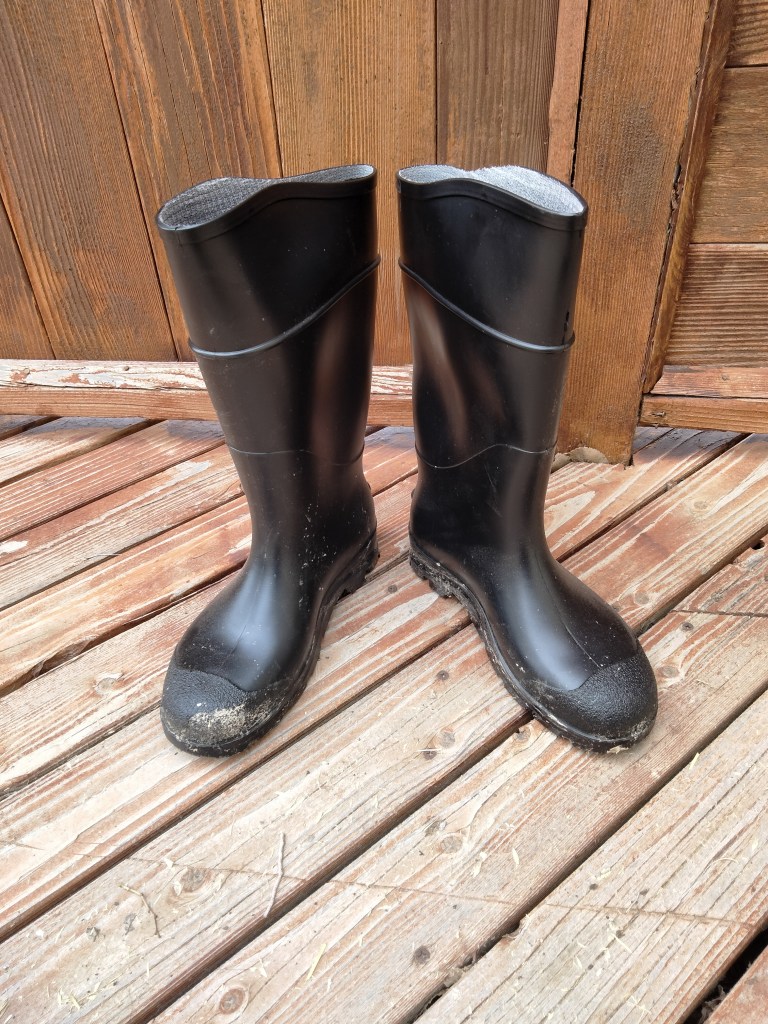
So, this week I bought these farm shoes. I know that some people call them “wellies,” but I don’t know what they’re called around here. Just “rubber boots” maybe.
I need them not because I am a real farmer in any way, but because Spring has sprung (sort of … we are also still getting snow), and even if a person only has 3 chickens, their run is still surrounded by mud. With these boots, I feel that I have leveled up in some small way.
As a person who romanticizes the past, the boots naturally got me thinking about what people did for mud shoes (in Europe, say) before they had access to rubber. The answer, of course, was clogs or wooden shoes. You can see them on French peasants in Millet’s paintings sometimes.

“The Gleaners,” by Millet. You can’t really tell what the shoes are made of, but you can see that they’re sort of in the clog family.
But I’m Dutch (actually, Frisian) by ancestry, and we have our own iconic version of the wooden shoe. I don’t know about other peasant clogs, but Dutch wooden shoes have to fit rather large and be worn with several layers of socks. They float, which is important in Holland.

Here is me in a partially authentic “Dutch costume” that my mom made, displaying the klompen. (That’s what the wooden shoes are called, for obvious reasons.) She did not make the klompen. We got those at De Klomp Wooden Shoe factory in Holland, Michigan, which is still in operation to this day. There, you can buy everything from tiny souvenir klompen to ones that fit you to huge painted klompen to put on your porch. You can watch the shoes being carved and hollowed out. You can have your name woodburned onto a pair if you wish. The whole place smells really good, like fresh wood shavings and woodburning smoke.

Here is someone I know (also of Frisian blood), modeling the klompen and the milk maid buckets. I know the blurring, and the basket in the foreground, make it look like this picture was taken in a studio, but it was actually snapped outdoors. The roses are real and those are real, fake Dutch farmer accoutrements.
If you, Reader, work outdoors (whether it’s farming or forestry or plein-air paintings), what do you prefer for spring mud shoes?

Also known as the Stashbuster Bonnet. But this one just felt like it should be named Ragtag to me. Perhaps I was thinking of the book The Ragamuffin Gospel by Brennan Manning.
Believe it or not, I made this bonnet using this ribbed bonnet pattern. Here are the changes I made:

The most striking thing about the bonnet, its “bag of rags” look, came because I used a variety of odds and ends of yarns in my stash, including a dark brown wool, a dark green wool, a dark blue blend, a couple of ombre balls, and even a leftover ball of glittery navy blue (used sparingly). The result is more or less the color story that I was going for. It was inspired by a hat on Pinterest made from a ball of yarn that wavered between shades of gold, brown, and grey. Making my own edgy colored hat was a lot more work, because I had to keep stopping to twine the ends of the different colored yarns together. When I get time, I’ll definitely knit this hat again, but “cheat” and buy a self-striping ball.
For now, I absolutely love this and I also love how it helps me pull off the “witchy lady” look that I am going for as I age. As you can see, it’s still cold here. A poor old woman needs a warm wool bonnet to wear when she toddles out to gather a few sticks for her meagre fire.

 Out of Babel Books