
The unseen battle is primarily waged through the proclamation of the gospel to the nations.
Joel Muddamalle, The Unseen Battle, p. 83
Tag: Joel Muddamalle
Greek Word of the Day: Anasta
The Septuagint translation of Isaiah 11:10 references the root of Jesse, the one who “rises up to rule the nations; nations will put their hope in him, and his repose will be honor.” The Septuagint has anistamenos for “rise,” and this is reflected in Romans 15:8 – 12 where Paul quotes Isaiah and refers to the Messiah who “arises” (anistamenos) and is both the ruler and the hope of the gentiles. This same concept is also present in Psalm 82:8, where Yahweh “rises” (anasta in the Septuagint) to judge the earth and inherit the nations. As we will see below, this language closely resembles the ascension language of Paul in Ephesians.
Joel Muddamalle, The Unseen Battle, p. 113
So, in this context, the word “rise” or “rise up” implies a warrior/king rousing himself to battle and conquering (in this case, conquering the gods of the nations). Like the word “inheritance,” it’s a clue that the Scripture is talking about which god has legal rights to a geographical area or a group of people: the unseen battle.
I believe it is also linked to the name Anastasia, which means resurrection.
Not sure why, but it feels very appropriate to me that the word for resurrection should have four or five syllables.
Quote: Sounds Boring, But Isn’t
The call of Abraham was more than just a call to go to a strange, unknown land. This call had spiritual implications, perhaps akin to a declaration of war. Spiritual warfare is fundamentally about obedience.
Joel Muddamalle, The Unseen Battle, p. 77
The Unseen Battle — Are You In?
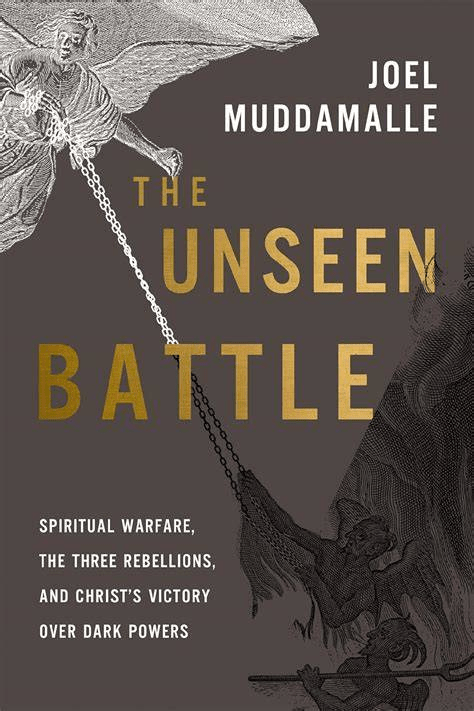
This review will be short and not very comprehensive. Why don’t I have time for a longer review? Because I’m in a fierce battle. Heh.
A few years ago, I reviewed Michael Heiser’s book The Unseen Realm.
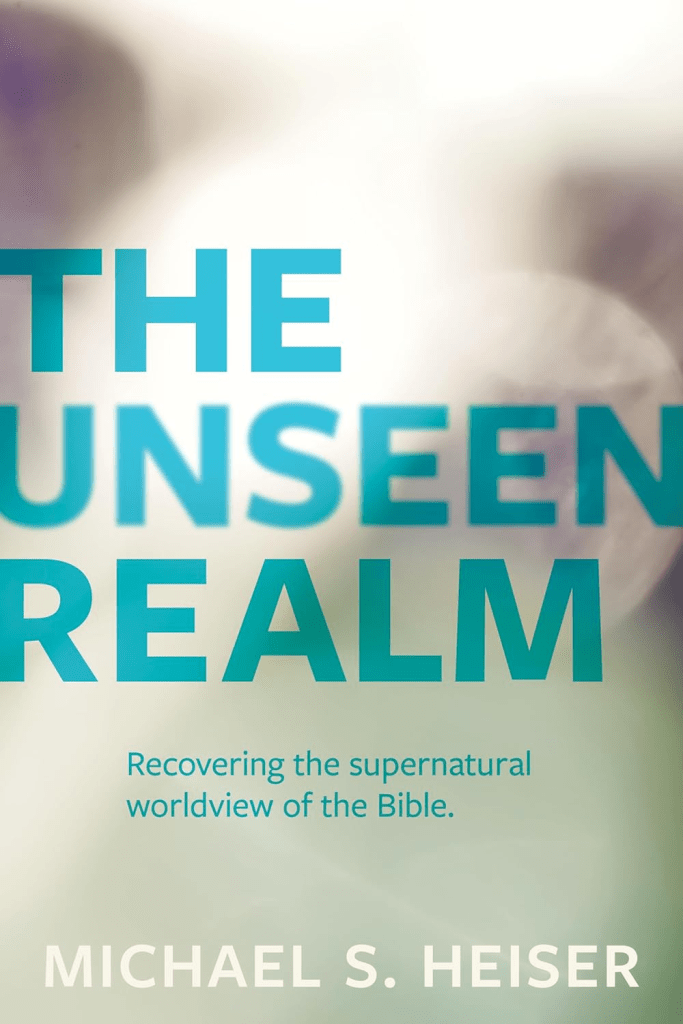
The Unseen Realm is a scholarly book about the concept of the divine council in Ancient Near Eastern cosmology, especially in Ugarit, which was a near neighbor of Israel both geographically, culturally, and linguistically. Heiser finds this concept of the divine council assumed in the Hebrew Scriptures, similar to how the heliocentric model of the solar system is assumed in anything you see written since Copernicus. That is, it’s never stated or described directly, but it is referenced in many stories, phrases, and figures of speech, and is openly the setting for certain passages, such as Psalm 82.
The idea behind “the divine council” is that there is a Most High God (the Creator) who rules the earth with the help of a sort of committee of divine beings (elohim). This committee is traditionally conceived of as meeting on a high mountain, in a garden setting, often a place that is the source of rivers. Or as Ps. 82 calls it, “the great assembly.”
Heiser spends most of his book establishing that this view is present in Scripture.
After reading Heiser, I heard a podcast interview with Joel Muddamalle. Muddamalle is the academic protege of Heiser (who has now gone to his reward). He is carrying on with researching this idea of the elohim as an active presence in redemption history, and also with popularizing it in the Christian world. And I heard that he had written a book, The Unseen Battle, which might be viewed as a sequel to Heiser’s book. So naturally, I had to get it.
I expected TUB to be all the same material as TUR, just with Muddamalle’s own personal style. It was not. The first few chapters do recap Heiser’s cosmology, but they don’t spend a lot of time establishing it, as Heiser did. Muddamalle then moves on to the nature of the battle, which Heiser touched on but did not major on.
The nature of the battle is that God wants to get the nations back from the gods.
The way this is done, in the church age, is through evangelism, missions, and building healthy churches and families. In short, obedience. It’s not primarily through a lot of fancy, spooky ghost-hunting or exorcism stuff.
This exegesis, naturally, warmed my little Reformed heart.
Now, it does mean that, if you are attempting to be faithful to your spouse and/or raise your kids; work hard and honestly at a lawful calling; worship the Lord on Sunday and support His people; or do any other forms of healthy, faithful culture-building, you have stepped into the battle. The dethroned powers do not like this sort of behavior. This may, perhaps, explain why just trying to mind your own business and live a quiet, peaceable life can occasion so much resistance: everything from health problems, to Murphy’s Law and attacks of depression and discouragement; to actual hate and legal resistance from human beings who do not like what you are doing. (Per Muddamalle, Scripture makes it clear that the “hosts” on both sides of this battle are mixed, consisting of human beings and of spiritual beings.)
Particularly if you are contributing in any way (including by prayer) to the disciplining of not-yet-Christianized nations, you present a threat to the old gods, who do not want to be cast out as they have been cast out of so many other nations in the last 2000 years. This is why foreign missionaries and native pastors in unreached or partially unreached countries undergo so many hardships: poverty, evil bureaucracy, and all kinds of health and mental problems.
The church itself, existing as an entity comprised of people from many nations, is a rebuke to the powers.
The multiethnic and diverse nature of the family of God, the church, can be seen through Paul’s use of polupoikilos. This term is a combination of two adjectives meaning “much” (polus) and “various kinds, diversified, manifold” (poikilos). The word polupoikilos can also mean “of many colors” or “polychrome.” Classical Greek writers used this word to reference cloth or flowers to convey a sense of intricate beauty. The word poikilos is used in the Septuagint to refer to Joseph’s coat of many colors (Gen. 17:3, 23). As Timothy Gombis observes, “The powers have ordered the present evil age in such a way as to exacerbate the divisions within humanity. God confounds them by creating in Christ one unified, multiracial body consisting of formerly divided groups of people.”
ibid, pp. 169 – 170
How about that. The Rainbow of Diversity, which we have been taught to hate, is actually God’s goal as well. The reason that we have been taught to hate it, is because of the way they have pursued it … trying to force it down by means of human power and moralism, by defining righteous and unrighteous groups and viciously suppressing those deemed to be foes of the rainbow. They have made “inclusion” mean “we exclude you.” This is what happens any time people try to make the world look like the restored heavens and earth, without Christ. They end up bringing about the opposite. True harmony among the ethnic groups is not an easy thing. It can only be obtained by means of the New Birth.
Though this is a scholarly-for-the-layperson work, Muddamalle’s lighter personality shines in it. He has many call-out boxes sprinkled throughout the book, devoting a page or two to questions such as, “Are There Aliens in This World?” and “What About Demonic Exorcisms?”.
That’s it. Just I promised: a short review.
Oh! What are the “three rebellions”?
- Adam and Eve’s rebellion at the Tree
- The rebellion of the “sons of God,” when they chose to come down and take human wives (Genesis 6)
- Humankind’s post-Flood rebellion at Babel (Genesis 11). It was at this point that God divided up humankind among the elohim, giving each people group extant at the time its patron god.
Anyway … back to the battle! God be w ye this weekend!

