… multo facilius atque expeditius, propterea quod inter fines Helvetiorum et Allobrogum …
“… much easier and freer from obstacles, because the Rhone flows between the boundaries of the Helvetii and those of the Allobroges …”
Gallic Wars, pp. 14 – 15
My translation of the Latin above was initially this way:
“Many things [were] easy and indeed unencumbered, on account of the fact that [it went] between the borders of the Helvetii and Allobrog …”
I thought that the unexplained inter (between) referred to the road, but apparently it’s the Rhone, which shows up later in the sentence. Other than that, I had it pretty close.
When I first looked at the phrase propterea quod, I thought it meant “therefore because.” Propterea can mean therefore, and quod can mean because. On a closer look, a better translation was “on account of (propterea) the fact that (quod).” On account of the fact that. Translator Ruedele just took a shortcut and rendered it “because.”
right — a right is an enforceable moral claim upon another person. It follows that, for every right, there is a corresponding prohibition or obligation. For example, people have a right to life because murder is wrong. We have a right to private property because theft is wrong. Children have a right to be cared for by their parents, because parents have an obligation to care for their children. If anything is claimed to be a right, you ought to be able to flip it around and find a crime on the other side.
privilege — an additional legal or procedural right granted to one person but not others, by an authority. Privileges can be based upon seniority; for example, high-school seniors may be allowed to drive their own vehicle to school, leave campus for lunch, or pull off a “senior prank” without being punished. Or a privilege may be awarded on a case by case basis. For example, Darius asked Haman, “What should be done for the man the king delights to honor?” Haman’s answer was the man should be dressed in the king’s robe, mounted upon the king’s horse, and paraded through the city. These were privileges. Privileges can be one-time, or they can be enjoyed indefinitely, like the right of officers to eat in the captain’s cabin. Privileges can be revoked in response to bad behavior. If someone enjoys something good, but it is not a special right granted by an authority or by virtue of seniority, then the good thing is not actually a privilege but perhaps one of the things below.
advantage — a factor of any kind, from any cause, that makes it easier for someone to accomplish a goal. If the feature does not help the person accomplish the goal in view, then it is not an advantage with respect to that goal. For example, being tall is an advantage if you want to make a basket, but not if you want to take a long bus ride. Thomas Sowell has pointed out that it is very common for people who are envious of each other, for example, siblings, to each consider the other more advantaged.
benefit — a benefit is a good thing that comes to someone as a result of something else. Benefits can come to us as a result of a privilege, as a gift, from luck, or even as a result of something bad (“the benefit of experience”). Not all benefits are privileges. This is a flexible word with a wide range of meaning. Every factor in our lives has both costs and benefits. Because this is such a wide category, many benefits come to people due to factors beyond any one person’s control.
blessings, needs, the ideal — These words all describe the life we would like everyone, ideally, to have. We would like everyone to have good health; enough to eat; a clean, comfortable home; two loving parents; and a good education. We might describe these things as things people “need” in order to thrive, though many, many people live without them. Given that people seem to need them, but they turn out to be more of an ideal, we can infer that this is the sort of environment human beings were designed to function in before the world fell. We try to get as close to these as possible. To the degree that they are lacking, we suffer. When we have these things, we can consider them blessings or gifts. They are not rights in the sense of enforceable moral claims on others. To try to compel others to provide these things would, in most cases, be impossible or would constitute us doing them an injustice. (The exception is two married parents, which can be justly compelled to some degree.) Continuing with the ideals, we would like everybody to be good-looking, athletic, intelligent, talented, comfortable in their own skin, have good friends, and be easily understand by others. This is our ideal, but obviously it would be insane to try to compel other people to provide these things for us. Then we find ourselves in Harrison Bergeron territory.
It is my observation that many people use the word “right” to describe things they would like everyone to have. They say “right” when they mean “need” or “ideal.”
I’ve also noticed that many people describe every perceived advantage or benefit as a “privilege.” This is at best unclear language; at worst, it’s an attempt to foment class war. We need to cut it out.
If you are able to view video embeds on my blog, please enjoy Disney’s exploration of this concept:
… oppida sua omnia, numero ad duodecim, vicos ad quadringentos, reliqua privata aedificia incendunt; frumentum omne, praeter quod secum portaturi erant, comburunt …
“All their towns, in number about twelve, and their villages, about four hundred, and the remaining private buildings, they burned. All their grain, except what was meant to be carried with them, they burned …”
… ut domum reditionis spe sublata paratiores ad omnia pericula subenda essent …
“… that they might be ready to undergo all dangers after destroying the hope of returning home.”
Yikes!
Taken from The Gallic Wars, trans. Franz Ruedele, pp. 12 – 13
murder — Murder has to have the following components: direct killing, of a human being, intentional, and unlawful. Therefore, the following things are not murder: Executing someone who has committed a capital crime (lawful). Killing an enemy soldier in war (lawful). Accidentally killing civilians in war (unintentional). Shooting in self-defense (unintentional, and in the case of a firefight, indirect). Killing an animal, even a highly sentient animal (not human). Being unable to provide prompt medical care for someone who is OD’ing while in your custody (not direct or intentional, and also not actually killing).
genocide — direct, intentional, systematic killing of an entire ethnic group, with the express purpose of wiping them out. Not genocide: a war that has a devastating impact upon a particular ethnic group, unless all the abovementioned components of genocide are present. Invasion and conquest. Intermarriage. Taking captives. Poverty. Death of a culture because of any of these causes or because of urbanization. All of these are tragic things that have happened to many, many ethnic groups throughout history, but they are not genocide. Definitely not genocide: natural cultural change that happens because of the spread of an innovation like the written word, or a new religion.
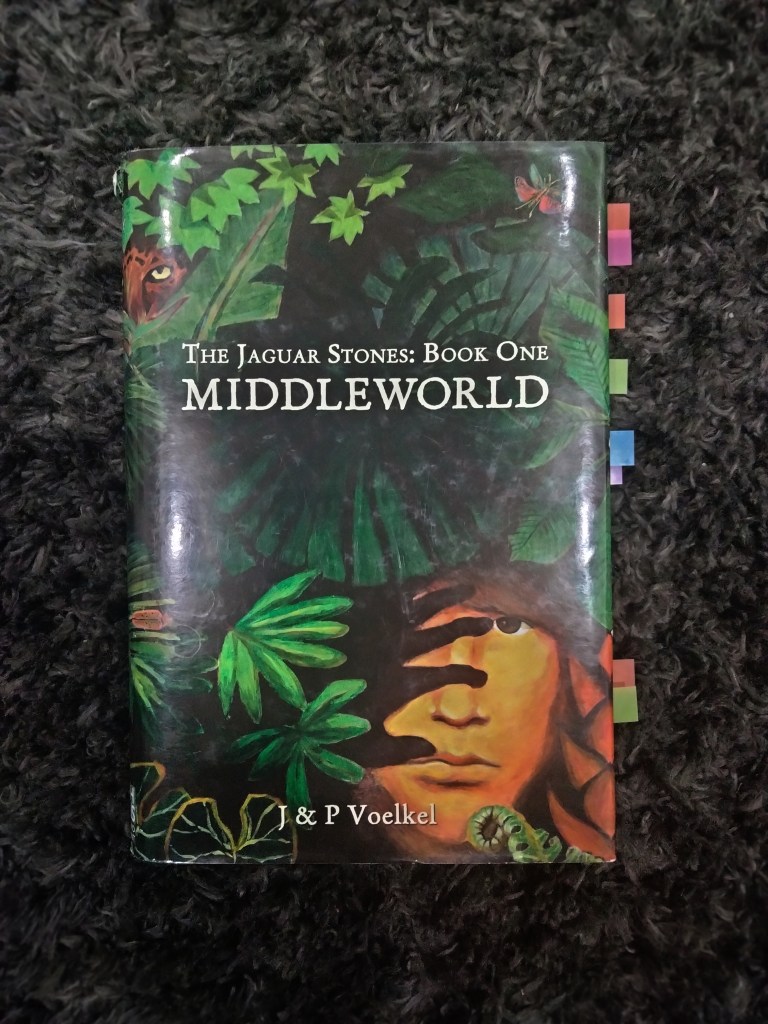
We continue our journey through darkest Jen’s TBR Pile with this book, which I picked up in an Idaho Falls thrift store several years ago and has been waiting patiently, like a pyramid under jungle cover but more durable, to be excavated.
One week ago, Max Murphy’s biggest problem was deciding which pizza to order. Now he’s lost in the perilous rainforest and running for his life with Lola, a modern Maya girl. Their terrifying journey will take them into the heart of an ancient evil and awaken powers that have slept for a thousand years. For fate has delivered an epic challenge to this pampered city boy. From now on, only one thing is for sure: Max Murphy won’t be eating pizza again any time soon.
from the dust cover
This book is the perfect YA Maya adventure. It starts with Max in Boston. His parents are archaeologists. They have to be gone a lot for their work. Max believes they “care more about the Maya than about him,” and he has learned to leverage this guilt into all the video games and snacks, and other luxuries his heart desires. This beginning is presumably there to ease the book’s target audience (American teens) into the Mayan context without a steep learning curve. They aren’t just thrown in; they find out things as Max does.
“Did anyone ever tell you that you’re bossy?” said Max.
“Did anyone ever tell you that you’re lazy?” said Lola.
“Yes,” said Max proudly, “all the time.”
“In the rainforest, lazy boys get eaten by jaguars.”
p. 150
But the book doesn’t stay in boring Boston for long. By Chapter 2, Max is in the fictional country of San Xavier (based on Belize). There is an excellent description of a nightmarish 3rd-world backcountry bus ride, a chapter or two at Max’s estranged uncle’s mansion, and then, he’s off into the jungle.
Behold this perfect author photo. Apparently, Jon grew up in Central America. Note also that the endpapers have a map of San Xavier. The map includes the Monkey River, Villa Isabella (Max’s uncle’s estate), and the five pyramids of Maya cosmology. If a place appears on this map, be sure we will visit it, either in this book or in a sequel.
Middleworld is an excellent introduction to the Maya cosmology, which is incorporated into a very lively adventure. As Max and Lola visit the different pyramids, they discover the purposes of the still-preserved machines within them: controlling the weather, time, etc., and even opening portals to Xibalba, the Maya underworld, into which Max’s parents have disappeared when they jumped into a cenote.
The overall adventure story is a good blend of actual Maya mythology and fictional or fictionalized characters. Lord Six Rabbit, who comes into the story, is a fictional ancient Maya king. The gods and demons we encounter are taken from actual Maya myths. Friar Diego DeLanda, an actual historical person who burned the majority of the Maya codices, makes an appearance. And because the intricate Maya calendar played such a large role in their cosmology, so it does in the events of this book. An Appendix contains an explanation of the interlocking calendar cycles and of how to read Mayan date glyphs, which are quite complex. Other appendices show a diagram of the Mayan cosmos; how to read Mayan numbers; and a glossary of characters and terms which appear in the book. By the time a reader gets to the end of the book, he or she might be interested enough to actually read this material.
It’s clear that the authors love Mayan culture, but they don’t shy away from the fact that many things about it were horrifying. Most of the rituals described call for blood, but the archaeologists have figured out that the blood doesn’t necessarily have to be from a human sacrifice — or even, necessarily, human:
[The archaeologist] Hermanjilio sighed. “Give me a break, will you? I don’t think there’s a precise science to these rituals. As I understand it, they’re more about showing swagger and confidence than following any particular steps. The Maya gods are like children. They like costumes, special effects, and plenty of action. We just have to put on a good show.”
“So you’re going to bluff it?” said Max.
“In a manner of speaking.”
pp. 244 – 245
For example, here is an entry from the glossary:
LORDS OF DEATH: The Maya underworld, Xibalba, is ruled by the twelve Lords of Death. According to the POPOL VUH … their names are One Death, Seven Death, Scab Stripper, Blood Gatherer, Wing, Demon of Pus, Demon of Jaundice, Bone Scepter, Skull Scepter, Demon of Filth, Demon of Woe, and Packstrap [???]. They are usually depicted as skeletons or bloated corpses. It’s their job to inflict sickness, pain, starvation, fear, destitution, and death … Luckily for us, they’re usually far too busy gambling and playing childish pranks on each other to get much work done.
p. 371
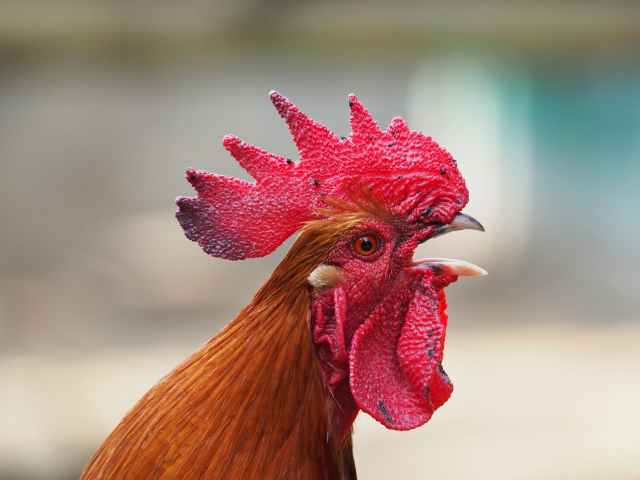
Given that everything in the Maya cosmos is simultaneously gross, horrifying, and (at least in this book) funny, it’s not surprising that Max and Lola are able to convince the Lord Six Rabbit and his mother that their chicken is a fearsome beast much more dangerous than its size would predict.
“Now tell them the bad news,” sighed Lady Coco. “Tell them what we heard!”
“What? What was it?” asked the others anxiously.
“The Chee Ken of Death,” said Lord Six-Rabbit. “We did not see it, but we heard its infernal crowing. It seemed to come from behind the cooking hut. I doubt my sleeping draught will work on that scaly devil.”
“Don’t worry, Lord Six-Rabbit,” said Hermanjilio. “I believe I am more than a match for this Chee Ken.”
This book, apparently the first in a series, strikes a good balance between a satisfying end to the adventure, and leaving some significant unfinished business open for later books. Near the end, Max strikes a deal with the Lords of Death in exchange for “a small favor” that they will ask of him in the future. That can’t be good.
My only complaint with this book is that there’s very little publication information on it. I can’t find the year it was published or the titles of the other books in the series. I guess I’ll have to go online to find out more. I will definitely seek to acquire the other Jaguar Stones books if the opportunity arises.
Edit: According to FictionDB, there are four books in the series:
… et regno occupato per tres potentissimos ac firmissimos populos totius Galliae sese potiri posse sperant.
Here’s the English translation given in the book:
“… and hope that, when they have seized the sovereignty, they will, by means of the three most powerful and valiant nations, be enabled to obtain possession of the whole of Gaul.”
Here’s my bumbling translation:
”… and having seized the kingdom, through three most powerful and brave peoples, they hoped to be able to be made able to all of Gaul … um … ones.”
Let’s zoom in on the phrase I am having trouble with:
sese potiri posse sperant
Now, this looks to me like “they hope [sperant] … to be able [posse] … to be MADE able [potiri] … ones [sese].”
Is it really “they hope to be able to be made able”? That’s just a ridiculous amount of helping verbs. It reminds me of the man quoted by Dave Barry, who allegedly said to his wife after she couldn’t get a ride, “If I’d a’ known you’d a’ wanted to went, I’d a seed you’d a’ got to get to go.”
But let’s look up potiri. I think it’s the passive infinitive of posse “to be able,” but maybe it’s something else.
[Duck-Duck-Go]
Ah-ha! It’s a different verb.
potior, potiris, potiri I, potitus sum (Dep.)Verb
user edited
Translations
to obtain, to acquire, to grasp, to attain, to reach (goal), to come by (experiences)