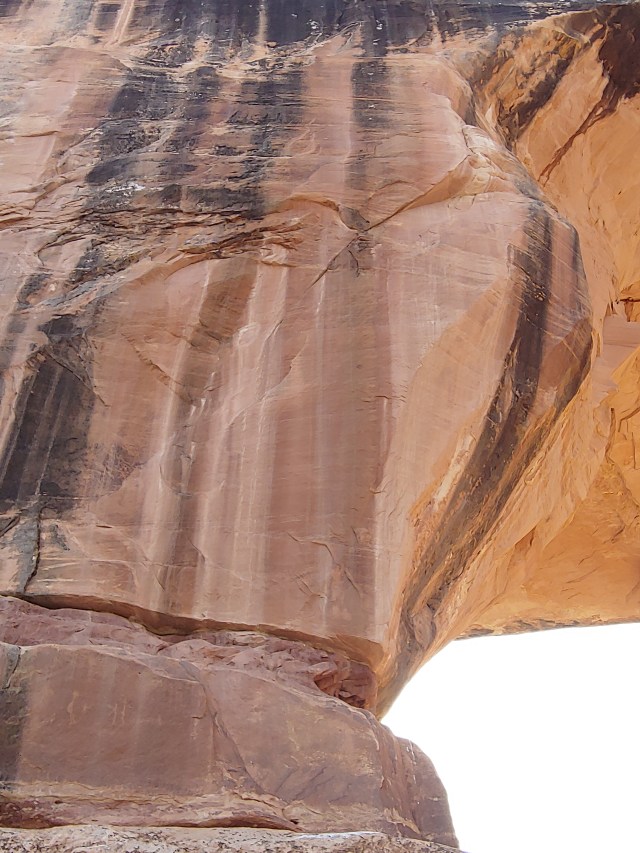
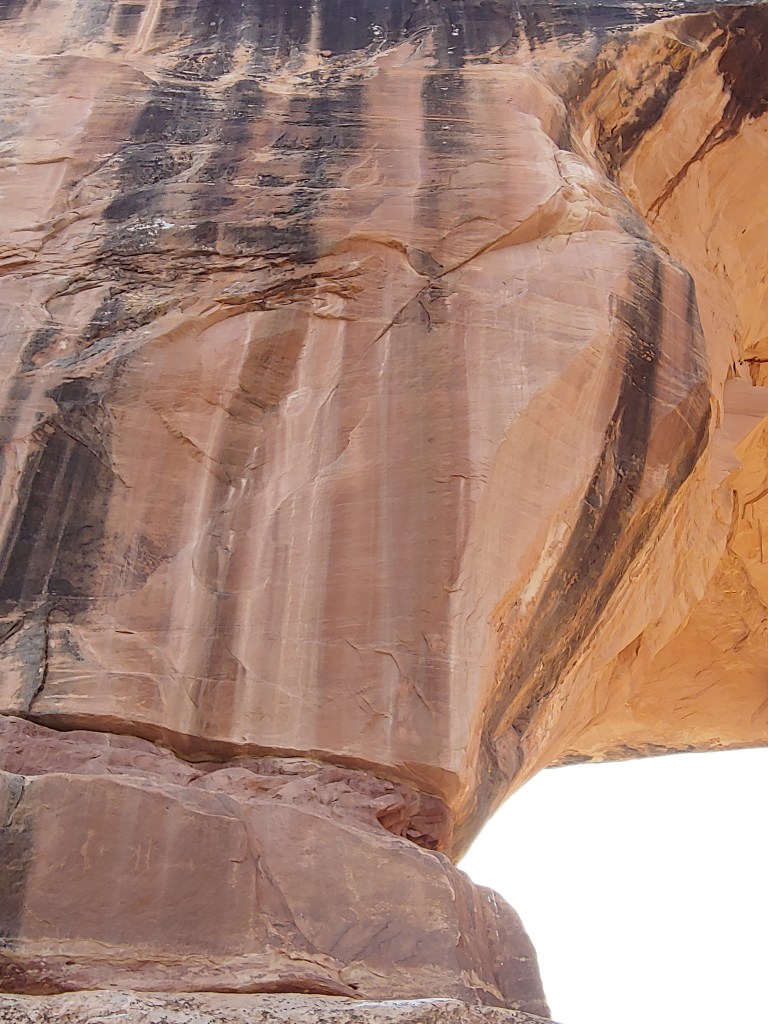
Kachina Bridge is huge natural stone bridge located in southern Utah. It has petroglyphs dibbled onto it. I was able to visit it last November, took a million pictures, fell in love. Here are some views of it from the back.
The photograph. The stripes are water/mineral staining.First painting of itSecond painting of it, done on a smaller canvas (8×10)
For
comparison
The more vibrant colors in the painting are closer to how I remember it looking real life, especially the warm glow.
Now, zooming out from the arch, let’s go down the path behind it, turn, and look back:
In the upper left corner of this painting, you can see the portion of the arch that the earlier paintings are close-ups of.
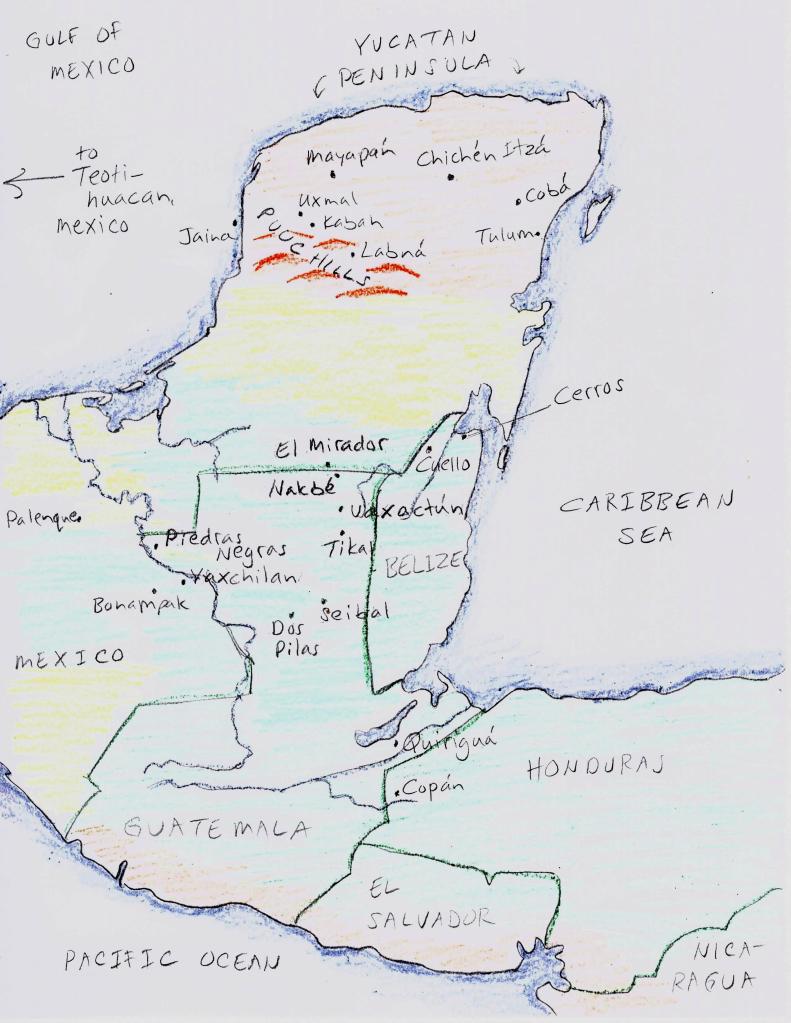
The Maya flourished between approximately 1000 BC and 1500 AD in Central America. Their civilization was centered in the Yucatan Peninsula and the lowland and hilly regions south of it. Their sites are found in what are now the countries of Mexico, Belize, Guatemala, and Honduras.
There is so much to learn about the Maya. I have barely dipped my toe in it. As always when learning about a new culture or civilization, I was met with the thrill of the exotic followed by a creeping feeling of familiarity. Though the Maya are very unique, in their own distinctly Mayan way they also epitomize certain things about human beings. In some sense, the more unique they are, the better they epitomize it.
They Are Surprising to Other People
I don’t know why, but people always get excited when they discover other people. (Animals get excited too: “Oh goody! A person!”) And we are always discovering other people, in the most remote corners of space and time, where for some reason we did not expect to find them, though you would think we’d have learned our lesson by now.
The Maya were particularly hard to find because of the geography of the region they inhabited. Jungle is not kind to the preservation of buildings or artifacts. It destroys things quickly, grows over things and hides them, and can make the region impassable.
Tree destroying a stone arch. From Mysteries of the Ancient Americas, p. 165
A really thick jungle allows no roads through it, and once they arrived, here is what some of the archaeologists found:
“The rain was incessant,” Charnay complained. “The damp seems to penetrate the very marrow of our bones; a vegetable mould settles on our hats which we are obliged to brush off daily; we live in mud, we are covered in mud, we breathe in mud; the ground is so slippery that we are as often on our backs as on our feet.” Once Charnay awakened to find 200 “cold and flat insects the size of a large cockroach” in his hammock, 30 of which clung to his body and bit him painfully.
The Magnificent Maya, p. 22
They Got Romanticized
In the early 1500s, during the Spanish conquest of the region, Spanish priests managed to preserve some Mayan cultural data – vocabulary lists, transcriptions of myths, and a few codices (books) – at the same time they were brutally wiping the culture out. These records remained obscure until, 300 years later, there was a resurgence of interest in the Maya. Explorers, hobbyists, and artists who happened to have the time, money, and fortitude to brave the jungles started unearthing Mayan ruins and making sketches and watercolors of them. In some cases, these sketches are the only record we have, since the jungle has continued its destructive work in the 200 years since.
Once European academics started getting interested in the Maya, they realized there was a very elaborate system of numbers and pictographs that they could not read. Thus began a long, haphazard process of rediscovering old codices and cross-checking them with symbols found on the monuments, as recorded in photographs and drawings. The number system was easier to decipher – dots for ones and bars for fives, for example – and so the first thing that got decoded were dates and astronomical cycles,
… which led many experts to conclude that Maya writing was limited to such matters. As late as the 1950s this was still the most prevalent view, and its chief spokesmen were the American archaeologist Sylvanus G. Morley of the Carnegie Institution in Washington, D.C., and J. Eric S. Thompson, a British archaeologist also affiliated with Carnegie. Thompson drew a picture of the Maya as a peaceful, contemplative people, obsessed with the passage of time, and guided by priests who watched the movements of celestial bodies and discerned in them the will of the gods. Maya cities were ceremonial centers, he believed, not bastions of the worldly power.
The Magnificent Maya. p. 33
Over the next few decades, through the work of several brilliant code breakers, about 80 percent of Mayan glyphs were deciphered. Turns out they are a combination of ideograms (an image representing an idea) and phonetic units (an image representing a sound). As this work went on, researchers have been able to read more and more of the Mayan myths and history, which in turn has helped us better to interpret their art. They started to discover that the 19-century “noble savage” characterization of the Maya was badly mistaken.
They Were Shockingly Cruel
First of all, the Mayan society was indeed hierarchical, with battles for succession and kings of city-states engaging in (perhaps ritual?) warfare. Discoveries during the 1990s confirmed that this hierarchy was present hundreds of years earlier than previously guessed. (Archaeologists’ preconceptions might have had something to do with these inaccurate guesses. See my post about Serpent Mound for a critique of the 19th-century idea that civilizations always develop along certain lines, from hunter-gatherers, to villages, to cities.)
from The Magnificent Maya, p. 108
But warfare was only the beginning. There was also the bloodletting, the torture, and the human sacrifice.
Apparently, Mayan royalty were expected to offer blood to their gods. During these bloodletting rituals, they would have visions. There are pictures and statues of both men and women doing this. Women would draw a stingray spine through their tongue to produce the blood. Men would draw blood from their tongue, earlobes, or genitals. (Yikes.) They would allow the blood to be absorbed by sheets of bark paper, which was then burned, the smoke being a way of getting the blood to the gods.
If a culture is going to have a painful ritual, it’s good that it should be done by the royalty. That’s certainly better than having a royalty that is unwilling to suffer for their duty and their people. If this were the only painful ritual the Maya had, I’d kind of admire it. But it wasn’t.
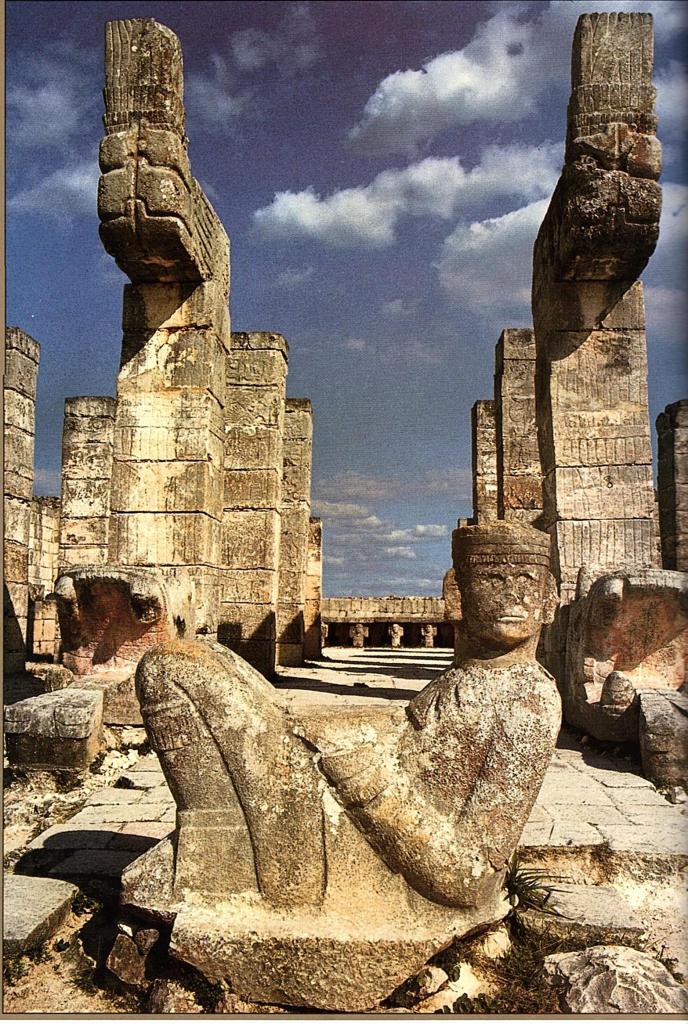
The Maya were big on human sacrifice. Decapitation was popular, or they might throw the victims into a sacred cenote (large natural limestone hole filled with water) if one was available. High-born victims, captured in war, would be mutilated and displayed before the community before being offed. Later, perhaps under the influence of the feathered-serpent cult of the Toltecs, Mayan priests would cut out the victim’s heart, offer it (and its steam – ew!) to the sun, and then kick the body down the steps of the temple. This ritual was still being conducted at Uxmal in the 1500s, which is why we know about details like the kicking of the body (Magnificent Maya, 139 – 140). Chacmools, which were obviously built to hold something, may have been made to hold human hearts.
The Magnificent Maya, p. 136. Temple of the Warriors at Chichen Itza. The reclining statue holding a bowl is the chacmool.
Then there were the ball games. Did I mention that the Maya were big sports fans? Like, really big. You have probably heard of this game, where the players would use their hips and buttocks to bounce a large, heavy rubber ball off the sloping walls of the court. Apparently, the Maya took their sports so seriously that the losers of this game might be sacrificed, either by one of the methods above, or by being trussed up and used as the ball until they died (94 – 95). This very ball game features in the Mayan creation story, the Popol Vuh, where the Hero Twins play the game against the inhabitants of the Underworld. The reason they are obliged to do so? The rulers of the Underworld “covet [the brothers’] sporting gear and want to steal it” (56 – 57). This story, too, features a lot of torture.
Cruelty is always shocking, which is why the heading for this section says “shockingly cruel.” But it should not shock us to discover that a previously unknown civilization featured widespread, institutionalized atrocity. Every single human culture has something like this. Cultures can have good historical moments when the human evil is comparatively restrained, and they can have bad historical moments when it is encouraged. You could argue that in the case of the Maya, it had really gotten out of hand, and I think you’d be right. But I don’t think that makes the Maya different from any other people in their basic humanity. In their uniqueness, they epitomize what human beings are capable of. People are extremely creative, and they have often used their creativity to dream up ways to torture one another. This is why we have the expression, “Man, the glorious ruin.”
They Were Jaw-Droppingly Smart
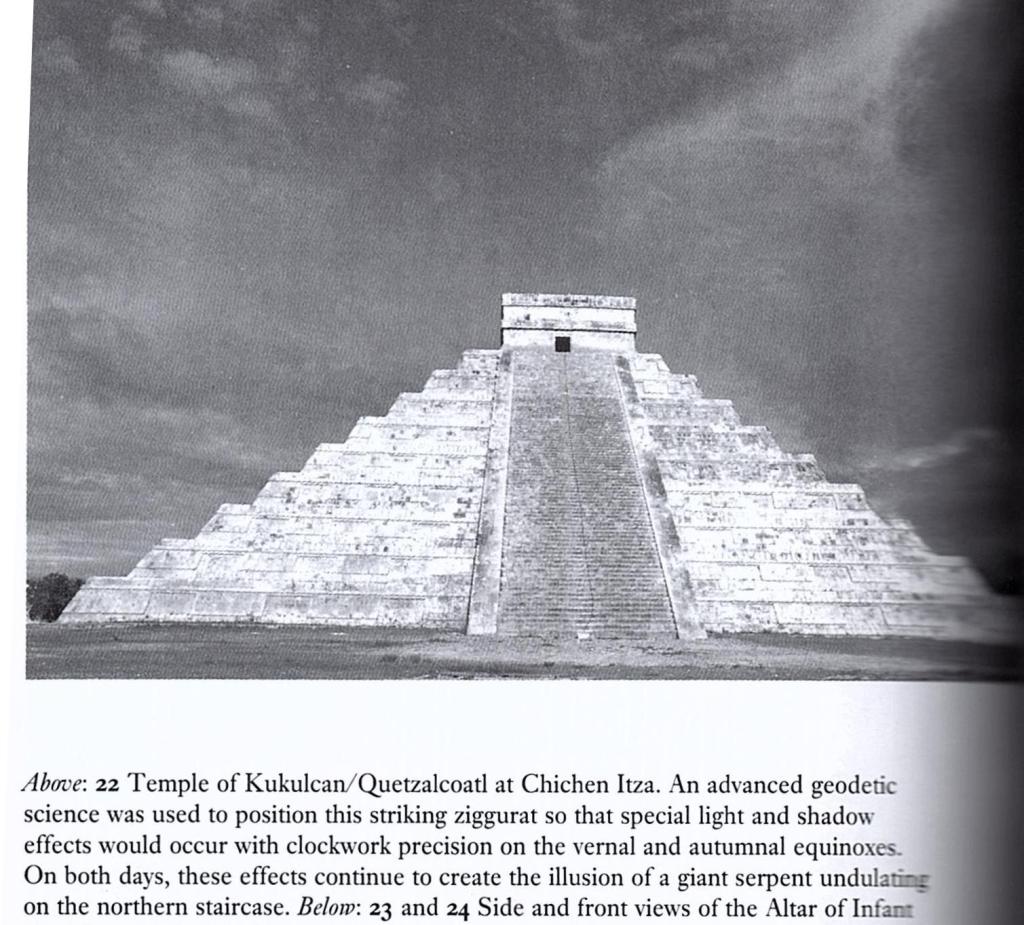
from Fingerprints of the Gods, photo plate between pages 134 – 135. I have no idea how this light and shadow serpent effect was accomplished, but if true, it’s an amazing piece of engineering.
And now we get to the glorious part. No matter how depraved, broken, fallen, or ruined they may be, human beings never stop being made in the image of God, which means they will keep on being creative and clever and productive. It has long been a theme on this blog that ancient people were smarter than modern people expect. This is because they were people, and people are always surprising other people – because the other people are proud – with their cleverness.
The Maya were advanced mathematicians. They had the concept of zero, and the idea of place value, which the Romans did not have. They had calculated the solar year at 365.2420 days (the modern calculation is 365.2422), and the time of the moon’s orbit at 29.528395 days (modern figure is 29.530588). They had figured out the average synodical revolution of the planet Venus (the amount of time it takes for Venus’s orbit and the earth’s orbit to sync up so that Venus is rising in the exact same spot in the sky). This average happens to be 583.92 days, and they had figured out how to reconcile this with their “sacred year” (13 months of 20 days each) and with the solar year, by adding days every certain number of years, similar to our leap year. Bringing all these interlocking calendars into sync then allowed them to calculate mind-blowingly distant dates without losing accuracy.
All the above information is from Graham Hancock in Fingerprints of the Gods. Hancock then quotes Thompson, the romanticizer whom we met a few sections ago. Studying the Mayan calendar, Thompson had reason to be impressed:
As Thompson summed up in his great study on the subject:
“On a stela at Quiriga in Guatemala a date over 90 million years ago is computed; on another a date over 300 million years before that is given. These are actual computations, stating correctly day and month positions, and are comparable to calculations in our calendar giving the month positions on which Easter would have fallen at equivalent distances in the past. The brain reels at such astronomical figures.”
Hancock, Fingerprints of the Gods, p. 162
Hancock, being a bit of a snob, questions why the Maya “needed” to develop these calendrical and mathematical tools. He speculates that the Maya had inherited “a coherent but very specific body of knowledge … from an older and wiser civilization.”
“What kind of level of technological and scientific development,” Hancock asks, “was required for a civilization to devise a calendar as good as this?” (158 – 159)
Of course, he is asking these questions because he’s heading in the direction of civilization having dispersed from a “mother-civilization.” That’s fine with me, but in asking these questions he also betrays a worship of science and technology that is distinctly modern and that, when applied to ancient peoples, makes us shortsighted. Why should mathematical genius exist only in the service of technology? The Maya were smart, and they wanted to make these calculations about the celestial bodies and about dates in the distant past and future. Isn’t that enough? Furthermore, they actually recorded why they were so obsessed with these calculations. Their cosmology held that time proceeded in predictable cycles of disasters, and they were pretty concerned with knowing when the next one was coming. That was the purpose of the Long Count calendar, as Hancock himself points out on page 161. It was a doomsday clock. That may also have been a big part of the reason for the horrifying sacrificial system.
The Long Count calendar is what everyone was talking about when they were saying the Maya had predicted a cataclysm for Dec. 23, 2012. It didn’t happen – phew! – and, frankly, for obvious reasons I don’t completely buy in to their cosmology. Although we do need to consider the possibility that in converting the dates, we made a mistake in interpreting their extremely complex system.
Bottom Line, the Mayans are People
I can’t say that I find the Mayan – or the Toltec, Aztec, or Olmec – myths or aesthetic particularly attractive. I dipped my toe in because as part of the research for my books, I need to at least know my way around the ancient Mesoamerican mindset. As the research proceeds, I find myself becoming increasingly fascinated with these people. But I still wouldn’t want to have lived as one. This has been true of virtually every ancient culture I’ve studied.
So, taking it in reverse order, here is what we have learned about the Maya, and here is what we have learned about humans.
Humans are smart.
Humans are evil.
Humans are wonderful.
Humans are everywhere.
Sources
Hancock, Graham, Fingerprints of the Gods. 1995, Three Rivers Press, Random House, Inc., New York, New York.
Reader’s Digest books, editors, Mysteries of the Ancient Americas. 1986, The Reader’s Digest Association, Inc., Pleasantville, New York.
Matthew Stirling, Chief of the American Bureau of Ethnology, [says] ‘Among the plants developed by these ancient botanists are maize, beans (kidney and lima), potatoes, and sweet potatoes, now four of the leading foods of the world. Manioc, extensively cultivated by the natives of tropical America is now the staff of life for millions of people living in the equatorial belt. Other important items, such as peanuts, squash, chocolate, peppers, tomatoes, pineapples and avocados might be added. In addition, the Indian was the discoverer of quinine, cocaine, tobacco and rubber …’
Kenneth Mackoman adds to this list, the custard apple, strawberry, vanilla bean, chickle, and cascara, besides a number of others less familiar. His whole list of important plants made up by Indian’s agriculture is impressive, for it contains 50 items, not one of which is an Old World species … The Indian devised a useful method for extracting a deadly poison (cyanide), from an otherwise useful plant, manioc, without losing the valuable starch it contained.
M.D.C. Crawford gave a list of vegetables which were cultivated by the American Indians prior to 1492, which adds the following: Aloe, Alligator Pear, Arrowroot, Star Apple, Cacao, Chili pepper, Jerusalem Artichoke, Cotton, Pineapple, Prickly pear, Pumpkin.
‘The pineapple … originated in America and was the unknown to the people of the Old World before its discovery.’ Just where the Indian found the original plants which they improved upon to produce modern pineapples, we do not know. None of the existing [wild] varieties compares with the domesticated plant … This was … a deliberate and intelligent breeding process … we cannot now retrace the steps by which it was first accomplished.
Arthur C. Custance, Noah’s Three Sons, Zondervan 1975, pp. 166 – 168
Building a fire is really stinkin’ hard. Even with matches. When I was 11, I attended an environmentally-focused school that taught (or attempted to teach) survival and camping skills. For one project, we had to build our own fire, using grass for tinder, and keep that fire going long enough to boil a 2-minute egg in a coffee can. (Remember coffee cans?) We were allowed matches, but even so, it was a challenge.
Fire-Building in Books
I think I could do it now, assuming there isn’t a ton of wind, or wet, or any other thing that makes fire-building really difficult. In Jack London’s classic short horror story To Build A Fire, the man is equipped with matches but not with brains, and he ends up freezing to death. The moral seems to be, Don’t go out in the Yukon when it’s 75 below.
Without matches, it’s a whole different ball game. The two main ways to do it are by striking sparks (the “percussion method”), or with a bow and drill. For both, you need a pile of tinder and good dry kindling handy. In the YA survival classic Hatchet, the 13-year-old hero Brian figures out by accident that he can strike sparks by throwing his hatchet against the wall of the cave in which he’s sheltering. Even then, it takes him a long time to get the sparks to catch in his “spark nest” of tinder. Once he does get a fire going, he realizes that his best bet is to keep it going at all times. That is how many people handle it. I’ve been told that some Native Americans used to carry a live coal in a small leather bag rather than try to start a fire from scratch, which is frankly genius. In my books, I have my characters do the same because I don’t have time for them to be unable to start a fire whenever they pick up and move camp. And also, they’re not stupid. That’s part of the point.
Bow and Drill
A drill, of course, is even harder. The drill may be rotated by the use of a thong, or a thong attached to a bow.
The thong-drill is rotated by a cord passed round it in a simple loop. The two hands of the operator pull on the thong in such a way that the [drill] stick repeatedly changes its direction of rotation … Obviously there is a necessity for the drill to be held upright in firm contact with the hearth [the bottom piece] by pressure from above, and a small socketed holder of wood, bone, or stone, or even the cut end of a coconut shell, is provided for this purpose. This socket-piece may be held down on the top of the drill by an assistant, or if its shape is suitable, as it usually is in the Eskimo appliance, it may be gripped in the mouth of the fire-maker.
H.S. Harrison, quoted in Rudgley, p. 161
The White Man has not introduced a single item of environmental protection in the Arctic which was not already used by the natives, and his substitute products are not yet as effective as native ones… Eskimos are described as very ‘gadget-minded’ and are able to use and repair machinery such as motors and sewing machines with almost no instruction.
Dr. O. Solandt and Erwin H. Ackerknecht, quoted in Custance, p. 159
If the thong is attached to a bow, it becomes possible to hold the drill on top with one hand and rotate it with the other hand by pulling the bow back and forth. If all goes well, the drill will produce on the hearth (bottom wood piece) “a little pile of wood-dust which smoulders and can be blown upon to make it glow, at which point it can ignite the tinder” (Rudgley p. 160). Obviously not an easy process.
Fire in the Stone Age and Before
Both these methods – percussion, and wood friction – are attested in Stone Age times, as noted by Richard Rudgley. A site in Yorkshire has yielded flint and iron pyrites from Neolithic times. Various kinds of bows and drills, because made of wood, are less likely to be preserved for millennia than stone artifacts. However, the bow-and-drill’s wide distribution around the world indicates that it was a very old invention (or that people, wherever they go, are clever, and that the same thing was invented multiple times). An intact bow and drill was found in the tomb of Tutankhamen, though he is comparatively recent on the time scale we are discussing. The Maglemosian culture, a culture from Mesolithic Scandinavia, has left stone and antler hand-rests from fire drills, as well as a fire-bow made from a rib. Also, many Stone Age objects have been found with drill-holes in them, so clearly Stone Age people were familiar with the drilling process. (Rudgley 161 – 162)
In Europe, objects reported to be lamps have survived from the Upper Paleolithic onwards. Examples get more numerous as we come forward in time. As with the Venuses of a previous post, we don’t see an evolution from “cruder” to “more sophisticated” lamps; rather, both kinds exist together, with the simpler ones being more common (146). By 25,000 years ago, there is evidence of different kinds of pyrotechnology, from hardening spear points in a fire, to oxidizing ocher, to heat treating flint to make it easier to work with, to metallurgy, to pottery.
For Palaeolithic man to have used such pyrotechnology [heat-treating flint] successfully he would have had to master a number of skills. Detailed knowledge of a range of materials, as well as a very accurate sense of timing and temperature control and maintenance, would have been essential. In these three fundamental aspects of Stone Age pyrotechnology one can see key elements that are found in the subsequent industrial activities of firing pottery and smelting metals.
Rudgley p. 149
In other words, as I’ve been saying, ancient people were a heck of a lot more capable than me, and probably than you as well.
There is evidence from Dordogne, France, that Neanderthals had fire about 60,000 years ago. “The Neanderthals seem to have deliberately chosen lichen as their fuel.” Rudgley adds, “At this site there is no evidence that any cooking took place … The indications are that the cave was used only as an occasional haven from the outside world, as signs of long-term use were lacking. Compared to the rock-lined hearths and excavated fire pits that were made by Upper Palaeolithic people, these fireplaces are rather basic” (p. 145). However, it seems a little hard on the Neanderthals to assume that they had no hearths and did not use for fire for cooking, just because there is evidence of neither at what Rudgley admits was probably a campsite.
Going even farther back, sites have been found with traces of human habitation and of fire that are believed to be 400,000 years old (Suffolk, England); 1.42 million years old (Chesowanja, Kenya); 1.8 million years old (Xihoudu, China); and 500,000 years old (Zhoukoudian or Choukoutien, China). For me personally, when the dates invoked are this ancient, the imagination fails and skepticism about the dating methods starts to set in. But regardless of the exact dates, I can accept that these are some of the oldest human sites that have been found, and that they seem to have used fire. Of course, sites from this far back (or even half this far back) are by their nature so fragmentary, and their interpretation requires so much conjecture, that if you don’t believe early “hominoids” had fire, it’s extremely easy to cast doubt on whether these ashes were caused by people.
The Binfordian hypothesis of minimal cultural capacities for Pleistocene hominids [proceeds by] imposing impossibly rigorous standards of evidence on archaeological assemblages and postulating elaborate natural alternatives (lightning-caused cave fires, spontaneous combustion, chemical staining).
Geoffry Pope, quoted in Rudgley, p. 144
But in Zhoukoudian (the supposedly 500,000-year-old, Homo erectus site), “the case is seen to be particularly strong, as burnt bones and stones, ash and charcoal have been found in each and every layer of the site” (Rudgley p. 144). As someone who believes that people have always been people and never merely “hominids,” I have no problem with the idea that the use of fire goes back to the very beginning of mankind.
Pyrotechnology in Ancient America
It’s an old saw that whenever archaeologists don’t know what a find was used for, they attribute to it some religious function. This proved to be the case with a mound near Indian Creek, Illinois, at the base of which was a “deposit of 6,199 flints … covered with a stratum of clay, 10 inches in thickness, and on this a fire had been maintained for some time” (Rudgley 150 -151). Most of these flints are unfinished. There was speculation, at first, that they had been buried as grave goods or, for some reason, to hide them from enemies. But it is now believed that this is a large-scale example of heat-treating flint. “It has now become clear that the use of heat treatment in aboriginal North America can be traced back to the Palaeo-Indians … This, in conjunction with the fact that the practice is known from the upper Palaeolithic period in France, and has been reported from Aboriginal Australia, South America and Japan, shows that it is of … considerable antiquity” (151) and that the story of the world is that of an outward spread of already sophisticated peoples.
Sources
Custance, Arthur C. The Doorway Papers I: Noah’s Three Sons. Zondervan, 1975.
For those uninitiated to book blogging, a tag is when another book blogger assigns you a series of questions or prompts. For each one, you name the book that it makes you think of. And rant about it, if you so desire.
Complete the questions with books you want to have read but don’t want to read
Tag some people at the end to do the tag next
OK? OK. Let’s get to the prompts …
The Prompts
A book that you feel you need to read because everyone talks about it
Twelve Years A Slave. Obviously that is going to be a heavy read.
Also, the Federalist Papers. Maybe “everyone” doesn’t talk about them, but people who seem to know what they are talking about keep mentioning them. Obviously there is some very important stuff in there that I need to know.
A book that’s really long
I mean, look at it.
I think there are seven of them now.
But I really need to get to these some time, if only because readers of George R.R. Martin might also be interested in my series some day. And I won’t make you wait decades either!
A book you’ve owned / had on your TBR for too long
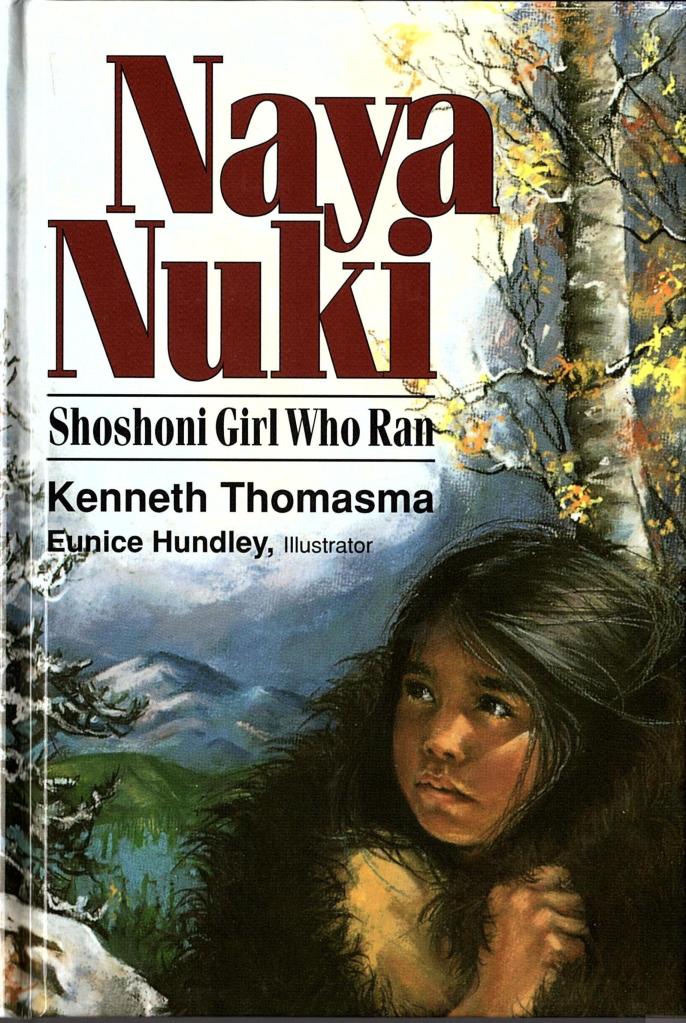
A few years ago, when my boys and I were studying American History, this novel was recommended as supplemental reading. I had all the more reason to want to read it, because Naya Nuki is Shoshone and when I lived in Idaho for a few years during my teens, it was near the Shoshone/Bannock Indian reservation. Our local library didn’t have it. I ordered it through interlibrary loan, but it never came! Must have been a long waiting list.
Fast forward three years. We have now moved back to Shoshone/Bannock country. I go to the local library here, and not only do they have Naya Nuki, they have the entire series by this author! Only problem is, the kids and I now have other required supplemental reading, and we’re working through that. I figure I’ll just zip through it by myself and return it to the library. But the due date approacheth, and I never do.
While still in this uncomfortable situation, my husband brings me home a surprise gift from his travels. It’s my very own copy of Naya Nuki! He thought it looked like something that would interest me. I’ve gone from not being able to get my hands on a copy, to an embarrassment of riches.
So I was free to return the library copy … but you guessed it, my gift copy is still sitting there unread. Why? Why???
A book that is ‘required’ reading (eg, school text, really popular classic – something you feel obligated to read!)
Everything by Freud and Nietzsche.
A book that intimidates you
Maps of Meaning by Jordan Peterson. He spent, what, decades on it? Rewrote every sentence at least 50 times? It sounds like it would be heavy going. A really thorough student of archetypes would read it, but I feel like this was the book where he developed his ideas, and now we can get the highlights of those through his class lectures on YouTube and through Twelve Rules for Life.
A book that you think might be slow
I know this one is slow, because I started it. I still think I might end up really liking it. Actually, I hope I do, because it’s sort of the same genre that I write in. But it requires a lot of attention during the first several chapters, as you have to learn a lot of different characters and figure out to who root for. It’s not the kind of book you can pick up and dive into for 20 minutes while eating your lunch, which is what I need right now.
A book you need to be in the right mood for
Circe. The main reason I haven’t read this is that it hasn’t shown up at the library yet, and I am too cheap to order it online. But there’s another reason as well.
I love the heroic age of Greece. As a teen I spent several years, off and on, immersed in this milieu. At one point I was going around telling people, “The Iliad is taking over my life!” (I also, when reading The Odyssey, had a crush on Odysseus. *blushes* Because who wouldn’t? I mean, the man can shoot an arrow through the centers of 12 ax heads lined up in a row!)
So I’m frankly super jealous of the author for having immersed herself in these books and written what everyone agrees is a fantastic novel that is true to the tradition. If I’m going to read it, it will put my head right back in that space, and I have to be ready for that.
Call, and raise you The Song of Achilles.
A book you’re unsure if you will like
Oh, so many. Pick any YA fantasy with a mermaid, vampire, or young woman on the front. I “ought” to be reading more of these, because they are fantasy and we are supposed to Read Widely In the Genre … but I just don’t find them appealing usually. Especially if the back cover copy deals with how mean everyone is to the young woman, or how she’s a member of an ostracized group.
And lest you misunderstand, I don’t say this dismissively. Probably some of these books are as meh as I expect, but no doubt others are gems. Maybe it’s even half and half. I’m not being superior. I just … can’t … get … interested …
People I Want to Tag but Also Don’t Want to Tag
Honestly, tagging activates my social anxiety. What if you’ve already been tagged for this? What if you don’t want to be tagged? What if I leave someone out? Gaaah!
I’m tagging you anyway. Don’t take it personally. If you hate the tag but want to please me, just do a super perfunctory and sarcastic tag like Bookstooge did that one time.
I’m tagging people who post frequently, because if you want something done, ask a busy person. So, if you post infrequently and didn’t get tagged and want to do this, go for it!
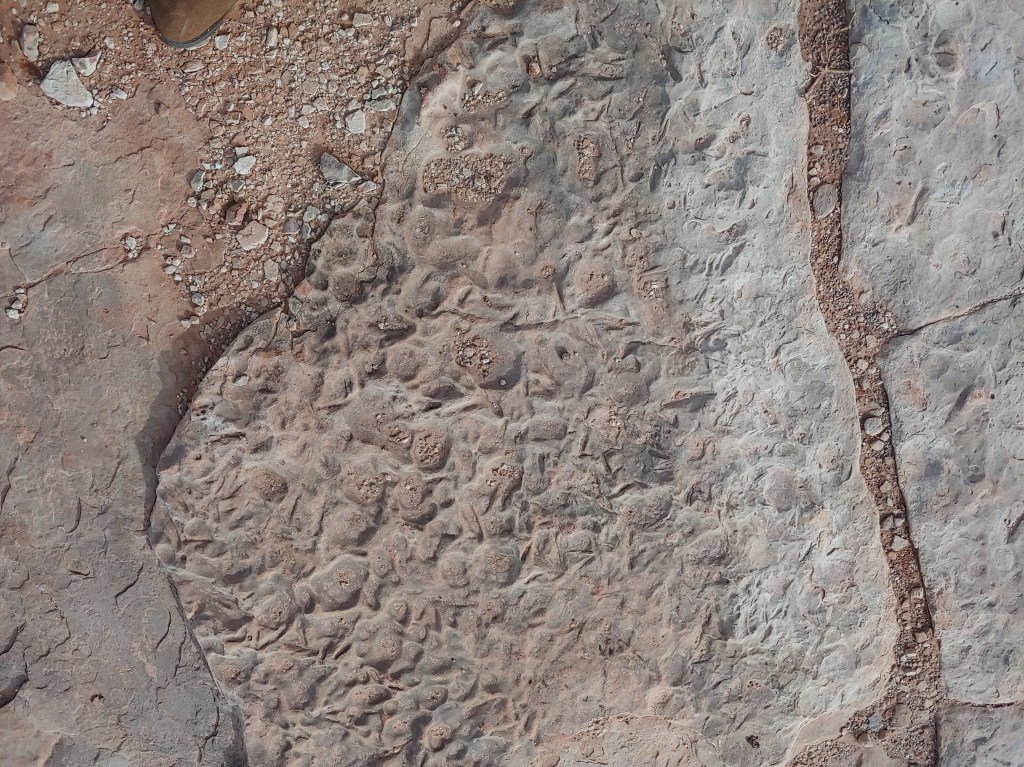
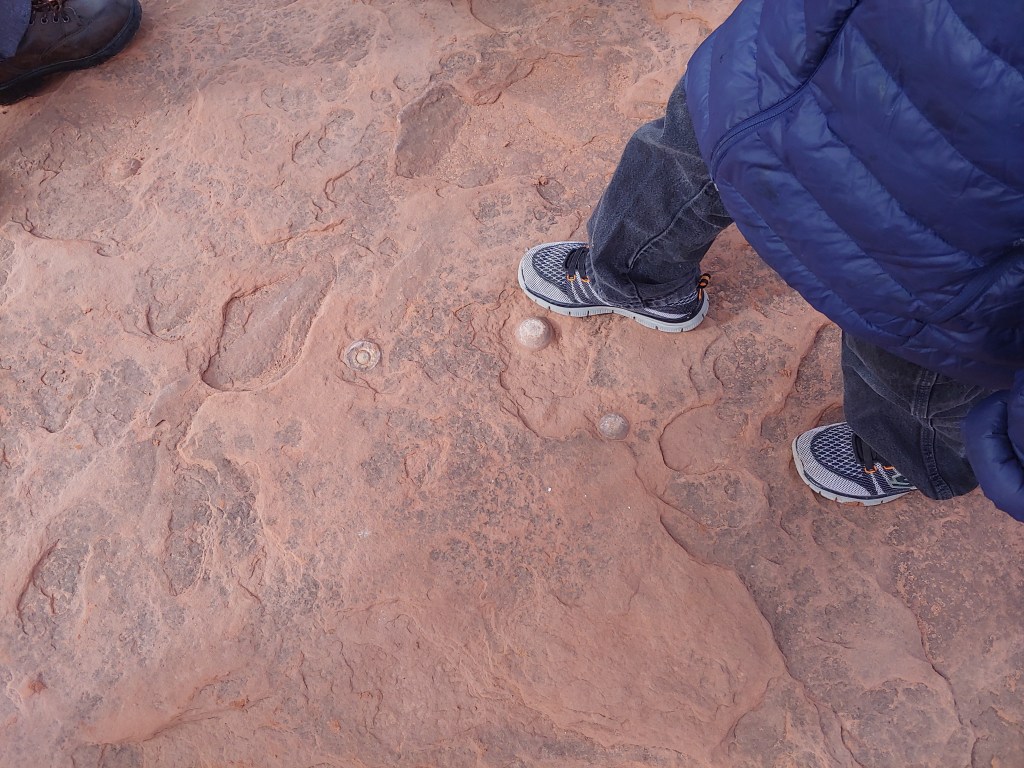
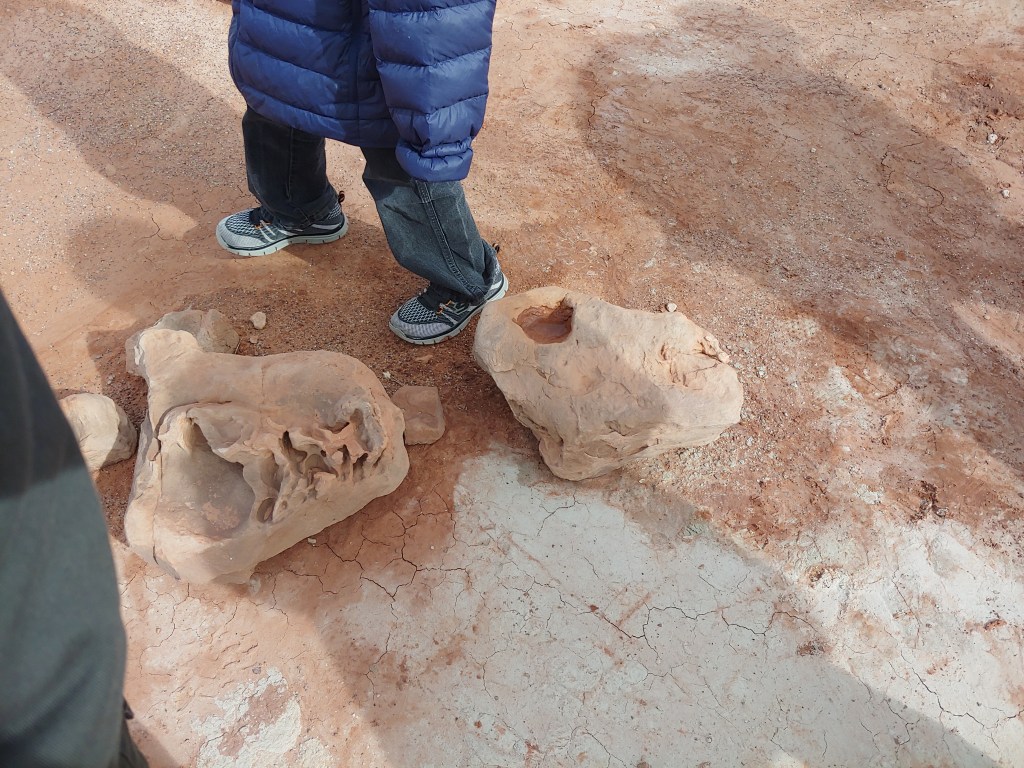
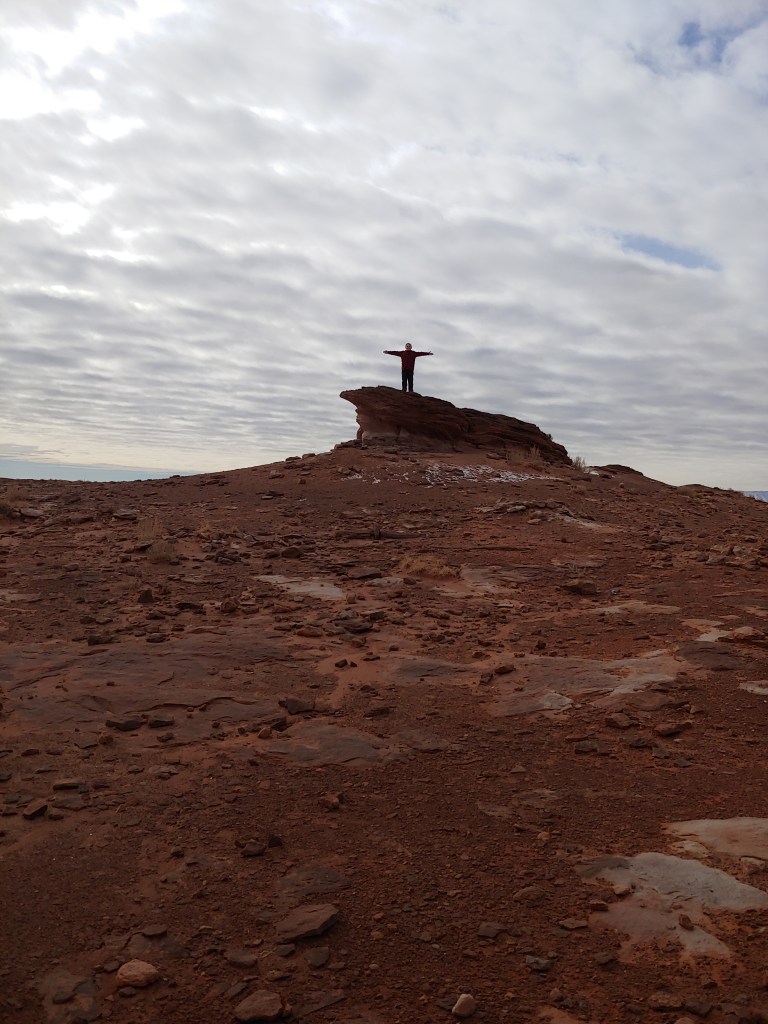
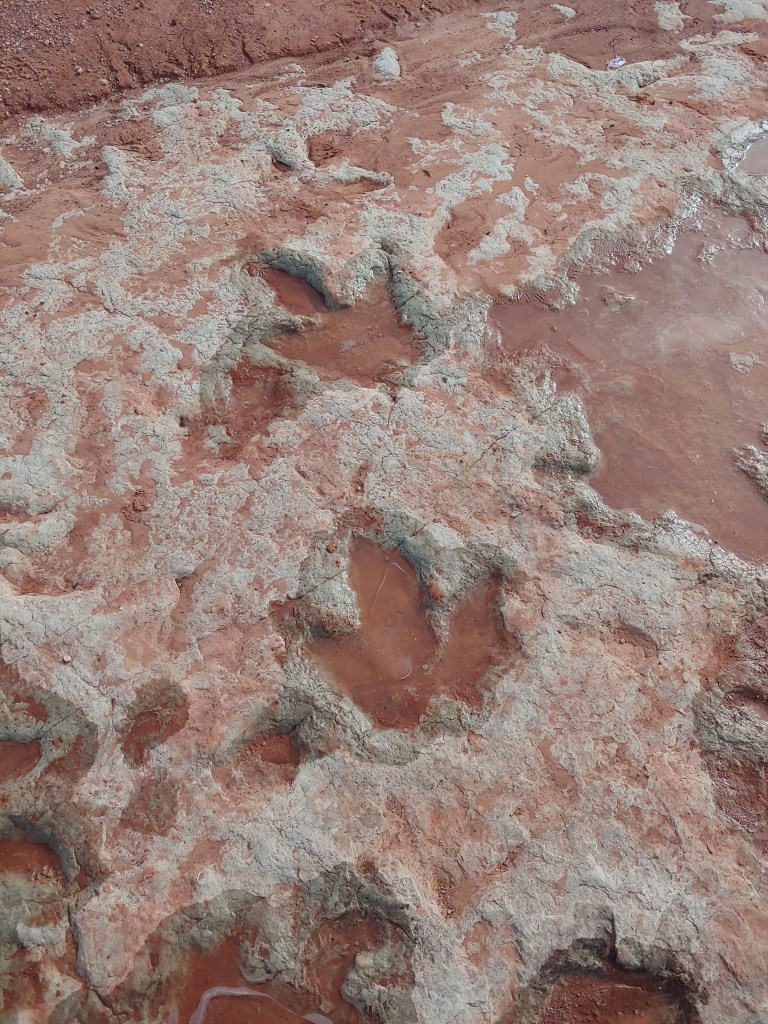
Maiasaurus tracks. Mother and baby tracks visible.T-Rex! I have a picture of my kids standing on this footprint, but want to protect their privacy.swamp grassfossilized dinosaur eggs (son’s foot for scale)skull, and neck vertebraeThis one is, according to our guide, a human footprint.This little rise was the only high point in the area, except that we were already on high ground as the road climbed towards Tuba City.
There were also some coprolites, big rock cow pies which had been stacked and made into a little fence at one point. Nothing like a stone wall built of dino poop.
Sometimes you want to see something with your own eyes.
My Dinosaurs in History post includes a link to a web site that discusses an Anasazi petroglyph that looks an awful lot like a dinosaur. Even on the web site, you can tell that the original petroglyph is very, very faint.
from the Defending Genesis web sitefrom Defending Genesis again
It’s on Kachina Bridge, which is in Natural Bridges National Park in southern Utah. So when I learned I would be passing through southern Utah, I thought I had better go and look at the thing myself. Do my due diligence. How could I live near this thing, drive right by it, and not try to get a glimpse?
Getting to Kachina Bridge
Here’s how to get to Kachina Bridge. First you drive to Natural Bridges National Park, which is about 35 miles from the main highway. The road is very good, but it is so twisty, with so much climbing, that the 35 mile drive took us about an hour.
We checked in at the Visitors’ Center and showed our national parks pass. From there, you drive your car around a one-way loop that takes you past all the major overlooks in the park. From the loop, you can park your car and access the trail heads. Kachina Bridge is down in a rocky canyon. The trail is about 1.5 miles round trip, but it’s basically vertical. It’s a combination of stone steps, scrambling over red rock following a trail marked by little cairns, scrambling down red rock faces aided by handrails the park has installed, and, in one case, a short climb down a wooden ladder.
It’s a beautiful hike, but despite what the Defending Genesis web site says, this trail would not be easy to navigate while carrying something bulky such as a ladder. In our case, it was made more beautiful and more perilous by the presence of snow and icy patches.
(By the way, could I just pause here and express how grateful I am for our national parks. Someone has created and maintained a fantastic road to get out to this place, then a driving loop and parking places, and then a trail with carved steps, handholds, etc. Because of all this, I (and even my kids!) are able to access this remote and beautiful spot. Without all this, we would have no reason to go there, no way to get there, and probably no idea that the place existed.)
Anyway, finally we were on the canyon bottom. We followed a gravel path beside a stream, and eventually we emerged and – ta-da! – there was the bridge before us.
Sneaky Petroglyphs
When you first get to the bridge, your natural instinct is to approach it and then walk under it. Consequently, I at first walked right past all the petroglyphs without even noticing them. Or actually, I walked right under them.
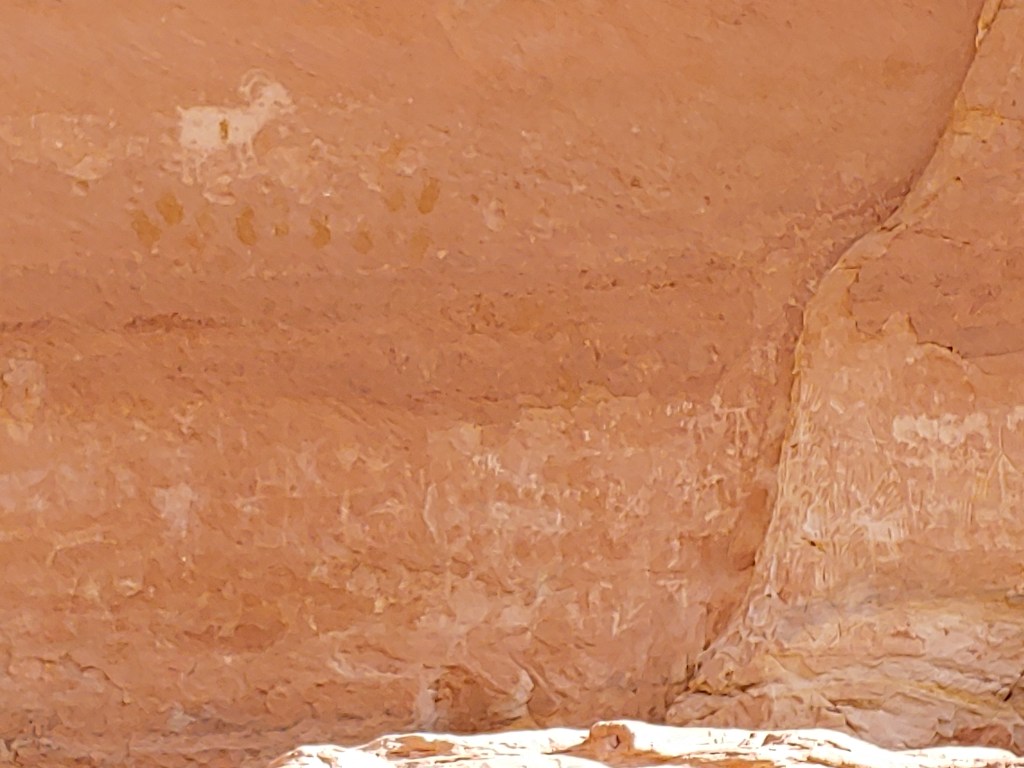
The biggest group of petroglyphs is on the side of Kachina Bridge that faces you as you approach it. They are on a relatively flat, vertical strip of canyon wall, about 10 or 15 feet up, with a ledge protruding below them. To get a close look at them, you would need to scale the ledge using rock climbing equipment or a ladder. If you stand right underneath them, the ledge partially blocks your view. So if, like me, all you have is a stupid cell phone camera, you have to back way up and then use the zoom to get grainy “close ups” of the petroglyphs.
Showing the ledge. What looks like a tiny pueblo under it is eroded red clay. The glyphs we’ll be looking at in a moment are farther along to the left of this group.
Some of these petroglyphs are really famous, but some of the most famous ones are the hardest to see. They are made up of dibbles in the rock which itself has an irregular surface. I imagine that the best time to photograph them would be morning or evening when the slanting light would help pick them out. (We were there at noon.) And to use a professional camera with a good zoom lens maybe.
For example, can you see three human figures, zigzags, and spirals in this photograph?Here I’ve used Paint to enhance the ones I could see … which did not include the second man’s head. There is also a turtle-like something I did not enhance because I wasn’t sure of it.
Me, Trying to Photograph Them Anyway
So I wandered around in the snow and took about a million photos of the different sections of the wall with my cell phone, hoping that I might photograph the dinosaur by accident and be able to find it later. There were so many petroglyphs, and many of them overlapping each other, and I had no idea where in this composite mural the supposed dinosaur might be.
I also took some photographs of the whole scene from a distance to give a sense of context of the petroglyphs.
As I stumped around in the frozen red mud, I thought to myself. These are so hard to get to and photograph. How hard must they have been to make? What would motivate anyone to make all this art (or language) in this hard-to-get-to spot? It’s a similar question to cave paintings. Of course, there is lots of good information out there about what these spirals and zigzags and blocky figures tell us about probable Anasazi cosmology. The only thing I could undeniably tell that the original artists must have been saying, though, was,
“We were here!”
I Did Photograph It! But You Can’t See It
When I got home, I tracked down the web site and tried to identify which section of the wall the dino petroglyph occupied. Turns out I did photograph that section of wall! Here it is.
It’s actually just to the right of the spirals, zigzags, and people I had to enhance.
Of course, you can’t see the dino at all. So I cannot verify that the thing is there. Certainly you can’t see it with the naked eye, from a distance, at noon on a winter day. But then, that goes for many of the petroglyphs.
In this picture, you can see the spiral that is to the right of the dinosaur’s head but not the dinosaur itself.
Further evidence that the dino glyph is actually there: Senter and Cole went out of their way to analyze it and disprove it. They seem to be able to see it, I guess. Enough that it bothers them.
My Kids Trying to Help Me Find the Dinosaur
Sometimes another pair of eyes helps, so before we left I asked my kids (who had spent the previous hour scrambling over red boulders and breaking ice in the stream) to see if they could spot any dinosaur.
They didn’t spot the dinosaur, but they did point out a number of glyphs that could have been dinosaurs (or, from that distance, anything).
Here are some clearer ones on the other side of Kachina Bridge. I don’t know what the situation was like when these were first made, but now, they are on a sheer wall that looms directly over the deepest part of the icy stream.
This one, which a dispassionate observer has called “Chicken Man,” could be a large bird. Or (just a thought here), it could be a T-Rex if we are assuming there are multiple glyphs of dinosaurs. At any rate, the 3-toed, bird-like foot, long neck, and fat body on 2 legs are clearly visible.
This one, which my son suggested as a possible dino, looks more like a giraffe to me, but who knows. Or it could be pure symbol, not meant to represent an animal at all. As you can see, it’s near the giant chicken.
Lesson Learned
So that’s my fail. I can tell you that there is not, on Kachina Bridge, a dinosaur petroglyph that you can’t miss and that unmistakably leaps out at the lay person.
I can tell you that there are many interesting symbols which are hard to discern and need to be (and have been) photographed and analyzed by experts who are familiar with Southwestern archeaology and anthropology.
And that, like everything having to do with ancient man and with dinosaurs, the process of interpretation is more art than science and is hugely influenced by our assumptions.
I was always sort of attracted to you. My husband and I camped our way through you right after we got married, and it was interesting, but I didn’t commit myself because I didn’t think I’d be back. I thought the two of us were going to move to Indonesia. And indeed we did, and we learned its languages (a few of them) and explored its tropical, Southeast Asian landscapes and cultures, a world away from your deserts. But we didn’t, as I had expected, end up raising our kids there. Ultimately we ended up coming back to North America. American Southwest, I was getting pulled into your orbit.
Betataki cliff dwelling at the Navajo National Monument
Things only got worse when I discovered Thunderhead by Douglas Preston and Lincoln Child, and then the Joe Leaphorn and Jim Chee novels of Tony Hillerman. (The first Hillerman novel I read was so sad, I swore I’d never read him again. But eventually, inevitably, I picked up another one, and then it was all over for me.)
Bought at the Navajo Cultural Center gift shop in Tuba City, AZ. They had many of Hillerman’s novels and I’d have bought them all if I could.
Yes, I know there is plenty of terrific nonfiction about you. But I always tend to reach for fiction.
Petroglyphs on Kachina Bridge, Natural Bridges National Park, Southern Utah
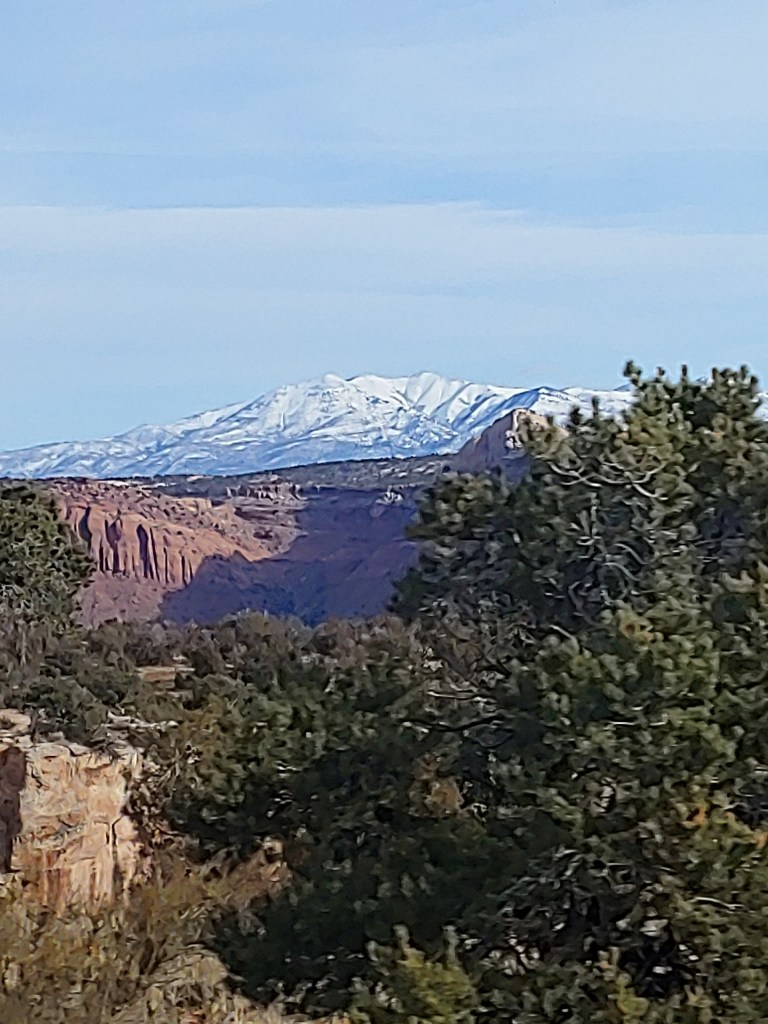
And then, the final blow: We moved to the Intermountain West. Within driving distance of … you. And this last week, I got the opportunity to explore you with my children by my side. I got to drive through Navajo country, Dinetah, the land of my book friends Chee and Leaphorn, seeing the places and hearing the language that I had read about in their adventures. I can’t describe how this felt. It was like getting to visit Middle Earth or something.
Dinosaur prints near Tuba City, AZ
So, after this trip, you win, American Southwest. You have conquered me. I am hooked. It is not possible to learn everything about you … not even in one lifetime, and I am getting started late. But whenever possible, I will be back. I promise you that.
Kachina Bridge
I know I’m not the first outsider to fall for you. In fact, that’s another thing that I sort of like about the tourist and transplant culture surrounding you: you seem to attract people who are into art. I look forward to doing some paintings of you that are exactly like the bajillions of other paintings done by your other adoring fans.
Paintings of landscapes like this one.
And I promise, I won’t steal or “acquire” any priceless artifacts. I don’t want your relics or your pots, American Southwest. They wouldn’t look good in my house. They look best exactly where they belong: right in the middle of you.
The other side of Kachina Bridge. Can you spot the petroglyphs?
Whenever I see “Calendar Girls” I think of the hilarious British movie by that name, but in this case, it means a group of (girl?) book bloggers who treat a different bookish theme during each month of the calendar. (So we will not be posing. I am sure you are relieved.) And this month, December, I was actually able to think of a book that fulfills the theme!
Calendar Girls is hosted by NeverNotReading, who says of this month’s theme, “What I really like about this theme is it allows you to interpret diversity in whatever way is meaningful to you. Racial or ethnic representation, LGBTQ diversity, neurodiversity, whatever you’re passionate about, we want to read it too!”
Picking a book with a diverse cast felt somewhat arbitrary because so many of my faves have casts that are diverse in one way or another. Pearl Buck’s Pavilion of Women springs to mind, as do Ursula le Guin’s novellas set on the planet of Yeowe (navy-blue colored upper class, grey-blue colored underclass, red-brown foreigners with a very different culture coming from distant Hain). Even the very Nordic Lord of the Rings has a main cast of four different species and minor characters that are even more diverse (Ents, anyone?). And then there’s Clan of the Cave Bear, which features Neanderthals as main characters.
But here is the book I have settled on: Sacred Clowns by Tony Hillerman.
Clowns is part of Hillerman’s Jim Chee and Joe Leaphorn series. It’s a mystery/police procedural series set in Dinetah, the Navajo homeland, which straddles the Four Corners region of the American Southwest. Chee and Leaphorn both work for the Navajo Tribal police. Because of the way jurisdiction on Indian reservations is handled, they frequently have to work on their cases with Arizona, New Mexico, Colorado or Utah State police and/or with the FBI.
Books in this series usually take place on the Navajo reservations and the plot often turns on Navajo culture. That’s already “diverse” to an outsider like me. But it quickly gets deeper. Chee and Leaphorn have each had a different experience of being Navajo. Leaphorn was of the generation that was sent away to boarding schools right around the time their adult vocabulary would have been developing. Consequently, his grasp on the Navajo language is a little shaky, and he thinks like a modern, secular white man. He doesn’t, in his bones, believe in Navajo cosmology. Chee, a younger man, was raised at home and enculturated, as per tradition, by his mother’s brother. He is a fully spiritual Navajo and wants to become a haatalii, or traditional healer, like his uncle (though Leaphorn, and others, feel the demands of being a hataalii would not mix well with a policeman’s schedule).
Sacred Clowns is even more diverse than the average Leaphorn and Chee book because in this case, the mystery takes place in Hopi culture, which is different from Navajo culture. (For example, Navajos tend to invite everyone to their religious ceremonies, whereas Hopi ceremonies are held in secret and never talked about.) In the opening scene, Chee is attending a Hopi cultural event that features clowns, which are supposed to show people their own folly. At one point, a Hopi clown mimes selling cultural artifacts to an outsider for a lot of money. He is clearly criticizing this practice, but Chee senses “there’s something I’m missing.” When the clown first drags his little wagon of artifacts out into the middle of the square, the Hopi crowd falls silent. Chee wants to find out why, and this will get him digging into local politics and ultimately solving the case.
Chee isn’t at the top of his game
during the event, however, because he is also there sort of on a date with Janet
Pete. Janet’s father was Navajo, but she was raised on the East Coast by her
Scottish-American mother. Chee really likes Janet, and he spends most of the
book trying to find out whether it would be OK for him to get involved with
her. The Navajo have an elaborate system of incest laws which prohibit you from
marrying anyone whose clans have a historical connection to your own clans. Janet
doesn’t know her father’s clans, and anyway the maternal clans are considered
more important.
Meanwhile, Leaphorn, a widower, is planning a trip to China with his lady friend, who is a white anthropologist (Lousia Bourbonette – a French name: more diversity, and a romance between older people!). He wants to visit Mongolia, because he’s read that his ancestors probably originated there.
And cramming in as many cultures as
possible, there is another tribal cop, Harold Blizzard, who is Cheyenne. About halfway through the book there’s a great
scene where Chee and Janet Pete are at a drive-in movie, and Blizzard is there,
sort of as a third wheel. The movie is an old Western called Cheyenne Autumn, which is a cult classic
among the Navajo because the “Cheyenne”
characters in the movie were actually played by Navajos. When they are
supposedly speaking Cheyenne
in the movie, they are actually speaking Navajo, and of course saying crude and
saracastic things that were not in the script. Chee, as the only person in the car who speaks
Navajo, has to translate for Janet and Harold so they can understand why certain
supposedly solemn lines are funny and why all the other (Navajo) moviegoers are
laughing and honking their car horns. It’s this experience that gets Chee thinking
about how much outsiders to a culture miss, and wondering what he was missing at
the Hopi gathering.
Finally, when Chee consults some
elders about Janet’s father’s clans, he gets an earful from them about how
young people aren’t traditional enough. They are referring to the way that hataalii of Chee’s generation will sometimes
break up the weeklong Navajo healing ceremonies over a couple of weekends so that
people who work 9-to-5 jobs can attend them. According to the elders, this is
not acceptable, but Chee will probably have to do it if he becomes a healer. He
must struggle with how much he can adapt his ancestors’ culture and still
remain Navajo.
All of Hillerman’s books do a great job exploring themes of culture and identity, but in this book he really outdoes himself.
I was tagged to answer these questions by author of the wonderful blog The Orangutan Librarian. You should definitely go over there and check out her posts. Number one, she’s an orangutan, and number two, she has some great satirical pieces.
What book has been on your shelf the longest?
I was going to show a Bible picture book that I’ve had since I was 3, but it turns out it is not on my shelf any more as I have passed it on to a niece. So, here …
What is your current read, your last read, and the book you’ll read next?
What book did everyone like, but you hated?
OK, this is the question that calls
for courage.
There are several that everyone
agrees are great, and they probably are, but I’m avoiding them.
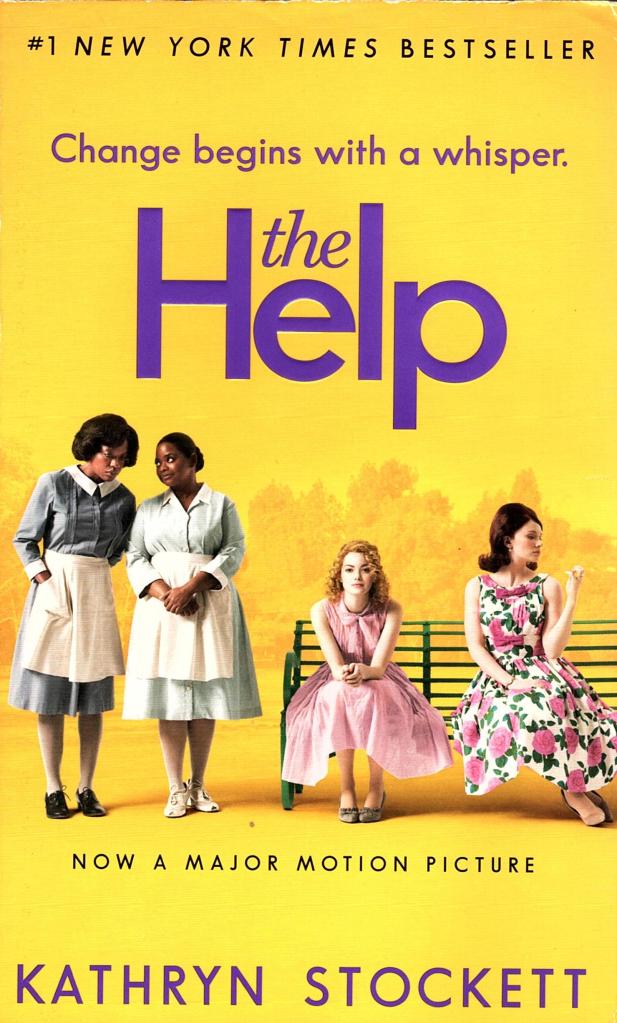
The
Hate U Give, The Help, and The Secret
Life of Bees.
I even have two of these on my
shelf, but I haven’t cracked them open.
Reason? I’m super easily guilted. I don’t want to read a book that is going to call me racist, because even though I know I’m not, I’m going to feel responsible for all the bad stuff that happens in the book. I will go around hanging my head just that little bit lower. Then I’ll be angry that I am being blamed for segregation or for a police shooting in a city I’ve never been to, and … well, you get the idea.
What book do you keep telling yourself you’ll read, but you probably
won’t?
The
Brothers Karamazov. I’ve started it,
and it was super good, and I know it has amazing writing and a ton of spiritual
insight, but I’ve heard so much about it that I feel like I already know the
ending.
What book are you saving for retirement?
At this rate, what I’m saving for retirement is probably my entire career as a novelist.
Last page: Read it first, or wait ‘til the end?
Wait, definitely. Unless you’ve
read everything that came before, the last page won’t make much sense and, even
if you can sort of figure out what is
going on, it certainly won’t have the same impact.
That said, I have been known to skim ahead a page or two in a book, just to break the tension, when I sense that something really awful is about to happen.
Acknowledgement: waste of paper and ink, or interesting aside?
Ok. I have lots of thoughts on
acknowledgements.
In general, I like them. They are
sweet. I love it when the author thanks
their spouse for all the sacrifices they made.
Also, the acknowledgements can be a way to find out the name of the
author’s agent, which is helpful if you write similar kinds of books and want
to query the agent.
But I’m not fond of acknowledgements
that fill 1 – 2 pages and, seemingly, list every single person who had anything
to do with bringing the book to print.
First of all, I can’t pay attention to all those names and my eyes glaze
over, and then I feel guilty because clearly all these people deserve to be
thanked.
Secondly, these long
acknowledgement sections can be discouraging to a fledgling author. If a dozen people are listed, and every one of
them is thanked for their “invaluable edits and corrections,” and is a person
“without whose work this book would never have come to be,” we get the
impression that it’s impossible to write a book (at least, a decent book) without a team of at least
a dozen at your back. Which means that
our current WIP is probably trash, which makes us doubt ourself since we know
it’s not.
Also, I once saw a long
acknowledgment section by Nicholas Sparks that was nothing but a bunch of puns
on the titles of his previous books, none of which I had read. I didn’t end up
reading that one either.
Which book character would you switch places with?
Bertie Wooster. Who wouldn’t want to have Jeeves on hand?
Do you have a book that reminds you of something specific in your life
(place, time, person)?
Yes, all of them.
(I once told a Medieval Lit
professor that because of a certain past friendship I had “issues” around the
entire corpus of Arthurian legends, and added, “I guess that makes me a real
literature dork, right?”
And she said, “I don’t know, I think most people have issues like that with different works of literature.” I think she was right.)
Name a book that you acquired in an interesting way.
A Meeting at Corvallis by S.M. Stirling. I read the first book in this series (Dies the Fire) by checking it out of the library. But I couldn’t find the second one in the library, though they had later books in the series. (What are you thinking, librarians?) So I was forced to go online and order copies of the missing books.
This shows the value of authors getting their books into libraries, by the way.
Have you ever given a book away for a special reason to a special
person?
Only all the time. It’s called “forcing books on people.” It’s
my social handicap (one of many). Apparently I communicate by giving, lending,
and recommending books.
Which book has been with you the most places?
This is a tricky one. In my youth I was a world traveler, and I am one of those people who always have to have a book with them, so I have dragged many different books to some very remote places. But it’s never always the same one. I remember reading an Indonesian version of The Two Towers while on a canoe, and reading How Green Was My Valley (in English) sitting on an ironwood porch in the jungle. Little House probably wins, though, since I re-read that one on the ironwood porch as well.
Any “required reading” you hated in high school that wasn’t so bad two
years later?
No. I liked To Kill A Mockingbird when we read it in high school, and loved it
even more later. I hated 1984 so much that I’ve never gone back
to it.
Used or brand new?
Library.
Have you ever read a Dan Brown book?
I can’t remember. I have read one by another person in a similar genre, and reviewed it here.
Have you ever seen a movie you liked more than the book?
The Great Gatsby (Leo DiCaprio version). The film made the characters sympathetic and the story poignant, which the book didn’t do for me.
Have you ever read a book that’s made you hungry, cookbooks included?
I don’t need a book to make me
hungry.
I am easily guilted (is a theme
developing here?) by books that feature starvation.
Laura Ingalls Wilder’s book Farmer Boy stars a 9-year-old boy who is
always hungry and includes many detailed, sensuous descriptions of food. Man, that boy could put away the pies! Of course, he was nine years old and was out
ploughing all day.
Who is the person whose book advice you’ll always take?
Not sure this person exists. Even people I respect greatly have different thresholds than I do.
Is there a book out of your comfort zone (e.g., outside your usual
reading genre) that you ended up loving?
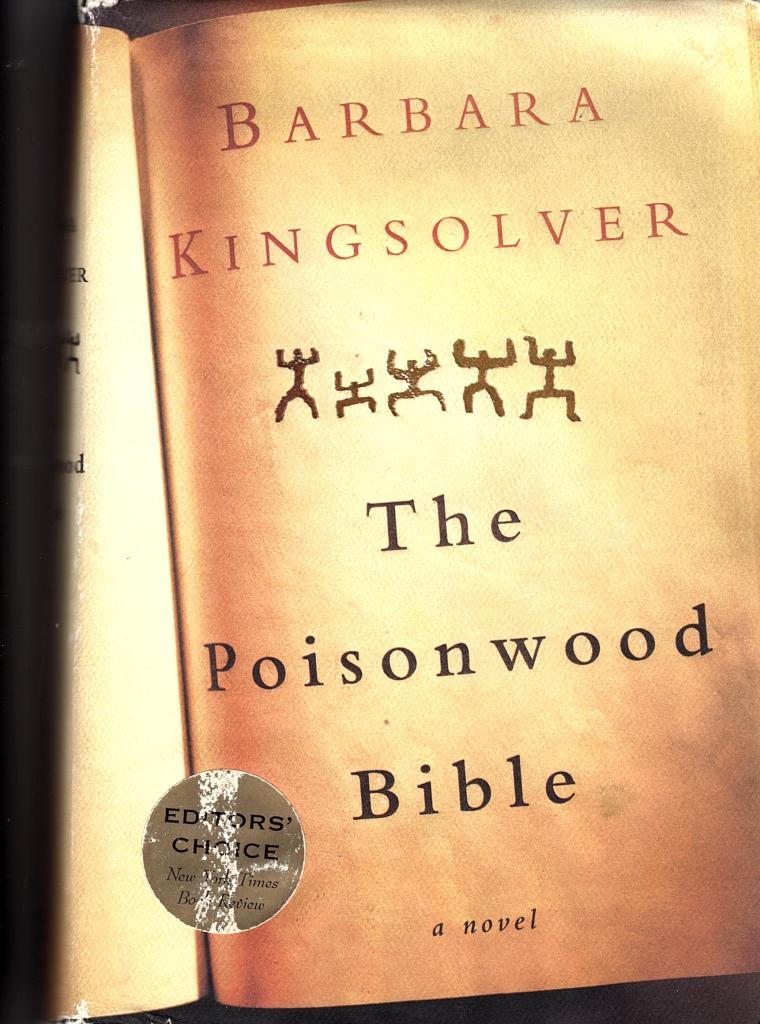
The Poisonwood Bible by Barbara Kingsolver was out of my comfort zone and I avoided it for several years because I got the impression that it demonized missionaries as evil colonialists who don’t bother to learn anything about the cultures they enter.
Eventually, when I’d made some
culture crossing mistakes of my own and been through some difficult personal
stuff, and I had accepted myself as a flawed person and life had calmed down a
bit, I felt ready to read it.
It is brilliant.
I still think it demonizes
missionaries to some extent, but it is such good literature that even the
Baptist pastor villain is portrayed in a complex way. It does a great job of
showing the huge learning curve faced
by Westerners when entering a West African culture. It deals with white guilt, parenting guilt,
and more. At least three of the characters made me go, “This is me!”
Also, the sections narrated by the pastor’s oldest daughter Rachel are hilarious because they’re filled with malapropisms.
Now it’s my turn to tag you.
Tag! You’re it. If you want to do this tag, go home and do it, and let me know. Or answer randomly selected questions from this tag in the comments.
















 Out of Babel Books