The Finally Fall Tag

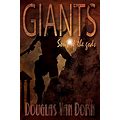
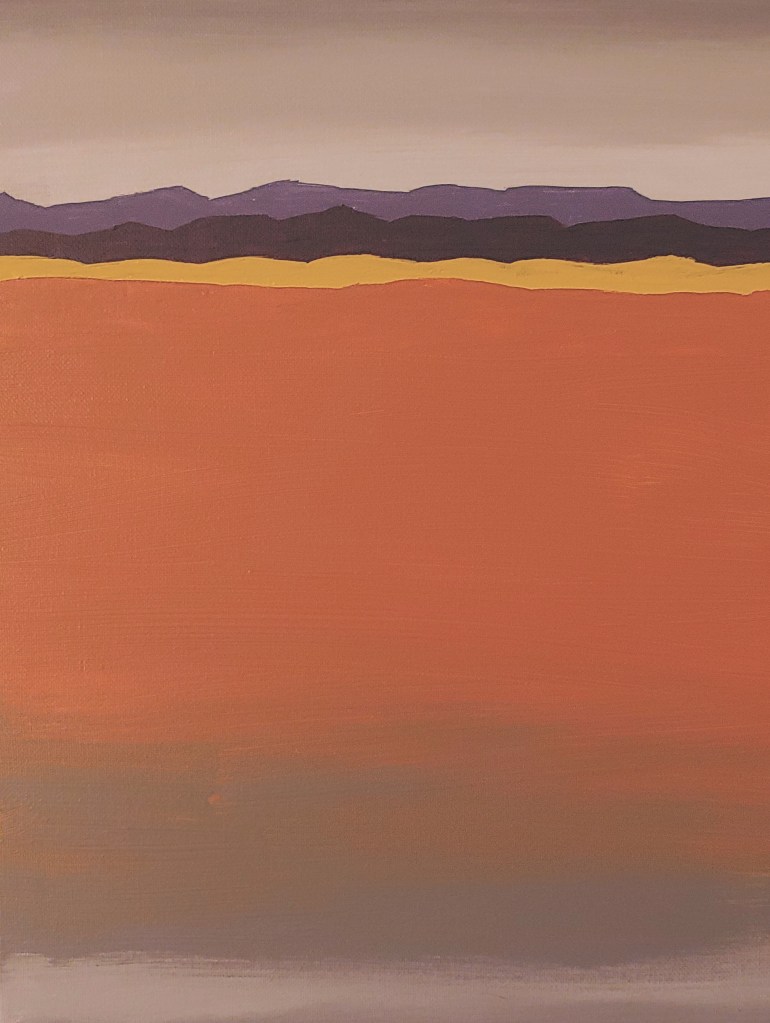
I thought this image looked sort of autumnal.

Today I will be doing the Finally Fall Book Tag, which I got from Riddhi. A tag is a series of prompts that the blogger responds to, usually by naming one or more books. At the end, we are supposed to “tag” other bloggers, but we all know that I don’t do that because it just gets too complicated, what with not wanting to leave anyone out, not wanting to hand anyone a task they hate, etc., etc. It’s sort of like planning a wedding that way.

In fall, the air is crisp and clear: Name a book with a vivid setting.

The Lord of the Rings.

OK, look, TLOTR could actually be the perfect answer for every one of these prompts, am I right? So I’ll just name it for each of them, and then one other one that is my backup answer.

Beyond Middle Earth, I suggest you check out the setting in Ursula Le Guin’s Hainish cycle. It’s on a planet that, because of its orbit, experiences seasons that last for lengths of time that we on Earth would call years. The people who live there have eyes with no whites to them. After intermarrying with immigrants from Earth, they develop a skin tone that is navy blue in the upper classes and “dusty” blue in the lower classes. It’s fascinating, brutal, and beautifully written.

Nature is beautiful… but also dying: Name a book that is beautifully written, but also deals with a heavy topic like loss or grief.

The Lord of the Rings. They kill off Gandalf.
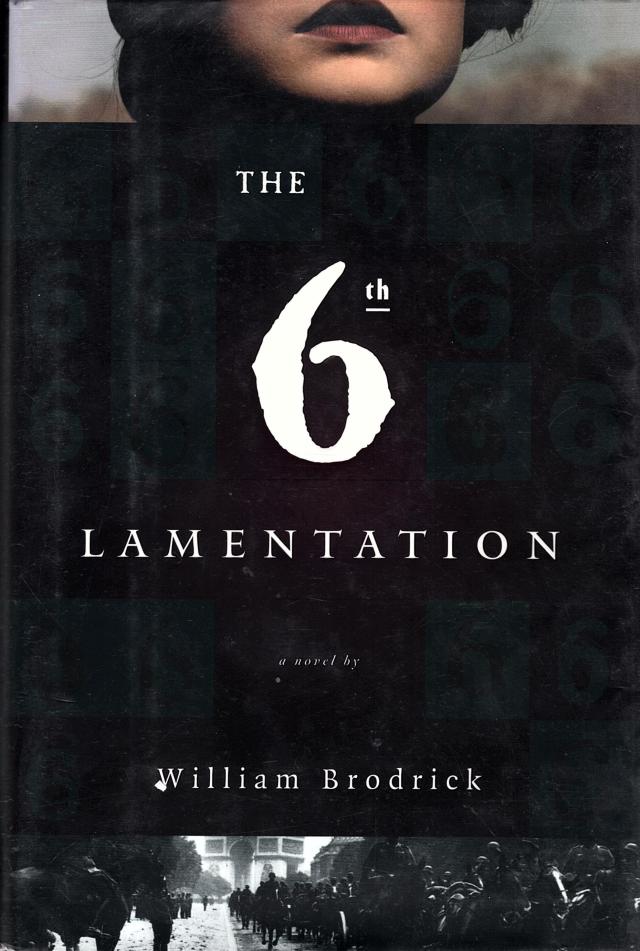
The 6th Lamentation by William Brodrick

Also, this book. The Holocaust, survivor’s guilt, lost children, neurological disease. Are those topics heavy enough? See my full review of it here.

Fall is back to school season: Share a non-fiction book that taught you something new.

The Lord of the Rings will teach you terms like weregild (“person-money” – money paid in compensation for someone’s death).
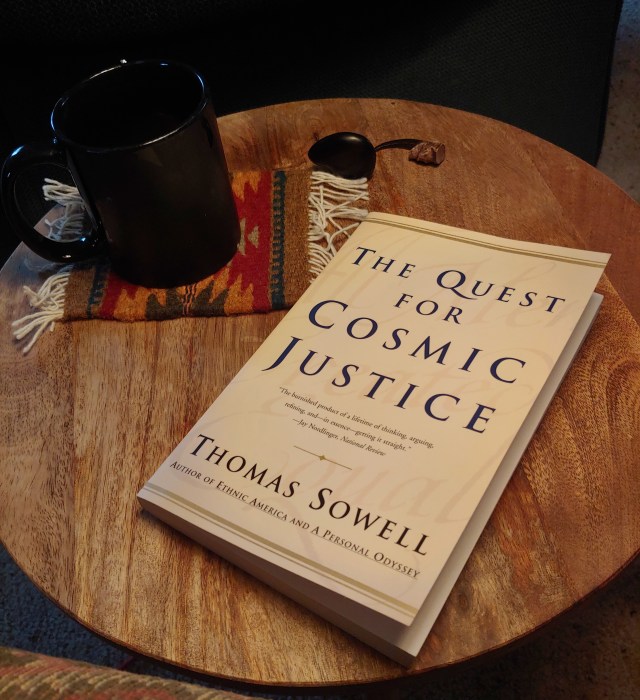
The Quest for Cosmic Justice by Thomas Sowell

Everybody please go read this and as many other Thomas Sowell books as you can get your hands on.

In order to keep warm, it’s good to spend some time with the people we love: Name a fictional family/household/friend-group that you’d like to be part of.

I would like to live with Tom Bombadil and the River Daughter.

Failing that, I would be honored to live and work with Mma Potokwane, the forceful woman who runs the orphanage in The No. 1 Ladies’ Detective Agency series.

The colourful leaves are piling up on the ground: Show us a pile of fall coloured spines!

I didn’t intend it, but every book in this pile except for The Family Mark Twain is indie published.

And Neanderthal Woman is homemade.

Also … the golden-leaved mallorn trees of Lothlorien.

Fall is the perfect time for some storytelling by the fireside: Share a book wherein someone is telling a story.

One of the best things about Lord of the Rings is the way you keep getting hints of yet more ancient places, people, and stories.

And for my backup answer, we have Ursula Le Guin again. In her Earthsea trilogy, there is a very creepy story told about a stone that if you so much as touch it, steals your soul. In her book Left Hand of Darkness, the main story is interspersed with short myths to help us get a feel for the culture of the planet the story is set on, where glaciers cover about half the landmass and people are sexless for most of each month.

The nights are getting darker: Share a dark, creepy read.

The Balrog, and Shelob, and the Ring and the effect it has upon people, are all pretty doggone creepy.

Also, The Dark is Rising and the whole series that follows it deals with pre-Roman paganism still alive in Britain.

The days are getting colder: Name a short, heartwarming read that could warm up somebody’s cold and rainy day.

The Hobbit. Annndddd …

Allie Brosch’s new book Solutions and Other Problems.

It’s not heartwarming in the sense that it presents the universe as a rational or hopeful place, BUT it did make me laugh so hard it brought tears to my eyes. It’s not short in the sense that it’s a big, thick hardcover, BUT that’s only because it is packed with her funny (and actually very artistic) drawings. It’s a fast read.

Fall returns every year: Name an old favourite that you’d like to return to soon.

THE LORD OF THE RINGS.

The Everlasting Man by G.K. Chesterton

Also, this book, The Everlasting Man, by the ebullient GKC. I recently ordered my own copy so that I could mine it for future quotes on the blog, and I quickly discovered that GKC was the original source of all my suspicions about ancient people having been just like us, but smarter.

Fall is the perfect time for cozy reading nights: Share your favourite cozy reading “accessories”!

Bears and coffee.

Quote of the Week from Anne Lamott

As a reminder, I am posting this purely in fun.

I remember one year my friend Carpenter and I had books out on the same day. We talked about it all summer. We each pretended to have modest expectations. I had modest expectations for his book; he had modest expectations for mine. The week before, we talked almost every morning about how excited we were and what a long time we had waited, and how it was just like being a little kid waiting for Christmas Eve. Finally the big day arrived and I woke up happy, embarrassed in advance by all the praise and attention that would be forthcoming. I made coffee and practiced digging my toe in the dirt, and called Pammy and a few friends to let them congratulate me. Then I waited for the phone to ring. the phone did not know its part. It sat there silent as death with a head cold. By noon the noise of it not ringing began to wear badly on my nerves. Luckily, though, by noon it was time for the first beer of the day. I sat by the phone like a loyal dog, waiting for it to ring. Finally, finally it rang at four. I picked up the phone and heard Carpenter laughing hysterically, like some serial killer, and then I became hysterical, and eventually we both had to be sedated.

Anne Lamott, Bird by Bird, p. 213

My Wish for You: A Welcome Distraction

So, tomorrow is election day in the United States. It’s going to be hell for everyone.

But don’t be sad, because The Long Guest goes on sale today!

So, strap on your face mask and your riot gear, venture out and vote … and then come home and curl up with a hot beverage and a book about an apocalypse you can enjoy. Leave everything else in the hands of God.

Buy TLG on Amazon

Buy TLG on Bookshop

This, Too, Is the Reader I Write For

People say that food is the good girl’s drug. But now I realize it was just one particularly cheap and sticky strain of my real drug of choice: distraction.

When I was a little kid, it just meant that I was daydreamy, or imaginative, running around performing whole musicals and movie scenes for the cat. When I grew up into a voracious reader, then great! Who would discourage a twelve-year-old from rereading The Catcher in the Rye? In high school, I was a devoted theater student, and in college I was serious about film study.

All that was true. Then there’s the truer version.

I wasn’t just rereading The Catcher in the Rye. I was rereading everything, constantly: in the car on the way to school, at recess, waiting for Karen to pick me up, and then all the way home. … Those teenaged nights I spent alone in my dorm singing along to CDs weren’t just about musical appreciation. They were about not being there, not being me. I was long gone, deep in my head, buried in the drama of “Someone Else’s Story” (from the original Broadway cast recording of Chess).

Kelsey Miller, Big Girl, pp. 210 – 211

So, guys, this was absolutely me when I was a kid as well, minus the musical talent. I can identify with wanting to immerse yourself in someone else’s story … and I don’t think it’s always a bad thing. Especially for kids, it’s a way to quickly learn a lot about the world. And, frankly, I can’t imagine anyone becoming a voracious reader without this hunger. I strive to make my books an immersive experience for the reader. Surely, without that, reading would be boring?

I do understand that reading can be used as form of escapism. In Miller’s case, her distraction addiction was so extreme that she realized it was becoming a major obstacle to her personal growth. After discovering mindful eating, she began to train herself in mindful walking to the subway without a podcast, and in mindful being in her apartment without the TV on every second. I get that.

But I have two things to say about books as a distraction.

One, sometimes we do need to escape from our troubles. This is true especially when we are kids and have few other outlets or coping mechanisms, but also at other times when we need to rest and re-group. I am reminded of a (possibly apocryphal?) Internet quote about how the author has a responsibility to entertain because readers are people sitting on busses and in hospital waiting rooms.

Secondly. The engrossing book that is an escape from reality, can also be a secret tunnel back into reality. You can “escape” into C.S. Lewis’s Chronicles of Narnia, or his Space Trilogy, but you will come out the other side with a renewed desire to face your own fears and responsibilities. And if you don’t actually emerge with the hope that there is an Aslan who could help you in this process, you will certainly, fervently wish there was one … which, as Lewis would say, is the first stage in Joy.

That’s what I hope my books will be. An immersive, entertaining experience that, while you’re not looking, also opens your eyes to aspects of the world that you had not considered before.

What do you guys think? Is it always wrong to use books and other media as escapism? Do kids have more leeway to do this than adults? At what point does voracious reading become pathological? And who gets to say?

Call for ARC Reviewers for The Long Guest

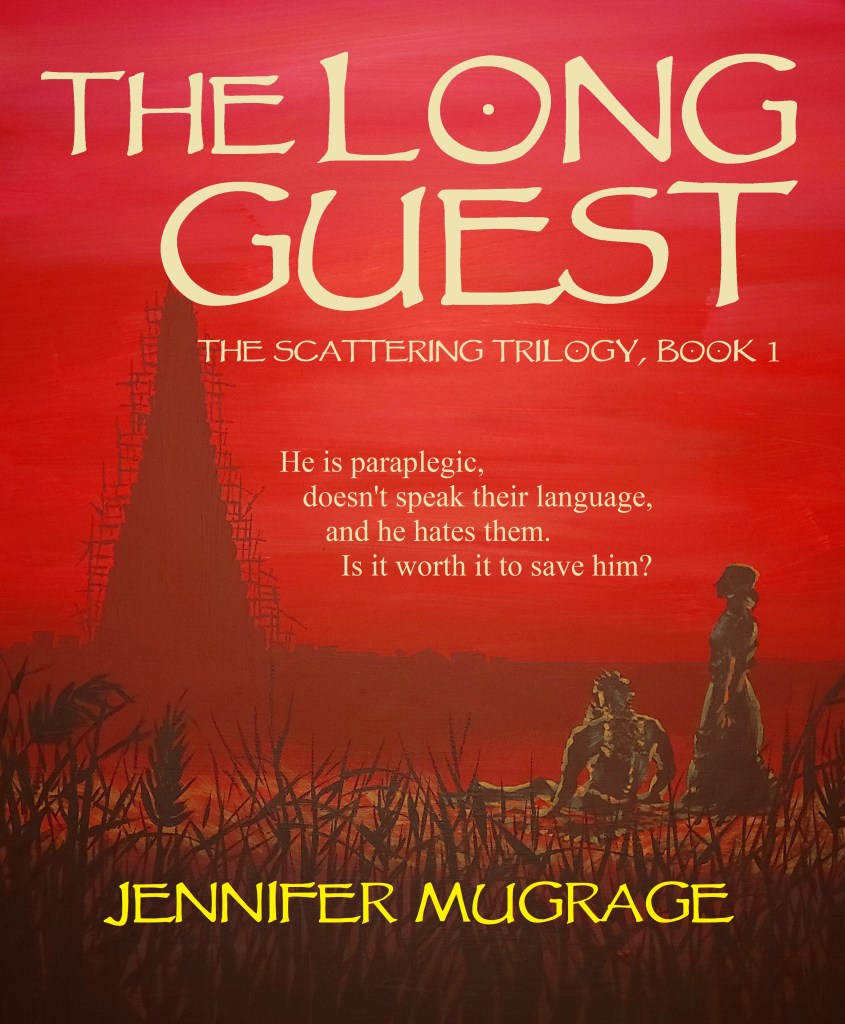
“The year is 10,000 B.C. All mankind was united in one project: to build a great city with a magnificent tower that reached to the heavens. But the tower fell; God confused their languages, and overnight, their world dissolved into unimaginable chaos.

Family groups, still tied by language, salvage what they can and flee to the countryside to survive. On the way, the family group of Enmer stumbles upon a highborn man, who does not speak their tongue. He lies paraplegic and near death, having survived a fall from the tower.

The matriarch of the family insists they save him; he is a human being, is he not? But he is also hateful, demanding, and useless. But if they don’t save him, who are they? And, if they do, he will leave them forever changed.

This sweeping epic starts at Babel and carries the action across the continent of Asia, even to the ends of the earth.”

That’s the official back cover copy. Coming November 1! But you can get the book before then.

ARC means Advance Review Copy or Advance Reader Copy. Here’s how it works. You use the contact button on this blog to send me your snail-mail address. I send you a free copy of the book. If you manage to get through it, you post a review on your blog or on Amazon or Goodreads or wherever else you typically post reviews. If you are a fast reader, your review might even go up around the time that the book is coming out. Either way, you get a free book, I get a review (probably); everyone’s happy!

And yes, sorry, the book is only available in hard copy at this time, not as an e-book. You will want to hold it in your hot little hands, flip back and forth to view the maps and family tree, mark your favorite passages for memorization, etc., etc.

My love to all of you! Especially to advance reviewers!

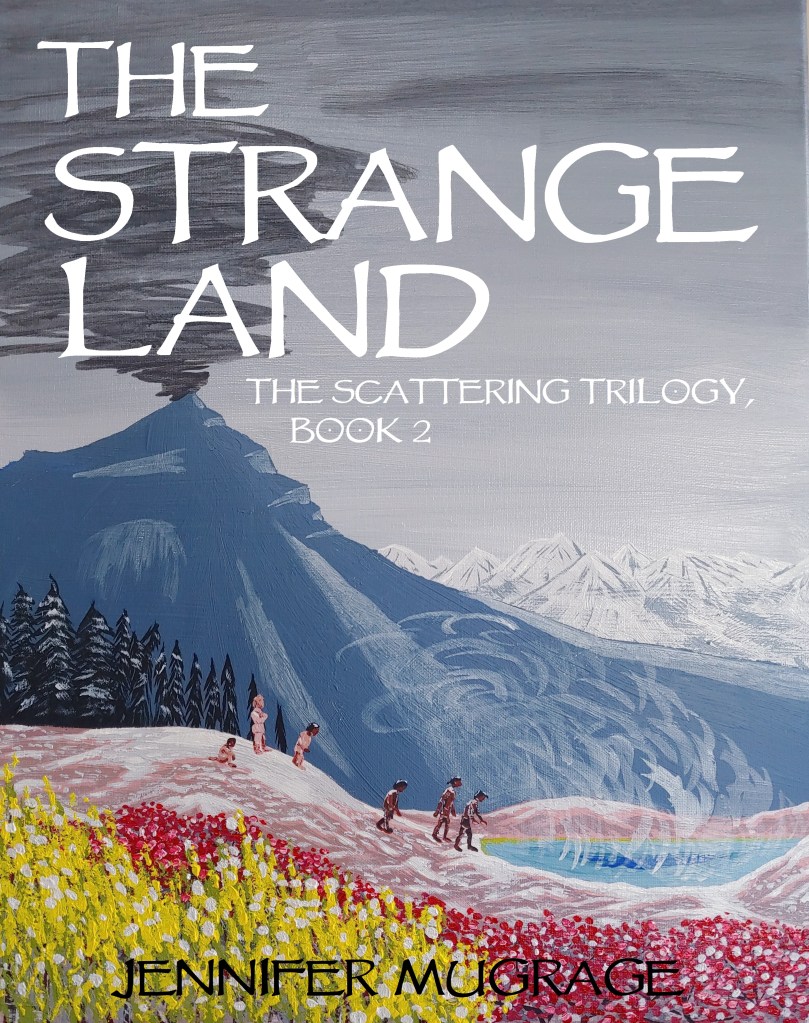
How Strange Was It?

Was it merely dark and ominous, but kind of normal?

Did it have this freaky rainbow pool that you couldn’t even tell what it was?

Or was it … both?

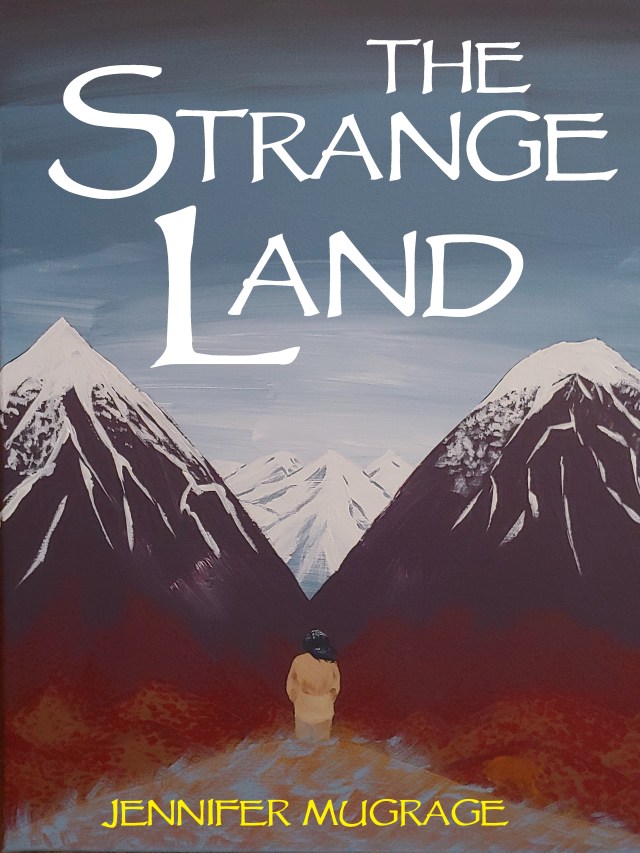
Faithful blog readers will know that this is my third (count ’em) cover draft for The Strange Land. And now, I am going to have to stop for while. Between the learning curve of teaching myself how to format The Long Guest for publishing, and the need to start school soon, I am fairly going crazy here.

You may notice that I have put a trilogy name on this cover draft. That’s at the suggestion of a librarian friend. Apparently, multiple interlocking series of books are hard to shelve unless they have distinctive series names and numbers. This would be a problem if I call them all “A Tale out of Babel.” And I’m thinking I don’t need that for this series, since the publishing company is already called Out of Babel.

So, as drafted, the first two books in the series would look like this. I am going to try to make them small so I can show them to you next to one another:

I can’t quite get them to be the same size, but I hope you get the idea.

So, what do you think? I worked hard on this painting, and I really like it, but I can always re-do it. Some day. Should I use a restricted palette like I did for The Long Guest? Maybe mostly greys as TLG was mostly reds?

The Horrifyingly Compelling Sulfur Pools of Yellowstone, and Another Cover Draft

Yellowstone National Park, which straddles the borders of Idaho and Montana but is mostly in Wyoming, is famously on top of an underground “supervolcano.” The volcanism in the area leads to the phenomenon that Yellowstone might be most famous for, namely Old Faithful geyser and many smaller and less faithful geysers.

Yellowstone also boasts these surreal-looking mineral pools. The edges are white, crusty mineral deposits similar to Tolkien’s descriptions of Mordor. The colors within the water come from heat-loving bacteria. Different microbes thrive at different temperatures, and they are responsible for the range of reds, oranges, and yellows before the water becomes clear and hence blue.

These pools are dangerous. They look appealing, but the heat will quickly kill any human or dog foolish enough to jump into one. There have been tragic cases at the park. Some people have survived their burns and others haven’t. To make matters worse, the ground around the pools can be fragile although it appears solid. The park has put up boardwalks studded with signs imploring people to stay on the paths and keep control of their children. Even the bison sometimes break through.

The landscape around these pools is not particularly beautiful, but it is interesting, even alien. I happen to have at least one pleasant association with the Mammoth Hot Springs area of Yellowstone. It was there that my now-husband first blurted out that he loved me.

However, in my book The Strange Land, my characters’ encounter with these pools did not go so well.

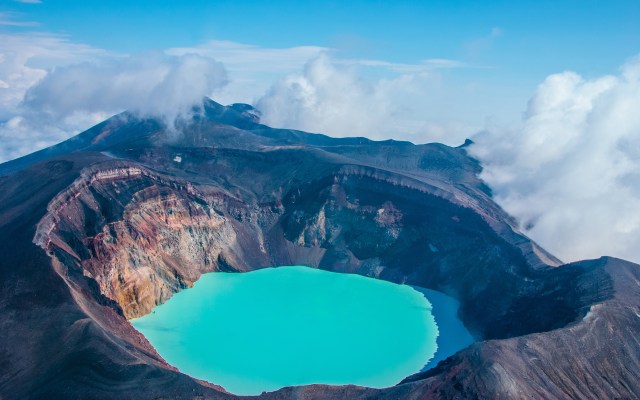
The strange land of the title is not Yellowstone National Park. It is another volcanic region, the area now known as Kamchatka. Kamchatka also has sulfurous pools. Behold:

For my second draft for a cover of The Strange Land, I thought about featuring one of these pools, with the volcano in the background:

I’m not sure how I feel about this cover painting. For one thing, there’s a lot going on in it. I’m not sure it has enough focus. For another, it’s kind of hard to believe. The colorful pool, the colorful vegetation, the white mineral deposits: all of them are well attested, but they look kind of … made up? I’m not even sure it would be clear what the pool is, to a viewer who wasn’t already familiar with Yellowstone.

I’m thinking perhaps I need to re-do this picture with a darker sky and with slightly more muted colors in the pool. You know, tone it down from real life to make it more believable.

For reference, the previous cover draft for the same book was this:

The “Never Have I Ever” Tag for Writers

How appropriate that just as I am starting to do a bunch of posts about publishing, the orangutan librarian should tag me with this bunch of questions about the writing process! The original idea was created by the Long Voyage- so definitely check out the original here!

This tag asks writers about whether they have ever engaged in a number of (mostly disreputable) behaviors. The headings will say the behavior, and then I’ll comment about whether it applies to me.

Never Have I Ever …

. . . started a novel that I did not finish.

I have started, and not finished, a number of novels. You know that whole idea that an artist can create a complete work in his or her head and then it’s irrelevant whether they ever put it on paper or canvas or whatever? That’s baloney. The actual process of enfleshing the work forces you to include so much more detail than you do in your head when you see the end from the beginning.

. . . written a story completely by hand.

(gets dreamy look)

As teenagers, my BFF and I used to write stories together. We would pass a notebook back and forth. Each of us controlled certain characters. We would write notes to each other and argue with each other in the margins.

My parts of those particular stories were the worst tripe ever written. We all have to write our awful tripe on the way to becoming writers.

. . . changed tenses midway through a story.

What?

. . . not researched anything before starting a story.

It’s never possible to do enough research.

But the experts don’t agree.

Also, if you research too long, you can end up talking yourself out of the premise for your story, at which point you’ve ripped out its heart.

So far, my stories have been inspired by cool theories (“research”) about the ancient world. So, I take the premise from the research. (See the ‘ancient world’ tag on my blog for all the stuff that interests me.) I have, so far, avoided setting my stories in really well-documented periods of ancient history (such as Rome) because of the sheer amount of research that would be required so as not to make glaring errors about the details of daily life.

Anyway, see the Bibliography page of this blog for a constantly slightly outdated, constantly growing tally of my sources.

. . . changed my protagonist’s name halfway through a draft.

I like stories that feature someone assimilating to a foreign culture. A total or partial name change is often part of this. So my protagonist Nimri starts out being called Nimri, which is basically Sumerian, but as they get to know him, the people around him eventually start calling him Nirri and that’s how he finishes the story. This is kind of an inconvenient feature, actually, because it makes it difficult to refer to him in summaries.

As for changing a name completely, just for the heck of it, I haven’t done so yet. But Find & Replace will make it easy to do if someone ever comes to me and says, “This name means [dirty word] in [major world language].”

. . . written a story in a month or less.

Short stories, yes.

. . . fallen asleep while writing.

What?

. . . corrected someone’s grammar irl / online.

Scene: Husband and I have been married less than a year, visiting a friend of his.

Friend: I need to go get some groceries. [Names several cleaning supplies, none of which are edible]

Me: Those things are not normally included in the core definition of ‘groceries.’

Friend: Well, excuuuuse me!

Me: (laughing) You are talking to a linguist.

Friend: That’s not the word that I thought of.

. . . yelled in all caps at myself in the middle of a novel.

No.

. . . used “I’m writing” as an excuse.

More like finding other tasks as an excuse not to write.

. . . killed a character who was based on someone I know in real life.

Mmm sooo …. I used to create characters based on my crushes and then kill them off. Yes, I was a sick puppy. Putting the best possible construction on it, I had figured out that killing off a character was the most poignant thing you can do in a story and I was overusing that tool sort of like a kid constantly dropping a new vocabulary word.

. . . used pop culture references in a story.

I avoid these because I am certain to use them clumsily, plus they will soon become dated. It’s part of the reason that my novels are set in the distant past, and that I may never try a “contemporary” novel.

. . . written between the hours of 1am and 6am.

Only at university, when finishing a paper due the next day. (Fun fact: if I stay up all night, I throw up!)

. . . drank an entire pot of coffee while writing.

While writing papers in college, yes, remembering that my “pot” only made two or three cups at a time. Also, vending machine brownies. Good times!

. . . written down dreams to use in potential novels.

Only once, age eleven.

. . . published an unedited story on the internet / Wattpad / blog.

No, but I have turned in a crummy first draft of a devotional essay to a church magazine. I believe the editor used his discretion and didn’t run it.

. . . procrastinated homework because I wanted to write.

Well, this gets into the whole topic of my work habits, which I’d rather not discuss …

. . . typed so long that my wrists hurt.

Not that I recall. I tend to take pauses for thinking.

. . . spilled a drink on my laptop while writing.

No, but that’s probably just dumb luck. I don’t take care of my equipment nearly as well as I should.

. . . forgotten to save my work / draft.

No, and I have even been known to send copies of Word documents to relatives so that copies exist out there in case my house burns down.

. . . finished a novel.

Two and counting.

. . . laughed like an evil villain while writing a scene.

… Um … I don’t think so? Not aware of the sounds I make while writing. Possibly grunts.

. . . cried while writing a scene.

Even in real life I am more likely to cry when angry, frustrated, or humiliated, rather than when sad. I’m not sure what that says about me. Nothing good, probably.

But I have certainly given myself the sads with my writing.

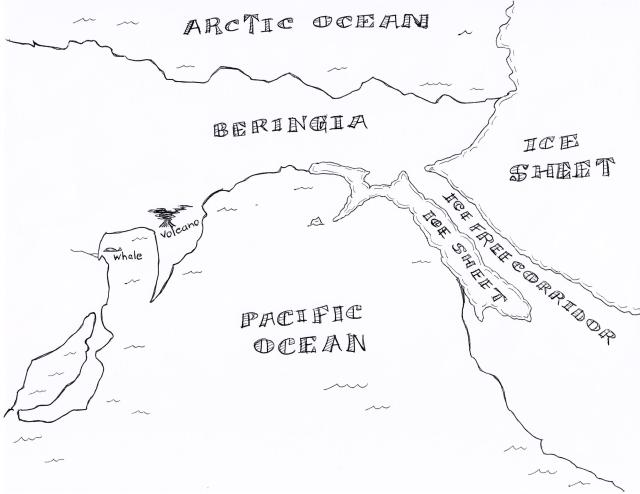
. . . created maps of my fictional worlds.

. . . researched something shady for a novel.

Giants and chimeras in history

horrible pagan practices of the ancient world

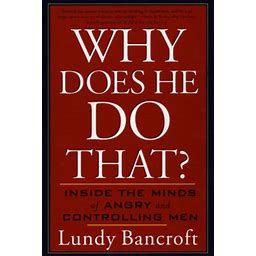
abusive husbands

what happens when a person falls into a super-hot sulpherous pool, as at Yellowstone National Park

All equally terrifying.

Now, Your Turn

In the comments section, tell me all your writerly habits! Or, judge mine!

Cover Draft for The Strange Land

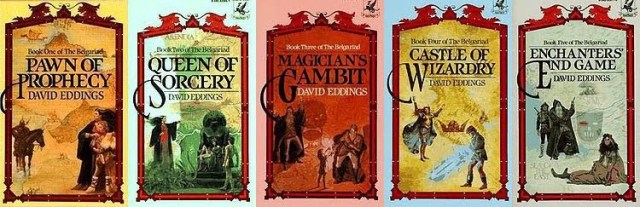
One early fantasy series that I read was The Belgariad by David Eddings. Here are the covers as they looked on the series when I had it.

As you can see, the titles are all on theme by being about chess (“pawn,” “queen,” “gambit,” etc.). The covers are all similar, but each cover has a slightly different color scheme to vary your reading experience: mustard, green, rust, blue (harder to see in this image), grey. After all, you’re going to be looking at that cover for a while, as long as you are reading the book and carrying it around. It will form part of the visual landscape of your life. Also, and this isn’t obvious unless you’ve read the series, the color and general look of each cover matches the country to which the adventurers travel in that volume.

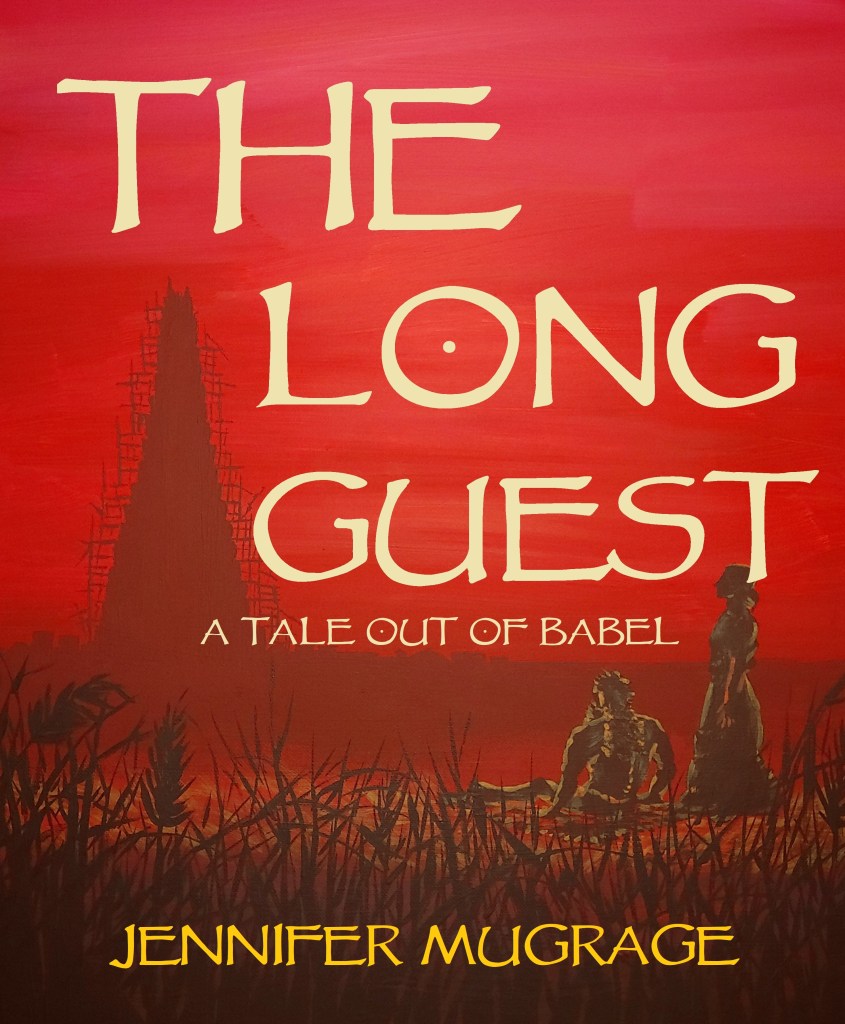
Last week, I unveiled my draft for the cover of my book The Long Guest. With the help of blog commenters, the font that we settled on for the title (at least for now) was Goblin Hand:

Now here is the draft for the second book in the series. I’ve kept the font and general title layout, but the color scheme is colder because, after all, we are going to Alaska.

Feedback please.

Cover Draft for The Long Guest

It’s Monday! Time for some art!

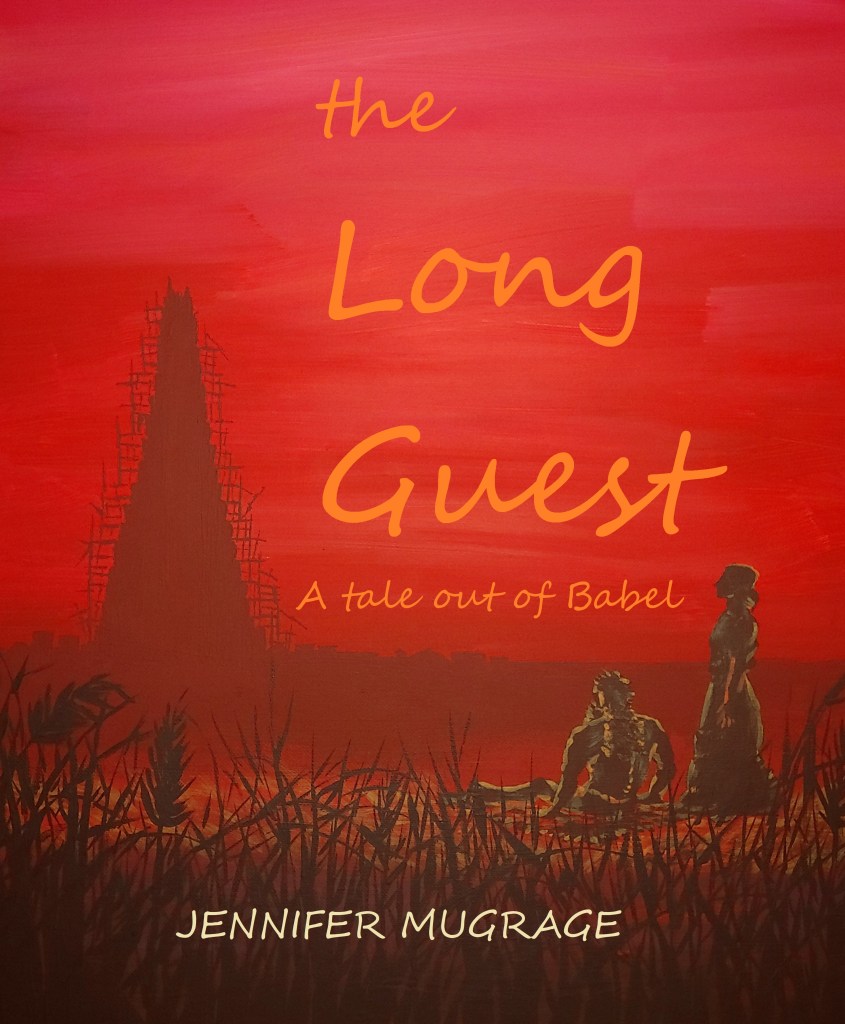
Today I present my mock-up for the cover of The Long Guest.

What is Normal for the Genre

TLG is in a genre of epic sci-fi/fantasy that is light on magic. Often books in this genre have an evocative landscape on the cover, to draw you into the world of the book. For example, this copy of Ursula Le Guin’s Left Hand of Darkness shows the icy landscape through which her characters travel …

On this cover for S.M. Stirling’s A Meeting at Corvallis, there is a lot of detail to show exactly what sort of world is contained in the covers. The broken asphalt and the ruined skyscrapers in the background show that this is a post-apocalyptic world. Meanwhile the horse and buggy, and the main character’s battle axe and chain mail, show that in this world, we use medieval technology. Finally, the man’s battle gear leads you to expect combat.

Often books in this genre will show one or more main characters, usually in only a semi-active pose. This particular one, unlike some of Stirling’s other books, shows the character face-on. I don’t prefer this as a reader, because I prefer to form my own mental picture of the character.

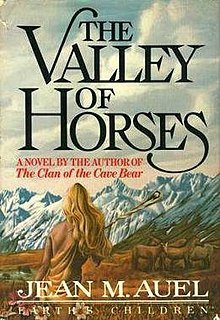
A good example is this copy of Jean M. Auel’s The Valley of Horses, which shows Ayla from behind. We’ve already been told that Ayla is tall and blond, so this doesn’t do too much damage to our mental picture of her. Notice the other hints at the important parts of the plot: the wild horses, the rugged mountains, and Ayla’s sling.

So I would like the cover of The Long Guest to look something like this. Nimri (sitting on the ground) and Zillah look at the unfinished, scaffolding-covered Tower. Grasses in the foreground hint at the steppes they will soon traverse. You get a general sense of what they look like (Nimri’s beard, Zillah’s bun), but are left to imagine their faces.

Obviously, my painting has less detail than the two examples above.

Here it is with a different title font …

And here, courtesy of photoshop tools, is a version with duller colors. I kind of like this one, but am concerned that it makes the book look like a horror story, which it isn’t.

The spine would look something like this.

What do you guys think? What kinds of covers do you expect on your fantasy books?

Postscript: Quick & Dirty Mock-Ups with Other Fonts

with Film Cryptic
with Goblin Hand