
Why should your heart not dance?
C.S. Lewis, ‘Til We Have Faces
Tag: spiritual
This Harrowing Holocaust Novel Perfectly Prepared Me for Good Friday
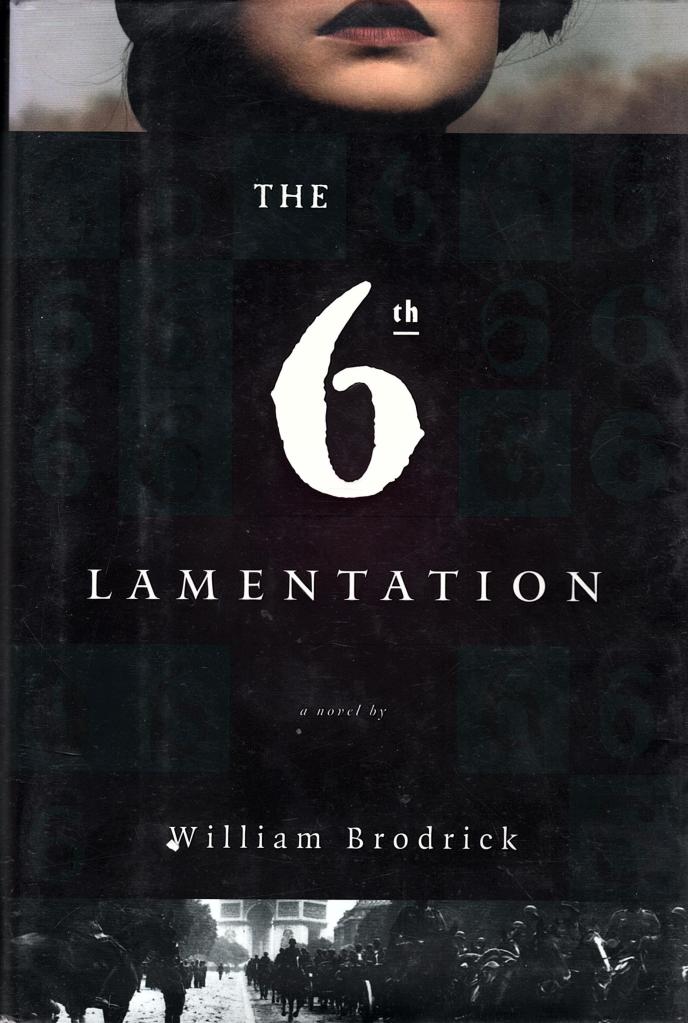
Agnes is a bad mother. She seems emotionally distant. She often goes into fugue states where she will stand, staring at nothing. It is hard for her to be fully present with her two children.
What they don’t know is that they aren’t actually her children. They were entrusted to her by their dying mother in a concentration camp.
They also don’t know that Agnes had a child of her own, a baby boy, who was lost in the Holocaust.
Freddie, Agnes’ son, has given up on his mother, her issues and her drama, her apparent inability to be there for him emotionally. It’s not until his own daughter, Lucy, is grown, and Agnes develops a degenerative disease that Freddie will belatedly get to know the history of a warm-hearted woman who was permanently broken by the Nazi occupation of France.
Meanwhile, as Agnes loses her ability to walk, and then to speak, a recently outed Nazi war criminal takes refuge in an English monastary. He is the man who sent Agnes and her baby to the camps.
This beautifully written book was really traumatic to read, and not because there is any graphic violence.
Brodrick does an amazing job of showing how the Nazi occupation of France put everyone in a position where, almost no matter what they did, they ended up failing or betraying someone. He shows how even a moment of weakness or cowardice could have fatal consequences for a person’s friends. That was the thing that really got me. Reading this, you can’t help asking yourself how you would do in the same situation, and coming up with an unsatisfactory answer. I say it prepared me well for Good Friday because it made me feel guilty as hell.
And these little failures of character, which might not have a huge impact in ordinary times, during the Holocaust would change and cripple people forever. Brodrick shows how a mythology grew up around the young people in the French resistance, such that three generations later, having had a hero in your family could bestow benefits, and being associated with a Nazi or a collaborator became a deep dark family secret. He shows how even the children who were smuggled out of France grew up with “shame,” because, as avenging angel Salomon Lachaise puts it, “you cannot escape the sensation that you have taken someone else’s place.”
One of the most affecting lines in the book, for me, was after the Frenchman has just been blackmailed by the Nazi guard. He hears the guard throwing up in the adjacent room.
Nevertheless, there is a redemptive thread to this book. It really makes you feel genuinely sorry for every single character (both the war generation and the later generations), and makes you realize how badly these poor people, in the midst of this great evil, needed a supernatural savior.
As do we all.
All that Should Be Remembered
They stepped outside, back into the churchyard. Salomon Lachaise said, “When I was a boy, my mother used to say that hell was the painless place where everything has been forgotten.”
“That doesn’t sound so bad.”
“It couldn’t be worse.”
“Why?”
“Because there’s no love. That’s why there is no pain.”
They walked beneath a milky sky shot with patches of insistent blue. Anselm looked up and asked, “Then what’s heaven?”
“An inferno where you burn, remembering all that should be remembered.”
The 6th Lamentation, by William Brodrick, page 182
Quote from the book How to Really Love Your Child

Believe it or not, many children are congenitally resistant to the natural ways of giving affection and love. They resist eye contact, they do not want to be touched, and they do not care for focused attention. … Many parents eventually resign themselves to what they conclude is “what the child wants.” This is a disastrous mistake. Even the extremely resistant child needs everything we have talked about concerning unconditional love. However, since he is uncomfortable accepting it, we parents must gradually teach this child to receive love comfortably.
[W]hen a child finds something to be quite humorous … parents have the opportunity to make eye contact, physical contact, and focused attention while commenting on the humorous subject. Parents must usually be quick in doing this because the defenses of a truly resistant child are down only briefly. We’ve got to “get in and get out” or a child may defend against similar tactics in the future.
[W]hen a child has accomplished something for which he is justifiably proud … parents can make eye and physical contact (and focused attention if appropriate) while praising a child. Again, we must be careful not to overdo it, especially by prolonging it; “get in and get out.”
Dr. Ross Campbell, How to Really Love Your Child, 1977, pp. 119 – 120
Quote About Love

Over the years I have asked audiences for a show of hands if they thought their parents loved them. Over 95 percent of the hands went up. It was never 100 percent but it was always a high percentage. Then I asked this question of those who had raised their hands — “Do you think that your parents expressed this love to you adequately?” Only half of the hands remained up. The third question was: “Of those of you who think your parents expressed their love for you adequately, could you have used an even greater expression of love?” All of the hands remained up.
Jim Wilson, How to be Free from Bitterness and Other Essays on Christian Relationships, Canon Press, 2007, p. 76
Love Ruins Everything
OK, not everything that Nicholas Cage’s character says in this little seduction speech do I endorse. For example,
“I don’t care if I burn in hell. I don’t care if you burn in hell.”
This recklessness is indeed what we sound like when we’re in the grip of headlong love (or lust), but I still don’t recommend saying it to your significant other.
But.
The way he winds up the speech is just … brilliant.
“Love don’t make things nice. It ruins everything. It breaks our hearts. We are here to ruin ourselves and love the wrong people and break our hearts … and die!”
Right on, Nick! The only thing that loving another guarantees us is heartbreak. No one knows this better than our Lord. He definitely “loved the wrong people” … and it got Him killed. Sure, love wins in the end, but let’s not skip over this part. The stories we tell will ring hollow if we skip the part where love ruins everything.
Factory Settings


Happy Valentine’s Day!
Today’s post is about cognitive science. But it’s also about love, in ways that will become clear.
In this post, I will regurgitate what Jordan Peterson has said about the Big Five personality traits, and then I will have a comment about them. If you doubt my word, or want to hear the same things said in a much more detailed, professional, and actually egg-headed manner, please feel free to watch the JP video below.
I have posted before about the MBTI, a personality typology which some people find insightful, but which was developed by amateurs. The MBTI makes a lot of intuitive sense to many people, but it was still made up. And it is not the only one with this problem. Peterson points out in this video that most personality typologies started as a theory which the developers then tried to apply to actual people. Not so with the Big Five. These are personality traits that emerge naturally from data. (JP says that much more convincingly than I do, of course.) They vary among individuals within every culture, and they are fairly stable throughout a person’s life. These traits are on a continuum, not binary. Each of us comes into this world falling at a certain point on each of these continua. As we mature, we expand our range along the continuum, but we are never going to move our set point from one end of a continuum to the other.
The Big Five Personality Traits
This will be easier to understand if we look at the Big Five.
Extraversion
Neuroticism
Agreeableness
Conscientiousness
Openness (to new experiences)
Very extraverted people draw energy from being around others. Very introverted people are drained by this. (This is the only trait from the Big Five that shows up, with the same terminology, in the MBTI.)
People with high neuroticism are more susceptible to negative emotion.
People with high agreeableness want to please others. Less agreeable people are less motivated to please others and more motivated to reach their own goals.
People with high conscientiousness are more industrious and more orderly than people without.
People with high openness tend to be creative types. They are also more likely to be politically liberal. (I am high openness, but due to a long personal journey, not politically leftist. My politics are spite of my temperament. This does mean that typical conservative arguments often don’t appeal to me.)
The Big Five and the Sexes
This is an aside, but Peterson often refers to the Big Five traits when talking about average differences between men and women. Women are, on average, more agreeable than men, higher in neuroticism, and slightly higher in conscientiousness. It is easy to see why these traits would flow from being designed to be moms. Even a greater tendency to negative emotion is an advantage when you’re taking care of preverbal children and you have to be sensitive to their distress.
These Are Factory Settings


It’s easy to see how a person could feel inferior by virtue of having any given one of these traits. It’s also easy to imagine how people who are proud of their trait could think there is something seriously wrong with people on the other end of the continuum.
- Why don’t you want to be around other people?/ Why can’t you ever entertain yourself? (Extraversion)
- Why are you so sensitive?/so insensitive? (Neuroticism)
- Why are you so domineering?/so wishy-washy? (Agreeableness)
- Why are you so lazy and irresponsible/so uptight and controlling? (Conscientiousness)
- Why are you such a stick-in-the-mud/a hippie? (Openness)
Relax, people.
All of us have character flaws. And sure, they fall along the fault lines of our Big Five traits, no doubt. But having any given one of these traits is not the same thing as having a sin nature. Conversely, not a single one of these traits will make the bearer a perfect person, either. These are just the factory settings.
And now we get to the love.
I was thinking about these traits as I sat in a Sunday School lesson about the love of God. To be specific, I was bemoaning that my natural tendency is to be low in conscientiousness. This has often caused me trouble with loved ones who are higher in conscientiousness. How can that be a good thing? Why didn’t God set my natural conscientiousness level a little higher? What was He thinking?
In a move typical of people who are high in openness but low in conscientiousness, I was lost in my thoughts rather than paying close attention. But then, the topic of the Sunday School lesson abruptly broke in upon my consciousness.
He loves me.
He loves me, and He made me, and, for some reason, He chose to make a person who is a bit low in conscientiousness. In fact, He chose to make people with all different Big Five factory settings. Ergo, all of these factory settings are by design. He must think we need all kinds.
Ergo, He likes your settings. Even if someone else doesn’t. Even if no one else does.
Happy Valentine’s Day!

Another Love Song
Oh, the depth of the riches of the wisdom and knowledge of God!
How unsearchable his judgments, and his plans beyond tracing out!
Who has known the mind of the Lord?
Or who has been his counselor?
Who has ever given to God, that God should repay him?
For from him and through him and to him are all things.
To him be the glory for ever!
Amen.
Romans 11:33 – 36, NIV
A Love Song
Be Kind to Yourself
Because you’ve gotta learn to love your enemies too.
 Out of Babel Books