The War of Art by Steven Pressfield, Black Irish Entertainment, 2002 and Wordsmithy by Douglas Wilson, Canon Press, 2011.
Both these books are pamphlets (165 pages and 120 pages respectively). Both have short, punchy chapters that are easy to dip into or re-read as desired. Wilson ends his sections with a takeaway point and recommended reading. Both, as they are written by seasoned pros, have plenty of self-deprecating humor, laugh-out-loud moments, and pithy bits of wisdom. I aim to keep them on hand (as a writer should) as reference books, to be dipped into when I need good quotes about writing or need to have some starch put into me.
The authors are professional writers and also manly men. Pressfield is a former Marine; Wilson, a Presbyterian pastor. Interestingly, it’s Pressfield whose writing-about-writing is more mystical by far.
Pressfield’s The War of Art
The main thrust of The War of Art is that an aspiring writer (or, really, anyone aspiring to do anything good) will encounter Resistance.
The following is a list, in no particular order, of those activities that most commonly elicit Resistance:
1) The pursuit of any calling in writing, painting, music, film, dance, or any creative art, however marginal or unconventional.
2) The launching of any entrepreneurial venture or enterprise, for profit or otherwise.
3) Any diet or health regimen.
4) Any program of spiritual advancement.
5) Any activity whose aim is tighter abdominals …
In other words, any act that rejects immediate gratification in favor of long-term growth, health, or integrity.
The War of Art, pp. 5 – 6
Pressfield then discusses the characteristics of Resistance, the fact that everyone experiences it, and ways to combat it. This is extremely helpful, because we tend to think we are the only person experiencing it.
When I began this book, Resistance almost beat me. This is the form it took. It told me (the voice in my head) that I was a writer of fiction, not nonfiction, and that I shouldn’t be exposing these concepts of Resistance literally and overtly …
Resistance also told me that I shouldn’t seek to instruct, or put myself forward as a purveyor of wisdom; that this was vain, egotistical, possibly even corrupt, and that it would work harm to me in the end. That scared me. It made a lot of sense.
Ibid p.30
About two-thirds of the way through the book, you get some Jungian explanations and you find out that according to the author, God, just like Resistance, is Within. Obviously Pressfield can’t develop all these ideas in this little pamphlet, so I’m still not 100% sure precisely what he means by some of his short essays. But you don’t have to completely buy Jung to benefit from this book because it tells us some shrewd psychological truths and confronts us about our character. The things it says are true, whether or not you also think (as I do) that God and Resistance both exist not only within but also outside of us. Some day I may do a post that explores more deeply how my understanding of Resistance compares and contrasts with Pressfield’s.
Doug Wilson’s Wordsmithy
Wordsmithy, being less Jungian than The War of Art, is aimed at a more specific audience. It addresses young people who want to be writers about the various things they need to do in order to become one: read widely, get some life experience in something besides writing, practice, play the long game, accept criticism, familiarize yourself with English grammar, vocabulary, and classics, learn at least one other language and more if you have opportunity, etc. It has much more content than War of Art (which is really just about one topic), despite having a lower page count. War of Art employs a lot of white space, sometimes with only a few sentences on a page. Wordsmithy is packed.
Much of what is in Wordsmithy is stuff that I have already been doing for years, some of it by accident, some of it by design. Some of it is stuff that I do, but not in the exact way that Wilson recommends. (For example, he suggests writers keep a “commonplace book” in which to jot quotes and ideas as they come to you. This is something I’ve done from time to time, but don’t currently feel the need for.) So in some ways, I’ve moved past the need for this book. However, I still plan to keep it around to mine for gems like these:
Read books of complaints about the decline of our language by word fussers and who-whomers, and read the hilarious refutations of those word fussers by word libertines. You can learn a lot from both. Anyone who can’t learn from a word fusser ought to have their head examined. A word fusser is anyone who would have a problem with the previous sentence.
… [perhaps] the reason your query letters are all getting round-filed is because of that apostrophe in the return address. It would violate a decent editor’s conscience to mail anything to “the Smith’s,” even if doing it with a self-addressed, stamped envelope. The Smith’s failed writing career is not stated, merely implied.
These are the works of man, this is the sum of our ambition!
You’d make a prison of my life
if you became another’s wife …”
When I was a teen, a friend called me up and said, “You HAVE to get the new Sting album. The songs sound exactly like your writing!”
Now, I did not have much disposable income and I did not often buy albums. But I managed to get it. And darned if it didn’t. Something about the songs on it matched the tenor of my imagination. This, below, is one of my favorites.
[We] must ask [ourselves] how it is right, or even psychologically possible, for creatures who are every moment advancing either to heaven or to hell, to spend any fraction of the little time allowed them in this world on such comparative trivialities as literature or art, mathematics or biology. If human culture can stand up to that, it can stand up to anything. To admit that we can retain our interest in learning under the shadow of these eternal issues, but not under the shadow of a European war, would be to admit that our ears are closed to the voice of reason and very wide open to the voice of our nerves and our mass emotions.
I think it important to try to see the present calamity in a true perspective. The war creates no absolutely new situation: it simply aggravates the permanent human situation so that we can no longer ignore it. Human life has always been lived on the edge of a precipice. Human culture has always had to exist under the shadow of something infinitely more important than itself. If men had postponed the search for knowledge and beauty until they were secure, the search would never have begun. We are mistaken when we compare war with “normal life.” Life has never been normal.
The insects have chosen a different line: they have sought first the material welfare and security of the hive, and presumably they have their reward. Men are different. They propound mathematical theorems in beleaguered cities, conduct metaphysical arguments in condemned cells, make jokes on the scaffold, discuss the last new poem while advancing to the walls of Quebec, and comb their hair at Thermopylae. This is not panache; it is our nature.
C.S. Lewis, “Learning in War-time,” a speech given in Oxford in autumn of 1939
A month ago, I wrote a post about the Big Five personality traits (Extraversion, Neuroticism, Conscientiousness, Agreeableness, Openness). In the comments, Katie Jane Gallagher suggested that an author could use the Big Five to plan out their characters’ personalities. I replied that this might work for some people, but I was doubtful my characters would co-operate with being assigned a personality beforehand.
I still think it would be difficult to assign, in a fixed way, all five of your character’s traits before you begin writing. But I have thought of a trope that relies heavily on the use of character traits: the odd couple.
The Source of the phrase “The Odd Couple”
The Odd Couple was a 1968 movie starring Jack Lemmon and Walter Matthau.
Then there was a 1970 – 1975 TV series starring Tony Randall and Jack Klugman.
Also, Nathan Lane and Matthew Broderick played the same odd couple in a Broadway revival of Neil Simon’s original play.
In all of the versions, the premise is that two men are living together because each has been kicked out by their wives: one for being such a perfectionist, the other for being such a slob. High jinks follow.
How odd couple stories use Big Five traits
As you can immediately see, the odd couple trope relies on selecting one Big Five personality trait (in this case, Conscientiousness) and throwing together two people who are on opposite ends of the spectrum with regard to that trait.
This is much more manageable than trying to run down all five traits for each of your characters before beginning to plot.
Of course, when you start to develop the story, other traits will come along too. In this story, the conscientious character (Lemmon/Randall/Broderick) is also high on Neuroticism. Interestingly, it is he, with his extreme conscientiousness, who is portrayed as being the harder person to live with. The slobby person is portrayed as more normal. That is not what I expected when I set out to research the show, because in real life, slobby people can be just as hard to live with, especially if they are low in Agreeableness, for example.
In fact, some shows will dispense with the “couple” part of the odd couple and just have the gimmick revolve around one person’s extreme traits. Monk springs to mind, in which the detective’s OCD about cleanliness is so incapacitating that he must have a handler with him at all times … but his attention to detail also makes him an excellent detective.
Odd Couples Everywhere!
Once you start looking for odd couples in film and literature, it seems to be a trope that is used to enrich all kinds of stories. You find odd couple cop partners, odd couple road trips, and (ubiquitously) odd couples in rom-coms. Often odd-couple stories are funny, but they can appear in dramas as well, such as Thelma and Louise, or Charlie and Raymond in Rain Man. Whether comedy or drama (but especially in drama), one or both characters are supposed to be transformed in some way by their forced relationship with their polar opposite.
In my own first book, The Long Guest, there is a bit of an odd couple dynamic going on between Enmer and Nimri. Enmer reacts to the demise of civilization by becoming hyper-responsible as he tries to care for his extended family. Nimri, who at the beginning of the book is selfish and has no one to care for, honestly doesn’t care if he himself lives or dies. The two are forced into proximity by the dynamics of the survival situation (and by Enmer’s mother, Zillah), and while they never resolve their differences, the inherent conflict between them drives much of the action in the book.
So … what do you think? Do you like odd couple stories? Are you a member of an odd couple? Perhaps more intensely, now during quarantine? Have odd couple stories lost their appeal? What are some of your favorite odd couples from film or literature?
The following is a poem by Puritan poet Anne Bradstreet. Bradstreet was a poet and a mom. This poem compares publishing a book to sending your child out into the world: you dress the kid as best you can, attempt to wipe his or her face, and just pray that he or she doesn’t embarrass you out there.
I was introduced to this poem in an American Lit class in college, and even then I thought it was clever. At the time, of course, I had no children and had not published anything.
In the years since, I’ve thought of this poem once or twice whenever I do manage to publish something and find that it can look very different staring up at you from a newspaper than it looked on my laptop. Truly, works of literature, like children, when we turn them loose on the world do not always behave the way we hoped they would.
Thou ill-formed offspring of my feeble brain,
Who after birth didst by my side remain,
Till snatched from thence by friends less wise than true,
Who thee abroad, expos’d to publick view,
Made thee in raggs, halting to th’press to trudge,
Where errors were not lessened (all may judg).
At thy return my blushing was not small,
My rambling brat (in print) should mother call,
I cast thee by as one unfit for light,
Thy visage was so irksome in my sight;
Yet being mine own, at length affection would
Thy blemishes amend, if so I could:
I wash’d thy face, but more defects I saw,
And rubbing off a spot, still made a flaw.
I stretched thy joynts to make thee even feet,
Yet still thou run’st more hobling then is meet;
In better dress to trim thee was my mind,
But nought save home-spun Cloth, i’ th’ house I find.
OK, not everything that Nicholas Cage’s character says in this little seduction speech do I endorse. For example,
“I don’t care if I burn in hell. I don’t care if you burn in hell.”
This recklessness is indeed what we sound like when we’re in the grip of headlong love (or lust), but I still don’t recommend saying it to your significant other.
But.
The way he winds up the speech is just … brilliant.
“Love don’t make things nice. It ruins everything. It breaks our hearts. We are here to ruin ourselves and love the wrong people and break our hearts … and die!”
Right on, Nick! The only thing that loving another guarantees us is heartbreak. No one knows this better than our Lord. He definitely “loved the wrong people” … and it got Him killed. Sure, love wins in the end, but let’s not skip over this part. The stories we tell will ring hollow if we skip the part where love ruins everything.
February is the month of romance, and the settings in this tag are as romantic as can be! I think this is most fun tag I’ve seen yet. I stole … er, got it from my faithful friend The Orangutan Librarian. She didn’t exactly tag me, but … she did say anyone can do the tag. So here goes!
Rules
Mention the creator of the tag and link back to original post [Alexandra @ Reading by Starlight]
Thank the blogger who tagged you
Answer the 10 questions below using any genre
Tag 5+ friends
The Questions
Secrets and lies: a book set in a sleepy small town … Many of Anne Tyler’s books are like this. Also, every almost every single Miss Marple mystery by Agatha Christie. Sometimes Miss Marple travels, and solves a mystery on a train, or in the Caribbean. But my favorites are the ones where she uses her knowledge of the character types, the dark dynamics, and the domestic history in a small town … her own small town, or someone else’s. As she always points out, small towns are not boring!
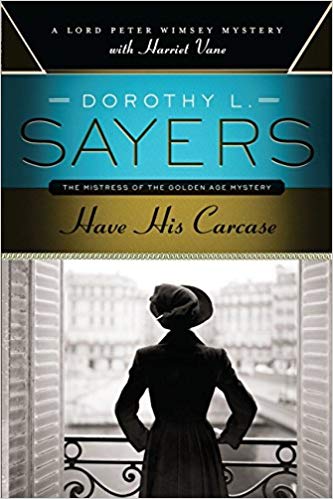
Salt and Sand: A book with a beach-side community … Have His Carcase by Dorothy Sayers. I’m not sure why the cover of this book looks the way it does, as the most striking scenes in it take place on a beach. This book stars Lord Peter Whimsey and his love interest, the tomboyish academic Harriet Vane, who is hiking along a deserted beach when she discovers the body of a man with his throat gruesomely slit. Harriet photographs the corpse, and after she leaves, the tide disposes of the evidence. Harriet herself becomes a suspect, and she and Lord Peter must put their heads together to extricate her.
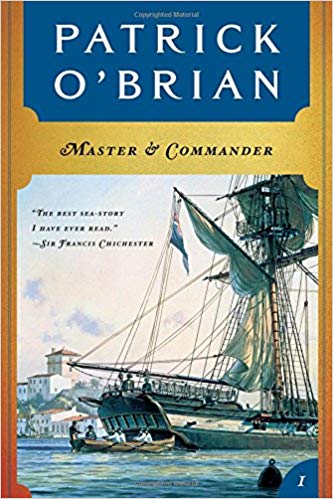
Here there be dragons: a book with a voyage on the high seas … I don’t read many sea stories. In fact, this is the only one I can think of besides Treasure Island and the third book of Ursula Le Guin’s Earthsea trilogy. Master & Commander is a really good book. When I was reading it, I even had dreams about it. They made it into a movie, which is also very good, but the movie only covers about half the material in the book, and not even the most sensational incidents.
Tread lightly: a book set down a murky river or jungle … There are many good missionary stories that take place in the remote jungle. These are novelized versions of real events. There is Bruchko (South America); Lords of the Earth (Irian Jaya); In Search of the Source, set in Papua New Guinea, by Neil Anderson; and Do You Know What You Are Doing, Lord?, which gives a very different perspective on the same events, written by Neil’s wife Carol. I am tempted to mention Through Gates of Splendor by Elisabeth Elliot, but I haven’t actually read it.
Frozen wastes: a book with a frostbitten atmosphere … Ursula Le Guin’s Left of Hand of Darkness takes place on a planet that has two huge ice caps which reach well down into what on Earth would be called the temperate zones. The main character, an ambassador for an interplanetary council, ends up in a gulag-like camp, is rescued by one of the locals, and the two make an amazing trek across one of the glaciers to escape.
The boonies: a book with rough or isolated terrain … I think many books depend on rough and isolated terrain for the danger and tension in their plot. Think of every murder mystery you’ve ever read where the group of suspects is cut off from the outside world by the tides or snows or whatever. This also goes for lifeboat stories, mountaineering stories, and post-apocalyptic books, all of which throw the characters on their own resources because “help is not going to come.” But I am going to mention Bearskin by James A. McLaughlin.
Hinterlands and cowboys: a book with a Western-esque setting … OK, you know what I am going to say here. I am going to, once again, recommend the Jim Chee and Joe Leaphorn police procedural/Navajo cultural mysteries by Tony Hillerman. What, you say you still haven’t started reading them? Get to it!
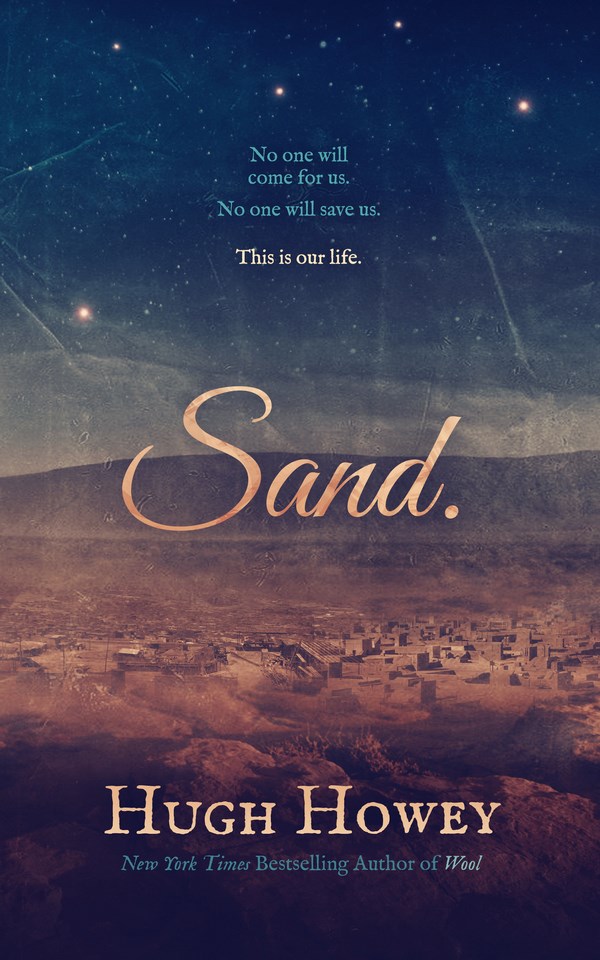
Look lively: a book set across sweeping desert sands … There are quite a few of these. I guess the desert really fires our imaginations. But I’m going to name one that I discovered recently: Sand. by Hugh Howey. (The period is apparently part of the title?) I know I’m late to the Hugh Howey party because the cover of Sand. tells me that he is the bestselling author of another book, Wool. It’s hard to imagine how anyone could make an entire novel centered on wool, but after reading Sand., I believe he certainly could and I’m going to pick up Wool as soon as I see it.
Wild and untamed: a book set in the heart of the woods … A Different Kingdom by Paul Kearney. Teenaged Michael lives on a prosperous farm in Ireland. When he ventures in to the woods near his home, he passes in to another, much larger, forest, which is also the source of all the myths and legends of the past.
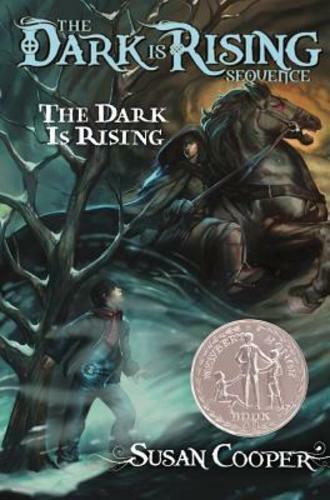
Wildest dreams: a whimsical book shrouded in magic … The Dark is Rising series. These YA books are pagan as all get-out, and seem to be based on a very good research into British and Welsh pagan lore. They do a great job of creating an atmosphere of this whole world of magic breaking in to a kid’s everyday life, in ways that only initiates can perceive.
… And may I mention that settings like these are the reason that I love reading and writing? It’s my ambition to write a book in each of these settings (except perhaps the high seas). I would say my books, to date, have covered Frostbitten, Boonies, Small Town and possibly Western.
And as usual, I tag … you, dear Reader! In the comments! Which of these settings do you love? Which will you never tire of?
Today’s post comes from chapters 4 and 5 of this book.
Writing is a human practice.
Of course it is possible to have a human society without writing, but the impulse to devise a writing system, looked at historically, may have been the rule rather than the exception.
This is counter-intuitive, of course. “Symbolic logic” seems like it ought to be unnatural to humans, especially if we are thinking of humans as basically advanced animals, rather than as embodied spirits. But if we think of mind as primary, everything changes. It’s telling that reading and writing are one of the learning channels that can come naturally to people, in addition to the visual, the audio, and the kinesthetic. But I’m getting ahead of myself.
Welcome to the third post taken from Lost Civilizations of the Stone Age by Richard Rudgley. Call this the writing edition. This post hits the highlights of Rudgley’s chapters 4 and 5, pages 58 through 85.
Nah, Ancient People Didn’t Write, They were Barbarians!
The idea of writing as an exception in human history has become dogma:
The proposition that Ice Age reindeer hunters invented writing fifteen thousand years ago or more is utterly inadmissible and unthinkable. All the data that archaeologists have amassed during the last one hundred years reinforce the assumption that Sumerians and Egyptians invented true writing during the second half of the fourth millennium. The Palaeolithic-Mesolithic-Neolithic progression to civilisation is almost as fundamental an article of contemporary scientific faith as heliocentrism. Writing is the diagnostic trait … of civilisation. Writing, says I.J. Gelb, ‘distinguishes civilised man from barbarian.’ If the Ice-Age inhabitants of France and Spain invented writing thousands of years before civilisation arose in the Near East, then our most cherished beliefs about the nature of society and the course of human development would be demolished.
Allan Forbes and Thomas Crowder, quoted in Rudgley, p. 75
Of course, the demolishing of our most cherished beliefs about the course of human development is exactly what, Rudgley is arguing, is going to have to happen.
In the last few chapters I have selected only a small number of the complex sign systems that have been preserved from prehistoric times. My concentration on the Near East and more particularly on Europe should not be taken to imply that such systems did not exist elsewhere in the prehistoric world. Far from it; investigations of numerous collections of signs are being undertaken in places as far afield as the Arabian peninsula, China and Australia. Millions of prehistoric signs across the continents have already been recorded, and more and more are being discovered all the time. … It no longer seems sufficient to retain a simplistic evolutionary sequence of events leading up to the Sumerian [writing] breakthrough some 5,000 years ago.
Rudgley, p. 81
Let’s look at these complex sign systems that Rudgley has mentioned.
The Vinca Signs
I was an adult before I ever heard the phrase “Old Europe.” I was doing research for a planned book, and I was surprised to learn that in southeast Europe (between the Balkans and the Black Sea), as early as 4,000 or 5,000 BC, there were not only cities but a writing system (undeciphered) known as the Vinca signs. It turns out that these cities and this writing system were probably part of a culture that obtained over much of Europe before the coming of the Indo-Europeans, which is called Old Europe. This is the culture that Marija Gimbutas believes was “the civilization of the goddess.”
Just as a reminder, these dates for the Vinca culture are before the very first human cities and writing are supposed to have arisen, in Sumeria in Mesopotamia, about 3,000 BC.
Perhaps I didn’t hear about the Vinca signs in school because they were only discovered in Transylvania 1961. (I was born in 1976, but we all know how long it takes new archaeological findings to get interpreted, integrated into the overall system, and eventually make it into school textbooks.) After being discovered, the signs were assumed to be derived from Mesopotamian cultures such as Sumer and Crete, because it was accepted dogma that writing was first invented in Mesopotamia. Later, the tablets on which the Vinca signs were discovered were carbon-dated and found to be older than the Mesopotamian writing systems. This led to a big disagreement between those who wanted to believe the carbon dates, and those who wanted to believe the more recent dates for Old European archaeological sites, which were then conventional.
Then, in 1969, more, similar signs were discovered on a plaque in Bulgaria and dated to be 6,000 – 7,000 years old. By this time, archaeologists were beginning to accept the carbon dating of these Old European sites. But since they still did not want to admit that writing might have been invented before Sumer, most of them decided “[the signs] could not be real writing and their apparent resemblance was simply coincidental.” (Rudgley p. 63)
An archaeologist named Winn analyzed the Vinca signs and while he is not willing to go further than calling them “pre-writing,” he concludes that they are “conventionalised and standardised, and that they represent a corpus of signs known and used over a wide area for several centuries.” (Rudgley 66)
Meanwhile, Marija Gimbutas and also Harald Haarmann of the University of Helsinki both feel the Vinca signs are true writing and that they developed out of religious or magical signs, not out of economic tallies like the Sumerian alphabet.
Haarmann notes that there a number of striking parallels between the various strands of the pre-Indo-European cultural fabric – especially those related to religious symbolism and mythology. Among these common features is the use of the bull and the snake as important religious symbols. In the case of the snake it is a form of the goddess intimately intertwined with the bird goddess motif in both Old European and later Cretan iconography. The bee and the butterfly are also recurrent divine attributes, and the butterfly is represented by … the double ax. Haarmann sees the goddess mythology of Old Europe echoed in these motifs that also feature prominently in the ancient civilisation of Crete. He then traces the links between the Old European script – as found in the Vinca culture – and later systems of writing, particularly those of Crete.
Rudgley, pp. 68 – 69
Rudgley’s Figure 15 (p.70). On the left are the Vinca signs, on the right is Linear A from Crete.
Ice Age Signs
There are quite a number of symbols that appear on artifacts or are associated with paintings from the Neolithic and even the Palaeolithic period. These include crosses, spirals, dots, “lozenges” (ovals), and the zigzag, which is very common and seems to have been used to represent water. (By the way, note the zigzags among the Kachina Bridge petroglyphs.) “The discovery in the early 1970s of a bone fragment from the Mousterian site of Bacho Kiro in Bulgaria suggests that the use of the signs may date back to the time of the Neanderthals. This fragment of bone was engraved with the zigzag motif …” and apparently on purpose, not accidentally in the course of doing some other repetitive task. (Rudgley 73)
“The single V and the chevron (an inverted V) are among the most common of the recurrent motifs in the Stone Age.” (Rudgley p. 74) Gimbutas, of course, interprets the V as a symbol for the female genitals and/or Bird Goddess, but it could be just … you know … a symbol.
Archaeologist André Leroi-Gourhan has interpreted the many signs found at various Palaeolithic cave art sites not as a form of hunting magic (contra previous interpretations), but as a symbolic system. “Leroi-Gourhan admitted to us shortly before his death, ‘At Lascaux I really believed they had come very close to an alphabet.’” (Rudgley p. 77)
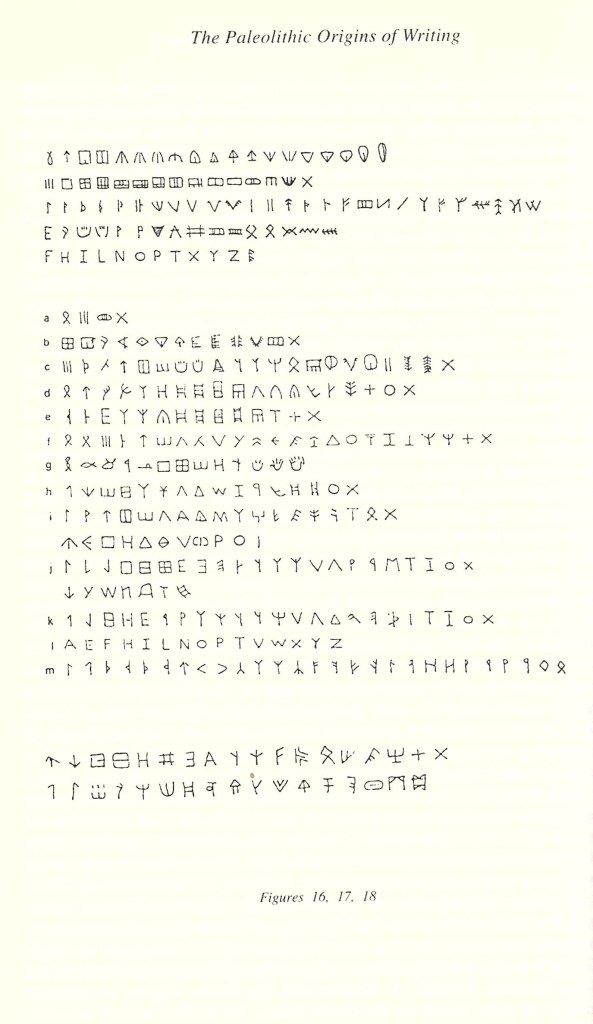
Rudgley’s Figures 16 – 18 (p. 78). Top paragraph: some of the Franco-Cantabrian (Stone Age) signs. Middle paragraph: a – hieroglyphic determinatives; b – Sumerian pictoral writing; c – Indus Valley; d – Linear A; e- Linear B; f – Cypriote; g – Proto-Sinaitic; h- Phoenician; i – Iberian; j – Etruscan; k – Greek (Western Branch); l – Roman; m – Runic. Bottom paragraph: some of the signs found on oracle bones in very ancient China.
But Can You Prove It’s Writing?
Every time some symbols are discovered that are so ancient they strain belief, anyone who doesn’t want to accept them as writing can easily go in to a number of calisthenic moves to cast doubt on this. If the item the signs are found on is in poor condition, they can question whether the marks were even intentional. Perhaps they were accidental scratches, the product of some other activity. If the marks are undeniably made by people, they can be dismissed as doodles. The Vinca signs, when first found, were speculated to have been copied randomly from Mediterranean signs by people who believed these things had mysterious power, but did not understand their meaning. Rudgley also notes that the Old European signs have been interpreted as purely magic symbols, as if a magical intent were to make them non-writing.
In short, any time we are presented with a complex system, there are always a million ways to get out of attributing it to a mind. This is doubly true if we aren’t able to interpret its meaning, but you will even see people do this with messages that they ought to be able to understand. Of course, it can also work the other way, where people see meaning in complex patterns where it wasn’t intended. Often what it comes down to is whether we want there to be a meaning there. Do we, or do we not, want to be in contact with another mind? If for whatever reason we don’t, we can always find a logical way to avoid that contact.
So in the case of apparent writing systems that we haven’t cracked and probably never will, our attitude towards them is going to depend heavily on what we believe about ancient people’s minds. Were they basically like ours, or were they different, animal? We will see more writing systems if we are expecting that they came from people. If we are not expecting to encounter people, then nothing is going to convince us that these are writing systems.
Was Adam a Writer?
My mind was blown, while taking an Old Testament Backgrounds course years ago, when I read an essay that asserted that Adam was able to write and in fact had left a written record for his descendants.
This idea seems completely loony on the face of it … until you realize that the only reason it seems loony is that we are assuming that writing is a recent, unnatural development, the product of tens of millennia of human cultural evolution, and not a characteristic human activity that is, so to speak, wired in.
The essay interpreted the early chapters of Genesis in this way. There will be a short historical record, followed by the phrase “the book of [name],” indicating that the passage immediately preceding was by that author.
Passage
Recounts
Closes with
Genesis 1:1 – 4:26
Creation (in poetry), fall, Cain and Abel, some of Cain’s descendants, Seth
Gen. 5:1 “the book of Adam”
Gen. 5:1b – 6:8
Recap of creation of Adam, Seth’s descendants up to Noah and his sons, Nephilim, God’s resolve to wipe out mankind, God’s favor on Noah
Gen. 6:9a “the book of Noah”
Gen. 6:9b – 11:9
Building of the ark, the Flood, emerging from the ark, the Table of Nations, the Tower of Babel
Gen. 11:10 “the book of Shem”
Gen. 11: 10b – 11:26
Genealogy from Shem to Terah and his son Abram
Gen. 11:27 “the book of Terah”
Gen. 11:27b – 25:18
Terah moves his family to Haran, Terah dies, a whole bunch of stuff happens to Abram, death of Sarah, Isaac finds a wife, Abraham dies, genealogy of the Ishmaelites
Gen. 25:19 “the book of Abraham’s son Isaac”
Gen. 25:19b – 37:1
Jacob’s entire life, death of Isaac, genealogy of Esau
Gen. 37:2 “the book of Jacob”
In Genesis, the author’s name comes after the notes he left.
I realize this might be a lot to accept. It’s just food for thought. It does explain why it says “the book of _________” (or, in my NIV, “this is the account of __________”), after the bulk of that person’s story.
Get it? Get it?
(By the way … for those wondering about the title of this post … prostitution is referred to as “the world’s oldest profession.” Erma Bombeck, mother and humorist, has published a book hilariously titled Motherhood: The Second Oldest Profession. The title of this post references those two, because the post is about the fact that writing is very, very old. I don’t mean to imply that a writer’s life has any necessary connection to the other two professions, although of course this does invite all kinds of clever remarks.)









 Out of Babel Books