Jesus, with some well-timed Trollery

Here are some thoughts I had when reading through the book of Mark a while back. Peruse them at your own risk. I hope you find them entertaining, maybe a slightly fresh take on Jesus, but remember this is not authoritative teaching.

Defining “Troll”

Let it be noted that my husband objects to use of the verb “troll” as applied to Jesus.

He was kind of shocked when I brought this up, as a step in my thinking-through-it process. And, I get it. One meaning of “troll” is when someone insults strangers just to be smug, superior and unkind. Obviously, Jesus doesn’t do that. He doesn’t need to cut other people down in order to build Himself up. And He isn’t bitter.

But there’s another definition of trolling, which is: intentionally to violate a social norm, in order to make a point. This is the sense in which trolling can be an art form. And this sense of the word is values-neutral. Trolling in this sense can be mean, or it can be strategic. It depends entirely upon who is the target, and what point you’re making.

I’m in Mark chapters 11 and 12, if you want to join me.

The Triumphal Entry

This in itself is a political powder keg, but we don’t have time to get into all that. I want to focus on the events of the Monday and Tuesday that followed. I just want to note Mark 11:11:

“Jesus entered Jerusalem and went to the Temple. He looked around at everything, but since it was already late, He went out to Bethany with the Twelve.”

The Turning over Tables Incident

The next day (Monday, the second day of their work week), Jesus goes to the outer court of the Temple and starts making a scene. It is obvious that He planned this the night before. I imagine Him sitting on Mary and Martha’s front porch in Bethany, quietly braiding his leather whip and savoring what He’s about to do. He has probably wanted to do it for years.

Also, notice that He didn’t just turn over tables, let the sacrificial animals free, and then leave. He “would not allow anyone to carry merchandise through the Temple courts.” (v. 16) In other words, He essentially barricaded the Temple and sat there all day. I can only imagine the disciples’ mortification. “When evening came, they went out of the city.” (v. 19)

But we still haven’t gotten to the trolling part yet.

The Fallout: The Direct Challenge

Well, Jesus goes right back to the same place the next day (Tuesday), and there are the authorities waiting for Him. “By what authority are you doing these things?” (v. 28) And furthermore, “who gave you the authority to do this?” (also v. 28) You can tell they are mad because they repeat it.

Jesus puts off this direct challenge by posing them a riddle about John’s baptism. This won’t make them any less mad (quite the contrary), and it won’t stop them from killing Him eventually, but it does prevent them from arresting Him right there, because after that great answer He just gave, it would cause a riot. He needs a few more days, partly because He has more teaching to do and partly because His death has to happen on the Passover.

Also, they aren’t mad enough yet.

Jesus Uses the Time He Has Bought to Troll

Mark 12:1 – 12:

Jesus tells what has since been dubbed ‘The Parable of the Tenants,’ in which some ungrateful vineyard tenants refuse to pay their rent, beat or kill bill collector after bill collector, and finally kill (!) the owner’s son.

And then He adds, “What then will the owner of the vineyard do? He will come and kill those tenants and give the vineyard to others.”

Hmm, their top-secret plan to kill Him is not so secret. He just told a thinly-disguised story about it, and wrapped up by saying, “You’ll get what’s coming to you.” This is the ultimate finger in the eye.

The Fallout II: The Obvious Political Trap

Mark 12:13 – 17

Having been stymied in the direct challenge, and still maddeningly unable to arrest Him because of the Jesus mobs, they re-group and send some different people (ooo so tricky!) with some flattery followed by a demand for His position on an impossible political issue.

“Teacher, we know you are a man of integrity. You aren’t swayed by men, because you pay no attention to who they are, but you teach the way of God in accordance with the truth. Is it right to pay taxes to Caesar or not?”

He responds, with an almost audible eye roll, “Why are you trying to trap me?” Which is great, but that’s not enough when a political trap is sprung. You also have to know how to get out of the trap.

“Find me a denarius.” There is then a pause while they hunt one up, because not everybody carries denarii of course, and probably a bigger crowd gathers, wondering what is going on. Finally, they find one.

“Whose portrait is this? And whose inscription?”
“Caesar’s.”

“Give to Caesar what is Caesar’s, and to God what is God’s.”

And that, a devastatingly spicy one-liner, is how we get out of a political trap.

(For what it’s worth, I don’t think Jesus was laying out a whole socio-political philosophy here. I don’t think that with “render unto Caesar” He was saying that all of our money rightfully belongs to the State (since they print it), or that there is no such thing as an unfair tax rate, or that the ideal country could have as high taxes as it pleased and still be perfectly just. Nor do I think He was trying to imply that civic government (Caesar) is a completely different realm from the worship of God, and should never be influenced by it. I’m sure that He had some thoughts about civics and religion, and might even have shared them if someone had asked Him in a more relaxed setting. In this situation, He was just answering a sound-bite-length question with a sound-bite-length answer. Ask a snappy, poorly framed question, get an answer that meets it on its own level.)

The Fallout III: The Elaborate Hypothetical Theological Question Trap

Mark 12:18-27

The political sound-bite thing having failed to work out, the Sadducees decide they are going to ask Him a really hard one. They believe “there is no resurrection” – i.e., no afterlife or future life for those who have died. They have been thinking about this a lot, and the implications are just too absurd. For example, Leverite marriage allows (actually requires) a man to marry his brother’s widow if his brother dies childless. In the unlikely (but possible!) event that one woman married seven brothers in succession, how would that work out? “Whose wife would she be at the Resurrection?”

I could be wrong, but I imagine that by the time the Sadducees got done posing this question, many in the audience had glazed over. All that was left were the theology nerds, and the twelve who were desperately trying to keep up. Scholars love this kind of reductio ad absurdum with an elaborate hypothetical, and to lay people, when it’s not boring it’s intimidating.

The question does sort of confuse Jesus, but not for the reason they meant it to. He’s momentarily thrown by the shallowness of their understanding of the Resurrection type of life. His answer is essentially, “Huh? What do you mean? The Resurrection isn’t like that.”

“Are you not in error because you do not know the Scriptures or the power of God?” He then drops a statement that to Him seemed obvious, but which the rest of us have been puzzling and speculating about ever since: “When the dead rise, they will neither marry nor be given in marriage; they will be like the angels in heaven.”

Wait! we cry. What do you mean, no marriage? If we aren’t allowed to pair off, how can the resurrection life be any fun? Also, will we get to be with our family members from this life? What if we don’t want to, though? Also, what age do people appear to be in heaven? What about those who died as babies… do they grow up, or are they babies for all eternity? Do martyrs get to keep their scars? What about …

Jesus does this a lot. “What are you on about? Of course [insert mind-blowing new doctrine that raises a ton more questions]!” He does know how to talk to regular people and relate to us, but, my gosh, He is sooo much smarter than we are and His perspective is so different! And many of the things that cause us to do a double take, aren’t even His main concern when He’s talking to people.

So He gets back to the main point, which is whether there is another life for the dead, and proves it with one reference to a very basic and well-known verse in Exodus.

And now for something completely different: A Sincere Question

Mark 12:28 – 34

Someone who was impressed with Jesus’ answer to the theological question asks Him a sincere one: “What is the most important commandment in the Law?”

Jesus, recognizing the sincerity, gives him a straight answer. (I won’t spoil it. Go look it up.)

And interestingly, the questioner repeats Jesus’ answer back to Him with enthusiasm. “Well said, teacher!”

I don’t think this guy is sucking up to an authority (since Jesus is not exactly persona grata right this moment), and neither can I fault him for his utterance being not very original. I think he has been turning these things over in his mind, is delighted to get his instincts confirmed by Jesus, and is verbalizing it again as a part of his learning process of really nailing it down. (Some of us can’t learn unless our mouths are moving.)

Jesus agrees: “You are not far from the kingdom of God.”

Trolling II: A Riddle

Mark 12:35 – 37

“How is it that the teachers of the law say that the Messiah is the son of David? David himself, speaking by the Holy Spirit, declared,

‘The Lord said to my Lord,/Sit at my right hand/until I put your enemies/under your feet.’

David himself calls him ‘Lord.’ How then can he be his son?”
The large crowd listened to Him with delight.

I usually don’t like being presented with puzzling things that I can’t understand, but the crowd’s response is, “Teacher, I have no idea, but I love it!” This shows how ready they are to soak up anything He has to say after yesterday’s and today’s performance.

Notice, the Emperor Has No Clothes

Mark 12:38 – 40

Having just given the severely underdressed Emperor a light smack on the behind, Jesus now wants to make sure that the lay people clearly understand the man is naked.

“Watch out for the teachers of the law. They like to walk around in flowing robes and and be greeted in the marketplace, and have the most important seats in the synagogues and the places of honor at banquets. They devour widows’ houses and for a show make lengthy prayers. Such men will be punished most severely.”

Why was this necessary? For the same reason it’s necessary right now to point out, “Big Pharma is a scam. They collude with government agencies and push expensive, harmful drugs on doctors and patients rather than cheap and effective ones.” When someone has been a trusted authority for a long time, many people might not know about their dirty dealings. They might find it hard to believe. They might believe that what the authority says on the surface (the “lengthy prayers”) is sincere. Exposing it through trollery is good but it’s not enough. Jesus needs to use the cachet He has with the crowd, right now, to let them know about WidowsHousesGate and to let know that God is, in fact, just, and is not pleased with all of this. He won’t be around to shepherd these particular people much longer, so He wants to warn them about the wolves that, in a little while, will be the only voices they’ll hear.

Someone Jesus Will Not Troll

Mark 12:41 – 44

“Jesus sat down opposite the place where the offerings were put and watched the crowd putting their money into the temple treasury. Many rich people threw in large amounts. But a poor widow came and put in two very small copper coins, worth only a fraction of a penny.

“Calling His disciples to Him, Jesus said, ‘I tell you the truth, this poor widow has put more into the treasury than all the others. They all gave out of their wealth; but she, out of her poverty, put in everything — all she had to live on.'”

I love it that, during what is one of Jesus’ last three days to live, He chooses to spend some of it people watching.

I also love it that, even though He is relatively young and has never had to support a wife and kids – that is, He’s not in a demographic that is normally very sympathetic to widows — He immediately recognizes her situation and is aware of her struggle to survive, almost as if He were an older person with years of hard life experience.
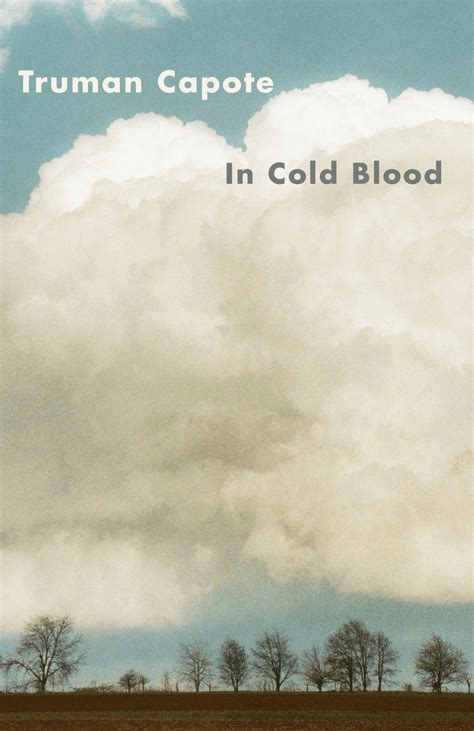

The Murderer’s Mother

She doesn’t know her son is suspected of murder, at this point. She just thinks he has been passing bad cheques again.

“That gun cost over a hundred dollars. Dick bought it on credit, and now the store won’t have it back, even though it’s not hardly a month old and only been used the one time–the start of November, when him and David when to Grinnell on a pheasant shoot. He used our names to buy it–his daddy let him–so here we are, liable for the payments, and when you think of Walter, sick as he is, and all the things we need, all we do without …” She held her breath, as though trying to halt an attack of hiccups. “Are you sure you won’t have a cup of coffee, Mr. Nye? It’s no trouble.”

Truman Capote, In Cold Blood, p. 171

Just look at that masterful dialog, how it breaks your heart!

Things We Write to our Friends

Hey. It’s been too long. We should get coffee some time. Yes, of course I’ll be in your wedding–jealous! Did you hear, I’m engaged too. You’re getting married? Better be careful–it’s risky, you know. Congratulations on the birth of your child. Here are some pictures of mine. Did you hear, our mutual friends are getting divorced. How awful. So much of it happening now. How can we help them? How can I help you? Thanks, it’s a lot better now, but boy, things were rough for a while. I’m sorry about your father, your mother, your cousin. I’m sorry your son died.

In Cold Blood made my Blood Run Cold

Well, I will be thinking about this one for a long time.

On November 15, 1959, in the small town of Holcomb, Kansas, four members of the Clutter family were savagely murdered by blasts from a shotgun held a few inches from their faces. There was no apparent motive for the crime, and there were almost no clues. As Truman Capote reconstructs the murder and the investigation that led to the capture, trial, and execution of the killers, he generates both mesmerizing suspense and astonishing empathy.

from the back of the book

The first thing to know about In Cold Blood that it’s incredibly well-written. Each paragraph is a work of art. Truly. It’s not ornate, which is why I don’t say “each sentence,” but it’s simply and eloquently told.

The book reads like a novel. It goes in chronological order – roughly – but it also slips through time seamlessly, like a good novel should, filling in glimpses of each character’s backstory just when it is needed, and in just the right dosage, no more. The details of the crime itself aren’t revealed until the last quarter of the book, though before Part II of the narrative, the crime has already taken place.

The other thing about this book is that it is really, really tragic. And not just because a family of four were shot in their beds. Just about every conceivable tragedy happens to someone, somewhere in this book. The only ameliorating thing I can say about it is that no indecent assault happens, as it were, “on camera.” We are given to understand that people have experienced it, but we have to read between the lines. The author uses the smallest effective dose.

The thing I really can’t forgive, though, is the way that Capote made me care about the murderer … one of them, that is. Dick Hickock is what today we would call a sociopath (the psychiatrist’s diagnosis is “severe character disorder”). I don’t give two figs for him, except that I wish he wasn’t crashing around the world, ruining everybody’s lives. The other one, though, is more complicated.

Perry Smith (“very nearly a paranoid schizophrenic” according to the doctor) is basically a lost man-child. He is “sensitive,” prescient, plays the guitar, and cherishes a dream, left over from boyhood, of finding sunken treasure. He “has a brilliant mind” (his words) and resents that he never got more than a third-grade education. (He got his high school equivalence during one of his stints in jail.) Perry travels with a cardboard suitcase full of books, journals, maps, and adventure magazines.

… his personal dictionary, a non-alphabetically listed miscellany of words he believed “beautiful” or “useful,” or at least “worth memorizing.” (Sample page: “Thanatoid = deathlike; Omnilingual = versed in languages; Amerce = punishment, amount fixed by court; Nescient = ignorance; Facinorous = atrociously wicked; Hagiophobia = a morbid fear of holy places & things; Lapidicolous = living under stones, as certain blind beetles; Dyspathy = lack of sympathy, fellow feeling; Psiloper = a fellow who fain would pass as a philosopher; Omophagia = eating raw flesh, the rite of some savage tribes; Depredate = to pillage, rob, and prey upon; Aphrodisiac = a drug or the like which excites sexual desire; Megalodactylous = having abnormally large fingers; Myrtophobia = fear of night and darkness.”)

page 146

This is a remarkable list, especially if it was truly taken from Perry Smith’s papers. It is remarkable for the way that every single entry seems to have some special relevance to Perry. Taken together, they almost constitute his biography as it is starting to emerge from the book at this point.

So, what makes him dangerous? Perry has dissociative tendencies, and a substratum of rage that he’s not even aware of. He thinks of himself as a genius with spiritual depths whom nobody appreciates. His is the rage that comes from being inadequately parented. Perry came from an unstable home and spent time in orphanages, where (to take just a sample incident) the nuns would beat and humiliate him for wetting the bed. He’s never had a good mother or father, and has roamed the world trying to find a home. All this deprivation has made him weak, and so he is dangerous in the way that weak, conceited men are dangerous. He is too weak to control his own actions when it matters.

Dad snatched a biscuit out of my hand, and said I ate too much, what a greedy, selfish bastard I was, and why didn’t I get out, he didn’t want me there no more. He carried on like that till I couldn’t stand it. My hands got hold of his throat. My hands–but I couldn’t control them. They wanted to choke him to death.

page 136

Perry also suffers chronic pain. A motorcycle accident left his legs never the same again, and the pain in his legs (and head) tends to flare up when he gets emotionally disturbed, making it even harder for him to concentrate.

I started feeling the tragedy within a page of meeting Perry. The first thing the book tells us is that it’s his dream to learn to skin dive and find buried treasure, and I had a feeling that dream was never going to come to pass. Damn you, Truman Capote!

I may do a whole separate post about Perry as a character, but there’s one more thing I will say about this book. Both Perry and Dick are types of people that you meet very often today. Perry’s history, in particular, is mirrored by many, many others. In fact, his wild, nearly fatherless youth of knocking about the American West reminds me very much of the family history of some of my own cowboy relatives.

Both murderers are treated by the psychiatrist who is called to write reports about them as if they are uniquely mentally ill individuals. Perhaps at the time they were (or perhaps the fact that they had already committed murder made them seem more egregious), but as I look at our society nowadays, their mental landscapes seem more like the rule than the exception. Do with that what you will.

Read this book if you don’t cry easily and want to enjoy 343 pages of the most amazing writing. But just be aware of what you are getting into.

Burning the Murder Victims’ Stuff

The men worked from noon to dusk. When the time came to burn what they had collected, they piled it on a pickup truck and, with Stoecklein at the wheel, drove deep into the farm’s north field, a flat place full of color, though a single color — the shimmering tawny yellow of November wheat stubble. There they unloaded the truck and made a pyramid of Nancy’s [bloodstained] pillows, the bedclothes, the mattresses, the playroom couch; Stoecklein sprinkled it with kerosene and struck a match.

“Everything Herb had, he earned– with the help of God. He was a modest man but a proud man, as he had a right to be. He raised a fine family. He made something of his life.” But that life, and what he’d made of it– how could it happen, Erhart wondered as he watched the bonfire catch. How was it possible that such effort, such plain virtue, could overnight be reduced to this– smoke, thinning as it rose and was received by the big, annihilating sky?

Truman Capote, In Cold Blood, p. 79

Big Sky Country, with Canal

This little (8×6) landscape acrylic painting is one of my favorites that I’ve done recently.

The water portrayed is actually a stream leading to the Snake River Reservoir, because the canals are not running at this time of year. However, I thought I’d give you some history about our local irrigation canals, because they are really remarkable.

The scheme diverts water from the [Snake] river about ten miles above Blackfoot. The main canal was planned to be 60-85 feet wide, carrying a depth of six feet of water about sixty miles, with many more miles of laterals and smaller ditches. … The canal is 60 feet wide and 8 feet deep, beginning near Firth and ending near the Lamb Weston Potato Plant at American Falls where a small amount of water then empties into the Snake.

Aberdeen, Idaho: Our Small Town Story, by Celia Klassen, p. 14

The canal system was constructed, essentially by hand, using horses, scrapers, and large baskets, and dynamite for rocky areas, between 1894 and approximately 1910. There were a series of investors, some working groups that fell apart, and two different canal companies that were formed to head up the project. The system includes many “fills” … areas where the canal was built up above the surrounding land, as to pass through a low spot.

During the construction, “Tent camps … were set up at various points, and everything the laborers needed had to be brought through the sagebrush by wagon … Families of canal workers lived along the canal while it was being built in what were called ‘ditch camps’.” (ibid, p. 15)

The canal system allows us to farm the Idaho soil, which is volcanic and very fertile, but doesn’t get enough rain for dryland farming. The Aberdeen-Springfield canal company still maintains the 190 miles of main and lateral canals, with sluice gates and the like. A canal runs right past my backyard, built up above the surrounding fields. The canals are drained in the winter months, and last year, an excavator worked its way slowly by our property, deepening the canal and creating large piles of soil on its banks. In the summer, “canal riders” patrol the system, checking for leaks. This is a wonderful system, and it takes a lot of effort to keep it working properly.

Despite being man-made, the canals also beautify the countryside. The presence of water attracts Russian olive trees, cattails, showy milkweed, and birds. Many farm kids grew up inner-tubing in the canals in the summertime, and their raised banks make a natural hiking route for people who want to walk in nature.

The source for this post was the book Aberdeen, Idaho: Our small town story, published by Celia Klassen in 2019. Celia did not grow up in Aberdeen, but married in. As so often happens, it took someone from the outside to appreciate that our local history was worth researching and recording.

Small-Town America, Described by Truman Capote

[T]he newcomer to Garden City, once he has adjusted to the nightly after-eight silence of Main Street, discovers much to support the defensive boastings of the citizenry: a well-run public library, a competent daily newspaper, green-lawned and shady squares here and there, placid residential streets where animals and children are safe to run free, a big, rambling park complete with a small menagerie (“See the Polar Bears!” “See Penny the Elephant!”), and a swimming pool that consumes several acres (“World’s Largest FREE Swim-pool!”). Such accessories, and the dust and the winds and the ever-calling train whistles, add up to a “home town” that is probably remembered with nostalgia by those who have left it, and that, for those who have remained, provides a sense of roots and contentment.

Truman Capote, In Cold Blood, pp. 33 – 34

The Book Titles Tag, Wimpy Version

I got this tag from Bookstooge, who found these lists at Emma’s site. The idea is to answer each question with the title of a book you read from the previous year. Emma and Bookstooge both filled in three sets of blanks using titles of books they read in 2024 alone. I, on the other hand, am filling in one of the three sets of questions, using books I read in roughly the last year. When I say roughly: If I am currently reading the book (now, in 2025 – In Cold Blood), I get to use it. If I read portions of it last year (The Seven Laws of Teaching), I get to use it. And so forth. Enjoy!

  • When I was younger I was Ellen Tebbits
  • People might be surprised to discover that I Hope This Finds You Well
  • I will never be The Sentinel
  • At the end of a long day I need The Hiding Place, Young Reader’s Edition
  • Right now I’m feeling (like) A Woman Underground
  • Someday I want to (fulfill) The Seven Laws of Teaching
  • At a party you’d find me In Cold Blood
  • I’ve never (seen) The Whisper on the Night Wind
  • I really don’t enjoy Race Marxism
  • In my next life I want Loves Saves the Day