
If a man digs a pit, he will fall into it;
if a man rolls a stone, it will roll back on him.
Proverbs 26:27
Corn Cobs as Fuel
I wanted to know whether I could use the few pitiful dried corn stalks left over from my garden as a fire-starter. Poking around on the Internet, I stumbled across this blog post about burning corn cobs, which has a ton of fascinating historical information. My favorite part is the picture of a North Dakota housewife feeding corn cobs into her kitchen stove, with the baby in a high chair in the background, in 1940.

The Only Halloween Costume I’ll Ever Need

I have the misfortune of liking costumes that look like people. Historical people, usually. It is always meant super sincerely — I really want to be that person — but can easily be taken the wrong way.
However, there is one interest group who still don’t mind if I represent them. Especially because, like the majority of people in the world, I am actually descended from them.
Neanderthals.
Faithful readers of this blog will object that, according to my own past posts, there is no reason to believe that Neanderthals carried clubs instead of more sophisticated weapons, or that they went around dressed in off-the-shoulder leopard skins. True. But a Halloween costume should be simple, iconic – a cartoon really – so that people can instantly recognize what you are supposed to be. So, I went with the off-the shoulder-leopard skin.
And used the remnants to make the handbag.

This was my dry run. The face paint was supposed to make my chin look weak, but apparently it comes off as a beard. Maybe on the 30th I’ll just give myself undereye circles and call it a day.
Also, you can’t see it, but there is a toy bone in my hair.
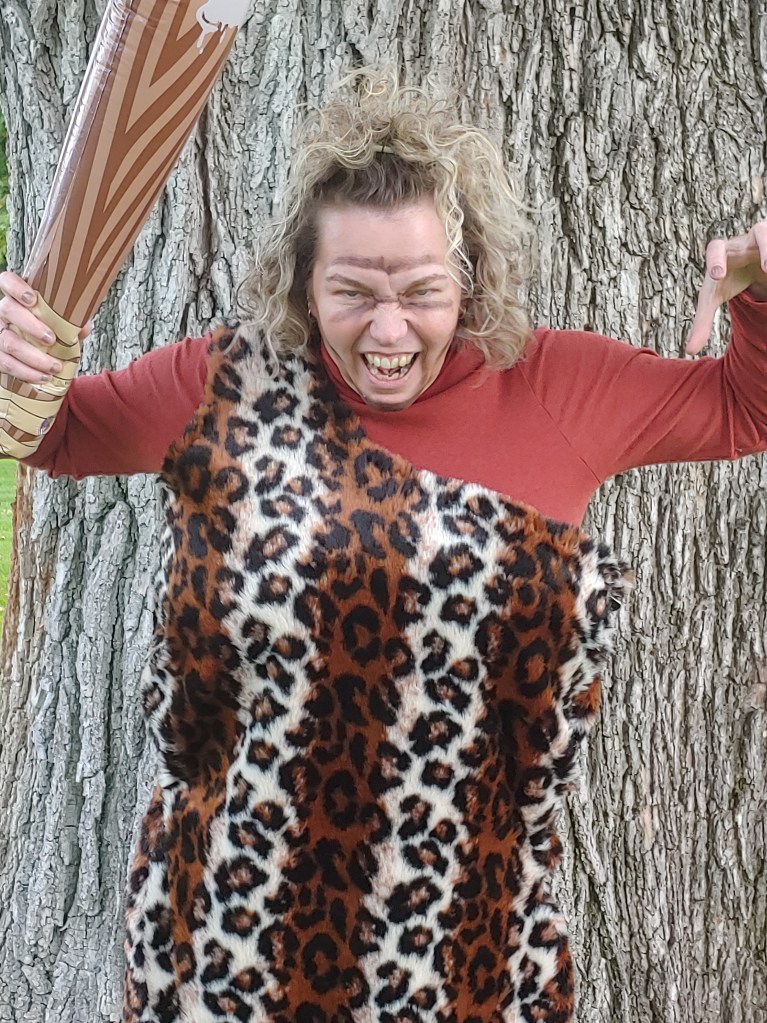
Should be able to use this costume for years to come.
Quote: Self-reflection in the Gulag
… Following an operation, I am lying in the surgical ward of a camp hospital. I cannot move. I am hot and feverish, but nonetheless my thoughts do not dissolve into delirium — and I am grateful to Dr. Boris Nikolayevich Kornfeld, who is sitting beside my cot and talking to me all evening. The light has been turned out — so it will not hurt my eyes. He and I — and there is no one else in the ward.
Fervently he tells me the long story of his conversion from Judiasm to Christianity. This conversion was accomplished by an educated, cultivated person, one of his cellmates … We know each other very slightly, and [Dr. Kornfeld] was not the one responsible for my treatment, but there was simply no one here with whom he could share his feelings. He was a gentle and well-mannered person.
It is already late. All the hospital is asleep. Kornfeld is ending up his story thus:
“And on the whole, do you know, I have become convinced that there is no punishment that comes to us in this life on earth which is undeserved. Superficially it can have nothing to do with what we are guilty of in actual fact, but if you go over your life with a fine-toothed comb and ponder it deeply, you will always be able to hunt down that transgression of yours for which you have now received this blow.”
I cannot see his face. Through the window come only the scattered reflections of the lights of the perimeter outside. But there is such mystical knowledge in his voice that I shudder. …
And it so happened that Kornfeld’s prophetic words were his last words on earth. And, directed to me, they lay upon me as an inheritance. You cannot brush off that kind of inheritance by shrugging your shoulders.
But by that time I myself had matured to similar thoughts.
I would have been inclined to endow his words with the significance of a universal law of human life. However, one can get all tangled up that way. One would have to admit that on that basis those who had been punished even more cruelly than with prison — those shot, burned at the stake — were some sort of super evil-doers. (And yet … the innocent are those who get punished most zealously of all.) And what would one then have to say about our so evident torturers: Why does not fate punish them? Why do they prosper?
But there was something in Kornfeld’s words that touched a sensitive chord, and that I accept quite completely for myself. And many will accept the same for themselves.
In the seventh year of my imprisonment I had gone over and re-examined my life quite enough and had come to understand why everything had happened to me: both prison and, as an additional piece of ballast, my malignant tumor.
The Gulag Archipelago, by Aleksandr Solzhenitsyn, pp. 309 – 311
Forest Gardens
So, a member of the Out of Babel research team sent me this cool link. (The research team being blog readers/friends who send me links.)
Apparently, the native peoples of British Columbia made gardens in the temperate rain forests up there. These were patches of forest where they planted edibles such as “hazelnuts, crabapples, cranberries, and hawthorn.” These patches persist to this day. They did not look like agriculture to the Europeans. We are just now realizing what they were, a mere 200 years behind the times as usual.
This article brings to mind the Wild Yam Question, which was raised by an old ethnology professor of mine. Part of the Wild Yam thesis is that people groups who look to city-dwellers’ eyes like hunter-gatherers, may actually be engaging in horticulture, where they plant a staple food (such as sago palm) in clusters in the forest and then rotate where they harvest it, which looks like pure foraging but isn’t. According to the linked article, the forest gardens in BC are the first instance of this kind of horticulture that has been discovered in a temperate climate.
And not to go on a patented Out of Babel rant, but I’ll just note that this kind of discovery undermines the old model of anthropology where people start out as hunter-gatherers and progress to gardens, then large-scale agriculture, and so on, becoming more urban as they go. This suggests that there are a variety of ways to do agriculture and that people can mix elements of different lifestyles to suit their needs. This, in turn, suggests that we can’t just look at whether a given people group has agriculture, and assume that we can infer from this when they lived or what stage of development they were in. There may well have been people groups who went from being farmers or herdsmen to being hunters when forced to do so, either because they were migrating or in response to some disaster. In fact, this is exactly what happens to Enmer’s tribe in my trilogy.
The Job Suite
I have been reading through the book of Job lately, because reasons.
Here is Michael Card’s brilliant musical interpretation of that brilliant book.
The Dia de los Muertos Book Tag

Jyvur Entropy created this tag with Anna Book Critter, and I got it off Jyvur’s blog.
For a tag, you are given a series of prompts around a particular theme, and you answer the prompts, usually with the names of books you’ve read.
Para que lo sepas, I had to restrain myself from naming one of my own books for almost every one of these prompts. After all, the Scattering Trilogy is multigenerational; life-affirming; about rebirth; includes a fair amount of food, etc. Anyway, that’s en mi opinion. But I will do this tag like a normal person and name books by other people.

The Day of the Dead is all about remembering and honoring past generations.
Name a book with an intergenerational cast or a strong focus on family.
Pavilion of Women, by Pearl Buck. Buck is a master at sliding seamlessly through time in her stories. In the opening scene, Madame Wu is sitting in her chamber on the morning of her fortieth birthday. Her maidservant comes in to comb her hair, and suddenly we are in this same bedroom twenty-four years ago, on the morning after Madam Wu married Mr. Wu, and the same maidservant has come in, and she is nervous as a cat around her new mistress, because she knows that she just had sex for the first time. Now, twenty-four years later again, the servant is much more at ease with Madam Wu, but she does not know that her mistress has decided that as of her fortieth birthday, she will stop living to keep the Wu household running smoothly, and start living for herself. She just has to get through the party.
Dia de los Muertos is an important Mexican holiday. Name a book that takes place in Mexico or includes Mexican culture.

I’ve been slo-mo bingeing on books about the archaeology of Mesoamerica. Of course, with books like these, which are about as old as I am, you need to supplement them with current articles, since new discoveries and analyses keep being made.
This holiday is often celebrated with vibrant, colorful imagery and sugar skulls. Name a book with a cover as visually-interesting and colorful as a sugar skull.
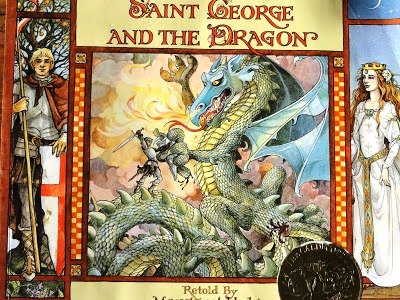
I will never stop promoting the art of Trina Schart Hyman.
Food is an important part of the Dia de los Muertos celebration. Food is set out on altars for the spirits of departed family members.
Tell us a book where food really makes the story!
The No. Ladies’ Detective Agency books. These are written from multiple perspectives, but arguably the main character is Precious Ramotswe, founder of the No. Ladies’ Detective Agency, the only female-run detective agency in Botswana. Mma Ramotswe is fat (“traditionally built”), and while not unusually greedy, she does enjoy her food and thinks about it fairly often. She always likes to visit the formidable Mma Potokwane, who runs an orphanage, because although Mma Potokwane is sure to ask for some kind of favor for her orphans, she always serves Mma Ramotswe a generous piece of cake, sometimes two.
“Some people very clearly and obviously would like to eat more cake. It might as well be printed on their forehead: Greedy person.” Ah yes, that would be me.
Dia de los Muertos is not only celebrated in Mexico, but also in Central and South America. Name a book that takes place in Central or South America or has a Central or South American author.

I’ve read a lot of missionary stories, but Bruchko is one of the most remarkable. It takes place among the Motilone, who live in the jungle somewhere along the border of Venezuela and Colombia.
In addition to sugar skulls, flowers and butterflies are also symbols of this holiday. Tell us a book with flowers or butterflies on the cover
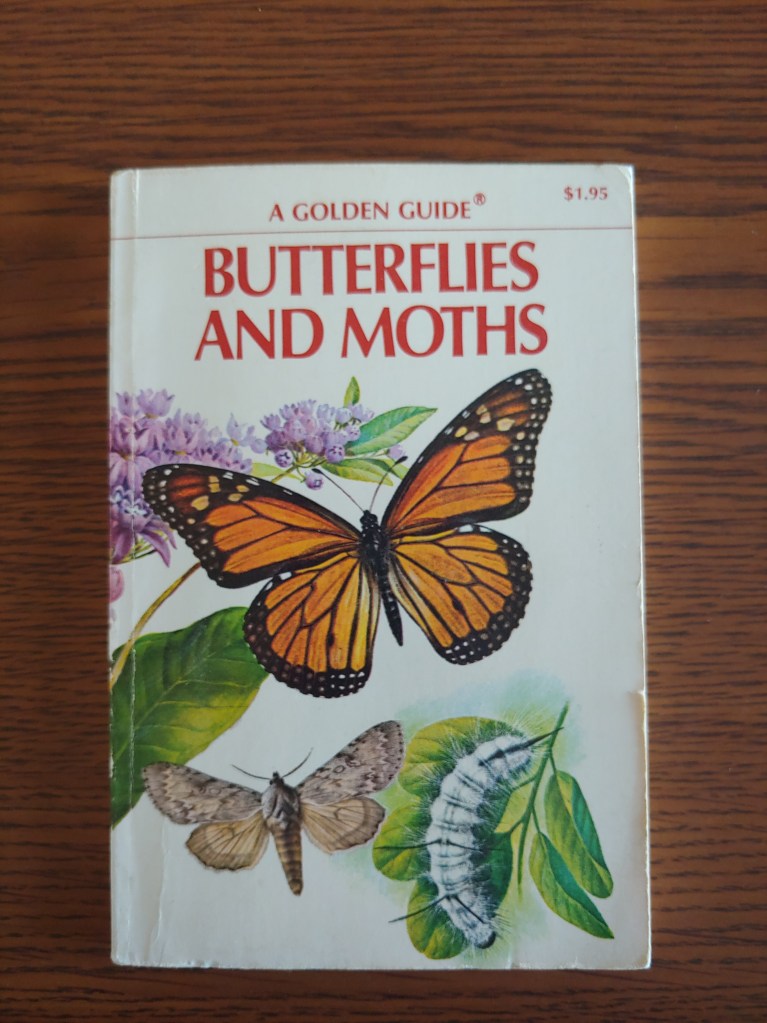
Nailed it.
The Day of the Dead is about celebrating life. Name a book that celebrates life.
The book of Job, in the Bible.
You think I’m kidding? No, listen.
Job isn’t about Job patiently putting up with suffering, proving what a good person he is, and then God rewards him. That’s the caricature, but it’s almost the opposite of the real theme of the book.
The consensus in Ancient Near Eastern wisdom literature was that, since God is just, if anything bad happens to anyone, it must be their fault. This is still, by the way, the essence of human wisdom in many parts of the globe, especially in Hinduism. It is also many people’s instinct when we see a horrible disaster befall someone, to find some way that the unfortunate person brought it upon themselves, or “how this could have been avoided.” It makes us feel a little more in control.
The book of Job exists to subvert this universally accepted bit of “wisdom.”
Job starts out as a model of the good person in the Ancient Near East. He has seven sons (the perfect number!), and three daughters; he offers regular animal sacrifices to God. And he’s rich, as he should be. Everything is making sense, see?
Now we take this model Good Person and visit all kinds of punishments on him. And this must be an expose, right? It must be Justice Falling At Last!
Job’s three “friends” show up, and they proceed to preach some very reasonable, theologically sound sermons just like you could hear in any of the wisdom literature of the day. God is just. He rewards the righteous and punishes the wicked. Therefore you must have deserved this somehow. If you say you haven’t, you are defying God! Beat that!
Their logic is flawless. And God sides with Job against them. “You have not spoken of me what is right, as my servant Job has.”
If that’s not life-affirming, I don’t know what is.
It is also a day of remembering loved ones who passed on. Name a book that was either given to you or reminds you of a loved one who passed away.
Let me tell you about Alice.
I can tell you all about her now, because she’s with the Lord. No privacy risk or anything like that. I’d post a picture if I had one, but I don’t.
By the time I knew Alice, she was in her late eighties. (I was in my late teens.) She mentored me for a few years before she got dementia. She was a sweet, little old German-American lady, with a sly sense of humor. She could do impressions, but used this skill judiciously. Once she said to me, “You want to know why I never married?” And then, for an answer, she quoted the King James verse, but with different punctuation: “I would not have thee, ignorant brethren.” Props to you if you get that joke.
The “brethren” that she “would not have” were certainly missing out, because Alice was a treasure. Perhaps they overlooked her good qualities because of a facial deformity. She had been bitten on the cheek by a horse as a child, and it wasn’t until she was an adult that she was able to afford corrective surgery.
Anyway, one day when I was at Alice’s house, I picked up the book The Holiness of God by R.C. Sproul. She encouraged me to borrow it. I expected it to be a dry, academic read, because it was on a lofty theological topic. But no, it was written for the layperson, and was very accessible. A page-turner, in fact. To this day I associate that book with Alice.
El flor del Muerto – The flower of the dead. Marigolds are used in massive quantities on the Day of the Dead. These flowers represent the sun and rebirth. Also believe to guide the spirits back home. Name a book about rebirth.
The Great Good Thing, by Andrew Klavan. Unfortunately, I have lent my copy out, so I can’t show you a picture. This is the story of how Klavan grew up as secular Jew on Long Island, ran away from home, lived as a hobo for several years, became a hard-boiled noir crime writer and a Hollywood success, and then became a Christian at the age of 50. He is now a Christian, Jewish, hard-boiled noir crime writer who also writes YA and fantasy.
If you want to read a novel about rebirth, try Identity Man, also by Andrew Klavan.
Colors are used as a form of symbolism in the decorations and sugar skulls. Some of the colors used in association with Dia de los Muertos are yellow (unity), white (hope and purity), red (blood and life), purple (mourning), and pink (happiness).
Take a photo of some book spines in the Dia de los Muertos colors!
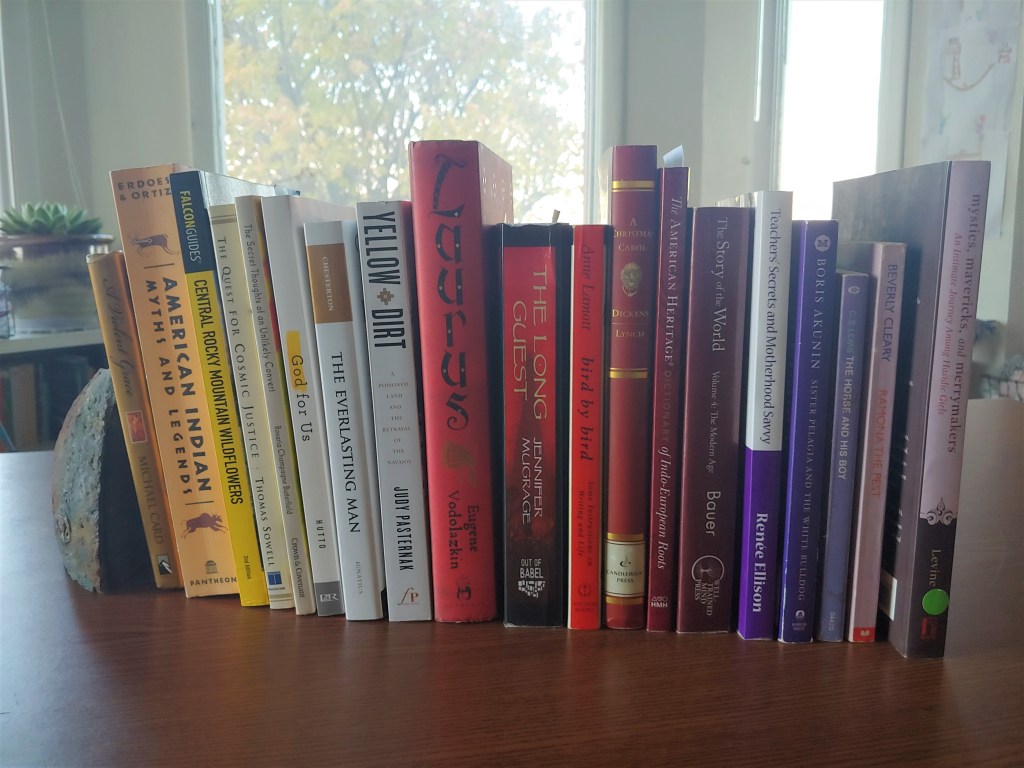
And a happy Dia de los Muertos to all who celebrate ❤
P.S. Disclaimer about Memorializing Our Dead
If anyone feels uncomfortable with me doing this tag, because, you know, skulls and dead people and paganism, I get it.
Let me reiterate a point I have made before, that pagan practices (especially old ones with deep roots) often fulfill basic human needs that every society needs to fulfill, such as celebration, marking the seasons, etc. In this case, the basic human need is to continue to feel a connection to, and to honor, our loved ones who have died. In a way, it’s part of the mourning process. Modern American society is terrible at this, sorry to say. The only formal time to remember the person is during the funeral and burial, after which the mourners are expected to basically stop talking about the person except to very close friends or relatives. Bringing them up, or continuing to visibly grieve, causes that sin of all sins, social awkwardness. This is pretty harsh, and it does not match well with the way that grieving goes for most people.
There are ways to provide for ongoing grieving, honoring, and remembering that are not ancestor worship. For example, in Indonesia, the Muslims have memorial services at 30 days, 100 days, and a year after the death. The people groups of Kalimantan (pagan and sometimes Christian as well) have a second, larger, funeral ceremony, usually a year later, when they dig up the person’s bones and re-inter them in an ossuary with the bones of the family. The Christians will have about a week or so of viewing services while they wait for people to gather for the funeral; then the graveside service; then that night an additional “comfort” service. Most of these take place at the family’s house, and they mean the house is filled with people, songs, and food. The family is not left alone. The people who attend don’t have to say or do anything special beyond “we share in your grief.” They just have to be physically present. This is also a better social rule than having to come up with something to say.
Christians will also have a vigil at their relatives’ graves on the night before Easter. This might sound creepy – and maybe it is – but sometimes when facing something as awful as death, we have to embrace the creepy and it will actually haunt us less.
So all that to say, while I am not recommending pagan worship, and while Christians are definitely forbidden from trying to contact the dead, I think having something like a Dia de los Muertos is a good idea on a psychological level. And yes, I did get teary-eyed when watching Coco.
Quote: “the center of this world”
Here is how it was with many others, not just with me. Our initial, first prison sky consisted of black swirling storm clouds and black pillars of volcanic eruptions — this was the heaven of Pompeii, the heaven of the Day of Judgment, because it was not just anyone who had been arrested, but I — the center of this world.
Aleksandr Solzhenitsyn, The Gulag Archipelago (abridged), p. 301
 Out of Babel Books