
[I]n these pagan cults there is every shade of sincerity — and insincerity. In what sense exactly did an Athenian really think he had to sacrifice to Pallas Athene? In what sense did Dr. Johnson really think that he had to touch all the posts in the street or that he had to collect orange-peel? In what sense does a child really think that he ought to step on every alternate paving-stone? … [These things] have the sincerity of art as a symbol that expresses very real spiritualities under the surface of life. But they are only sincere in the same sense as art; not sincere in the same sense as morality. The child does not think it is wrong to step on the paving-stone as he thinks it is wrong to step on the dog’s tail.
These are the myths: and he who has no sympathy with myths has no sympathy with men. But he who has most sympathy with myths will most fully realize that they are not and never were a religion…. They satisfy some of the needs satisfied by religion; and notably the need for doing certain things at certain dates; the need of the twin ideas of festivity and formality. But though they provide a man with a calendar they do not provide him with a creed. A man did not stand up and say ‘I believe in Jupiter and Juno and Neptune,’ etc., as he stands up and says ‘I believe in God the Father Almighty’ and the rest of the Apostles Creed.
The crux and crisis is that man found it natural to worship; even natural to worship unnatural things. The posture of the idol might be stiff and strange; but the gesture of the worshipper was generous and beautiful. He not only felt freer when he bent; he actually felt taller when he bowed. Henceforth anything that took away the gesture of worship would stunt and even maim him forever. If man cannot pray he is gagged; if he cannot kneel he is in irons.
When the man makes the gesture of salutation and sacrifice, when he pours out the libation or lifts up the sword, he knows he is doing a worthy and virile thing. He knows he is doing one of the things for which a man was made. His imaginative experiment is therefore justified. But precisely because it began with imagination, there is to the end something of mockery in it, and especially in the object of it.
G.K. Chesteron, The Everlasting Man, excerpts from the argument that runs pages 107 – 112
Tag: anthropology
And More About Our Favorite Cave People
So, apparently, I now have you guys trained to send me links about Neanderthals. Which is great. It saves me a lot of time.
Here’s the latest, sent in by a fellow author. (By the way, go buy his book: The Accidental Spy. It’s about a submarine and stuff).
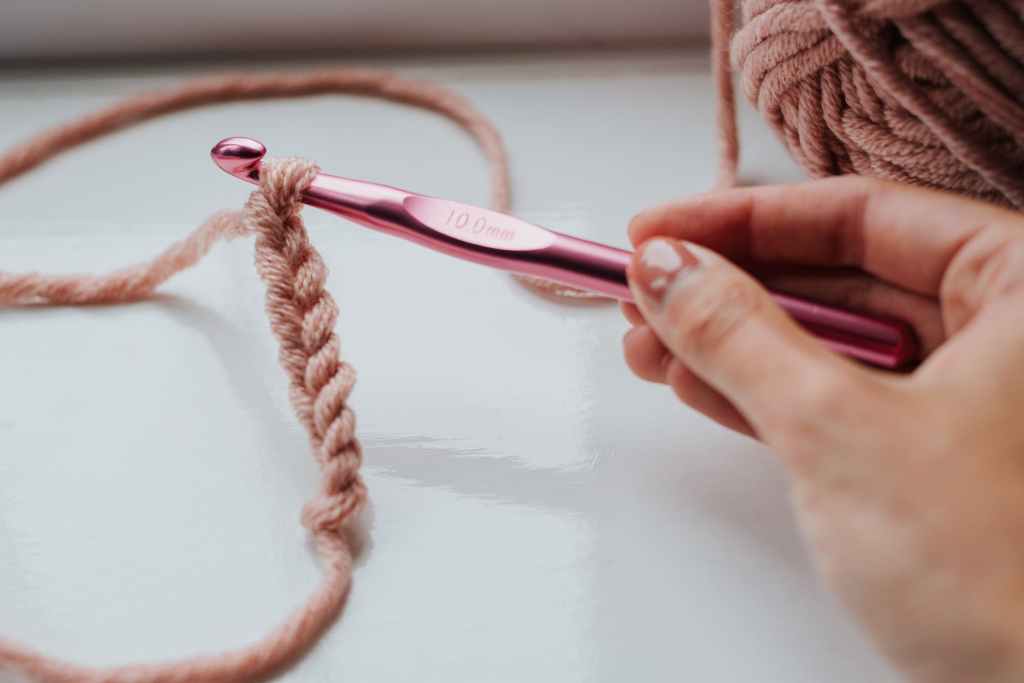
Anyway, this link, “Neanderthals may have used their hands differently from humans,” apart from distinguishing Neanderthals from humans in the title, makes claims that I find impressively modest; you might say, impressively unimpressive. The general idea is that Neanderthals’ thumb bones appear to be a little different from those of modern humans, such that they may have found precision grips a little more difficult. But the article points out that Neanderthals did have a precision grip, and were able to make yarn, thread seashells for jewelry, etc. So, there you go.
As a layperson, it seems to me that these are still guesses based on reconstructing a hand from the bones and using 3-D imaging of how the joints would have worked. Again as a layperson, as far as I can tell, 3-D imaging is just a really sophisticated, computer-aided series of guesses. So it isn’t necessarily accurate. I remember that time that we thought the T-rexes stood upright and put their tails on the ground to support themselves, and then we changed our minds and decided that they ran with their weight leaning forward and the tail stuck out behind for balance.
But, whichever. I have no problem with Neanderthal thumbs being a little bit clumsy, or not a little bit clumsy. I suppose we will find out some day.
“Things Happened with Horrible Timing”
Hello everyone! To my American readers, I hope your holiday weekend was restful. I hope it went fantastic. (Mine did.)
But perhaps your holiday weekend didn’t “go fantastic.” Perhaps it went horrible.
Thanksgiving has betrayed me just enough times that I get nervous around it. I can think of three or four past Thanksgivings where there emerged, on that very weekend, a crisis of life-and-death proportions. I’m not sure why, but holidays and other non-ordinary times seem to attract these things.
In my upcoming book, The Strange Land, the tribal chief notes ruefully that moving days are subject to the same phenomenon:
Enmer had seen this time and again. If anyone was going to get sick, if anyone was going to get pregnant, if anyone was going to miscarry or commit a petty crime or simply snap under the pressure of survival, they were more likely to do it at the exact moment of transition. These in-between times [when the tribe was getting ready to move] were dangerous.
Enmer had given this a lot of thought and had concluded that though he could — and did — blame his people for their actual actions, he could not blame them for their bad timing. Things happened with horrible timing. That was the way of the world.
The Strange Land, chapter 10
I hope this Thanksgiving was kind to each of you, though. See you next time!
Dour Quote of the Week: That Stage of Life
Jesus’s most underrated miracle may have been having twelve friends in his early thirties!
Rachel Gilson, Born Again This Way, p. 108
Neanderthals, Again
Here is an article sent to me by a helpful blog reader and friend.
To summarize, there is apparently some kind of genetic link between cuter facial features and domesticity in animals. When foxes, for example, are bred for friendly and compliant personalities, over generations their snouts get shorter, their ears floppier, their tails shorter and curlier.
The linked article suggests there might be a similar kind of genetic linkage in humans. It relies partly on a genetic study of human beings with Williams-Beuren syndrome, “a disorder linked to cognitive impairments, smaller skulls, elfinlike facial features, and extreme friendliness.”
Extrapolating from this, and using studies of Neanderthal and Denisovan DNA, the suggestion is that humans “domesticated ourselves” by preferring mates who were friendlier and less aggressive. As sexual selection decreased the aggressive tendencies in our species, so too the related genes determining facial features gradually made our features smaller and less coarse.
So, I have some thoughts. Bear with me, because I’m tapping this post out the night before it goes up, so it might not be the best organized or best-written.
- I’m not going to question that even in humans, there might be some genetic linkage between elfin facial features and lack of natural aggressiveness. W-B syndrome, and Down Syndrome, both seem to suggest this. It may be that this linkage is so subtle and complex that it only becomes obvious in extreme cases, like with these syndromes. It’s similar to how there is evidence that people with fair or red hair are more likely to be “Highly Sensitive People,” highly sensitive to stimuli of all kinds including social stimuli, sound, and pain.
- Both of these suggestions (I’m not going to call them findings because they are too complex) also dovetail with traditional stereotypes. The quick-tempered redhead, the fine-featured child who cries easily, and the “low-browed” criminal are all types that go way back. Stereotypes do not apply across the board, but they often tell us something about people’s observations of the world.
- But that is also a danger. People, it turns out, have a strong tendency to judge others by their physical appearance. Ugly or unattractive people are interpreted through a grid that assumes they are stupid, aggressive, or unstable compared to more attractive people. I just finished reading an interview, here, with a person who explains from personal experience how we tend to interpret someone without sex appeal as a menace.
- So if people did selectively marry in a way that weeded out Neanderthal facial features, it’s just as likely they were selecting for looks as for lack of aggression.
- And obviously, making judgments about someone’s abilities and character based on their facial features and body shape is not only unjust, it’s usually likely to be mistaken. It would be great if we could tell everything we needed to know about someone just by looking at them, but we can’t. If we try to do so — and resist changing our opinion — we are going to be walking around with a lot of bad information. This strategy will not work well for us.
- This should tell us that there is something missing from the thesis about smaller facial features being associated with less aggressive behavior.
- What’s missing is the fact that human beings are human beings, not just two-legged animals. Our behavior is not just determined by whether we have genetic tendencies to aggression.
- Rather, we are made in the image of God. Thus, we have language, an innate moral sense, and an innate need to be in a family and culture with other human beings. This, not our genetics, is what makes us “domestic.”
- That’s why, as I have pointed out before, you will often meet people in modern times with features reminiscent of Neanderthals, and these people are neither stupid, nor aggressive, nor even particularly ugly. (I mean, just look at the Neanderthal reconstruction at the top of the linked article. Is he not adorable?)
- Also, friendliness is not the only desirable trait in a human being. “Extreme friendliness,” particularly when coupled with cognitive impairments, will not equip a person to survive on their own in the world. What we need is natural aggressiveness, appropriately controlled and directed by our mind, moral sense, and culture. So, completely breeding aggressive tendencies out of our population would not be desirable, even if it were possible.
- Ergo, if the Neanderthals and Denisovans were actually human beings (which I believe they were), we can assume that they were much like us in that they had aggressive tendencies, but they also had all the other standard human equipment that allowed them to control and direct these tendencies. We already know that they enjoyed seafood, intermarried with so-called “modern humans,” and made art.
OK, that’s it from me. I continue my campaign for Neanderthal Human Rights!
Now, go out there, club something, and eat it!
Time-Words in Fiction
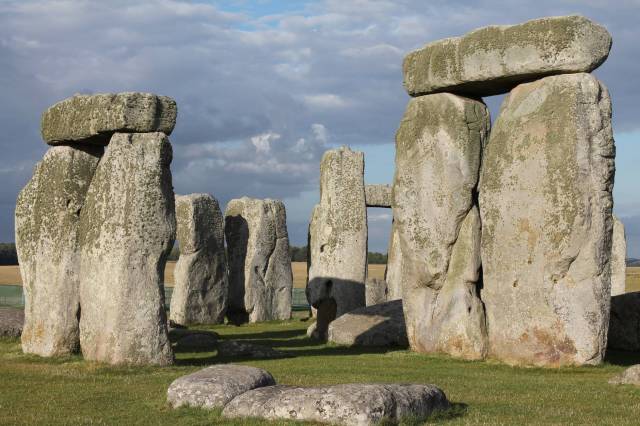
How do you handle expresssions of time when writing about a preindustrial culture that does not use our time divisons?
Not that Preindusrial People Are Unaware of Time …
I’m not meaning to imply that people in preindustrial cultures take no notice of time. This is a notion, sometimes asserted, that goes with the romantic “noble savage” idea that because hunter-gatherers live closer to the earth, they necessarily live a “simpler” life, comparatively free from worries, cares, and conflict. See The Gods Must Be Crazy, the Wild Yam Question, and many others.
In fact, the earth is trying to kill you, so people who live close to the earth have plenty of survival-related worries (besides the usual human sin problem that did not first arise with industrialization). Farmers have to pay detailed attention to months and seasons, as do hunters, who also have to be concerned with times of day. So, no, there are no “time-free” people. In fact, there have been many ancient cultures that were very, very concerned with calendars. See Stonehenge, above, which was apparently a computer for predicting eclipses, and the Maya, who could be fairly said to be obsessed with dates.
But, Seriously, How Do You Deal with Time?
But, of course, it makes no sense to have a hunter-gatherer culture going around talking about the months by the names we give them. Let alone the days of the week, although if you follow Genesis, people have always known that days come in sevens and one day is for rest. Talk of seconds and minutes is even more of an atmosphere killer when it comes to verisimilitude.
Sci-fi writers can make up their own time divisions or draw on terms from sci-fi convention: clicks, parsecs, light-years, cycles, and no, I don’t know what most of these words mean really. They are fun, though. Perhaps in the comments you can enlighten me.
Anyway, here is how I deal with time. I didn’t spend a lot of … you-know-what … thinking about this when I first started drafting. I became more aware of it as my characters moved more into a hunter-gatherer lifestyle. You will still occasionally see the word, for example, “hours” crop up in my books. But when it would not take too much rewriting to get rid of modern time-words, here is what I use:
- I don’t talk about specific months by name. Rather, I talk about seasons. (Early spring, midwinter, etc.) (However, if you are interested, my character Ikash’s birthday is in April and Hyuna’s birthday is right around Christmas.)
- I do sometimes mention months in a generic sense, because everyone is aware of lunar months. I don’t say “moons,” because that sounds … well, I just feel like saying “moons” is a minefield.
- It has never been necessary for me to mention weeks, either.
- For “minute,” I try to use “moment,” which is less specific and technical sounding.
- I use “a few beats” instead of “a few seconds.”
- Nanoseconds, for some reason, have never come up.
Scary Quote of the Week, Courtesy of Thomas Sowell
Those who seem to be promising an end to existing group disparities, as a result of whatever policies they advocate, may be promising what cannot be delivered, regardless of those policies. Moreover, the clash between numerical goals, fervently pursued, and the repeatedly frustrated attempts to reach those goals is not without social consequences.
Among the dire consequences for society as a whole are widespread resentments, bitterness, disorder and violence on the part of those who have been told incessantly that they are “entitled” to a demographically defined “fair share” of what is produced, and that this “fair share” is being denied to them by others who are guilty of maliciously keeping them and their loved ones down.
Such consequences of a toxic social vision tend to be especially dire for the less fortunate, who suffer most when social order breaks down and violence is unleashed amid heady crusades.
The actual consequences of a social vision cannot be assessed on the basis of its good intentions or even its plausibility. The real test is what has actually happened when that vision has been applied, and what the implications are of those social consequences.
Thomas Sowell, Discrimination and Disparities, pp. 165-166
Heart-Warming Link About A Toad
The Wyoming Toad lives only in Wyoming. It was once thought to be extinct in the wild, but now it is coming back, thanks to a large number of people who have been working on it for ten years. This team includes the City of Laramie, private landowners, Fish and Game, University of Wyoming, and several zoos and wildlife organizations.
I find it heartwarming that large numbers of people, who are clearly superior in every way to toads, would devote so much time and effort to save this ordinary-looking toad. Some of them have donated land. Others have invested their entire careers in this little animal. Clearly, they love the toad just because it exists, not because it does anything special for them.



Mongolian Throat Singing!
So, this cool dude is ripped from the pages of The Long Guest. Singing, with his daughter, on a little stringed instrument, about … what else? … horses. In Mongolian. In Mongolia.
Except he is even cooler than any character in my book, because he does “throat singing,” which as far as I can tell, basically involves turning his voice into a digeridoo.
Also, his daughter is adorable.
This video just makes me very happy.
Here is a link to the Classic FM article which gives some background about the singer and about throat singing.
 Out of Babel Books