Neanderthals, Again

Here is an article sent to me by a helpful blog reader and friend.

To summarize, there is apparently some kind of genetic link between cuter facial features and domesticity in animals. When foxes, for example, are bred for friendly and compliant personalities, over generations their snouts get shorter, their ears floppier, their tails shorter and curlier.

The linked article suggests there might be a similar kind of genetic linkage in humans. It relies partly on a genetic study of human beings with Williams-Beuren syndrome, “a disorder linked to cognitive impairments, smaller skulls, elfinlike facial features, and extreme friendliness.”

Extrapolating from this, and using studies of Neanderthal and Denisovan DNA, the suggestion is that humans “domesticated ourselves” by preferring mates who were friendlier and less aggressive. As sexual selection decreased the aggressive tendencies in our species, so too the related genes determining facial features gradually made our features smaller and less coarse.

So, I have some thoughts. Bear with me, because I’m tapping this post out the night before it goes up, so it might not be the best organized or best-written.

  • I’m not going to question that even in humans, there might be some genetic linkage between elfin facial features and lack of natural aggressiveness. W-B syndrome, and Down Syndrome, both seem to suggest this. It may be that this linkage is so subtle and complex that it only becomes obvious in extreme cases, like with these syndromes. It’s similar to how there is evidence that people with fair or red hair are more likely to be “Highly Sensitive People,” highly sensitive to stimuli of all kinds including social stimuli, sound, and pain.
  • Both of these suggestions (I’m not going to call them findings because they are too complex) also dovetail with traditional stereotypes. The quick-tempered redhead, the fine-featured child who cries easily, and the “low-browed” criminal are all types that go way back. Stereotypes do not apply across the board, but they often tell us something about people’s observations of the world.
  • But that is also a danger. People, it turns out, have a strong tendency to judge others by their physical appearance. Ugly or unattractive people are interpreted through a grid that assumes they are stupid, aggressive, or unstable compared to more attractive people. I just finished reading an interview, here, with a person who explains from personal experience how we tend to interpret someone without sex appeal as a menace.
  • So if people did selectively marry in a way that weeded out Neanderthal facial features, it’s just as likely they were selecting for looks as for lack of aggression.
  • And obviously, making judgments about someone’s abilities and character based on their facial features and body shape is not only unjust, it’s usually likely to be mistaken. It would be great if we could tell everything we needed to know about someone just by looking at them, but we can’t. If we try to do so — and resist changing our opinion — we are going to be walking around with a lot of bad information. This strategy will not work well for us.
  • This should tell us that there is something missing from the thesis about smaller facial features being associated with less aggressive behavior.
  • What’s missing is the fact that human beings are human beings, not just two-legged animals. Our behavior is not just determined by whether we have genetic tendencies to aggression.
  • Rather, we are made in the image of God. Thus, we have language, an innate moral sense, and an innate need to be in a family and culture with other human beings. This, not our genetics, is what makes us “domestic.”
  • That’s why, as I have pointed out before, you will often meet people in modern times with features reminiscent of Neanderthals, and these people are neither stupid, nor aggressive, nor even particularly ugly. (I mean, just look at the Neanderthal reconstruction at the top of the linked article. Is he not adorable?)
  • Also, friendliness is not the only desirable trait in a human being. “Extreme friendliness,” particularly when coupled with cognitive impairments, will not equip a person to survive on their own in the world. What we need is natural aggressiveness, appropriately controlled and directed by our mind, moral sense, and culture. So, completely breeding aggressive tendencies out of our population would not be desirable, even if it were possible.
  • Ergo, if the Neanderthals and Denisovans were actually human beings (which I believe they were), we can assume that they were much like us in that they had aggressive tendencies, but they also had all the other standard human equipment that allowed them to control and direct these tendencies. We already know that they enjoyed seafood, intermarried with so-called “modern humans,” and made art.

OK, that’s it from me. I continue my campaign for Neanderthal Human Rights!

Now, go out there, club something, and eat it!
Time-Words in Fiction

Photo by Kris Schulze on Pexels.com

How do you handle expresssions of time when writing about a preindustrial culture that does not use our time divisons?

Not that Preindusrial People Are Unaware of Time …

I’m not meaning to imply that people in preindustrial cultures take no notice of time. This is a notion, sometimes asserted, that goes with the romantic “noble savage” idea that because hunter-gatherers live closer to the earth, they necessarily live a “simpler” life, comparatively free from worries, cares, and conflict. See The Gods Must Be Crazy, the Wild Yam Question, and many others.

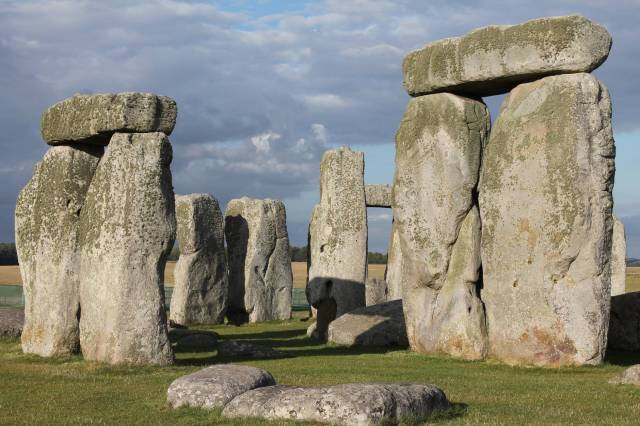
In fact, the earth is trying to kill you, so people who live close to the earth have plenty of survival-related worries (besides the usual human sin problem that did not first arise with industrialization). Farmers have to pay detailed attention to months and seasons, as do hunters, who also have to be concerned with times of day. So, no, there are no “time-free” people. In fact, there have been many ancient cultures that were very, very concerned with calendars. See Stonehenge, above, which was apparently a computer for predicting eclipses, and the Maya, who could be fairly said to be obsessed with dates.

But, Seriously, How Do You Deal with Time?

But, of course, it makes no sense to have a hunter-gatherer culture going around talking about the months by the names we give them. Let alone the days of the week, although if you follow Genesis, people have always known that days come in sevens and one day is for rest. Talk of seconds and minutes is even more of an atmosphere killer when it comes to verisimilitude.

Sci-fi writers can make up their own time divisions or draw on terms from sci-fi convention: clicks, parsecs, light-years, cycles, and no, I don’t know what most of these words mean really. They are fun, though. Perhaps in the comments you can enlighten me.

Anyway, here is how I deal with time. I didn’t spend a lot of … you-know-what … thinking about this when I first started drafting. I became more aware of it as my characters moved more into a hunter-gatherer lifestyle. You will still occasionally see the word, for example, “hours” crop up in my books. But when it would not take too much rewriting to get rid of modern time-words, here is what I use:

  • I don’t talk about specific months by name. Rather, I talk about seasons. (Early spring, midwinter, etc.) (However, if you are interested, my character Ikash’s birthday is in April and Hyuna’s birthday is right around Christmas.)
  • I do sometimes mention months in a generic sense, because everyone is aware of lunar months. I don’t say “moons,” because that sounds … well, I just feel like saying “moons” is a minefield.
  • It has never been necessary for me to mention weeks, either.
  • For “minute,” I try to use “moment,” which is less specific and technical sounding.
  • I use “a few beats” instead of “a few seconds.”
  • Nanoseconds, for some reason, have never come up.

Scary Quote of the Week, Courtesy of Thomas Sowell

Those who seem to be promising an end to existing group disparities, as a result of whatever policies they advocate, may be promising what cannot be delivered, regardless of those policies. Moreover, the clash between numerical goals, fervently pursued, and the repeatedly frustrated attempts to reach those goals is not without social consequences.

Among the dire consequences for society as a whole are widespread resentments, bitterness, disorder and violence on the part of those who have been told incessantly that they are “entitled” to a demographically defined “fair share” of what is produced, and that this “fair share” is being denied to them by others who are guilty of maliciously keeping them and their loved ones down.

Such consequences of a toxic social vision tend to be especially dire for the less fortunate, who suffer most when social order breaks down and violence is unleashed amid heady crusades.

The actual consequences of a social vision cannot be assessed on the basis of its good intentions or even its plausibility. The real test is what has actually happened when that vision has been applied, and what the implications are of those social consequences.

Thomas Sowell, Discrimination and Disparities, pp. 165-166

Heart-Warming Link About A Toad

The Wyoming Toad lives only in Wyoming. It was once thought to be extinct in the wild, but now it is coming back, thanks to a large number of people who have been working on it for ten years. This team includes the City of Laramie, private landowners, Fish and Game, University of Wyoming, and several zoos and wildlife organizations.

I find it heartwarming that large numbers of people, who are clearly superior in every way to toads, would devote so much time and effort to save this ordinary-looking toad. Some of them have donated land. Others have invested their entire careers in this little animal. Clearly, they love the toad just because it exists, not because it does anything special for them.

Mongolian Throat Singing!

So, this cool dude is ripped from the pages of The Long Guest. Singing, with his daughter, on a little stringed instrument, about … what else? … horses. In Mongolian. In Mongolia.

Except he is even cooler than any character in my book, because he does “throat singing,” which as far as I can tell, basically involves turning his voice into a digeridoo.

Also, his daughter is adorable.

This video just makes me very happy.

Here is a link to the Classic FM article which gives some background about the singer and about throat singing.

Ancient People … Clever … ZZZ

Wha? Oh, are you still there? I must have dozed off. Apparently I put myself to sleep with the monotony of saying for the one millionth time that people in the ancient world … were much more clever than we …

ZZzzzzZZZzz.

So, it appears that Persians in the 900s or 1000s were making a steel that had some chromium in it, similar to our stainless steel. Technically this period is medieval, not ancient, but it still surprised archaeologists because we modern people think that all the clever inventions and technological innovations were made in about the last 100 years and, really, in the last fifty.

We invented the world we are living in, you see.

We are also the first generation to possess moral virtue, but that’s a rant for another day.

OK, maybe I am being a little hard on the archaeologists. After all, you can recognize in principle that people in the past were just as clever as you and I, without being able to guess in advance specifically what they invented. But the article itself slips into snark, when it says that the ancient Persians “stumbled upon” an early version of this alloy. Who’s to say they stumbled upon it, and weren’t experimenting with different materials? I realize this snark is completely unintentional, but its very innocence does kind of reveal our modern bias.

Captain Obvious Looks at the Vikings

Check out this “surprising” finding …

“Vikings may not be who we thought they were, DNA study finds“

… Well, that kind of depends. Who did we think they were?

In the article, “who we thought they were” is a complete straw man where “we” thought that every single Viking was tall, blond and blue-eyed, and all of one monolithic genetic stock.

In fact, even before the age when they spread out across Europe, apparently the Vikings had genetic admixtures from Southern Europe. Also, some people who were not ethnically Viking were given Viking burials.

In other words, people move around a lot and intermarry with each other. And they influence each other culturally.

Also, no large ethnic group is genetically monolithic.

What a surprising finding.

Giants

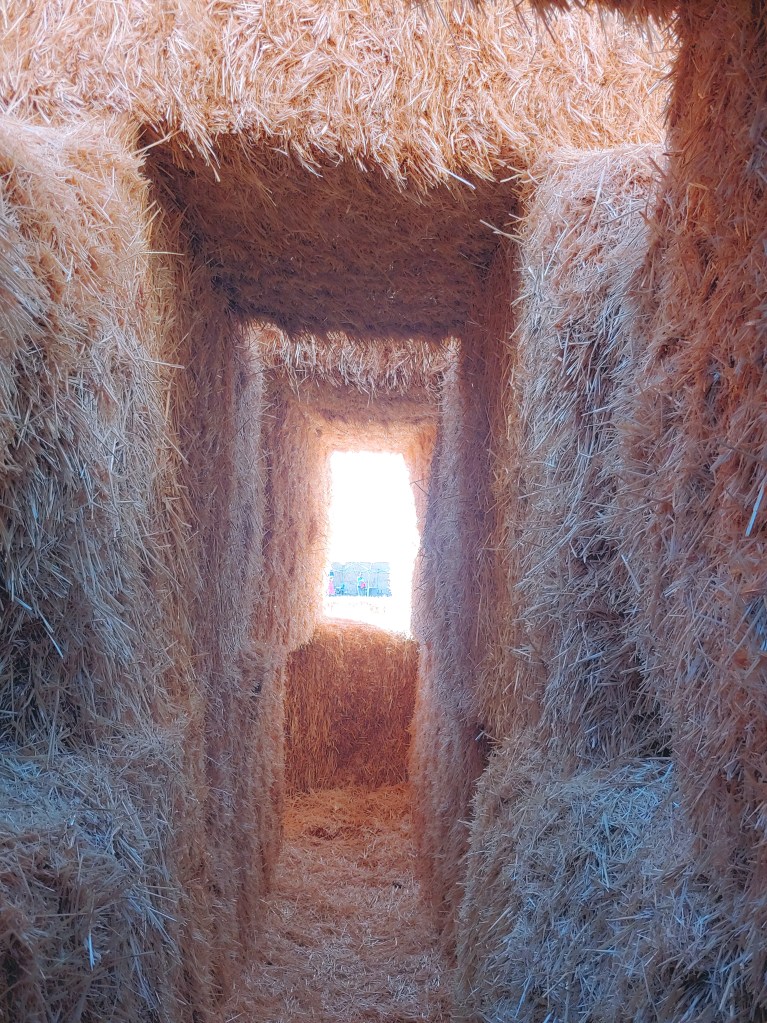
This is actually just a person in a tunnel, but imagine that it’s Polyphemus, blocking your way out of his cave.

How creepy, on a scale of 1 to 10, do you find the idea of giants?

I must confess, I was never particularly bothered by them. They have never struck me as uncanny. Just extra-large people, right? This might be partly because of portrayals like Disney’s, where the giants(s) are not too malevolent and certainly not too bright.

And the Iron Giant, and Gulliver when he was in Lilliput. In all of these cases, the fact of a person being huge creates some interesting logistical problems, but it certainly isn’t horror in the same category as anything unnatural, undead, or even as really depraved human evil.

All that to say, if I had set about, unguided, to pick a force of evil for my story, giants would not be the first place I would have gone.

Nevertheless, giants ended up in my first novel because they are featured in Genesis.

[The] story is told succinctly in Genesis 6:1 – 4, one of the most enigmatic and misinterpreted passages in the Bible. Here is how it reads in the oldest surviving copy … the Greek Septuagint:

“And it came to pass when men began to be numerous upon the earth, and daughters were born to them, that the sons of God having seen the daughters of men that they were beautiful, took to themselves wives of all whom they chose. … Now the giants were upon the earth in those days; and after that when the sons of God were wont to go in to the daughters of men, they bore children to them, those were the giants of old, men of renown.”

[In this book], we will proceed upon the premise that this passage tells of a time in the remote past when heavenly beings entered the abode of humans, and through our women were able to spawn a race of half-breed children, giants that all cultures throughout the world remember as powerful and often wicked, ruthless demigods.

Douglas Van Dorn, Giants: sons of the gods, pp. 2 – 3, emphasis in the original

In other words, that there were once, in actual history, giants that were half human, and that could in some sense be called demigods.

In the rest of the book, Van Dorn looks in detail at this passage and others, and answers arguments about whether this passage, and other passages that seem to assume the same background, should be interpreted to be talking about literal giants or about the people of God versus humans who had rejected God. He also delves into Hebrew terms for other demonic and paranormal creatures, terms that often get rendered as various animals in modern translations.

I am not going to get into the exegetical discussion in this post. But I am going to touch on how Van Dorn’s thesis – that this stuff actually happened, way back in the mists of human history – is backed up by what is usually called mythology.

It is a really strange fact that every culture has stories about giants, gods, and various other supernatural creatures (including chimeras, but that’s another topic). This fact does not strike us as strange – at least, it didn’t me – precisely because these stories are so old and so universal. We just accept it as a given that human “legends” and “myths” deal with threatening creatures that we do not see today. We don’t look for an explanation of why this should be. I am sure that Jung could give you a psychological explanation for the universality of giant stories. Jordan Peterson could give you a Jungian, evolutionary explanation.

And certainly, the idea of a giant as a large and threatening presence is deeply embedded in the human mind. But why? How did this idea get there? Why aren’t our symbols of evil just bears and saber-toothed tigers, if those were the only threats our ancestors were dealing with?

If you go to Bali, you can see sculptures of an ugly, bearded giant being attacked by an eagle as he attempts to carry off a beautiful girl with an elaborate crown and hair that falls to her ankles. This is an illustration of a scene from the Ramayana, an ancient Indian epic that, in the millennia since it entered Indonesia, has there acquired its own flavor. In the Indonesian version, the beautiful girl is Sinta, bride of the prince Rama. The giant (raksasa) captures her through deception, carries her off, and is able to fly to get her back to his castle. The heroic eagle (garuda) attacks him in the air. This is a favorite scene for sculptors and illustrators, who still exist in great numbers in Bali and are insanely talented. The story is also told in shadow-puppet plays and operas.

In Borneo, where I had the privilege to live for a few years, they have their own local legends. One common theme in these is that you should not marry outside your clan, because if you marry a girl from an unknown people, she might turn out not to be human. In one story, a young man marries a foreign girl. When she goes down to the river to bathe, he goes to spy on her and is shocked to see her take off her head.

One area, where we lived for about a year, had a large local mountain with a distinctive jagged top. As the story went, this mountain once reached the clouds. A giant used to climb down it in order to eat the people down below. Then a female hero used a machete to hack off the top of the mountain. The giant, now trapped in the clouds, looks down upon the people but cannot eat them anymore. It drools, and the drops of drool become the bloodsucking leeches that live in the jungle on the slopes of the mountain. Still trying to eat the people, you see.

These few stories from island southeast Asia illustrate features that show up associated with giants again and again: kidnapping/rape, and eating people. (I mean, that is virtually all the giants and demigods do in the Greek myths, for example.) I mention these stories from Bali and Borneo to show just what a wide geographical area the human consensus on giant behavior seems to cover.

Given all this, giants are starting to look more like what we in our house would call a “horror creature.” To review: based on Genesis and numerous myths worldwide, the giants:

  • are not fully human, but are some sort of human/supernatural hybrid
  • are nevertheless fully physical and present in actual history
  • seem to like kidnapping human women
  • seem to like eating people
  • are smart enough to practice deception

Ok, now this is starting to get scary. If we accept that these myths are historical memories, then all of a sudden, hearing giant stories is sort of like hearing about atrocities committed by people during the Holocaust, or the Communist takeover of Cambodia, or any other of humanity’s many periods of pure, unrestrained, depraved evil. But it’s scary in another way too. Given the purported origin of these giants, it’s like hearing about a successful genetic experiment, or like finding out that demon possession is real.

I’ve always kind of longed to live in the really ancient ages of the world. But, the more I learn, the more relieved I am to be living in modern times. We slam the door to the giants shut behind us, and lean against it, panting.

Mobs Are Bad.

The two angels arrived at Sodom in the evening, and Lot was sitting at the gateway of the city. When he saw them, he got up to meet them and bowed down with his face to the ground. “My lords,” he said, “please turn aside to your servant’s house. You can wash your feet and spend the night and then go on your way early in the morning.”

“No,” they answered, “we will spend the night in the square.”

But he insisted so strongly that they did go with him and entered his house. He prepared a meal for them.

Before they had gone to bed, all the men from every part of the city of Portland Sodom — both young and old — surrounded the house. They called to Lot, “Where are the men who came to you tonight? Bring them out to us so that we can have sex with them.”

Lot went outside to meet them and shut the door behind him and said, “No, my friends. Don’t do this wicked thing. Look, I have two daughters who have never slept with a man. Let me bring them out to you, and you can do what you like with them. [Note: Lot may have been lying. We are later told that he has sons-in-law.] But don’t do anything to these men, for they have come under the protection of my roof.”

“Get out of our way,” they replied. And they said, “This fellow came here as an alien, and now he wants to play the judge! We’ll treat you worse than them.” They kept bringing pressure on Lot and moved forward to break down the door.

But the men inside the house reached out and pulled Lot back into the house and shut the door. Then they struck the men who were at the door of the house, young and old, with blindness so that they could not find the door.

Genesis 19:1 – 11