
“Colored People,” the classic song by D.C. Talk.
Tag: anthropology
Egyptian Red Hair

This is my second post about non-stereotypical hair. See my first one here.
If I were to ask you to draw an Ancient Egyptian, you would probably draw someone with gold, reddish, or dark skin, long dark eyes, and black hair. Red hair would probably not appear in your drawing. However, there has been a red-haired strain in Egyptian genetics apparently from time immemorial.
Ramses II, 90 years old when he died, was tall, thin, and by the time of his death he was stooped and had a tooth abscess. He also had red-gold hair. “Specialists who examined the strands under a microscope found that it had been dyed with henna and in all likelihood had been auburn in Ramses’ youth” (Time-Life, p. 153). Tall, thin, red-haired and hook-nosed, Ramses II does not match my mental picture of a typical Egyptian.
But he is not the only one. A number of red-haired Egyptian mummies have been found. Archaeologists used to assume that the hair was once dark and had been bleached out by the embalming process. But a recent study treated hair samples with the natron salts similar to those the Egyptians used, and found that the process did not change the color of the hair. Apparently these were actually redheads.
When I was taught Egyptian mythology in school, I was told that Seth, the villain of the story of Isis and Osiris, was red-haired. He was also Osiris’ brother. I found this intriguing, and it reminded me of the Semitic story of Jacob and Esau, who were twins one of whom was a dark-haired (?), “smooth” man, and one of whom was “hairy” and “red.”
Now I find out that Seth, as his legend later developed, was a trickster god, usually portrayed as a composite of different animals, with red hair or fur. Also, red was a symbolic color that could represent vitality or anger (no surprise there). So it’s possible that Seth was an entirely invented character and that his unusual hair color was picked to match his personality and symbolism. But, since this is an ancient origin myth, I can’t shake the possibility that there once was actually a founding pair of brothers, one of whom was dark-haired and one of whom was red. (Also, shades of the original Thor, a quick-tempered, red-haired, trickster god!)
If Red Hair is Native to Egypt, Does This Mean that Ancient Egyptians were Indo-Europeans?
No.
It just means that, as for most people groups worldwide, their genetics were more complex than the layperson would first imagine.
The ethnicity of the ancient Egyptians has been a hugely contested topic. Their civilization is so intriguing that everyone wants to claim them. Eurocentrists have tried to claim that the Egyptians were actually “Mediterranean” (specifically the Hellenistic, European-style Mediterranean), because this supports their dogma that Europeans have been the only source of civilization and there has never been a high civilization to come out of Africa. Afrocentrists have countered by claiming the ancient Egyptians were not only not white, but were truly black, the ancestors of the modern-day sub-Saharan Africans. The world’s first high civilizations were African, and everyone else has stolen their ideas!
Both groups are wrong about the ethnicity of the ancient Egyptians. Genetic studies of mummies are difficult to do, and this is truer the older the mummies are, but so far, they have concluded that Egyptians have more or less always been … Egyptian. Uniquely themselves, more closely related to the peoples of the Levant than to any others, and genetically, more or less just like the Egyptians of today.
Also, Could We Stop the Tug-of-War?
And may I just add, this is stupid, human race? Could we please (and when I say we, I mean you, human race) stop all this “I started civilization” “No, I did”?
First of all, Egypt was not the world’s first civilization. Contemporary with them, we have the Sumerians, who though they did not live in Africa were probably also black, and the little-known Balkan civilization that gave us the Vinca signs. And there are good indications that many civilizations existed just as advanced as, and prior to, these. See all my posts about The Lost Civilizations of the Stone Age by Richard Rudgley.
The Afrocentrists are closer to being right than the Eurocentrists. Arthur C. Custance makes the case,
One does not think of Africa as particularly inventive. As a matter of fact, however, so many new things came from that great continent during Roman times that they had a proverb, “Ex Africa semper aliquid,” which freely translated means, “There is always something new coming out of Africa.”
It is true to say that whatever inventiveness [Indo-Europeans] have shown in the past three or four centuries has almost always resulted from stimulation from non-Indo-Europeans. Our chief glory has been the ability to improve upon and perfect the inventions of others, often to such an extent that they appear to be original developments … [I]t does not seem proper to call a people “inventive” who once in a while do invent something, but who 99% of the time merely adapt the inventions of others to new ends.
Custance, Noah’s Three Sons, pp. 199, 215
That said, the idea that any one nationality can claim to have founded civilization is … stupid, human race. Human beings are really smart and civilization springs up wherever they go. Lots of people have invented civilization, many times.
(Furthermore, even if your ancestors did build the Parthenon or the Pyramids or Notre Dame, you didn’t build them personally, did you? Do you really want to start taking credit for amazing stuff that people who share your genetics did 3,000 years ago? Are you also going to take credit for all the atrocities they committed? Human race, you are too smart for this stupid idea.)
Egyptian Red Hair Makes an Appearance in The Long Guest
Nimri, the anti-hero of my novel The Long Guest, is a Cushite, who per Genesis is related to “Egypt.” Mid-novel, after being separated from his own people and dragged off on a journey over the Asia steppes, he observes some red-haired Indo-Europeans.
When I first saw that redhaired fellow I was reminded of my relative Mizra. He had red –gold hair and bright burnished skin like my own – only even more ruddy, just a shade darker than his hair. He was tall and thin, with a long thin arrogant face. Between that and his unusual coloring, he was a very striking-looking man. He used to stalk around the architects’ complex like a very god … how we all admired him, and wanted to be like him! But no one could compare to Mizra.
The Long Guest, Chapter 13
The Hebrew word for Egypt is Mizraim, which is actually plural: “Egypts.” Rather than making Nimri’s relative’s name plural, I have simply called him Mizra.
Nimri never manages to tell anyone about Mizra, because he cannot yet communicate at this stage in the story. But I can tell you. In case you didn’t know, I’ll whisper it in your ear: Some Egyptians had red hair.
Sources
“Color (iwen)” Ancient Egypt: the Mythology
Custance, Arthur C. Noah’s Three Sons, The Doorway Papers series vol. 1, Zondervan, 1975. pp. 155 – 216 discuss “The [Technological] Inventiveness of the Hamitic Peoples.” Or you can read the chapter here.
“Isis: Egyptian Goddess,” Britannica.
“New Research Shows that Some Ancient Egyptians were Naturally Fair-Haired,” Ancient Origins, 2 May 2016
Perry, Philip. “Were the ancient Egyptians black or white? Scientists now know,” Big Think, June 11, 2017
Ramses II: Magnificence on the Nile, by the editors of Time-Life books, Time-Life Books, Alexandria, Virginia, 1993. p. 153 shows the red-gold hair on the mummy of Ramses II.
Schuenemann, Verena J., et. al., “Ancient Egyptian mummy genomes suggest an increase of Sub-Saharan African ancestry in post-Roman periods,” Nature.com, 30 May 2017. This is the study that the Big Think article is summarizing.
“Seth: Egyptian God,” Britannica.
Betataki Cliff Dwelling, Nestled in Its Valley
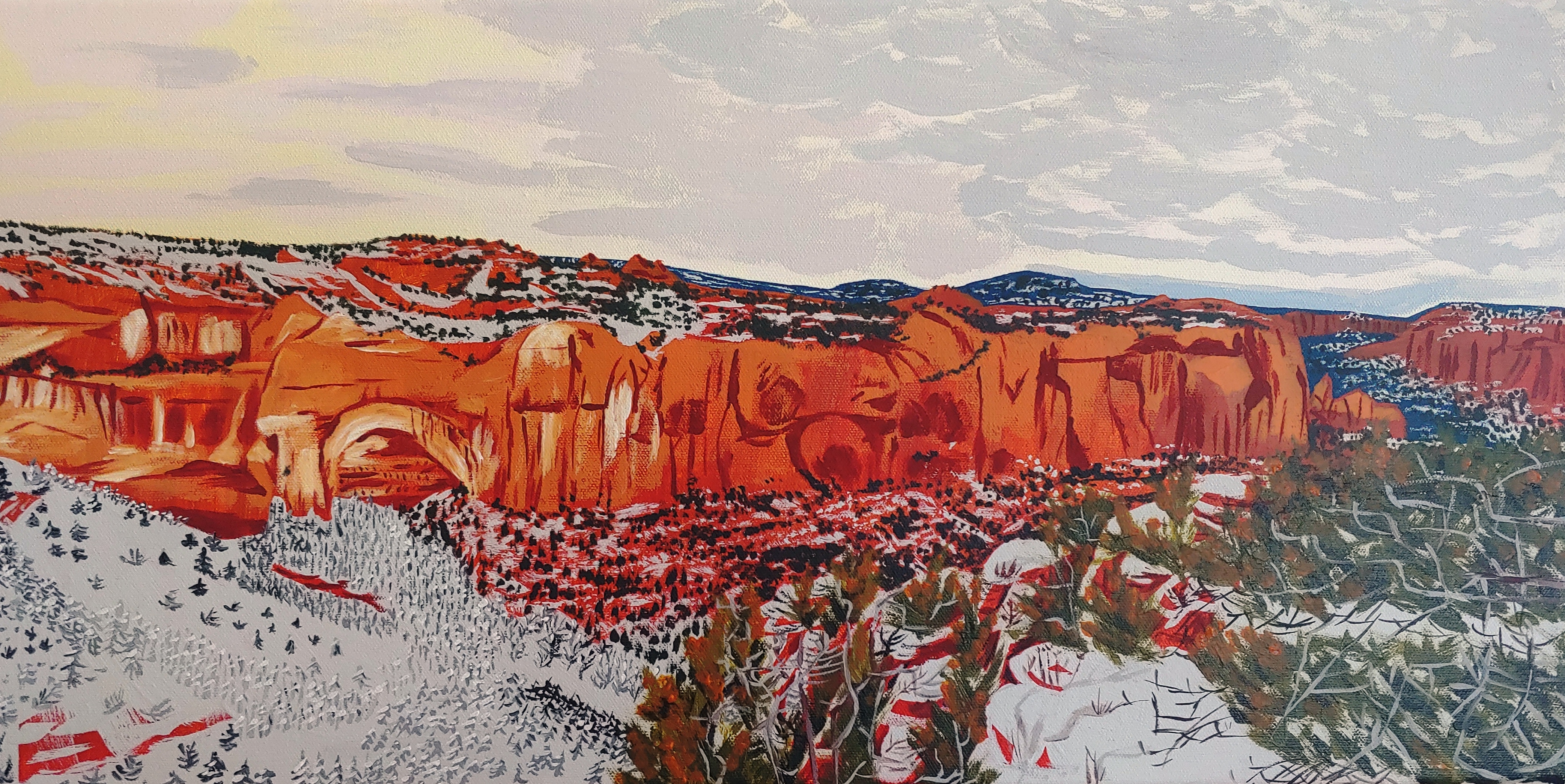
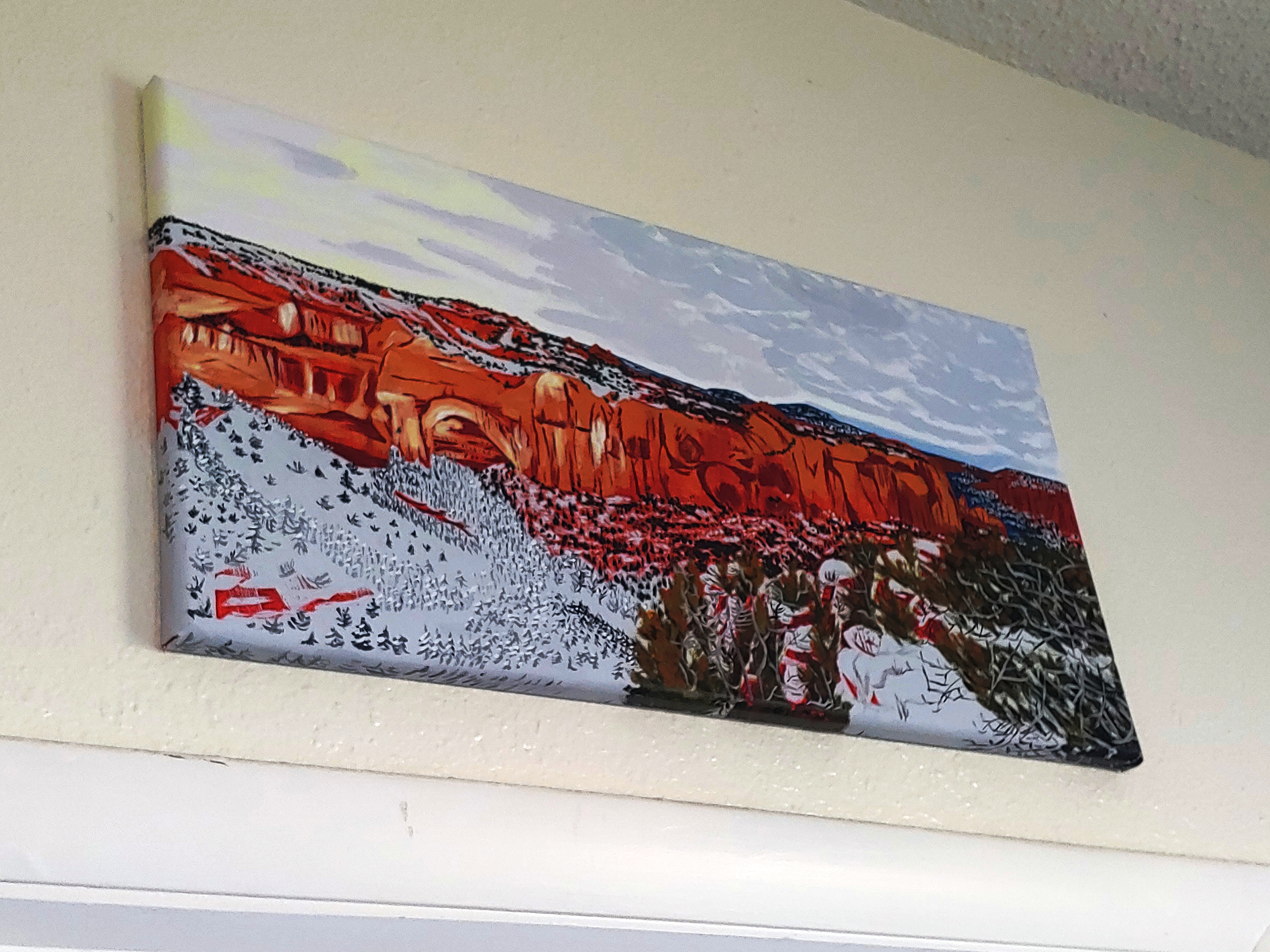
Betataki Cliff Dwelling is located at what is now the Navajo National Monument. Rand McNally, who kindly alerted me to its presence, won’t allow me to post a copy of a page from their atlas. However, if you want to find this somewhat out-of-the-way place, head north from Phoenix on I-17. Continue north as the highway becomes 89, then get off at the turnoff for 160, signs for Tuba City. 160 cuts northeast across Navajo country. About 75 miles past Tuba City (and just before Kayenta), you’ll see signs for the Navajo National Monument. It’s on the north side of the road. Like every good national park, there is a small museum/gift shop/information center, where you can obtain maps for walking the various trails.
The trail to Betataki is a short, easy hike: about an hour round trip to and from the overlook. You cannot approach the cliff dwelling itself, but there is a viewing platform that allows you to look across the canyon. When you do, this painting is roughly what you will see.
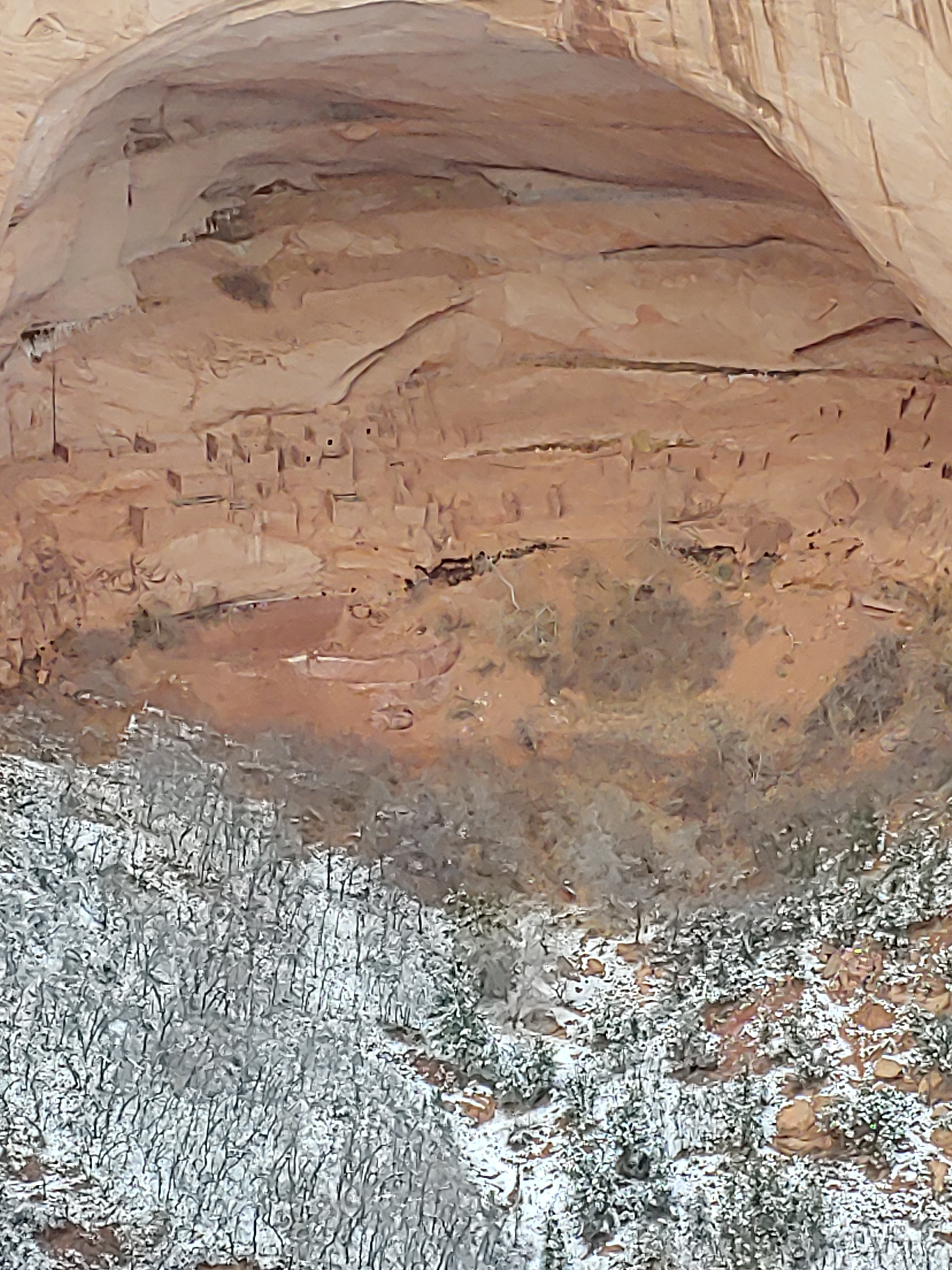
Here is a crude, cell-phone-picture close-up of the cliff dwelling. As you can see, it’s under the large arch on the left side of the painting.
We were there on a grey, snowy day. I didn’t plan it this way, but I love the contrast the snow and the cold grey colors of sky and vegetation make with the red-rock desert.
For those keeping track, Kachina Bridge is about one day’s drive north of Betataki. It’s in Natural Bridges National Monument in southeastern Utah. This is simply a huge culture area.
Gobekli Tepe, the World’s Oldest Temple?

I wonder whether you’ve ever heard of Gobekli Tepe. I hadn’t until just a few years ago, which makes sense because it wasn’t rediscovered (and so, presumably, begun to be excavated) until the 1990s.
It’s called the world’s oldest temple because it dates back more than 10,000 years. In the article I will link to below, dates of 11,500 years ago and even 15,000 years ago are mentioned. This puts it in the Neolithic: the Stone Age. Like many other ancient complexes that have been given more recent dates, it is made of megaliths placed with geometrical precision.
The Dating of Gobekli Tepe
It sounds really to cool to say that a til-recently-unknown stone structure in Turkey with an exotic name is the “world’s oldest temple.” But as we sometimes mention on this blog, it’s very possible that some of the other megalithic structures found around the world are in fact older than conventional dating would have it. An argument has been made, for example, that the Sphinx and the pyramids at Giza are closer to 20,000 years old. Gobekli Tepe, then, is the oldest megalithic temple that has been able to convince mainstream archaeologists of its bona fides. At any rate, it clearly hails from a very ancient time when people all over the world were for some reason (and with some method???) building stuff with megaliths.
The ancientness of Gobekli Tepe creates a problem for its excavators when its obvious sophistication comes into a head-on collision with their beliefs about the abilities of Stone Age humans. That clash happens several times in the Jerusalem Post article Israeli researchers unveil architecture secrets of ‘world’s oldest temple.’
Two archaeologists from Tel Aviv University, PhD candidate Gil Haklay and his supervisor, Prof. Avi Gopher, have now unveiled new secrets of its sophisticated architecture, highlighting an intricate geometrical pattern that was conceived before humans had even discovered agriculture or pottery.
Ibid
… Um, are you sure they hadn’t discovered agriculture or pottery, Professors?
Göbekli Tepe features dozens of monolithic pillars four to five meters tall placed along at least 20 concentric rings, which archaeologists refer to as “enclosures.” The pillars are decorated with remarkable reliefs depicting animals including gazelles, jaguars, Asiatic wild donkeys and wild sheep. …
“We found that there is a center point in each enclosure, which we identified not only in the three in the main excavation area, but also in others located outside it,” Haklay explained. “We also found out that the center of these enclosures was always located between the two large central pillars aligned with the front side. These pillars also presented an anthropomorphic structure and they have a front side. In each enclosure based on the surrounding peripheral pillars was found an alignment with the narrow front side. This was our first observation: an abstract design rule.“We later noticed that the role of those center points extended beyond an individual enclosure, because the three center points of enclosures B, C and D form an almost perfect equilateral triangle,” he added.
Haklay highlighted that they went on to verify whether the geometric pattern was confirmed by further observations, for example the orientation of the central pillars. They found many other elements supporting it. Among others, the main access to the structure was located between the only two pillars carrying anthropomorphic as opposed to animal reliefs.
Ibid
But how was all this accomplished?
[I]t is not clear how long its construction took but it might have been centuries if not more, with different people initiating it and adding to it.
Ibid
But yet later, we get this:
This discovery also overcame a previous theory common among researchers that the enclosures were conceived and built in unrelated stages.
Ibid
Huh? So it was built over hundreds of years, added to a little at a time, but yet planned by one or a few masterminds?
“We are talking about hunter-gatherers, but at the same time we see signs of a very complex social structure,” Haklay said …
But how could such a complex design be envisioned by people who did not even know how to create a simple pottery vessel?
Ibid
Oh, stop. Just … stop.
Gobekli Tepe in Fiction
There is one novel that I know of which focuses squarely on Gobekli Tepe: The Genesis Secret, 2009, by Tom Knox. See my review of it here. Interestingly, though Knox is not a believer in the Judeo-Christian God (quite the opposite, in fact), he takes seriously the accounts of giants walking the earth in Genesis 6 and, in fact, his novel ends up revealing that Gobekli Tepe was built at the initiation of a violent, giant race who left large, misshapen skulls behind them.
In film, within the last year I saw on a Netflix a Turkish show called The Gift. In it, a young artist who lives in Istanbul finds that a symbol she has spontaneously drawn all her life has recently been uncovered at the ancient site of Gobekli Tepe. I enjoyed this show, but be warned it has some entirely gratuitous sex scenes.
And Now, for a Really Wild Speculation …
People who take Genesis seriously as history have speculated about the location of the original Garden of Eden. Genesis mentions four rivers as arising from the Garden (or running into it; the linguistics are ambiguous). Two of these are the Tigris and Euphrates. The other two (the Gihon and the Pishon) have been lost to time.
Of course, to try and locate the original Garden is probably impossible. If you suspect, as I do, that the Flood was a result of continental-drift like changes in the Earth’s geography, then nothing anymore is located where it was in Adam’s day, including rivers. On this view, the modern-day Tigris and Euphrates are probably just named after some much more ancient rivers, which could have been in a completely different location.
But if we assume that the continents look more or less the same now as they did in Adam’s day, we can try to guess the region where Eden once stood. One likely candidate is northeastern Africa, or even what is now the floor of the Red Sea (sea levels having risen).
Another candidate is the mountainous region of eastern Turkey, near the headwaters of the modern-day Tigris and Euphrates, along with several other rivers.
And also not too far from Gobekli Tepe.
Just sayin’.
Demystifying the Hunter-Gatherer Diet
Who would you rather hang out with …
or supposed hunter-gatherers who, it turns out, made pottery and ate dairy products?
c.f. The Wild Yam Question, which posits that hunter-gatherers might always either trade with settled people, or engage in some form of agriculture.
Man delights not me.
No, nor woman neither, though by your smiling you seem to say so.
The Maya Microcosm of Humanity
The Maya flourished between approximately 1000 BC and 1500 AD in Central America. Their civilization was centered in the Yucatan Peninsula and the lowland and hilly regions south of it. Their sites are found in what are now the countries of Mexico, Belize, Guatemala, and Honduras.
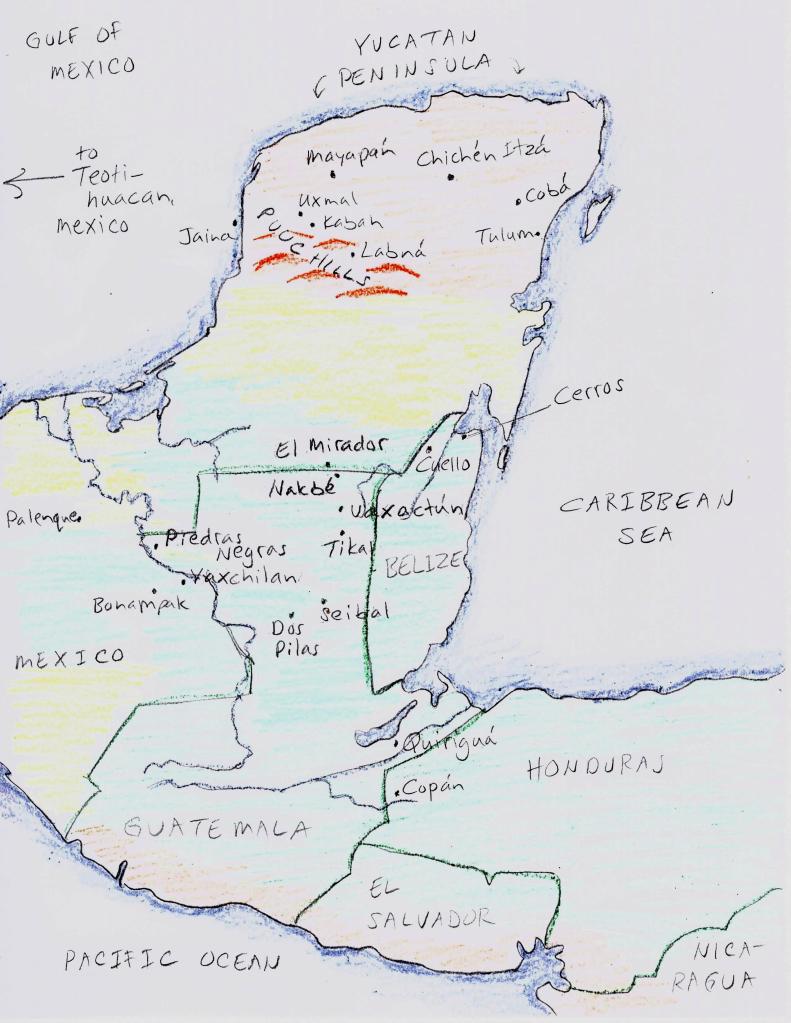
There is so much to learn about the Maya. I have barely dipped my toe in it. As always when learning about a new culture or civilization, I was met with the thrill of the exotic followed by a creeping feeling of familiarity. Though the Maya are very unique, in their own distinctly Mayan way they also epitomize certain things about human beings. In some sense, the more unique they are, the better they epitomize it.
They Are Surprising to Other People
I don’t know why, but people always get excited when they discover other people. (Animals get excited too: “Oh goody! A person!”) And we are always discovering other people, in the most remote corners of space and time, where for some reason we did not expect to find them, though you would think we’d have learned our lesson by now.
The Maya were particularly hard to find because of the geography of the region they inhabited. Jungle is not kind to the preservation of buildings or artifacts. It destroys things quickly, grows over things and hides them, and can make the region impassable.

A really thick jungle allows no roads through it, and once they arrived, here is what some of the archaeologists found:
“The rain was incessant,” Charnay complained. “The damp seems to penetrate the very marrow of our bones; a vegetable mould settles on our hats which we are obliged to brush off daily; we live in mud, we are covered in mud, we breathe in mud; the ground is so slippery that we are as often on our backs as on our feet.” Once Charnay awakened to find 200 “cold and flat insects the size of a large cockroach” in his hammock, 30 of which clung to his body and bit him painfully.
The Magnificent Maya, p. 22
They Got Romanticized
In the early 1500s, during the Spanish conquest of the region, Spanish priests managed to preserve some Mayan cultural data – vocabulary lists, transcriptions of myths, and a few codices (books) – at the same time they were brutally wiping the culture out. These records remained obscure until, 300 years later, there was a resurgence of interest in the Maya. Explorers, hobbyists, and artists who happened to have the time, money, and fortitude to brave the jungles started unearthing Mayan ruins and making sketches and watercolors of them. In some cases, these sketches are the only record we have, since the jungle has continued its destructive work in the 200 years since.
Once European academics started getting interested in the Maya, they realized there was a very elaborate system of numbers and pictographs that they could not read. Thus began a long, haphazard process of rediscovering old codices and cross-checking them with symbols found on the monuments, as recorded in photographs and drawings. The number system was easier to decipher – dots for ones and bars for fives, for example – and so the first thing that got decoded were dates and astronomical cycles,
… which led many experts to conclude that Maya writing was limited to such matters. As late as the 1950s this was still the most prevalent view, and its chief spokesmen were the American archaeologist Sylvanus G. Morley of the Carnegie Institution in Washington, D.C., and J. Eric S. Thompson, a British archaeologist also affiliated with Carnegie. Thompson drew a picture of the Maya as a peaceful, contemplative people, obsessed with the passage of time, and guided by priests who watched the movements of celestial bodies and discerned in them the will of the gods. Maya cities were ceremonial centers, he believed, not bastions of the worldly power.
The Magnificent Maya. p. 33
Over the next few decades, through the work of several brilliant code breakers, about 80 percent of Mayan glyphs were deciphered. Turns out they are a combination of ideograms (an image representing an idea) and phonetic units (an image representing a sound). As this work went on, researchers have been able to read more and more of the Mayan myths and history, which in turn has helped us better to interpret their art. They started to discover that the 19-century “noble savage” characterization of the Maya was badly mistaken.
They Were Shockingly Cruel
First of all, the Mayan society was indeed hierarchical, with battles for succession and kings of city-states engaging in (perhaps ritual?) warfare. Discoveries during the 1990s confirmed that this hierarchy was present hundreds of years earlier than previously guessed. (Archaeologists’ preconceptions might have had something to do with these inaccurate guesses. See my post about Serpent Mound for a critique of the 19th-century idea that civilizations always develop along certain lines, from hunter-gatherers, to villages, to cities.)

But warfare was only the beginning. There was also the bloodletting, the torture, and the human sacrifice.
Apparently, Mayan royalty were expected to offer blood to their gods. During these bloodletting rituals, they would have visions. There are pictures and statues of both men and women doing this. Women would draw a stingray spine through their tongue to produce the blood. Men would draw blood from their tongue, earlobes, or genitals. (Yikes.) They would allow the blood to be absorbed by sheets of bark paper, which was then burned, the smoke being a way of getting the blood to the gods.
If a culture is going to have a painful ritual, it’s good that it should be done by the royalty. That’s certainly better than having a royalty that is unwilling to suffer for their duty and their people. If this were the only painful ritual the Maya had, I’d kind of admire it. But it wasn’t.
The Maya were big on human sacrifice. Decapitation was popular, or they might throw the victims into a sacred cenote (large natural limestone hole filled with water) if one was available. High-born victims, captured in war, would be mutilated and displayed before the community before being offed. Later, perhaps under the influence of the feathered-serpent cult of the Toltecs, Mayan priests would cut out the victim’s heart, offer it (and its steam – ew!) to the sun, and then kick the body down the steps of the temple. This ritual was still being conducted at Uxmal in the 1500s, which is why we know about details like the kicking of the body (Magnificent Maya, 139 – 140). Chacmools, which were obviously built to hold something, may have been made to hold human hearts.
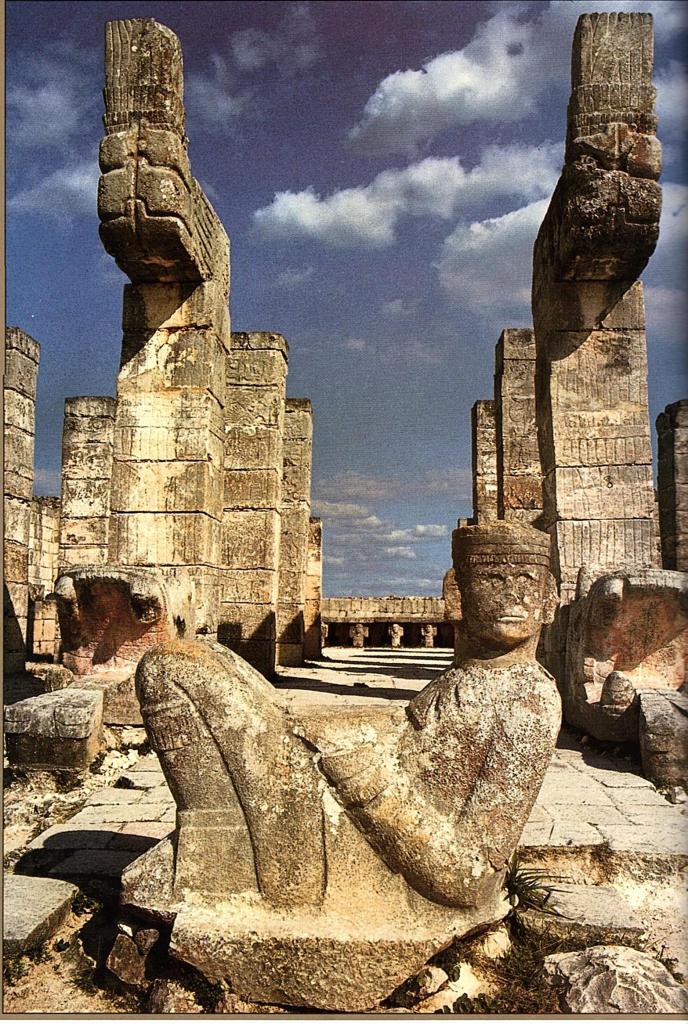
Then there were the ball games. Did I mention that the Maya were big sports fans? Like, really big. You have probably heard of this game, where the players would use their hips and buttocks to bounce a large, heavy rubber ball off the sloping walls of the court. Apparently, the Maya took their sports so seriously that the losers of this game might be sacrificed, either by one of the methods above, or by being trussed up and used as the ball until they died (94 – 95). This very ball game features in the Mayan creation story, the Popol Vuh, where the Hero Twins play the game against the inhabitants of the Underworld. The reason they are obliged to do so? The rulers of the Underworld “covet [the brothers’] sporting gear and want to steal it” (56 – 57). This story, too, features a lot of torture.
Cruelty is always shocking, which is why the heading for this section says “shockingly cruel.” But it should not shock us to discover that a previously unknown civilization featured widespread, institutionalized atrocity. Every single human culture has something like this. Cultures can have good historical moments when the human evil is comparatively restrained, and they can have bad historical moments when it is encouraged. You could argue that in the case of the Maya, it had really gotten out of hand, and I think you’d be right. But I don’t think that makes the Maya different from any other people in their basic humanity. In their uniqueness, they epitomize what human beings are capable of. People are extremely creative, and they have often used their creativity to dream up ways to torture one another. This is why we have the expression, “Man, the glorious ruin.”
They Were Jaw-Droppingly Smart
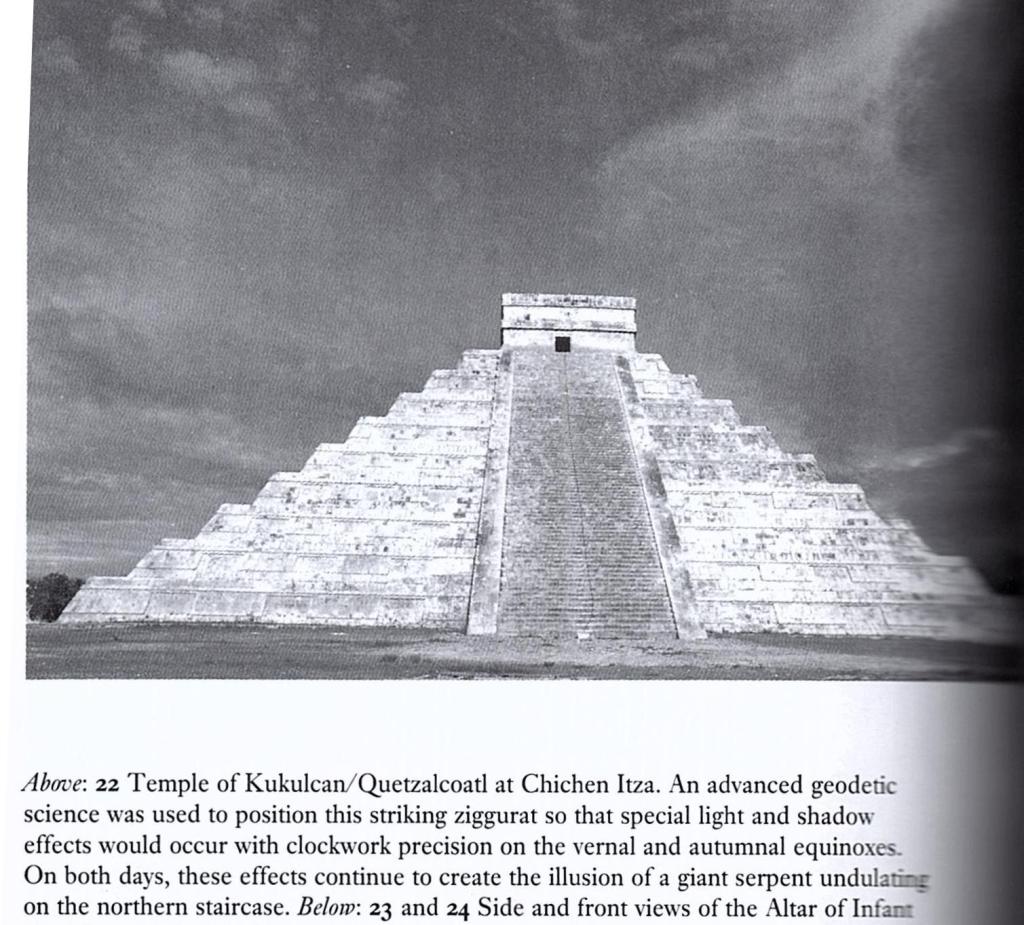
And now we get to the glorious part. No matter how depraved, broken, fallen, or ruined they may be, human beings never stop being made in the image of God, which means they will keep on being creative and clever and productive. It has long been a theme on this blog that ancient people were smarter than modern people expect. This is because they were people, and people are always surprising other people – because the other people are proud – with their cleverness.
The Maya were advanced mathematicians. They had the concept of zero, and the idea of place value, which the Romans did not have. They had calculated the solar year at 365.2420 days (the modern calculation is 365.2422), and the time of the moon’s orbit at 29.528395 days (modern figure is 29.530588). They had figured out the average synodical revolution of the planet Venus (the amount of time it takes for Venus’s orbit and the earth’s orbit to sync up so that Venus is rising in the exact same spot in the sky). This average happens to be 583.92 days, and they had figured out how to reconcile this with their “sacred year” (13 months of 20 days each) and with the solar year, by adding days every certain number of years, similar to our leap year. Bringing all these interlocking calendars into sync then allowed them to calculate mind-blowingly distant dates without losing accuracy.
All the above information is from Graham Hancock in Fingerprints of the Gods. Hancock then quotes Thompson, the romanticizer whom we met a few sections ago. Studying the Mayan calendar, Thompson had reason to be impressed:
As Thompson summed up in his great study on the subject:
“On a stela at Quiriga in Guatemala a date over 90 million years ago is computed; on another a date over 300 million years before that is given. These are actual computations, stating correctly day and month positions, and are comparable to calculations in our calendar giving the month positions on which Easter would have fallen at equivalent distances in the past. The brain reels at such astronomical figures.”
Hancock, Fingerprints of the Gods, p. 162
Hancock, being a bit of a snob, questions why the Maya “needed” to develop these calendrical and mathematical tools. He speculates that the Maya had inherited “a coherent but very specific body of knowledge … from an older and wiser civilization.”
“What kind of level of technological and scientific development,” Hancock asks, “was required for a civilization to devise a calendar as good as this?” (158 – 159)
Of course, he is asking these questions because he’s heading in the direction of civilization having dispersed from a “mother-civilization.” That’s fine with me, but in asking these questions he also betrays a worship of science and technology that is distinctly modern and that, when applied to ancient peoples, makes us shortsighted. Why should mathematical genius exist only in the service of technology? The Maya were smart, and they wanted to make these calculations about the celestial bodies and about dates in the distant past and future. Isn’t that enough? Furthermore, they actually recorded why they were so obsessed with these calculations. Their cosmology held that time proceeded in predictable cycles of disasters, and they were pretty concerned with knowing when the next one was coming. That was the purpose of the Long Count calendar, as Hancock himself points out on page 161. It was a doomsday clock. That may also have been a big part of the reason for the horrifying sacrificial system.
The Long Count calendar is what everyone was talking about when they were saying the Maya had predicted a cataclysm for Dec. 23, 2012. It didn’t happen – phew! – and, frankly, for obvious reasons I don’t completely buy in to their cosmology. Although we do need to consider the possibility that in converting the dates, we made a mistake in interpreting their extremely complex system.
Bottom Line, the Mayans are People
I can’t say that I find the Mayan – or the Toltec, Aztec, or Olmec – myths or aesthetic particularly attractive. I dipped my toe in because as part of the research for my books, I need to at least know my way around the ancient Mesoamerican mindset. As the research proceeds, I find myself becoming increasingly fascinated with these people. But I still wouldn’t want to have lived as one. This has been true of virtually every ancient culture I’ve studied.
So, taking it in reverse order, here is what we have learned about the Maya, and here is what we have learned about humans.
Humans are smart.
Humans are evil.
Humans are wonderful.
Humans are everywhere.
Sources
Hancock, Graham, Fingerprints of the Gods. 1995, Three Rivers Press, Random House, Inc., New York, New York.
Reader’s Digest books, editors, Mysteries of the Ancient Americas. 1986, The Reader’s Digest Association, Inc., Pleasantville, New York.
Time-Life books, editors, The Magnificent Maya. 1993, Time-Life Books, Alexandria, Virginia.
Anthropic Quote of the Week
What a piece of work is a man! How noble in reason, how infinite in faculty! In form and moving how express and admirable! In action how like an angel, in apprehension how like a god! The beauty of the world. The paragon of animals. And yet, to me, what is this quintessence of dust? Man delights not me. No, nor woman neither, though by your smiling you seem to say so.
Hamlet, Act 2, Scene 2
A Tyrant is A Tyrant, on Whatever Continent

I met a traveler from an antique land
Who said: ‘Two vast and trunkless legs of stone
Stand in the desert … Near them, on the sand,
Half sunk, a shattered visage lies, whose frown,
And wrinkled lip, a sneer of cold command,
Tell that its sculptor well those passions read
Which yet survive, stamped on these lifeless things,
The hand that mocked them, and the heart that fed:
And on the pedestal these words appear:
“My name is Ozymandias, king of kings:
Look on my works, ye mighty, and despair!”
Nothing beside remains. Round the decay
Of that colossal wreck, boundless and bare,
The lone and level sands stretch far away.’
Ozymandias, by Percy Bysshe Shelley
Fun project: write a send-up of Ozymandias that stars Lord Pacal instead.
Sources
Evergreen Verse, selected by Hilary Laurie, J.M. Dent, Orion Publishing Group, London, 1998. Ozymandias on p. 89
The Magnificent Maya, Time-Life Books, Alexandria, Virginia, 1993. Photo of Lord Pacal on p. 85
The Diamond-Shaped Face

Who is this handsome fellow? He is Lord Pacal (or Pakal), denizen of the most spectacular tomb ever discovered from the Mayan civilization. This is the tomb at Palenque, the excavation of which reads like an archaeological thriller. The limestone slab covering Lord Pacal’s coffin is the location of the famous Mayan “astronaut” carving, the actual cosmological significance of which is explained here.
This watercolor of him is my own interpretation, done from a photograph of a sculpted head of him, reproduced below.
Though I did my best, in the sculpture his face is even longer, leaner, more angular, more … well … Mayan. I took a guess about skin, hair, and eye color. I also had to interpret his hairstyle and headdress, after staring for some time at the textures in the statue. As near as I can tell, his hair has been arranged to cascade upward and forward over some sort of cone-shaped crown, which I imagined to be jade, a stone the Maya valued. The hair style is apparently meant to accentuate the tall, narrow shape of the head, which was a head shaped valued by the Maya if we go based on their other art. The headband I rendered as a buff-colored woolly material, again based on its texture, though given Pacal’s status it could have been red or gold.
I spent maybe an hour or two on this watercolor, but no doubt the sculptor spent much, much longer on his or her rendering of Lord Pacal, which was probably the most important work of his or her lifetime.
You can see that it’s a dramatic face. You can see why I wanted to paint it.
In my watercolor, Lord Pacal came out looking surprisingly sensitive and gentle. In real life, he probably wasn’t, at least not by the time he reached the age of his death. He was buried with six teenaged human sacrifices, and he came from a culture that produced statues of torture victims.
But my main concern here is with the shape of his face. I am fascinated by the wildly varying types of shape that can and do work as recognizable, and indeed attractive, human faces. Lord Pacal’s face is almost a perfect diamond. It’s widest at the brows and cheekbones, narrowest at the chin and forehead.
As I went to draw this face, I was reminded that I had once drawn another face with a similar shape.

Here is a pen portrait I did from life. This man’s jaw is a touch wider than Lord Pacal’s, but the main difference between the two faces is the nose. This model has a small, rather flat nose with a very low bridge, unlike Lord Pacal’s knifelike nose with its very high bridge, extending all the way up into his forehead, which seems to have been a convention in Mayan portrait art. Whether it this was an ideal of beauty or a real-life physical feature, I don’t know. I do know that low nose bridges are not valued in the culture that the second portrait came from … though I think both kinds can be perfectly beautiful.
And my second model for a diamond-shaped face came from … Borneo. Land Bridge, baby!
Source
The Magnificent Maya, Lost Civilizations series, by the editors of Time-Life Books, Alexandria, Virginia, 1993.
(Much more has been discovered about the Mayan civilization since the publication of this book. In particular, Lidar and UAV aerial imaging have revealed that the Mayan cities were much larger and more numerous than was known in 1993. However, though the context for their interpretation might have changed, the artifacts documented in The Magnificent Maya have not ceased to exist, so I am using the book as an introductory source.)
 Out of Babel Books