There’s a reason I’m posting about this book on Feb. 14.
It does something that I want to do with my novels.
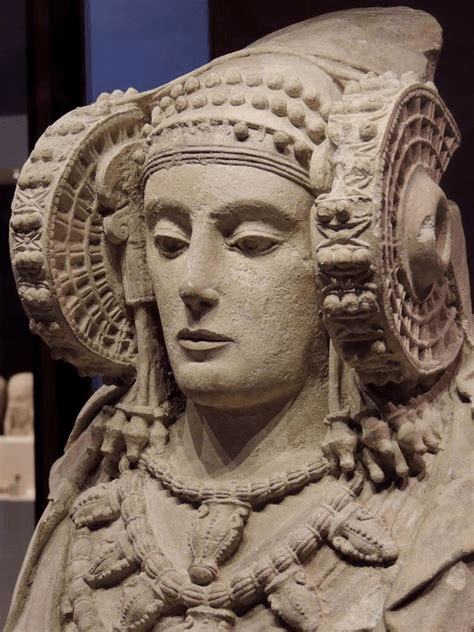
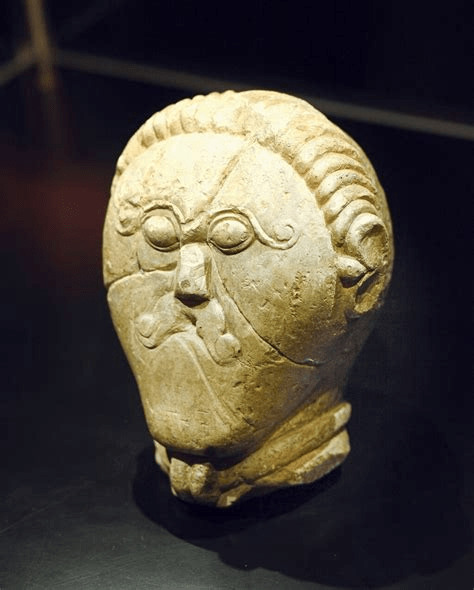
It takes the feeling that I get when hearing about bog burials, stone circles, cave paintings — and amplifies it.
Did I mention that I love it?
I’ll be posting quotations from this book throughout the month of February. The one I posted two days ago – To The Air – could have been written about the scene in The Long Guest where the family cremates … well, I won’t give it away. It was trying for the same thing as that scene, or vice versa. But I mostly posted it for that evocative last line.
you died horribly but are beautiful,
sleeping face and pointed cap and perfect feet,
a peat cutter’s slash dug into your back
but preserved as none of your captors are —
though what a price for immortality.
–from Tollund Man, p. 39
If you’ve ever seen a picture of Tollund Man, this is exactly it.
I haven’t yet read every poem in Bone Antler Stone. They require close attention, and some of them are not short. But every so often I’ll dip into it, and find gems like this one:
The sun sets into the sea with a hiss
and rises with the sound of a driven wheel,
the creak of speaking stone, metal and wood.
The sun sets into the sea to simmer
and rises with the sound of stretched leather
and the song of the horse’s chain and bit.
ibid, p. 23
The idea of the solar system as a great big machine, perhaps made of hoops or wheels, that is alluded to in that first stanza is actually very close to how some ancient cultures conceived of the cosmos.
The last poem in the collection shows the author leaving Orkney, where he went to view the burials, with a friend who is named Pytheas for some reason. This poem raises the thought that not everyone is going to “get” a book of poems like this one.
The price to pay for a place like that,
the price to pay for poems like these…
our intensity is terrifying or just tiresome,
and so the dead and the damp doubleback
into just another of our silent, stone secrets.
It the compares the book itself to a barrow burial waiting to be discovered at the right moment:
So Pytheas proceeded in reply,
assuring me that for us, and for ours,
there was only the odd look, the old look, the awed look,
but rarely the real look of revelation,
or the consolation of having communicated.
And so the motive was to make meaning and memory
a kind of barrow burial in bloom
a garlanded grave underground
forged with turf and stone and fire and then forgotten,
This post is about how we got our Christmas trees. For the record, I would probably still have a Christmas tree in the house even if it they were pagan in origin. (I’ll explain why in a different post, drawing on G.K. Chesterton.) But Christmas trees aren’t pagan. At least, not entirely.
My Barbarian Ancestors
Yes, I had barbarian ancestors, in Ireland, England, Friesland, and probably among the other Germanic tribes as well. Some of them were headhunters, if you go back far enough. (For example, pre-Roman Celts were.) All of us had barbarian ancestors, right? And we love them.
St. Boniface was a missionary during the 700s to pagan Germanic tribes such as the Hessians. At that time, oak trees were an important part of pagan worship all across Europe. You can trace this among the Greeks, for example, and, on the other side of the continent, among the Druids. These trees were felt to be mystical, were sacred to the more important local gods, whichever those were, and were the site of animal and in some cases human sacrifice.
God versus the false gods
St. Boniface famously cut down a huge oak tree on Mt. Gudenberg, which the Hessians held as sacred to Thor.
Now, I would like to note that marching in and destroying a culture’s most sacred symbol is not commonly accepted as good missionary practice. It is not generally the way to win hearts and minds, you might say.
The more preferred method is the one Paul took in the Areopagus, where he noticed that the Athenians had an altar “to an unknown god,” and began to talk to them about this unknown god as someone he could make known, even quoting their own poets to them (Acts 17:16 – 34). In other words, he understood the culture, knew how to speak to people in their own terms, and in these terms was able to explain the Gospel. In fact, a city clerk was able to testify, “These men have neither robbed temples nor blasphemed our goddess” (Acts 19:37). Later (for example, in Ephesus) we see pagan Greeks voluntarily burning their own spellbooks and magic charms when they convert to Christ (Acts 19:17 – 20). This is, in general, a much better way. (Although note that later in the chapter, it causes pushback from those who were losing money in the charm-and-idol trade.)
However, occasionally it is appropriate for a representative of the living God to challenge a local god directly. This is called a power encounter. Elijah, a prophet of ancient Israel, staged a power encounter when he challenged 450 priests of the pagan god Baal to get Baal to bring down fire on an animal sacrifice that had been prepared for him. When no fire came after they had chanted, prayed, and cut themselves all day, Elijah prayed to the God of Israel, who immediately sent fire that burned up not only the sacrifice that had been prepared for Him, but also the stones of the altar (I Kings chapter 18). So, there are times when a power encounter is called for.
A wise missionary who had traveled and talked to Christians all over the world once told me, during a class on the subject, that power encounters tend to be successful in the sense of winning people’s hearts only when they arise naturally. If an outsider comes in and tries to force a power encounter, “It usually just damages relationships.” But people are ready when, say, there had been disagreement in the village or nation about which god to follow, and someone in authority says, “O.K. We are going to settle this once and for all.”
That appears to be the kind of power encounter that Elijah had. Israel was ostensibly supposed to be serving their God, but the king, Ahab, had married a pagan princess and was serving her gods as well. In fact, Ahab had been waffling for years. There had been a drought (which Ahab knew that Elijah — read God — was causing). Everyone was sick of the starvation and the uncertainty. Before calling down the fire, Elijah prays, “Answer me, O LORD, answer me, so these people will know that you, O LORD, are God, and that you are turning their hearts back again.” (I Kings 18:37)
Similar circumstances appear to have been behind Boniface’s decision to cut down the great oak tree. In one of the sources I cite below, Boniface is surrounded by a crowd of bearded, long-haired Hessian chiefs and warriors, who are watching him cut down the oak and waiting for Thor to strike him down. When he is able successfully to cut down the oak, they are shaken. “If our gods are powerless to protect their own holy places, then they are nothing” (Hannula p. 62). Clearly, Boniface had been among them for some time, and the Hessians were already beginning to have doubts and questions, before the oak was felled.
Also note that, just as with Elijah, Boniface was not a colonizer coming in with superior technological power to bulldoze the Hessians’ culture. They could have killed him, just as Ahab could have had Elijah killed. A colonizer coming in with gunboats to destroy a sacred site is not a good look, and it’s not really a power encounter either, because what is being brought to bear in such a case is man’s power and not God’s.
And, Voila! a Christmas Tree
In some versions of this story, Boniface “gives” the Hessians a fir tree to replace the oak he cut down. (In some versions, it miraculously sprouts from the spot.) Instead of celebrating Winter Solstice at the oak tree, they would now celebrate Christ-mass (during Winter Solstice, because everyone needs a holiday around that time) at the fir tree. So, yes, it’s a Christian symbol.
Now, every holiday tradition, laden with symbols and accretions, draws from all kinds of streams. So let me hasten to say that St. Boniface was not the only contributor to the Christmas tree. People have been using trees as objects of decoration, celebration, and well-placed or mis-placed worship, all through history. Some of our Christmas traditions, such as decorating our houses with evergreen and holly boughs, giving gifts, and even pointed red caps, come from the Roman festival of Saturnalia. This is what holidays are like. This is what symbols are like. This is what it is like to be human.
Still, I’d like to say thanks to St. Boniface for getting some of my ancestors started on the tradition of the Christmas tree.
Bonus rant, adapted from a discussion I had …
... in a YouTube comments section with a Hebraic-roots Christian who was insisting that Christmas is a “pagan” holiday:
So, as we can see, the evergreen tree is a Christian symbol, not a pagan one, and has been from the very beginning of its usage. St. Boniface cut down the tree that was sacred to Thor, and that was an oak tree, not a Christmas tree. Sacred oaks are pagan. Christmas trees, which incidentally are not actually considered sacred, are Christian.
Yes, I am aware, as are most Christians, that Jesus was probably not actually born on Dec. 25th. Yes, I am aware that Yule was originally a pagan feast time.
But let’s look at the symbolism, shall we?
For those of us who live in northern climes, and especially before the industrial revolution, the winter solstice is the scariest time of the year. The light is getting less and less, and the weather is getting worse and worse, and all in all, this is the time of year when winter officially declares war on humanity. Winter comes around every year. It kills the sick and weak. It makes important activities like travel and agriculture impossible. It makes even basic activities, like getting water, washing things, bathing, and going to the bathroom anywhere from inconvenient to actually dangerous to do without freezing to death. If winter never went away, then we would all surely die. That is a grim but undeniable fact. Read To Build A Fire by Jack London, and tremble.
Thus, people’s vulnerability before winter is both an instance and a symbol of our vulnerable position before all the hardships and dangers in this fallen world, including the biggie, death. And including, because of death, grief and sorrow.
Yule is a time of dealing with these realities and of waiting for them to back off for another year. After the solstice, the days slowly start getting longer again. The light is coming back. Eventually, it will bring warmth with it. Eventually, life.
Thus, it is entirely appropriate that when the Germanic tribes became Christians, they picked the winter solstice as the time to celebrate Jesus’ birth. He is, after all, the light of the world. A little, tiny light – a small beginning – had come into the bitter winter of the sad, dark world, and it was the promise of life to come. The light shines in the darkness, and the darkness has not overcome it. All this biblical, very Hebrew symbolism answers beautifully the question raised by the European pagans’ concern with the sun coming back.
Our ancestors were not “worshipping pagan gods” at Christmas. They were welcoming Christ (who is the God of Abraham, Isaac, and Jacob) into the heart of their culture. They were recognizing that He was the light, using terms they knew, which were Germanic terms, and this is not surprising because they were Germans.
So, if you want to make the case that no holidays are lawful for Christians except those prescribed in the Old Testament for Israel, be my guest. Try to find some Scriptures to back that up. And maybe you can. But you cannot make that case by accusing people who put up a Christmas tree of worshipping pagan gods. All you’ll do then is reveal yourself to be historically ignorant.
And now to Rome, as always in December, came the Saturnalia.
“Io! Saturnalia!” That was the call that ushered in the merriest holiday of the Roman year — that hilarious, glorious, mid-December festival, the Saturnalia.
“Io! Saturnalia! Io! Io! Io!” That was the greeting that echoed through the holiday season. For it was in honor of Saturn — good, old, generous Saturn, kindest and most provident of the gods.
During those mid-December days (first three, later seven) no war was ever declared, nor battles fought, no criminals tried or punished. Courts were closed; schools dismissed; even the slave markets were shut down. During those days, all slaves were free [just] as in those golden days of old, all people had been equal. Everyone, rich, poor, young and old joined in a glorious holiday.
The day began with a sacrifice of thanksgiving in the early morning, followed by a public feast at midday, which turned into a wild, hilarious carnival before evening. In red pointed caps and colored costumes, merrymakers went singing and laughing through the streets, showering wheat and barley like confetti, and granting every wish, no matter how wild, ridiculous, or disgusting, made by the lucky one who had been chosen “King of the Saturnalia.”
The weeks ahead were always filled with preparation. Candlemakers and makers of dolls were busy pouring wax, turning out little earthenware images, and setting up booths for the doll fair. Every child would want a doll, and every household would need many candles for the Saturnalia.
Holly branches, with their bright berries, had to be cut and carted into the city, and houses trimmed with evergreen. Gifts for the family and friends must be selected and wrapped. For on the second day, after a family dinner of roast young pig, with all the trimmings, came an exchange of presents!
Augustus Caesar’s World: 44 BC to AD 14 by Genevieve Foster, Beautiful Feet Books, 1947, 1975, pp. 56 – 58
For those in the back seats, Gobekli Tepe is an archaeological site in Turkey that I love for many reasons. It clearly partakes of the ancient megalithic culture that seems to have been worldwide (why? and how???). It has been dated to about 9000 B.C., which we must take with the usual grain of salt, but according to the people dating it, this was before the discovery of agriculture, the wheel, etc. Yet it employs circles, equilateral triangles, and other such evidence of having been built by mathematically capable people. For those new to Out of Babel Books, we frequently post about how wrong conventional archaeology appears to be about when and how civilization arose among human beings. If you click through to this article, you will see them struggling with that a bit.
The article also has some entertaining turns of phrase, for example: “In the end, searching for answers concerning motives and reasons from such an ancient time involves a great deal of speculation, since we cannot go back in time and probe the perpetrators.” Yes, that does sound like an unpleasant process for everyone involved.
The main reason I’ve included this link is the new-to-me information that Gobekli Tepe means “potbelly hill,” which I find charming. And it turns out the hill had a “belly button,” which was actually a sign that the hill was not natural, but had this temple buried below. Which I find creepy, like the whole site is creepy.
Besides “have we been completely wrong about the history of agriculture?,” the other question this article raises is “Why was Gobekli Tepe apparently deliberately buried?”
Why does one bury a thing? Particularly, why does one bury a statue, an idol, a god?
While acknowledging that we don’t know, the article references other instances of “de-sacralizing,” such as when an altar is no longer in use and we don’t want to pose a danger to anyone who might blunder upon it. They also reference the defaced and buried giant heads found in the Olmec region. If a statue is defaced, such as those heads are, we can reasonably guess that it, or its people, got conquered or overthrown by someone else, who wanted to humiliate the statue and rob it of its power. There are cases in the Old Testament where a king or someone else leading a reform not only defaces the pagan altars but defiles them (e.g., turning them into public toilets), so that no more honor may go to that god or goddess.
I don’t know whether the large stones at Gobekli Tepe were defaced. In every photograph I’ve seen of them, they appear to be not only intact, but still standing, as if they were buried so as to preserve them. But it’s possible that the archaeologists are the ones who set them upright again. Still, it’s customary when destroying an enemy’s temple to “leave no stone upon another.” So, unless a lot more reconstruction than I realized has been done under Potbelly Hill, I’m thinking the temple was buried for some other reason. I’m with the authors of the article on this one: We can’t tell what went down, but we can infer that it was probably not good.
This painting is me in twenty years. I hope. Note my cottage in the background.
Our Friend Mary Harrington
I want to talk about another lovely gift that I have been given by reactionary feminist author Mary Harrington. I reviewed her book, Feminism Against Progress, here.
In the video below, Jordan Peterson interviews Harrington. She gets to talk a lot. I don’t know whether this is because Peterson is mending his monologuing ways, or because Harrington is confident, articulate, and not afraid to take long turns, but in any case, we definitely get to hear her thoughts. They are not the exact same thoughts as the ones she expressed in Feminism Against Progress. You can see that her thinking is still developing, particularly the terms she likes to use to describe things.
It’s a very long video, and well worth the listen if this topic interests you, but for your reading pleasure I have transcribed the section that I want to talk about. Here it is:
At about 46:24, Peterson says, “The thing about women is that their mythological orientation is multidimensional and complex.” He mentions Beauty and the Beast, and Woman and Infant, as two possible hero myths for women, but notes that “our society does not hold sacred the image of Woman and Infant as a fundamental unit of female identity” (so we’re really only left with Beauty and Beast, which gets us into trouble).
Then at about 49:00 he asks Harrington, without asking a direct question, what she thinks is the woman’s Heroic Journey. And she’s got an answer for him!
After a detour into why she felt lonely as a young mother, Harrington answers at 51:45,
“In my observation, there is a hero’s journey for women, it just doesn’t follow the same track as the male one. And in fact, it has three parts, which correspond to a very ancient female archetype, which is the Maiden, the Mother, and the Matriarch. The triple goddess. And anecdotally, it stacks pretty closely to me with actually what a majority of normal women’s lives look like.
“You know, as the Maiden, you’re free, you do have more of a warrior aspect. The Mother is more oriented towards home and the domestic sphere, and probably bluntly just doesn’t care about [outside] work as much.
“But then, later on – and this was something I found very interesting when I did therapy training in the late aughts and early tens, was just how many of the trainees on that course were women in their 50s and 60s. So these were women who had pretty much done the motherhood arc, and they were moving into a new phase of life. They were moving into the Matriarch space. I mean the classic, three-part-goddess term for this is Crone. But they were some way from cronehood. These were lively, vital, energetic, public-spirited women who had some life experience. They had a lot of connections, they had a rich social life, they had met lots of people, and they were ready to give something back.
“And in my observation, there are a huge number of women who reach the end of the Mother part of that journey, and will then re-train. And those women are a huge, rich force for deepening reflection in the culture, for public service, for all manner of incredibly productive, usually quite self-effacing, but incredibly productive, life-giving contributions to the social fabric. And they’re incredibly marginalized. They’re almost completely invisible in terms of the liberal feminist narrative, which really centers the Maiden. And it wants to foreground the Maiden and to tell women that the hero’s journey means essentially being the Maiden for their entire life. At best, if the Mother is noticed, it’s as a problem to be solved. And the Matriarch doesn’t really get a look-in at all, and if she does, it’s only so that she can be denounced for being a TERF, or in some other way spat on for being a dinosaur or obsolete or old-fashioned or out of touch, or in some other way irrelevant or ridiculous.
“And in fact, these [older] women are the backbone of the social fabric. I mean, those are the women who are making weak cups of tea for slightly traumatized new mothers like I was in small-town England. (laughs) And telling me I’m doing fine. And really, that mattered a lot at the time. I mean, those are the women who are running Brownies groups for no money every Wednesday because they can and because they want to give back. Those are the women who are re-training as counselors and helping traumatized people for free. Those are the women who keep things going. (laughs again) And yet, somehow, the liberal feminist version of the hero’s journey just doesn’t see them at all.”
About that word “Crone”
I love what Harrington has to say here. But I must make a note of how she shies away from the word “crone” in favor “matriarch.” Based on the qualifications she puts around even mentioning the word, it’s apparent that Harrington thinks crones are women at the very end of their lives, who are listless and isolated: the opposite of “having a lot of energy” and “lots of connections” and “a rich social life.” The word crone in Harrington’s mind apparently conjures up a bedridden hospice patient who enjoys her only social interaction when the pastor visits once a month.
I got a similar reaction out of my editor when I went to describe Zillah (one of the main characters of my trilogy) as a crone. The word crone, said Editor, reads “old and ugly.” I convinced her to leave it, because I wanted to broaden the meaning of the word, or perhaps recover some of its original meaning.
Zillah, in my series, is in her sixties when we meet her in The Long Guest. I’m cheating a little with having a protagonist in her 60s, however, because my books are set in the immediate post-Flood era, when people lived into their 250s, and a woman in her sixties could still be fertile. Zillah has grown children in The Long Guest, but she still looks like a young woman, and in fact she gets her own romance arc.
In later books, Zillah gets older. By The Great Snake, when I was calling her a crone, she was over one hundred. By the standards of the time, this is only middle-aged, and in fact she is strong enough to hike all day, do dryland farming, and so forth. However, her role in the community is definitely what Harrington describes above as Matriarch. She practices emergency medicine and herbology, innovates in farming maize, counsels her family through crises, and brings potential problems to the attention of the patriarch (who is not her husband but her son). She can’t do everything, and in fact she has had some costly failures. But my trilogy would be much darker without Zillah.
I’m not saying my books anticipated what Harrington is saying, but … my books anticipated what Harrington is saying.
Hats off to Grandma! Or are they?
Of course, she is not the only one saying it (though she may be saying it the most eloquently, and with the biggest platform), and she is not the only one thinking it. Every woman is thinking through these things, whether she realizes it or not, and most women come to some kind of resolution. You have to, if you don’t want to live your life with a pathological fear of aging. This is not an attractive look, and most people figure this out and make some kind of effort to “age gracefully,” that is, to embrace their status as an older person.
This task is made more difficult in modern Western society, where we as a culture don’t value our elders at all and don’t really have any special role for them in the community. This is true of old men, to a lesser degree, but it’s really true of old women. Has anyone heard the phrase, “old women of both sexes”? It’s usually used in the following context: “I want to do bold plan XYZ, but when I said so, it really upset the old women of both sexes.” Old women, we learn, are fragile, risk-averse, set in their ways, and prudish. Probably bureaucrats. Also, they are not athletic or healthy (two other things our culture really values).
Our culture’s disdain for old women traces back to its disdained for motherhood and family life. If you don’t value mothers as such, then you are less disposed to respect your own mother when she is old. Further, if a culture does not have a lot of young moms who need help at home, then there really is no job for the old ladies to do other than go to work in an office, where the hours, tasks, and working conditions are often uncongenial to their nature and where admin would really like to push them out before they develop a bunch of expensive health problems.
On the other hand, if your culture prioritizes a large, thriving household of the kind described in Feminism Against Progress and in Proverbs 31, then there is plenty of useful work for Grandma to do. Furthermore, it’s exactly the kind of work she has spent decades becoming good at. She’s baking her famous dessert, she’s sewing outfits for the little kids, she’s quilting, she is babysitting. She’s answering Mom’s panicked questions about how to garden, get that stain out, and how in the world do I manage everything. This is work that is actually useful and needed (which is the kind of work that keeps people alive and happy). But it’s not like going to work in a shop or office in your fifties. There is more variety, and the schedule is freer. There is room for Grandma to go home and be by herself for a few days. There is room for her to take a nap. And unlike admin at the office, your grown children will not fire you and wash their hands of you when you develop health problems (not ideally, anyway).
Of course, all this is the ideal, and we all know that reality is different. Not every family relationship is a happy one that would allow this kind of close community (especially 60 years after the Sexual Revolution began its relentless campaign to break up families). And even in ideal circumstances, we can get on each other’s nerves. That’s why, in the painting, I am living in a cottage in the woods, where I can garden, paint, and keep a library. Ya gotta’ know your limits. But there is a world of difference between having some tension with your children in a context that values and honors older people for their wisdom and experience, and having to get a 9 to 5 job that really calls for a younger person, just to prove you’ve still “got it” and to justify your existence. This is the difference between Zillah’s world and ours.
Looking forward to being a Crone
I have been fortunate that I was a given a husband and children. I’ve moved through the stages and am now standing on the threshold of matriarchy/cronehood. And I’m liking the view.
Don’t get me wrong … I’m frightened as well. What scares me most is the prospect of chronic pain or disability — my own, or a loved one’s. But I’m not scared of aging itself. I like the idea of less pressure to look beautiful, of a lightening of parenting responsibilities (in exchange for others), and of time to keep getting better at my various crafts.
As a Christian, I am surrounded by a world that despises motherhood, families, and old women … but I have access to a world that honors them. I am in the world but not of it.
Also, I realize that I need to do a better job appreciating the older women who have surrounded me since I was small, my own mother included. I didn’t ever like being taught new things, because of the amount of correction it involved, but now I see how much we must listen to these ladies, honor them, eat the food they cook for us. Send in the crones!
This review is through the Online Book Club, a book discussion site where volunteers review books in exchange for a free copy or, sometimes, a small fee. As an author, I had purchased a batch of reviews. They are done by book lovers who select the books to review based on whether it sounds like something that would interest them. They agree to give an honest review.
I appreciate this review by Li Zapata. She has picked up on how The Great Snake is the story of not just one person, but of a community and how they develop. (This is true of the entire trilogy, actually. Ensemble cast.) The weaknesses she found in the book have been noted by others as well, so I can’t fault her there.
Check out her review, my book, and onlinebookclub.
“Well, yeah, but I work for the good guys. Don’t I?”
“Who can say? Not you, certainly. In your lunatic dream of a godless universe, good and evil can only be determined by the opinions of your fellow madmen, and morality is just a matter of democracy in the asylum. Mind you, I can work with that. The government can always find a use for lunatics as long as they’re homicidal. Speaking of which, I have another assignment for you.”
The House of Love and Death, by Andrew Klavan, p. 79
“When Kath and her boyfriend arrive at a remote cabin, they find a mysterious young couple already there. But when her boyfriend disappears with the young woman, Kath becomes obsessed with finding an explanation with the help of an unlikely supporter.”
I checked this 2022 film out of the library so I’d have something to watch while knitting in the evening. I like Winona Ryder, although her character in this film is very different from the beloved Joyce of Stranger Things. As you can see from this cover, she doesn’t look at all like the same person.
This is a mystery/thriller. I won’t give away the plot, except to say that it is disturbing. Instead, I want to talk about the movie’s theme: aging and the way our culture fears it.
Gone does a fabulous job of working the theme into almost every scene. (And, now that I think about it, it’s even arguably present in the title … you wake up and your youth has “gone in the night.”) Some things are very subtle: for example, when the boyfriend (I think his name is Max) gets out of the car to retrieve his hat, the camera lingers on Kath, sitting in the driver’s seat. She opens the mirror on the sun visor and looks at her reflection, then wrinkles her forehead and touches the lines there.
Max is having a beer with a young couple. The woman is flirting with him. She asks how old he is, and he jokingly replies, “Fifty.”
“Fifty? You look good for fifty,” she responds. “You look like you work out.”
“Oh, God, no, I was kidding! I’m not fifty!”
In fact, Kath and Max are both probably closing on 40, or perhaps in their early 40s. They don’t have grey hair or use a walker. They are not old enough to be grandparents. They are middle-aged. Kath seems OK with this. She would be happy to live with “my books, my plants, and have it quiet … forever.” Max, on the other hand, seems to be trying to cling to lost youth. He wants to go to raves and concerts, hike up mountains, and do all the things done by adrenaline junkies in their 20s. He and Kath, since they are not married and don’t have children, are still sort of trying to live in youth culture, but they keep getting messages that they don’t belong.
“How long have you been married?” the twenty-something woman asks Kath.
“What makes you think Max and I are married?”
“Oh! It’s just that people like you are usually either married or alone.”
“What do you mean, ‘people like me’?”
Awkward silence.
In another scene, Kath is following someone. The person leads her to what appears to be a rave happening in an old warehouse. Kath says to bouncer, “I need to get in for a minute. I can pay whatever.”
The bouncer, who is eating a snack, eyes her up and down and then says through a mouthful of food, “Dyahavakidinere or somethin’?”
“What?”
With an eye roll, he clears his mouth, and then articulates very clearly, “Do – you – have – a – kid – in – there?”
Fear of aging – and ultimately, of death – ends up being highly relevant to the plot of Gone. And, really, unless you happen to be a Christian with the certain hope of the resurrection of the body and the life everlasting, how could you not fear it? As Kath says, in a memorable line, “We are all scared.”
A joke is told about the time that Brezhnev was showing his mother around a swanky new dacha (summer cottage) he had obtained, and she was getting increasingly worried as the tour continued. He finally asked her what was wrong, and she said, “But Leonid, what if the communists come back?”
Doug Wilson, in his July 31 article “On Shooting Your Way Out”, blog and mablog