
All night Naya Nuki ran at a steady pace, with short periods of walking that served as rest periods. At every stream she drank small amounts of water. She ate no food and would go without food as long as possible. As a Shoshoni Indian, she was used to having only three or four meals a week when times were hard. Now Naya Nuki would call on all her past experiences to help her survive her long and difficult journey back to her people.
Naya Nuki, Shoshoni Girl Who Ran, by Kenneth Thomasma, p. 61
Tag: book reviews
Quote of the Week: Disaster Preparedness
Jeevan’s understanding of disaster preparedness was based entirely on action movies, but on the other hand, he’d seen a lot of action movies.
Station Eleven by Emily St. John Mandel
This Harrowing Holocaust Novel Perfectly Prepared Me for Good Friday
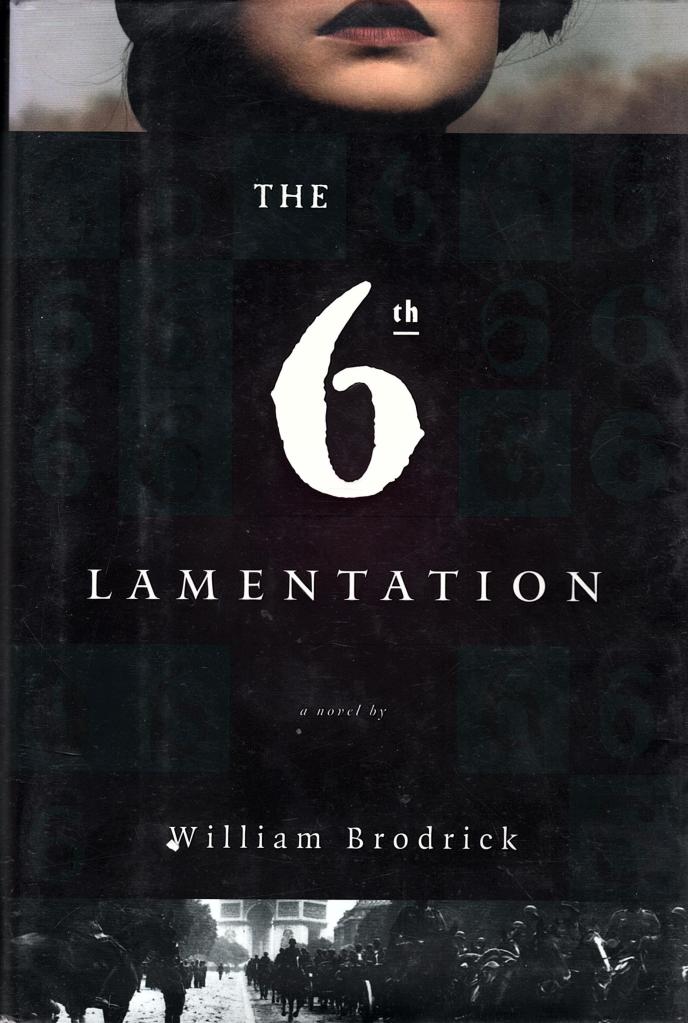
Agnes is a bad mother. She seems emotionally distant. She often goes into fugue states where she will stand, staring at nothing. It is hard for her to be fully present with her two children.
What they don’t know is that they aren’t actually her children. They were entrusted to her by their dying mother in a concentration camp.
They also don’t know that Agnes had a child of her own, a baby boy, who was lost in the Holocaust.
Freddie, Agnes’ son, has given up on his mother, her issues and her drama, her apparent inability to be there for him emotionally. It’s not until his own daughter, Lucy, is grown, and Agnes develops a degenerative disease that Freddie will belatedly get to know the history of a warm-hearted woman who was permanently broken by the Nazi occupation of France.
Meanwhile, as Agnes loses her ability to walk, and then to speak, a recently outed Nazi war criminal takes refuge in an English monastary. He is the man who sent Agnes and her baby to the camps.
This beautifully written book was really traumatic to read, and not because there is any graphic violence.
Brodrick does an amazing job of showing how the Nazi occupation of France put everyone in a position where, almost no matter what they did, they ended up failing or betraying someone. He shows how even a moment of weakness or cowardice could have fatal consequences for a person’s friends. That was the thing that really got me. Reading this, you can’t help asking yourself how you would do in the same situation, and coming up with an unsatisfactory answer. I say it prepared me well for Good Friday because it made me feel guilty as hell.
And these little failures of character, which might not have a huge impact in ordinary times, during the Holocaust would change and cripple people forever. Brodrick shows how a mythology grew up around the young people in the French resistance, such that three generations later, having had a hero in your family could bestow benefits, and being associated with a Nazi or a collaborator became a deep dark family secret. He shows how even the children who were smuggled out of France grew up with “shame,” because, as avenging angel Salomon Lachaise puts it, “you cannot escape the sensation that you have taken someone else’s place.”
One of the most affecting lines in the book, for me, was after the Frenchman has just been blackmailed by the Nazi guard. He hears the guard throwing up in the adjacent room.
Nevertheless, there is a redemptive thread to this book. It really makes you feel genuinely sorry for every single character (both the war generation and the later generations), and makes you realize how badly these poor people, in the midst of this great evil, needed a supernatural savior.
As do we all.
Department of Redundancy Department
Arthur [the android] shoves me into the crevice and begins raking dirt and snow over me. He tears off a piece of his shirt and I close my eyes as he lays it over my face. The damp soil and ice fall upon me. I feel like a man being buried alive.
The Lost Colony, by A.G. Riddle, p. 74
Um, James … you are a man being buried alive.
Oh My, Oh, Memoirs!
It turns out that I like to read memoirs. Here is a list of a few I’ve read. There were many ways I could have categorized them (Mental Health Memoirs, Conversion Memoirs, Holocaust Memoirs, Memoirs by Authors, etc.), but there are so many categories (some of which crosscut each other) that I have decided just to list them alphabetically. They are eclectic; that’s kind of the point.
All of these are compulsively readable, and some are beautifully written. I can recommend all of them.
- Angela’s Ashes: Frank McCourt grows up poor in New York and Ireland (did not get a chance to finish this one).
- Anything Can Happen: George Papashvily emigrates from Georgia to the United States, and conquers it with his charming personality.
- Bitter is the New Black: Jen Lancaster loses her lucrative job, goes through a long period of unemployment, and learns to live frugally.
- Brave Girl Eating: Harriet Brown fights for her daughter through the latter’s anorexia, and discovers some surprising things about the disease in the process.
- Bruchko: Bruce Olson goes to live with Motilone people in the jungles on the Columbia/Venezuela border.
- Confessions of a Sociopath: M.E. Thomas is not ashamed of the fact that she’s a sociopath.
- The Cross and the Switchblade: In the late 1950s, backcountry pastor David Wilkerson feels called to go to New York City and minister to teenaged gang members.
- Dear Father, Dear Son: In an 8-hour conversation, Larry Elder finally discovers his estranged father’s backstory.
- Evidence Not Seen: Darlene Deibler Rose was an American missionary in Indonesia when the Japanese army took over, was sent to a concentration camp, and was suspected of being a spy.
- Ex-Friends: Norman Podhoretz splits with his former friends Allen Ginsberg, Lionel and Diana Trilling, Lillian Hellman, Hannah Arendt, and Norman Mailer.
- Half Assed: Jenette Fulda loses half her body weight, but not her sense of humor.
- The Hiding Place: Corrie ten Boom’s family hides Jews in occupied Holland, gets betrayed.
- Girl(ish): Lara Lillibridge was raised by her mother and her mother’s lesbian partner before gay marriage was legal.
- The Girl with the Lower Back Tattoo: Comedienne Amy Schumur grows up.
- The Great Good Thing: Andrew Klavan, secular Jew and hard-boiled crime novelist, comes to faith in Christ.
- The Greening of Mrs. Duckworth: Marion Duckworth overcomes her shyness.
- Maus (graphic novel): Artie Speigelman recalls his difficult relationship with his father and his father’s youth in Nazi-occupied Poland.
- Maxed Out: Katrina Alcorn suffers from burnout while trying to be a mom who works FT outside the home.
- Minding the Manor: Mollie Moran recalls being a scullery maid in the 1930s.
- My Age of Anxiety: Journalist Scott Stossel suffers from severe anxiety and writes an insightful book about the phenomenon.
- Night: Elie Wiesel and his father are sent to a concentration camp.
- Not That Kind of Girl: Lena Dunham grows up in New York City.
- On Writing: Stephen King’s life influences his career as a novelist.
- Orange is the New Black: Piper Kerman, now in her early 30s, gets arrested on a 10-year-old drug charge.
- Pale Girl Speaks: Red-haired, fair-skinned California girl Hillary Fogelson gets skin cancer.
- Princess: Jean Sassoon tells the story she got from interviews with “Sultana” about growing up in the kingdom of Saudi Arabia.
- Secret Thoughts of an Unlikely Convert: Rosaria Champagne Butterfield was a lesbian activist college professor when her life was “train wrecked” by God.
- Surprised by Joy: C.S. Lewis, sarcastic Irish atheist, comes to faith in Christ.
- Wild Swans: Jung Chang’s grandmother narrowly escaped having her feet bound. Her mother was an idealistic young communist. Jung and her family lived through the horrors of the Cultural Revolution.
Want to Read
Darkness Visible: William Styron chronicles his depression.
Books I Want to Have Read, but Don’t Want to Read
For those uninitiated to book blogging, a tag is when another book blogger assigns you a series of questions or prompts. For each one, you name the book that it makes you think of. And rant about it, if you so desire.
The blogger and author who tagged me was Katie Jane Gallagher.
The Rules:
- Link back to the original tag (this post, and Jami!)
- Complete the questions with books you want to have read but don’t want to read
- Tag some people at the end to do the tag next
OK? OK. Let’s get to the prompts …
The Prompts
A book that you feel you need to read because everyone talks about it
Twelve Years A Slave. Obviously that is going to be a heavy read.
Also, the Federalist Papers. Maybe “everyone” doesn’t talk about them, but people who seem to know what they are talking about keep mentioning them. Obviously there is some very important stuff in there that I need to know.
A book that’s really long

I mean, look at it.
I think there are seven of them now.
But I really need to get to these some time, if only because readers of George R.R. Martin might also be interested in my series some day. And I won’t make you wait decades either!
A book you’ve owned / had on your TBR for too long
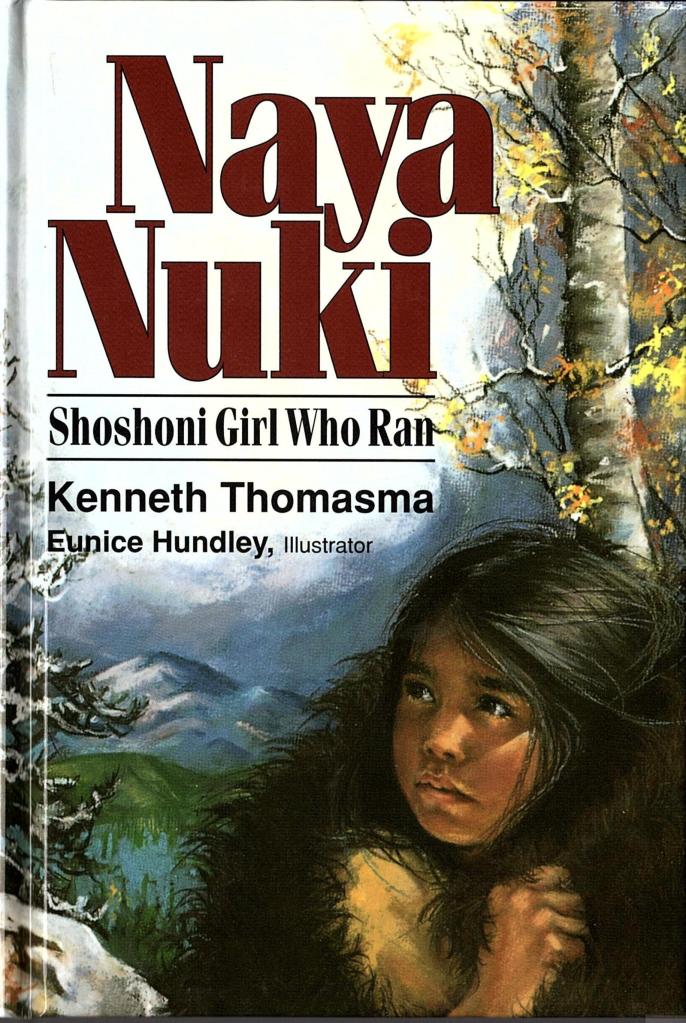
A few years ago, when my boys and I were studying American History, this novel was recommended as supplemental reading. I had all the more reason to want to read it, because Naya Nuki is Shoshone and when I lived in Idaho for a few years during my teens, it was near the Shoshone/Bannock Indian reservation. Our local library didn’t have it. I ordered it through interlibrary loan, but it never came! Must have been a long waiting list.
Fast forward three years. We have now moved back to Shoshone/Bannock country. I go to the local library here, and not only do they have Naya Nuki, they have the entire series by this author! Only problem is, the kids and I now have other required supplemental reading, and we’re working through that. I figure I’ll just zip through it by myself and return it to the library. But the due date approacheth, and I never do.
While still in this uncomfortable situation, my husband brings me home a surprise gift from his travels. It’s my very own copy of Naya Nuki! He thought it looked like something that would interest me. I’ve gone from not being able to get my hands on a copy, to an embarrassment of riches.
So I was free to return the library copy … but you guessed it, my gift copy is still sitting there unread. Why? Why???
A book that is ‘required’ reading (eg, school text, really popular classic – something you feel obligated to read!)
Everything by Freud and Nietzsche.
A book that intimidates you
Maps of Meaning by Jordan Peterson. He spent, what, decades on it? Rewrote every sentence at least 50 times? It sounds like it would be heavy going. A really thorough student of archetypes would read it, but I feel like this was the book where he developed his ideas, and now we can get the highlights of those through his class lectures on YouTube and through Twelve Rules for Life.
A book that you think might be slow

I know this one is slow, because I started it. I still think I might end up really liking it. Actually, I hope I do, because it’s sort of the same genre that I write in. But it requires a lot of attention during the first several chapters, as you have to learn a lot of different characters and figure out to who root for. It’s not the kind of book you can pick up and dive into for 20 minutes while eating your lunch, which is what I need right now.
A book you need to be in the right mood for

Circe. The main reason I haven’t read this is that it hasn’t shown up at the library yet, and I am too cheap to order it online. But there’s another reason as well.
I love the heroic age of Greece. As a teen I spent several years, off and on, immersed in this milieu. At one point I was going around telling people, “The Iliad is taking over my life!” (I also, when reading The Odyssey, had a crush on Odysseus. *blushes* Because who wouldn’t? I mean, the man can shoot an arrow through the centers of 12 ax heads lined up in a row!)
So I’m frankly super jealous of the author for having immersed herself in these books and written what everyone agrees is a fantastic novel that is true to the tradition. If I’m going to read it, it will put my head right back in that space, and I have to be ready for that.
Call, and raise you The Song of Achilles.
A book you’re unsure if you will like
Oh, so many. Pick any YA fantasy with a mermaid, vampire, or young woman on the front. I “ought” to be reading more of these, because they are fantasy and we are supposed to Read Widely In the Genre … but I just don’t find them appealing usually. Especially if the back cover copy deals with how mean everyone is to the young woman, or how she’s a member of an ostracized group.
And lest you misunderstand, I don’t say this dismissively. Probably some of these books are as meh as I expect, but no doubt others are gems. Maybe it’s even half and half. I’m not being superior. I just … can’t … get … interested …
People I Want to Tag but Also Don’t Want to Tag
Honestly, tagging activates my social anxiety. What if you’ve already been tagged for this? What if you don’t want to be tagged? What if I leave someone out? Gaaah!
I’m tagging you anyway. Don’t take it personally. If you hate the tag but want to please me, just do a super perfunctory and sarcastic tag like Bookstooge did that one time.
I’m tagging people who post frequently, because if you want something done, ask a busy person. So, if you post infrequently and didn’t get tagged and want to do this, go for it!
The Wanderlust Tag
February is the month of romance, and the settings in this tag are as romantic as can be! I think this is most fun tag I’ve seen yet. I stole … er, got it from my faithful friend The Orangutan Librarian. She didn’t exactly tag me, but … she did say anyone can do the tag. So here goes!
Rules
- Mention the creator of the tag and link back to original post [Alexandra @ Reading by Starlight]
- Thank the blogger who tagged you
- Answer the 10 questions below using any genre
- Tag 5+ friends
The Questions

Secrets and lies: a book set in a sleepy small town … Many of Anne Tyler’s books are like this. Also, every almost every single Miss Marple mystery by Agatha Christie. Sometimes Miss Marple travels, and solves a mystery on a train, or in the Caribbean. But my favorites are the ones where she uses her knowledge of the character types, the dark dynamics, and the domestic history in a small town … her own small town, or someone else’s. As she always points out, small towns are not boring!
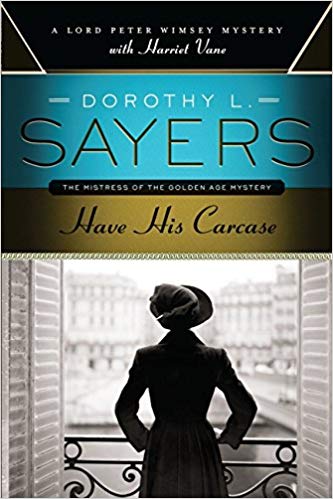
Salt and Sand: A book with a beach-side community … Have His Carcase by Dorothy Sayers. I’m not sure why the cover of this book looks the way it does, as the most striking scenes in it take place on a beach. This book stars Lord Peter Whimsey and his love interest, the tomboyish academic Harriet Vane, who is hiking along a deserted beach when she discovers the body of a man with his throat gruesomely slit. Harriet photographs the corpse, and after she leaves, the tide disposes of the evidence. Harriet herself becomes a suspect, and she and Lord Peter must put their heads together to extricate her.
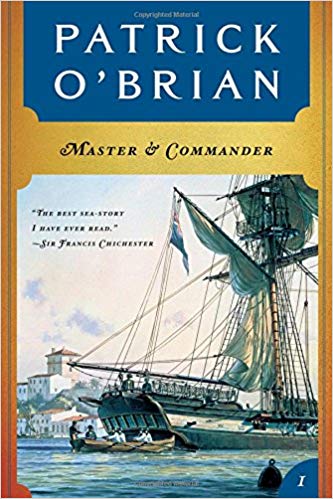
Here there be dragons: a book with a voyage on the high seas … I don’t read many sea stories. In fact, this is the only one I can think of besides Treasure Island and the third book of Ursula Le Guin’s Earthsea trilogy. Master & Commander is a really good book. When I was reading it, I even had dreams about it. They made it into a movie, which is also very good, but the movie only covers about half the material in the book, and not even the most sensational incidents.


Tread lightly: a book set down a murky river or jungle … There are many good missionary stories that take place in the remote jungle. These are novelized versions of real events. There is Bruchko (South America); Lords of the Earth (Irian Jaya); In Search of the Source, set in Papua New Guinea, by Neil Anderson; and Do You Know What You Are Doing, Lord?, which gives a very different perspective on the same events, written by Neil’s wife Carol. I am tempted to mention Through Gates of Splendor by Elisabeth Elliot, but I haven’t actually read it.

Frozen wastes: a book with a frostbitten atmosphere … Ursula Le Guin’s Left of Hand of Darkness takes place on a planet that has two huge ice caps which reach well down into what on Earth would be called the temperate zones. The main character, an ambassador for an interplanetary council, ends up in a gulag-like camp, is rescued by one of the locals, and the two make an amazing trek across one of the glaciers to escape.

The boonies: a book with rough or isolated terrain … I think many books depend on rough and isolated terrain for the danger and tension in their plot. Think of every murder mystery you’ve ever read where the group of suspects is cut off from the outside world by the tides or snows or whatever. This also goes for lifeboat stories, mountaineering stories, and post-apocalyptic books, all of which throw the characters on their own resources because “help is not going to come.” But I am going to mention Bearskin by James A. McLaughlin.

Hinterlands and cowboys: a book with a Western-esque setting … OK, you know what I am going to say here. I am going to, once again, recommend the Jim Chee and Joe Leaphorn police procedural/Navajo cultural mysteries by Tony Hillerman. What, you say you still haven’t started reading them? Get to it!
Look lively: a book set across sweeping desert sands … There are quite a few of these. I guess the desert really fires our imaginations. But I’m going to name one that I discovered recently: Sand. by Hugh Howey. (The period is apparently part of the title?) I know I’m late to the Hugh Howey party because the cover of Sand. tells me that he is the bestselling author of another book, Wool. It’s hard to imagine how anyone could make an entire novel centered on wool, but after reading Sand., I believe he certainly could and I’m going to pick up Wool as soon as I see it.

Wild and untamed: a book set in the heart of the woods … A Different Kingdom by Paul Kearney. Teenaged Michael lives on a prosperous farm in Ireland. When he ventures in to the woods near his home, he passes in to another, much larger, forest, which is also the source of all the myths and legends of the past.
Wildest dreams: a whimsical book shrouded in magic … The Dark is Rising series. These YA books are pagan as all get-out, and seem to be based on a very good research into British and Welsh pagan lore. They do a great job of creating an atmosphere of this whole world of magic breaking in to a kid’s everyday life, in ways that only initiates can perceive.
… And may I mention that settings like these are the reason that I love reading and writing? It’s my ambition to write a book in each of these settings (except perhaps the high seas). I would say my books, to date, have covered Frostbitten, Boonies, Small Town and possibly Western.
And as usual, I tag … you, dear Reader! In the comments! Which of these settings do you love? Which will you never tire of?
Self-Pitying Quote of the Week
Mr. Haig-Ereildoun may be like me. Full of charm, winning everyone’s affection, but somehow not quite doing the job. I can say that the advertising agency chose me to fire because I was the youngest … But I know it was more basic than that. I did win awards. But I lost hours, days, weeks, trying to make jewels out of the twenty-five-cents-off coupons ads. Everyone loved me, but in a practical world I wasn’t what they needed. It’s hard, actually scary, being the kind of people Mr. Haig-Ereildoun and I are.
The Diary of an American Au Pair by Marjorie Leet Ford, Anchor Books, 2003, p. 182
The Seven Heavenly Virtues Tag
The Orangutan Librarian tagged me for this post that applies the “Seven Heavenly Virtues” to the world of our reading.
By the way. The Seven Deadly Sins are easy to remember, in groups of two, three, and two. There’s The World (Envy, Greed); The Flesh (Lust, Gluttony, Sloth); and The Devil (Anger … and the granddaddy, Pride). The seven virtues are the flip side of these.
Once when I was at university, the theme of our homecoming week was the extremely creative “We’ve Got Pride.” I will always love my fellow English majors who named their contribution to the parade “Beyond pride: the seven deadly sins.” They wanted to show that “[our university] also gots Envy, Greed, Lust, Gluttony, Sloth, and Anger.” And of course it was true.
Onward.
CHASTITY: Which author/book/series you wish you had never read?
Hmm. It’s rare that I go on wishing I had never read a book. Usually if it stuns me with some horror, I hate it at the time, but as my mind assimilates the idea, I’m glad to have encountered it in a book so that I can grapple with that aspect of the world.
A good example is Ken Follett’s Pillars of the Earth. A major part of the plot is a sexual assault. It’s described graphically. The creepy lead-up and the lengthy aftermath include scenes from the point of view of both the victim and rapist. When I read this, it was the first time I’d read a rape described in detail (or, at least, the first time I understood what I was reading). It was very traumatic, and it led to lots of crying and praying for women who were real-life victims. So, as you can see, it bore some good fruit almost immediately.
Later I read another book by Ken Follett in a completely different genre, and it also featured a serial stalker and rapist, with many scenes written from his point of view. At that point I decided that I would not read any more books by Ken Follett, nor would I ever get on an elevator with the man.
TEMPERANCE: Which book/series did you find so good, that you didn’t want to read it all at once, and you read it in doses just to make the pleasure last longer?
I don’t usually show temperance when it comes to serious, emotional reads. … OK, I actually don’t have much temperance at all. I once stayed up all night finishing Mary Doria Russell’s The Sparrow.
However, with comic series, I find that if you binge on them they can become wearing, whereas if you read one every once in a while, they are refreshing. For example, P.G. Wodehouse’e Bertie Wooster books and Janet Evanovich’s Stephanie Plum series.
CHARITY: Which book/series/author do you tirelessly push to others, telling them about it or even giving away spare copies bought for that reason?
Well this question will contain no surprises to anyone who knows me or has followed my blog for any length of time.

The Emberverse series by S.M Stirling: I recommend this often because it encompasses a wide range of interests. The first few books are post-apocalyptic, and then it becomes more of a fantasy series. I’ve recommended it to people because it’s set in the Northwest (Idaho, eastern Washington and Oregon, northern California). Recently I recommended it to someone who is interested in retro martial arts such as sword fighting and archery, because there is a ton of that in these books, including descriptions of how the weapons are made and gripping battle scenes. The research on these books is both wide and deep, from ecology to botany to anthropology to martial arts to Celtic mythology.
‘Til We Have Faces: A searing, emotional novel about friendship, identity, divided loyalty, and religion. One of C.S. Lewis’s less famous works.
The Everlasting Man (non-fiction): G.K. Chesterton discusses paganism and why it expresses important things about being human … with the cheery paradoxes that only he can bring.
The Divine Conspiracy(non-fiction): With wit and wisdom, Dallas Willard applies the Gospels in a fresh way (which we all need frequently). This is so well-written that it’s a pleasure to read, and you just sail through it even though it’s quite thick.
Now, go forth and read these!
DILIGENCE: Which series/author you follow no matter what happens and how long you have to wait?
Agatha Christie. She has such a large corpus of work that even though I think I’ve read all her novels, I’m never sure.
Also, the Brother Cadfael series by Ellis Peters.
Also anything by Tony Hillerman or Dick Francis.
It looks like formula mysteries are my genre for this.
PATIENCE: Is there an author/book/series you’ve read that improved with time the most, starting out unpromising, but ultimately proving rewarding?
Watership Down. It is gripping from the first, don’t get me wrong, but it is so long. Then when you get to the end, you discover that the author is doing things with it that only a really long book can do.
KINDNESS: Which fictitious character would you consider your role-model in the hassle of everyday life?

Any strong, quiet, capable character who consistently takes care of others. Durnik in the Belgariad; Precious Ramotswe in The No. 1 Ladies series; Bardia in ‘Til We Have Faces; Sam Gamgee, Aragorn, Gandalf, Aslan. And, of course, Zillah from my own books.
Unfortunately my gifts and personality are almost opposite from all these characters. But I’ve always wanted to be strong, quiet, calm, and capable.
HUMILITY: Which book/series/author do you find most under-rated?
This is a hard one to answer because I don’t always have a real great idea of what other people are reading. How can I know that the gem I’ve “discovered” hasn’t also been discovered by a bunch of others?
Apparently Thomas Sowell has a bunch of great books about economics and society that have helped the people who’ve read them greatly … but I have not read them, only watched videos of him speaking. There are many such examples.
Now, Discuss
I hesitate to tag people because it seems to freak them out. But if you get inspired by any of the questions in this tag, please answer them either at your own blog or in the comments.
So. This book.
A Lady’s Guide to Selling Out, by Sally Franson, 2018. I read the Center Point Large Print version.
From the jacket:
Casey Pendergast is losing her way. Once a book-loving English major, Casey lands a job at a top ad agency that highly values her ability to tell a good story. Her best friend thinks she’s a sellout, but Casey tells herself she’s just paying the bills – and she can’t help that she has champagne taste.
When her hard-to-please boss assigns her to a top-secret campaign that pairs literary authors with corporations hungry for upmarket cachet, Casey is both excited and skeptical. But as she crisscrosses America, wooing her former idols, she’s shocked at how quickly they compromise their integrity …
When she falls in love with one of her authors, Casey can no longer ignore her own nagging doubts about the human cost of her success. By the time the year’s biggest book festival rolls around in Las Vegas, it will take every ounce of Casey’s moxie to undo the damage – and, hopefully, save her own soul.
How could I not pick up a book that has the former English major main character falling in love with an author? And since Casey was going to “the year’s biggest book festival,” I also hoped this book might teach me something about the industry.
It didn’t.
I enjoyed it, it was a page turner, but in retrospect, most of the colorful characters – including the evil corporations, the evil advertising exec, and even the quirky authors – were kind of … stereotype-y? Also, the book kept smacking me in the face with its politics. It was pretty subtly done, but I guess, as author and an avid reader, I could see the strings moving.
The Good
First, the good part. Casey herself is not stereotype-y. The author had to write a character who was sympathetic, but unaware enough to participate, for most of the book, in activities that – in the world of the book – are considered “selling out.” So Casey is complex. She’s smart and analytical, has mommy and daddy issues (the mommy issues drive her career path), and does a great job documenting her own self-deception.
She is also, though socially vivacious, an empath and an introvert:
Before I met [my writer friend Susan], I’d spent my whole life feeling a few clicks on the dial away from everyone I knew. Not that you could tell necessarily – I was popular and all that growing up, lots of friends, guys buzzing around like big horseflies – but there was this static in the air when I was around other people. Sometimes I’d even cancel plans, feigning illness, in order to stay home and read novels and fiddle with the antenna in my brain, trying to get a clear signal. Sometimes I’d go days, weeks, without it, the dull hissing unceasing. The static only seemed to stop, or my brain could only tune in to the world properly, when I was taking walks or reading novels. In other words, when I was alone.
Oh well, I’d thought then, sucks for me I only get clarity by myself, everyone else seems to be getting on fine. Weirdo. Probably best to pretend the static doesn’t exist.
pp 14 – 15
The “static” is the way Casey can sense other people’s thoughts and emotions.
This is a terrific description of the inner life of an introvert/empath.
It’s also a good example of how, contrary to what you might expect, feeling other people’s feelings does not necessarily endow a person with good social skills. Quite the opposite. Sometimes it can be quite overwhelming, and the empath will withdraw, or will wildly act out the emotion that’s already flying around the room.
The Bad
A number of things bothered me about this novel. Let’s start with the reverse sexism:
In the aftermath of our efforts to hold these men responsible, we realized we didn’t possess the power to do that. We were just a couple of nobodies, a couple of ladies. Men were innocent until proven guilty. Women were crazy until they were believed.
page 352
Yeah, I don’t know any men who have been publicly shamed on the Internet … who have lost their jobs, been called names, received death threats, been unable to get their side of the story out there, or been unable to recover their reputation.
Sure, powerful people exploit less powerful people all the time. People unfairly get their reputations ruined all the time too. But this does not divide neatly along the lines of sex. Social power is so much more complex than that. Interestingly, the book seems to recognize this sometimes, except when it forgets itself and wants to beat us on the head with its Message.
Then there is the book’s incoherent attitude towards money. In trying to convince Casey to get authors to rep dying companies, her boss tells her cynically, “You’d be surprised what people are willing to do when you put enough money on the table.” And, for most of the authors, they agree to the deal realizing that they are being used, but wanting the money for a noble cause (taking care of an ailing mother, opening an animal shelter, etc.).
But then Casey goes to meet her literary hero, also the book’s villain, and hears him speak at a book festival:
Beyond the obvious problems of his sick wife’s medical bills, Julian didn’t appear to be motivated by money — a sure sign that he’d grown up with a fair amount of it.
page 310
So, we are selling out if we need some money and are willing to work for it … but not wanting to make money is also, it’s implied, a sign of culpable privilege. It sounds like we are damned if we do and damned if we don’t. Reminds me of that scene in Time Bandits where Robin Hood and his men are giving bags of gold to a line of poor people. As soon as anyone receives his gold, he takes a few steps crying out, “I’m rich!” … until the next Merry Man punches him in the face and takes the bag away again because, after all, he is now rich, and must be punished.
Speaking of the book festival, when Casey first arrives there,
The crowd at the fair was mixed in the way of gender, and about as mixed in skin color as, say, a gallon drum of vanilla ice cream.
page 294
Now, I have never been to the country’s biggest annual book fair (because it’s for actual, published authors). So maybe this racial critique is true. But it feels made-up.
At the one writer’s convention I attended, we had a mix of races, ages, both sexes. The keynote speaker was a woman of color. She got up and told us that when she got to grad school, she found out that all her favorite books from childhood (which included some of my favorites, such as the Chronicles of Narnia), “were racist.” She then showed us this hurtful graphic:

The stats themselves are disturbing, but so is the presentation. In this picture, the kid that looks most like one of my kids (the kid on right) is a horrible little narcissist, reading books for the sole purpose of seeing himself reflected in them. It’s assumed he identifies with any white character in any book, regardless of whether that character is, say, out in space or living 1000 years ago, as long as the character is white … but he can’t identify with a main character of color. Apparently this kid doesn’t want to read about anyone who isn’t racially like himself. Sounds exciting. I guess he is not making the literary choices that I made as a kid, which was to seek out books about Native American kids and passionately wish I could be one.
Meanwhile, the bunny rabbit is joyfully reading a book about himself. I can’t believe that I have to point this out, but … animals don’t read? So, obviously, animal characters are intended to be relatable all children? So, even if we are going to make a chart showing which races are represented in a given year in children’s books, animals should not be on there? Because they are not an interest group in competition with kids of color? But our keynote speaker thought they were. She noted with an eye roll that there were even “more animals” than black children in 2015 children’s books.
I don’t think the most important thing about a book is the color of its characters, readers, or author. Even so, I can understand why we might want more different colors and cultures in children’s books. A book is more than a mirror, but not less than one.
That said, this information could have been presented in a form that didn’t demonize the white kid or imply that kids only want to read about themselves. It could have been presented as a pie chart. Or the graphic could have had a variety of different children, gathered around, reading all the books that are there. That would have been more like real life. The animal books, if they were included at all, should have gone into each category. Also, there are tons of books with a multiracial cast. I’m not sure how this chart handled those, but I can guess.
As it is, the message I got from the keynote speech (not, thankfully, from the whole conference) was this:
“So that readers of color don’t feel left out, we need more books starring characters of color. [So far so good.] But it’s stupid when we have white writers writing about characters of color. [OK, possibly.] Wouldn’t it make more sense to have people write about their own culture?”
Yes, perhaps, with the caveat that writers usually write far beyond their own experience, and that this is in fact a critical part of the writing process and the reading adventure. Also, it’s a fallacy that no writer can really identify with any person who is not of their own tribe. Taking this logic to its conclusion, the only thing anyone can really write with honesty is autobiography. Say goodbye to fantasy, sci-fi, and historical fiction.
It was a weird feeling being walked through this logic. While I didn’t disagree with the intermediate steps, after doing the math, the unavoidable conclusion is that I am not allowed to write anything any more because I am the wrong color. There are already way too many characters “like me” out there, and I am not allowed to write about anyone who’s not “like me.” (Bwa ha ha … of course, little do they know how weird I am! There is no one like me in the world!)
So, yeah, my experience of a writer’s conference was emphatically not a tub of vanilla ice cream. More like a “Stop writing, white author.”
About Forgiveness
Ahem. Back to A Lady’s Guide.
Susan says forgiveness is just a philosophical construction anyway, a con put in place by those in power against those who have no power, so that the responsibility of coming to terms with bad shit keeps falling to the latter.
So instead I believe in forgiverness, which to me means waiting for these a**holes who f*cked me up to take some responsibility for their actions. And I, in order to make this practice copacetic, will have to in turn approach those with whom I grievously f*cked, bowing my head and admitting that I, too must take responsibility, and no, I don’t want their forgiveness; I’m just coming around to own up to what I did. If they forgive me, great. But that’s not the point.
page 406
What a strange mixture of insight and incoherence.
First, note the assumption that there are only two kinds of people in this world: those who “have power,” and those who don’t. That these categories never shift. That sin is never committed by those who have less power.
But the really odd thing is that this book, and even this passage, does seem to understand the need for forgiveness. Casey realizes that she has wronged other people. There are several relationships in the book where, indeed, she does need to be forgiven in order for the relationship to proceed.
I think at the bottom of this passage is a misunderstanding of what forgiveness means. Susan (and Casey) seem to think it means passing over wrongdoing, doing nothing about it, not calling the person to account. Offering forgiveness to those who have not repented. That is not what it means, at least not in Biblical categories.
Casey realizes that forgiveness without repentance won’t do, because in the very next paragraph she describes her own need to repent to those she has wronged (she calls it “taking responsibility.”) But then she adds, “I don’t want their forgiveness.” This might be true in the case of some people, who are enemies, whom, after repenting, she might have no desire to see again. But I can’t believe it’s true about her best friend, or about her love interest. The whole point of forgiveness is so that the relationship can continue. This is why it’s not just about power. Every person, powerful or not, has intimate relationships that they need to continue long-term. Every person wrongs people within those intimate relationships. Therefore, every relationship has to proceed on forgiveness if it’s not going to stall out.
And In Conclusion
So, I’m not quite sure how to land this plane. Lady’s Guide was a fine book, well-written, lots of insight about the little things plus some big lies about the bigger ones. I went back and forth between feeling that the book loved me (I’m a woman, an author, an introvert) and that it hated me (I’m white though not wealthy, a Christian, and a social conservative).
I guess the best way to sum it is up is that my reaction, on nearly every page, was,
“I see what you’re doing there.”

