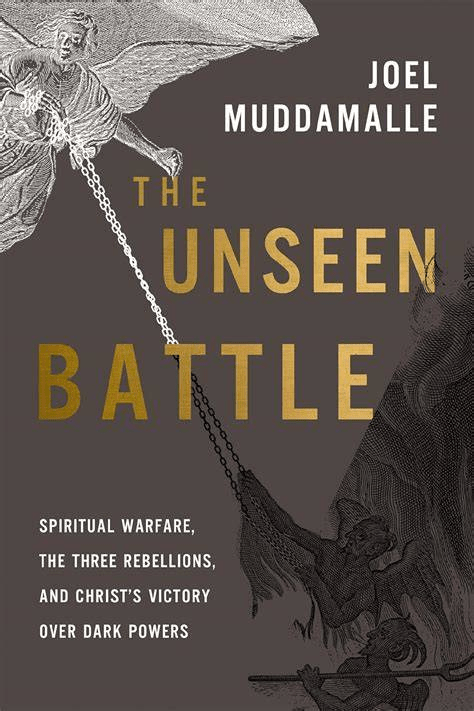
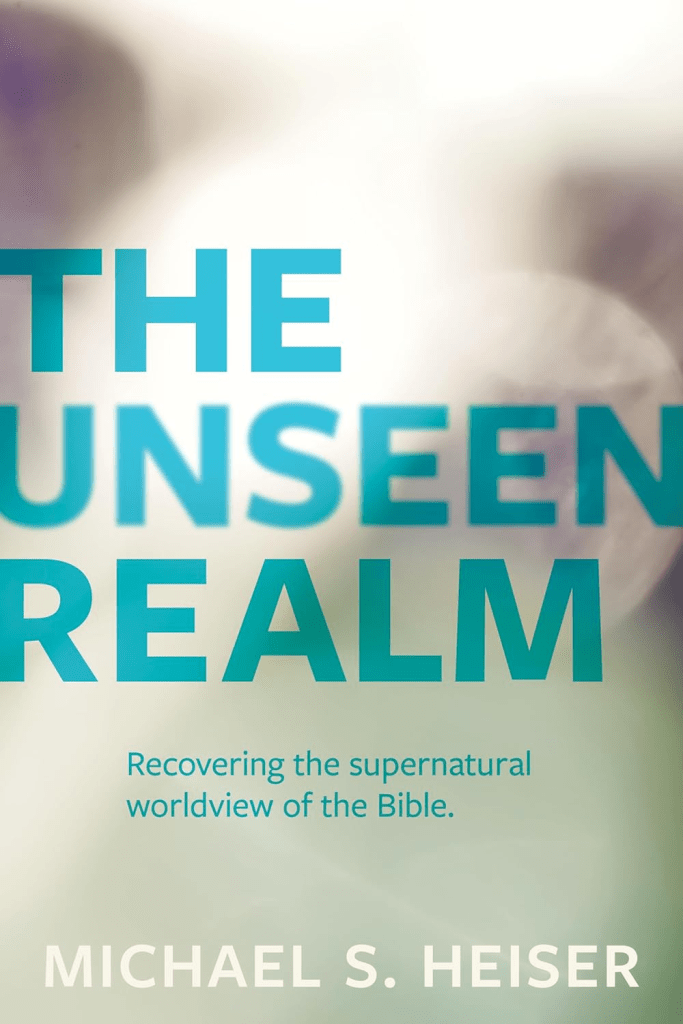
The Unseen Realm is a scholarly book about the concept of the divine council in Ancient Near Eastern cosmology, especially in Ugarit, which was a near neighbor of Israel both geographically, culturally, and linguistically. Heiser finds this concept of the divine council assumed in the Hebrew Scriptures, similar to how the heliocentric model of the solar system is assumed in anything you see written since Copernicus. That is, it’s never stated or described directly, but it is referenced in many stories, phrases, and figures of speech, and is openly the setting for certain passages, such as Psalm 82.
The idea behind “the divine council” is that there is a Most High God (the Creator) who rules the earth with the help of a sort of committee of divine beings (elohim). This committee is traditionally conceived of as meeting on a high mountain, in a garden setting, often a place that is the source of rivers. Or as Ps. 82 calls it, “the great assembly.”
Heiser spends most of his book establishing that this view is present in Scripture.
After reading Heiser, I heard a podcast interview with Joel Muddamalle. Muddamalle is the academic protege of Heiser (who has now gone to his reward). He is carrying on with researching this idea of the elohim as an active presence in redemption history, and also with popularizing it in the Christian world. And I heard that he had written a book, The Unseen Battle, which might be viewed as a sequel to Heiser’s book. So naturally, I had to get it.
I expected TUB to be all the same material as TUR, just with Muddamalle’s own personal style. It was not. The first few chapters do recap Heiser’s cosmology, but they don’t spend a lot of time establishing it, as Heiser did. Muddamalle then moves on to the nature of the battle, which Heiser touched on but did not major on.
The nature of the battle is that God wants to get the nations back from the gods.
The way this is done, in the church age, is through evangelism, missions, and building healthy churches and families. In short, obedience. It’s not primarily through a lot of fancy, spooky ghost-hunting or exorcism stuff.
This exegesis, naturally, warmed my little Reformed heart.
Now, it does mean that, if you are attempting to be faithful to your spouse and/or raise your kids; work hard and honestly at a lawful calling; worship the Lord on Sunday and support His people; or do any other forms of healthy, faithful culture-building, you have stepped into the battle. The dethroned powers do not like this sort of behavior. This may, perhaps, explain why just trying to mind your own business and live a quiet, peaceable life can occasion so much resistance: everything from health problems, to Murphy’s Law and attacks of depression and discouragement; to actual hate and legal resistance from human beings who do not like what you are doing. (Per Muddamalle, Scripture makes it clear that the “hosts” on both sides of this battle are mixed, consisting of human beings and of spiritual beings.)
Particularly if you are contributing in any way (including by prayer) to the disciplining of not-yet-Christianized nations, you present a threat to the old gods, who do not want to be cast out as they have been cast out of so many other nations in the last 2000 years. This is why foreign missionaries and native pastors in unreached or partially unreached countries undergo so many hardships: poverty, evil bureaucracy, and all kinds of health and mental problems.
The church itself, existing as an entity comprised of people from many nations, is a rebuke to the powers.
The multiethnic and diverse nature of the family of God, the church, can be seen through Paul’s use of polupoikilos. This term is a combination of two adjectives meaning “much” (polus) and “various kinds, diversified, manifold” (poikilos). The word polupoikilos can also mean “of many colors” or “polychrome.” Classical Greek writers used this word to reference cloth or flowers to convey a sense of intricate beauty. The word poikilos is used in the Septuagint to refer to Joseph’s coat of many colors (Gen. 17:3, 23). As Timothy Gombis observes, “The powers have ordered the present evil age in such a way as to exacerbate the divisions within humanity. God confounds them by creating in Christ one unified, multiracial body consisting of formerly divided groups of people.”
ibid, pp. 169 – 170
How about that. The Rainbow of Diversity, which we have been taught to hate, is actually God’s goal as well. The reason that we have been taught to hate it, is because of the way they have pursued it … trying to force it down by means of human power and moralism, by defining righteous and unrighteous groups and viciously suppressing those deemed to be foes of the rainbow. They have made “inclusion” mean “we exclude you.” This is what happens any time people try to make the world look like the restored heavens and earth, without Christ. They end up bringing about the opposite. True harmony among the ethnic groups is not an easy thing. It can only be obtained by means of the New Birth.
Though this is a scholarly-for-the-layperson work, Muddamalle’s lighter personality shines in it. He has many call-out boxes sprinkled throughout the book, devoting a page or two to questions such as, “Are There Aliens in This World?” and “What About Demonic Exorcisms?”.
That’s it. Just I promised: a short review.
Oh! What are the “three rebellions”?
Adam and Eve’s rebellion at the Tree
The rebellion of the “sons of God,” when they chose to come down and take human wives (Genesis 6)
Humankind’s post-Flood rebellion at Babel (Genesis 11). It was at this point that God divided up humankind among the elohim, giving each people group extant at the time its patron god.
Anyway … back to the battle! God be w ye this weekend!
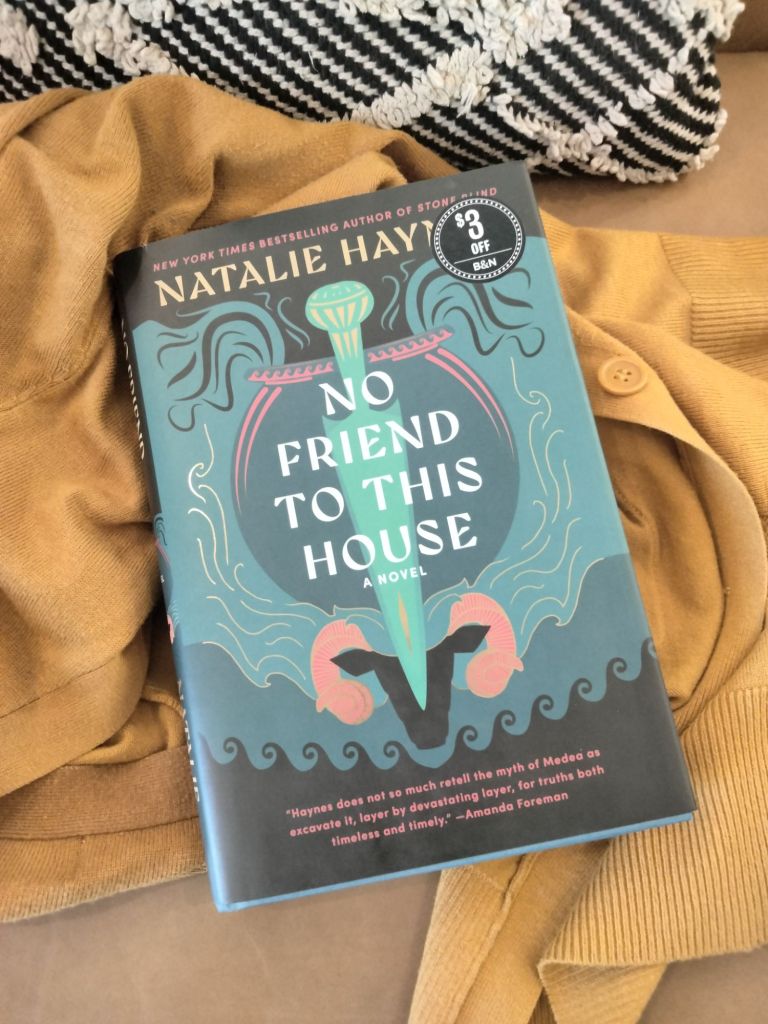
Like anybody who has ever encountered it, I have “issues” with the story of Jason and Medea.
In case you missed it, he sails off on the Argo to get the Golden Fleece. She is a witch, daughter of the king of Colchis, descendent of Helios, the sun god. Struck by Eros with an inordinate crush on Jason, she helps him accomplish all the tasks necessary to get the fleece and escape alive. He takes her with him on the Argo, and they crash around Greece, leaving a trail of bodies in their wake. Eventually, he throws her over for a younger model, a native Greek gal who is daughter of the king of Corinth. Medea takes a bloody and spectacular revenge, which I won’t spoil (look it up).
I first heard all this from my ninth-grade Lit teacher. She presented it in a very feminist way, but to be fair, this particular story sort of begs for that. I remember, in university, arguing rather incoherently with a male classmate about who was the real villain in this story. Later, when I was home schooling and read a simplified version of the legend to my kids, we decided we didn’t like the story, and we didn’t like Jason or Medea either, and they were both horrible people and they deserved each other.
So, hopefully, this book will be the nadir of my year of reading Greco-fiction: facing the story of Jason and Medea square on, by reading an entire novel about them.
The reason I liked the title of this novel is that it sounded like a phrase taken directly from the Greek — and so it was. The author, Natalie Haynes, has really done her homework.
Euripides’ Medea was the first Greek tragedy I saw performed, and it was the first or second play I read in Greek. … I wrote my dissertation on the heroics of infanticide in Euripides (I don’t have children, before you think about composing your sternly worded letter). … I’ve been reading and thinking about this play for the best part of thirty years, and I have probably seen it performed twenty-five times … I decided that the thing I needed to do [before writing the novel] was translate the Euripides, longhand. This is–in case you are wondering–weapons-grade procrastination. It took me a few weeks …
Haynes, in the Afterword, pp. 359 – 360
Haynes’ treatment of this story has been called feminist. And O.K. … sort of? But it’s not “feminist” in the sense of someone who understands the literature poorly who then reacts against the ancient heroic-age value system and sets out to undermine it. It is, rather, the work of someone who has marinated themselves in the ancient heroic-age mileu, which inherently presented a very broken relationship between men and women (especially husbands and wives). This story, and also the story of Agamemnon and Clytemnestra, bring a lot of tension with them and almost demand that you take what might be called a “feminist” perspective, at least in part, unless you want to take a very simplified view of the whole thing and not really analyze it much at all.
It’s not just me saying this. Apparently, everyone has been arguing about Medea for … well, ever since she came to their attention.
Diodorious Siculus says that the reason we have so many contradictory versions of her story is because tragic poets are drawn to talking about marvels. It’s also worth mentioning that any character who prompts different versions of their story is one who was popular in antiquity. If you want to read more about Medea, I spent many happy hours with “Medea,” a collection of essays edited by James J. Clauss …
ibid, pp. 365 – 366
Apparently, my and my children’s feeling that the whole story is regrettable is echoed by the Nurse of Jason and Medea’s two sons. Here is her opening monologue to the play (translated by Haynes):
If only the Argos had sunk to the bottom of the sea rather than winging its way towards the land of Colchis … For then my mistress Medea would not have sailed to the towers of Iolcus, stricken with love for Jason … and she wouldn’t live here, in Corinth, with her husband and children, pleasing the citizens to whose land she came in flight, helping Jason in everything. That is the greatest help: whenever a wife doesn’t disagree with her husband. But now, everything is hostile .. For Jason–betraying his own children and my mistress–is sharing his bed with royalty … Medea is wretched, dishonored like this. She cries out about the oaths he swore to her .. I’m afraid she is planning something. She’s a strange woman. No one starts a fight with her and takes an easy victory.
ibid, pp. 272 – 273
Successive phrases from this speech are used as chapter headings for the first 3/4 of the book.
I give this book 3 out of 4 stars. (Or 4 out of 5, take your pick.) The research, storytelling and psychology are spectacular. It gets tenser and more tragic towards the end. It is, of course, very hard to read, because this is a tragedy. The hardest parts to read, for me, were the parts where the Nurse speaks to the children. Even though it’s set in the ancient world, this is fundamentally a story about a home that gets broken when the children are very small. That’s hard to bear.
The one missing star? I needed more description.
This book consists almost entirely in monologues by the different characters (except for Jason), punctuated occasionally by dialogue. I guess that makes sense for a novel that is a re-telling of a play. But if I’m going to read a book set in the ancient Mediterranean, which includes a tour of the cities of Iolcus, Colchis, Aeaea (Circe’s island), and Corinth, not to mention the Aegean, Adriatic, and Black Seas, I want more than little hints and scraps about what these places look, sound, and smell like. I want to see the terrain, the buildings, and the clothes people wear. Haynes gives us almost none of that. We only get a little bit of description when it is directly relevant to a plot point, like the Symplegades (giant clashing rocks), or the golden dress that Medea gifts to Glauke. This is where Haynes falls short of Renault, who describes buildings, clothing, and artifacts in detail.
Also, there is almost zero description of how the people look. That’s important to me.
As for Jason, we are only told that he is “good-looking” until he meets Medea, when we find out that he has dark, curly hair and golden skin. This means that we have to go through the Argo’s entire outbound journey making up our own mental image of Jason, and then modify it when we find out what is canon in the novel. In the case of Jason, that may be intentional. Part of his characterization is that he is a chameleon, able to be the figure that people want in order to get what he wants; or, as Haynes puts it, “a blank space where a man ought to be.”
But there are plenty of other characters that Haynes could describe when we first meet them, and she doesn’t. What do the Colchians look like? They are “not Greek.” Do they look Asian? Or is Medea made of gold, like the children of Helios in the novel Circe? What do the different Argonauts look like? The Tutor? The Nurse? Haynes does a better job describing the various goddesses, women, nymphs, and the golden ram whose lives are also busted up by this story … but still, I could use more.
Gentle reader, you have survived the harrowing journey of the Argo with me. What horrible ancient Greek story should we read about next?
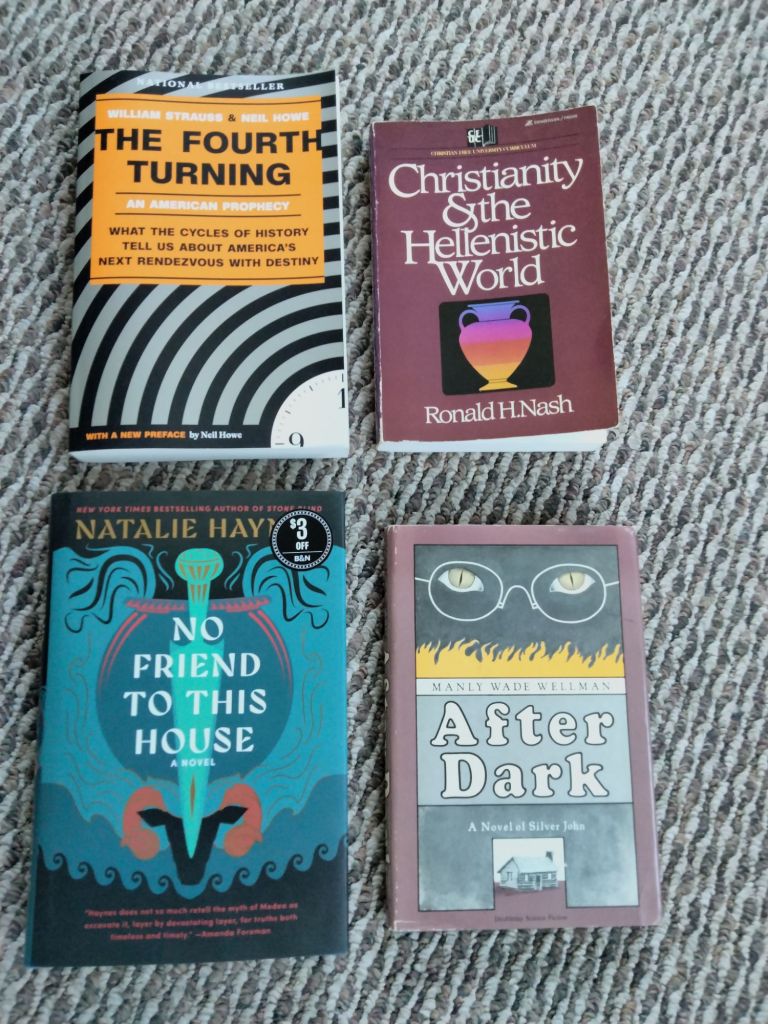
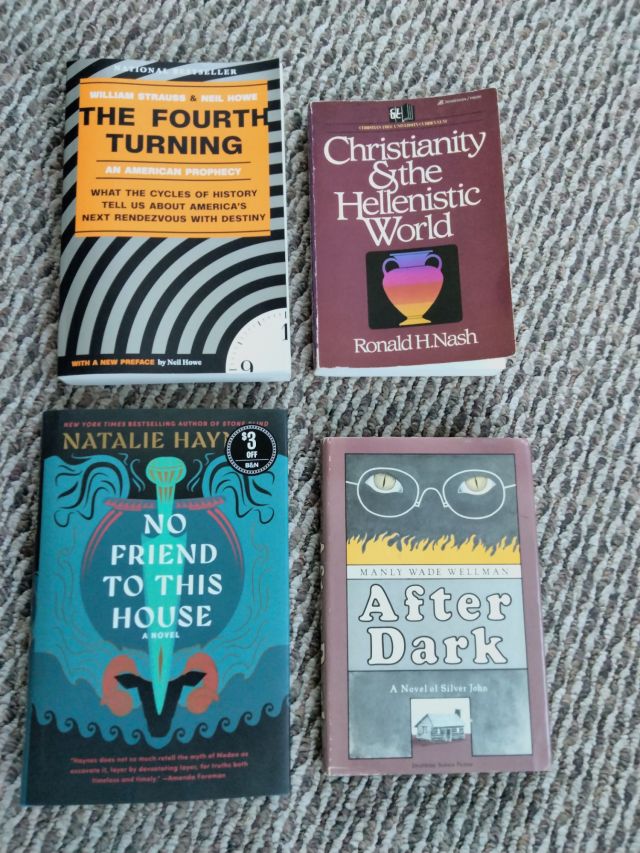
My self-control when it comes to buying books has been terrific just about as good as can be reasonably expected. I can justify each one of these!
Top left: been thinking about buying for some time, found myself in a Barnes & Noble
Top right: came to me at just the right moment to help bolster my arguments about The King Must Die. Cost $1. Working on a post that relies on it.
Bottom right: Heard about this author from Bookstooge, wanted hard copies, sought hard copies on Etsy. A self-indulgent buy.
Bottom left: In Barnes & Noble again (a separate trip). This is a big deal because the nearest B&N is an hour and fifteen minutes away, but I promise you, I had my reasons. Felt like I could afford to buy a book, spotted this new entry in the Greco-Fiction genre. Checked first to make sure it wasn’t written in the present tense. Found a map. Indulged.
In my recent big post about sacrifice (willing and otherwise), I pointed out some similarities between the different sacrificial deaths in Mary Renault’s The King Must Die, and the death of Christ.
Some of these similarities are deep. Theseus, as future king of Athens, has an honorary title the Shepherd of the People. He is the king’s son, and he feels “the god” (Poseidon) calling him “to the bulls,” that is, to go and be a human sacrifice in Crete. Before he departs, he reassures the parents of the other future bull-dancers, “I will go with your children, and take them into my hand. They shall be my people.”
Two thousand years after Christ, we are so saturated in the power of His story and of the things He said that it is hard to read these ancient customs as anything but Christological types. And, since The King Must Die was published in 1958, it’s pretty clear the author also was aware of Christ and was intentionally pulling phrases from Him. More about that in a moment.
Other similarities are superficial, but nonetheless striking. Near the end of TKMD, a sixteen-year-old “king” who is about to be torn to pieces by wild women in a Dionysian rite, goes to his death riding in a cart, crowned with ivy, brandishing a wine cup and scattering wheat seed on his people. Now, this rite is almost nothing like the death of Christ. It’s pagan. It does not happen on Passover, the date of the annual sacrifice of a lamb, but rather it is part of an annual ritual of human sacrifice mixed with orgy. The “king,” along with everyone else, is reeling drunk. He has just spent a year as the consort of the priestess/queen, and he has no choice in what is about to happen to him. It’s hard to imagine a death more different from Christ’s.
And yet, these very superficial similarities do not strike us as coincidences. Instead, they seem significant. On this side of Christ, we can’t help but notice when a man who is about to go up a hill and die shares out bread and cup to his followers.
This sort of horrifying, yet somehow moving, ritual is not something Renault just made up. It’s well-attested in myths, legends, and histories. In this essay, I will argue that Christ did not share out bread and wine because it had been done before. Rather, the pagan one-year king shared out bread and wine because Christ did so one thousand years later. Future events cast backwards shadows.
What was Renault trying to do?
To be clear, that is my thesis, not Renault’s. She was a lesbian who published a number of contemporary gay romance novels before discovering her personal obsession with ancient Greece. Writing about Socrates and Alexander the Great allowed her to write sympathetic historical novels about gay characters who lived in a context where this sort of behavior was considered completely normal. The King Must Die certainly includes all kinds of sexual activity; for example, in the Bull Court, the female bull-leapers cannot be allowed to get pregnant, so they are sequestered from the boys, and turn to relationships with each other. Many of the male bull-leapers become the paramours of upper-class Cretan men. Theseus himself is straight, but as an ancient prince, let’s just say he’s not exactly chaste. (I may have lucked into picking up Renault’s least gay book about ancient Greece.)
All this to say, I don’t think Renault was trying to say that any ancient customs were foreshadowings of Christ. If she was “trying to say” anything at all about Christ, it’s probably that He’s not so unique, and anybody familiar with ancient Hellenistic ideas would understand that. But her novels (at least TKMD) are not really “message” novels. She immersed herself in that world, wrote characters and customs that grew organically out of it, and this is what came out.
So no, I don’t think Renault is projecting Christ back into the ancient Mediterranean customs intentionally, except in the sense that she would have been familiar with biblical phrases as a woman raised in 1900s England. I think she was primarily writing from her research and imagination.
Is Christianity a ripoff from Greek mystery religions?
Still, when I first read TKMD, the tone was familiar to me and I immediately picked up the implications. Not that many years before reading it, I had been through a year of thorough education in Greek mythology by a high-school teacher who could safely be described as feminist. My best friend at the time was a neo-pagan. Between the two of them, this teacher and friend were quick to point out any parallels between Greek paganism and Christian practice, and to accuse Christians of “stealing” it. Looking back, there was a certain defensiveness there, which I did not realize at the time. But my teacher and friend were only two voices in a large crowd of scholars.
During a period of time running roughly from about 1890 to 1940, scholars often alleged that primitive Christianity had been heavily influenced by Platonism, Stoicism, the pagan mystery religions, or other movements in the Hellenistic world. Largely as a result of a series of scholarly books and articles written in rebuttal … Today, most Bible scholars regard the question as a dead issue. [But] even though specialists in biblical and classical studies know how weak the old case for Christian dependence was, these old arguments continue to circulate in the publications of scholars in such other fields as history and philosophy.
–Christianity and the Hellenistic World (1984), p. 10
As an aside, notice that the peak of this theory were the years during which Mary Renault was growing up and going to school.
Sometimes books come to you, serendipitously, just when you are ready for them. As I was thinking about this question of the similarities between fictional (but history-based) sacrificial victims in Renault, and my own Dying God, I imagined how I would build a case that He was clearly not copying them. Although He did grow up in a thoroughly Hellenized environment, He was a Jew. He was extremely faithful to the God of Abraham, Isaac, and Jacob, and was so familiar with the Law and the Prophets that He could quote them off the cuff. His veins seemed to flow with the Hebrew Scriptures. In short, He showed no signs of wanting to throw over the religion of His ancestors for that of the Greeks. Furthermore, many of the elements of how His last days went down came about as a result of the particular historical conditions in which He found Himself. He went up the hill to die because Jerusalem is built on a height. He shared out bread and wine because they were having the Passover, and this ceremony had been established 1400 years before in the desert of Sinai, not 1000 years before in the Ionian islands. He called Himself a king because that was what the Jewish Messiah was supposed to be, and He was of the house and lineage of David … not because He had been selected by matriarchal priestess to live as a king for one year and then die. He called Himself the Good Shepherd because of the Israelite pastoral tradition, not because of the Athenian one. The Roman soldiers put a crown of thorns on His head because they were professionals at humiliating and torturing people. It’s hard to imagine how He could have orchestrated all these historical factors intentionally in order to copy a pagan custom that was practiced far away, and centuries before He was born.
I can assert all this stuff, but there is always some scholar out there who could be quoted to argue with me. I needed a book. And the book came to me. As I was turning all these things over in my mind, I had to venture out to a Christian bookstore that was closing. (“Come get your novels,” they said.) Of course, many of their books were on clearance, and there before me was Nash’s Christianity and the Hellenistic World for the low low price of one dollar, its asking price all out of proportion to its value to me at that moment. Nash can prove what I can only assert.
Nash systematically addresses claims that early Christian writers, particularly Paul, got many of their key concepts from Platonism, Stoicism, the mystery religions, and Gnosticism.
Among the many claims published in this century are the following:
Early Christianity was just another Hellenistic mystery religion.
Important Christian beliefs and practices were either borrowed from, or were heavily dependent on, similar beliefs and practices in the mysteries.
Both baptism the Lord’s Supper evidence the influence of similar rituals in the mystery cults.
Among the many Christian beliefs drawn from the mysteries is the Pauline doctrine of salvation, which parallels the essential themes of the mysteries: a savior-god dies violently for those he will eventually deliver, after which the god is restored to life.
A major movement in the development and promotion of such theories was the History of Religions School (Religionsgeschichtliche Schule).
-ibid, pp. 116 – 177
Nash addresses problems with these claims such as the following: in the mysteries, the dying god does not really rise. Osiris lives on in the underworld; the dead god’s body becomes the wheat, etc. As far as we can tell, ritual washings in the mysteries were just purification rituals, and they had to be repeated. They do not seem to have been a one-time entry into a new life like the Christian baptism. For many of these mystery religions, we don’t actually know much about the content of the rituals, because they were intentionally kept secret. For many mystery-religion practices that are well-attested, such as the taurobolium where the initiate stood beneath a grate while a bull was slaughtered, these practices seem to have developed after Christ rose and Paul wrote his letters. In the case of the mystery religions of the first, second, and third centuries, some of them were actually influenced by Christianity, not the other way round.
But I’ll let German scholar Adolf von Harnack, quoted by Nash, have the last word:
We must reject the comparative mythology which finds a causal connection between everything and everything else, which tears down solid barriers, bridges chasms as though it were child’s play, and spins combinations from superficial similarities … By such methods one can turn Christ into a sun god in the twinkling of an eye, or one can bring up legends attending the birth of every conceivable god, or one can catch all sorts of mythological doves to keep company with the baptismal dove; and find any number of celebrated asses to follow the ass on which Jesus rode into Jerusalem; and thus, with the magic wand of “comparative religion,” triumphantly eliminate every spontaneous trait in any religion.
–ibid, pp. 118 – 119
Too many keys to mythology
In short, the problem is not that there are some key symbolic parallels between Christ and ancient pagan symbolism. The problem is that there are too many parallels, or similarities, right down to the animals involved. Part of this is simply the limitations of living in this world. Jesus had to eat something, He had to ride on something, He had to use some kind of words when He spoke, and there were a finite number of foods, mounts, and terms in the ancient world, just as there are everywhere. I have pointed out before, when addressing the problem of whether Christians “stole” pagan practices like hot cross buns and wedding customs, that there are a limited number of ways to do every human activity. If you eat something, wear something, or go through a life passage, and you are a human being, I guarantee that in the past four thousand years there has been someone who did it that way before you. And that someone was probably pagan.
As G.K. Chesterton said about finding mystical and symbolic connections:
The true origin of all the myths has been discovered much too often. There are too many keys to mythology, as there are too many cryptograms in Shakespeare. Everything is phallic; everything is totemistic; everything is seed-time and harvest; everything is ghosts and grave-offerings; everything is the golden bough of sacrifice; everything is the sun and moon; everything is everything.
–The Everlasting Man, p. 103
These are the givens of the universe that all humans encounter; and, unless we are sorely impoverished, we all have some way of dealing with them. But just because they are ubiquitous does not mean they are unimportant. These things are shadows of what was to come. The reality, however, is found in Christ.
Symbolism in Reality
Last point: Jesus was the fulfillment of all these confused hints in every culture. But the vibe of the New Testament historical records is much less gorgeous, mythical, and poetic than the ancient pagan stories. As C.S. Lewis put it:
When I first, after childhood, read the Gospels, I was full of that stuff about the dying God, The Golden Bough, and so on. It was to me then a very poetic, and mysterious, and quickening idea; and when I turned to the Gospels never will I forget my disappointment and repulsion at finding hardly anything about it at all. The metaphor of the seed dropping into the ground in this connexion occurs (I think) twice in the New Testament, and for the rest hardly any notice is taken; it seemed to me extradordinary. You had a dying God, Who is always representative of the corn; you see Him holding the corn, that is, bread, in His hand, and saying, ‘This is My Body,’ and from my point of view, as I then was, He did not seem to realize what He was saying. Surely there, if anywhere, this connexion between the Christian story and the corn must have come out; the whole context is crying out for it. But everything goes on as if the principal actor, and still more, those close to Him, were totally ignorant of what they were doing. It is as if you got very good evidence concerning the sea-serpent, but the men who brought this good evidence seemed never to have heard of sea-serpents. Or to put it another way, why was it that the only case of the ‘dying God’ which might conceivably have been historical occurred among a people (and the only people in the whole Mediterranean world) who had not got any trace of this nature religion, and indeed seemed to know nothing about it?
–C.S. Lewis, “The Grand Miracle,” in God in the Dock, p. 83
Well, when you put it that way, it’s pretty funny, isn’t it? Jesus’s death reads as disappointingly prosaic compared to the myths only because it actually happened. This is very humble of God. He has quite the sense of humor. As John puts it after his account of the Triumphal Entry, “At first His disciples did not understand all this. Only after Jesus was glorified did they realize that these things had been written about Him and that they had done these things to Him.” John 12:16
Sources
Chesteron, G.K. The Everlasting Man. Ignatius Press: 2008, originally published in 1925.
Lewis, C.S., ed. Walter Hooper, God in the Dock: Essays on Theology and Ethics. Eerdmans: 1970, 1978.
Nash, Ronald H. Christianity and the Hellenistic World. Zondervan: 1984.
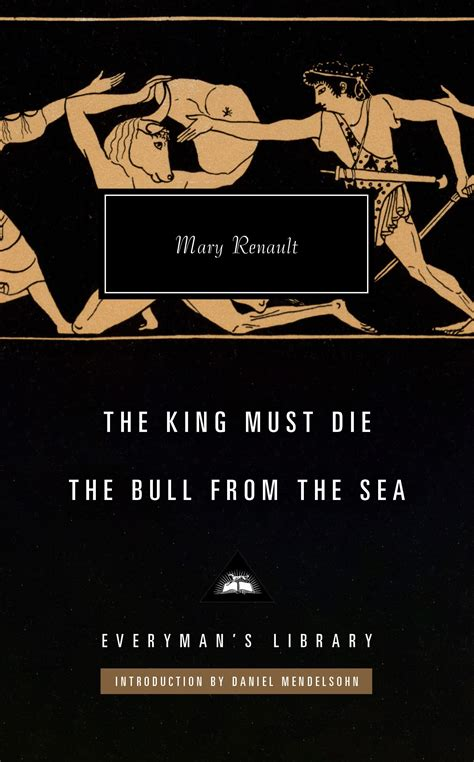
Renault, Mary. The King Must Die. Alfred A. Knopf, Everyman’s Library edition pub. 2022, originally published by Pantheon Books in 1958.
After the extremely long last Friday’s post, on which I labored for weeks, this will be just a short quick review.
I love the Archie-style eyes on the cover of this book. It’s addressing a very ugly sin, but the fact that the eyes on the cover are pretty makes it easier for the reader to accept the rebuke.
Tilly Dillehay is an awesome writer. Nevertheless, she spent much of her young adult years consumed with poisonous, immiserating envy for her younger sisters, who were thinner and had developed their musical talents more than she had. Dillehay writes with blistering honesty about this sin, the ins and out of it, the effect it had on her relationships, and above all, the cure.
When Dilley writes of the natural gifts that God gives unequally to people, and that we are tempted to envy, she calls them “glories.” There is the glory of being good-looking, of talent, of being a warm and charming person, and so on. She brings out how, when God gives someone a gift like this, it is there for the rest of us to enjoy. It makes the world a more beautiful place, and ultimately, shows forth His glory. It is wise of her not to denigrate the things that we envy (which is one thing envious people tend to do), but to fully admit that they are praiseworthy. She points out that, in the new heavens and the new earth, there will still be inequality among us when it comes to beauty, talent, and other such features. But though there will still be inequality, there will no longer be any envy.
3 There is no speech or language where their voice is not heard.
4 Their voice goes out into all the earth, their words to the ends of the world.
In the heavens He has pitched a tent for the sun,
5 which is like a bridegroom coming forth from his pavilion,
like a champion rejoicing to run his course.
6 It rises at one end of the heavens and makes its circuit to the other;
nothing is hidden from its heat.
7 The law of the LORD is perfect, reviving the soul.
The statutes of the LORD are trustworthy, making wise the simple.
8 The precepts of the LORD are right, giving joy to the heart.
The commands of the LORD are radiant, giving light to the eyes.
9 The fear of the LORD is pure, enduring forever.
The ordinances of the LORD are sure and altogether righteous.
10 They are more precious than gold, than much pure gold;
they are sweeter than honey, than honey from the comb.
11 By them is your servant warned; in keeping them is great reward.
12 Who can discern his errors? Forgive my hidden faults.
13 Keep your servant also from willful sins;
may they not rule over me.
Then will I be blameless, innocent of great transgression.
14 May the words of my mouth and the meditation of my heart
be pleasing in your sight,
O LORD, my Rock and my Redeemer.
–Psalm 19, of David
The following is a reader-response literary analysis of Psalm 19.
This is an extremely famous psalm. If you have been around Bible circles for any length of time, you probably have heard it quoted. I was no different, but for some reason, it took me 40 years to really understand why the elements of this psalm are here and how they all work together. So perhaps you can find some benefit from following my plodding steps.
The first four verses of Psalm 19 are often quoted. They describe how the skies and space themselves testify to all humankind that there is a God and that He is glorious. Paul alludes to this in Romans 1, where he says, “since the creation of the world God’s invisible qualities–His eternal power and divine nature–have been clearly seen, being understood from what has been made, so that men are without excuse.” Of course, God makes it abundantly clear to the Israelites that the sun, moon, and stars are in fact creatures and that He is not pleased when people worship them … which raises the question of sun-worship … which we will get to momentarily.
Similarly, the last three verses of the psalm–the prayer for personal cleansing from sin–are also often quoted. These are very accessible. You could pick them up and pray them, with no obstacles to understanding, if you became a Christian just yesterday. On a slightly deeper level, I have heard these verses taught as a very savvy description of the progressive nature of sin. It starts out as “hidden faults,” then if unrepented becomes “willful,” which leads to sin ruling over a person, and this state of being ruled by sin eventually leads to some egregious “great transgression.”
And this is really a psalm that is best understood back to front. If the last three verses are the most easily accessible, verses 7 – 11, about the law of God, are a close second. True to Hebrew poetry, David uses a bunch of different synonyms: law, statutes, precepts, commands, ordinances, and, interestingly, fear. Obviously these are English translations of Hebrew words for God’s law, of which the language had quite a number.
To David, he wasn’t just referring to the Ten Commandments or to the book of Leviticus. By all these synonyms he meant the whole “law of God,” that is all the revealed word of God that they had at the time. And by his inclusion of fear, it’s also clear that he meant the revelation of God’s nature, His presence with His people, and the holy awe that they were supposed to have in response.
However, I don’t want to unsay what the psalm says. The emphasis in these verses is clearly on the moral, right-and-wrong aspect of God’s word. God has given us a law. But rather than just being an obscure collection of ancient rules, this is a law that somehow revives the human soul, makes the simple wise, gives joy to the heart, light to the eyes, endures forever, warns, and is sweeter than honey.
It was for this passage that I returned to Psalm 19 recently. I had noticed after forgetting for a while–again–as one does–that without some kind of moral standard coming from outside ourselves, human beings are really and truly sunk. If there is no objective right and wrong, then might makes right and all truth claims are actually just attempts to grab power. (Thank you, Derrida!) The last couple of hundred years have been a big social experiment demonstrating this. Again.
So, my original reason for pulling out Psalm 19 was so I could pray verses 7 – 11 and thank God for His Word. Of course, as a Christian, I had an even more in-depth appreciation for the treasure that Bible truly is. It doesn’t just give us the only extra-human set of truth claims upon which a civilization can be built. It’s also, by far, our most comprehensive and reliable source text on ancient history. As if that weren’t enough, it’s not written in dry legalese or as lists of facts, but in the form of stirring stories, terrifying mythological scenes, and challenging and moving poetry. Books, and libraries, are already a treasure, but this particular library of books is truly “more precious than gold, than much pure gold.”
So I really just wanted to quote that back to God. But it’s a short psalm, and the confession verses at the end are sooo good, so of course I ended up reading the whole thing out loud whenever I went to use it.
The only sour note in this symphony of devotion were the verses about the sun. They seemed overdone. I get that we are talking about the skies and things in the skies, but why devote three whole verses just to poetically describing the sun? Rabbit trail much, David?
Then, after I don’t know how many iterations, it dawned (even) upon me that there might, possibly, be a few similarities between the sun and the law of God as described in the verses that follow it. Let’s see: nothing is hidden from its heat. It covers the whole earth and all people. It’s inescapable. It gives light to the eyes, and it revives the soul (think about the effect of sunlight after a long night!). It gives hope. But it can also be kind of oppressive. It “warns.” It also disinfects things that are exposed to it. Hiding from the sun is not usually a good sign. It can be a metaphor for hiding wrongdoing. However, we do still need shelter from the sun, because it’s pretty intense. Almost as if it were a small picture of the One Who is too holy to look upon.
Haha! I get it now!
There was just one remaining fly in the ointment. I really didn’t see why it was necessary for David to compare the sun to “a bridegroom coming forth from his pavilion” … that is, to a young man who has just had sex with his wife for the first time. Yeah, I suppose that does give a guy a certain glow. Yeah, Hebrew poetry is earthy. I get it. But … why? Is this just there to make modern readers squirm?
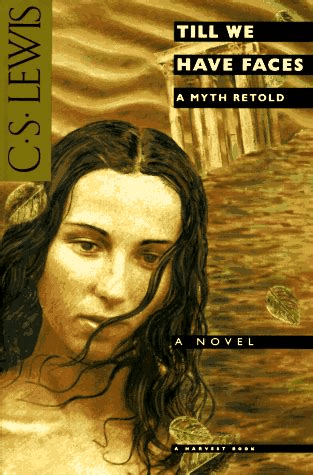
In the providence of God, I happened to be reading Till We Have Faces. In this book, the narrator (Orual) has a little sister (Psyche) who marries a god. This is literal, not figurative. It is a retelling of the Cupid and Psyche myth.
Orual meets her divine brother-in-law twice. The first time, it is in terrible judgment:
There came as it were a lightning that endured. That is, the look of it was the look of lightning, pale, dazzling, without warmth or comfort, showing each smallest thing with fierce distinctiveness, but it did not go away. This great light stood over me as still as a candle burning in a curtained and shuttered room. In the center of the light was something like a man. It is strange that I cannot tell you its size. Its face was far above me, yet memory does not show the shape as a giant’s. And I do not know whether it stood, or seemed to stand, on the far side of the water or on the water itself.
Though this light stood motionless, my glimpse of the face was as swift as a true flash of lightning. I could not bear it for longer. Not my eyes only, but my heart and blood and very brain were too weak for that. A monster would have subdued me less than the beauty this face wore. And I think anger (what men call anger) would have been more supportable than the passionless and measureless rejection with which it looked upon me.
-Till We Have Faces, pp. 172 – 173
The second time, Orual’s literal and metaphorical ugliness has been cleansed, and the god coming to judge her is going to see only beauty:
“Did I not tell you, Maia,” she said, “that a day was coming when you and I would meet in my house and no cloud between us?”
Joy silenced me. But now, what was this? You have seen torches grow pale when men open the shutters and broad summer morning shines in on the feasting hall? So now. Suddenly, from a strange look on Psyche’s face, or from a glorious and awful deepening of the blue sky above us, or from a deep breath like a sigh uttered all round us by invisible lips, or from a deep, doubtful, quaking and surmise in my own heart, I knew that all this had been only a preparation. Some far greater matter was upon us. The voices spoke again; but not loud this time. They were awed and trembled. “He is coming,” they said. “The god is coming into his house. The god comes to judge Orual.”
The air was growing brighter and brighter about us; as if something had set it on fire. Each breath I drew let into me new terror, joy, overpowering sweetness. I was pierced through and through with the arrows of it. I was being unmade. And he was coming. The most dreadful, the most beautiful, the only dread and beauty there is, was coming. The pillars on the far side of the pool flushed at his approach. I cast down my eyes.
“You also are Psyche,” came a great voice.
–ibid, pp. 306 – 308
The bridegroom is actually the one Who links everything together in this poem. C.S. Lewis had to hit me over the head with an extremely long, vivid description before I could see it, but I see it now. The god–Christ–is the bridegroom and He’s also the sun. He comes in horrible, revealing judgment, he comes in shining beauty, He overwhelms the senses. He convicts and purifies and beautifies the people that His light touches. And, of course, He is also the Word. And Word also does all these things.
I read The King Must Die back in university. My education up to that point had some gaping holes, but I had been privileged to attend a school one time where they spent an entire year getting us thoroughly familiar with Greek myths and history. My point is, I knew the story of Theseus. I knew the labyrinth and the Minotaur were the main event. And I was eager to get to them. So I moved through the first part of the book at a pretty good clip, the part that tells of Theseus’ childhood in Troizen, his coming of age, and his journey across the Peloponnesian Peninsula to find his father, the king of Athens.
I thought then, and still think now, that Theseus is not an especially likeable character to modern eyes. He’s a prince of Heroic Age Greek culture, and he is, as they say, a product of his time. He is proud, ambitious, pious towards the gods, stoic, brave, and clever (those are his virtues), and also snobby, entitled, callous, cruel, sexist, and promiscuous. He has all the virtues of ancient paganism, but none of the virtues a Christian man. You can’t endorse all his actions or even his value system. (By the way, that is exactly what makes this such a fantastic historical novel.) But despite all this, there are moments in his story that ring incredibly poignant. And these are moments that I either forgot since my first reading, or missed entirely.
You want to hear about the Minotaur? Let me tell you about a son and his father.
Theseus’s grandfather is king in Troizen, a small Greek kingdom on the east coast of the Peloponnesian Peninsula (or what they call the Isle of Pelops). His mother, a princess, had him when she was a teenager. She lives, still unmarried, in the palace, and serves as a priestess of the Mother, who is goddess left over from before the Greeks arrived, whom they feel they must give her due.
Theseus’s mother has always told him that he is the son of Poseidon. Theseus takes this seriously as a little child. He views the sacred horse, also called a son of Poseidon, as his brother. He whispers “Are you there, Father?” into the sacred well that sometimes grumbles when Poseidon is stirred up. But as he gets a little older, he sees that other people doubt he has a divine father. He becomes defensive.
Truly “god-got” children are known to be really tall, and Theseus has always been small for his age. He waits and waits to grow (he hopes to be six or seven feet tall). He develops “short man syndrome,” taking daring risks in order to prove himself in front of the other boys. He is the best at every sport except for Hellene-style wrestling, because that requires mass and weight.
Once, he even swims way out into the ocean, figuring either Poseidon will prove he is his father, or Theseus will welcome a death by drowning. The current sweeps him back to the island, and he figures he has his answer.
Then Theseus turns seventeen, and his mother shows him the rock that his father said he should try to raise in order to prove whose son he is. So, it wasn’t Poseidon after all.
Theseus tries and can’t raise it by brute strength. He is broken, furious with his mother who won’t tell him anything.
But eventually, he realizes that he can raise it with a lever. That’s when he finds the sword.
His grandfather tells him the story, which is full of the tragedy, ugliness and beauty of ancient paganism is and basically a mini novel within this novel. There was a plague, a drought. Apollo claimed not to be responsible. Poseidon wasn’t answering. Finally, the priestess said it was the Mother. “A virgin must go and wait in the myrtle-house and give herself to the first man who comes along.” The priestess disliked Theseus’s mother, because she was an attractive young girl. His grandfather couldn’t see a way to get her out of this.
But it happened that Aigeus, the thirtysomething king of Athens, was visiting Troizen. He agreed with Theseus’s grandfather that he would be the man. At least the princess would lose her virginity to someone she had met before, and he would be kind and gentle with her. They could not tell her about this arrangement beforehand, because when a member of the royal family is in some way sacrificing themselves for the people, their willingness to make the sacrifice is a critical element. Only then will the god bless it.
The thunderstorm was already arriving. Aigeus stripped and swam across the channel to the sacred island where the Myrtle House was. A flash of lightning revealed to the princess a dark-haired man rising up out of the water, with a ribbon of seaweed on his shoulder. She thought he was Poseidon. She knelt, and crossed her arms over her chest, as one would do for a god.
Why didn’t he wait for the boat? Why did he jump into unknown waters, in a rainstorm, and swim across? Was Poseidon indeed possessing him? say these pagans. Who knows?
Theseus is disappointed, but intrigued, to find out that he has a human father. He travels over the Isthmus (a dangerous and lawless place), gets entangled with the earth-mother-worshipping people of Eleusis, which is very creepy, and eventually makes it to Athens and reveals himself to his father, narrowly escaping being assassinated first.
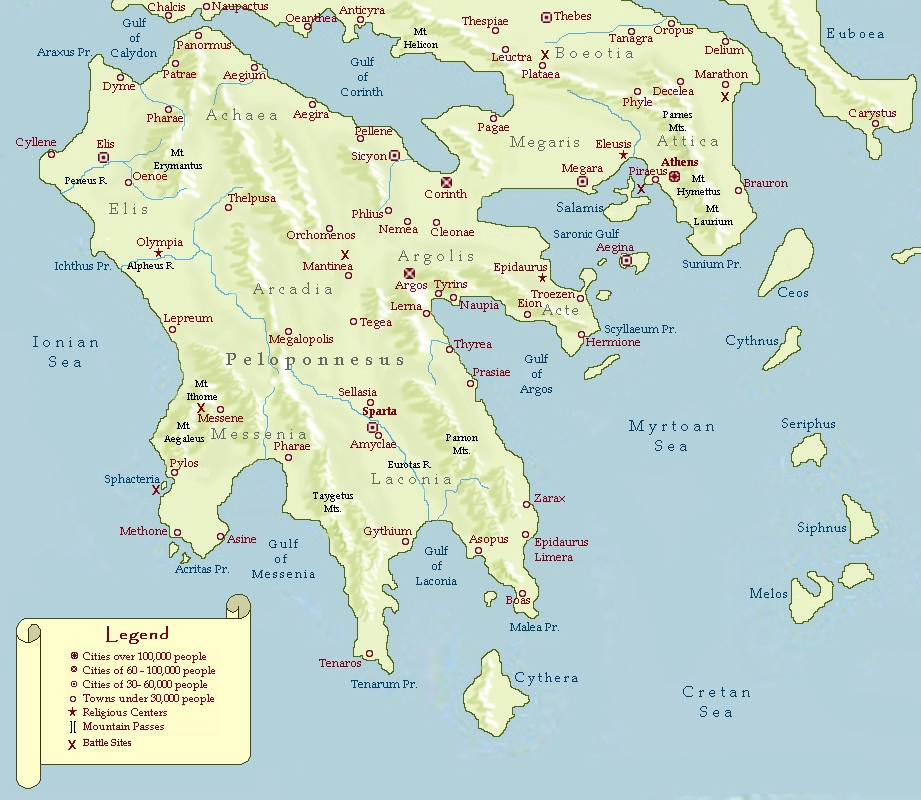
On the map above, if you look around the Saronic Gulf, you can see Troezen on the south side, Athens on the north side, and Eleusis just a bit west of Athens. I wish I’d had this map 25 years ago, when I first read the book.
Aigeus has no other sons. He is thunderstruck and delighted to see Theseus.
There’s not exactly hugging and crying, because both of them are proud, aristocratic, cautious men. On the whole, Aigeus probably wears his feelings closer to the surface than Theseus does. Still, they start getting to know each other.
Theseus’s birthday is approaching. Aigeus wants to have a feast for him. Theseus suggests sending to Troizen to bring his mother for the feast, but Aigeus dismisses this plan. If they wait, the time will get too close to “the tribute” (the sending of young men and women to Crete), and he doesn’t want to be celebrating his long-lost son when some of his subjects have just had to give up theirs.
It’s at this point that the reader who knows the outline of the story realizes that Theseus and his father are not going to have much more time together.
The day of the feast comes. Aigeus gifts Theseus a chariot, “of dark polished cypress-wood, with ivory inlays and silver-bound wheels, a craftsman’s masterpiece.”
It was a gift beyond my dearest wish. I thank him on one knee, putting his hand to my brow; but he said, “Why this haste, before you have seen the horses?”
They were matched blacks, with white-blazed foreheads; strong and glossy, sons of the north wind. My father said, “Aha, we slipped them up here, as neat as Hermes the Trickster lifting Apollo’s steers. The chariot while you were in Eleusis; and the horses this very morning, while you still slept.”
He rubbed his hands together. I was touched at his taking all this care to surprise me, as if I had been a child. “We must take them out,” I said. “Father, finish your business early, and I will be your charioteer.” We agreed that after the rites, we would drive to Paionia below Hymettos.
pp. 154 – 155
In case you missed it, Aigeus just gave his son a sports car.
After the rites, Theseus goes to the stables and waits and waits for his father. When the king does show up, he seems to have forgotten their plan to take a ride. He is stressed out by something. He urges Theseus to ride by himself, but to leave by the back gate.
The reader realizes, with a sinking feeling, that the representatives from Crete have come early to collect the youths and maidens for the tribute.
Aigeus, almost in tears, is trying to get Theseus away from there. But Theseus, too sharp not to realize something is wrong and too proud to be hustled out the back, quickly finds out what is happening and insists on entering the deadly lottery.
And now, the reader realizes that they are never, ever going to take that chariot ride.
The youths and maidens of Athens are chosen by putting their names on scraps of pottery, which are then drawn at random out of a bowl. Aigeus puts in a lot for his son, on which he has surreptitiously written some other youth’s name. But Theseus, standing among the crowd, realizes what has happened when he sees that his father is not worried. What should he do? Should he let the deception stand? Or should he stride forward and insist on being among those who are sacrificed?
I thought, “What was it? What has my father done? What every father would do if he could. And he is King. He has to think for the kingdom. It is true enough that I am needed here. I ought not to think like a warrior only. Has someone else gone to Crete for me? I have led such lads to war, and never thought I wronged them, though some were sure to die. Why then do I hate my father, and myself still more, and feel I cannot bear my life?”
I looked at my father, and remembered how he had invoked Poseidon, praying him to choose the victims. And I thought, “Yes! That is it! He has mocked the god, the guardian of the house, who brought him to beget me. Well may I be angry! This man has mocked my father.”
p. 163
Theseus begins praying his heart to Poseidon. He senses that the god wants him to go to Crete. It is time to make the sacrifice.
Sorrow fell black upon my eyes and the sun grew cold. I thought of what I had planned to do in Athens: small things I had to hoped to force my father’s hand to, great ones when my own time came. I knelt where I was, with my hair hiding my face, and thought of my life; of hunting with the Guard, of feasts and dances, of my room with the lion walls; of a woman I wanted, and had meant to speak to at the festival; of my beautiful horses, who had scarcely felt my hand; of the war paean, the bright rage of battle, and the triumph song. And I thought, “The god cannot mean it. He sent me here to be king.”
“Father Poseidon,” I whispered, “take something else from me. I will not ask to live long, if I can make a name and be remembered in Athens. Now it will be as if I had never been born.” I heard the name called of some Athenian. It was the last of the seven. “Lord Poseidon, I will give you my horses, the best I ever had. Take anything but this.”
The sea-sound grew fainter in my ears. And I thought, “The god is leaving me.”
p. 164
So off he goes. Rather than lose the unction of the god to rule, Theseus insists on going to Crete, where, he has been told, bull-dancers last six months at the most.
“Don’t grieve, Athenians. The god is sending me. He has called me to the bulls, and I must obey his sign. But don’t weep for me, I will come again.” I did not know these words till I had spoken them; they came to me from the god. “I will go with your children, and take them into my hand. They shall be my people.”
They had left off weeping, and their voices sank to a hush. I turned, and faced my father.
I saw the face of a man who has got his death-wound.
This is an unplanned post. But, after all, a blog is a “web-log,” no? As in, a record of how we are doing day to day. And book blogs are records of how our reading affects us.
And whoof. Reading Greco-fiction is proving costlier than I anticipated.
First, there was Circe, with its depressing picture of Odysseus slipping into OCD paranoia after his return to Ithaca.
Then, I read Till We Have Faces, which is sort of like having the Holy Spirit do open heart surgery on you, if you really pore over it.
Now, I’m sitting here trying to work, but I’m having to take a break because reading The King Must Die has made my stomach hurt. That is not an exaggeration; I am experiencing psychologically caused stomach pain from reading this book.
I had some time to myself this morning, before leaving for the office. I thought I’d just get caught up on my reading of The King Must Die. Plus, it is hard to put down. I enjoyed reading about the earthquake that brought down the palace of Knossos. I relished when the Greek ship passed the island of Kalliste, the source of the earthquake, and the watery crater where the island used to lie. (This is the eruption of Thera, a well-documented event that took place about 1500 B.C.) Theseus is bringing with him Princess Ariadne of Crete. He is in love with her, and he has promised her father Minos that he will marry her and protect her.
The party lands on the Isle of Dia. I knew what was coming, but I kept reading. I remember this from university.
The people on the Isle of Dia are about to have a festival to Dionysius. Terrible things happen at such times, but everyone is in an altered state. A sacrificial man is torn apart by the wild women, the Maenads. I mean with their bare hands, teeth, etc.
Ariadne participates in this ceremony. When Theseus finds her, sleeping the wine off peacefully, all covered in someone else’s blood and still holding a body part, he vomits. He knew the king must die, but he didn’t anticipate exactly how it would happen. And he’s only eighteen years old.
I knew what would happen, but for some reason, it affected me worse this time. Perhaps because this time, I have children the ages of Theseus, Ariadne (16), and the “King” (also 16) whom she murdered.
At the same time, I can’t just dismiss it as follows: “Well, of course. It’s paganism. It’s all horrible and worthless, not worth caring about these people, not worth my time.” The reason these stories still intrigue us is because there is some very deep stuff going on there. And The King Must Die is filled, almost on every page, with Biblical easter eggs, both as direct quotes and as symbolic allusions. Even the Dionysian ceremony has them. Though I don’t doubt those wild women would indeed have to be possessed, and not in a good way, to do what they did.
Anyway, I’ll get to how I found Christ in The King Must Die in a later post, when I have gathered myself. I just wanted to report that it sort of ruined my day.
Have you ever had a physical reaction to a book? And did you still like the book after?
That’s right, this wasn’t even a first-time read, and it destroyed me. Again. Maybe worse this time.
It’s tempting to do a super detailed book review, including an analysis of all the ancient customs, the Bible Easter eggs, and the symbolism. (My God, the symbolism!) But I’m not going to do that, because I really think you should read it if at all possible. And, even though this book is possibly more powerful on re-reads, I still don’t want to ruin your first read with spoilers.
Any analysis I gave, would be less of an immersive experience than the story itself, because that is the power of fiction.
I will just say a few things about the setting and genre, so you can decide whether to subject yourself to it.
I read TWHF as part of my 2026 “Greco-fiction” project, where I read books set in and/or inspired by the Heroic Age of Greece. When I mentioned this project to someone, they suggested Till We Have Faces. They were right, of course, though I hadn’t put it in the same category in my mind as, say, The Song of Achilles.
The action takes place in a fictional country called Glome. Based upon hints in the text, Glome is located somewhere just south or just north of the Caucasus Mountains, between the Black and Caspian seas. Georgia, Azerbaijan, perhaps southern Russia. Glome is not a mountainous kingdom, but it is near mountains. In the distance, they can see “what we call the sea, though it is nowhere nearly as great as the Great Sea of the Greeks.” This would probably be the Caspian. They are far from Greece, but near enough that they occasionally encounter a Greek captive taken in war. They are near enough to “Phars” (Persia) for that country to present a problem. At one point, the narrative makes a passing mention of “the wagon people, who live beyond the Grey Mountain.” These “wagon people” are probably steppe-dwellers related to the Scythians or Kazaks.
The people of Glome worship a fertility goddess called Ungit, who is embodied in a large irregular black stone that is said to have pushed its way up from the earth. Ungit’s “house” is a group of megaliths joined together with walls. Her worship involves temple prostitution, animal sacrifice, and sometimes human sacrifice, all the usual things that you expect with a fertility religion. Her priest wears a large bird mask on his chest, and dangles with amulets and animal bladders.
The narrator, a little girl named Orual, is frightened of the priest and of Ungit. The story will go on to focus on this fear. Orual very much hopes that the gods are, as her Greek tutor has told her, merely “lies of poets, lies of poets, child.” But are they? Or is there a power in Ungit (and in her son, who dwells on the Grey Mountain) that will leave Orual quite outmatched?
C.S. Lewis is an underrated horror writer. In this story he draws back the curtain on the horror of paganism. We also see, I think, hints of how he himself felt when he was an atheist: desperately hoping there is no spiritual world; uneasily worried that there might be. Relieved, but unsatisfied, by the “clear, shallow” Greek explanations.
So, I’ve said enough. Read it if you dare. I doubt that this year will bring me a better book in the category of Greco-Fiction.
In my Greco-Fiction project, I have briefly set aside The King Must Die in order to re-read Till We Have Faces. I have to read TWHF for a book club, but I can’t complain, really, because I was one who convinced the book club to read it for our February discussion.
If you have never heard of it, Till We Have Faces is one of C.S. Lewis’s lesser-known novels. The point of view character is a young woman, a princess in the ancient, fictional kingdom of Glome, who is cursed with an ugly face, an abusive father, and a horrible fertility goddess for a religion. Her name is Orual. The first bright spot in Orual’s life is a Greek slave her father captured in war, who becomes her tutor. The second, and much brighter, spot is her younger half-sister Psyche.
The back of the book describes it as a “timeless tale of two princesses–one beautiful and one unattractive.” Naturally, when I first picked it up, then in my late teens, I thought, “Well, I know which one of these I will identify with!” Like probably every young woman, I expected to have a grand time wallowing in self-pity on behalf of the ugly princess. However, this is not that kind of story. Orual is not envious of Psyche’s beauty. The jealousy she feels is of a very different kind.
I don’t want to give away the events of the story, because you should definitely read it. However, I do want to post a long passage from the book. This passage is very important thematically, and in terms of Orual’s character development, even though it is not an action scene.
When we topped [the ridge], and stood for a while to let the horse breathe, everything was changed. And my struggle began.
We had come into the sunlight now, too bright to look into, and warm (I threw back my cloak). Heavy dew made the grass jewel-bright. The Mountain, far greater yet also far further off than I expected, seen with the sun hanging a hand-breadth above its topmost crags, did not look like a solid thing. Between us and it was a vast tumble of valley and hill, woods and cliffs, and more little lakes than I could count. To the left and right, and behind us, the whole coloured world with all its hills was heaped up and up to the sky, with, far away, a gleam of what we call the sea. There was a lark singing; but for that, huge and ancient stillness.
And my struggle was this. You may well believe that I had set out sad enough; I came on a sad errand. Now, flung at me like frolic or insolence, there came as if it were a voice–no words–but if you made it into words it would be, “Why should your heart not dance?” It’s the measure of my folly that my heart almost answered, “Why not?” I had to tell myself over and over like a lesson the infinite reasons it had not to dance. My heart to dance? Mine whose love was taken from me, I, the ugly princess who must never look for other love, the drudge of the King, perhaps to be murdered or turned out as a beggar when my father died? And yet, it was a lesson I could hardly keep in my mind. The sight of the huge world put mad ideas into me, as if I could wander away, wander forever, see strange and beautiful things, one after the other to the world’s end. The freshness and wetness all about me made me feel that I had misjudged the world; it seemed kind, and laughing, as if its heart also danced. Even my ugliness I could not quite believe in. Who can feel ugly when the heart meets delight? It is as if, somewhere inside, within the hideous face and bony limbs, one is soft, fresh, lissom and desirable.
Was I not right to struggle against this fool-happy mood? What woman can have patience with the man who can be yet again deceived by his doxy’s fawning after he has thrice proved her false? I should be just like such a man if a mere burst of fair weather, and fresh grass after a long drought, and health after sickness, could make me friends again with this god-haunted, plague-breeding, decaying, tyrannous world.