
Pagan kings looking like Jesus
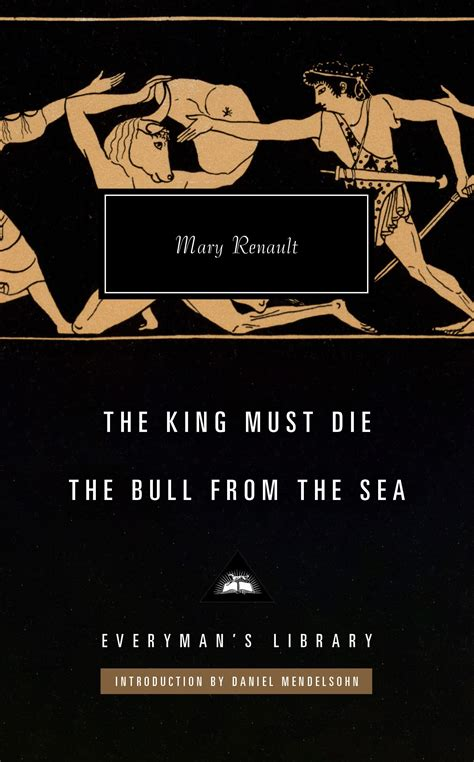
In my recent big post about sacrifice (willing and otherwise), I pointed out some similarities between the different sacrificial deaths in Mary Renault’s The King Must Die, and the death of Christ.
Some of these similarities are deep. Theseus, as future king of Athens, has an honorary title the Shepherd of the People. He is the king’s son, and he feels “the god” (Poseidon) calling him “to the bulls,” that is, to go and be a human sacrifice in Crete. Before he departs, he reassures the parents of the other future bull-dancers, “I will go with your children, and take them into my hand. They shall be my people.”
Two thousand years after Christ, we are so saturated in the power of His story and of the things He said that it is hard to read these ancient customs as anything but Christological types. And, since The King Must Die was published in 1958, it’s pretty clear the author also was aware of Christ and was intentionally pulling phrases from Him. More about that in a moment.
Other similarities are superficial, but nonetheless striking. Near the end of TKMD, a sixteen-year-old “king” who is about to be torn to pieces by wild women in a Dionysian rite, goes to his death riding in a cart, crowned with ivy, brandishing a wine cup and scattering wheat seed on his people. Now, this rite is almost nothing like the death of Christ. It’s pagan. It does not happen on Passover, the date of the annual sacrifice of a lamb, but rather it is part of an annual ritual of human sacrifice mixed with orgy. The “king,” along with everyone else, is reeling drunk. He has just spent a year as the consort of the priestess/queen, and he has no choice in what is about to happen to him. It’s hard to imagine a death more different from Christ’s.
And yet, these very superficial similarities do not strike us as coincidences. Instead, they seem significant. On this side of Christ, we can’t help but notice when a man who is about to go up a hill and die shares out bread and cup to his followers.
This sort of horrifying, yet somehow moving, ritual is not something Renault just made up. It’s well-attested in myths, legends, and histories. In this essay, I will argue that Christ did not share out bread and wine because it had been done before. Rather, the pagan one-year king shared out bread and wine because Christ did so one thousand years later. Future events cast backwards shadows.
What was Renault trying to do?
To be clear, that is my thesis, not Renault’s. She was a lesbian who published a number of contemporary gay romance novels before discovering her personal obsession with ancient Greece. Writing about Socrates and Alexander the Great allowed her to write sympathetic historical novels about gay characters who lived in a context where this sort of behavior was considered completely normal. The King Must Die certainly includes all kinds of sexual activity; for example, in the Bull Court, the female bull-leapers cannot be allowed to get pregnant, so they are sequestered from the boys, and turn to relationships with each other. Many of the male bull-leapers become the paramours of upper-class Cretan men. Theseus himself is straight, but as an ancient prince, let’s just say he’s not exactly chaste. (I may have lucked into picking up Renault’s least gay book about ancient Greece.)
All this to say, I don’t think Renault was trying to say that any ancient customs were foreshadowings of Christ. If she was “trying to say” anything at all about Christ, it’s probably that He’s not so unique, and anybody familiar with ancient Hellenistic ideas would understand that. But her novels (at least TKMD) are not really “message” novels. She immersed herself in that world, wrote characters and customs that grew organically out of it, and this is what came out.
So no, I don’t think Renault is projecting Christ back into the ancient Mediterranean customs intentionally, except in the sense that she would have been familiar with biblical phrases as a woman raised in 1900s England. I think she was primarily writing from her research and imagination.
Is Christianity a ripoff from Greek mystery religions?
Still, when I first read TKMD, the tone was familiar to me and I immediately picked up the implications. Not that many years before reading it, I had been through a year of thorough education in Greek mythology by a high-school teacher who could safely be described as feminist. My best friend at the time was a neo-pagan. Between the two of them, this teacher and friend were quick to point out any parallels between Greek paganism and Christian practice, and to accuse Christians of “stealing” it. Looking back, there was a certain defensiveness there, which I did not realize at the time. But my teacher and friend were only two voices in a large crowd of scholars.
During a period of time running roughly from about 1890 to 1940, scholars often alleged that primitive Christianity had been heavily influenced by Platonism, Stoicism, the pagan mystery religions, or other movements in the Hellenistic world. Largely as a result of a series of scholarly books and articles written in rebuttal … Today, most Bible scholars regard the question as a dead issue. [But] even though specialists in biblical and classical studies know how weak the old case for Christian dependence was, these old arguments continue to circulate in the publications of scholars in such other fields as history and philosophy.
–Christianity and the Hellenistic World (1984), p. 10
As an aside, notice that the peak of this theory were the years during which Mary Renault was growing up and going to school.

Sometimes books come to you, serendipitously, just when you are ready for them. As I was thinking about this question of the similarities between fictional (but history-based) sacrificial victims in Renault, and my own Dying God, I imagined how I would build a case that He was clearly not copying them. Although He did grow up in a thoroughly Hellenized environment, He was a Jew. He was extremely faithful to the God of Abraham, Isaac, and Jacob, and was so familiar with the Law and the Prophets that He could quote them off the cuff. His veins seemed to flow with the Hebrew Scriptures. In short, He showed no signs of wanting to throw over the religion of His ancestors for that of the Greeks. Furthermore, many of the elements of how His last days went down came about as a result of the particular historical conditions in which He found Himself. He went up the hill to die because Jerusalem is built on a height. He shared out bread and wine because they were having the Passover, and this ceremony had been established 1400 years before in the desert of Sinai, not 1000 years before in the Ionian islands. He called Himself a king because that was what the Jewish Messiah was supposed to be, and He was of the house and lineage of David … not because He had been selected by matriarchal priestess to live as a king for one year and then die. He called Himself the Good Shepherd because of the Israelite pastoral tradition, not because of the Athenian one. The Roman soldiers put a crown of thorns on His head because they were professionals at humiliating and torturing people. It’s hard to imagine how He could have orchestrated all these historical factors intentionally in order to copy a pagan custom that was practiced far away, and centuries before He was born.
I can assert all this stuff, but there is always some scholar out there who could be quoted to argue with me. I needed a book. And the book came to me. As I was turning all these things over in my mind, I had to venture out to a Christian bookstore that was closing. (“Come get your novels,” they said.) Of course, many of their books were on clearance, and there before me was Nash’s Christianity and the Hellenistic World for the low low price of one dollar, its asking price all out of proportion to its value to me at that moment. Nash can prove what I can only assert.
Nash systematically addresses claims that early Christian writers, particularly Paul, got many of their key concepts from Platonism, Stoicism, the mystery religions, and Gnosticism.
Among the many claims published in this century are the following:
- Early Christianity was just another Hellenistic mystery religion.
- Important Christian beliefs and practices were either borrowed from, or were heavily dependent on, similar beliefs and practices in the mysteries.
- Both baptism the Lord’s Supper evidence the influence of similar rituals in the mystery cults.
- Among the many Christian beliefs drawn from the mysteries is the Pauline doctrine of salvation, which parallels the essential themes of the mysteries: a savior-god dies violently for those he will eventually deliver, after which the god is restored to life.
A major movement in the development and promotion of such theories was the History of Religions School (Religionsgeschichtliche Schule).
-ibid, pp. 116 – 177
Nash addresses problems with these claims such as the following: in the mysteries, the dying god does not really rise. Osiris lives on in the underworld; the dead god’s body becomes the wheat, etc. As far as we can tell, ritual washings in the mysteries were just purification rituals, and they had to be repeated. They do not seem to have been a one-time entry into a new life like the Christian baptism. For many of these mystery religions, we don’t actually know much about the content of the rituals, because they were intentionally kept secret. For many mystery-religion practices that are well-attested, such as the taurobolium where the initiate stood beneath a grate while a bull was slaughtered, these practices seem to have developed after Christ rose and Paul wrote his letters. In the case of the mystery religions of the first, second, and third centuries, some of them were actually influenced by Christianity, not the other way round.
But I’ll let German scholar Adolf von Harnack, quoted by Nash, have the last word:
We must reject the comparative mythology which finds a causal connection between everything and everything else, which tears down solid barriers, bridges chasms as though it were child’s play, and spins combinations from superficial similarities … By such methods one can turn Christ into a sun god in the twinkling of an eye, or one can bring up legends attending the birth of every conceivable god, or one can catch all sorts of mythological doves to keep company with the baptismal dove; and find any number of celebrated asses to follow the ass on which Jesus rode into Jerusalem; and thus, with the magic wand of “comparative religion,” triumphantly eliminate every spontaneous trait in any religion.
–ibid, pp. 118 – 119
Too many keys to mythology
In short, the problem is not that there are some key symbolic parallels between Christ and ancient pagan symbolism. The problem is that there are too many parallels, or similarities, right down to the animals involved. Part of this is simply the limitations of living in this world. Jesus had to eat something, He had to ride on something, He had to use some kind of words when He spoke, and there were a finite number of foods, mounts, and terms in the ancient world, just as there are everywhere. I have pointed out before, when addressing the problem of whether Christians “stole” pagan practices like hot cross buns and wedding customs, that there are a limited number of ways to do every human activity. If you eat something, wear something, or go through a life passage, and you are a human being, I guarantee that in the past four thousand years there has been someone who did it that way before you. And that someone was probably pagan.
As G.K. Chesterton said about finding mystical and symbolic connections:
The true origin of all the myths has been discovered much too often. There are too many keys to mythology, as there are too many cryptograms in Shakespeare. Everything is phallic; everything is totemistic; everything is seed-time and harvest; everything is ghosts and grave-offerings; everything is the golden bough of sacrifice; everything is the sun and moon; everything is everything.
–The Everlasting Man, p. 103
These are the givens of the universe that all humans encounter; and, unless we are sorely impoverished, we all have some way of dealing with them. But just because they are ubiquitous does not mean they are unimportant. These things are shadows of what was to come. The reality, however, is found in Christ.
Symbolism in Reality
Last point: Jesus was the fulfillment of all these confused hints in every culture. But the vibe of the New Testament historical records is much less gorgeous, mythical, and poetic than the ancient pagan stories. As C.S. Lewis put it:
When I first, after childhood, read the Gospels, I was full of that stuff about the dying God, The Golden Bough, and so on. It was to me then a very poetic, and mysterious, and quickening idea; and when I turned to the Gospels never will I forget my disappointment and repulsion at finding hardly anything about it at all. The metaphor of the seed dropping into the ground in this connexion occurs (I think) twice in the New Testament, and for the rest hardly any notice is taken; it seemed to me extradordinary. You had a dying God, Who is always representative of the corn; you see Him holding the corn, that is, bread, in His hand, and saying, ‘This is My Body,’ and from my point of view, as I then was, He did not seem to realize what He was saying. Surely there, if anywhere, this connexion between the Christian story and the corn must have come out; the whole context is crying out for it. But everything goes on as if the principal actor, and still more, those close to Him, were totally ignorant of what they were doing. It is as if you got very good evidence concerning the sea-serpent, but the men who brought this good evidence seemed never to have heard of sea-serpents. Or to put it another way, why was it that the only case of the ‘dying God’ which might conceivably have been historical occurred among a people (and the only people in the whole Mediterranean world) who had not got any trace of this nature religion, and indeed seemed to know nothing about it?
–C.S. Lewis, “The Grand Miracle,” in God in the Dock, p. 83
Well, when you put it that way, it’s pretty funny, isn’t it? Jesus’s death reads as disappointingly prosaic compared to the myths only because it actually happened. This is very humble of God. He has quite the sense of humor. As John puts it after his account of the Triumphal Entry, “At first His disciples did not understand all this. Only after Jesus was glorified did they realize that these things had been written about Him and that they had done these things to Him.” John 12:16
Sources
Chesteron, G.K. The Everlasting Man. Ignatius Press: 2008, originally published in 1925.
Lewis, C.S., ed. Walter Hooper, God in the Dock: Essays on Theology and Ethics. Eerdmans: 1970, 1978.
Nash, Ronald H. Christianity and the Hellenistic World. Zondervan: 1984.
Renault, Mary. The King Must Die. Alfred A. Knopf, Everyman’s Library edition pub. 2022, originally published by Pantheon Books in 1958.
“Who is Mary Renault?” copyright The Mary Renault Society, 2010 – 2026, Who Is Mary Renault? – The Mary Renault Society, accessed April 17, 2026.

