I posted this video a few months ago, but I can’t think of a better thing to post for Halloween, because some of the stuff Jason McLean discusses in this video is the most hair-raising stuff you can imagine.
Stay safe out there, everybody! Don’t talk to any strange aliens!
… I was going to put, “… I’ve been waiting for all my life,” but it hasn’t been quite that long.
[T]he scientific community selected father-son pairs (or other male relatives of known genealogy) and sequenced their Y chromosome DNA. Then they counted the number of differences between the relatives. The number of Y chromosome DNA differences between them revealed how many copying errors occurred each generation. These differences told them how fast the Y chromosome clock ticked.
One of the first studies to measure the error rate was published in 2009. Two Chinese men of a known genealogical relationship going back to the 1800s had their Y chromosome DNA sequences determined. The resultant rate of copying errors was slow. It fit the existence of a “Y chromosome Adam” (the ancestor of all living men) about 200,000 years ago. In 2015, a study of hundreds of Icelandic men produced the same result.
So far, these results would leave the mainstream time scale as is.
However, due to financial and time constraints, these earlier studies were based on low quality DNA sequence. Then, in 2015, another research group compared father and son Y chromosome DNA sequences. This time, they used high quality methods. The result was a copying error rate that was much faster than the previous, lower quality studies: “The number of [father-son Y chromosome] differences was approximately 10-fold higher than the expected number … considering the range of published [Y chromosome copying mistake] rates.”
In fact, the data from this study implied that “Y chromosome Adam” lived just a few thousand years ago.
What was the mainstream scientific community to do? Oddly, they filtered their results, removing data that contradicted the 200,000-year timescale. They did so until the Y chromosome copying error rate matched their expectations.
In 2017, researchers compared the DNA sequences between 50 parent-offspring trios — i.e., they obtained DNA from father, mother, and child. Again, they did so by using high quality DNA sequencing methods. The researchers published detailed analyses of the copying error rate in these people. But conspicuously absent from their published results was a statement on the father-son Y chromosome copying error rate. Why? From the raw data that did make it into their published study, a potential answer emerged. From this raw data, the father-son Y chromosome DNA copying error rate could be extracted. The results were consistent with the 2015 high-quality study. The 2017 Y chromosome copying error rate again implied that “Y chromosome Adam” existed about 4,500 years ago.
Traced, pp. 67 – 68
Jeanson, the author of this book, is a geneticist who works for Answers in Genesis. In this book, written for the lay person, he explains the study of genetics and its often counter-intuitive results. For example, early in the book he covers how, if all of your ancestors were unrelated to each other, by the time you go back about a thousand years you have to have had more great-grandparents than the population of the world at the time. Obviously that can’t be right, so in the deeps of the past, you must have had cousins or second cousins marrying each other. Also early in the book, he walks us through a simple thought/mathematics experiment to show how a minority population moving into a new area could make their genes the majority in that area after several generations by dint of simply having a few more children per family than the native population. This has actually happened in Europe with a Central Asian population that apparently came to Western Europe fleeing the Mongols.
Having oriented us and laid some foundational principles, Jeanson moves on to looking at specific branches of the human family tree as it has been reconstructed through geneticists looking at Y chromosome data. Using this data, we can “see” historical events like the population collapse that happened in the Americas in the few centuries after the arrival of Columbus; the massive people movements out of Central Asia in response to the Mongols; and the dispersion of certain haplogroups from East Africa into the rest of Africa in response to the Muslim expansion. Going deeper in the family tree, we can reconstruct the movement of certain haplogroups: for example, one group that started in Central Asia, split, and moved into India and into Europe, without meeting up again. Jeanson has a method, which he explains, to convert conventional dating for these events to his young-earth dates. In some cases, historical records like the ones mentioned above corroborate his method. If you look at the pages of his book end-on, the middle third of them are thick, high-quality, glossy paper. These are the diagrams, illustrations, and numerous maps to which Jeanson is constantly referring his reader. It really is important to be able to reference these in order to follow his arguments, so that you can visualize geographic dispersion and understand the different branches on the human family tree. (Being named by scientists, the branches have names like R1a and R1b, so it is really helpful to have a visual, where they are distinguished by different colors, to help you keep them all straight.)
Everyone likes to imaginatively trace the footsteps of their ancestors, but this book is a special treat for me. I am the kind of person who can get story ideas just from staring hard at a map. Give me a multigenerational migration story to go with it, and I’m in my element. This gets even more so when you start trying to use it to peer into the deep past. Bearing in mind that the world population was much smaller in past ages than it is now, when we look at these branches of haplogroups we are, in most cases, not seeing entire nations as we would now conceive of them. We are “seeing” clans, maybe in some cases individual families.
Traced is a real gift to people like me who want to write novels about early human dispersion. Of course, Jeanson is a good enough scientist to tell us that it is not the final word. Some haplogroups have been identified, but the sample size has been small. There are probably more out there, waiting to find their places on the big family tree. There are probably also haplogroups that have been completely wiped out, that will never be found no matter how many currently living men we sample.
In this video, I am keeping company with Jason McLean, a Christian paranormal researcher. That moniker should tell you a lot about the nature of this video. We discuss Bigfoot, the flood, and ancient alien theory. Our interests have a lot of overlap, but I must confess that even so, I was exposed to some ideas in the course of this conversation that (even) I found startling.
We were hosted by the lovely podcaster Chris K.
If you want to forget your troubles and bury yourself in Christian paranormal weirdness, please enjoy this 2+-hour conversation.
(N.B.: At one point, Chris asks, “Have you ever heard of Michael Heiser?” and I start squealing that I am right now reading one of Heiser’s books. Then the three of us jump into a discussion of beings called the elohim, without giving any background about what these things are. What they are, is created beings who dwell in a different realm (for convenience let’s call it “the heavens”), and are called “gods” relative to human beings. They are referred to as elohim in the Old Testament, although confusingly the same word is used to refer to the Most High God. If you want to see both uses in a single verse, see Psalm 82:1, “God [Elohim] stands in the divine council; He gives judgement among the gods [elohim].” This is an Ancient Near Eastern world view that is endorsed, with some caveats, by both the Old and New Testaments. If you’re curious how this could possibly be good theology, I encourage you to read Michael Heiser’s book The Unseen Realm.)
The dates, as always, are messed up and questionably to be trusted. For example, the idea that the step pyramid at Saqqara is the oldest known pyramid in ancient Egypt.
Still, Caral-Supe seems to be old and I’ll accept that it was the region’s “mother culture.”
“The design of both the architectural and spatial components of the city is masterful, and the monumental platform mounds and recessed circular courts are powerful and influential expressions of a consolidated state.” Also, “Archaeologists think the sites collectively reflect the Americas’ earliest core of civilization, which existed from 3000 to 1800 B.C. and was totally uninfluenced by outside factors.” Both cannot be true. Given that it is a sophisticated city-state centered around pyramidal temples, it seems have been an expression of the ancient,pagan bureaucratic urban human culture. Triangulating with genetic evidence, it was probably carried to Peru across the Pacific when humanity was dispersing after the Flood.
“No trace of warfare has been found at Caral: no battlements, no weapons, no mutilated bodies. Findings suggest it was a gentle society, built on commerce and pleasure.” That’s a nice thought, but I’m withholding judgement. The same thing was said about the Maya until we got better at interpreting their inscriptions, and started finding pictures of gruesome human sacrifice, piles of bones, etc. As Caral-Supe is much older than the Mayan civilization, the traces of warfare might be even harder to find.
humans are smart, and they make culture wherever they go
the ancient world was much more urban than we have been told
there was apparently a universal human culture that included cities, pyramids, and legends/myths/cultural histories about “gods,” giants, and a worldwide flood
And, as a bonus …
The population of the Americas was much greater than once thought, before the arrival of the Europeans. A major population collapse happened in the centuries between the arrival of Columbus and the settling of the two continents by Europeans. For more information, see this video, which is #10 in a series, and the videos that follow it (#s 11 – 14). This is fascinating stuff.
Find out this and more in this article, which seems to indicate that the dinosaur-killing asteroid impact (or, if you prefer, the “continental sprint“ associated with the Flood) happened as the Northern Hemisphere was entering spring. There’s something poetic about that.
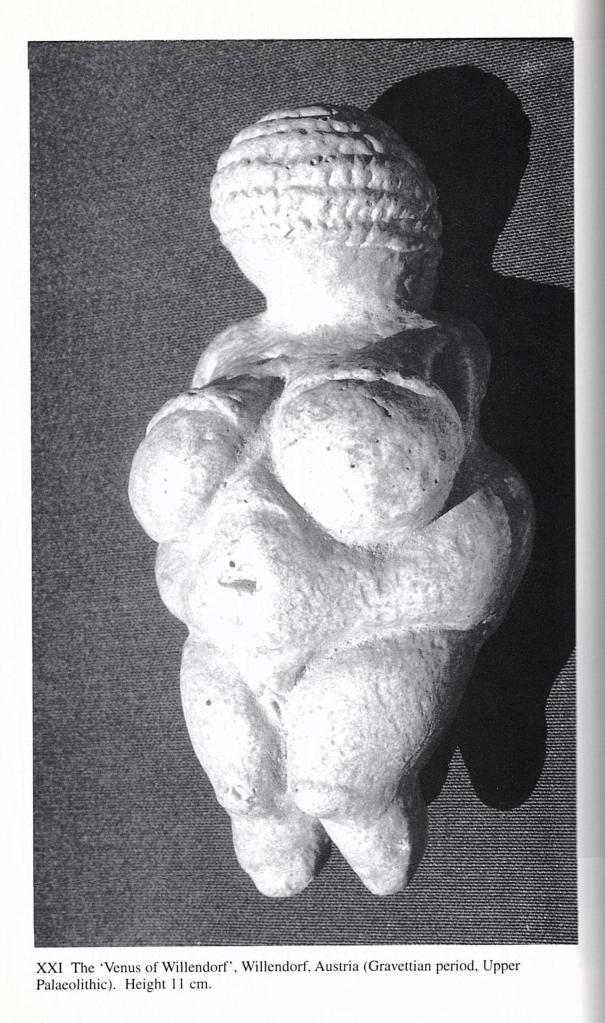
The “Venuses” are those little prehistoric sculptures of naked ladies found all over Europe.
You might not want to readthis article, as it features both the phrases “obesity” and “climate change.” But long story short, it seems that the closer the Venuses were to the glaciers, the fatter they were. The assumption is that, the harder food was to come by, the fatter the ideal mama became.
Everyone has to have their 15 minutes of appearing on video, right?
My wonderful sister, who has a YouTube channel, graciously offered to interview me about The Scattering Trilogy. Here, you can watch us chat about genres, languages, and paganism, and how it all fits in.


 Out of Babel Books