Giants II

Photo by NEOSiAM 2020 on Pexels.com

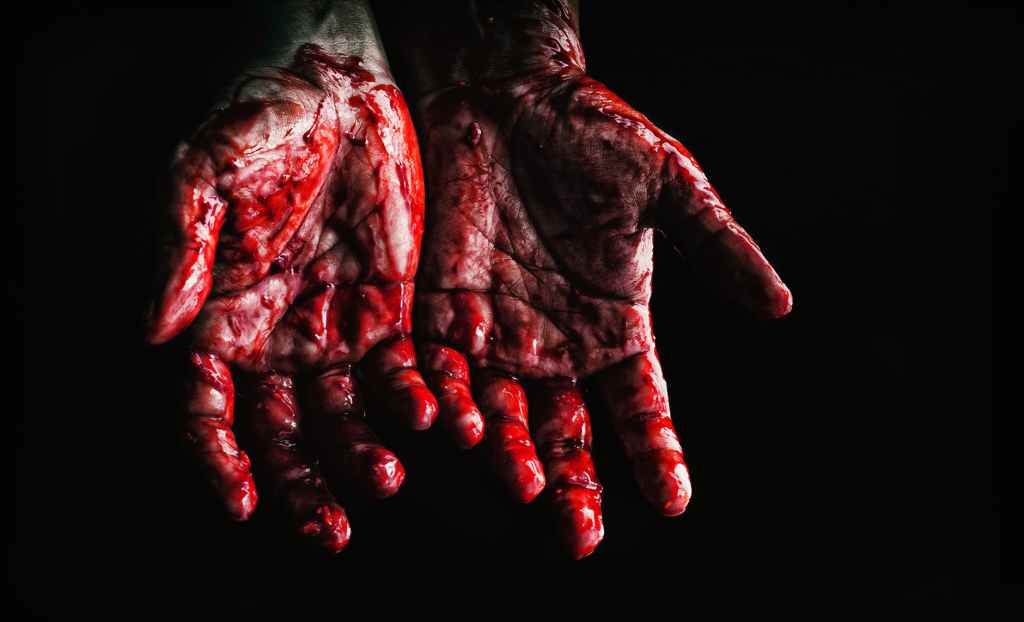
Welcome to October, month of Halloween! Every Friday, we will discuss scary things. This week’s scary thing is giants, and specifically the proper use of the word cannibalism.

A few weeks ago, I wrote a post arguing that in both ancient history and folklore, giants are more horror creature than fantasy creature. Part of the reason for this is that they eat people. My question for you is, Can we properly call them cannibals?

But first, a detour about eating blood

In my second book, The Strange Land, the people group whose adventures I am following (I think of them as “my” people) tell stories of giants who eat people and animals indiscriminately. Their euphemism for them is “blood eaters.”

Some religions have a taboo on “eating meat with the blood still in it.” In Indonesia, there is a special word for such meat. If you want to eat, say, a chicken, the word for the animal and the meat is ayam. But that’s only if the bird has been killed properly and bled out. If these rules have not been followed, it is ayam bangkai, which translates as “chicken carrion” or “corpse chicken.” If you are a devout Muslim, you would not eat meat without knowing that it has been butchered in the proper manner. Otherwise, you could accidentally defile yourself by eating ayam bangkai or some other kind of bangkai.

Obviously, this rule goes way back, at least to Leviticus:

“Any Israelite or any alien living among them who eats any blood — I will set my face against that person who eats blood and will cut him off from his people. For the life of a creature is in the blood, and I have given it to you to make atonement for yourselves on the altar; it is the blood that makes atonement for one’s life. Therefore I say to the Israelites, ‘None among you may eat blood, nor may an alien living among you eat blood.’

“Any Israelite or any alien living among you who hunts any animal or bird that may be eaten must drain out the blood and cover it with earth, because the life of every creature is its blood.”

Leviticus 17:10 – 14

There is a similar passage in Deuteronomy 12:23.

Here in Leviticus, God gives two reasons for the taboo on blood-eating. First of all, the blood is important to the sacrificial system that He had set up for the Israelites. “I have given it to you to make atonement for yourselves on the altar.” This blood was a key part of God’s solution for dealing with the people’s sins. Obviously, to eat such a thing for mere physical nourishment would be to take lightly the evil in one’s own people, family, and heart, and to disrespect the sacrificial system and, by extension, the One who set it up. Note that God does not expect the other nations, to whom He has not yet given this sacrificial system, to abstain from blood, unless an individual foreigner happens to be living among the Israelites, and therefore presumably learning about and also benefiting from that system.

The other reason, which seems to be implied here, is that eating or drinking an animal’s blood shows disrespect for the creature itself. “The life of every creature is its blood.” Even when out hunting, and not bringing an animal for sacrifice, He tells them to bleed out the body and to cover the blood with earth, as if to symbolically give the animal a proper burial before we take it home and eat it.

Apparently, avoiding eating an animal’s blood is the respectful, civilized, human thing to do. This is very different from the usual picture we are given of ancient people, where they club something in the field and then tear right into it with their teeth.

I have described elsewhere how Genesis 6:1 – 4 tells of spiritual beings interbreeding with human women, producing a race of giants who terrorized the earth. This would have been before the Flood (and was probably a major reason for the Flood), which makes the time frame very ancient indeed. The extrabiblical book of 1 Enoch tells us,

“and when the people were not able to sustain them [with agriculture], the giants dared (to attack) them, and they devoured the people. And they began to sin with birds and wild animals and reptiles and fish, and to devour one another’s (!) flesh, and drink blood.” (I Enoch 7:2 – 6, quoted in Giants by Doug Van Dorn, p. 60)

This horrifying practice was apparently common knowledge even as “recently” as the time of the Exodus, which is still ancient history but is now within the realm of recorded history, not just dim memories. When the Israelites arrived on the border of the land of Canaan, having escaped from Egypt, Joshua sent twelve men to spy out the land. They came back and reported “it is a land that devours its inhabitants” (Numbers 13:32 -33). That’s why they were so scared. Even after having seen God’s ability to deliver them from the merely human inhabitants of Egypt, they recommended not entering the promised land for their own safety.

I am not arguing that the Biblical taboo on eating blood was given because the giants ate blood. I see it in reverse: eating blood — like eating people, like bestiality — was just one of many obvious and intuitive taboos in ordinary human morality which the giants either were unable to perceive or perversely sought to break.

This picture of giants as somehow paranormal and as eating humans and/or drinking their blood is well attested in world folklore. Polyphemus, the cyclops who captures Odysseus and his men in the Odyssey, will literally pick up a human and eat him alive. And he’s not hunting them like animals. He is fully aware that the sailors he has captured are persons and can talk, and he doesn’t care. He likes Odysseus, and so promises to eat him last.

Beyond Polyphemus, Van Dorn points out in his book that cultures all around the world have stories about paranormal creatures that seek to drink human blood, though they are not always portrayed as giants.

About the word “cannibal”

Surely, cannibalism has to be one of the last taboos. Even if you have been exposed to the concept before, it never seems to lose its shock value. (“Soylent Green is people!!!“)

On the other hand, the idea of a giant eating people, I believe has lost its shock value, though maybe it shouldn’t have. We associate it with fairy tales. After all, how scary can a character be if he lives in the clouds and goes around saying Fe, Fi, Fo, Fum?

To recover the shock value, I propose using the term “cannibal giants.” But there’s a problem. Technically, cannibalism means eating your own kind. Technically, these giants aren’t human. So, is this hyperbole only slightly less serious than that committed by every earnest 13-year-old vegetarian who calls her parents “cannibals” for eating something was that once sentient?

I argue no, for two reasons. For one thing, giants are clearly humanoid. They look like people (more or less). In Genesis, they have human mothers. Critically, like Polyphemus, they can talk. If they were less human-y, it wouldn’t make sense to call them cannibal. We would call them man-eating, like a man-eating tiger, which would still be scary, but not as much so, because it would be done more innocently somehow.

Secondly, the word cannibal actually has two subtly distinct senses. One, indeed, is the idea of eating one’s own kind. So we can say chickens or spiders are cannibals, or we can talk about someone cannibalizing their own ideas. But the other meaning is just eating people, who are a thing which should not be eaten, and I think this its primary meaning. Once that line has been crossed, humanity itself is now somehow defiled. We have been shown that it’s possible to think of people not as sacred bearers of the image of God, irreplaceable individuals, eternal embodied souls … but as a substance. A food source. We are being invited to change the way we view ourselves and our fellow humans, and this is true whether that ancient taboo is being broken by actual humans, or just by creatures that look sort of human and can talk and, frankly, ought to know better.

Neither one is great.

So I am going to go ahead and call these giants cannibals.

Surprising Fact of the Week

We should never defend Christianity by saying it is traditional. From the beginning, it has stood against the traditions of its day.

Beginning in the fifth century, Christian leaders finally began to wield enough political influence to pass laws against sexual slavery. The church fathers called it “coerced sin.” One historian notes that the most reliable index of the Christianization of an ancient society was the recognition of the injustice of sexual slavery.

Let that historical fact sink in: The most reliable index of how deeply Christianity had permeated a society was whether [the society] outlawed sexual slavery.

Nancy R. Pearcey, Love Thy Body, pp. 69 – 70, 71 – 72

Ancient People Were Really Smart, Part … What? 10?

Massive stone structures in Saudi Arabia may be some of the oldest monuments in the world.

They number in the hundreds, can be larger than an NFL football field and are found across Saudi Arabia. … radiocarbon dating of charcoal found within one of the structures indicates people built it around 5,000 B.C.

“This ‘monumental landscape’ represents one of the earliest large-scale forms of monumental stone structure construction anywhere in the world.”

Ibid

Oooh, so many thoughts.

We keep finding these things everywhere. And every time one is found, it’s older than expected, such that it seems we are constantly being told that “the earliest” or “one of the earliest” has just been found.

There is Gobekli Tepe in Turkey, the earliest (?) stone temple.

There are standing stones, marching stones, and stone circles all over the Middle East and Europe.

There are crannogs in Scotland (apparently Neolithic), and the Stone Serpent of Loch Nell.

The Giza pyramids, and the Sphinx, are arguably much older than commonly believed.

So, I don’t necessarily believe that these monuments in Saudi Arabia are “the first” of anything (even though, I’d like to point out, the monument could be older than the charcoal they found in it).

What I do believe is that they are yet more evidence that the compulsion to build massive stone structures, and the engineering skills to pull it off, was near universal among ancient humanity.

It looks most probable to me that these “earliest monuments” in Arabia were contemporaneous, or nearly so, with the other “earliest stone monuments” and temples and things that we keep finding, all over the world.

Perhaps people were dispersing from somewhere (somewhere near the Fertile Crescent, say), taking this building culture with them as they went. They would have hit northwest Arabia fairly quickly. The Table of Nations, in Genesis 10, lists all the peoples that descended from Noah’s three sons after the Flood. Though this is supposedly a comprehensive list, when it tells where they settled, the homelands listed for them are all in the Fertile Crescent, the Levant, and Arabia, though it is obvious that some of these peoples eventually ended up settling in much more far-flung places.

See also my posts about The Lost Civilizations of the Stone Age, by Richard Rudgley, who presents evidence that fully functioning human civilizations existed 10,000, 20,000, or even 30,000 years ago.

Just a thought for the day.

Quote of the Week: The Soul Who Sins is the One who will Die

The word of the Lord came to me: “What do you people mean by quoting this proverb:

‘The fathers eat sour grapes/and the children’s teeth are set on edge’?

“As surely as I live, declares the Sovereign Lord, you will not longer quote this proverb in Israel. For every living soul belongs to Me, the father as well as the son — both alike belong to Me. The soul who sins is the one who will die.

“Suppose there is righteous man who does what is just and right. … Suppose he has a violent son, who sheds blood or does any of these other things (though the father had done none of them) … Will such a man live? He will not! Because he has done all these things, [the son] will surely be put to death and his blood will be on his own head.

“But suppose this son has a son who sees all the sins his father commits, and though he sees them, he does do not such things. He will not die for his father’s sin; he will surely live. But his father will die for his own sin, because he practiced extortion, robbed his brother and did what was wrong among his people.

“Yet you ask, ‘Why does the son not share the guilt of his father?’ Since the son has done what is just and right and has been careful to keep all my decrees, he will surely live. The soul who sins is the one who will die. The son will not share the guilt of the father, nor will the father share the guilt of the son. The righteousness of the righteous man will be credited to him, and the wickedness of the wicked will be charged against him.

“Yet you say, ‘The way of the Lord is not just.’ Hear, O house of Israel: Is it not your ways that are unjust?”

Ezekiel 18, most of the chapter

Writing about the Afterlife

Writing about the afterlife is tricky. It does not always go well.

Bookstooge recently reviewed a book that was set entirely in the afterlife, and it failed (at least, based on his review, it failed) because writing about the afterlife immediately brings out the limitations of the author’s understanding of: God, eternity, human nature, human embodiment, space, time, etc.

Some of these limitations on our understanding can be fixed with better theology. (For example, the TV show The Good Place could have benefitted from an understanding that the human heart is deceitful and desperately wicked, and who can know it?). Others of these limitations can’t be fixed because they are a consequence of our inability to imagine an existence that transcends space and time. New Age accounts of “out of the body” experiences immediately lose me when they describe things like “a cord coming out from between my shoulder blades that connected me to my body.” (Pro tip: if you are out of the body, you do not have shoulder blades.)

But despite these pitfalls, I find it irresistibly attractive to follow my characters just a step or two beyond death. Perhaps it’s because the moment of death is so poignant in a story, or because there is an opportunity to address unfinished business. “Wrong will be right/when Aslan comes in sight.” We are all longing for that wrong will be right moment.

The 11-minute song below is a ballad that successfully (I think) follows a character slightly past death. I find it very moving. I hope you do as well.

For the comments: when an author attempts to write about the afterlife, do you start rolling your eyes or do you go with it? What are some of your favorite post-death scenes in books or movies?

Psalm 91: Encouraging, Yet Confusing

He who dwells in the shelter of the Most High

will rest in the shadow of the Almighty.

I will say of the LORD, “He is my refuge and my fortress,

my God, in whom I trust.”

Surely he will save you from the fowler’s snare

and from the deadly pestilence.

He will cover you with His feathers,

and under His wings you will find refuge;

His faithfulness will be your shield and rampart.

You will not fear the terror of the night,

nor the arrow that flies by day,

nor the pestilence that stalks in the darkness,

nor the plague that destroys at midday.

A thousand may fall at your side,

ten thousand at your right hand,

but it will not come near you.

You will only observe with your eyes

and see the punishment of the wicked.

If you make the Most High your dwelling

— even the LORD, who is my refuge —

then no harm will befall you,

no disaster will come near your tent.

For He will command His angels concerning you

to guard you in all your ways;

they will lift you up in their hands,

so that you will not strike your foot against a stone.

You will tread upon the lion and the cobra;

you will trample the great lion and the serpent.

“Because he loves me,” says the LORD,

“I will rescue him;

I will protect him, for he acknowledges my name.

He will call upon me and I will answer him;

I will be with him in trouble,

I will deliver him and honor him.

With long life will I satisfy him

and show him my salvation.”

Ps. 91:1 – 16

So many things to notice about this psalm. For one thing, it’s one of the better-known psalms. The hymn “Under His Wings” is taken from it. And it’s worth noting that this poem portrays God as … a chicken. This is not the only place in the Bible where God is portrayed as a mother hen protecting her chicks under her wings. (Or, given the mention of the “fowler’s snare,” maybe in this poem a wild game bird is in view.) This is one example of how, though He is called He, the Old Testament God is also shown to be maternal.

Another thing that stands out to me is how the ancient Israelites felt just as helpless as we do in the face of violence, “disaster,” and the “deadly pestilence.”

One of my most vivid memories about this psalm came during an orientation activity when I had just arrived in Asia. A seasoned missionary read the entire thing to us, and then went on to tell a bunch of stories about times when he and people he knew had not been protected from various kinds of disaster.

Jesus knew this as well. Satan actually quotes this psalm to Him, “He will command His angels concerning you …” in Luke 4, to get Him to jump from the pinnacle of the Temple. Jesus does not jump.

This is a poem. It is strangely heartening to read.

Yet it doesn’t always happen this way.

Yet it is the word of God.

I don’t understand it either.

Video: the Author of Ender’s Game Dispenses Writer’s Wisdom

Ben Shapiro interviews an eclectic grab bag of people each week on his Sunday Special. (Their main common factor is that they were willing to come on and be interviewed by him.) The interview embedded below is my favorite of all the ones he’s done so far. It’s super long, but if you are interested in the fiction industry or the writing process or the sci-fi and fantasy genres or identity politics or religion, then it will be worth your while.

Orson Scott Card is the author of the super popular sci-fi novel Ender’s Game. I tried to read this novel when I was way too young and I did not get all the way through it. It was hard for me to keep in mind that Ender and his co-trainees were kids when in some ways they acted like geniuses.

Card is also a Mormon, or LDS (Latter-Day Saint) as many of them prefer to be called. This gives him a unique perspective on religion, specifically on what it’s like to be misunderstood as a religious person.

Highlights:

AT 4:18, Card clears up what exactly counts as sci-fi versus fantasy: “The usual is that science fiction is stuff that has not happened but is possible, and fantasy is stuff that doesn’t happen and isn’t actually possible but we can imagine it. And that almost works except for the fact that it’s considered science fiction if you do things like faster-than-light travel or time travel. And those can’t happen. Time travel especially, because the string of causality is unbreakable. … So it’s arguable. But I learned the practical definition right away. The covers of fantasy books have trees. The covers of science fiction books have sheet metal with rivets. So it’s rivets versus trees. If your story is illustratable with rivets then it’s sci-fi, and if it needs trees to be effective, then it’s fantasy.” (N.b.: This is why my books are fantasy even though they feature no wizards.)

11:35 On the fact that fantasy magic systems have rules too: “You can’t just throw magic on the page and make it fantasy. You have to make it fantasy that would pass muster with a science fiction writer, because that’s who’s writing fantasy now.”

At 15:00, he addresses Pantsing versus Plotting: “I try to think ahead. Mostly milieu development. Then I’ll think of obligatory scenes, things that have to happen. And I’ll have to then set up those scenes so that they mean something. So there’s some planning that goes into it. I know writers who think like screenwriters, and their thought is all on the [outline]. I can’t do that, because anything I wrote for anything after chapter two is going to be discarded as soon as I find out what’s going on in chapter one. The process is pretty flexible, because by the time I’m nearing the end of any novel, the outline is now a relic … And I’ve seen, for example, an early novel by Dean Koontz, where it was obvious to me that after developing an amazing cast of characters that readers cared about, he caught up with the point in the outline where they all go into an alien spaceship together, and at that point he was just following the outline and it didn’t matter who any of the characters were.” (N.b.: Card’s method is plantsing, and it is the method I use as well. )

At 37:00, he starts talking about religions in fiction: “If you are going to create a character that has an existing religion, you have a responsibility to make it plausible. In America, we have two generic religions. If you need a hierarchical religion, you use Catholic. If you need a congregational religion, you use generic-Protestant-but-really-Baptist. Those religions are available and we all have some experience with them by watching movies. Jewish, not so much. I would feel a great deal of trepidation making a character of mine Jewish, especially orthodox, because I’ve known enough orthodox Jews to know how rigorous the demands are, what has to be kept in your head all the time. And I do that as a Mormon. I know all of our rules by heart, I don’t even have to think about them any more. But whenever I watch somebody’s fictional treatment of Mormonism, no one ever gets it right. No one even comes close. Getting somebody else’s religion wrong is a terrible faux pas.”

41:56: “That’s one of my minor messages: people have religion, and the fiction writer who retreats from that is cheating himself and his readers.”

43:51: “There are smart people in Hollywood. There are good people in Hollywood. They just don’t have the power to greenlight a film.”

At 52:00, he starts talking about the move towards identity politics in sci-fi: “And many of them, whom I know, are people who are simply writing their conscience. But their conscience is ill-informed.”

55:20 and following, on race: “When every white person in America knows that they are labelled as racist, that means why keep trying? Because no matter what you do, you are going to be labelled as white privileged and as racist. … But I know that now, all white people are getting more and more nervous that no matter what they say, it’s going to be turned on them and used to call them the ugly name racist. And that is pretty much the ugliest name that we have in our vocabulary right now. If you’re looking for your Tourette’s list of words that you should not speak, words which will wound, the f-word is way way low on the list. We are used to the f-word, we hear it all the time. Compared to racist. Wow! That’s serious. That’s savage.”

Heartening Quote of the Week

Photo by Ray Bilcliff on Pexels.com

Because sometimes we have enough misanthropy.

“I live in a high and holy place,

but also with him who is contrite and lowly in spirit,

to revive the spirit of the lowly

and to revive the heart of the contrite.

I will not accuse forever,

nor will I always be angry,

for then the spirit of man would grow faint before me —

the breath of man that I have created.

I have seen his ways, but I will heal him;

I will guide him and restore comfort to him,

creating praise on the lips of the mourners in Israel.

Peace, peace to those far and near,”

says the LORD. “And I will heal them.”

But the wicked are like the tossing sea,

which cannot rest,

whose waves cast up mire and mud.

“There is no peace,” says my God,

“for the wicked.”

Isaiah 57:15b – 16, 18 – 21