For those in the back seats, Gobekli Tepe is an archaeological site in Turkey that I love for many reasons. It clearly partakes of the ancient megalithic culture that seems to have been worldwide (why? and how???). It has been dated to about 9000 B.C., which we must take with the usual grain of salt, but according to the people dating it, this was before the discovery of agriculture, the wheel, etc. Yet it employs circles, equilateral triangles, and other such evidence of having been built by mathematically capable people. For those new to Out of Babel Books, we frequently post about how wrong conventional archaeology appears to be about when and how civilization arose among human beings. If you click through to this article, you will see them struggling with that a bit.
The article also has some entertaining turns of phrase, for example: “In the end, searching for answers concerning motives and reasons from such an ancient time involves a great deal of speculation, since we cannot go back in time and probe the perpetrators.” Yes, that does sound like an unpleasant process for everyone involved.
The main reason I’ve included this link is the new-to-me information that Gobekli Tepe means “potbelly hill,” which I find charming. And it turns out the hill had a “belly button,” which was actually a sign that the hill was not natural, but had this temple buried below. Which I find creepy, like the whole site is creepy.
Besides “have we been completely wrong about the history of agriculture?,” the other question this article raises is “Why was Gobekli Tepe apparently deliberately buried?”
Why does one bury a thing? Particularly, why does one bury a statue, an idol, a god?
While acknowledging that we don’t know, the article references other instances of “de-sacralizing,” such as when an altar is no longer in use and we don’t want to pose a danger to anyone who might blunder upon it. They also reference the defaced and buried giant heads found in the Olmec region. If a statue is defaced, such as those heads are, we can reasonably guess that it, or its people, got conquered or overthrown by someone else, who wanted to humiliate the statue and rob it of its power. There are cases in the Old Testament where a king or someone else leading a reform not only defaces the pagan altars but defiles them (e.g., turning them into public toilets), so that no more honor may go to that god or goddess.
I don’t know whether the large stones at Gobekli Tepe were defaced. In every photograph I’ve seen of them, they appear to be not only intact, but still standing, as if they were buried so as to preserve them. But it’s possible that the archaeologists are the ones who set them upright again. Still, it’s customary when destroying an enemy’s temple to “leave no stone upon another.” So, unless a lot more reconstruction than I realized has been done under Potbelly Hill, I’m thinking the temple was buried for some other reason. I’m with the authors of the article on this one: We can’t tell what went down, but we can infer that it was probably not good.
You may notice that I have a large tag in my tag cloud called Native Americana. I’ve always been a sucker for American Indians. The second two books in my trilogy are a speculative exploration of what their distant ancestor’s lives might have been like.
This subject comes up every year because of the efforts to change Columbus Day to Indigenous Peoples’ Day. I’m not in favor of this, but I do love all things American Indian. (Traditional things, that is. I’m not a fan of the cultural disintegration brought about by enforced socialism on the rez. For more on this, see the book review below.) Anyway, this is the time of year when I find myself annoyed yet again by Matt Walsh.
Walsh has done yeoman’s work fighting the forces of evil in our culture, but he just doesn’t know very much about American Indians. He’ll portray pre-conquest America as an extremely backwards place, full of “stone-age” people, who “hadn’t even invented the wheel.” This annoys me. There actually had been civilizations in the Americas (howbeit, without wheels), including astronomically aligned earthworks and pyramids, even in North America. The Americas suffered a population collapse about a hundred years before Columbus arrived, as documented by Nathaniel Jeansen of Answers in Genesis and in his book Traced. So, what the Europeans found were the scattered remains of civilizations. (Except Cortez. He found the real thing, and it was terrible to behold.)
Now granted, the American civilizations had not yet been Christianized, so they resembled Ancient Near Eastern pagan theo-states rather than European medieval kingdoms. It was probably this, in fact, that gave the Europeans the intellectual edge and enabled them to conquer the continents. Other things being equal, paganism tends to make people more passive. Fatalism, you know.
So Walsh is right that the Europeans conquered the Americans fair and square, as it were. Just like everywhere else throughout history. Now, the conquerors celebrating and romanticizing those they have conquered is a tradition that goes way back. See Homer writing sympathetically about the Trojans. See the beautiful Roman statue, The Dying Gaul. See the Romans commemorating the abduction of the Sabine women, but also celebrating Romulus and Remus, whose story is enough to curl you hair. So I am all for celebrating indigenous peoples (because I love ’em), but also Columbus (because there is no call to demonize your own culture).
That said, let’s not let sympathy turn into damaging infantilization. That’s what the United States government has done with the American Indians, as documented in the book below.
Book Review: The New Trail of Tears by Naomi Schaefer Riley
Life is very bad on our American Indian reservations.
People on the reservations experience rates of corruption, unemployment, depression, drug addiction, sexual assault and child abuse that are as high or higher than any other place in the nation.
But why?
Those with overly simplistic views of American Indians tend to oversimplify in one of two ways: your average American Indian is seen either as Wise Noble Victim, or Worthless Lazy Drunk. My instincts have always put me in the Wise Noble Victim camp, but I recognize that neither of these oversimplifications explains conditions on the rez. American Indians are people, which means they are sinful but not worthless. As Schaefer Riley puts it, “Indians, just like all people, respond to the economic incentives and political conditions around them” (page 178).
I have occasionally spoken with people who seem to resent all that American Indians receive from the government. Tribal governments are “sovereign.” Tribes have the right to operate casinos on their land (in most states no one else can), and in many cases, tribal governments or even individuals receive direct payments of federal dollars. None of this is false, but what has been the effect of it? It has not led to a cushy life for tribe members; quite the opposite.
The Incentives
Here’s my quick summary of the “economic incentives and political conditions” created by the way the federal government has handled the tribes:
Law enforcement on the rez is a nightmare. Since Indians are not considered as being under the jurisdiction of the state in which they live, if there is a serious crime, it is considered a federal crime, and you could have three or four agencies involved. “He became especially concerned ‘with the lack of coordination between the tribal police and the Bureau of Indian Affairs and the FBI and the Justice Department.'” (page 164) Often, other law enforcement agencies defer to the tribal police, who often, because of nepotism, don’t prosecute. This creates a lawless situation on the rez, with high crime. It gives victims the impression that nothing will be done.
It is difficult for Indians to own land; or, if they happen to own some, to develop or sell it. Most land is not individually owned, but belongs to the tribe. A combination of tribal politics, environmental concerns, and federal red tape tends to block any attempts at development. This means that it is very hard to create or find jobs on the reservation … except jobs in tribal government.
While casinos provide some jobs, the linking of the casinos with tribal membership has introduced all kinds of corruption. Some tribal governments run their casinos essentially as cartels. The effect is that tribal membership is “commodified.” A common political move against a rival would be to get them declared no longer a member of the tribe.
Schools on the rez tend to be as bad as the worst inner-city schools. Schaefer Riley profiles a few schools that have bucked this trend, at least for a few years. One is a Catholic school. There are also Teach for American volunteers who are very motivated to give Indian kids a better education. But these people are usually met with mistrust and actively undermined or driven out because they are outsiders and because of the bad experiences that the older generation had with residential schools trying to forcibly assimilate them.
While it is important for Indian kids to learn about their traditional language and culture, “this is not a good first step.” Schaefer Riley points out that those tribes that have done the most to preserve their language and culture are those that have done the best economically. When no longer just struggling to survive, they use the money and the energy they now have to create museums and cultural centers.
In short, massive amounts of government money and regulations have had the same effects on the Indian reservations that they always have elsewhere. The red tape is at least tripled compared to the red tape faced by other Americans, which pretty much brings any kind of enterprise to a grinding halt. The infusion of government money through the tribal government incentivizes corruption. The lack of private property and actual employment makes people depressed. The white guilt (and the red tape) have made a lost cause of law enforcement.
Possible Solutions
Schaefer Riley ends with a call for American Indians to be treated like all other American citizens. She points out that American Indians have had very high rates of serving in the military.
Indeed, despite centuries of broken promises from the federal government, despite the bitterness that often pervades Indian communities, and despite years of being told by their own leaders and by Washington’s that they must remain a people apart, American Indians largely see themselves as Americans.
pp. 175 – 176
There has to be a way to ensure that Indian crime victims have the same rights under law as other crime victims … that Indians can own land and start businesses as individuals, not just as members of the tribe … that Indian families have access to a choice of schools that will prepare their kids to succeed. It has been suggested that the larger reservations be made into their own states. Then the people who live there would be considered full citizens who happen to reside in that state. This might not be feasible politically (although I think it would be really cool), but there are a few bands in Canada who are trying to get their tribal lands incorporated as cities. This would allow them to do development that they can’t do now, and the tribal leaders would be like city governments. Failing all this, a good step would be to drastically reform (or, ideally, eliminate) the Bureau of Indian Affairs, which is known for being the one of the most corrupt and inefficient government agencies in a field where the competition is stiff.
I sincerely hope that Schaefer Riley’s book catalyzes a move in this direction. It should, of course, be read by anyone with the slightest interest in American Indians’ living conditions in these modern times. But it should also be read by anyone who is concerned about the effect of government micromanaging of citizens’ lives.
A Cautionary Tale
I see at least three ways in which the federal government’s treatment of Indians serves as a sample of what it would like to do with all citizens:
It’s coming from good – or at least utopian – intentions. In the case of the Indians, many people feel that the government owes them lots and lots of money and special rights because of the ways that same government mistreated them in the past. (Turns out, the money and “rights” are a new kind of mistreatment.) There is also an assumption that less development is better, because we don’t want to impact the environment at all. In the same way, there is a strong movement to put all citizens in the same position: “You will own nothing, and you will be happy.” Putting the most charitable interpretation on it, the idealists believe that this would bring about a utopia in which everyone has a high (but more importantly, “equal”) standard of living … there is no family loyalty or private property to cause conflicts … and everyone’s lifestyle is perfectly “green.”
It features forced assimilation. Schaefer Riley points out that Indians are in fact assimilating culturally to the United States, but forced assimilation is a very different story. A few generations ago, Indian children were forcibly removed from their homes and sent to boarding schools where they were not allowed to speak their own language. This idea that, if the parents don’t share the government’s value system, the government has a right to separate children from their parents and re-educate them, has not died away. The idealists have not yet gained enough power to practice forced assimilation on all American children, but they are trying.
It is collectivist. The degree to which Indians have been denied private property and individual initiative is the exact degree to which they have been brought to poverty and despair. In their case, this has been brought about partly from a sort of Rousseauian “noble-savage” myth about the way the Indians lived before Columbus (spoiler: they weren’t collectivists then either). In the case of other Americans, there has been an attempt to demonize private property, small business, and intact families as the problem with humanity. In fact, these things are key to human flourishing. Sin certainly shows up in them, but that is because it is present in human nature and shows up in whatever humans do.
Actually, that calls for a lot of explanation, doesn’t it?
The Setup
Carl is a faithful Mormon who is grieving his family. His wife, Sharon, and their three small children were killed by a drunk driver who ploughed over them on the sidewalk. But, Carl knows that if he remains faithful, he will be reunited with his family in the Celestial Kingdom. Per the Mormon promises, they’ll be together forever.
Then, Carl’s sister, who has had a troubled history, is killed by a mysterious woman in an alley. Carl becomes obsessed with finding the killer (the police seem to have given up). He tracks her to what appears to be a sex cult with gothic trappings. Thinking he is just going undercover to collect evidence, Carl takes an oath he doesn’t mean and finds himself becoming a vampire.
He doesn’t finish the ceremony, though. As soon as it becomes clear that he is supposed to drink the blood of an innocent girl, Carl instead breaks free and takes her to the nearest hospital. There, he collapses, and is rescued by Moira. Moira is another well-intentioned vampire (a “Penitent”), who works at the hospital so that she can work nights and have access to blood without having to attack people. Moira shows Carl the ways of surviving as a vampire without doing evil. Incredibly, it later turns out that she too is Mormon. She actually became a Mormon after she was already a vampire, thanks to two very persistent missionaries. For about fifty years, one Mormon bishop after another has handed down to his successor a letter explaining Moira’s special “condition.”
Like I said … Mormon vampires.
Pros and Cons, and Why I Was Crying in Public
(P.S. This section turned out kind of long. Sorry about that.)
C. David Belt (shown here with me at the recent Fantasy Faire) is a fantastic horror writer because he pairs the horror writer’s instincts and penchant for research with a uniquely right-side-up view of the world.
Take, for example, his take on vampires. I don’t usually read vampire books because the vampires are usually presented as like mortals, but better: they don’t age, they’re beautiful, they’re sexy. Mortals who don’t want their blood sucked are prudes and bigots and super intolerant. Not so with Belt. In his books, vampires are actually, you know, evil. Vampirism is actually a horror, like it would be if you encountered it in real life. That’s what I mean by a right-side-up view of the world.
Now, this strong sense of the wholesome can shade into a bit of naivete about the human heart. The whole premise of this series is based upon the idea that Carl took the vampire oath and even allowed his own blood to be drunk … “innocently.” Because he “didn’t mean it” and “didn’t think it was real,” he is blameless. He is, in all of history, the only Unwilling vampire.
This raises two questions. Now, perhaps these will be raised by the author himself later in the series, but I’m taking The Unwilling on its own terms. So here we go.
First, is it really possible to take an oath and not be responsible for it because “you don’t mean it”? That would be an extremely convenient thing, if so. Picture this: you are a follower of the One True God. But you live in a pagan environment, and you’re being pressured to take an oath of loyalty to Kukulkan, or Zeus, or the divine Caesar, or Big Brother is requiring you to “just say” there is no God but Big Brother. I think you see where I’m going with this. Now, granted, in The Unwilling Carl was not clinging to secret reservations just to get out of martyrdom when he took the oath to be loyal to Lilith. We know this because he fled the ceremony room, endangering himself, as soon as he realized what he was really being asked to do. So there are degrees of culpability, and of self-awareness. However, the principle that “I didn’t really mean it” or “I thought it was a game” is a dangerous one to introduce. As G.K. Chesterton has pointed out in The Everlasting Man, there is an element of game to much of pagan worship. It’s not always 100% clear how seriously the pagan followers themselves take all their superstitions. However, God still tells Israel in no uncertain terms not to pour out libations to any foreign god or take up their names in oath. So, “it was a game” or “it was maybe partly a game” is not going to cut it.
This leads directly to the second question. How is it possible that, in all of history, Carl is the first person to take the vampire oath without realizing it is real? Wouldn’t we expect that to be true of almost every person that gets inducted into the vampire cult? Or true of at least 50%? In modern times, most people do not really believe that vampires are an actual thing. Surely, the majority of the people that join this “empowering” gothic sex cult think of it as a sort of cosplay.
After all, this is how people join cults: there are concentric circles. There are the hangers-on or wannabes, then the neophytes, then the journeymen, and so on. Typically only the people in the inner circle know what the cult is really about. By the time someone gets that far in, however, they have so much trauma bonding, Stockholm syndrome, sunk cost fallacy, mental confusion and spiritual deception that they tend not to be repelled by even the most bizarre and obviously evil beliefs.
The only way I can square this circle is to figure that, if there were any other Converted who didn’t take the vampire element seriously, then when it came time to commit the ritual murder, unlike Carl they didn’t balk, but rather went ahead. And this because, we can assume, they were not as strong-minded as Carl, or not as pure of heart and motive.
One downside of having a right-side-up view of the world, where you recognize that good and evil actually exist and that people can choose to do good or evil, is that there’s a tendency to think as though the world consists of some good people and some bad ones. Belt falls prey to this, to a certain degree. I don’t want to overstate this flaw, because on the whole he is quite insightful about human psychology, as any good novelist has to be. But here are some examples of what I mean.
Vampires, it appears, can “smell” when a person is truly depraved, truly far gone in their evil. Such a person’s blood “calls” to the vampire, creating an almost irresistible urge to kill. In this book, occasionally Carl will encounter such a person. One is a crooked cop, who is also molesting his stepdaughter. Another is a random mother we encounter at the Mormon church service. The precise nature of her evil is never revealed, but as Carl puts it when he warns the bishop about this woman, “something is very wrong” in that house.
So far so complex, right? I actually love the scene where Carl and Moira have to restrain themselves from attacking this apparently pious Mormon woman. My beef with this phenomenon is that there are far too few of these people who call to Carl with their rotten/sweet-smelling blood.
Technically, on an orthodox Christain view of the world, the taint is in everybody. “There is none righteous, no, not one. All have turned aside; they have together become corrupt.” But let’s grant that this does not mean (as indeed the doctrine of total depravity doesn’t) that everyone is as bad as they could possibly be. Nevertheless, part of a mature Christain world view is realizing more and more uncomforable truths like the following:
Given the intervening steps, anyone is capable of anything.
I am far weaker and more sinful than I ever realized, but the grace of God is far deeper and stronger than I ever realized.
“I know that in myself lives no good thing.”
“Cheer up! You are worse than you think.”
“Christ Jesus came into this world to save sinners, of whom I am the chief.”
So, to modify our illustration, if The Unwilling had been written by an orthodox Christian, it would show a world where every single person had this taint in their blood, but some of them were in remission. Nevertheless, the proportion of people who had gone far down the road towards “capable of anything” would be quite large – large enough that Carl would be certain to be distracted by their intoxicating scent every time he went out in public.
But Belt is a Mormon, so although his worldview is basically right-side-up, it doesn’t include total depravity. His picture of the world is basically a bunch of lost, but essentially wholesome and well-meaning people, and a few stinkers. Furthermore, in the Mormon cosmology, salvation is not for the stinkers. It is for the well-meaning people who do their best to save themselves and trust God for the rest.
Take this scene, where Carl and Moira are trying to convince a mortal-turned-vampire to repent of his sins. Things start out well enough:
“You’re Catholic, aren’t you?” I ask him.
He laughs bitterly. “Lapsed.”
“Go to your priest,” I say. “Or go to a Mormon bishop. Only God can help you now.”
So far so good. Carl continues,
“Stop killing. Go to your priest or to a Mormon bishop. Pray. Lean on God. I believe you can find your way back. Atone for your sins as best you can. Put your trust in the Savior to take care of the rest. It’s the only way you can ever find redemption.”
And there we have the difference between Mormonism and orthodox Christianity. Ephesians 2:8 – 9 says, “For by grace you are saved, through faith, and this [faith] is not of yourselves, not of works, lest any man should boast.” The Mormons have a similar verse, but it runs like this: “We are saved by grace, through faith, after we have done all we can.” What this misses is that, if we are “doing all we can,” then one of two things is going on. If we are truly repenting and making restitution, then that itself is a gift and is a sign that the Holy Spirit is already revivifying our heart. Which means that He started this good work in us before we were repentant. The other possibility is that we are “doing all we can” in a cynical way, as a work of our own righteousness, so as to put God in a position where He “has to” forgive us. This is a grievous sin against God, probably far worse than the original bad things we did.
To an orthodox Christian, “Atone for your sins as best you can. Put your trust in the Savior to take care of the rest” is a HUGE insult to the Savior. Did He really suffer torture and the wrath of God to take care of our leftovers? Doesn’t it seem that we could have done a little more and spared Him all that? Or, if there was a portion of our sins that called for torture and death on His part, then doesn’t that suggest that the rest of them were equally bad and probably can’t be dealt with by “doing the best we can”?
These are the things that crossed my mind as I read this book. The psychology is good, and somewhat deep, but it’s not the deepest of the deep. That is reserved for writers like Dostoyevsky and St. Paul.
Finally, I won’t give the background of this because you really should read the book, but there was a certain character whose story had me in tears in the doctor’s office. I had brought this book with me to my son’s doctor appointment, to read in the waiting room, as one does. And – well, it was a really hard to put down part, and so it was that the doctor came in to see us just at the moment when my heart got broke. And I had to knuckle a tear away and say, “Sorry, we are fine. This book made me cry.” Good job, Mr. Belt, good job.
Alien Intrusion: UFOs and the Evolution Connection by Gary Bates, A Book Review
The next thing [Bill] knew, he was being levitated above his bed. He then had the sensation he was being suspended by what felt like a pole inserted into his rectum. By this time, he was alive with terror, but he couldn’t scream. The following is an excerpt taken directly from the transcript of Mr. D’s interview:
“I thought I was having a satanic experience; that the devil had gotten ahold of me and had shoved a pole up my rectum and was holding me up in the air… . So helpless, I couldn’t do anything. I said, ‘Jesus, Jesus, help me!’ or ‘Jesus, Jesus, Jesus!’ When I did, there was a feeling or sound or something that either my words that I thought or the words that I had tried to say or whatever, had hurt whatever was holding me up in the air on this pole. And I felt like it was withdrawn and I fell. I hit the bed, because it was like I was thrown back in bed. I really can’t tell, but when I did, my wife woke up and asked why I was jumping on the bed.”
ibid, p. 266
A while back, I posted a link to an interview with Gary Bates, in which I called him “a very sane UFOlogist.” This book confirms my initial impression. It’s 400+ pages, with endnotes to each chapter, appendices, and an index, yet it is accessibly written.
Synopsis of the Chapters
The Invasion Gets Underway deals with the social history of the UFO phenomenon, “the ETH,” or “extra-terrestrial hypothesis,” and its reflection of cultural fears and its symbiotic relationship with sci-fi books and movies. (Gates introduced the term ETH because although technically, a UFO just means any explained light in the sky, the term has actually come to mean “spacecraft filled with aliens from other planets.”)
The Science of Fiction addresses major sci-fi writers who have embraced and promoted the ETH. It also addresses the physical impossibility of ultra high-speed or light-speed travel, which is a necessary prerequisite for the ETH to be true. For example, “To propel an object that weighs one pound to 50% of the speed of light would require an energy source equal to the energy of 98 Hiroshima-sized atomic bombs” (69) and “at one-tenth the speed of light, the impact [of hitting a dust particle] would be equivalent to about 10 tons of TNT” (73).
Is There Life on Other Planets? The short answer is, there doesn’t seem to be. Earlier ideas about alien life had them living on other planets in our solar system. As these have been discovered to be unlivable, the aliens have been moved out to distant galaxies, raising the high-speed travel problem from the previous chapter. So far, earth is the only planet we have found that seems to have even the most basic preconditions for life … and it has them all, perfectly. Additionally, based on the red-shift effect, earth appears to be located at the center of the universe. (Everything else appears to be moving away from us.) This would make sense on an intelligent-design hypothesis, where the earth was designed for life including people, but non-ID astronomers find it unacceptable, and a variety of different universe shapes have been proposed to account for the fact that everything seems to be moving away from everything else. This chapter addresses the precommitments behind a belief that the universe came from a “big bang” which then coalesced into stars and planets.
Did Aliens Create Life on Earth? This chapter summarizes the reasons that natural selection cannot have created complex life forms. Natural selection reduces the amount of genetic information, but never increases it. Other than intelligent design, no explanation has ever been proposed for how the complex information got there in the first place. The discussion in this chapter is similar to Philip Johnson’s in his excellent Darwin on Trial, but it is more succinct. Most people who believe in the ETH, believe that since life evolved here on earth, it must have evolved in other star systems too. There is also a theory that aliens brought life to earth. Given that we see complex genetic information appearing on earth seemingly out of nowhere, perhaps it was brought or “seeded” by an intelligent race from the place where it did evolve. This, however, just pushes the problem of how complex information can appear out of nothing farther back in time and off to a distant planet.
Lights in the Sky — Where Are They Coming From? looks at the history of UFO sightings, including mistaken sightings (the majority of cases are Venus, government planes, and the like), hoaxes, and the small residue of sightings that remain truly unexplained. Interestingly, this is a global phenomenon. For example, the 90s saw a rash of well-documented sightings in Mexico, including in Mexico city, sometimes in broad daylight. This chapter also touches on government cover-ups of their research into the UFO phenomenon. This often because the people involved in the sightings were pilots whose activities had to do with national security, but of course the cover-ups give the public the impression that the government knows far more about aliens than they are telling.
Mysteries, Myths, Mayhem, and Money deals mostly with people who tried to capitalize on the UFO craze. Some of these people are true believers, others are hucksters, and many are both. But even the true believers have to use tortured logic in order to put forth their theories. This chapter discusses in detail Roswell, crop circles, and Erich von Daniken (a major proponent of “ancient astronaut theory”), among others. Interestingly, there was also a major UFO craze in the USSR, near weapons testing sites. Not surprisingly for a people who have been lied to about everything else, the Russian true believers are only able to think conspiratorially and impossible to convince otherwise.
Abducted — Close Encounters of the Fourth Kind is a really interesting chapter. Bates has just spent more than half the book showing that the extraterrestrial hypothesis, at least as it is usually understood, cannot be true for multiple reasons. But now, he turns his attention to the many people who have had alien abduction experiences. And instead of dismissing them as hoaxers (dealt with in the last chapter) or gaslighting them, he believes them. And he has a great deal of compassion for them. This is why I think so highly of Bates. This topic deserves more than a bullet point, so now I’m going to stop the synopsis and discuss in a little more depth.
A “Typical” Alien Abduction Story
According to Bates, drawing on the work of other researchers, here are the elements of “Classic Abduction Syndrome [CAS]”: the abductee is captured, often at night, and often while being seemingly paralyzed. Once on the ship, they are typically undressed and subjected to some kind of invasive and humiliating “medical” examination. Often, this escalates to sexual abuse of various kinds. Then, the aliens “teach” the abductee. This involves being told that they have been chosen for a special mission. Predictions are made about the future of earth or of humanity. The aliens are trying, and they want the abductee’s help, to raise humanity’s consciousness or to save humanity. Often, they say they are engaged in a breeding program, creating human/alien hybrids. Sometimes this is explained as a way for humanity to survive when the earth is destroyed. Abductees may be given a tour of the ship or of other locations, and they may meet a divine being or an entity claiming to be Jesus, the pope (!), or a dead relative. After the abductee is returned to his or her surroundings, they often don’t immediately remember their abduction experience. They may experience “lost time,” and recall the experience only later (sometimes under hypnosis, which raises other issues).
Abductees experience lasting physical and mental aftereffects of their experience, whatever its nature may have been. They have PTSD-like symptoms. They have may bruises, scars, or puncture marks on their body, though these are never of an obvious enough nature to prove their story. They may experience new chronic health problems, commonly with their reproductive system, even including uterine or breast cancer.
On the spiritual side, many abductees come out of the experience with a new openness to the occult and to New Age beliefs. Others, though they initially feel understandable anger and fear towards the aliens, after multiple abductions come to a passive state of appearing to love and be fascinated with their tormentors, almost like Stokholm Syndrome.
Assuming that all these people are not just making up these bizarre and traumatic experiences, it is clear that they have come into contact with entities that do not wish them well.
On their own testimony, the “aliens” can be shown to be unreliable. For example, they tell abductee they are torturing them “for your own good.” They say they are wise and want to help human beings evolve to the next level, yet they subject their human subjects to frightening and degrading sexual practices. Either these beings don’t understand humans very well, or they are traumatizing them on purpose to “break” them. The aliens also seem eager to explain exactly where they are from. In past decades, they would claim to be from Mars or Venus. Now that we know more about those planets, they tend to name a star or star system that is outside of our galaxy.
Aliens tend to appear to humans in whatever form is culturally expected at the time.
Over the decades, we have allegedly been visited by long-haired Space Brothers, stacked Space-Babes, black-eyed and large-headed dwarfs, bipedal reptiles, praying mantis-type creatures, and … well … the list goes on and on. But, they all seem perfectly comfortable with Earth’s gravity, temperature, oxygen levels, etc. Doesn’t that strike you as a bit odd?
Nick Redfern, UFO researcher, quoted in ibid, p. 321
So, we have powerful, apparently deceptive entities, which kidnap and traumatize people, and then unfailingly give them a New Age message to take back to earth, often going out of their way to say that the Bible has “gotten it wrong.” Furthermore, apart from claiming to be from space, these “alien” abduction experiences have a lot in common with abduction stories from past ages where the perpetrators were fairies, demons, or other paranormal entities. It is starting to look as if we are hearing the same song, but a different verse. And in fact, Bates suggests that these “aliens” are probably demonic, or fallen angelic, entities. They are, in short, the “elohim” described by Heiserand identified as “the gods” by Cahn.
Jesus Really Is the Answer
Two UFO researchers, Joe Jordan and Wes Clark, noticed that out of all the abduction cases they had heard of, very few were Christians. They put out a call for anyone who was a Christian and had an abduction experience to contact them. Confusingly, they were contacted by people who said things like “I’m a Christian and I was abducted and saw Jesus on the spaceship.” With further research, they found that while people who identified as Christian but did not “walk the walk,” as the researchers put it, were just as likely to experience abduction and subsequent New Age brainwashing by the “aliens.” However, “walk the walk” Christians had a different experience:
Clark said that many of the respondents claimed to be Christians who told of their own abduction experiences. He felt that they were happy to have someone to talk to; they usually felt uncomfortable talking about their experiences because most UFO investigators had New Age inclinations and ideas that opposed their own beliefs. In addition, the Christian church is not equipped to deal with such reports because the UFO phenomenon has been largely misunderstood and dismissed by organized religions. Clark comments:
“As the number of cases mounted, the data showed that in every instance where the victim knew to invoke the name of Jesus Christ, the event stopped. Period. The evidence was becoming increasingly difficult to ignore.”
Over the past several years, my research and reading has led me more and more to the conviction that the entities that people often call the old gods were not “mere mythology.” They were and are real.
Several threads of my thinking have re-enforced each other in coming to this conclusion.
First of all, as a Christian, I reject the Enlightenment-era, materialist notion that there is no spiritual world, that matter is all that really exists. I reject both the strong version of this, in which not even the human mind is real, and the weak version of it, in which we accept that human beings exist as minds, but we try envision as them as “arising” out of matter, and we disbelieve in any other spiritual beings, whether spirits, angels, demons, ghosts, or the one true God. This view, the one I reject, has held sway for most of our lifetimes. Even people such as myself who would not call themselves materialists will lapse into this sort of thinking by default, looking for a physical or mechanical process to explain what is “really” going on behind any claimed spiritual phenomenon.
Another thread in the tapestry has been my interest in the ancient world. Anyone with a passing familiarity with archaeology quickly comes to realize that ancient people were much smarter than they have gotten credit for, at least during the Golden Age of Scientific Triumphalism, the late 1800s and early 1900s. All the good, old-fashioned scientific materialists from this era took it as an axiom that human beings started out as apelike hunter-gatherers, and slowly “ascended,” developing shelter and clothing, “discovering” fire, slowly and painfully inventing various “primitive” tools, and then finally moving on to farming, language, and religion. By hypothesis, ancient people were stupid compared to us now.
Genesis, my favorite history book, tells a very different story. It shows people being fully human from the get-go, immediately launching into writing, herding, weaving, art, music, and founding cities. And in fact, archaeology confirms this. Every year, we discover a more ancient civilization than the evolutionists told us existed. Some recent examples: the Antikythera mechanism is an ancient computer. The Vinca signs are an alphabet that pre-dates Sumeria. Gobekli Tepeis a temple complex that uses equilateral triangles and pi, and dates to “before agriculture was invented” (as is still being claimed). The Amazon basin turns out to have been once covered in cities.
Evolutionists’ dogmatism about early man being stupid has allowed them to ignore all the data that ancient history presents us about the existence of a spirit world. Why should we believe claims (universally attested) about heavenly beings that come to earth to visit, rule over, and even mate with humans? These are primitive people’s attempts to explain purely scientific phenomena that they didn’t understand. But if, as a Christian, I choose to respect ancient people and take seriously their intelligence, then I also have to grapple with their historical and cosmological claims.
Moving on to the third thread. The Bible itself confirms that there were entities called gods (“elohim”), some of whom, at one point in very ancient times, actually came to earth and reproduced with human women, creating a race of preternatural giants, “the heroes of old, men of renown” (Gen. 6:4). The story is told in Genesis ch. 6, but it is assumed and referenced throughout the rest of the Bible and in Hebrew cosmology. This idea is also attested in oral and written traditions worldwide, which universally have gods and giants. A Bible-believing Christian can take seriously the bulk of pagan history, cosmology and myth, whereas a strict materialist evolutionist has to reject it all as primitive superstition.
Part of the Biblical understanding of the gods is that they are created entities who were supposed to help the one true God rule the cosmos. In the course of redemption history, the fallen gods were first banished from appearing physically on earth (in the Flood). At Babel, the gods were each given a nation of men as their “portion” to rule over (Deut. 32:7 – 8), which they did a pretty poor job (Psalm 82). Then God called Abram to make a people for Himself, with the ultimate goal of making all the nations His portion (Ps. 82:8, Ps. 2, Matt. 4:8 – 9). When Christ came, He began to drive the gods out of their long-held territories (Mat. 12:28 – 29). Whenever a region was Christianized, the old gods would first fight back, then become less powerful, and eventually go away altogether. Sometimes, their very names were forgotten. This disappearance of lesser spiritual entities from more and more corners of the earth is the only reason any person could ever seriously have asserted that there is no spirit world.
As a Christian, I am immensely grateful to have grown up in a civilization from which the old gods had been driven. It has been a mostly sane civilization, in which everyday life is not characterized by spooks, curses, possession, temple prostitution or human sacrifice.
This, then, is the background that I brought to Cahn’s book. This mental background helped me to accept many of his premises immediately. If you do not have this background – if you are, for example, a modern evangelical Christian but still a functional materialist – Cahn’s book might be a bit challenging. He dives into the deep end right away. He moves fast and covers a lot of material.
Who is Jonathan Cahn?
In his own words,
Jonathan Cahn caused a worldwide stir with the release of the New York Times best seller The Harbinger and his subsequent New York Times best sellers.
n.b.: I had seen The Harbinger on sale, but I assumed it was fiction in the style of the Left Behind series and avoided it.
He is known as a prophetic voice to our times and for the opening up of the deep mysteries of God. Jonathan leads Hope of the World … and Beth Israel/the Jerusalem Center, his ministry base and worship center in Wayne, New Jersey, just outside New York City.
To get in touch, to receive prophetic updates, to receive free gifts from his ministry (special messages and much more), to find out about his over two thousand messages and mysteries … use the following contacts …
From page 239 of this book
In other words, Jonathan Cahn swims in the dispensational or charismatic stream of Christianity. He calls himself a prophet. That’s a red flag to me, as a Reformed Christian. I believe that the prophetic age ended with John the Baptist (Matt. 11:11 -14). The prophets and apostles were the foundation of the church, and they died out with the first generation of Christians (Eph. 2:19 – 22). This exegesis of Scripture finds confirmation in daily life. I have met Christians who sensed God speaking to them (and have experienced it myself), but I have never met anyone who claimed to be a modern-day prophet, receiving authoritative words from God, who wasn’t a charlatan.
To make matters worse, Cahn asserts that he can “open up the deep mysteries of God” and that we can “find out about his over two thousand messages and mysteries.” This is a direct claim to have exclusive spiritual knowledge that is not available to all in the already-revealed Word of God. If he were just talking about knowledge already found in the Bible, he would call it “exegesis” or “Bible teaching,” not “messages and mysteries.” This claim reveals him to be part of the Gnostic or Hermetic stream of Christianity. Yes, I am using the words “Gnostic” and “Hermetic” loosely. They are big terms with somewhat flexible definitions. However, both are characterized by an emphasis on secret or esoteric knowledge which can only be accessed through a teacher (or, in this case, a prophet) who has been enlightened somehow. To see my posts about Hermeticism and why it is it antithetical to orthodox Christianity, click here,here, here, and here.
What was my approach to this book?
I knew when I picked up this book that Cahn was dispensational, a “prophet,” and therefore fundamentally a false teacher. So, I approached the book not as I would an exegesis by a trusted or mostly trusted, orthodox teacher or scholar like Michael Heiser or Douglas Van Dorn, but rather with curiosity. My interest in the topic of the old gods is such that I can’t ignore what anyone claiming the name of Christ had to say about it. I already knew there was a resurgence of interest in this topic in the Reformed world, and now I wanted to see what the Dispensationalists were saying. I picked it up prepared for anything up to and including rank heresy, but as it turned out, the most heretical thing in the book was the “About Jonathan Cahn” section that I just showed you. The rest was, for someone with my cosmology, mostly pretty hard to disagree with.
The Parable of the Empty House
Cahn spends four very short chapters (Chapters 2 – 5; pages 5 – 22) establishing the ideas I attempted to establish above: that the gods of the ancient world were real spiritual entities who ruled over nations and received their worship. He demonstrates briefly that this was assumed in the Bible and in Hebrew cosmology. He uses the word shedim, a Hebrew word for demon or unclean spirit, which is sometimes used in the Old Testament to describe the gods. He doesn’t get into the idea of elohim, Watchers, or other different names for spiritual entities, or many details of how they fell. Entire books can be (and have been) written about this (see Michael Heiser). However, Cahn wants to move on and see what is going on with these entities in the modern day.
Moving at treetop level, he reviews how the coming of Christ progressively drove the gods out of more and more regions of the earth, in a process that took centuries. He describes civilizations as being “possessed” by the gods they serve. I don’t think he means that every person in a pagan civilization is demon possessed, but as a group, their thinking and behavior is shaped and to some extent controlled by whatever god they serve. As someone who has studied the Aztecs, I can’t disagree. Cahn also points out that it was common, indeed routine, for priests, priestesses, and prophets of the pagan gods to experience actual possession, such as the Oracle of Delphi, the girl with the “python spirit” in Acts 16, or worshippers going into a “divine frenzy.”
Having introduced the concept of possession, Cahn moves on to a parable Jesus told about the dynamics of possession in an individual.
When an evil spirit comes out of a man, it goes through arid places seeking rest and does not find it. Then it says, “I will return to the house I left.” When it arrives, it finds the house unoccupied, swept clean and put in order. Then it goes and takes with it seven other spirits more wicked than itself, and they go in and live there. And the final condition of that man is worse than the first. That is how it will be with this wicked generation. Matt. 12:43 – 45, NIV
Typically of Jesus, this parable works on three levels. The house which is cleansed, left empty, and then re-occupied stands for a person who has been demon-possessed, has been delivered, and then ends up in a worse state than before. And the person, Jesus says, can stand for “this wicked generation.”
Cahn takes this parable and applies it to entire civilizations. He has already established that pagan civilizations were possessed, sometimes literally, by a variety of old gods, to their sorrow. When the Gospel came to them, Christ showed up in person, delivered and cleansed them, and lived in their house. Now, says Cahn, what might happen if a civilization rejects Christ, drives Him out? The house (the post-Christian civilization) has been “swept clean and put in order” by its centuries of Christianity, but it is now “empty,” having driven out Christ. It is now a very attractive vessel for “seven other spirits more wicked than the last.”
I honestly don’t think this is an abuse of Scripture. Cahn seems to be applying the parable in one of the senses in which Jesus meant it. Furthermore, he is not the first to point out that the many wonderful benefits of modern Western civilization are an aftereffect of about 1500 years of Christianity. Some commentators have said that “we are living off interest.” Others have compared us, as a society, to someone sawing off the branch he is sitting on. Doug Wilson has mourned that “we like apple pie, but we want to get rid of all the apple orchards.”
A post-Christian society, say Cahn and many others, for various reasons is vulnerable to much greater evils than a pre-Christian one. In the rest of the book, Cahn will show how the old gods have indeed come back. His focus is on the United States, because he’s an American, but also because the United States has a been a major exporter of culture to the world, and in recent years that culture has been of the demonic variety. Cahn’s book is so persuasive because he is not, as “prophets” often do, sketching a near-future scenario and trying to convince us of it. Instead, he is describing what has already happened.
Which gods, though?
When Cahn first started talking about “the gods” coming back, it occurred to me to wonder, “Which gods?” When Americans or Europeans become openly neo-pagan, I’ve noticed they often go for the gods their ancestors worshipped. So, many people research the Norse gods and cosplay as Vikings … except it’s not just cosplay. Other people are more attracted to the Celtic pantheon. These are the Wiccans. Interestingly, in S.M. Stirling’s Emberverse series, we have a very literal return of the gods when technology vanishes from modern society. Creative anachronists suddenly find that their skills are useful. A Wiccan busker becomes the leader of her own little witch community. Other people get into reviving the Norse religion. It’s a neopagan’s fantasy.
But there are a couple of problems with this. For one thing, neopagans’ version of the ancient religion often looks very different from the actual beliefs of the ancient pagans (many of which have been lost to history). Also, modern neopagans are happy to mix elements of different traditions from opposite sides of the globe: wicca, Tibetan Buddhism, or their kooky version of American Indian religions (probably also not very authentic). I once commented to a neopagan friend of mine (back when we were still friends) that her religion resembled a “personal scrapbook”. And she happily acknowledged this as one of its good points. A DIY paganism, popular with modern individualists, is not the sort of the thing that can become the state religion of a whole society. Finally, actual, hardcore neopagans are not small in number, but they are nowhere near the majority in the United States. Neopaganism does not appear, at this moment, to be the manner in which an entire postChristian society comes under the control of the old gods. And, in fact, that’s not exactly what Cahn has in mind.
America is not made up of any one ethnicity or people group but many, almost all. In many ways America is a composite and summation of Western civilization. So then what gods could relate not to one nation or ethnicity within Western civilization but to all of them or to Western civilization as whole? … The faith of Western civilization come from ancient Israel. The Bible consists of the writings of Israel, the psalms of Israel, the chronicles and histories of Israel, the prophecies of Israel, and the gospel of Israel. The spiritual DNA of Western civilization comes from and, in many ways, is the spiritual DNA of ancient Israel. … The gods, or spirits, that have returned to America and Western civilization are the same gods and spirits that seduced ancient Israel in the days of its apostacy. … If a civilization indwelled by Israel’s faith and word should apostacize from that faith, it would become subject to the same gods and spirits of Israel’s apostacy.
ibid, pp. 34 – 35
The dark trinity
I have a feeling that Cahn, coming from the worldview he does, is setting up this principle as a hard-and-fast rule, and I don’t feel he has really established it as such from Scripture. However, I’m open to it as speculation. Though it’s not, in my opinion, closely argued, his line of reasoning becomes more convincing when we see the gods that he identifies as having returned to America.
He calls them the “dark trinity”:
Baal (“the lord”): the god of rain in the Ancient Near East, he was often portrayed as riding on a bull and brandishing a thunderbolt. Controlling the rain meant that Baal controlled crops, and hence fertility, wealth, and prosperity. Thus, he was the god of power and wealth, and was a ruler.
Ishtar/Ashera (Sumerian Inanna): goddess of sex, alehouses, and the occult. Among the Canaanites, Ashera was considered the consort of Baal and “Ashera poles” were the site of orgies.
Moloch/Molech: The dark god of human sacrifice, particularly child sacrifice. His name means “king.”
Once these gods are identified, we can see that it does not seem so arbitrary that they should be the ones to return. For one thing, they and the God of the Israelites were personal enemies, as it were, battling for control of the same territory, for many centuries. But secondly, these pagan gods come close to being universal.
Baal is your basic male sky god. His name means “lord,” and his essence is basically that of taking power for oneself, rebelling against the Creator. Once we look at him this way, we can see that every pantheon has a Baal. In Ugarit, an ancient Semitic civilization, Baal was understood to be the Creator’s chief administrator over the earth, head of the divine council (credit: Michael Heiser). Baal was actually translated as Zeus in Greek and Jupiter in Rome.
Ishtar, a dangerous female sex goddess, shows up as Inanna in Sumer, one of the most ancient civilizations whose records we can actually read. Cahn spends much of the book delving into Inanna’s characteristics and history, for reasons that will become clear. But, through a process of cultural exchange, she showed up as Ishtar in ancient Babylon (leading to the words Ostara and Easter), Ashera among the Phoenicians (a.k.a. Canaanites), and Aphrodite among the Greeks (Venus among the Romans).
Molech was called Chemosh in Moab. Greek historian Diodorus Siculus translates his name as Kronos (Saturn), the god who devoured his own children. Many many cultures throughout the world have practiced infant sacrifice.
These three gods, then, not only show up by different names in nearly all the cultures of the Ancient Near East right down to Christian times; they not only are the types of entities that show up in nearly every pantheon worldwide, even in the Americas; they also appear to date back to ancient Sumer, which is still a source that is sought by modern neopagans and Hermetic believers. They are not, unfortunately, out of date or obscure. Suddenly, it no longer seems as if they are irrelevant to modern America.
How it went down
Briefly, Cahn argues that cultures (not just America) first let in Baal, who ushers in Ishtar, who ushers in Molech. And he argues that in our culture, this has already happened.
Baal represents the motivation for rebelling against the one true God that seems reasonable. Human beings want prosperity, they want security, they want to do their own thing. They want a god who can reliably make the rain come, the crops grow, the city flourish. They want to have independent, personal power, and not have to humble themselves before or depend upon the Creator. Baal is the god of prosperity, money, and success. Cahn says that America first welcomed Baal. He points to the actual bronze statue of a bull at Wall Street as a literal, though unintentional, idol to Baal, right in the financial center of arguably the most powerful and influential city in our nation.
Once you have Baal, he ushers in his consort, Ishtar. Ishtar is a much more unstable character. As the prostitute goddess, she likes people to engage in sexual chaos. In her instantiation as Inanna, she is emotionally unstable and vengeful, notorious for taking lovers and then killing them (which is why Gilgamesh tried to turn her down). As the patron of the alehouse, she is also the goddess of beer. And she presides over the occult, and with it, drugs. So, Ishtar’s influence began to surge in the 1960s, with sex, drugs, and rock ‘n’ roll, accompanied by a rising interest in the occult and a rising sense of rage. Cahn will have more to say about Ishtar.
Finally, Ishtar ushers in Molech. In the early 70s, after the worship of money and immediately after the Sexual Revolution, American’s highest court legalized the killing of infants. This practice has been defended with religious fervor by its followers ever since. Just as with the Phoenician worshippers of Molech, killing babies has been called not just a necessary evil but a moral good, and opposing this killing has been called a moral evil. Just as when Molech reigned in the Ancient Near East, babies have been killed in their thousands and then in their millions.
We started out just wanting to get ahead, and now here we are, in the darkest place imaginable. But unfortunately, with the gods things can always get worse.
Now, here is where it gets weird
So far, Cahn’s claims have presented themselves to me as insightful, not completely new. Adjusting for his dispensational worldview, what he says makes good sense to anyone who has a passing familiarity with the Old Testament and modern American history. To someone who has had a special interest in the ancient world, they make even more sense. Everything that he has said so far has been hard to argue with, though of course it is still a terrible sight.
Now, however, we are moving into the part of the book that caused me to put Mind: Blown in the title of this post. Cahn spends a good half of the book (pages 115 – 207, out of 240 total) delving into Inanna/Ishtar, and how precisely her characteristics map onto the social changes that have recently been taking place in the United States.
I can’t go into detail about this, but quickly, here are some characteristics of the Sumerian goddess Inanna and her cult. I’ll let you make the applications yourself:
Inanna had the power to metamorphose and transform: people into animals, men into women and vice versa. (She was obviously not the only old god with this ability.) She liked to blur the boundaries between kinds.
As a female goddess, she behaved like a fierce male warrior and could also manifest as a young man. Her female followers carried swords. She was known for being bloodthirsty rather than nurturing.
She could curse human beings by making their men behave like women and their women behave like men.
But this was sometimes considered a good thing. She had several different kinds of cross-dressing priests, who would curl their hair, tie it up in colorful cloths, dance, and sing in the female dialect.
In some places, such as in her cult in Turkey, male worshippers would work themselves up into a frenzy and the castrate themselves in her honor. (My note: this may be what the Apostle Paul, who grew up in Tarsus in modern-day Turkey, had in view when he said he wished the Circumcision fanatics would “go the whole way” [Gal. 5:12].)
Inanna was associated with the rainbow, “stretching herself like a rainbow across the sky.”
She wanted absolute submission. When spurned or disrespected in any way, she would fly into a rage and seek to destroy the one who had not submitted to her.
In the ancient world, it was common for gods to be honored with annual festivals. Inanna’s took place in the month of Tammuz, which roughly corresponds to June. It consisted of a large parade, starting at the gate of the city and proceeding to her temple. These parades would feature music, dancing, multicolored cloths and of course her cross-dressing priests and priestesses.
Mind even blown-er
Cahn spends nine chapters (pp. 143 – 172) arguing that the infamous Stonewall riot was, in many ways, the exact night that Ishtar battered down the gates of America. In June 1969 a crowd outside Stonewall, a gay bar in New York City, turned on the police who had raided the place. The police eventually withdrew into the bar, and the crowd, ironically, was now trying to get inside, battering at the doors and even trying to set it on fire. Symbolically, they were trying to get in, just as Inanna famously insisted on being let in to the gates of the underworld. They threw bricks, just as she stood on the brick wall of the city of Uruk to unleash her fury on the whole city because of Gilgamesh.
Cahn argues that New York City is symbolically the gateway of America. As the gay crowd battered at the door of the Stonewall bar, Inanna was simultaneously battering to be let in. As they felt enraged at not being considered mainstream, Inanna too was enraged at, for many centuries, having been driven out.
“If you do not open the gate for me to come in, I shall smash the door and shatter the bolt, I shall smash the doorpost and overturn the doors.”
Myths from Mesopotamia, quoted in ibid, p. 166
Cahn is trying to cover a lot of ground, so he goes over all this at treetop level. I particularly would like to have heard more about the details of the Sumerian sacred calendar, how it relates to the month of Tammuz celebrated by the Israelites, and how its dates in relation to the modern calendar are calculated. Cahn finds significance, for example, in the date June 26, which was the date of the Supreme Court decisions Lawrence vs. Texas (2003), which legalized homosexual behavior; United States vs. Windsor (2013), which overturned the Defense of Marriage Act, and Obergefell vs. Hodges (2015), when the rainbow was projected onto the Empire State Building, Niagara Falls, the castle at Disney World, and the White House, in a clear statement that our nation had declared it allegiance to Inanna. Cahn asserts that June 26 has significance in the commemoration of Inanna’s lover Tammuz, who was ritually mourned every year.
In 1969 the month of Tammuz, the month of Ishtar’s passion, came to its full moon on the weekend that began on June 27 and ended on June 29. It was the weekend of Stonewall. The riots began just before the full moon and continued just after it. The Stonewall riots centered on the full moon and center point of Tammuz.
ibid., p. 170
The day that sealed Stonewall and all that would come from it was June 26, 1969. It was then that deputy police inspector Seymour Pine obtained search warrant number 578. … On the ancient Mesopotamian and biblical calendar, [the warrant] took place on the tenth day of the month of Tammuz. Is there any significance to that day? There is. An ancient Babylonian text reveals it. The tenth of Tammuz is the day given to perform the spell to cause “a man to love a man.”
ibid, p. 171
This does seem really striking at first blush. Note, though, that in the typical manner of esoteric gurus, if the date June 26 doesn’t fall on exactly the beginning of the Stonewall riots, Cahn takes something significant – or that he asserts is significant – that happened on a date near by the riots, and points to that. Why are we considering the obtaining of the warrant to be the event that “sealed” the riots? Because otherwise, the dates don’t work out quite right.
The timing of the Supreme Court decision had nothing to do with the timing of Stonewall … it was determined by the schedule and functioning of the Supreme Court. And yet every event would converge within days of the others and all at the same time of year ordained for such things in the ancient calendar… So the ruling that legalized homosexuality across the nation happened to fall on the anniversary of the day Stonewall was sealed. The mystery had ordained it.
ibid., p. 203
I must say, if Graham Hancock were covering this subject, he would devote several lengthy chapters to the calendar aspect of it. Whole books have probably been written about this. It did make me want to study in more depth ancient Sumeria, with the same terrible fascination with which I have scratched the surface of studying the Aztecs and the Mayas. I’m not super good at the mathematical thinking required to correlate calendars or unpack ancient astronomy, though I do enjoy reading other people’s work.
Not being a dispensationalist, I am less concerned with exact numbers and dates being the fulfillment of very precise prophecies, and more concerned with the general, overall picture of nations turning toward or away from God. I don’t think we need the repeated date of June 26 to match up with the Sumerian calendar perfectly in order to see that America has rejected heterosexuality, and indeed the whole concept of the normal, in a fit of murderous rebellion against the Creator, and that this is entirely consistent with the spirit of this particular goddess.
Nevertheless, I have only named a few striking parallels between the Stonewall riots and the myths and cult of Inanna. Cahn weaves it into a compelling story, and hence the title of this blog post.
Now, about times and seasons I do not need to write you
I’m also a little concerned with the amount of power that Cahn seems to be granting here to Inanna, and to the whole Sumerian/Babylonian sacred calendar. I have no doubt that this ancient entity would prefer to bring back her worship in the month it used to be conducted, around the summer solstice every year. I realize that every day in the Babylonian calendar was considered auspicious or inauspicious for different activities, due to the labyrinthine astrological bureaucracy that the gods had set up. No doubt, the gods would prefer to bring back as much of that headache-inducing system as possible. However, this does not mean that they are always going to get their way. It is not “ordained” in the same sense that the One God ordains things by His decretive will. He is in charge of days, times, and seasons, and of stars and solstices. He is the one who made these beings, before they went so drastically wrong.
Then Daniel praised the God of heaven and said,
“Praise be to the name of God for ever and ever; wisdom and power are His.
He changes times and seasons; he sets up kings and deposes them.
He gives wisdom to the wise and knowledge to the discerning.
He reveals deep and hidden things; He knows what lies in darkness, and light dwells with Him.”
Daniel 2:19 – 22
To his credit, Cahn, after scaring the pants off anyone who is not on board with bringing back full-on Sumerian paganism, gives a nice, clear Gospel presentation at the end of his book. His last chapter, The Other God, points his readers to Yeshua:
Even two thousand years after His coming, even in the modern world, there was still none like Him among the gods. There was none so feared and hated by them. … He was, in the modern world, as much as He had been in the ancient, the only antidote to the gods — the only answer. As it was in the ancient world, so too in the modern — in Him alone was the power to break their chains, pull down their strongholds, nullify their spells and curses, set their captives free.
When one is trying to get into a house, one seeks openness. One pushes to open its door. So when the gods were seeking to get into the American house and that of Western civilization, the focus was on openness and tolerance. It was never really about either.
The Return of the Gods, by Jonathan Cahn, p. 219
The above book qualifies as my most mind-blowing read of the year so far (as well as I can remember). I’ll work on a review to have up by Friday.
In the meantime, the primary domain of this here Out of Babel blog is now outofbabelbooks.com (note that I have also updated the name on the banner). If you are here, congratulations, you found it!
The old url, outofbabel.com, is still in the process of being transferred to another user. Apparently, this can take a while. When the transfer is complete (perhaps by next week?), the address outofbabel dot com will no longer be associated with me in any way. At that point, some of you may see your shortcuts to my blog stop working. I don’t know. If that happens, keep calm and create a shortcut to outofbabelbooks dot com. Thank you.
What happened to the Oracle of Delphi, the pinnacle of pagan revelation and its most exalted case of spirit possession? In the year 362 the pagan Roman emperor known as Julian the Apostate attempted to restore the oracle’s temple to its former glory. He sent a representative to consult her. She sent back a word that would become known as her last pronouncement:
“Tell the emperor that my hall has fallen to the ground. Phoebus no longer has his house, nor his mantic bay nor his prophetic spring: the water has dried up.”
I am traveling this weekend. I’ll be going to a conference, where I hope to personally connect with the proprietors of Haunted Cosmos Podcast. These guys are (I believe) kindred spirits in that they are Reformed Christians with an interest in paranormal ancient mysteries weird stuff. If I can convince them to re-issue my books under their imprint, maybe I will be free no longer need to promote my own books and all our troubles will be over. Anyway, a lot of things are up in the air just now (at least, in my mind they are), so pray for God’s will to be done there. And in the meantime, definitely check out the Haunted Cosmos podcast.
Secondly, I have finally broken down and become a creator on Patreon. Not much happening over there yet (or maybe ever), but please do visit Out of Babel Art and Novels if you are seized with an inexplicable urge to give me money.
Finally, here is the book I’m currently reading.
Obviously, the chilling topic of the old gods and their ongoing activity in this world is one that’s near and dear to my heart. I bought this book because I wanted to see what the Dispensationalists were saying about it. So far, it’s solid and pretty hard to argue with. Here’s a quote:
Since the house is clean, swept, and in order, the spirit brings in seven other spirits to join in the repossession. The implication is that if the house had not been cleansed and set in order, the spirit would not have brought back the other spirits to occupy it.
And therein lies the warning. The house that is cleansed and put in order but remains empty will be repossessed. And if it should be repossessed, it will end up in a worse state than if it had never been cleansed. What happens when we apply this to an entire civilization? … Should a culture, a society, a nation, or a civilization be cleansed, exorcised of the gods and spirits – but then remain or become empty – it will be repossessed by the gods and spirits that once possessed it, and more. And it will end up in a far worse state than if it had never been cleansed or exorcised at all. …
A post-Christian civilization will end up in a far darker state than a pre-Christian civilization. It is no accident that the modern world and not the ancient has been responsible for unleashing the greatest evils upon the world. A pre-Christian civilization may produce a Caligula or a Nero. But a post-Christian civilization will produce a Stalin or a Hitler. A pre-Christian society may give birth to barbarity. But a post-Christian society will give birth to even darker offspring, Fascism, Communism, and Nazism. A pre-Christian nation may erect an altar of human sacrifice. But a post-Christian nation will build Auschwitz.
Sorry, folks. Life has continued to be busy. So this weekend, I’m re-posting another one of my most-often-viewed essays for your edification.
Discovering the Extent of the Problem
I learned the word Hermeticism recently.
Here’s an extended simile of what my experience was like in doing a deep dive on this word.
Imagine that your drain keeps backing up. You take a look, and discover a root. You have to find at what point the roots are coming into the pipe, so you do the roto-rooter thing. It turns out that the roots are running through the pipe all the way down to the street and across the street and into the vacant lot, where there is a huge tree.
And oh, look, it’s already pulled down the neighbor’s house!
That’s what it was like. (Oh, no! It’s in my George MacDonald pipe too!)
What Methought I Knew
I’ve listened to a number of James Lindsay podcasts, and he talks a lot about Hegel. In discussing what exactly went wrong with the train wreck that is modern education and politics, James has to dive deep into quite a few unpleasant philosophers, among them Herbert Marcuse, Jaques Derrida, Paolo Friere, and the postmodernists. And Hegel.
I had heard James describe before how Hegel saw the world. Hegel had this idea that progress is reached by opposite things colliding and out of them comes a new synthesis, and then that synthesis has to collide with its opposite and so on until perfection is reached. This process is called the dialectic. Marx took these ideas and applied them to society, where there has to be conflict and revolution, but then the new society that emerges isn’t perfect yet and so there has to be another revolution and so on until everything is perfect and/or everyone is dead.
Obviously I am simplifying a lot. James can talk about this stuff for an hour and he is simplifying too, not because these ideas are themselves complicated but because Hegel produced a huge dump of words, and he came up with terminology that tried to combine his ideas with Christian concepts so that they would be accepted in his era. Anyway, the word dialectic is still used by postmodern writers like Kimberle Crenshaw, and it is a clue that they think constant revolution is the way to bring about utopia.
So, I was familiar with Hegel through the podcasts of Lindsay, and I was also familiar enough with Gnostic thought to at least recognize it when it goes by, as it so often does. For one thing, you kind of have to learn a little bit about Gnosticism if you are a serious Christian, because gnostic (or at least pre-gnostic: Platonic, mystery religion) ideas were very much in the air in New Testament times, and many of the letters of the New Testament were written to refute these ideas. Also, Gnosticism, particularly the mind/body duality, has had such an influence on our culture that it’s hard to miss. It’s present in New Age and neopagan thought, and it’s called out in Nancy Pearcey’s book Love Thy Bodyfor the bad effects it has had on the way we conceive of personhood.
So that’s the background.
Several months ago, I was listening to Lindsay give a talk summarizing his recent research to a church group. He was talking about theologies: systems of thought that make metaphysical and cosmological claims, and come with moral imperatives. And he dashed off this summary, something like the following:
“You could have a theology where at first all that exists is God, but He doesn’t know Himself as God, so in order to know Himself he creates all these other beings, and they are all like pieces of God but they don’t know it, and their task is to become enlightened and realize that they, too, are God, and when they realize this, eventually they will all come back together, but now God is self-conscious because of the process of breaking He’s been through.”
And I’m thinking, Sounds like Pantheism, or maybe Gnosticism.
And James says, “That’s the Hermetic theology.”
And I’ve got a new word to research.
Kind of a Weird Name
So, why is it called Hermeticism? Does it have to do with hermits?
My first foray into Internet Hermeticism immediately showed that the school of thought was named for a guy named Hermes, as in this paragraph from wiki:
Hermeticism, or Hermetism, is a label used to designate a philosophical system that is primarily based on the purported teachings of Hermes Trismegistus (a legendary Hellenistic combination of the Greek god Hermes and the Egyptian god Thoth).[1] These teachings are contained in the various writings attributed to Hermes (the Hermetica), which were produced over a period spanning many centuries (c. 300 BCE – 1200 CE), and may be very different in content and scope.[2]
One of my search hits, I can’t remember which one, said that Hermeticism is “often confused with Gnosticism.” O.K., so if it’s not Gnosticism, that means I know less than I thought and it’s all the more reason to research.
I also found avowedly Hermetic web sites like Hermetic World, whose “summary” is actually more of an attempt to draw you into their movement:
Hermeticism – The secret knowledge
Hermeticism is an ancient secret doctrine that dates back to early Egypt and its innermost knowledge has always been passed on only orally. In each generation there have been some faithful souls in different countries of the world who received the light, carefully cultivated it and did not allow it to be extinguished. Thanks to these strong hearts, these fearless spirits, truth has not been lost. It was always passed on from master to disciple, from adept to neophyte from mouth to ear. The terms “hermetically sealed”, “hermetically locked”, and so on, derive from this tradition and indicate that the general public does not have access to these teachings.
Hermeticism is a key that gives people the possibility to achieve everything they desire deep in their hearts, to develop a profound understanding of life, to become capable of decision making and responsibility; and to answer the question of meaning. Hermeticism offers a hidden key to unfolding.
Nobody can teach this knowledge to himself. Even in competent books like Kybalion, the teaching is only passed on in a veiled way. It always requires a master to pass on the wisdom to the able student. Today, as in the past, authentic mystery schools are a way to acquire this knowledge. The Hermetic Academy is one of these authentic schools.
This is certainly the genuine article, but it is perhaps not the first place to go. I wanted to learn about the basic doctrines from a neutral source, simply and clearly described. I didn’t want to have to wade through a bunch of hand-waving to get there, at least not at first. Still, I suppose we shouldn’t be surprised that Hermetic World tries to cast a mysterious, esoteric, yet somewhat self-help-y atmosphere on their first page. After all, it is a mystery religion.
Well, at least now I know why it’s called Hermeticism. It’s basically an accident of history, due to the name of the guy to whom the founding writings were attributed.
Time to move on to a book.
Moving On to a Book
I am fortunate to be descended from a scholar who has a large personal library, heavy on the theology.
I asked my dad.
Serendipitiously, he had just finished reading Michael J. McClymond’s two-volume history of Christian universalism (the doctrine that everyone is going to heaven), and he remembered that Hermeticism entered into the discussion. He was happy to lend it to me. You can see all the places I’ve marked with tabs. Those are just the ones where Hermeticism is directly mentioned. I hope you now understand my dilemma.
In McClymond’s Appendix A: Gnosis and Western Esotericism: Definitions and Lineages, I found at last the succinct, neutral summary I was looking for:
[“Hermetism”] as used by academics refers to persons, texts, ideas, and practices that are directly linked to the Corpus Hermeticum, a relatively small body of texts that appeared most likely in Egypt during the second or third centuries CE. … “Hermeticism” is often used in a wider way to refer to the general style of thinking that one finds in the Corpus Hermeticum and other works of ancient gnosis, alchemy, Kabbalah, and so forth. “Hermeticism” sometimes functions as a synonym for “esotericism.” The adjective “Hermetic” is ambiguous, since it can refer either to “Hermetism” or “Hermeticism.”
McClymond, p. 1072
O.K.
So it isn’t that different from Gnosticism after all.
“Esoteric,” by the way, means an emphasis on hidden or mystical knowledge that is not available to everyone and/or cannot be reduced to words and propositions. “Exoteric” refers to the style of theology that puts emphasis on knowledge that is public in the sense that it is written down somewhere, asserts something concrete, can be debated, etc.
Even though I have literally just found an actual definition of the word that is clear enough to put into a blog post, in the time it took me to find this definition I feel that I have already gotten a pretty good sense of what this philosophy is like. Perhaps it helps that it has pervaded many, many aspects of our culture, so I have encountered it many times before, as no doubt have you.
I began to peruse the tabs in the volumes above and read the sections there, in all their awful glory.
Yep, James Lindsay in fact did a pretty good job of explaining the core metaphysic of Hermeticism. Of course, this philosophy brings a lot of things with it that he didn’t get into. If we and all beings in the universe are all made of the same spiritual stuff as God Himself, it follows that alchemy should work (getting spiritual results with physical processes and the other way round). It follows that astrology should work (everything is connected, and the stars and men and the gods not only all influence each other, but when you get down to it are actually the same thing). It follows that reincarnation should be a thing (the body is just a shell or an illusion that is occupied by the spirit, the spark of God). It follows that there are many paths to God, since we are all manifestations of God and will all eventually return to Him/It. It follows that the body is not that important (in some versions of this philosophy, matter is actually evil). Therefore we should be able to physically heal ourselves with our minds. Our personhood should be unconnected to (some might say unfettered by) our body, such that we can be born in the wrong body, or we can change our sex or our species if we want to. There might also be bodies that don’t have souls yet (such as unborn babies), and so it would be no wrong to destroy them. Also, since matter is not really a real thing, it follows that Jesus was not really incarnated in a real human body and that He only appeared to do things like sleep, eat, suffer, and die. Also, since we are all parts of God like He is, He is not really one with God in any sense that is unique, but just more of an example of a really enlightened person who realized just how one with God He was.
I imagine that about twenty pop culture bells have gone off in your mind as you read that preceding paragraph. You might also have been reminded of the Church of Jesus Christ of the Latter-Day Saints, which teaches that we were all pre-existent souls literally fathered by God out of some sort of spiritual matter before we came to earth to be born.
So, What the Heck Is It?
Hermeticism is not just one thing. It’s a whole human tradition of thought. It had a lot of streams flowing into it, like Plato, first-century mystery religions, Gnosticism, and early attempts to reconcile Christianity with these things. It has a lot of streams flowing out of it, like many Christian mystics of varying degrees of Christian-ness; Origen; Bohme; Hegel; medieval and Renaissance alchemy; the Romantic literary movement; Mormonism; New Age thinking; identity politics; transhumanism; Shirley McLaine; The Secret, and the movie Phenomenon.
Not all of these thinkers hold to the exact same set of doctrines. In a big philosophical movement like this, almost every serious thinker is going to have his or her own specific formulation that differs from everyone else’s in ways that seem really important to people on the inside of the system. So anyone who is an insider or who has made it their life’s work to research any of the things I mention above (and many others besides) could come along and point out errors or overgeneralizations in this article and make me look like I don’t know anything. That’s partly because it’s a huge historical phenomenon and I actually don’t know much of all there is to know. It’s also partly because these mystery religions delight in making things complicated. They love to add rituals and symbols and secret names and to discover new additional deities that are personifications of abstract ideas like Wisdom. It’s supposed to be esoteric. That’s part of the fun.
Another reason it’s difficult to describe Hermeticism accurately is that when all is one, it is really difficult to talk about anything. In this view of the world, when you get right down to it there is no distinction between spirit and matter, creator and creature, man and woman, conscious and inanimate, and the list goes on. I called it Hermeticism at the beginning of this paragraph, but I was tempted to write Hermeticism/Gnosticism, or perhaps Hermeticism/Gnosticism/alchemy/mystery religions/the New Age/Pantheism/postmodernism. If you’ve ever read any New Age writers, you’ll notice that they tend to write important terms with slashes like that (“Sophia/the divine feminine”). That’s because it’s all one. They don’t want you to forget that. They don’t want to forget it. Even if these ideas do not go very well with the human mind, and they tend to break it if you keep trying to think them.
In a sense, Hermeticism and all these other related movements are very diverse and not the same at all. In another sense, it’s all … the same … crap.
Too many Atlantises. An embarrassment of Atlantises. One Atlantis, two Atlantis, red Atlantis, blue Atlantis …
Atlantis is Now Off the Coast of Cuba
This articledescribes an intact granite city, with pyramids, discovered off the West coast of Cuba, about 2,000 feet down, in December of 2001. As our old friend KFM, of Bad Archaeology, points out, the city would be unlikely to survive intact like this if it actually dropped dramatically from what is now sea level, as Plato seems to describe. The article points out that there is another city, the Yonaguni Monument, off the coast of Japan, and Graham Hancock in his book, Underworld, points out that there are submerged megalithic cities in many places around the world, including off the coast of India. (Hancock has cycled through seriously advancing a number of different Atlantis theories, so he will be sort of the workhorse of this post.)
It seems to me that the city off the coast of Cuba is part of a worldwide phenomenon where sea levels were once much lower. We can include in this phenomenon Doggerland (which will make another appearance later in this post), and the land bridges known to have once connected Asia to the Americas and the Indonesian islands to the mainland.
If you are an old-earth believer and have to juggle millions of years, multiple cooling and warming periods, slow but somehow effective continental drift, and some confusing archeological indications that humans were perhaps around well before they should have been … good luck. As someone who believes that the history of the earth is measured in thousands or tens of thousands, but not millions or billions of years, my guess is that this period of low sea levels plus advanced civilization came right after the Great Flood.
You would have a much colder, rainier climate as the earth adjusted to the recent cataclysm (about this more in a minute). You would have had frequent snow and rain storms, with all this precipitation getting frozen in the rapidly forming ice sheets, causing Earth’s water supply to be greatly reduced. Meanwhile, you would have Noah’s children and grandchildren branching out as quickly as possible, building megalithic cities wherever they went, still remembering the techniques and technology (and possibly still assisted by the giants and gods) that they had seen pre-Flood. This period of low sea levels would have had to last long enough for people to disperse and to build, but it need not have been very long. It could have a been a matter of a few hundred to a thousand years. As the climate stabilized, you would have had floods covering settlements and civilizations in different parts of the world. This, I believe, is the reason we have an embarrassment of Atlantises.
There have also been assertions that the reason for the Bermuda Triangle phenomenon is that Atlantis lies underneath it. (Note that the west coast of Cuba is outside of the Bermuda Triangle.) This theory certainly appeals to those who are interested in the potential paranormal effects of the lost city, but I do not know of any actual submerged city found in the Bermuda Triangle area. (If you do, please enlighten me in the comments. I’m always looking for another Atlantis to add to my collection.) This article discusses how ocean-floor mapping technology can create lines that look like city streets.
Atlantis as Antarctica
Graham Hancock makes the case for this in his book Fingerprints of the Gods. He posits that the evidence points to an ancient, advanced civilization which was destroyed by a cataclysm, and asserts that the refugees from it seeded their scientific knowledge, in code form, by creating new religious cults all around the world that featured certain sacred numbers.
If you’ve been reading Out of Babel for a while, you know my assessment of all of this is that it’s right, but not in the way that Hancock thinks it is. Among other things, his scientific materialism and evolutionary beliefs make it impossible for him to imagine that people groups like the Maya, for example, would have come up with advanced mathematics on their own, so he needs to posit a more “advanced” civilization bringing these things from without.
Anyway. For his advanced ancient civilization, Hancock realizes he needs a continent-sized homeland (because, again, his evolutionary beliefs about man require that such a civilization develop gradually, over millennia, from hunter-gatherers to farmers and so on). Antarctica is a good candidate because it’s an entire continent; there is some evidence that it was mapped before it was quite so covered in ice; its general pre-ice outline corresponds roughly to Plato’s description of Atlantis; and there is a theory available for how it could have gone from being in a temperate part of the Atlantic, to being at the South Pole, in a relatively short amount of time. Hancock calls this “earth crust slippage” and posits that it happened about 20,000 B.C.
Now for the version I find more plausible: Creation scientist Dr. Kurt Wise presents his team’s model for “continental sprint” in this video. I find Dr. Wise’s model persuasive as a model of the Great Flood, and as we will discuss, it could explain the Atlantis legend wherever in the world Atlantis proves to have been. However, even if you buy into “continental sprint,” it does not follow that Plato was describing Antarctica when he wrote about Atlantis. If all the land on the earth were breaking up, the ultimate fate of that portion that later became Antarctica would seem like a minor detail.
Atlantis as North America
This one was put forward by Graham Hancock, after he abandoned his Antarctica theory, in his book America Before, a review of which I react to here. Although weak, the theory relies on the fact that there are large structures, either megalithic or earthworks, which align to different astronomical features and/or function as observatories, all around the world, including in North America. For example, the pyramid complex at Teotihuacan appears to be a model of the solar system; the Giza Plateau appears to be a model of Orion, and Serpent Mound in Ohio, which sites towards the sunrise at solstices, may be according to Hancock a model of the constellation Draco.
All that to say, anywhere you can find a large astronomical structure, you can make a case for Atlantis, and Hancock has made that case for North America.
Atlantis as the Cyclades Plateau in the Aegean
This article, which I posted last summer, asserts that Plato’s descriptions of Atlantis are admirably matched by the Cyclades Plateau (now the Cyclades islands), which would have existed when sea levels were 400 feet lower than they are now. The Cyclades Plateau is a rather large formation right in the middle of the Aegean. (If we consider that lower sea levels would have also expanded the coastlines of the rest of Greece, then it would have been even closer to the mainland.) This is an attractive theory in terms of its being what Plato was actually talking about (since he makes Atlantis contemporary with Athens), but it does depend upon this:
Recently, a four year study that included a thorough analysis of Plato’s work established that serious errors by early translators allowed for the mixed messages in the translated document.
Atlantis as Part of Doggerland
Yet another underwater location that used to be inhabited when sea levels were lower, Doggerland was a vast region that stretched between England, France, Holland, and Scandanavia, and is now the relatively shallow southern part of the North Sea. Archaeological discoveries have handily established that this area was once inhabited, here and here among others. As with other now-submerged human habitations, the reader’s preconceptions will determine how long ago you believe it was inhabited, and for how long.
This article describes an entire book which puts forth a detailed theory Plato was describing Doggerland. Apparently, Atlantis had a large, roughly rectangular plain surrounded by “ditches,” which the author thinks could also be translated “dikes.” He imagines the inhabitants of AtlantiDoggerland using these dikes to keep the sea back from a certain region of Doggerland for a period of time. Without some very expensive underwater archeological expeditions (in a notoriously dangerous sea), there is no way to confirm whether the ruins of a large city lie where this theory would predict. The maps are well worth looking at.
Atlantis as the Richat Structure
The Richat Structure, of the “Eye of the Sahara,” is a large (c. 40 km) formation of concentric rings of stone located in present-day Mauritania. Because of its size and remote location, it is hard to spot except from orbit.
Depending upon how you calculate, the structure matches the recorded dimensions of Atlantis quite well. There are also, of course, explanations about how this structure could have formed geologically. I’m not enough of an expert to assess these, but I am more skeptical of geological explanations than I used to be, now that I’ve seen “mountains” that turned out to be pyramids with insides, and geologists’ attempts to explain how a single fossilized tree could cross-cut millions of years’ worth of sedimentary rock layers. In other words, could go either way.
For the Richat structure to be Atlantis, we have to imagine that it was once nearer to coast and was inundated by a tsunami or something of that nature. This theory actually works fairly well with the geological model that Dr. Kurt Wise presents above. “Continental sprint” would have included many earthquakes and resultant tsunamis. Africa, in the model, does not move as much as the other pieces of Pangea, but it would still have undergone earthquakes and, possibly, some uplift.
On this theory, with his tale of Atlantis Plato somehow retained a memory of a pre-Flood incident (and read Athens back into it?). Below is a video of Pastor Joel Webbon discussing the theory with Brian Suave and Ben Garrett of Haunted Cosmos. They get into local lore around the Richat structure, how this dovetails with Greek legends about Atlantis, and how this all could have been plausible in a pre-Flood world haunted by gods and nephilim.
Conclusion
When I first started composing this post, I thought I was going to come out in support of the Richat Structure. Now, I just don’t know. The Haunted Cosmos guys make it sound very plausible, but a few of the other candidates are also plausible (some less so). There does not seem to be any way to “find” Atlantis without sacrificing at least some of what Plato has to say about it. (For example, Athens existed before the Flood? Before there was a Europe?) This makes it really difficult to favor any one theory (although we can probably discard others). What is clear, is that the prehistoric world had many sophisticated cities, lots of things built with megaliths, pyramids on almost every continent, and that there was a period when many human settlements were submerged as sea levels rose. The details are a matter of speculation, of the kind suitable for someone writing a novel.



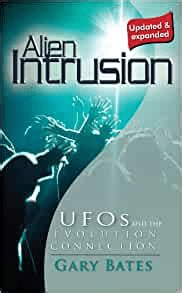


 Out of Babel Books